
Alarm System for Schools: Safety & Compliance Guide

Educational institutions face unique safety challenges that demand comprehensive, reliable protection systems. An alarm system for schools must address multiple threats simultaneously, from fire emergencies to security incidents, while meeting stringent regulatory requirements. As we progress through 2026, the landscape of school safety technology continues to evolve, driven by legislative changes and technological advancements that prioritize rapid response and effective communication with emergency services.

Understanding Modern School Alarm Requirements

The complexity of an alarm system for schools extends far beyond traditional fire detection. Today's educational facilities require integrated solutions that combine fire safety, intrusion detection, and emergency communication capabilities. This multi-layered approach ensures comprehensive protection for students, staff, and visitors across all campus areas.

Modern school alarm systems must comply with multiple regulatory frameworks. The NFPA 72 standard establishes fundamental requirements for fire alarm and emergency communication systems, providing the baseline for all installations. Beyond these foundational requirements, individual states have implemented additional mandates that specifically address school safety concerns.

Key components of a comprehensive school alarm system include:

  • Fire detection and notification systems with intelligent sensors
  • Mass notification systems for emergency communication
  • Panic alert systems with direct law enforcement connection
  • Intrusion detection for after-hours security
  • Environmental monitoring for hazardous conditions
  • Integration capabilities with access control systems

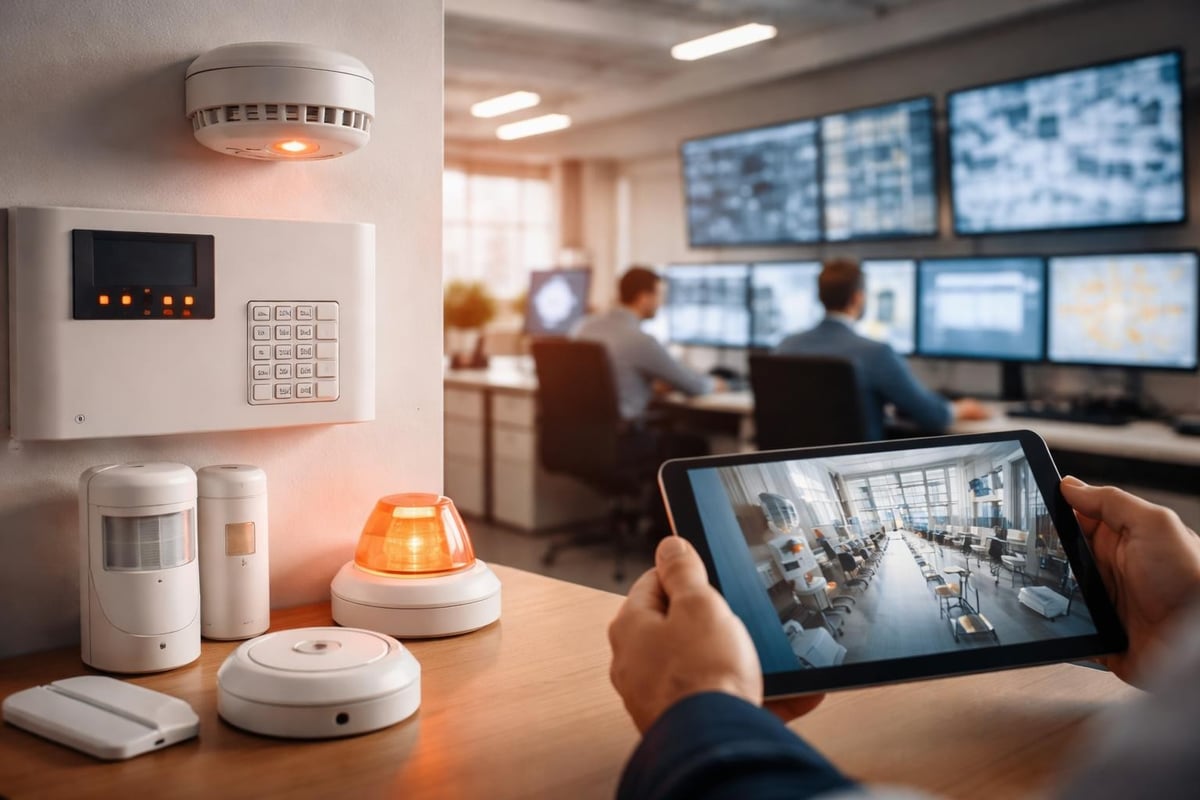
School alarm system components

The regulatory environment surrounding school alarm systems has undergone significant transformation. Several states have enacted legislation requiring panic alarm systems following tragic incidents. Florida’s Alyssa’s Alert system mandates mobile panic alert capabilities that enable real-time coordination with first responders, setting a precedent for similar legislation nationwide.

Fire Detection Systems in Educational Settings

Fire safety remains the cornerstone of any alarm system for schools. Commercial fire alarm systems designed for educational environments must account for diverse occupancy types, from classrooms to laboratories, cafeterias to gymnasiums. Each space presents distinct fire risks requiring tailored detection strategies.

Advanced fire detection technology has revolutionized school safety. Intelligent addressable systems can pinpoint the exact location of a fire event, enabling faster response and more efficient evacuation. These systems reduce false alarms through advanced algorithm processing that distinguishes genuine threats from environmental anomalies.

Detection Type Best Application Response Time Maintenance Frequency
Smoke Detectors Classrooms, corridors 30-60 seconds Quarterly testing
Heat Detectors Kitchens, workshops 60-90 seconds Semi-annual inspection
Multi-Sensor Laboratories, storage 20-40 seconds Quarterly testing
Beam Detectors Gymnasiums, halls 40-60 seconds Annual alignment check

The Indiana Department of Homeland Security guidance emphasizes proper response protocols for fire alarms, highlighting the importance of regular drills and staff training. Schools must balance safety with educational continuity, minimizing disruption while maintaining readiness for genuine emergencies.

Panic Alert and Lockdown Systems

Recent legislative developments have prioritized immediate threat response capabilities. An effective alarm system for schools now typically incorporates dedicated panic alert functionality that enables staff to summon emergency assistance silently and rapidly. This technology proves critical during active threat situations where traditional communication methods may be unavailable or dangerous.

Texas regulations specify requirements for panic alert systems capable of direct communication with law enforcement agencies. These systems bypass standard emergency call routing, ensuring the fastest possible response to critical incidents. Implementation varies from fixed wall-mounted buttons to wearable devices that staff can activate discreetly.

Panic alert system features that enhance school safety:

  1. Silent activation preventing alerting potential threats
  2. Automatic location identification for precise responder deployment
  3. Multi-channel notification reaching law enforcement, administrators, and security personnel
  4. Integration with access control for automated lockdown procedures
  5. Two-way communication enabling real-time situation updates

The New Jersey compliance requirements for Alyssa's Law mandate panic alarm systems with direct links to law enforcement. Schools implementing these systems report significant improvements in emergency response coordination and overall security confidence among staff and parents.

Integration with Access Control and Security Systems

A truly effective alarm system for schools integrates seamlessly with building access control systems to create layered security. During emergencies, these integrated systems can automatically lock or unlock doors based on the incident type, controlling access while facilitating evacuation as needed.

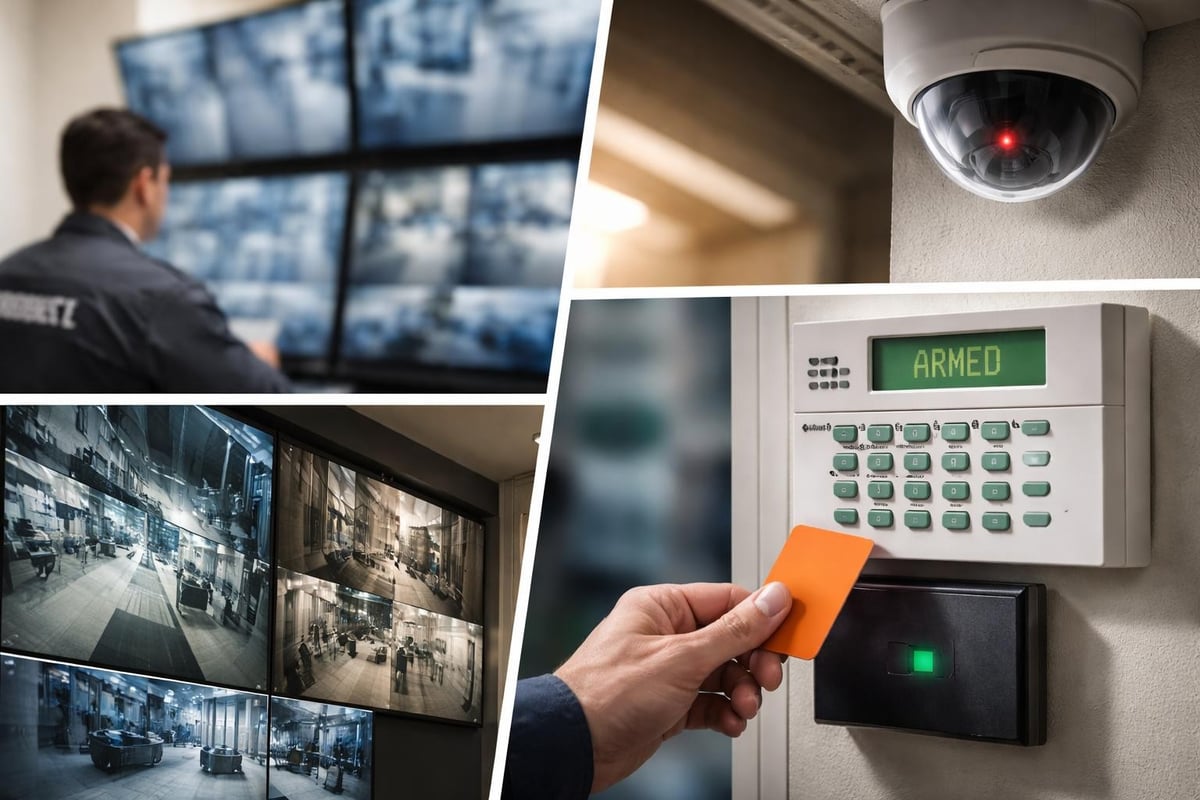
Emergency response protocols

Integration extends to video surveillance systems, providing visual verification of alarm events. When commercial security systems work in concert with alarm platforms, security personnel can assess situations rapidly and provide critical information to responding emergency services. This capability proves invaluable for distinguishing false alarms from genuine threats.

Modern school security platforms consolidate multiple systems into unified management interfaces. Administrators can monitor fire detection, intrusion alarms, access control, and video surveillance from centralized workstations, improving situational awareness and response coordination.

Best Practices for Implementation and Maintenance

Successful deployment of an alarm system for schools requires careful planning, professional installation, and ongoing maintenance. School alert system best practices emphasize the importance of stakeholder involvement throughout the implementation process, ensuring systems meet the specific needs of each educational environment.

The design phase should incorporate input from administrators, security personnel, local fire departments, and law enforcement agencies. This collaborative approach identifies potential vulnerabilities and ensures compliance with all applicable regulations. Professional security integrators like Logic Fire and Security bring expertise in educational facility protection, navigating complex requirements while optimizing system performance.

Implementation timeline for comprehensive school alarm systems:

  • Week 1-2: Site survey and needs assessment
  • Week 3-4: System design and regulatory review
  • Week 5-8: Equipment procurement and staging
  • Week 9-12: Installation and integration
  • Week 13-14: Testing and commissioning
  • Week 15-16: Staff training and documentation

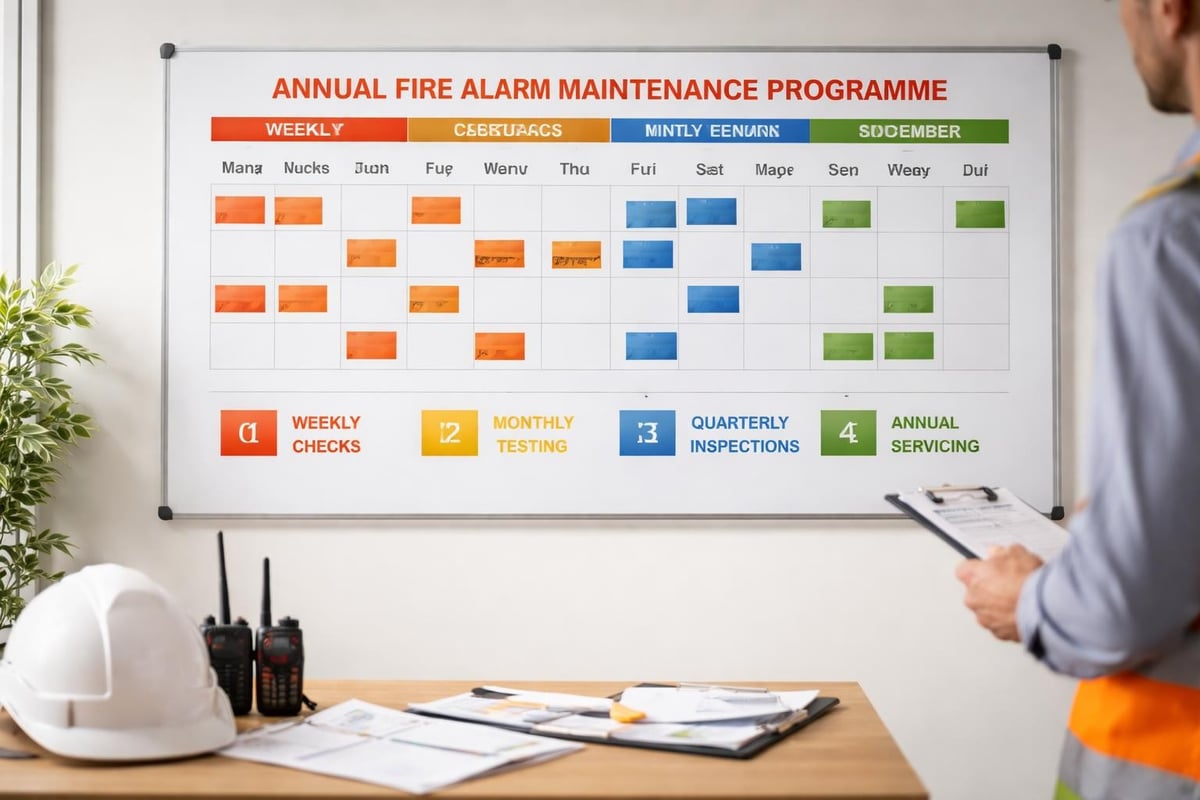
Regular maintenance ensures alarm system reliability when emergencies occur. Alarm monitoring systems require periodic testing to verify communication paths remain functional. Fire detection devices need cleaning and calibration to prevent false alarms while maintaining sensitivity to genuine threats.

Testing and Training Requirements

An alarm system for schools provides protection only when staff understand proper response procedures. Comprehensive training programs should cover activation methods, evacuation protocols, lockdown procedures, and communication expectations during various emergency scenarios.

Training Component Frequency Duration Participants
Fire evacuation drills Monthly 15-20 minutes All occupants
Lockdown procedures Quarterly 30 minutes Staff only
Panic alert operation Semi-annually 45 minutes Administrative staff
System maintenance review Annually 2 hours Facilities personnel
Emergency responder coordination Annually 3-4 hours Security team

Testing extends beyond scheduled drills. Evacuation alert systems should undergo regular functional testing to verify all notification devices operate correctly. This includes audible alarms, visual strobes, and mass notification speakers throughout campus facilities.

Documentation of all testing and maintenance activities provides essential compliance records. Regulatory agencies may request these records during inspections, and they prove valuable for identifying system performance trends and potential issues before failures occur.

Regulatory Compliance and Local Requirements

Geographic location significantly influences alarm system requirements for schools. While national standards provide baseline guidance, state and local jurisdictions often impose additional mandates. The Olympia Municipal Code exemplifies local regulations that specify alarm system exemptions and service fee structures for public schools.

Compliance verification requires understanding multiple regulatory layers. Building codes, fire safety standards, educational facility requirements, and emergency communication mandates all intersect when designing school alarm systems. Professional security providers maintain current knowledge of these evolving requirements, ensuring installations meet all applicable standards.

Regulatory compliance checklist for school alarm systems:

  • Fire alarm design complies with NFPA 72 requirements
  • Panic alert systems meet state-specific mandates
  • Emergency communication reaches all campus areas
  • Notification devices accommodate hearing and visually impaired occupants
  • System documentation includes as-built drawings and operation manuals
  • Monitoring arrangements provide 24/7 emergency response
  • Annual inspections scheduled with qualified technicians

Insurance providers increasingly scrutinize school alarm systems when underwriting policies. Comprehensive, well-maintained systems may qualify institutions for premium reductions, while inadequate protection can result in coverage limitations or exclusions. Documentation of proper installation and maintenance supports favorable insurance terms.

Monitoring and Emergency Response Coordination

Around-the-clock monitoring represents a critical component of any alarm system for schools. Professional monitoring services receive alarm signals immediately upon activation, verify the emergency type, and dispatch appropriate responders according to pre-established protocols. This rapid response capability can save precious minutes during life-threatening situations.

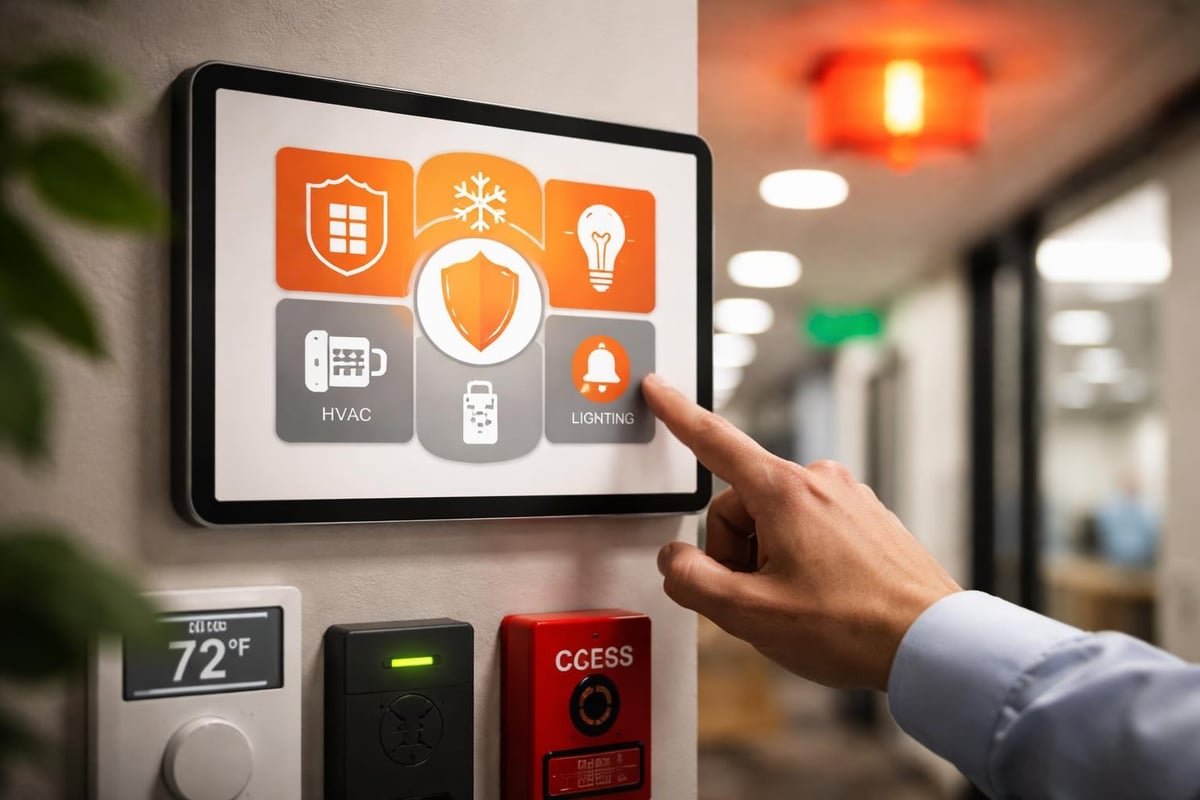
Monitoring center workflow

Monitoring centers should maintain detailed information about each protected facility, including floor plans, occupancy schedules, key holder contacts, and special hazard locations. This information enables more effective emergency response coordination and helps responders navigate campus environments efficiently.

Communication between monitoring services and educational administrators ensures appropriate responses to different alarm types. Fire alarms may require immediate evacuation, while intrusion alarms during school hours might indicate unauthorized access requiring security investigation rather than full lockdown.

Advanced Features and Future Technologies

The evolution of school alarm technology continues accelerating. Artificial intelligence enhances threat detection capabilities, distinguishing between normal activities and potential dangers with increasing accuracy. Machine learning algorithms analyze patterns across multiple sensor inputs, reducing false alarms while improving genuine threat identification.

Integration with mobile technology enables more flexible emergency communication. Staff members receive instant notifications through smartphone applications, providing situation updates and response instructions regardless of their campus location. Parents may also receive controlled information during emergencies, reducing anxiety while preventing campus disruption from concerned family members.

Emerging technologies enhancing school alarm systems:

  • Gunshot detection providing immediate active shooter alerts
  • Air quality monitoring detecting chemical hazards or poor ventilation
  • Behavioral analytics from video systems identifying concerning activities
  • Wearable panic buttons offering discreet threat reporting
  • Outdoor coverage extending protection to playgrounds and athletic facilities
  • Cloud-based management enabling remote system monitoring and updates

Voice evacuation systems represent significant advancement over traditional alarm bells. These systems provide clear verbal instructions during emergencies, directing occupants to appropriate exits while conveying specific information about the threat type and location. Research demonstrates improved evacuation efficiency with voice systems compared to conventional alerting methods.

Environmental monitoring capabilities expand alarm system functionality beyond traditional security concerns. Sensors detecting temperature extremes, water leaks, or power failures enable proactive facility management, preventing minor issues from escalating into major problems that could impact educational operations.

System Design Considerations for Different School Types

Primary schools require alarm system designs that account for younger children who may not respond appropriately to complex emergency instructions. Visual indicators supplement audible alarms, and evacuation routes must accommodate smaller students with limited mobility and understanding. Staff panic alert systems prove particularly valuable in primary settings where threats to vulnerable populations demand immediate response.

Secondary schools present different challenges, including larger campuses with multiple buildings, higher occupancy densities, and diverse facility types from science laboratories to performing arts centers. An alarm system for schools at this level often incorporates zone-based alerting, enabling targeted notifications to specific campus areas while avoiding unnecessary disruption to unaffected zones.

School Type Typical Coverage Area Device Count Range Special Considerations
Primary (300 students) 30,000-50,000 sq ft 40-80 devices Child-appropriate notifications
Secondary (800 students) 100,000-200,000 sq ft 150-300 devices Multi-building coordination
Higher Education Campus 500,000+ sq ft 500+ devices Outdoor coverage, residence halls
Specialized Facilities Varies Custom design Unique hazards, specialized spaces

Universities and colleges face additional complexity from mixed-use facilities, public access areas, residential housing, and 24/7 operations. Alarm systems must differentiate between academic buildings, dormitories, athletic facilities, and research laboratories, each requiring tailored detection and notification strategies. Integration with campus-wide communication systems ensures consistent messaging across diverse platforms during emergencies.

Specialized educational facilities such as vocational schools, technical colleges, or facilities serving students with special needs demand customized alarm system approaches. Workshops with industrial equipment require specific fire detection technologies, while facilities for students with sensory sensitivities may need alternative notification methods that avoid triggering adverse reactions.


Protecting educational environments demands sophisticated alarm systems that integrate fire detection, security monitoring, and emergency communication capabilities while meeting stringent regulatory requirements. The investment in comprehensive school safety infrastructure pays dividends through enhanced protection, regulatory compliance, and peace of mind for administrators, staff, and families. Whether you're planning a new installation, upgrading existing systems, or ensuring compliance with the latest safety legislation, Logic Fire and Security delivers the expertise and comprehensive solutions that educational institutions throughout the UK trust for their critical safety needs.

Fire Alarm Supply: Essential Guide for UK Businesses

Selecting the right fire alarm supply partner represents one of the most critical decisions facing facilities managers and building owners across the United Kingdom. The complexities of modern fire detection systems demand not only high-quality components but also reliable suppliers who understand compliance requirements, product specifications, and long-term maintenance needs. Whether upgrading an existing system or specifying equipment for a new installation, understanding the landscape of fire alarm supply ensures your organisation maintains optimal safety standards whilst managing costs effectively.

Understanding Fire Alarm Supply Chain Components

The fire alarm supply industry encompasses a diverse range of manufacturers, distributors, and specialist providers who deliver everything from basic detection devices to sophisticated integrated systems. At the foundation level, suppliers must stock essential components including smoke detectors, heat sensors, manual call points, sounders, and control panels. These individual elements form the building blocks of any fire detection installation.

Quality fire alarm supply extends beyond simple product availability. It encompasses technical support, product certification, compatibility assurance, and ongoing availability of replacement parts. Leading suppliers maintain comprehensive inventories that include both contemporary technology and legacy components, ensuring facilities can maintain existing systems whilst planning strategic upgrades.

Key Components in Modern Fire Alarm Supply

Professional fire alarm supply operations typically categorise their offerings into several distinct groups:

  • Detection devices: Optical smoke detectors, ionisation detectors, heat detectors, multi-sensor units, and beam detectors
  • Control and indication equipment: Fire alarm control panels, repeater panels, network devices, and mimic panels
  • Warning devices: Bells, sounders, visual alarm devices (VADs), and voice evacuation speakers
  • Manual devices: Break glass call points and remote test devices
  • Interface modules: Input/output modules, relay modules, and integration devices
  • Power supplies: Battery units, chargers, and power supply modules

The breadth of this inventory highlights why selecting an experienced fire alarm supply partner proves essential for commercial installations. Systems must comply with BS 5839 Part 1, the British standard governing fire detection and alarm systems in non-domestic premises, which specifies stringent requirements for component quality and system design.

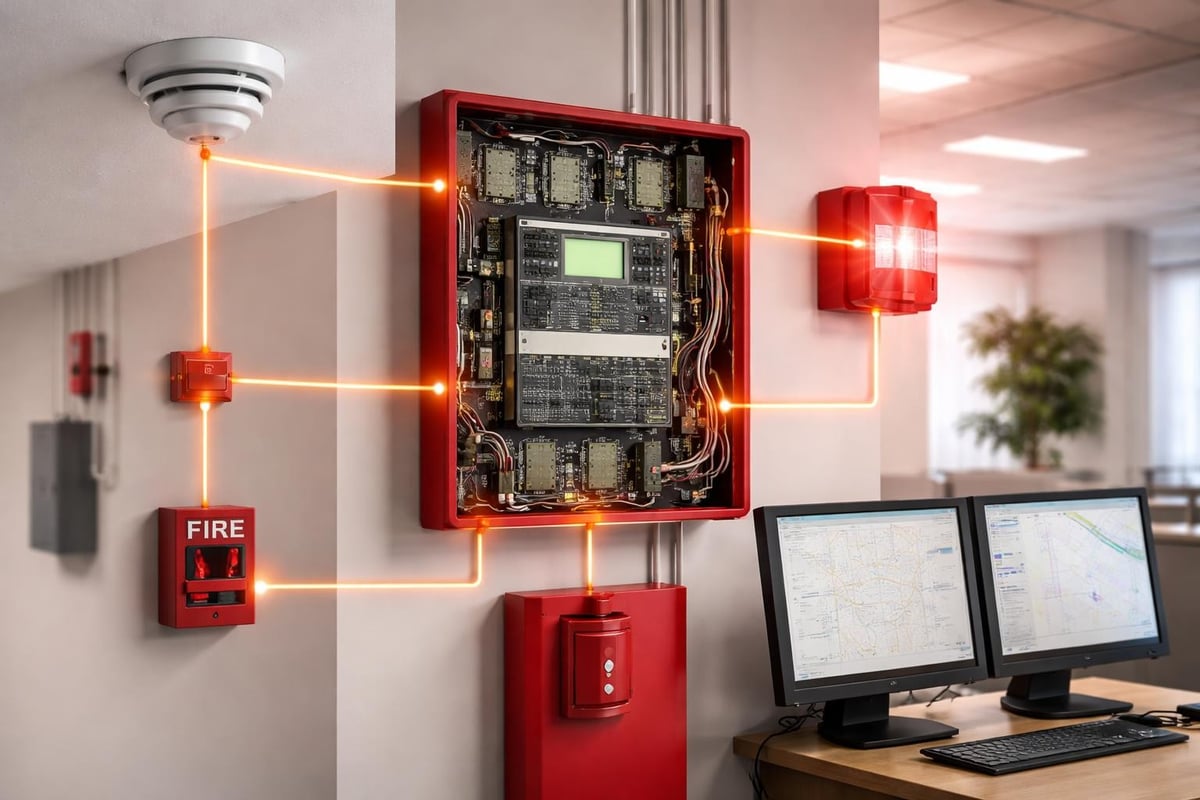
Fire alarm system components and their functions

Evaluating Fire Alarm Supply Partnerships

Establishing relationships with dependable fire alarm supply companies protects organisations from project delays, compliance failures, and long-term maintenance challenges. The selection process should examine multiple factors beyond initial pricing, as the true value of a supplier emerges through sustained partnership and support.

Critical Selection Criteria

When assessing potential fire alarm supply partners, facilities managers should evaluate several fundamental aspects of their operations:

Criterion Why It Matters What to Verify
Product range Ensures compatibility and choice Manufacturer partnerships, stock levels
Technical expertise Supports specification and troubleshooting Qualifications, training programmes
Compliance knowledge Guarantees regulatory adherence Certification status, standards awareness
Delivery reliability Prevents project delays Stock management, logistics capabilities
After-sales support Ensures long-term system performance Warranty terms, technical helpline

Experience within your specific sector matters considerably. A fire alarm supply company serving commercial offices, healthcare facilities, educational establishments, and manufacturing sites understands the unique requirements each environment presents. This sector-specific knowledge informs product recommendations and system specifications, reducing the risk of inappropriate component selection.

The importance of choosing the right fire alarm system vendor cannot be overstated, as this decision influences system performance, compliance status, and total cost of ownership throughout the installation's operational lifetime. Companies like Logic Fire and Security have built their reputation on understanding these complex requirements across diverse commercial environments.

Standards Compliance in Fire Alarm Supply

Regulatory compliance represents a non-negotiable aspect of fire alarm supply in the United Kingdom. Every component supplied for commercial fire detection systems must meet established standards, with documentation proving conformity to relevant European and British specifications.

European and British Standards Framework

The EN 54 series of standards governs fire detection and fire alarm equipment across Europe. This comprehensive framework covers individual component types, from control panels (EN 54-2) to smoke detectors (EN 54-7) and manual call points (EN 54-11). Fire alarm supply companies must verify that all products carry appropriate EN 54 certification marks before distribution.

British Standards provide additional guidance specific to UK installations. BS 5839-1:2017 establishes the code of practice for system design, installation, commissioning, and maintenance in non-domestic buildings. Professional fire alarm supply partners maintain current knowledge of these standards, advising clients on compliant component selection and system configuration.

Additional standards influence fire alarm supply decisions:

  • BS 7671 (IEC 60364) for electrical installations
  • BS 8629 for evacuation alert systems serving people with disabilities
  • Building Regulations Approved Document B for fire safety provisions
  • Fire Safety Order 2005 requirements for risk assessment and appropriate systems

Organisations requiring guidance on compliance frameworks should consult resources on codes and standards that outline the regulatory landscape governing fire detection equipment.

Fire alarm compliance standards

Advanced System Integration and Supply Considerations

Modern fire alarm supply extends beyond standalone detection systems to encompass integrated solutions that connect fire safety with broader building management infrastructure. This integration demands suppliers who understand network protocols, software platforms, and compatibility requirements across diverse manufacturers.

Networked and Addressable Systems

Contemporary commercial installations predominantly specify addressable fire alarm systems, where each detection device carries a unique identifier on the network. This architecture enables precise fault location, individual device monitoring, and sophisticated cause-and-effect programming. Fire alarm supply for addressable systems requires careful attention to compatibility, as mixing components from different manufacturers often creates integration challenges.

Protocol compatibility represents a critical consideration. Whilst some manufacturers employ proprietary communication standards, others utilise open protocols that facilitate multi-vendor integration. Suppliers who understand these technical distinctions guide clients toward solutions that balance performance, flexibility, and cost-effectiveness.

Integration extends to connections with other building systems:

  1. Building Management Systems (BMS): Fire alarm data feeds into centralised monitoring platforms
  2. Access control: Automatic door release upon fire alarm activation
  3. HVAC systems: Smoke control and air handling coordination
  4. Emergency lighting: Synchronised activation with fire alarm signals
  5. Voice evacuation: Phased evacuation messaging coordinated with alarm zones

For organisations implementing comprehensive safety strategies, exploring commercial security systems demonstrates how fire alarm supply decisions fit within broader security infrastructure planning.

Maintenance Planning and Long-Term Supply Relationships

The relationship with a fire alarm supply partner extends throughout the system's operational life, which typically spans fifteen to twenty-five years. Successful maintenance programmes depend upon reliable access to replacement components, technical support, and system knowledge that suppliers provide.

Obsolescence Management

Technology evolution creates ongoing challenges for facilities managers. Components become obsolete as manufacturers discontinue product lines, requiring careful planning to maintain system functionality. Proactive fire alarm supply partners notify clients of impending obsolescence, offering migration pathways that minimise disruption and cost.

Strategic approaches to obsolescence management include:

  • Maintaining critical spare parts inventories for current systems
  • Planning phased upgrades rather than complete system replacement
  • Selecting manufacturers with demonstrated long-term product support
  • Documenting system configurations to facilitate future modifications
  • Establishing service level agreements that guarantee component availability

Professional maintenance arrangements, such as those provided through fire alarm monitoring services, often include supply agreements ensuring rapid access to replacement components during fault resolution.

Quality Assurance in Fire Alarm Supply

Distinguishing between genuine manufacturer products and substandard alternatives demands rigorous quality assurance processes. Reputable fire alarm supply companies implement verification procedures that protect clients from counterfeit components, ensuring every device meets specification requirements.

Certification and Traceability

Each component should carry traceable certification documentation. This includes manufacturer certificates of conformity, third-party testing reports, and compliance declarations referencing relevant EN 54 standards. Fire alarm supply chains that maintain comprehensive documentation enable clients to demonstrate regulatory compliance during inspections and audits.

Quality Indicator Verification Method Risk if Absent
CE marking Visual inspection, documentation review Non-compliance, insurance issues
EN 54 certification Certificate verification, LPCB approval System rejection, failed commissioning
Batch traceability Serial number records, supply chain documentation Warranty complications, recall management
Performance data Test certificates, specification sheets Inappropriate application, system failure

Following best practices for fire and gas detection includes verifying that all supplied components originate from authenticated sources and carry appropriate certification marks.

Quality assurance in fire alarm components

Installation Support and Technical Resources

Effective fire alarm supply partnerships extend beyond component delivery to encompass technical guidance, installation support, and commissioning assistance. Suppliers who invest in technical resources help installers avoid common fire alarm installation mistakes that compromise system performance and compliance.

Design and Specification Support

Professional fire alarm supply companies employ technical specialists who review project requirements, recommend appropriate components, and verify design compliance with applicable standards. This consultative approach proves particularly valuable for complex installations involving multiple protection categories, diverse environmental conditions, or specialised detection requirements.

Technical support typically encompasses:

  • System architecture recommendations and network topology planning
  • Device selection based on environmental conditions and risk assessment
  • Power supply calculations ensuring adequate capacity for full system operation
  • Cable specification guidance for different zones and circuit types
  • Integration planning for connections with other building systems

Organisations seeking to improve documentation accuracy benefit from understanding how to improve fire alarm design documents, ensuring specifications accurately communicate requirements to fire alarm supply providers.

Emerging Technologies in Fire Alarm Supply

The fire alarm supply sector continues evolving as manufacturers introduce innovative detection technologies, connectivity solutions, and intelligent algorithms that enhance system performance. Staying informed about technological developments enables facilities managers to specify solutions that deliver long-term value.

Wireless and Hybrid Systems

Wireless fire alarm technology has matured significantly, offering reliable alternatives to traditional hard-wired installations. Fire alarm supply for wireless systems includes radio-frequency devices, repeaters, and gateways that create mesh networks capable of serving substantial commercial premises. These solutions prove particularly valuable during refurbishment projects where minimising disruption and avoiding cable installation costs deliver significant benefits.

Hybrid configurations combine wired and wireless technologies, allowing facilities to extend existing systems or add coverage to challenging areas without comprehensive rewiring. Progressive fire alarm supply partners maintain expertise across both traditional and wireless platforms, recommending optimal approaches based on building characteristics and budget considerations.

Recent innovations reshaping fire alarm supply include:

  1. Multi-sensor detectors: Combining optical, heat, and carbon monoxide detection in single devices
  2. Cloud connectivity: Remote monitoring and diagnostics through internet-connected panels
  3. Video verification: Camera integration providing visual confirmation of alarm conditions
  4. AI algorithms: Machine learning reducing false alarms through intelligent signal analysis
  5. Mobile applications: Commissioning and testing tools simplifying installation and maintenance

Facilities exploring comprehensive safety solutions should investigate how fire alarm systems integrate with complementary technologies including emergency lighting, evacuation systems, and disabled refuge provisions.

Cost Management and Value Optimisation

Whilst initial component costs influence fire alarm supply decisions, sophisticated procurement strategies consider total cost of ownership throughout the system lifecycle. This broader perspective examines installation efficiency, maintenance requirements, energy consumption, and upgrade pathways.

Life-Cycle Cost Analysis

Evaluating fire alarm supply options through life-cycle costing reveals the true financial impact of component selection. Premium products often deliver superior reliability, reducing maintenance callouts and replacement frequencies that accumulate substantial costs over time. Similarly, energy-efficient devices lower operational expenses, whilst systems designed for easy expansion reduce future modification costs.

A comprehensive cost comparison should evaluate:

Cost Category Budget Products Premium Products Long-Term Impact
Initial purchase Lower Higher Initial budget allocation
Installation time Standard Potentially faster Labour cost variation
False alarm rate Higher potential Lower through advanced algorithms Reduced disruption, compliance costs
Maintenance frequency More frequent Extended intervals Ongoing service expenses
Component lifespan 10-15 years 15-25 years Replacement cycle costs
Upgrade compatibility Limited Future-proof design System longevity, modification costs

Strategic fire alarm supply partnerships help organisations balance immediate budget constraints against long-term value creation, identifying solutions that optimise both safety performance and financial outcomes.

Sector-Specific Fire Alarm Supply Considerations

Different commercial sectors present unique fire alarm supply requirements reflecting their operational characteristics, regulatory frameworks, and risk profiles. Suppliers with sector expertise understand these nuances, recommending solutions appropriately tailored to specific environments.

Healthcare Facilities

Medical establishments demand fire alarm systems that balance patient safety with operational continuity. Fire alarm supply for healthcare environments includes specialist devices such as zone-indicating call points that direct staff to incident locations, and sounders with volume profiles that alert occupants without causing unnecessary distress to vulnerable patients.

Educational Institutions

Schools, colleges, and universities require robust systems capable of withstanding demanding environments whilst providing clear evacuation guidance across complex building layouts. Fire alarm supply specifications often emphasise vandal-resistant devices, voice evacuation capabilities for phased evacuation, and integration with security systems managing access control.

Industrial and Manufacturing

Production facilities present challenging detection environments featuring heat, dust, fumes, and electromagnetic interference. Specialist fire alarm supply for industrial applications includes high-temperature detectors, beam detection for large open spaces, and explosion-proof devices rated for hazardous atmospheres.

Commercial Offices and Retail

Office buildings and retail premises typically implement sophisticated addressable systems with graphical indication, allowing security teams to monitor extensive sites from centralised control rooms. Understanding fire risk assessment requirements helps specify appropriate detection coverage and system capabilities.

Supplier Relationships and Partnership Benefits

Establishing enduring relationships with fire alarm supply providers delivers advantages extending beyond transactional component purchases. Strategic partnerships facilitate knowledge transfer, preferential pricing, priority support, and collaborative approaches to system optimisation.

Value-Added Services

Leading fire alarm supply companies differentiate themselves through comprehensive service offerings that support clients throughout the project lifecycle. These value-added capabilities transform suppliers into trusted advisers who contribute to safety outcomes rather than merely fulfilling component orders.

Partnership benefits typically include:

  • Technical training for facilities management teams and maintenance personnel
  • Specification review services validating designs against standards and best practices
  • Stock management programmes ensuring critical spares availability
  • Scheduled maintenance planning coordinating inspections with component replacement cycles
  • System health monitoring identifying performance trends and predicting failures
  • Compliance updates communicating regulatory changes affecting installed systems

For organisations seeking comprehensive support, engaging specialists who provide fire alarm monitoring alongside component supply ensures integrated approaches to fire safety management.

Documentation and Compliance Recording

Comprehensive documentation represents a fundamental requirement for compliant fire alarm installations, with records demonstrating that supplied components meet specifications and systems function as designed. Fire alarm supply partners contribute to documentation requirements through certificates, test data, and product information.

Essential Documentation

Every fire alarm supply transaction should generate appropriate documentation supporting compliance verification and future maintenance activities. This paperwork establishes an audit trail demonstrating due diligence in component selection and system specification.

Critical documents include:

  1. Manufacturer certificates of conformity to EN 54 standards
  2. Technical datasheets specifying device performance characteristics
  3. Installation instructions and wiring diagrams
  4. Commissioning certificates confirming system functionality
  5. Operation and maintenance manuals for end-user reference

Following fire alarm inspection best practices requires maintaining accessible records that inspectors can review during routine assessments and compliance audits.


Selecting the right fire alarm supply partner fundamentally influences the safety, compliance, and operational effectiveness of commercial fire detection systems throughout their service life. By prioritising quality, compliance expertise, technical support, and long-term partnership potential, organisations establish robust foundations for protecting people and property. Logic Fire and Security combines comprehensive product knowledge with decades of installation and maintenance experience, helping businesses across the United Kingdom specify, source, and maintain fire detection systems that deliver reliable performance whilst meeting stringent regulatory requirements.

Door Entry Systems: Security Solutions for UK Businesses

Modern commercial buildings demand sophisticated security solutions that balance protection with operational efficiency. Door entry systems have evolved from simple lock-and-key mechanisms into intelligent access control platforms that serve as the first line of defence for businesses across the UK. These systems not only regulate who enters a premises but also provide comprehensive audit trails, integrate with wider security infrastructure, and ensure compliance with current regulations. For organisations seeking to protect their assets, staff, and visitors, understanding the capabilities and considerations of contemporary door entry technology is essential.

Understanding Modern Door Entry Technology

Door entry systems comprise multiple components working in harmony to control, monitor, and record access to buildings and restricted areas. At their core, these solutions combine authentication methods, electronic locking mechanisms, control panels, and management software to create a cohesive security environment.

The fundamental architecture includes credential readers positioned at entry points, electromagnetic or electromechanical locks that secure the doors, a central controller that processes authentication requests, and power supplies that ensure continuous operation. Modern systems often incorporate access control entry systems that extend beyond basic door management to include time-and-attendance tracking, visitor management, and integration with fire alarm systems.

Authentication Methods and Technologies

Contemporary door entry solutions support multiple authentication technologies, each offering different balances of security, convenience, and cost:

  • Proximity cards and key fobs utilise RFID technology for quick, contactless access
  • Biometric readers verify fingerprints, facial features, or iris patterns for enhanced security
  • PIN keypads provide a code-based option that doesn't require physical credentials
  • Smartphone credentials leverage Bluetooth or NFC technology through mobile applications
  • Multi-factor authentication combines two or more methods for maximum protection

The selection of authentication technology depends on the security requirements, user volume, and environmental conditions of each facility. High-security areas often employ biometric verification or multi-factor approaches, whilst general office spaces may rely on proximity cards for efficiency and ease of management.

Authentication methods comparison

Integration With Comprehensive Security Systems

Door entry systems deliver maximum value when integrated with broader commercial security systems rather than operating in isolation. This integration creates a unified security ecosystem where different components share information and coordinate responses to events.

CCTV and Video Verification

Combining door entry with video surveillance enables visual verification of access events. When someone presents credentials at a door, the system can automatically trigger cameras to record the entry, creating visual confirmation alongside the electronic audit trail. This proves particularly valuable for investigating security incidents or verifying that the person using credentials is the authorised holder.

Video intercom functionality extends this capability by allowing security personnel or receptionists to visually verify visitors before granting access. Modern IP-based systems deliver high-definition video to central monitoring stations or even mobile devices, enabling remote access management.

Integration Type Primary Benefit Typical Application
CCTV Linkage Visual verification of access events Corporate lobbies, secure facilities
Intruder Alarms Coordinated arming/disarming Office buildings, warehouses
Fire Systems Automatic door release during evacuation Multi-storey buildings, schools
Building Management Centralised control and monitoring Large campuses, commercial complexes

Fire Safety Coordination

Integration between door entry and fire detection systems is not merely beneficial but often mandatory under UK regulations. Fire safety requirements dictate that electronically secured doors must release automatically upon fire alarm activation, ensuring clear evacuation routes. This integration must be designed carefully to maintain security whilst prioritising life safety.

Fire alarm system integration ensures that during an emergency, all access-controlled doors unlock whilst simultaneously logging this override event. Once the alarm is cleared, the system can automatically restore normal access control operation, eliminating manual intervention and potential security gaps.

Compliance and Regulatory Considerations

UK businesses must navigate numerous regulations and standards when implementing door entry systems. Compliance requirements span data protection, disability access, fire safety, and industry-specific mandates.

The Equality Act 2010 requires that access control systems do not discriminate against disabled individuals. This means door entry solutions must consider various accessibility needs, including:

  • Accessible credential readers positioned at appropriate heights
  • Audio assistance for visually impaired users
  • Extended access times for those with mobility challenges
  • Alternative authentication methods for individuals unable to use biometric systems

Data protection obligations under the UK GDPR significantly impact door entry system operation. Access logs constitute personal data, requiring organisations to establish lawful bases for processing, implement appropriate security measures, and define retention periods. Biometric data receives special protection as sensitive personal information, demanding enhanced justification and safeguards.

Compliance framework

Industry-Specific Standards

Beyond general regulations, certain sectors face additional compliance requirements. Healthcare facilities must adhere to NHS standards for access control, ensuring patient confidentiality whilst enabling emergency access when needed. Financial institutions follow stricter authentication requirements and audit trail mandates. Understanding access control principles helps organisations align their door entry systems with both general and sector-specific obligations.

Educational institutions balance security with the need for rapid evacuation, requiring door entry systems that integrate seamlessly with fire safety protocols. The Standards for Alarm Systems, Installation, and Monitoring provide frameworks that ensure reliable operation across various environments.

System Design and Implementation

Effective door entry system design begins with thorough security assessment and operational requirement analysis. This process identifies which doors require access control, who needs access to specific areas, and what level of security each zone demands.

Zoning and Access Hierarchies

Well-designed systems employ zoning strategies that divide facilities into areas with different security levels. This might include:

  1. Public zones accessible to all visitors during business hours
  2. General staff areas requiring basic employee credentials
  3. Restricted departments limited to specific personnel groups
  4. High-security zones demanding enhanced authentication or multi-factor access
  5. Emergency-only exits that permit egress but prevent entry

Access hierarchies define which user groups can enter which zones, with permissions often tied to job roles, departments, or temporary requirements. Modern systems enable time-based access rules, automatically adjusting permissions based on schedules, ensuring that contractors or temporary staff only gain access during their assigned periods.

Network Architecture and Reliability

Contemporary door entry systems typically utilise IP-based networking, connecting controllers, readers, and management software through standard network infrastructure. This approach offers several advantages but requires careful planning to ensure reliability and security.

Network design considerations include:

  • Segregated VLANs to isolate access control traffic from general business networks
  • Redundant communication paths to maintain operation during network failures
  • Local controller intelligence allowing continued operation if network connectivity is lost
  • Encrypted communication channels protecting credential data from interception
  • Regular firmware updates addressing security vulnerabilities

Power supply redundancy proves equally critical, with uninterruptible power supplies (UPS) ensuring that door entry systems remain operational during electrical failures. This becomes particularly important for life safety integration, where power loss must not compromise evacuation capabilities.

User Management and Administrative Control

The administrative capabilities of door entry systems determine how effectively organisations can manage credentials, monitor activity, and respond to security events. Modern platforms provide web-based or cloud-hosted interfaces that enable centralised management across multiple sites.

Credential Lifecycle Management

Managing user credentials throughout their lifecycle represents a significant operational consideration. The process encompasses:

Enrollment: Creating user profiles, issuing credentials, and assigning initial access permissions
Modification: Updating access rights as job roles change or temporary requirements emerge
Suspension: Temporarily disabling credentials without full deletion for leave or investigations
Revocation: Immediately removing access when employment ends or security is compromised
Audit: Regularly reviewing permissions to ensure they remain appropriate and necessary

Automated provisioning workflows can integrate with HR systems, automatically creating and revoking access based on employment status changes. This reduces administrative burden whilst eliminating security gaps caused by delayed credential management.

User Type Typical Access Duration Management Approach Security Level
Permanent Staff Ongoing with periodic review HR system integration Standard authentication
Contractors Project-specific timeframes Scheduled expiration Enhanced verification
Visitors Single-day or short-term Sponsor approval required Escort or limited zones
Emergency Services Permanent override capability Master credentials Highest authority

Audit Trails and Reporting

Comprehensive logging capabilities transform door entry systems from simple access control into valuable business intelligence tools. Systems record every access attempt, whether successful or denied, creating detailed audit trails that support:

  • Security investigations identifying unusual access patterns or unauthorised attempts
  • Compliance reporting demonstrating adherence to regulatory requirements
  • Operational insights revealing usage patterns that inform staffing or facility decisions
  • Incident reconstruction providing timestamped evidence for internal or legal proceedings

Advanced systems employ analytics to identify anomalies, such as credentials used at unusual times or locations, multiple failed access attempts, or tailgating detection through integrated sensors. Alerts notify security personnel of these events in real-time, enabling prompt investigation and response.

Maintenance and Lifecycle Considerations

Door entry systems require ongoing maintenance to ensure reliable operation and sustained security effectiveness. Neglected systems become security vulnerabilities, with failed components creating unauthorised access opportunities or impeding legitimate users.

Preventive Maintenance Programmes

Regular maintenance schedules should address both hardware and software components:

  • Monthly checks of door operation, lock engagement, and reader functionality
  • Quarterly testing of battery backups and emergency release mechanisms
  • Annual inspections of wiring integrity, controller operation, and system-wide testing
  • Firmware updates applied promptly to address security vulnerabilities
  • Software upgrades providing enhanced features and compatibility

Professional maintenance services ensure that trained technicians identify potential issues before they cause system failures. This proactive approach proves particularly important for organisations where access control failures could compromise safety or business continuity.

System Refresh and Technology Evolution

Door entry technology evolves rapidly, with new authentication methods, enhanced security features, and improved integration capabilities emerging regularly. Organisations should plan for system refresh cycles, typically spanning five to seven years for major components.

Planning considerations include:

Backwards compatibility with existing infrastructure, minimising replacement costs during phased upgrades. Door access control systems continue advancing with features like mobile credentials and cloud management platforms that offer enhanced flexibility.

Scalability to accommodate business growth without requiring complete system replacement. Migration paths that allow gradual transition to new technologies whilst maintaining operational continuity. Investment protection through vendor selection focused on long-term viability and ongoing support commitments.

Maintenance lifecycle

Cloud-Based vs On-Premises Solutions

The decision between cloud-hosted and on-premises door entry systems significantly impacts cost structure, administrative requirements, and operational flexibility. Each approach offers distinct advantages suited to different organisational needs.

Cloud-based platforms deliver several compelling benefits. They eliminate on-site server requirements, reducing capital expenditure and IT infrastructure demands. Automatic updates ensure systems remain current with security patches and feature enhancements without manual intervention. Multi-site organisations particularly benefit from centralised management through a single interface, accessible from any location with internet connectivity.

However, cloud solutions introduce dependency on internet connectivity for management functions, though local controllers typically maintain operation during network disruptions. Data residency and privacy concerns require careful vendor evaluation to ensure compliance with UK data protection requirements.

On-premises systems provide complete data control, with all information remaining within the organisation's infrastructure. They offer independence from internet connectivity for core operation and potentially lower ongoing costs after initial capital investment. Organisations with stringent data sovereignty requirements or existing robust IT infrastructure often prefer this approach.

The hybrid model combines elements of both approaches, with local controllers ensuring continuous operation whilst cloud services provide management interfaces and advanced analytics. This architecture delivers reliability and flexibility, making it increasingly popular for medium to large organisations.

Future Developments in Door Entry Technology

The door entry sector continues evolving with emerging technologies that promise enhanced security, improved user experience, and deeper integration with smart building ecosystems. Understanding these trends helps organisations make forward-looking investment decisions.

Artificial intelligence and machine learning are transforming how systems identify threats and optimise operations. AI-powered analytics can detect sophisticated tailgating attempts, identify credential sharing, and predict maintenance requirements before failures occur. Facial recognition technology continues advancing, though deployment requires careful consideration of privacy implications and regulatory compliance.

Mobile credentials are rapidly displacing physical cards as the preferred authentication method. Smartphones offer convenient, secure access through encrypted Bluetooth or NFC communication, whilst eliminating card production and replacement costs. Users appreciate the convenience of accessing buildings with devices they already carry, and organisations benefit from remote credential management and instant revocation capabilities.

Touchless access technologies gained prominence following the COVID-19 pandemic and continue developing beyond health considerations. Gesture recognition, proximity detection, and automatic door opening enhance accessibility whilst reducing surface contact and wear on hardware components.

The convergence of door entry systems with broader building automation platforms creates opportunities for enhanced efficiency. Integration with HVAC, lighting, and occupancy monitoring systems enables buildings to respond intelligently to human presence, reducing energy consumption whilst improving user comfort. These building security compliance standards increasingly expect such integration as standard practice.

Selecting the Right Door Entry Solution

Choosing an appropriate door entry system requires balancing numerous factors including security requirements, budget constraints, operational needs, and future scalability. Organisations should approach this decision methodically, avoiding both over-engineered solutions that exceed requirements and inadequate systems that create security gaps.

Begin with comprehensive security assessment identifying specific threats, vulnerable entry points, and regulatory obligations. This foundation ensures that selected solutions address actual risks rather than perceived concerns. Consider the total cost of ownership spanning initial installation, ongoing maintenance, credential management, and eventual system replacement.

Vendor selection proves equally important as technology choice. Established providers with proven track records offer greater assurance of long-term support and product evolution. Evaluation criteria should include:

  • Industry certifications demonstrating compliance with recognised security standards
  • Reference sites where similar organisations successfully deployed the solutions
  • Integration capabilities with existing security and building management systems
  • Technical support availability and responsiveness during both installation and operation
  • Training provisions ensuring staff can effectively manage and maintain systems

Professional consultation from experienced security integrators provides valuable perspective, helping organisations navigate technical complexities and avoid common implementation pitfalls. Specialists like those at Logic Fire and Security bring expertise across diverse industries and building types, ensuring solutions align with both immediate needs and long-term strategic objectives.


Door entry systems represent critical infrastructure that protects people, assets, and information whilst enabling efficient building operation. Modern solutions offer sophisticated capabilities that extend far beyond simple access control, integrating with fire safety systems, providing valuable operational insights, and adapting to evolving security threats. Whether you're upgrading existing systems or implementing access control for the first time, Logic Fire and Security brings decades of experience designing, installing, and maintaining comprehensive security solutions for businesses across the UK. Our team understands the unique challenges facing modern organisations and can help you select and deploy door entry systems that deliver lasting value and protection.

Our Accreditations

Work
For Us