

Refuge defined in its simplest form is shelter or protection from danger or distress, and also the place that provides that protection. Merriam-Webster adds a third sense: something a person turns to for help in difficulty. The word is used in everyday speech, in law, in conservation and in building safety, and the meaning shifts slightly in each setting.
For anyone responsible for a commercial or residential building in the UK, the word carries a precise practical meaning as well. This article sets out the dictionary sense, the origins of the word, its related terms and its specific application in fire safety.
What Does Refuge Mean? The Core Definition
The core meaning of refuge is protection from danger, trouble or distress, or a place that offers that protection. The Cambridge English Dictionary gives the same definition and illustrates it with a mountain refuge and a wildlife refuge.
Dictionaries generally record three connected senses:
- Protection itself: the state of being shielded from harm, as in "they found refuge from the storm".
- A place of shelter: a physical location that provides safety, such as a hut, a shelter or a sanctuary.
- A source of comfort or help: something relied upon in difficulty, such as "music was her refuge".
The Cambridge Learner’s Dictionary draws a useful distinction between refuge as protection from danger and refuge as the place that provides it. The first is abstract and the second is concrete. Most confusion about the word comes from using one sense when the other is intended.
Refuge is a noun. Its verb use appears only in the phrasal construction "take refuge", covered below.
Where Does the Word Refuge Come From?
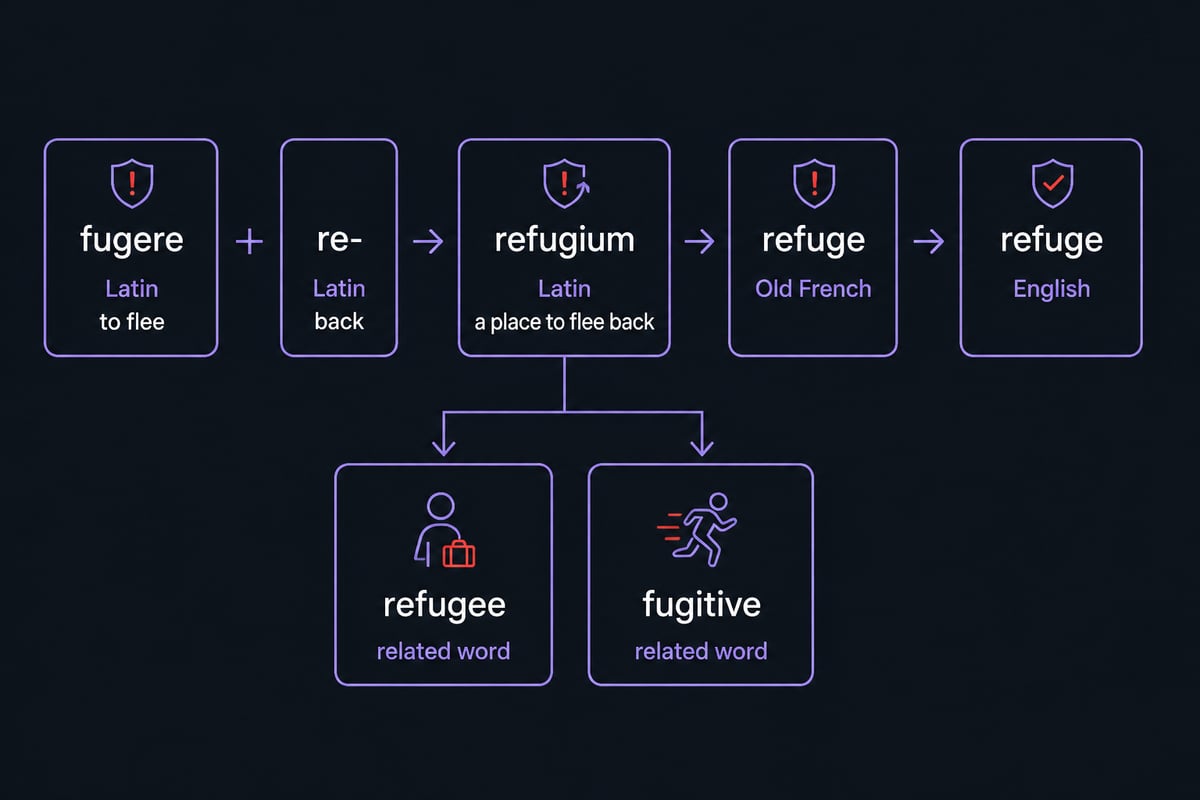
Refuge comes into English from Old French refuge, which derives from Latin refugium, meaning a place to flee back to. The Latin root combines re- (back) with fugere (to flee).
That origin explains the sense of the word. A refuge is not simply a safe place. It is a place you retreat to when something threatens you. The same root gives us "refugee", a person who has fled danger and seeks protection elsewhere, and "fugitive", a person in flight.
The word has been in English for several centuries, and the core idea has changed very little in that time. What has changed is the range of contexts in which it appears.
What Does "Take Refuge" Mean?
To take refuge means to move to a place of shelter or to seek protection from something harmful. The phrase works literally and figuratively.
In its literal sense, people take refuge from weather, fighting, flooding or fire. A hiker takes refuge in a bothy during a storm. Occupants of a building may take refuge in a protected stairwell while waiting for rescue.
In its figurative sense, someone may take refuge in silence, in routine or in work to avoid something painful. The phrase often suggests a retreat rather than a solution, and it can carry a mild implication of avoidance.
The related phrase "seek refuge" tends to be used for more serious circumstances, particularly where people are fleeing conflict or persecution. Legal and humanitarian writing uses it in this sense.
Other Names and Related Terms for a Refuge
A refuge can be called a shelter, sanctuary, haven, retreat, asylum or safe place, depending on context. These words overlap but are not interchangeable.
| Term | Typical sense | Example |
|---|---|---|
| Shelter | Basic physical protection | A bus shelter, an emergency shelter |
| Sanctuary | Protected, often with a sacred or legal dimension | A wildlife sanctuary |
| Haven | A place of safety and calm | A safe haven |
| Retreat | A place withdrawn from activity or danger | A mountain retreat |
| Asylum | Legal protection granted by a state | Political asylum |
| Safe place | Informal or procedural safety | An evacuation assembly point |
"Refuge" is the broadest of these. It can describe a hut on a hillside, a nature reserve, a legal status or an emotional state. Synonyms such as "haven" lean towards comfort, while "asylum" belongs to law and "shelter" to the immediate and practical.
The word also has a specific meaning in British traffic engineering. In British English, a refuge can also mean a traffic island, a raised area in the middle of a road where pedestrians can wait safely. The principle is the same: a protected spot within a hazardous environment.
Refuge in Conservation and Law
In conservation, a refuge is a protected area set aside to safeguard wildlife and habitat. In law, refuge relates to protection granted to people at risk, most often those fleeing persecution.
The United States operates a well-known conservation example. A national wildlife refuge system exists in the United States, managed for conservation. A wildlife refuge is therefore defined by what it protects, not simply by being a quiet piece of land.
In legal and humanitarian usage, refuge is closely tied to the status of refugees. Someone who seeks refuge in another country is asking for protection from harm in their own. That is the sense most readers will associate with the word in news coverage.
Historically, many cultures recognised designated places of refuge in law. Religious texts, including the Hebrew Bible, describe cities of refuge, where a person who had caused death accidentally could be protected until a fair hearing took place. The underlying idea is that a refuge is protected by an agreed rule, not just by walls.
What Is a Spiritual Refuge?
A spiritual refuge is a source of inner security, guidance or peace that a person turns to when facing hardship, usually within a faith or contemplative tradition.
The usage varies by tradition:
- Christianity and Judaism: God is frequently described as a refuge and strength in times of trouble, a theme running through the Psalms.
- Buddhism: Taking refuge is a formal act. Practitioners take refuge in the Buddha, the Dharma (the teachings) and the Sangha (the community), often called the Three Jewels.
- Secular contexts: People speak of finding refuge in nature, reflection or community in a non-religious sense.
In each case the meaning matches the dictionary sense. Something is relied on for protection from distress, although the danger in question is inner rather than physical.
Refuge in Fire Safety: A Practical Definition
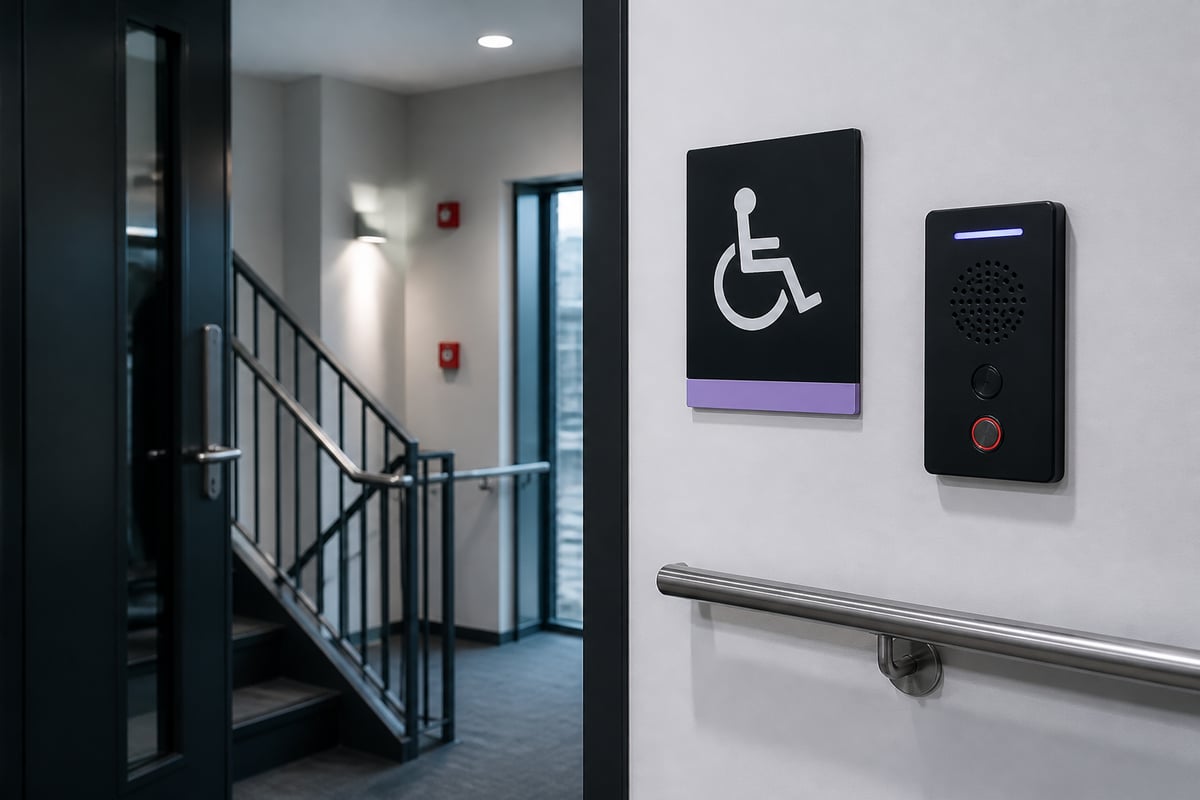
In fire safety, a refuge is a protected area within a building where people who cannot evacuate unaided can wait safely for assistance. It is separated from the fire by fire-resisting construction and is usually located on an escape route, most commonly in a stairwell or protected lobby.
This is where the word has direct legal and operational weight for the Responsible Person. The refuge concept appears in regulation internationally. U.S. regulations describe a workplace refuge area as a space on an exit route separated from other building spaces by a barrier rated for at least one hour of fire resistance, or qualifying floors in certain sprinkler-protected buildings. UK guidance uses different documents, but the principle is shared: a refuge is only a refuge if the construction around it can hold back fire and smoke for long enough.
Why Refuge Areas Matter for Building Managers
Lifts cannot normally be used in a fire, and stairs are not accessible to everyone. A wheelchair user, a person with a mobility impairment or someone who is temporarily injured may be unable to descend several floors quickly. A refuge gives these occupants a protected place to wait, with a means of communicating their location to those managing the evacuation.
For employers and facilities managers, this connects directly to the duty to plan for all building users. Personal emergency evacuation plans, staff training and clear signage all rely on refuges being properly specified, kept clear and fitted with working communication. A refuge that is blocked by storage, or whose communication equipment has failed, offers no real protection.
Communication Is What Makes a Refuge Work
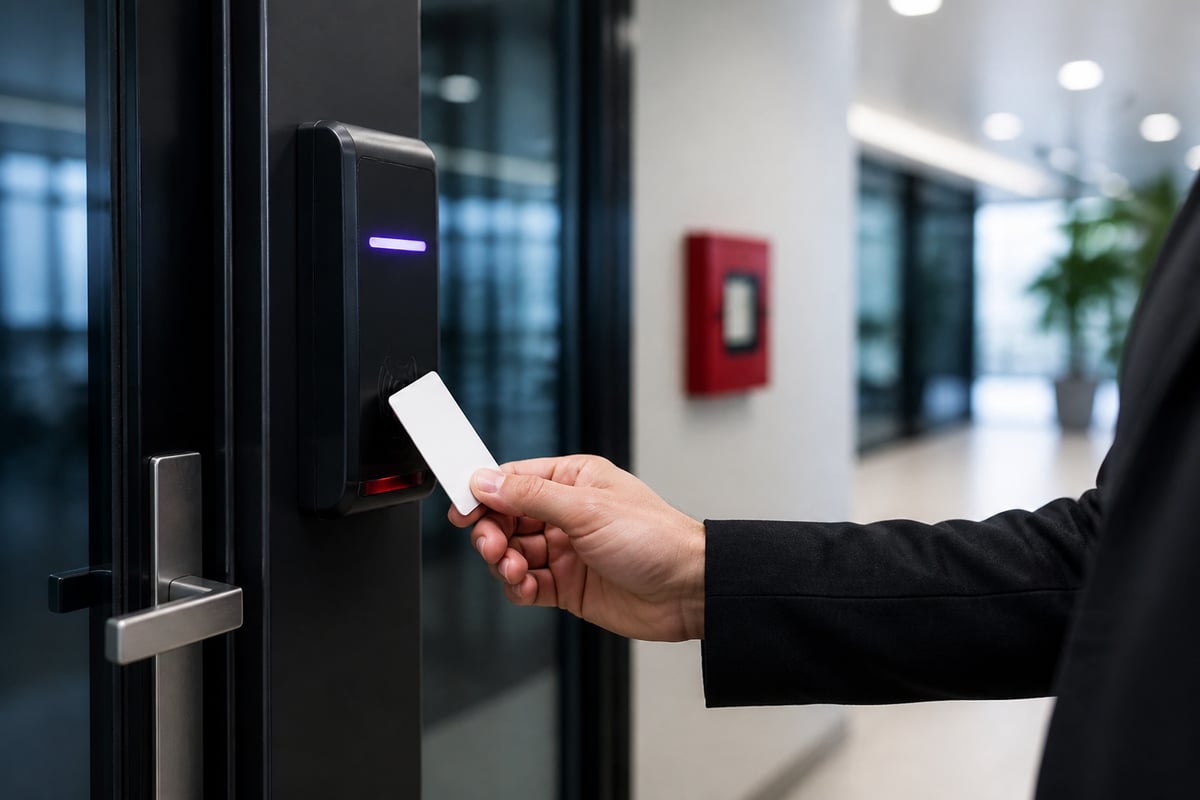
A protected space alone is not enough. Occupants in a refuge need to tell someone where they are, and responders need to know who is waiting and on which floor. This is the purpose of a disabled refuge system, which provides two-way voice communication between each refuge point and a control position.
Regular testing is part of keeping that communication dependable. Logic Fire and Security works to recognised industry standards, and its accreditations are listed on its quality and accreditations page. Engineers who design, install, commission and maintain these systems work to those standards.
Refuge in High-Rise Residential Buildings
In high-rise residential buildings, refuge thinking extends beyond individual refuge points to how an entire building is evacuated. Landlords and managing agents of these buildings need a way for the Fire and Rescue Service to alert residents when circumstances change.
Some tall residential buildings are designed on a "stay put" basis, where residents remain in their flats unless directly affected by fire. If conditions require a wider evacuation, the Fire and Rescue Service needs a reliable means of telling residents. An evacuation alert system is operated only by the Fire and Rescue Service and allows phased evacuation to be managed. It sits alongside, and does not replace, the protected escape and refuge arrangements in the building.
Managing agents should confirm how their building's strategy treats residents who cannot use stairs. Where refuge provision is part of that strategy, it needs documenting, testing and communicating to the relevant residents and responders.
Checking Your Own Building's Refuge Provision
If you are the Responsible Person, a short review will show whether refuge arrangements are fit for purpose. The following steps give a sensible starting point:
- Confirm your fire strategy: Identify whether refuges form part of your evacuation plan and where they are located.
- Inspect the physical space: Check that refuge areas are clear, correctly signed and enclosed by intact fire-resisting construction.
- Test communication equipment: Confirm that two-way communication reaches the control position and that staff know how to respond.
- Review personal evacuation plans: Make sure anyone who might need a refuge has a documented plan that matches the actual layout.
- Record and schedule servicing: Keep test records and arrange regular maintenance by a competent contractor.
Your fire risk assessment should be reviewed after any change to the building layout, occupancy or use. Further background reading is available in the Logic Fire and Security resources library, and the wider fire safety services overview outlines the systems that sit around a refuge, such as detection and alarm.
FAQ
What is another name for a refuge?
Common alternatives include shelter, sanctuary, haven, retreat and safe place. The best choice depends on context: "sanctuary" suits protected wildlife or sacred places, while "shelter" suits immediate physical protection.
What is the Hebrew meaning of the word refuge?
In the Hebrew Bible, the idea of refuge is expressed through several words, and the phrase "cities of refuge" refers to designated places where a person responsible for an accidental death could be protected until a fair hearing took place.
Is refuge a noun or a verb?
Refuge is a noun. It appears in verb form only within phrases such as "take refuge" or "seek refuge", where the verb is "take" or "seek" and refuge remains the noun.
If you manage a building, your next step is to check whether your fire strategy relies on refuge areas and, if so, to confirm that the communication equipment at each one has been tested recently. Logic Fire and Security designs, supplies, installs and maintains fire detection and electronic security systems for businesses and public bodies across the UK, with fire alarm monitoring available. For tall residential buildings, the evacuation alert system page explains how phased evacuation is managed by the Fire and Rescue Service. To discuss your building's requirements with fully trained engineers, contact Logic Fire and Security by calling 0800 8445 999 or emailing [email protected].