

Modern businesses face unprecedented security challenges, from unauthorised access and theft to vandalism and workplace incidents. Surveillance security systems have evolved from simple camera installations into sophisticated networks that integrate multiple technologies, providing comprehensive protection whilst ensuring regulatory compliance. For UK organisations, particularly those operating across multiple sites or handling sensitive operations, understanding the capabilities and requirements of contemporary surveillance technology is essential for maintaining safe, secure environments that protect both people and assets.
Understanding Modern Surveillance Security Systems
Surveillance security systems encompass far more than traditional closed-circuit television (CCTV) installations. Today’s systems represent integrated platforms combining network cameras, video analytics, cloud storage, access control and real-time monitoring capabilities. This convergence creates comprehensive security ecosystems that provide situational awareness, evidence collection and proactive threat detection.
The technological foundation has shifted dramatically over the past decade. Analogue systems have given way to Internet Protocol (IP) networks, enabling higher resolution imaging, remote accessibility and intelligent video analytics. Modern surveillance security systems can recognise faces, detect unusual behaviour patterns, count occupants and even identify potential fire or safety hazards before they escalate.
Core Components and Technologies
A comprehensive surveillance security system comprises several interconnected elements, each contributing to overall effectiveness:
Camera Technologies:
- Fixed cameras for monitoring specific locations
- Pan-tilt-zoom (PTZ) cameras for flexible coverage
- Thermal imaging for low-light and perimeter protection
- 4K and higher resolution units for detailed identification
- Multi-sensor panoramic cameras for wide-area coverage
Network infrastructure forms the backbone of modern systems. Unlike legacy analogue installations requiring dedicated cabling, IP-based surveillance security systems utilise existing data networks, reducing installation costs whilst improving scalability. Power over Ethernet (PoE) technology simplifies deployment by delivering both power and data through single cables.
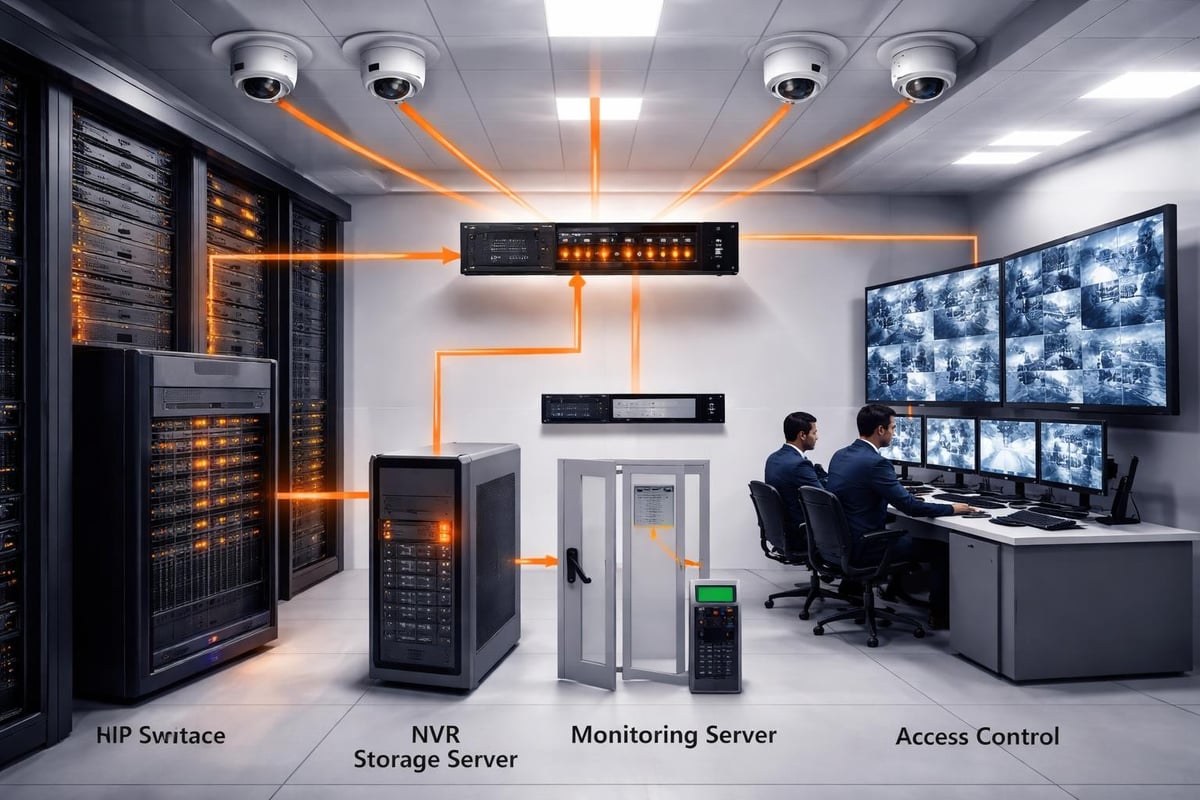
Storage architecture has evolved considerably. Where physical video recorders once dominated, hybrid and cloud-based solutions now offer enhanced redundancy, remote accessibility and virtually unlimited retention periods. Edge storage capabilities, where cameras themselves retain footage locally, provide additional resilience against network failures.
Integration with Fire Safety and Building Management
The most effective surveillance security systems don’t operate in isolation. Integration with fire detection, access control and building management systems creates synergies that enhance both security and operational efficiency. When a fire alarm activates, integrated cameras can automatically focus on affected areas, providing first responders with critical situational awareness before they arrive.
Commercial CCTV systems increasingly communicate with access control platforms, enabling visual verification of entry events and creating comprehensive audit trails. If someone uses credentials to access a restricted area, surveillance footage provides visual confirmation of the individual’s identity, addressing the vulnerability of shared or stolen access cards.
This integration extends to emergency evacuation procedures. During an incident, surveillance security systems can monitor evacuation routes, identify individuals requiring assistance and confirm that buildings have been fully cleared. When combined with evacuation alert systems, this creates a comprehensive emergency response framework.
Monitoring and Response Capabilities
| Monitoring Type | Response Time | Coverage | Best Application |
|---|---|---|---|
| Self-monitoring | Variable | On-site only | Small single-site operations |
| Remote monitoring | 30-60 seconds | Multi-site capable | Medium to large organisations |
| AI-assisted monitoring | Real-time | Unlimited | High-security environments |
| Hybrid approach | Immediate to 30 seconds | Flexible | Most commercial applications |
Professional CCTV monitoring services provide 24/7 oversight, with trained operators responding to alerts and verifying incidents before dispatching appropriate resources. This reduces false alarms whilst ensuring genuine threats receive immediate attention. Advanced systems employ artificial intelligence to distinguish between routine activity and genuine security concerns, further reducing operator workload.
The shift towards intelligent analytics represents a fundamental change in how surveillance security systems function. Rather than simply recording events for retrospective review, modern platforms actively analyse video streams in real-time, identifying anomalies and triggering alerts based on predefined parameters.
Compliance and Privacy Considerations
Operating surveillance security systems in the UK requires adherence to strict regulatory frameworks. The Surveillance Camera Code of Practice establishes twelve guiding principles ensuring systems are used proportionately and transparently. These principles mandate clear justification for surveillance, appropriate signage, data protection compliance and regular operational reviews.
Key Compliance Requirements:
- Define clear operational objectives
- Conduct privacy impact assessments
- Implement appropriate retention policies
- Ensure secure data storage and access controls
- Provide staff training on lawful use
- Maintain comprehensive documentation
Data protection regulations under GDPR impose additional obligations. Surveillance security systems process personal data, requiring organisations to establish lawful bases for processing, implement appropriate technical safeguards and respect individuals’ rights regarding their recorded information. Retention periods should reflect genuine operational needs rather than indefinite storage “just in case.”
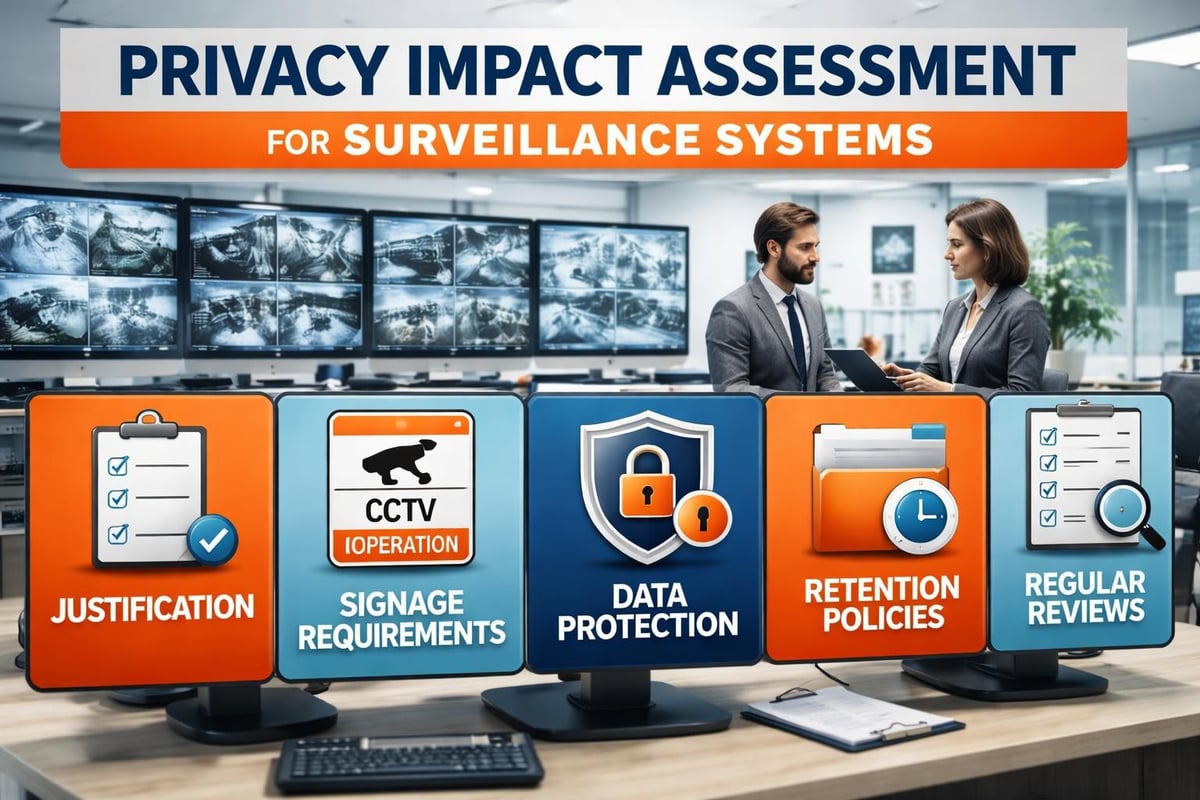
Public-facing businesses face particular scrutiny. Retail environments, hospitality venues and healthcare facilities must balance legitimate security interests against customer privacy expectations. Transparent communication about surveillance purposes, clearly visible signage and proportionate camera placement demonstrate responsible stewardship.
Designing Effective Surveillance Solutions
Successful surveillance security systems begin with thorough site assessments identifying vulnerabilities, coverage requirements and integration opportunities. Unlike generic installations, bespoke designs account for architectural features, operational workflows and specific threat profiles.
Coverage mapping requires strategic thinking. High-value areas demand different specifications than general circulation spaces. Perimeter protection necessitates different camera types and placement than internal monitoring. Entry points warrant particular attention, with positioning ensuring clear facial capture of individuals entering and exiting.
Site-Specific Considerations
Different environments present unique challenges requiring tailored approaches:
Manufacturing and Industrial:
Harsh environmental conditions, wide-open spaces and specific hazard zones require ruggedised cameras with appropriate IP ratings. Integration with plant monitoring systems enables comprehensive operational oversight.
Retail and Hospitality:
Point-of-sale monitoring, shoplifting prevention and customer behaviour analysis drive camera placement. High-traffic areas benefit from advanced analytics identifying queue lengths and occupancy levels.
Office and Corporate:
Reception areas, car parks and restricted zones require coverage balancing security with employee privacy. Integration with access control systems creates comprehensive identity verification.
Healthcare and Education:
Sensitive environments demand discrete installations respecting patient and student privacy whilst maintaining safety. Specific areas like pharmacies and laboratories warrant enhanced protection.
Installation and Ongoing Maintenance
Professional installation ensures surveillance security systems function reliably whilst meeting compliance requirements. Proper camera positioning, secure mounting, appropriate cabling and network configuration all impact system performance. Inadequate installation compromises image quality, creates blind spots and potentially violates privacy principles through excessive coverage.
Network infrastructure requires particular attention in IP-based systems. Bandwidth calculations ensure adequate capacity for video streams, especially when multiple high-resolution cameras operate simultaneously. Quality of Service (QoS) configurations prioritise surveillance traffic, preventing degradation during peak network usage.
| Maintenance Activity | Frequency | Purpose | Impact if Neglected |
|---|---|---|---|
| Camera cleaning | Quarterly | Clear image quality | Degraded footage unusable as evidence |
| Firmware updates | As released | Security patches, new features | Vulnerabilities, compatibility issues |
| Storage verification | Monthly | Confirm recording operation | Lost evidence, compliance breaches |
| Analytics calibration | Bi-annually | Accurate detection | False alarms, missed incidents |
| Physical inspections | Quarterly | Identify damage, tampering | System failures, coverage gaps |
Regular maintenance sustains system effectiveness. Cameras accumulate dust and environmental debris affecting image clarity. Firmware updates address security vulnerabilities and introduce enhanced capabilities. Storage systems require monitoring ensuring adequate capacity and verifying backup operations function correctly.

24/7 protection services encompass both monitoring and maintenance, ensuring continuous system availability. Proactive maintenance identifies potential failures before they compromise security, whilst rapid response minimises downtime when issues occur.
Advanced Features and Future Developments
Contemporary surveillance security systems incorporate sophisticated capabilities that extend far beyond basic recording. Video analytics powered by artificial intelligence and machine learning enable unprecedented functionality, transforming passive observation into active intelligence gathering.
Facial recognition technology can identify known individuals, streamlining access for authorised personnel whilst flagging unauthorised presence. However, ethical considerations and regulatory constraints require careful implementation ensuring compliance with privacy legislation and human rights principles.
Emerging Capabilities:
- Behavioural analytics identifying unusual patterns suggesting potential threats
- Object recognition detecting abandoned items or removed assets
- Crowd density monitoring for capacity management and emergency planning
- License plate recognition for parking and vehicle access control
- Heat mapping revealing traffic patterns and space utilisation
Integration with broader commercial security systems creates unified platforms managing multiple security functions through single interfaces. When surveillance detects a perimeter breach, the system can automatically lock doors, illuminate areas and alert security personnel, orchestrating coordinated responses without manual intervention.
Cloud-based architectures enable scalability previously impossible with on-premises solutions. Organisations can expand coverage across new sites without substantial infrastructure investment, accessing footage from any location whilst benefiting from automatic updates and redundant storage.
Cybersecurity for Surveillance Infrastructure
As surveillance security systems become increasingly networked, cybersecurity assumes critical importance. Cameras and recording devices represent potential entry points for malicious actors seeking network access. Inadequately secured systems have been exploited in botnet attacks, whilst compromised footage could enable reconnaissance for physical attacks.
Fundamental cybersecurity practices include changing default passwords, implementing network segmentation isolating surveillance traffic, enabling encryption for video streams and stored footage, and maintaining current firmware addressing known vulnerabilities. Regular security audits identify potential weaknesses before exploitation.
Essential Security Measures:
- Strong authentication with unique credentials per device
- Virtual LAN (VLAN) segregation separating surveillance networks
- Encrypted transmission protocols protecting video streams
- Regular vulnerability assessments and penetration testing
- Incident response procedures for security breaches
Research on security surveillance systems consistently emphasises the importance of defence-in-depth strategies, where multiple security layers provide redundancy if individual controls fail. This approach protects both the surveillance infrastructure itself and the broader organisational network.
Return on Investment and Business Benefits
Whilst surveillance security systems represent significant investments, comprehensive analysis reveals substantial returns through multiple mechanisms. Direct loss prevention through theft deterrence and detection provides quantifiable savings, particularly in retail and logistics environments where shrinkage substantially impacts profitability.
Liability protection offers less obvious but equally valuable benefits. Documented footage of incidents protects organisations against fraudulent claims, provides evidence supporting legitimate claims and demonstrates due diligence in maintaining safe environments. Insurance providers often recognise comprehensive surveillance through reduced premiums.
Operational insights derived from video analytics extend benefits beyond pure security. Retail organisations analyse customer movement patterns optimising store layouts. Manufacturing facilities identify bottlenecks in production workflows. Service businesses monitor queue lengths, adjusting staffing dynamically to maintain service levels.
Employee productivity and safety improve when surveillance security systems are implemented transparently with clear communication about purposes and appropriate policies governing use. Workers appreciate visible security measures protecting them from external threats, whilst fair policies prevent excessive monitoring undermining trust.
Selecting the Right Provider
Choosing a surveillance security systems provider requires evaluating technical capabilities, industry experience and ongoing support commitments. Installation represents only the beginning of a long-term relationship; organisations depend on providers for maintenance, upgrades and emergency response throughout system lifecycles.
Accreditation and certifications indicate professional competence and commitment to industry standards. Providers should demonstrate appropriate qualifications, insurance coverage and track records delivering complex installations on time and within budget. References from similar organisations in comparable environments provide valuable insights into actual performance versus promises.
Integration capabilities distinguish exceptional providers from basic installers. The ability to work with existing access control entry systems, fire detection platforms and building management systems creates unified solutions rather than disconnected technologies requiring separate management.
Ongoing support structures warrant careful evaluation. Response times for technical issues, availability of replacement equipment, training provision for operational staff and proactive maintenance all impact total cost of ownership and system reliability. Providers offering comprehensive monitoring and support deliver greater value than those focused solely on initial installation.
Surveillance security systems have become indispensable components of comprehensive protection strategies, offering far more than simple recording capabilities through advanced analytics, integration and intelligent monitoring. The right system design, professional installation and ongoing maintenance ensure maximum effectiveness whilst maintaining compliance with privacy regulations. Logic Fire and Security combines decades of experience with cutting-edge technology, delivering integrated fire and security solutions that protect UK businesses through expert design, installation and 24/7 monitoring services tailored to your specific operational requirements.