

With fire-related incidents costing UK businesses over £1 billion each year, investing in a fire security service is not just a precaution, it is a necessity. In 2026, the risk landscape is rapidly evolving. New technologies, stricter regulations, and emerging fire hazards mean that relying on outdated measures could put your property and people at risk.
This article is designed to empower property owners and managers with practical knowledge to safeguard assets using the most current fire security service solutions. You will discover the latest fire risks, essential components of a comprehensive system, a clear step-by-step guide for choosing the right provider, compliance essentials, and future trends shaping fire protection.
Ready to protect your property, ensure compliance, and gain peace of mind? This guide will show you how.
The Evolving Fire Risks in 2026
Fire risks are rapidly changing, and property owners must keep pace. With technology advancing and environmental pressures rising, a robust fire security service is more important than ever. Let us explore the new threats, regulatory updates, common causes, the true costs, and the importance of proactive measures.
New Fire Threats Facing Properties
Properties in 2026 face risks that did not exist a decade ago. The surge in lithium-ion batteries, found in electric vehicles and portable devices, has led to a rise in sudden, intense fires. Smart home and IoT devices add complexity, increasing ignition sources. Hotter summers and more wildfires, driven by climate change, threaten buildings even in urban areas. Urban density and modern construction materials can accelerate fire spread. A recent warehouse fire caused by a faulty e-bike battery illustrates how a fire security service must adapt to these evolving risks.
Regulatory Changes and Compliance Requirements
The regulatory landscape is stricter than ever. Updates to the Fire Safety Act 2021 and the Building Safety Act 2022 place greater emphasis on high-rise and multi-occupancy buildings. Mandatory risk assessments and meticulous record-keeping are now required. Penalties for non-compliance include hefty fines and even business closure. The 2025 revision to PAS 9980 further tightens guidance for residential properties. Importantly, new Fire Safety (Residential Evacuation Plans) Regulations 2025 mandate detailed evacuation plans for all residential buildings from April 2026. Choosing a fire security service that supports compliance is crucial.
Common Causes of Fire in Modern Properties
Despite modern advances, traditional hazards persist. Electrical faults and overloaded circuits remain the leading cause of commercial fires, accounting for over 30 percent of incidents in the UK. In commercial kitchens, catering equipment is a frequent ignition source. HVAC system failures can spark fires, especially if maintenance is neglected. Human error continues to play a role, often due to a lack of fire safety training. A comprehensive fire security service addresses these issues, helping to prevent incidents before they escalate.
The Cost of Fire Incidents: Financial & Human Impact
Fire incidents can devastate businesses, both financially and emotionally. The average cost of business interruption following a fire is £650,000, according to Aviva. Beyond direct losses, companies often face long-term reputational damage and a loss of customer trust. Personal tragedies, including injuries and fatalities, leave lasting scars on occupants and staff. A 2024 hotel fire that led to permanent closure highlights the stakes. This underscores the value of a fire security service that prioritises prevention and rapid response.
Why Proactive Fire Security Matters
Early detection and swift action are vital for saving lives and property. A proactive fire security service not only helps secure better insurance terms but also maintains business continuity and legal compliance. By investing in modern solutions, property owners demonstrate a duty of care to all occupants and staff. In a world where fire risks are constantly evolving, taking action today can make all the difference.
Essential Components of a Modern Fire Security Service
Modern properties require a holistic fire security service to address evolving threats and regulatory demands. Each component plays a specific role in reducing risks, ensuring compliance, and protecting occupants. Let us break down the essential elements you should expect from a robust fire security service in 2026.
Advanced Fire Detection Technologies
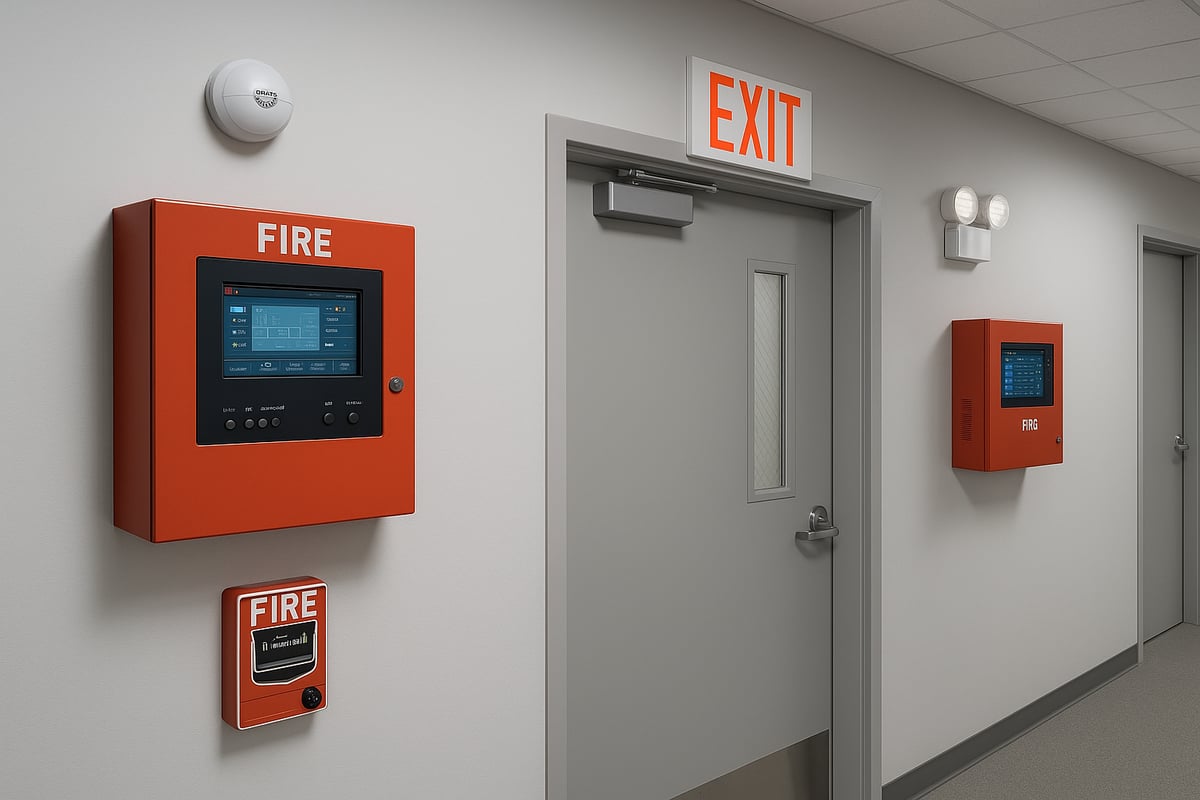
A reliable fire security service begins with cutting-edge fire detection. Addressable alarm systems offer pinpoint accuracy, while conventional setups provide basic coverage. Modern solutions use smoke, heat, and multi-sensor detectors for rapid response.
Wireless and smart-enabled devices integrate seamlessly with building management systems. For a deeper dive into the latest options, review this Advanced fire alarm systems guide. Choosing the right detection technology is the cornerstone of any effective fire security service.
Fire Suppression and Control Systems
The fire security service must include robust suppression and control solutions. Sprinkler systems—wet, dry, or pre-action—are essential for various property types. Gaseous suppression protects server rooms and sensitive assets where water is unsuitable.
Portable extinguishers, when correctly selected and maintained, allow for immediate action. Data shows that effective sprinkler systems can reduce fire-related fatalities by up to 80 percent. Integrating these systems is vital to a comprehensive fire security service.
Emergency Lighting and Evacuation Solutions
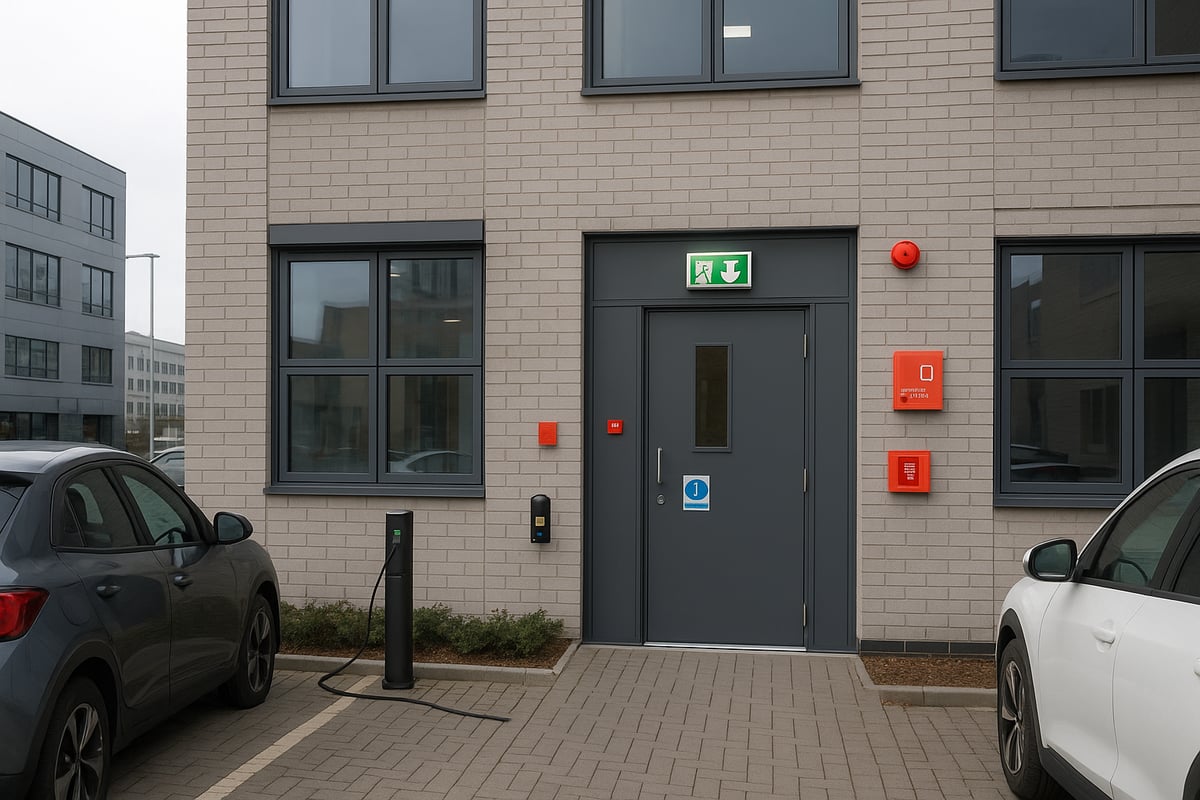
A complete fire security service ensures safe evacuation during emergencies. Emergency lighting guides occupants to exits when visibility is compromised. Wayfinding systems and illuminated signage reduce confusion and support orderly movement.
Designated refuge areas provide essential protection for vulnerable individuals. Well-maintained evacuation solutions are not only a legal requirement but also a practical necessity for any modern fire security service.
Fire Doors and Compartmentation
Certified fire doors and regular maintenance are central to a high-quality fire security service. These doors help contain fire and smoke, slowing their spread and buying critical time for evacuation.
Compartmentation divides a building into sections, preventing fire from engulfing the entire property. For example, an office block fire was successfully contained because of effective compartmentation, underscoring the importance of these features in any fire security service.
Integrated Monitoring and Remote Management
A modern fire security service offers 24/7 monitoring via remote alarm receiving centres. Real-time alerts and incident dashboards empower rapid response and data-driven decision-making.
Cloud-based platforms allow property managers to oversee multiple locations efficiently. Integrated monitoring not only supports ongoing compliance but also ensures your fire security service remains proactive and ready for future threats.
Step-by-Step Guide to Choosing the Right Fire Security Service
Choosing the right fire security service for your property is a strategic process. It involves careful risk assessment, setting clear objectives, evaluating providers, comparing technologies, and ensuring ongoing support. Follow these steps to make informed decisions that protect your assets and ensure compliance.
Assessing Your Fire Risk
Begin by understanding the unique fire risks associated with your property. Every building has different vulnerabilities, whether due to its layout, use, or occupancy. A professional fire risk assessment is essential for identifying hazards, evaluating current controls, and prioritising improvements. For in-depth guidance, consult Fire risk assessment guidance to ensure your fire security service is based on a solid foundation.
Review historical incidents and near-misses, and consider factors like building age, electrical installations, and the presence of high-risk equipment. This step sets the stage for a tailored fire security service plan.
Setting Fire Security Objectives
Set clear goals for your fire security service. Define whether you aim to meet legal compliance or strive for best practice standards. Align your objectives with your overall business continuity strategy to minimise disruptions during emergencies.
Establish measurable targets, such as reducing evacuation times or increasing staff training participation. These objectives help you select the most suitable fire security service and ensure ongoing improvement.
Evaluating Fire Security Providers
Not all providers deliver the same level of expertise. When selecting a fire security service, check for industry accreditations like BAFE, NSI, or FIA membership. These credentials confirm the provider’s technical competence and commitment to quality.
Assess their experience in your sector and ask for case studies or client testimonials. A trusted fire security service provider should demonstrate a proven track record in similar environments.
Comparing System Solutions and Technologies
Next, compare the technical solutions available. Decide between wired and wireless systems, considering compatibility with your existing infrastructure and future expansion plans. Evaluate features such as smart integration, cloud monitoring, and remote management.
A thorough comparison ensures your fire security service is robust, scalable, and equipped to handle evolving risks.
Installation and Commissioning Best Practices
Proper installation is critical for system reliability. Ensure your chosen provider uses certified engineers for all installations. The commissioning process should include comprehensive system testing and a formal handover to your staff.
Look for examples of successful installations in complex settings, such as heritage or listed buildings, where careful planning is essential.
Ongoing Maintenance and Support
Ongoing support is a cornerstone of any effective fire security service. Regular servicing, remote diagnostics, and predictive maintenance are vital for system reliability and legal compliance.
Service contracts should detail response times, scheduled inspections, and emergency support. Regular maintenance not only protects your investment but also ensures your fire security service remains up to standard.
Logic Fire and Security: Trusted UK Partner
Logic Fire and Security is a leading UK provider with extensive experience in designing, installing, and maintaining advanced fire security service solutions. Their team delivers tailored systems that prioritise compliance, reliability, and business continuity.

Trusted by blue chip companies and public agencies, Logic Fire and Security offers end-to-end fire security service support, ensuring your property remains protected and compliant in 2026.
Ensuring Compliance and Legal Responsibilities in 2026
Navigating the legal landscape for fire security service in 2026 is vital for every property owner. UK law demands rigorous compliance, and missing a detail can have costly consequences. Let us explore the critical regulations, assessments, training, maintenance, and insurance implications shaping your fire security service obligations.
Key UK Fire Safety Regulations
The foundation of any fire security service is strict adherence to UK fire safety law. The Regulatory Reform (Fire Safety) Order 2005, Fire Safety Act 2021, and Building Safety Act 2022 all outline the responsibilities of the ‘Responsible Person’. This individual must ensure premises are safe, maintain documentation, and act on risk assessments.
Recent changes, such as the Transition to European Fire Testing Standards, mean that from March 2025, all new builds and refurbishments must comply with BS EN 13501 for fire testing. Accurate records and up-to-date policies are non-negotiable for a compliant fire security service.
Mandatory Fire Risk Assessments
Regular fire risk assessments are a legal requirement, forming the backbone of an effective fire security service. The frequency and scope depend on property type and occupancy. Residential blocks, commercial spaces, and high-rise buildings each have specific standards.
Using accredited third-party assessors helps ensure impartiality and legal protection. Failure to conduct or act on assessments can result in fines, prosecution, and loss of insurance coverage. A robust fire security service includes scheduled reviews and clear documentation.
Staff Training and Fire Drills
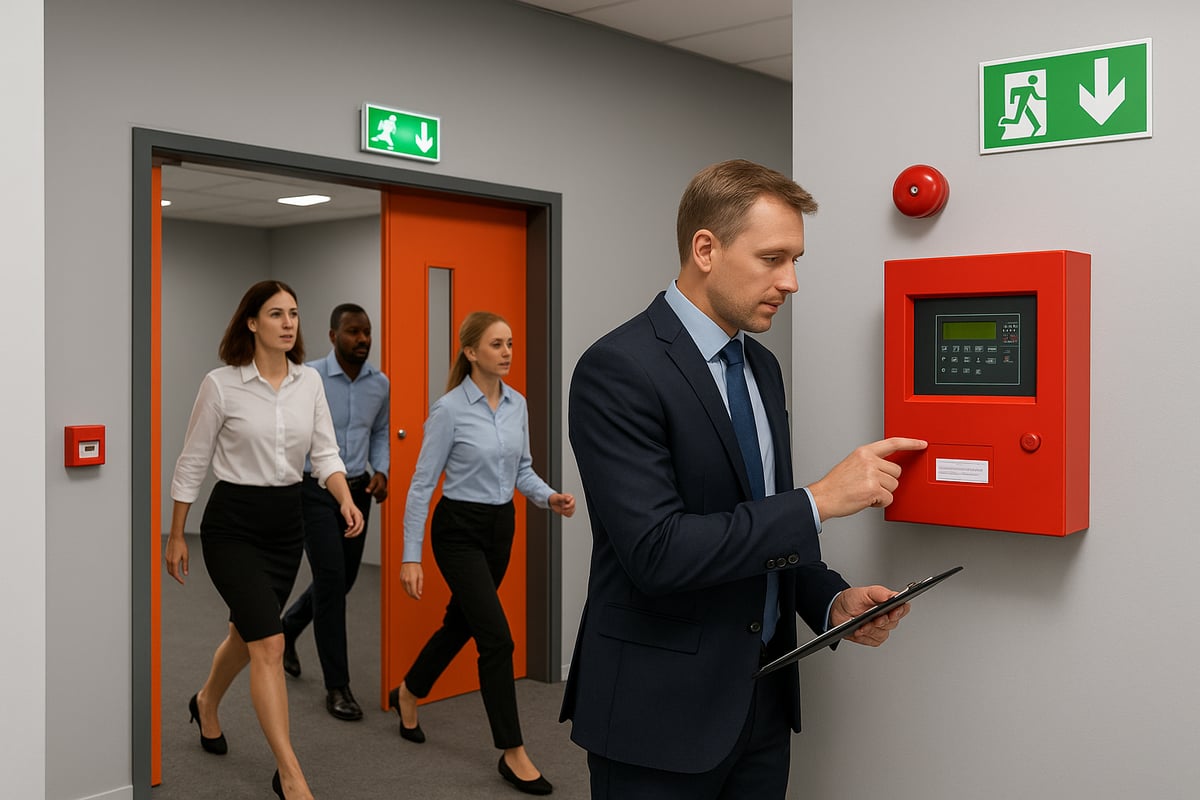
Training is essential to any fire security service, ensuring staff know what to do in an emergency. Legislation requires all employees to receive fire safety instruction, with fire wardens given additional responsibilities.
Fire drills must be held at least annually, with results recorded and actions taken to improve evacuation times. For example, properties conducting regular drills report faster, safer evacuations. Continuous training forms a core part of your fire security service strategy.
Maintaining and Testing Fire Equipment
Ongoing maintenance is not just best practice, it is a legal obligation within every fire security service. Alarms, extinguishers, and emergency lighting must be checked at prescribed intervals, with detailed logs kept for compliance.
A quarter of fire alarm failures stem from neglected maintenance. For guidance on extinguisher upkeep, see Fire extinguisher servicing essentials. Regular servicing guarantees your fire security service remains effective and legally compliant.
Insurance and Liability Considerations
Insurance providers increasingly scrutinise fire security service standards. Non-compliance can invalidate policies, deny claims, or raise premiums. Maintaining evidence of risk assessments, equipment testing, and staff training is essential.
A single missing maintenance record can mean a denied claim after an incident. By prioritising compliance within your fire security service, you protect both your assets and your organisation’s reputation.
Future Trends in Fire Security Services
The landscape of fire security service is changing rapidly as new technologies and challenges emerge. Property owners and managers must stay ahead by understanding these evolving trends. From smart integration and artificial intelligence to sustainability and data-driven management, the future of fire security service is about proactive, adaptive solutions.
Smart Building Integration and IoT
The integration of smart building technologies is revolutionising the fire security service industry. IoT-enabled sensors and devices now communicate seamlessly with central management systems, allowing for faster detection and response.
These connected systems can:
- Monitor temperature, smoke, and air quality in real time
- Alert building managers remotely to potential hazards
- Integrate with other safety and building management platforms
Predictive analytics powered by IoT can identify risks before they escalate, making fire security service more efficient and responsive.
AI and Machine Learning for Fire Detection
Artificial intelligence is set to transform how fire security service providers detect and manage incidents. AI-powered detectors can analyse sensor data to distinguish between real fires and false alarms, improving accuracy and reducing costly disruptions.
Machine learning algorithms learn from previous incidents and environmental patterns, enabling earlier warnings and smarter decision-making. According to industry experts, AI-based systems could reduce false alarms by up to 60%. For more on these innovations, see Fire Service Technology Trends for 2026.
AI advancements are making fire security service smarter and more reliable for every type of property.
Sustainable Fire Security Solutions
Sustainability is becoming a priority for every fire security service. New eco-friendly suppression agents are replacing traditional chemicals, reducing environmental impact without compromising safety.
Key developments include:
- Recyclable system components
- Solar-powered emergency lighting
- Green building certifications that require sustainable fire safety solutions
By prioritising sustainability, a fire security service not only protects assets but also supports broader environmental goals.
Evolving Threats and Adaptive Security
The modern fire security service must adapt to new threats such as battery storage systems and urban vertical farming. These environments introduce unique fire risks that require flexible, scalable protection.
Retrofit solutions allow older or heritage properties to benefit from modern fire safety without extensive renovations. Adaptive systems ensure that as buildings evolve, so too does their fire security service.
Staying responsive to emerging hazards is essential for long-term protection.
The Role of Data and Remote Monitoring
Centralised, cloud-based dashboards are now standard in advanced fire security service offerings. These platforms provide real-time oversight across multiple sites, making compliance reporting and incident analytics more accessible.
Property managers can:
- Track system status and maintenance schedules
- Receive instant alerts for any fire event
- Analyse trends to improve future safety strategies
Embracing these data-driven tools ensures fire security service remains proactive and efficient in the face of shifting risks.
Taking proactive steps to protect your property in 2026 is more important than ever, especially with the new risks and regulations we’ve discussed. By staying up to date on the latest fire security technologies and compliance requirements, you’re not only safeguarding your assets but also ensuring peace of mind for everyone who relies on your building. If you’d like expert guidance tailored to your unique needs, why not take advantage of a complimentary assessment? You can Get a Free Site Survey from Logic Fire and Security and discover how to keep your business safe, compliant, and resilient for the future.