

UK businesses face a rapidly evolving threat landscape as criminals and cyber attackers become more sophisticated in 2026. The consequences of overlooking security are severe, with theft, data breaches, and operational disruption leading to significant financial and reputational loss.
Advancements in technology, along with stricter regulations, are changing how companies approach business security monitoring. Organisations must adapt quickly to stay ahead and protect their assets, people, and information.
This guide provides actionable strategies to help you build robust, future-ready protection. We will walk you through understanding security risks, the latest monitoring systems, step-by-step implementation, compliance essentials, technology trends, and proven best practices.
Understanding Modern Business Security Risks in 2026
Business security monitoring is facing unprecedented challenges as criminal tactics evolve rapidly. In 2026, UK businesses must contend with a complex threat landscape shaped by both digital innovation and shifting work patterns. Understanding these risks is the first step towards building a resilient security strategy.
The Evolving Threat Landscape
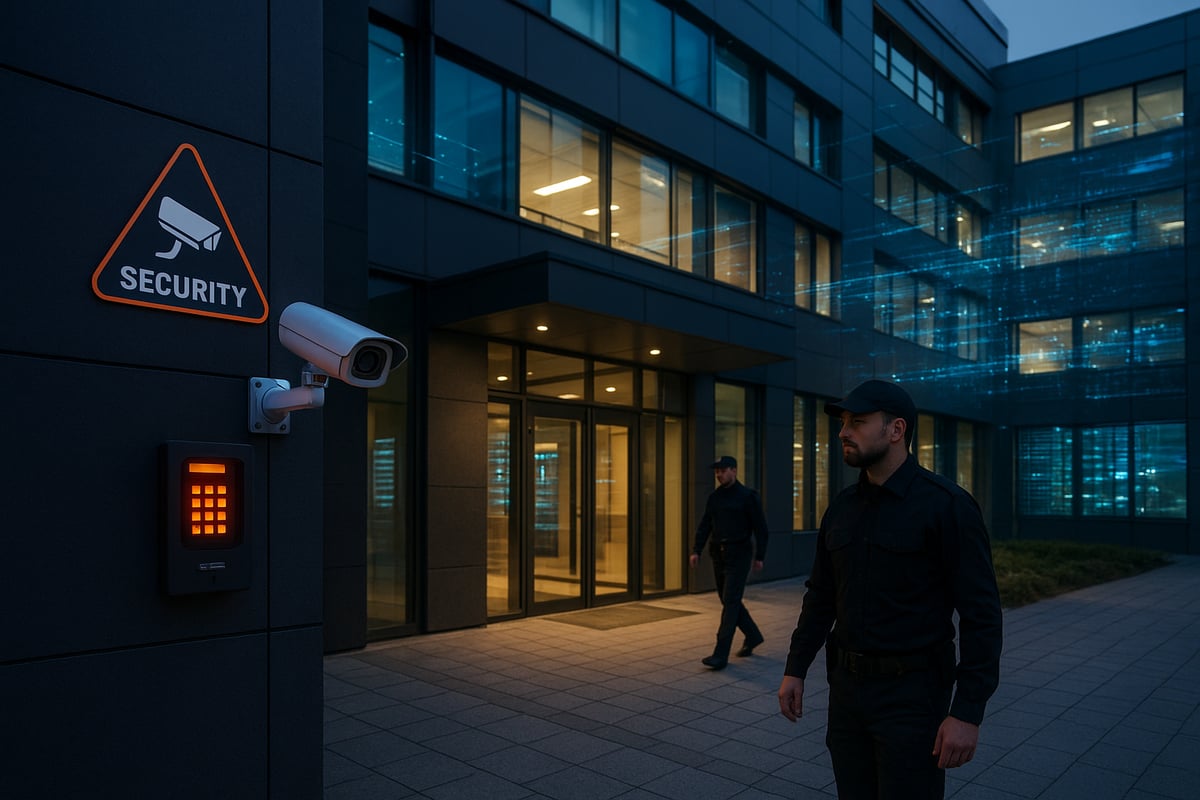
The threat landscape for business security monitoring in 2026 has become more complex and dynamic. There has been a surge in cyber-physical attacks, targeting both small and large enterprises. Organised retail crime, vandalism, and coordinated burglary attempts are increasingly common. Insider threats and sophisticated social engineering tactics have also risen, exploiting human vulnerabilities as much as technical gaps.
Remote and hybrid work models have introduced new physical security challenges, such as increased access points and less direct oversight. According to the Office for National Statistics, business-related crime has shown year-on-year increases since 2022, with theft and unauthorised access incidents on the rise. The Cyber Security Breaches Survey 2025 highlights that a significant proportion of UK businesses experienced at least one security breach in the past year, reflecting the urgent need for robust business security monitoring.
Common Security Incidents and Their Impact
The most frequent incidents affecting UK businesses include theft, burglary, and unauthorised access to premises. These events not only compromise assets but can also jeopardise employee and visitor safety. Workplace violence and aggressive behaviour have become serious concerns, particularly in sectors with public-facing roles.
The financial and reputational consequences of inadequate business security monitoring are severe. Data breaches can result in costly fines and long-term brand damage. For example, a manufacturing company suffered significant losses after an intruder exploited a poorly monitored side entrance, leading to equipment theft and production delays. Such incidents underline the necessity of continuous monitoring and rapid response.
| Incident Type | Potential Impact |
|---|---|
| Theft/Burglary | Asset loss, insurance claims |
| Unauthorised Access | Data breaches, safety threats |
| Workplace Violence | Legal action, staff wellbeing risks |
Regulatory and Insurance Pressures
The regulatory landscape is tightening, placing greater responsibility on businesses to implement effective security measures. Compliance with the General Data Protection Regulation (GDPR) is essential for handling surveillance data. The Health & Safety at Work Act mandates safe environments for all staff and visitors, making comprehensive business security monitoring a legal and ethical priority.
Insurance providers are also demanding proof of documented monitoring solutions before offering full coverage. Failure to meet these requirements can result in higher premiums or denied claims. As regulations evolve, businesses must stay informed and proactive, ensuring all monitoring systems are up to date and fully compliant. Regular audits and transparent reporting are now critical components of an effective security strategy.
Types of Business Security Monitoring Systems
Modern business security monitoring relies on a blend of advanced systems that work together to protect assets, people, and data. With threats becoming more complex in 2026, UK businesses must choose solutions that offer both deterrence and rapid response. Let us break down the main types you should consider.
CCTV Surveillance and Remote Monitoring
CCTV surveillance forms the backbone of most business security monitoring strategies. High-definition cameras enable both real-time and recorded monitoring, crucial for deterring crime and collecting evidence. In 2026, AI-powered cameras can automatically detect unusual activity, recognise faces, and alert security teams to potential threats.
Remote monitoring is now standard, allowing businesses to oversee their premises from anywhere. For a deeper look at how this works, explore Remote CCTV monitoring solutions. These systems help prevent incidents before they escalate and provide invaluable support during investigations.
Intruder Alarms and Perimeter Protection
Intruder alarms are a vital part of business security monitoring for both SMEs and larger enterprises. Integrated with monitoring centres, these systems offer features such as zone-specific detection, instant mobile alerts, and even automated lockdowns when triggered.
Perimeter protection technologies include motion sensors, door contacts, and break-glass detectors. Together, they create a robust barrier against unauthorised entry, ensuring that any breach is detected and addressed promptly.
Access Control Systems
Access control systems are essential for managing entry to sensitive areas within a business. Electronic keypads, biometric readers, and visitor management terminals all contribute to restricting unauthorised access and maintaining a clear audit trail.
This type of business security monitoring supports compliance by logging entries and exits, making it easier to investigate incidents or meet insurance requirements. Flexible systems can be scaled for multiple sites or adapted to changing organisational needs.
Fire and Environmental Monitoring
Protecting your business goes beyond preventing theft and intrusion. Integrated fire alarms and environmental sensors are critical for early detection of fire, smoke, or hazardous conditions. These systems are designed to comply with UK fire safety regulations, ensuring both legal compliance and staff safety.
Business security monitoring platforms now often include environmental monitoring, alerting you to temperature changes, flooding, or gas leaks. Rapid notifications enable swift action, reducing the risk of costly damage or operational downtime.
Integrated Security Platforms
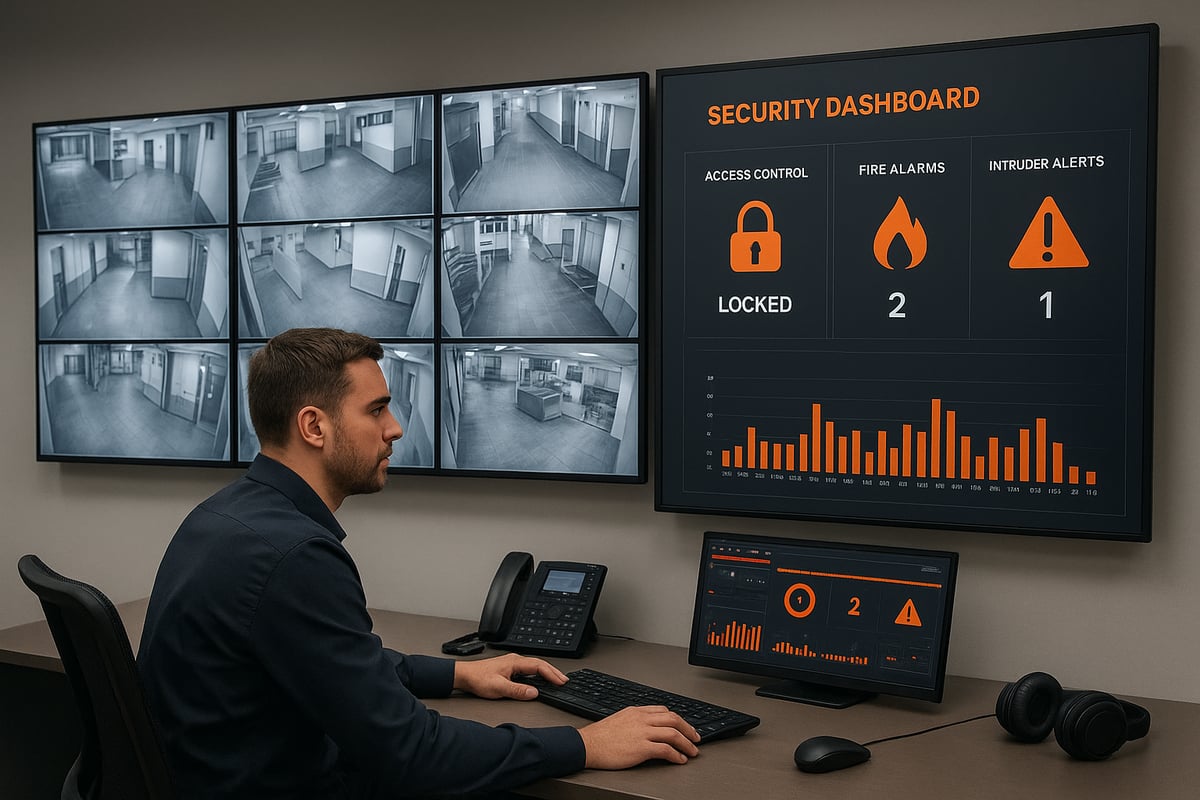
Many UK businesses now choose integrated security platforms, which combine CCTV, alarms, access control, and fire monitoring into a single dashboard. This unified approach streamlines day-to-day management and enables faster, coordinated responses to incidents.
Integrated business security monitoring systems offer centralised reporting, automated alerts, and customisable workflows. By consolidating all security data, decision-makers gain clearer insights and can adapt to evolving threats with confidence.
Step-by-Step Guide to Implementing a Security Monitoring Solution
Implementing an effective business security monitoring strategy requires a methodical, step-by-step approach. By following these six steps, companies can build robust protection that adapts to evolving threats and regulatory demands.

Step 1: Conduct a Comprehensive Risk Assessment
Begin by identifying all physical, digital, and operational vulnerabilities across your premises. Engage professional auditors or qualified consultants to perform a thorough site survey. This process should cover entry points, high-value assets, IT networks, and areas where staff or visitors may be at risk.
Use a combination of interviews, inspections, and data analysis to pinpoint blind spots. For instance, a retail chain might discover unmonitored storage areas or overlooked emergency exits. Accurate risk assessment lays the groundwork for tailored business security monitoring, ensuring that no critical threat is left unaddressed.
Step 2: Define Security Objectives and Compliance Needs
Next, clarify what you want your business security monitoring system to achieve. Is your primary concern asset protection, safeguarding staff, or meeting regulatory requirements? Setting clear objectives helps prioritise resources and select appropriate solutions.
Consider sector-specific regulations, such as GDPR for data handling or the Health & Safety at Work Act for physical safety. Document these requirements to ensure your system design meets both legal and insurance standards. Aligning monitoring with business goals increases resilience and reduces compliance risks.
Step 3: Design a Tailored Monitoring System
With risks and objectives defined, design a security system that blends CCTV, access control, alarms, and fire monitoring. Factor in the size of your premises, future growth, and the need for multi-site integration. For hospitality or retail, flexibility and guest experience are paramount.
Incorporate advanced features like AI-powered cameras or biometric access as needed. Integrating Intruder alarm monitoring for businesses strengthens your business security monitoring by providing real-time alerts and professional response, ensuring your premises are protected around the clock.
Step 4: Professional Installation and Integration
Select certified installers to ensure your system is compliant, reliable, and future-proof. Proper installation reduces the risk of technical failures and meets insurance requirements. Integration with existing IT infrastructure allows for seamless remote access and centralised management.
Test each component thoroughly before going live. Professional installers will also provide guidance on optimising system performance and ensuring that your business security monitoring operates smoothly from day one.
Step 5: Set Up Monitoring and Response Protocols
Decide whether to use 24/7 remote monitoring, in-house teams, or a hybrid model. Establish clear response plans for different incident types, such as intrusions, fire alarms, or unauthorised access. Automated alerts, escalation procedures, and direct links to emergency services are essential.
Create a detailed incident response guide and ensure staff understand their roles. Effective monitoring protocols minimise response times and reduce potential damage during security incidents.
Step 6: Staff Training and Ongoing Review
Provide comprehensive training for all employees on how to use the security system, respond to alerts, and follow emergency procedures. Schedule regular refresher sessions to keep staff updated on new features or policies.
Review and update your business security monitoring setup at least annually. Use incident data and feedback to identify areas for improvement, ensuring your protection evolves alongside emerging threats.
Leveraging Technology Trends for Business Security in 2026
Embracing cutting-edge technology is essential for effective business security monitoring in 2026. Rapid advances are transforming how UK organisations detect, prevent, and respond to threats. By integrating the latest innovations, businesses can stay ahead of criminals and regulatory demands.
Artificial Intelligence and Advanced Analytics
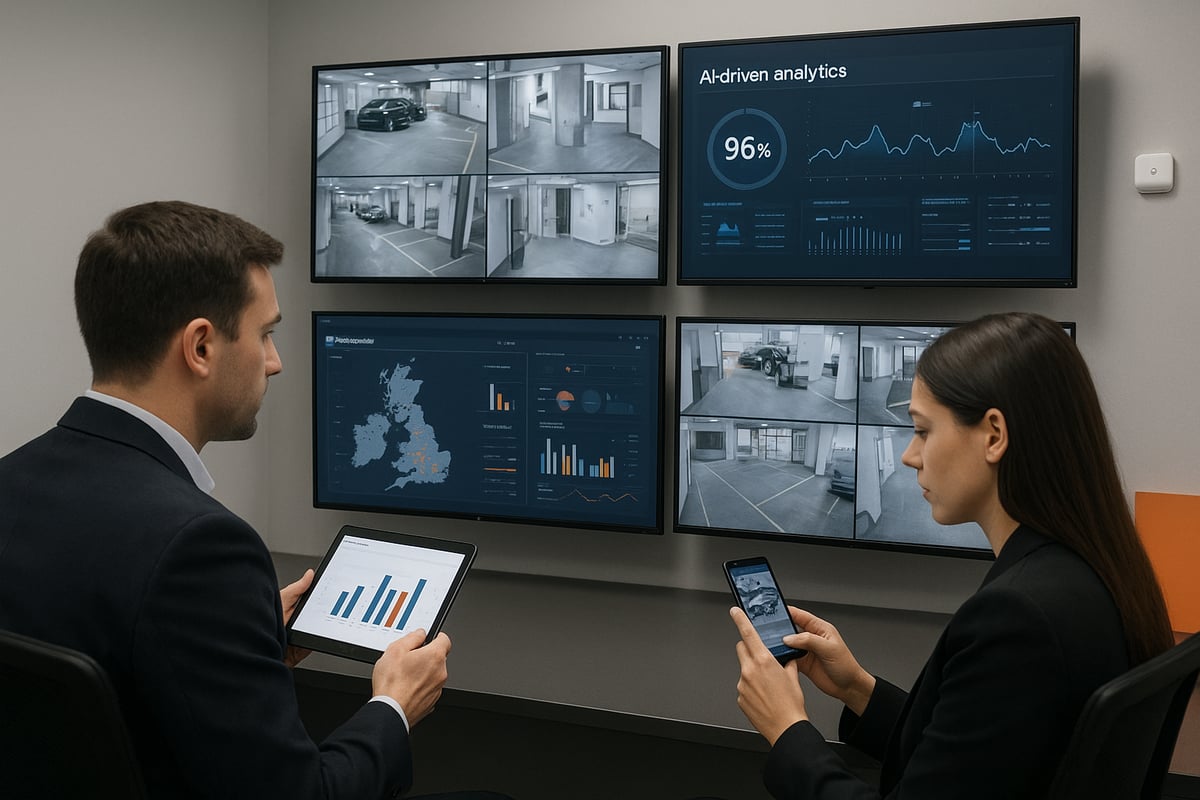
Artificial intelligence is revolutionising business security monitoring. AI-powered cameras can recognise faces, analyse behaviour, and detect suspicious patterns in real time. These systems help reduce false alarms, prioritise genuine threats, and support rapid decision-making.
For example, retailers use AI analytics to spot shoplifting attempts or identify repeat offenders. This level of automation makes business security monitoring more proactive and less reliant on manual oversight. Advanced analytics also enable security teams to predict incidents before they escalate.
Cloud-Based Monitoring and Mobile Access
Cloud-based solutions are reshaping business security monitoring by enabling remote access to surveillance footage and system controls. With secure cloud storage, businesses can safeguard critical evidence off-site and ensure continuity during physical disruptions.
Mobile access allows managers to monitor sites in real time, receive alerts, and respond from anywhere. This flexibility is vital for multi-site operations and hybrid workplaces. Cloud platforms also simplify updates, making business security monitoring more adaptable to changing needs.
IoT and Smart Sensors
The Internet of Things (IoT) brings a new dimension to business security monitoring. Smart sensors detect fire, temperature changes, or unauthorised entry, instantly communicating with centralised systems.
These devices generate real-time alerts, allowing for swift action to minimise damage. IoT integration enhances visibility across all areas of a facility, supporting compliance and risk management. By automating environmental and intrusion detection, business security monitoring becomes more comprehensive and responsive.
Cybersecurity and Physical Security Convergence
As security systems connect to corporate networks, cybersecurity becomes inseparable from physical protection. Hackers increasingly target surveillance infrastructure, exploiting vulnerabilities in poorly secured devices.
Best practices include regular software updates, network segmentation, and strong authentication protocols. Staying informed about the threat landscape is crucial; the 2025 UK Cyber Threat Report highlights the persistent risk of cyberattacks facing UK organisations. Combining digital and physical defences ensures business security monitoring remains robust in the face of evolving threats.
Future-Proofing Your Security Investment
To maintain resilience, businesses must choose scalable, upgradable systems that can adapt to new risks and compliance requirements. Investing in modular technology allows for seamless integration of future innovations.
Staying updated on regulatory changes and emerging threats is key. Regular reviews and upgrades ensure your business security monitoring solution continues to deliver effective, long-term protection.
Best Practices for Ongoing Security Monitoring and Compliance
Ongoing vigilance is essential to ensure business security monitoring remains effective and compliant with evolving UK standards. Adopting a proactive approach to maintenance, response, staff education, and data handling is critical for long-term protection and resilience.
Regular System Maintenance and Testing
Consistent maintenance is the foundation of reliable business security monitoring. Schedule routine inspections for all components, including CCTV, access control, and alarm systems.
Partnering with a provider offering fire alarm monitoring services ensures your fire detection systems are tested and compliant. This approach also helps meet insurance requirements and reduces false alarms.
Keep detailed records of all maintenance activities and ensure prompt resolution of any identified faults.
Incident Response and Reporting
Develop clear protocols for responding to incidents detected by your business security monitoring solution. Assign roles for initial response, escalation, and communication with emergency services.
Document every incident, even minor ones, as comprehensive records support insurance claims and future investigations. Use monitoring data to identify trends, helping you refine your response procedures over time.
Staff Awareness and Training
Human error remains a significant risk in business security monitoring. Conduct regular staff training sessions on system usage, security protocols, and emergency procedures.
- Organise annual security drills
- Provide refresher courses for new technology
- Encourage a security-conscious workplace culture
Well-trained staff are your first line of defence against both internal and external threats.
Data Protection and Privacy Compliance
Business security monitoring generates sensitive data, including video footage and access logs. Ensure all data is handled in line with GDPR and UK privacy laws.
Implement secure storage, strict access controls, and clear data retention policies. Regularly review who has access to sensitive information and provide data protection training to all staff.
Continuous Improvement and Auditing
Security threats and regulations are constantly evolving. Schedule periodic audits of your business security monitoring systems to identify gaps and opportunities for improvement.
Leverage monitoring data to adjust security measures and stay ahead of emerging risks. Staying informed about sector trends, such as those highlighted in the Cyber Security Sectoral Analysis 2025, ensures your approach remains robust and future-ready.
Frequently Asked Questions about Business Security Monitoring in 2026
Curious about business security monitoring in 2026? Here are answers to the most common questions UK businesses ask:
What are the legal requirements for business security monitoring in the UK?
Businesses must comply with GDPR, fire safety laws, and, for some, the Terrorism (Protection of Premises) Act 2025.
How much does a comprehensive security monitoring solution cost?
Costs vary widely based on system complexity, size, and features.
Can security systems be integrated with existing IT infrastructure?
Yes, most modern solutions allow seamless integration and central management.
What are the most common mistakes businesses make with security monitoring?
Overlooking regular maintenance and neglecting staff training are frequent errors.
How often should systems be reviewed and updated?
Annual reviews and updates are essential to address evolving threats and regulatory changes.
As you look ahead to securing your business in 2026, it’s clear that a proactive approach to monitoring is essential for staying ahead of evolving threats and meeting compliance demands. By understanding your unique risks and implementing integrated solutions, you can protect your people, assets, and reputation with confidence. If you’re ready to take the next step and want practical advice tailored to your site, why not let us help you assess your needs in person? You can start with a no obligation Get a Free Site Survey—it’s the first move towards a safer, future ready business.