

Fire safety is under more scrutiny than ever in 2026, following a series of high-profile incidents and sweeping changes to UK fire safety laws. The need for a robust fire risk assessment is no longer just a suggestion but a critical requirement for every business and property manager.
This guide offers a clear, actionable approach to fire risk assessment. You will find step-by-step instructions to ensure your premises meet legal standards, protect lives, and avoid costly penalties.
In the following sections, we will cover:
- Legal requirements
- Preparation and information gathering
- Risk identification and evaluation
- Action planning and implementation
- Documentation and ongoing review
Stay informed, compliant, and confident by following these essential steps for fire safety in 2026.
Understanding Fire Risk Assessment and Legal Obligations
The importance of a robust fire risk assessment cannot be overstated for 2026. With evolving fire safety standards and increased scrutiny following recent incidents, every business and property manager must understand their legal and practical duties.
What is a Fire Risk Assessment?
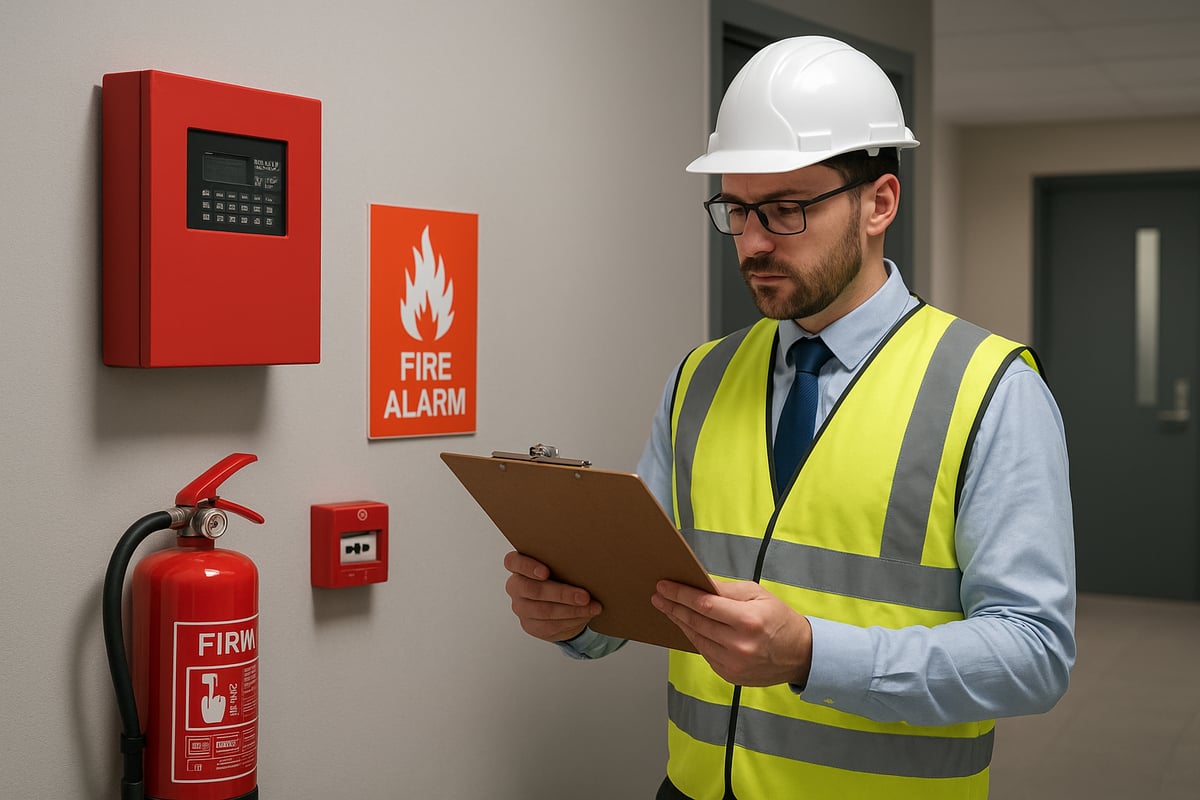
A fire risk assessment is a systematic evaluation of a building to identify potential fire hazards, people at risk, and the effectiveness of current safety measures. This process is essential for highlighting sources of ignition, fuel, and oxygen, as well as considering those who may be vulnerable, such as employees, residents, or visitors.
For example, in a commercial kitchen, the assessment would focus on cooking equipment and grease build-up, while in a residential block, attention would be given to communal areas and escape routes. Public sector buildings, such as schools or hospitals, require tailored approaches due to varied occupancy.
Ultimately, a fire risk assessment is both a legal requirement and a moral responsibility, ensuring the safety of all occupants and compliance with UK regulations.
UK Fire Safety Legislation for 2026
The UK’s fire safety framework is primarily governed by the Regulatory Reform (Fire Safety) Order 2005 and the Fire Safety Act 2021. New amendments expected in 2026 will further strengthen requirements, particularly around high-rise and complex buildings.
Responsibility for compliance rests with the “responsible person” which includes employers, landlords, building owners, and managing agents. They must ensure regular, suitable, and sufficient fire risk assessments are carried out and kept up to date.
Penalties for failing to comply are severe, including fines, prosecution, or even business closure. For example, the London Fire Brigade and South Wales Fire and Rescue Service regularly prosecute businesses for inadequate assessments.
To ensure compliance and expert support, organisations may benefit from professional fire risk assessment services tailored to their specific premises.
Who Needs a Fire Risk Assessment?
All non-domestic premises in the UK must complete a fire risk assessment, including offices, shops, warehouses, communal areas in residential buildings, and public venues. Special cases include shared buildings, houses in multiple occupation (HMOs), care homes, and high-rise properties, each carrying unique risks and regulatory expectations.
Statistics show that over 90% of UK businesses are legally required to undertake a fire risk assessment. Exemptions are rare and typically limited to private single-occupancy dwellings.
Enforcement actions are not uncommon. For instance, a retail unit in South Wales was forced to close temporarily after failing to address blocked fire exits identified during an inspection. This underscores the critical need for every responsible person to understand and comply with fire safety laws.
In summary, whether you manage a small office or a large residential complex, a thorough fire risk assessment is essential for legal compliance, occupant safety, and peace of mind.
Step 1: Preparation and Gathering Information
Effective preparation forms the foundation for a successful fire risk assessment. Before identifying hazards or planning improvements, gathering the right information ensures accuracy, compliance, and safety for everyone involved.

Appointing a Competent Person
Appointing a competent person is a legal requirement for every fire risk assessment. This individual must possess the right blend of training, knowledge, and practical experience to assess fire hazards and recommend appropriate controls.
Competence can be demonstrated through formal qualifications, industry certifications such as BAFE or IFEDA, and a proven track record in fire safety. Businesses may choose to train an in-house specialist or engage an external professional, depending on the complexity of the premises.
It is especially critical for high-risk environments, such as care homes, to select assessors with specific expertise. If you are responsible for a care setting, refer to this fire risk assessment for care homes resource for tailored guidance. Failing to appoint a qualified assessor can result in penalties, as illustrated by cases where businesses faced fines after audits revealed assessments were conducted by untrained staff.
Reviewing Building Layouts and Occupancy
A thorough review of building layouts and occupancy is essential to the fire risk assessment process. Start by obtaining up-to-date architectural drawings, fire alarm system schematics, and accurate occupancy data for each area.
Pay special attention to high-risk zones, including kitchens, plant rooms, storage areas, and escape routes. These spaces often contain ignition sources or obstacles that can increase fire risk.
Remember to consider vulnerable occupants, such as children, elderly individuals, or people with disabilities. The London Fire Brigade recommends extra diligence in complex or multi-use buildings, where evacuation may be more challenging and layouts can change frequently.
Collecting Historical Data and Maintenance Records
Analysing historical data and maintenance records is a powerful way to prevent repeat incidents and strengthen your fire risk assessment. Gather all available incident logs, records of fire alarm activations, previous risk assessments, and maintenance reports for fire safety systems.
Reviewing these documents can reveal patterns, such as recurring faults or neglected safety equipment. Statistics indicate that 30% of fire incidents occur in areas with a poor maintenance history, highlighting the importance of this step.
A well-documented case involved a business that overlooked a faulty fire alarm sensor, which had been flagged in maintenance records. This oversight led to a delayed evacuation and significant property damage, underscoring the value of learning from the past.
Consulting Staff and Stakeholders
Engaging staff, tenants, and contractors is vital for a complete fire risk assessment. Their daily experience provides insights that might not be obvious from documents or plans alone.
Invite feedback on previous fire drills, near-misses, and evacuation experiences. A collaborative approach helps uncover hidden hazards and ensures everyone feels responsible for fire safety.
In one instance, staff input identified a storage cupboard blocking an escape route, which had been overlooked during earlier assessments. Including stakeholder perspectives not only enhances the quality of your assessment but also fosters a proactive safety culture.
Step 2: Identifying Fire Hazards and People at Risk
Understanding which hazards and individuals are most at risk is a crucial stage in any fire risk assessment. By methodically identifying these factors, you lay the foundation for effective protection and compliance.
Spotting Fire Hazards
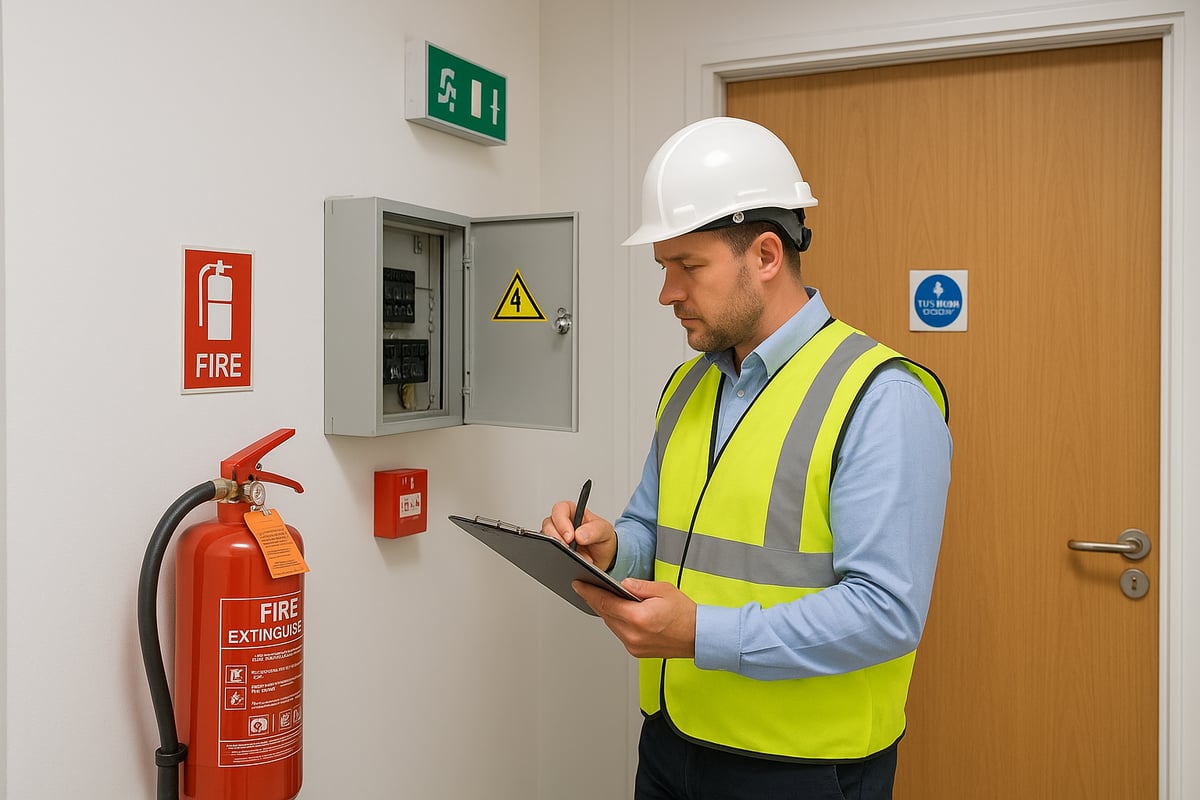
A thorough fire risk assessment begins by pinpointing potential sources of ignition and fuel. Common hazards include faulty electrical equipment, overloaded sockets, portable heaters, and kitchen appliances. Flammable materials like paper, cleaning chemicals, and packaging also pose significant risks in offices, warehouses, and hospitality venues.
Less obvious dangers can hide in cluttered corridors, blocked fire doors, or storage rooms where escape routes are compromised. Lithium-ion batteries, especially in charging stations, are increasingly cited by South Wales Fire and Rescue Service as a hazard, as are commercial cooking areas. Regularly inspecting these areas ensures risks are not overlooked during the fire risk assessment process.
Identifying People at Risk
The next step in your fire risk assessment is to consider everyone who might be affected. This includes employees, visitors, contractors, and residents. Special care must be taken in high-rise buildings, care homes, and public venues, where vulnerable individuals such as children, the elderly, or those with disabilities may be present.
Data shows that fires in care settings carry a 50% higher risk of injury to vulnerable occupants. Imagine a scenario where an evacuation was delayed because a fire risk assessment failed to account for a resident needing assistance. Identifying these groups ensures every person’s safety is prioritised.
Assessing the Building’s Fire Protection Measures
Evaluating your current fire protection measures is vital to a successful fire risk assessment. Review the condition and suitability of fire alarms, extinguishers, emergency lighting, clear signage, and fire doors. All systems should be tested regularly and maintained to the highest standard.
For additional guidance on selecting and maintaining effective alarm systems, see the fire alarm system guidance. There have been incidents where failed alarms led to ineffective evacuations, highlighting the need for robust, well-maintained fire detection and warning systems.
Evaluating Escape Routes and Assembly Points
Clear, accessible escape routes and well-defined assembly points are the backbone of any fire risk assessment. Check that all exits are free from obstruction and that signage is visible and easy to understand. Assembly points should be located at a safe distance and known to all occupants.
Blocked or poorly marked exits can cause confusion and delay during an emergency. London Fire Brigade recommends regular walkthroughs and updates to evacuation plans to ensure everyone can leave safely and efficiently when needed.
Step 3: Evaluating, Recording, and Prioritising Risks
When you reach this stage of your fire risk assessment, it is crucial to systematically evaluate each identified risk. This process ensures that your business or property addresses the right hazards with appropriate urgency, supporting both compliance and effective risk management.
Evaluating Likelihood and Consequence
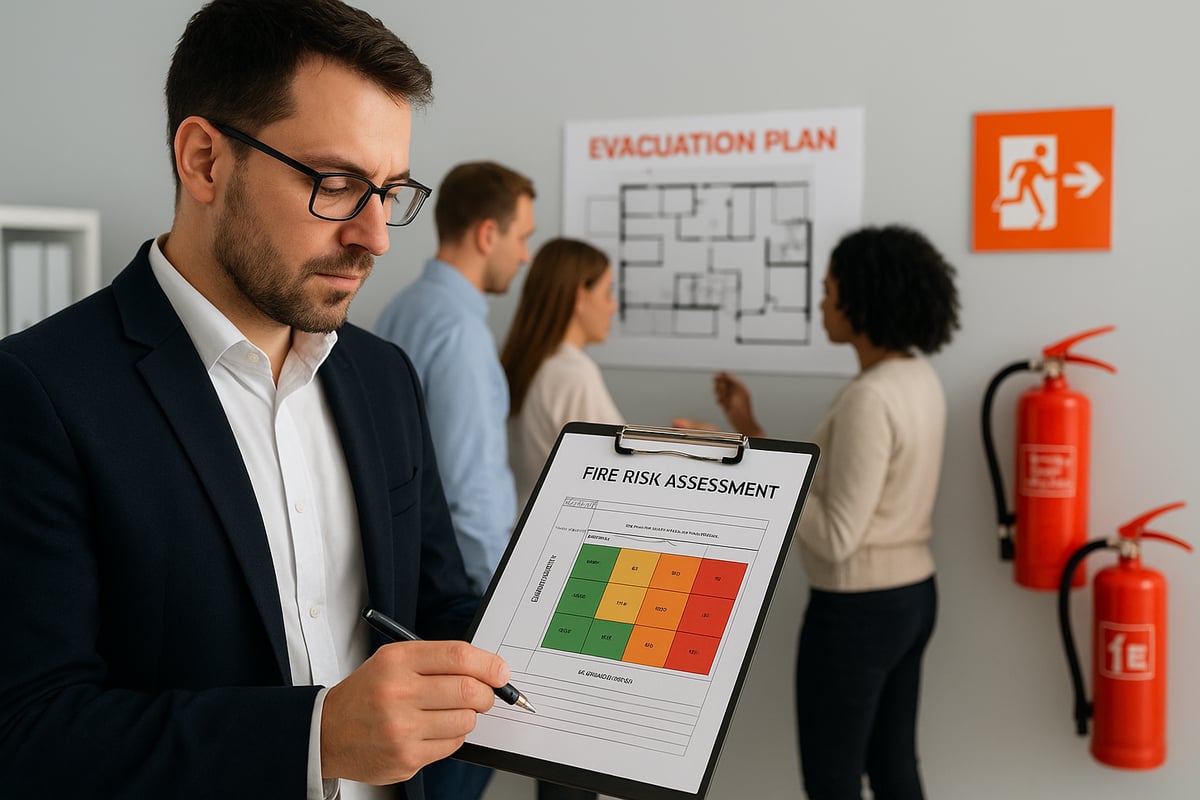
Begin by assessing the probability of each hazard causing a fire and the potential consequences if it does occur. A risk matrix is a practical tool for this step, allowing you to categorise risks as low, medium, or high:
| Likelihood | Consequence | Risk Level |
|---|---|---|
| Unlikely | Minor | Low |
| Possible | Moderate | Medium |
| Likely | Severe | High |
For example, a commercial kitchen with multiple heat sources and oils is a higher risk environment compared to a standard office. According to fire prevention and protection statistics 2025, fires originating in kitchens account for about 20% of workplace incidents. By applying this structured approach, your fire risk assessment ensures that both likelihood and consequence are fully considered.
Recording Significant Findings
It is a legal requirement for businesses with five or more employees to keep written records of their fire risk assessment. Document all significant hazards, people at risk, and the control measures in place or planned.
Consider using a checklist or digital template for clarity. Your records should include:
- A summary of identified risks
- Details of vulnerable groups
- Existing and proposed safety measures
Clear documentation makes audits and reviews more manageable and demonstrates compliance if inspected by authorities.
Prioritising Actions
Once risks are evaluated and recorded, rank them by severity and urgency. Immediate actions, such as clearing blocked exits or removing flammable waste, should be addressed first. Longer-term improvements, like upgrading alarm systems, can be scheduled accordingly.
Effective prioritisation in your fire risk assessment can mean the difference between preventing an incident and facing significant disruption. For instance, a business that promptly removed stored combustibles from escape routes avoided a potential fire hazard, ensuring uninterrupted operations.
Communicating Findings to Stakeholders
Share your assessment results with all relevant parties, including staff, management, and tenants. Use clear, accessible language and offer practical recommendations.
Transparency supports a positive safety culture, encouraging everyone to engage with the fire risk assessment process and contribute to ongoing improvements.
Step 4: Implementing Control Measures and Action Plans
Taking effective action is the heart of any fire risk assessment. Once hazards are identified and prioritised, robust control measures must be put in place. This step transforms your assessment into real safety improvements, reducing risk and ensuring compliance.
Reducing Fire Hazards
A core element of every fire risk assessment is tackling fire hazards head on. Begin by removing ignition sources and flammable materials wherever possible. Improve housekeeping by ensuring regular waste removal, especially in storage or kitchen areas.
- Clear escape routes of clutter
- Store flammable liquids safely
- Upgrade electrical wiring and faulty appliances
These steps lower the chance of fire starting. In fact, regular housekeeping can reduce fire risk by up to 40 percent in commercial environments. Prioritising these actions creates a safer workplace for everyone.
Enhancing Fire Detection and Protection Systems
Your fire risk assessment should review the adequacy of alarms, extinguishers, and emergency lighting. Install or upgrade systems to suit the size and occupancy of your building. Maintenance is vital, as neglected equipment may fail in an emergency.
For detailed guidance, refer to fire extinguisher servicing advice to ensure extinguishers are always ready for use. Many incidents have been contained due to quick action and working suppression systems. Regular checks and servicing are essential for compliance and safety.
Staff Training and Fire Drills
People are central to fire safety. Conduct regular fire safety training for all staff, including new joiners. Schedule fire drills at least twice a year and document participation and outcomes.
- Designate fire wardens
- Review evacuation procedures
- Encourage feedback after each drill
Businesses that invest in training see evacuation times improve by up to 60 percent. Well-prepared teams respond confidently and calmly during real incidents.
Developing and Testing Emergency Plans
A comprehensive emergency plan is a cornerstone of fire risk assessment. Create clear, detailed evacuation and response plans, assigning roles such as fire wardens and assembly coordinators.
Regularly test these plans through drills, updating them after any building changes or lessons learned. Use resources from the South Wales Fire and Rescue Service to access templates and best practice guidance. This ongoing process ensures your plan remains effective as circumstances evolve.
Fire Safety Systems by Logic Fire and Security
For organisations seeking expert support, Logic Fire and Security offers comprehensive fire risk assessments, advanced detection systems, and ongoing maintenance across the UK. Their certified professionals ensure compliance with all legislation, tailored to your premises’ needs. Trusted by blue-chip companies and public agencies, Logic Fire and Security provides end-to-end solutions for fire safety and peace of mind.
Step 5: Documentation, Review, and Continuous Improvement
Maintaining robust documentation, regular reviews, and a proactive approach to continuous improvement are the pillars of an effective fire risk assessment. These steps help businesses stay compliant, learn from real incidents, and adapt to new legal requirements with confidence.
Maintaining Accurate Records
Accurate record-keeping is essential for every fire risk assessment. All findings, actions taken, maintenance checks, and staff training must be logged in detail. Store these documents securely, either digitally or in a dedicated file, and ensure they are accessible for inspections or audits.
For compliance, businesses should retain records for at least five years. Good documentation can prove invaluable if a fire incident or regulatory audit occurs. For example, after a small fire in a retail unit, comprehensive records enabled authorities to quickly verify compliance and identify the cause, preventing further disruption.
A simple table can help summarise essential records to maintain:
| Record Type | Minimum Retention Period | Purpose |
|---|---|---|
| Fire risk assessment | 5 years | Compliance, review |
| Training logs | 5 years | Staff competency |
| Maintenance reports | 5 years | System reliability |
| Incident logs | 5 years | Learning, reporting |
Scheduling Regular Reviews and Updates
A fire risk assessment is not a one-off task. Schedule formal reviews at least annually or whenever significant changes occur, such as renovations, new fire systems, or after any fire-related incidents.
Action plans and control measures must be updated to reflect new risks or changes in building use. The London Fire Brigade advises that regular reviews are vital to ensure your assessment remains accurate and effective. Remember, as buildings evolve, so do their risks, so ongoing vigilance is key.
Learning from Incidents and Near Misses
Every fire, false alarm, or near-miss is an opportunity to improve safety. Investigate all such events to identify root causes and implement preventive measures. Sharing lessons with staff and stakeholders fosters a culture of transparency and learning.
For instance, after an evacuation was delayed by blocked exits, one company updated its procedures and increased checks, significantly improving its fire safety record. Incident analysis is crucial for meaningful change.
Staying Informed on Legislation and Best Practice
Fire safety regulations are frequently updated, so staying current is essential for compliance. Regularly monitor changes to fire safety laws and best practice guidance. Attend training, subscribe to bulletins, and consult resources from authorities such as the South Wales Fire and Rescue Service.
For the latest on legislative changes, refer to the UK fire safety regulation updates 2025, which outlines key shifts affecting fire risk assessment, including new standards for building materials and safety protocols. Additionally, reviewing the Approved Document B fire safety updates ensures your practices align with current expectations. Ongoing education is not just about compliance, but about leading on safety and protecting everyone on your premises.
Taking proactive steps to safeguard your premises and people isn’t just a matter of compliance—it’s about genuine peace of mind. As you put these essential fire risk assessment measures into practice and look ahead to 2026’s evolving regulations, remember you don’t have to navigate the process alone. At Logic Fire and Security, we understand the complexities and pressures you face, and we’re committed to making fire safety straightforward and effective for your unique setting. If you’re ready to ensure your site is protected and compliant, why not Get a Free Site Survey? Let’s work together to keep your business safe and secure.