

Fire safety is never optional. In emergencies, properly maintained fire doors can mean the difference between safety and disaster, safeguarding both lives and valuable property. As awareness of building safety grows across the UK, fire door inspection services have become crucial in meeting strict new compliance standards.
With evolving regulations and increased scrutiny, ignoring fire door inspection services can lead to severe legal penalties, reputational harm, and heightened liability. This guide is here to help you navigate the latest requirements, break down the inspection process, explain key updates, and show you how to select the right provider for your needs. Read on for a clear overview of regulations, step-by-step inspections, expert tips on choosing a provider, the benefits of regular checks, and the future of fire door compliance.
Understanding Fire Door Regulations in 2026
Keeping up with fire door inspection services is more important than ever as the UK’s regulatory landscape continues to evolve. The tragic Grenfell Tower fire was a turning point, leading to significant updates in fire safety legislation and stricter compliance expectations for all building stakeholders.
The Evolution of Fire Door Legislation
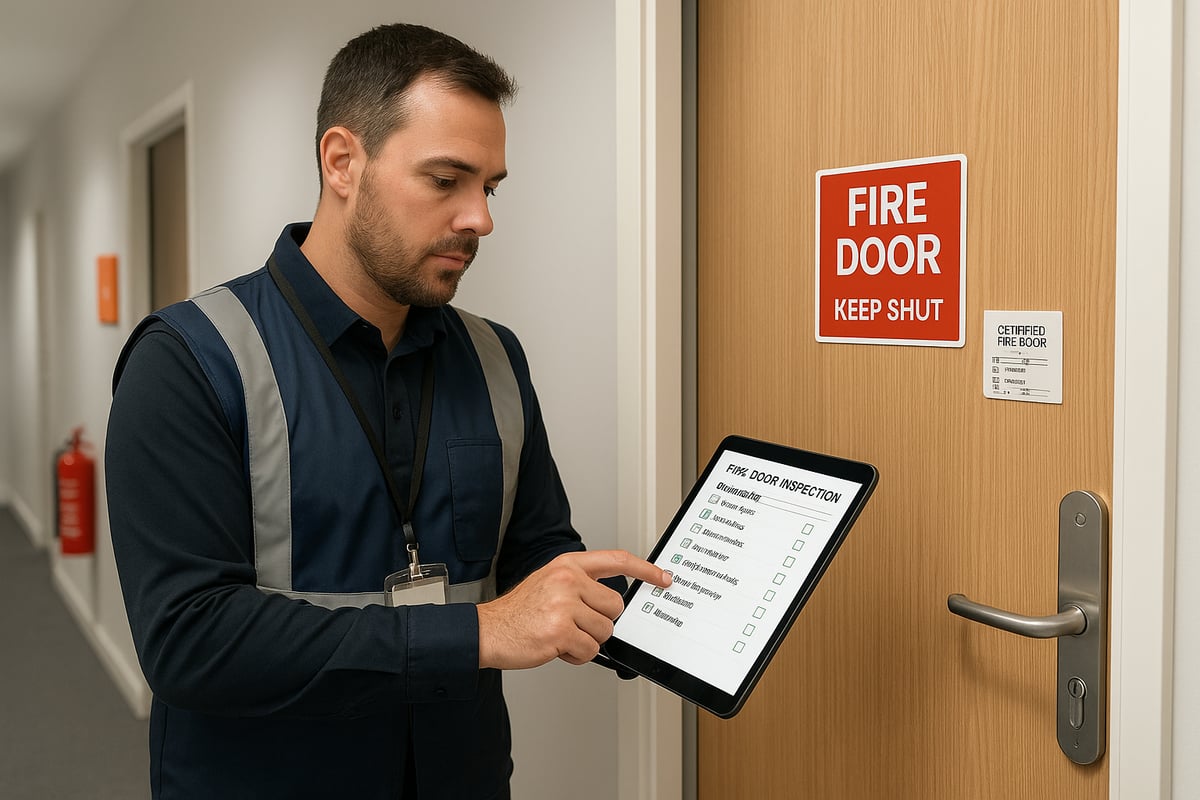
Fire safety laws in the UK have undergone major transformation since Grenfell. The Fire Safety (England) Regulations 2022 introduced new requirements for routine fire door inspection services, especially in multi-occupancy residential buildings.
By 2026, these regulations have expanded to cover more property types and introduced clearer deadlines for compliance. Both residential and commercial buildings must now meet stricter standards, with the role of Responsible Persons clearly defined. Duty holders are required to act on inspection findings promptly to avoid repeat failures.
High-profile compliance failures, such as those seen in large housing associations, have highlighted the risks of neglecting fire door regulations. These cases show that even minor lapses can lead to legal action and significant reputational harm.
Key Legal Requirements for Fire Door Inspections
Fire door inspection services must adhere to statutory inspection frequencies. For example, flat entrance doors in multi-occupied residential buildings require annual inspections, while communal doors need quarterly checks. Accurate documentation and robust record-keeping are essential, as authorities often request these records during audits or investigations.
A compliant fire door must be constructed from certified materials, installed correctly, and maintained to manufacturer specifications. Routine maintenance ensures that seals, hinges, and closers remain in good condition. The consequences of non-compliance can be severe, including fines, prosecution, and even closure notices for serious breaches.
Third-party certification and the use of accredited inspectors are now expected best practices. In the last 12 months, over 200,000 fire doors have been inspected in England, reflecting a growing focus on safety and accountability. For a full breakdown of the latest statutory obligations and inspection guidance, refer to the Fire Safety (England) Regulations 2022: fire doors.
Who is Responsible for Compliance?
Responsibility for fire door inspection services is shared among landlords, property owners, building managers, and managing agents. In multi-occupancy buildings or commercial premises, each party must fulfil their legal duties and coordinate efforts to ensure that all fire doors are regularly inspected and maintained.
Resident engagement is also crucial. Clear communication about inspection schedules and results helps build trust and ensures access for inspectors. For example, one property manager achieved 100% compliance across a large portfolio by using targeted resident communications and digital scheduling tools. This proactive approach not only meets legal requirements, but also demonstrates a strong commitment to safety.
The Fire Door Inspection Process: Step-by-Step
Understanding the fire door inspection services process is crucial for maintaining compliance and safety in any property. A well-structured approach ensures every inspection is thorough and meets legal requirements. Let us walk through each phase, highlighting best practices and key considerations.
Pre-Inspection Preparation
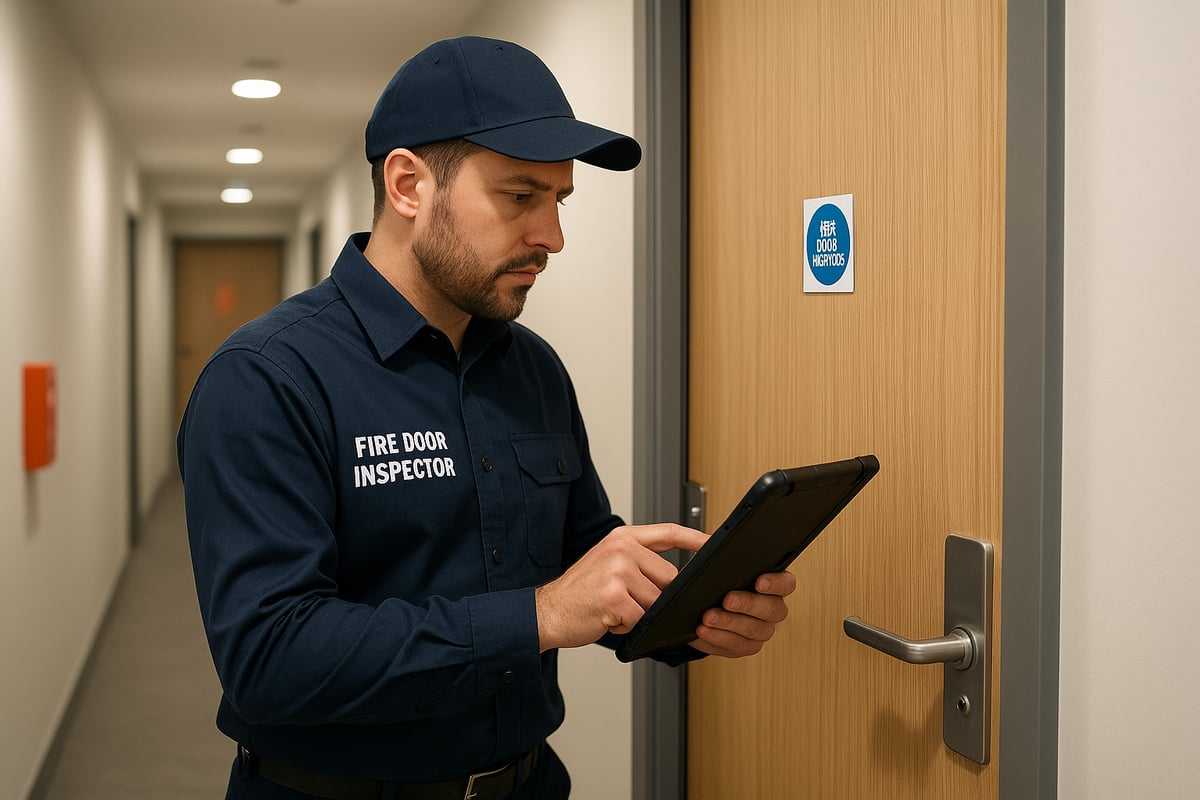
Preparation is the foundation of effective fire door inspection services. Inspectors begin by scheduling visits and coordinating access with residents or tenants to minimise disruption. Reviewing building plans and past inspection reports helps identify high-risk areas and previous issues.
Essential tools and checklists are assembled before arrival, ensuring nothing is overlooked. Stakeholders, including property managers and residents, are notified in advance to facilitate smooth access. Many companies now use digital scheduling platforms to streamline coordination and provide real-time updates.
A well-organised start saves time and sets the tone for a professional inspection process. Consistent preparation is vital to the success of fire door inspection services.
What Inspectors Look For
During fire door inspection services, inspectors follow a detailed checklist to assess every aspect of each fire door. They examine the integrity of the door leaf and frame, ensuring there are no cracks, warping, or defects.
Key components such as seals, hinges, and closers are checked for certification, correct installation, and wear. Inspectors measure gaps around the door, inspect glazing and hardware, and look for signs of unauthorised alterations or damage. Photographic records and digital evidence are gathered to support findings.
For more detailed insights into the inspection process, see this Fire door inspection overview. Comprehensive checks protect both people and property.
On-the-Spot Repairs and Immediate Actions
A unique advantage of professional fire door inspection services is the ability to address minor defects immediately. Inspectors can adjust door closers, replace worn seals, or fix loose hardware while on site.
Quick fixes like these help prevent small issues from becoming major safety risks. By resolving minor problems during the inspection, the need for follow-up visits is reduced, saving both time and money.
Immediate action demonstrates a proactive approach and ensures that fire doors remain compliant and fully operational at all times.
Reporting and Documentation
Accurate documentation is a core component of fire door inspection services. After the inspection, inspectors generate clear, compliant reports that detail findings, highlight risks, and recommend remedial actions.
Reports are stored securely and shared promptly with stakeholders, providing a transparent audit trail. Digital reporting tools offer instant access, searchable archives, and photographic evidence for each door.
Effective documentation not only proves compliance but also supports ongoing maintenance and future inspections, making the entire process more efficient and reliable.
Choosing a Fire Door Inspection Service Provider
Selecting the right partner for fire door inspection services is critical for compliance, safety, and peace of mind. With increasing regulatory scrutiny in the UK, your choice of provider can make the difference between robust protection and avoidable risk.
What to Look for in an Inspection Company
When evaluating fire door inspection services, start by checking the company’s credentials. Look for accreditations such as BAFE, IFEDA, or RICS, which demonstrate up-to-date expertise and compliance with industry standards.
Experience is vital. Providers with a track record in both residential and commercial environments understand the unique challenges of each. Consider whether the company offers national coverage or focuses on local areas, and assess their ability to scale services as your needs grow.
Transparent pricing models, such as flat fees with no hidden costs, make budgeting straightforward. Consistency is also key—companies using in-house teams often deliver more reliable results than those relying on subcontractors.
For a detailed overview of inspection and maintenance standards, consult this Fire Door Inspection & Maintenance Guide, which outlines key compliance points to look for in any provider.
Questions to Ask Potential Providers
Before committing to fire door inspection services, ask targeted questions to assess their suitability:
- How do you document and evidence compliance for our records?
- What is your process for urgent repairs and follow-up?
- Can you manage large or complex property portfolios?
- Are minor repairs included during inspections?
- How do you ensure your team stays current with regulation changes?
A reputable provider should offer digital reports, photographic evidence, and clear communication throughout the process. For example, some companies now provide client portals for instant access to inspection outcomes and compliance updates, making ongoing management simpler.
Logic Fire and Security: A Trusted Partner for Fire Door Compliance
Logic Fire and Security stands out among fire door inspection services, delivering accredited inspections in line with the latest UK regulations. Their team holds certifications including NICEIC, BAFE, NSI Gold, and IFEDA, ensuring every inspection is performed by qualified professionals.

Their services cover comprehensive risk assessments, fire door inspections, and ongoing maintenance across the UK. With over 20 years’ experience supporting blue chip clients and public agencies, Logic Fire and Security offers tailored solutions for commercial, industrial, and public sector buildings.
Clients benefit from end-to-end support, from initial assessment through to remedial works and compliance documentation. Their commitment to quality has helped property managers achieve 100 percent compliance across entire portfolios, reducing risk and building long-term trust.
Benefits of Regular Fire Door Inspections
Regular fire door inspection services are not just a box-ticking exercise. They are central to protecting lives and assets in any building. The advantages extend far beyond compliance, touching every aspect of safety, reputation, and operational efficiency.
Enhanced Building Safety and Occupant Protection
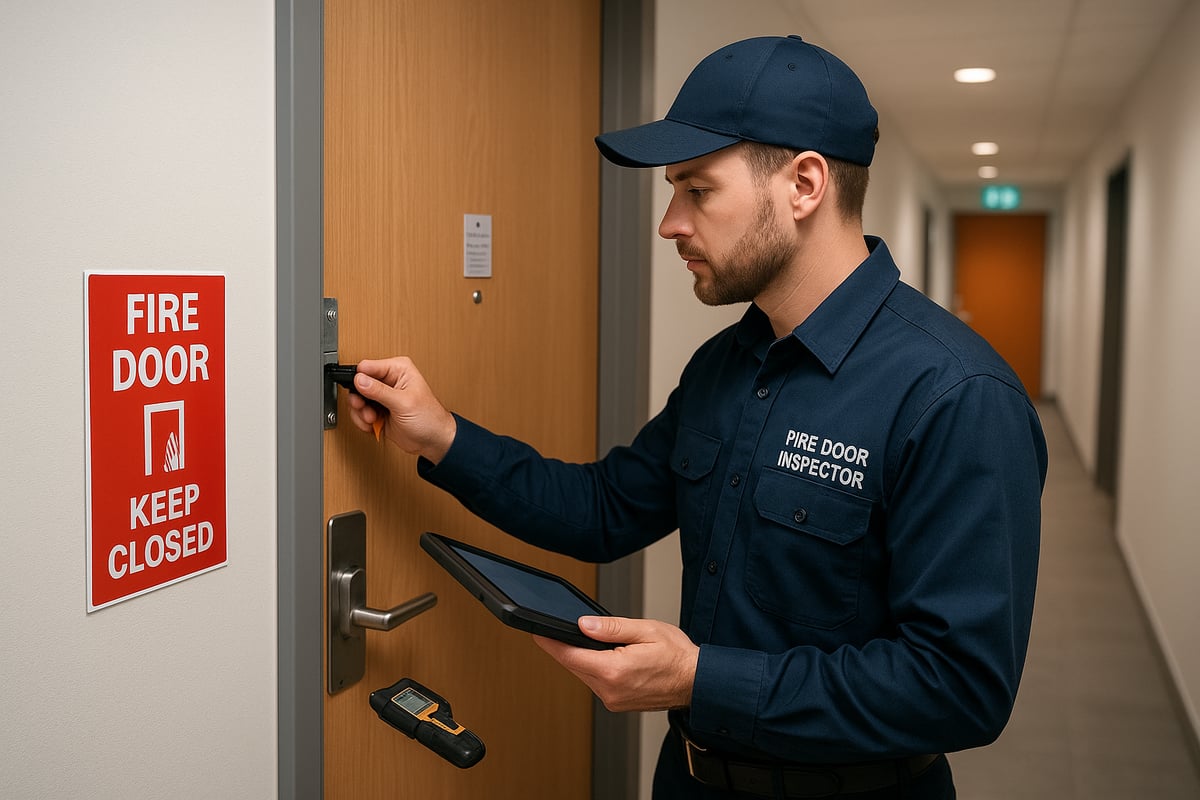
Fire doors are designed to prevent the rapid spread of smoke and flames, giving occupants precious time to evacuate safely. When fire door inspection services are carried out regularly, they ensure every door performs as intended during an emergency.
Recent incidents have shown that properly maintained fire doors can mean the difference between a contained incident and a major disaster. Data confirms that buildings with routine inspections experience far fewer fire-related casualties. For a practical overview of what these inspections involve, see this Fire Door Inspections: What to Expect resource.
Legal and Financial Risk Reduction
Neglecting fire door inspection services exposes property owners and managers to significant risks. Legal penalties for non-compliance can be severe, including fines, prosecution, or even closure notices. Insurers increasingly require proof of regular inspections to validate claims.
Accurate documentation and a robust inspection regime demonstrate compliance to regulators and insurers, minimising the potential for costly disputes. For a deeper understanding of risk management and its connection to fire door compliance, review the fire risk assessment guide.
Operational Efficiency and Cost Savings
Investing in fire door inspection services leads to long-term operational benefits. Early identification of defects, such as worn seals or poor alignment, allows for planned maintenance rather than emergency repairs. Immediate minor fixes during inspections help avoid downtime and disruption for residents or businesses.
A proactive approach reduces the likelihood of large-scale remedial works, saving both time and money. Many property managers report substantial cost reductions after implementing scheduled inspection programmes.
Supporting Resident Trust and Satisfaction
Consistent fire door inspection services build trust among residents and tenants. When people see visible evidence of safety checks and receive clear communication about compliance, their confidence in building management grows.
Resident engagement strategies, such as advance notice and easy feedback channels, further improve cooperation. Case studies have shown a notable increase in resident satisfaction scores following the introduction of transparent and regular inspection processes.
Future Trends in Fire Door Inspection Services
The landscape of fire door inspection services is evolving rapidly. New technologies, regulatory changes, and a growing focus on sustainability are shaping the future of compliance and safety. Staying informed about these trends is essential for anyone responsible for building safety.
Digital Transformation and Smart Reporting
Digital innovation is redefining fire door inspection services. Inspectors now use cloud-based platforms for real-time reporting, enabling instant access to compliance data. Photographic evidence is standard, ensuring transparency and traceability in every inspection.
Many providers offer client portals, allowing property managers to view inspection reports, certificates, and remedial actions at any time. Automated reminders help maintain statutory inspection schedules, reducing the risk of missed deadlines.
Digital tools also support seamless integration between inspection and installation. For example, Fire door installation best practices are often referenced within digital platforms to ensure that both installation and ongoing inspections meet the latest standards.
Integration with Building Safety and Asset Management
Modern fire door inspection services are becoming part of broader building safety strategies. By linking inspections with asset management systems, organisations can coordinate safety checks across alarms, lighting, lifts, and fire doors.
This integration enables efficient scheduling, minimises disruption for residents, and supports data-driven decisions for long-term planning. Inspection data feeds directly into compliance dashboards, offering a comprehensive view of building safety performance.
With unified management, property owners can ensure all statutory checks are completed on time, improving reliability and reducing administrative burden.
Regulatory Evolution and Industry Best Practices
The regulatory environment for fire door inspection services is set to become even more rigorous. Anticipated changes include stricter third-party certification, enhanced transparency, and updated testing standards. Industry best practice is shifting towards a holistic approach, where fire door compliance is part of a wider culture of building safety.
A significant regulatory shift is the upcoming adoption of EN 1634 standards, which will replace BS 476 Part 22 for fire door testing in the UK from 2029. Understanding these changes is crucial, and resources such as Fire Door Testing Standards: EN 1634 Replaces BS 476 Part 22 provide essential guidance for staying ahead of compliance requirements.
Sustainability and Environmental Considerations
Sustainability is increasingly influencing the delivery of fire door inspection services. Providers are adopting eco-friendly materials for fire doors and implementing responsible disposal practices for old components.
Reducing the carbon footprint is a growing priority. Efficient inspection processes, digital documentation, and green service policies all contribute to environmental goals. Some companies now highlight their green credentials as part of their value proposition, attracting clients who prioritise both safety and sustainability.
By embracing sustainable methods, fire door inspection services help protect both people and the planet.
As you’ve seen, keeping up with fire door inspection requirements is about more than ticking boxes—it’s about safeguarding lives, assets and reputations. With regulations evolving and expectations higher than ever, having a trusted partner by your side makes all the difference. At Logic Fire and Security, we understand the challenges you face and offer tailored, accredited solutions to support your journey to full compliance. If you’re ready to take the next step or simply want expert guidance on where to start, why not Get a Free Site Survey and see how we can help you achieve peace of mind for 2026 and beyond