
Wireless Fire Alarms Guide: Essential Insights for 2026

Fire safety is a critical priority for every business, and recent years have seen a rapid shift towards wireless solutions. As technology evolves, wireless fire alarms are reshaping how property owners and managers protect lives and assets.

This guide explores why wireless fire alarms are at the forefront of modern fire protection strategies for 2026. You will discover the latest advancements, crucial compliance requirements, and practical advice for choosing and maintaining the right system.

Ready to future-proof your fire safety? Learn about technology trends, legal standards, seamless installation, hassle-free maintenance, and expert support to ensure your business stays secure and compliant.

Understanding Wireless Fire Alarms: What Sets Them Apart?

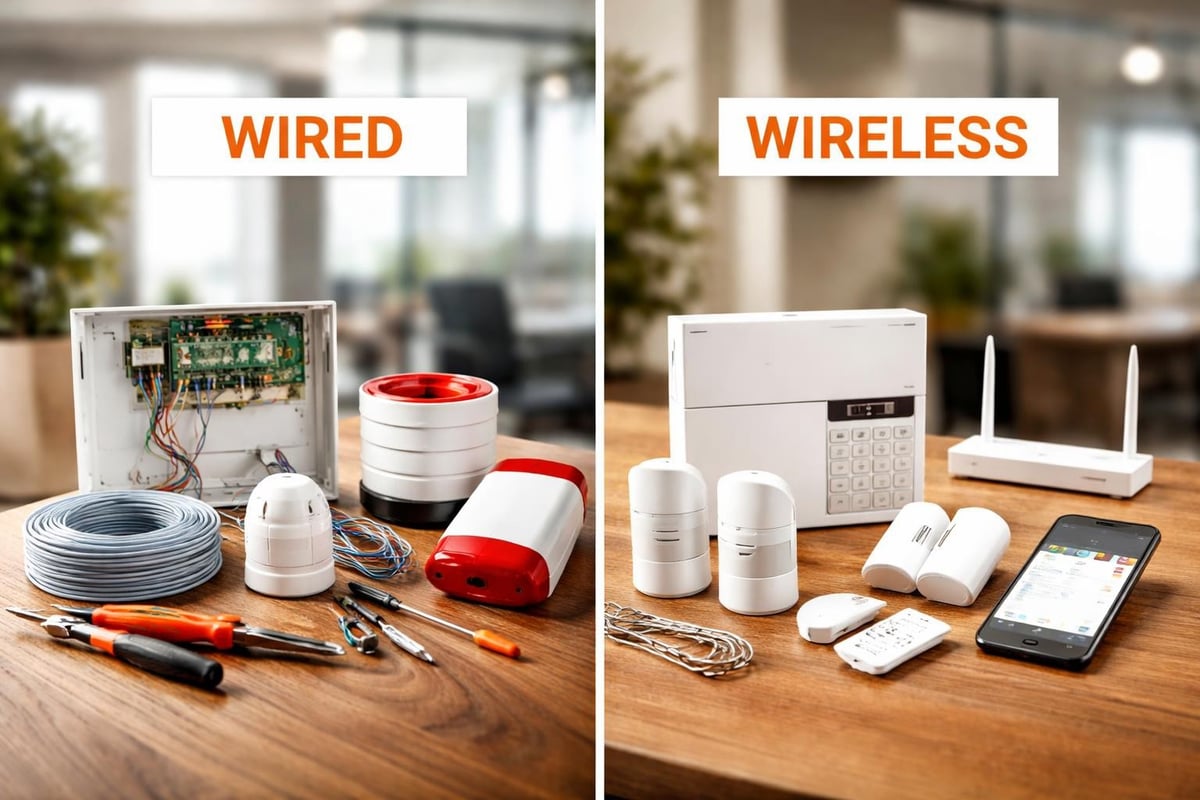
Wireless fire alarms are modern safety systems that detect and alert occupants to the presence of fire using wireless technology. Unlike traditional wired systems, these solutions rely on radio signals to connect core components such as detectors, control panels, sounders, and manual call points. This wireless communication removes the need for extensive cabling, making the system both versatile and easy to integrate with other building management technologies. By using addressable devices, wireless fire alarms can pinpoint the exact location of an incident, ensuring fast response and precise control.

Understanding Wireless Fire Alarms: What Sets Them Apart?

Defining Wireless Fire Alarms

The core components of wireless fire alarms include smoke and heat detectors, control panels, sounders to alert occupants, and manual call points for emergency activation. These devices communicate via secure radio frequency protocols, often operating on dedicated bands to avoid interference. Addressable technology allows each device to be uniquely identified, enabling targeted alerts and more effective evacuation procedures. Integration with building management systems is now common, allowing centralised control and monitoring.

Key Benefits Over Wired Systems

Wireless fire alarms offer several advantages compared to conventional wired systems. Installation is significantly faster and causes less disruption, as there is no need to run extensive cabling through walls and ceilings. This makes the solution ideal for retrofit projects, heritage sites where structural changes are restricted, and temporary or rapidly changing environments like construction sites. The reduced need for cabling also lowers overall costs and supports flexible expansions or reconfigurations. Maintenance is generally simpler, and system upgrades are more straightforward.

Limitations and Considerations

Despite their many benefits, wireless fire alarms come with unique considerations. Battery-powered devices require regular checks and timely replacement to maintain reliability. Radio frequency signals can be affected by building materials or external interference, so careful planning and signal surveys are essential. Security is crucial, with modern systems offering encryption and anti-tamper features to prevent unauthorised access. The upfront investment can be higher than that of traditional systems, but this is often offset by lower installation and maintenance costs over time.

Market Growth and Adoption Trends

The adoption of wireless fire alarms is accelerating across commercial, public, and construction sectors. Offices, schools, temporary venues, and listed buildings are increasingly choosing wireless solutions for their flexibility and compliance with evolving standards. Industry reports, such as the Wireless Fire Detection Systems Market Trends Report 2026, highlight strong growth driven by regulatory demands and technological advancements. Competitor offerings now include EN54-certified addressable panels, multi-sensor detectors, and scalable systems suitable for diverse environments.

2026 Regulatory Landscape: Compliance and Standards for Wireless Fire Alarms

Stricter regulations are shaping the future of wireless fire alarms in the UK. Keeping pace with compliance requirements is vital for any business or property owner aiming to protect assets, ensure occupant safety, and remain legally secure. Understanding the evolving regulatory landscape is key to selecting and maintaining the right wireless fire alarms.

2026 Regulatory Landscape: Compliance and Standards for Wireless Fire Alarms

UK Fire Safety Legislation and Wireless Systems

The foundation of fire safety regulation in the UK is the Regulatory Reform (Fire Safety) Order 2005. This law places responsibility on business owners and facilities managers to ensure effective fire detection and alarm systems, including wireless fire alarms, are in place. Wireless systems must deliver performance equal to wired alternatives, providing reliable detection, alerting, and evacuation.

British Standard BS 5839-1:2017 specifically covers fire alarm systems in non-domestic premises, while EN54-25 addresses requirements for wireless components. Compliance with these standards is not optional, it is a legal expectation for any property using wireless fire alarms.

Certification and Approval Requirements

Third-party certification is essential when choosing wireless fire alarms. Look for systems and installers accredited by recognised bodies such as BAFE or LPCB. Components should feature EN54-25 certification for wireless modules, EN54-7 for smoke detectors, and EN54-3 for sounders.

Competitor products frequently highlight these certifications to demonstrate compliance. Always verify credentials before installation, as non-certified equipment may not be accepted by insurers or regulators. Proper documentation and evidence of approval are crucial for demonstrating compliance during audits.

Evolving Standards and Anticipated Changes for 2026

The regulatory landscape for wireless fire alarms is expected to shift further by 2026. Updates to British Standards, including the anticipated revision of BS 5839-1, may introduce stricter requirements for system resilience, cybersecurity, and environmental sustainability. The divergence between UK and EU standards post-Brexit means businesses must remain vigilant regarding compliance changes.

Cybersecurity is increasingly important for wireless fire alarms, with new standards likely to address data protection and signal integrity. There is also a growing focus on battery recycling and energy efficiency. For a detailed look at these changes, see the BS 5839-1:2025 fire alarm standard update.

Key Compliance Pitfalls and How to Avoid Them

Common compliance mistakes with wireless fire alarms include:

  • Using non-certified products or installers
  • Failing to keep thorough documentation and records
  • Overlooking regular battery checks and replacements
  • Neglecting updates on regulatory changes

To avoid these pitfalls, schedule regular maintenance, ensure all system updates are documented, and engage only accredited professionals. Regulatory breaches can lead to fines, invalid insurance, or even prosecution if fire safety is compromised. Proactive management and awareness of evolving standards are essential for ongoing compliance.

How Wireless Fire Alarms Work: Components, Features, and Technology Explained

Wireless fire alarms are designed to provide robust fire protection without the need for complex cabling. By using radio signals to connect all parts of the system, they offer flexibility and scalability for a wide range of environments. For a more detailed fire alarm system overview, including wireless options, you can explore dedicated resources.

How Wireless Fire Alarms Work: Components, Features, and Technology Explained

Core System Components

Wireless fire alarms consist of several essential parts working together seamlessly. The control panel acts as the brain, managing signals from all devices. Detectors—such as smoke, heat, or multi-sensor models—identify potential fire threats quickly. Manual call points allow occupants to trigger an alarm instantly in case of emergency.

Sounders and visual indicators alert building occupants to evacuate, while boosters or repeaters extend wireless coverage in larger or more complex spaces. The absence of cabling simplifies installation and minimises disruption to building layouts. Each component is designed for reliability and ease of upgrade as safety needs evolve.

Component Function
Control Panel Central management and monitoring
Detector Senses smoke, heat, or other fire signals
Call Point Manual alarm activation
Sounder/Strobe Audible and visual evacuation alerts
Booster/Repeater Extends wireless signal range

Communication Protocols and Security

Wireless fire alarms use secure radio frequency bands, approved for use in the UK, to ensure reliable communication between devices. Each device is addressable, meaning the exact location of an activated alarm can be pinpointed immediately, which is vital for swift emergency response.

Security is a top priority. Encrypted signalling protects against unauthorised access or tampering. Anti-tamper mechanisms and interference resistance features help maintain system integrity, even in challenging environments. Regular testing and monitoring ensure that the communication network remains robust, supporting continuous fire safety.

Advanced Features in 2026

Innovation is driving the next generation of wireless fire alarms. In 2026, systems will increasingly integrate with building management and evacuation alert platforms, providing a holistic approach to safety. Remote monitoring through cloud services and mobile apps allows facilities managers to oversee fire safety from anywhere.

Modern systems also incorporate self-testing and automated fault reporting, reducing the need for manual inspections. Battery health monitoring and predictive maintenance features further enhance reliability, helping prevent unexpected failures and minimising downtime. These advancements make wireless fire alarms a smart, future-ready choice.

Real-World Example

Competitor systems, such as the Zerio Plus, demonstrate the practical benefits of wireless fire alarms. With the capacity to support up to 240 addressable devices, these systems offer options like programmable detector types and combined sounder/strobe units for tailored protection.

Wireless fire alarms are now widely used in large office complexes, schools, temporary construction sites, and event venues. Their flexible installation and ease of expansion make them ideal for diverse settings. As technology continues to advance, these systems will remain at the forefront of reliable, compliant fire safety solutions.

Step-by-Step Guide: Selecting and Installing a Wireless Fire Alarm System

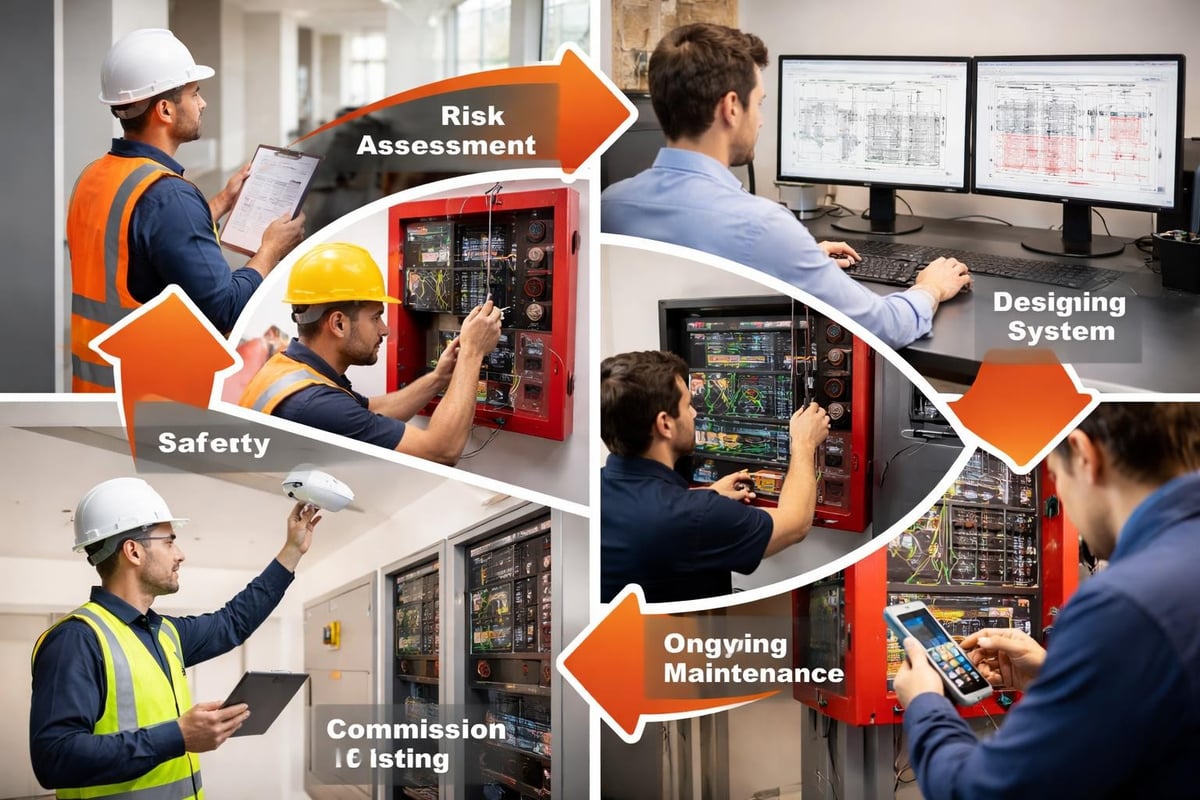
Selecting and installing wireless fire alarms is a structured process that ensures your premises stay protected, compliant, and future-ready. Each step, from assessment to maintenance, is vital for building a robust fire safety strategy.

Step-by-Step Guide: Selecting and Installing a Wireless Fire Alarm System

Step 1: Assess Your Fire Safety Needs

Begin with a comprehensive fire risk assessment tailored to your premises. This process identifies hazards, evaluates the risk to occupants, and determines the required level of protection.

Consider factors such as building layout, occupancy levels, and any unique challenges like heritage status or temporary structures. For buildings with complex layouts or access restrictions, wireless fire alarms often provide the most flexible and effective solution.

If you need guidance, consult fire risk assessment guidance to ensure your assessment meets UK legal standards.

Step 2: Evaluate System Options and Specifications

Next, explore the different wireless fire alarms systems available. Compare detection types, system capacity, and compatibility with your existing infrastructure.

Prioritise systems that carry EN54 certification for reliability and compliance. Review supplier credentials, focusing on proven track records and third-party approvals for both products and installation.

Shortlist options that can accommodate future expansion and adapt to changes in building use.

Step 3: Professional Design and Planning

Engage an accredited fire safety professional to design your system. A bespoke approach ensures all areas are covered and that zoning meets regulatory requirements.

Zone planning is crucial for effective alarm notification and evacuation. A signal strength survey should be conducted to verify robust wireless communication throughout the premises.

Professional design reduces the risk of coverage gaps and ensures your system is fit for purpose.

Step 4: Installation Process

Installation of wireless fire alarms is usually swift and minimally disruptive. Devices are strategically placed according to the design plan, and control panels are configured for optimal performance.

Signal testing is essential to confirm all devices communicate reliably. Once installation is complete, thorough commissioning and documentation help ensure compliance and support future maintenance activities.

Keep all records organised for regulatory audits and insurance purposes.

Step 5: Handover and User Training

After installation, a detailed handover is conducted with responsible persons and staff. This includes a demonstration of system operation, distribution of manuals, and explanation of maintenance schedules.

Staff should be trained on emergency procedures and how to respond to alarms. Accurate record-keeping is vital for demonstrating compliance and supporting regular reviews.

Step 6: Ongoing Maintenance and Monitoring

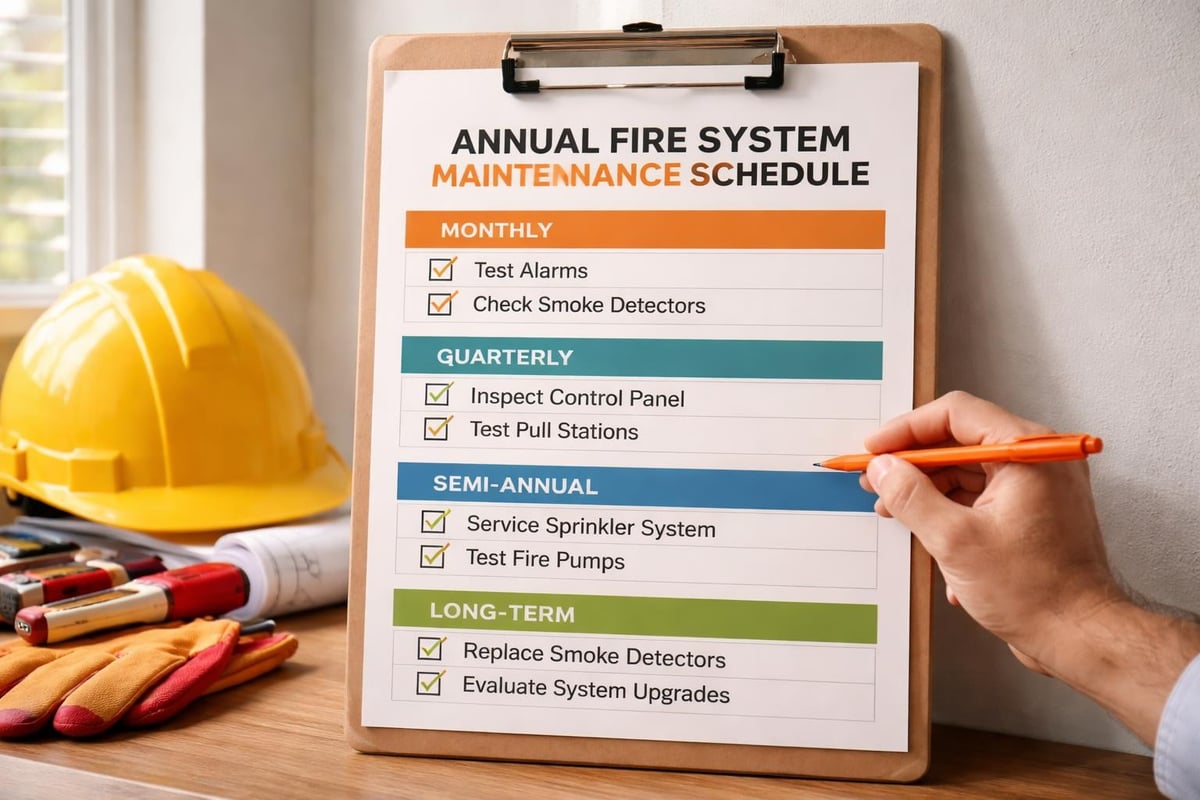
Routine maintenance is key to the reliability of wireless fire alarms. Schedule regular battery checks, system tests, and software updates as recommended by the manufacturer.

Preventative maintenance and remote diagnostics help reduce downtime and keep your system compliant with BS 5839 standards. Maintaining detailed records ensures you are always audit-ready and protected against regulatory or insurance issues.

Expert Support and Custom Solutions: Partnering with Logic Fire and Security

Choosing the right partner for wireless fire alarms is essential to achieving full compliance and peace of mind. Logic Fire and Security’s accredited team delivers expert design, installation, and maintenance tailored to your business needs.

Whether you operate in commercial, public, or specialist sectors, their end-to-end service covers risk assessment, bespoke system planning, installation, and ongoing support. Clients benefit from national coverage, rapid response, and 24/7 monitoring for uninterrupted protection.

For further reassurance, explore their fire alarm monitoring services to ensure your wireless fire alarms are always performing at their best.

Future-Proofing Fire Safety: Wireless Innovations and Emerging Trends for 2026

The landscape for wireless fire alarms is evolving rapidly as we approach 2026. Businesses and property owners must keep pace with new innovations, sustainability goals, and tightening regulations. Staying ahead of these trends is essential for any organisation seeking to protect assets and people effectively.

Next-Generation Wireless Technologies

By 2026, wireless fire alarms are expected to leverage longer-lasting batteries, mesh networking for improved reliability, and AI-driven detection algorithms. These advancements will enable faster, more accurate alerts and seamless integration with IoT platforms.

Systems will be capable of predictive analytics, identifying maintenance needs before failures occur. For a comprehensive view of market trends and technology projections, the Wireless Fire Detection System Market Size 2025-2034, Report offers valuable insights into future adoption and innovation.

Sustainability and Environmental Impact

Sustainability is a key driver in the evolution of wireless fire alarms. Manufacturers are focusing on recyclable battery materials and eco-friendly system designs to reduce environmental impact.

Energy efficiency is being prioritised, ensuring compliance with emerging environmental standards. Organisations that adopt sustainable wireless fire alarms will be well-placed to meet regulatory expectations and corporate social responsibility targets.

Enhanced User Experience

The user experience for wireless fire alarms is set to improve significantly. Enhanced mobile apps will allow real-time remote management and instant alerts, empowering facilities teams to respond quickly.

Self-learning systems will adapt to building usage patterns, reducing false alarms and optimising detection sensitivity. These features provide peace of mind, making fire safety more accessible and intuitive for everyone.

Evolving Threats and Security Measures

As wireless fire alarms become more sophisticated, so do the security challenges. Stronger encryption, regular firmware updates, and robust incident response protocols are becoming standard requirements.

The proliferation of wireless devices increases the risk of interference, making it vital to choose systems designed to resist disruption. Industry reports, such as the Fire Alarm Systems Market Size, Report, Share & Growth Drivers 2031, highlight the importance of ongoing investment in cybersecurity and compliance.

Preparing for Legislative and Insurance Changes

Legislation and insurance requirements are expected to tighten, with greater scrutiny on system documentation and maintenance. Keeping wireless fire alarms up to date and fully compliant will be crucial for audit readiness and risk mitigation.

Case Studies and Real-World Examples

Recent deployments of wireless fire alarms in multi-site offices, listed buildings, and temporary construction sites demonstrate the flexibility and compliance benefits of these systems.

Organisations have seen reduced installation times, easier system expansion, and improved regulatory outcomes, reinforcing the value of future-proofed fire safety strategies.

As you look ahead to 2026 and consider how wireless fire alarms can transform your building’s safety and compliance, it’s important to choose a solution that truly fits your needs. At Logic Fire and Security, we combine deep expertise with the latest technology to deliver bespoke systems designed for your business—no matter its size or complexity. If you’re wondering where to start or want practical guidance on your next steps, why not let us help you assess your unique requirements? You can get a free site survey and discover how wireless fire alarms can work best for your organisation.

Fire Security Service Guide: Protect Your Property in 2026

With fire-related incidents costing UK businesses over £1 billion each year, investing in a fire security service is not just a precaution, it is a necessity. In 2026, the risk landscape is rapidly evolving. New technologies, stricter regulations, and emerging fire hazards mean that relying on outdated measures could put your property and people at risk.

This article is designed to empower property owners and managers with practical knowledge to safeguard assets using the most current fire security service solutions. You will discover the latest fire risks, essential components of a comprehensive system, a clear step-by-step guide for choosing the right provider, compliance essentials, and future trends shaping fire protection.

Ready to protect your property, ensure compliance, and gain peace of mind? This guide will show you how.

The Evolving Fire Risks in 2026

Fire risks are rapidly changing, and property owners must keep pace. With technology advancing and environmental pressures rising, a robust fire security service is more important than ever. Let us explore the new threats, regulatory updates, common causes, the true costs, and the importance of proactive measures.

The Evolving Fire Risks in 2026

New Fire Threats Facing Properties

Properties in 2026 face risks that did not exist a decade ago. The surge in lithium-ion batteries, found in electric vehicles and portable devices, has led to a rise in sudden, intense fires. Smart home and IoT devices add complexity, increasing ignition sources. Hotter summers and more wildfires, driven by climate change, threaten buildings even in urban areas. Urban density and modern construction materials can accelerate fire spread. A recent warehouse fire caused by a faulty e-bike battery illustrates how a fire security service must adapt to these evolving risks.

Regulatory Changes and Compliance Requirements

The regulatory landscape is stricter than ever. Updates to the Fire Safety Act 2021 and the Building Safety Act 2022 place greater emphasis on high-rise and multi-occupancy buildings. Mandatory risk assessments and meticulous record-keeping are now required. Penalties for non-compliance include hefty fines and even business closure. The 2025 revision to PAS 9980 further tightens guidance for residential properties. Importantly, new Fire Safety (Residential Evacuation Plans) Regulations 2025 mandate detailed evacuation plans for all residential buildings from April 2026. Choosing a fire security service that supports compliance is crucial.

Common Causes of Fire in Modern Properties

Despite modern advances, traditional hazards persist. Electrical faults and overloaded circuits remain the leading cause of commercial fires, accounting for over 30 percent of incidents in the UK. In commercial kitchens, catering equipment is a frequent ignition source. HVAC system failures can spark fires, especially if maintenance is neglected. Human error continues to play a role, often due to a lack of fire safety training. A comprehensive fire security service addresses these issues, helping to prevent incidents before they escalate.

The Cost of Fire Incidents: Financial & Human Impact

Fire incidents can devastate businesses, both financially and emotionally. The average cost of business interruption following a fire is £650,000, according to Aviva. Beyond direct losses, companies often face long-term reputational damage and a loss of customer trust. Personal tragedies, including injuries and fatalities, leave lasting scars on occupants and staff. A 2024 hotel fire that led to permanent closure highlights the stakes. This underscores the value of a fire security service that prioritises prevention and rapid response.

Why Proactive Fire Security Matters

Early detection and swift action are vital for saving lives and property. A proactive fire security service not only helps secure better insurance terms but also maintains business continuity and legal compliance. By investing in modern solutions, property owners demonstrate a duty of care to all occupants and staff. In a world where fire risks are constantly evolving, taking action today can make all the difference.

Essential Components of a Modern Fire Security Service

Modern properties require a holistic fire security service to address evolving threats and regulatory demands. Each component plays a specific role in reducing risks, ensuring compliance, and protecting occupants. Let us break down the essential elements you should expect from a robust fire security service in 2026.

Essential Components of a Modern Fire Security Service

Advanced Fire Detection Technologies

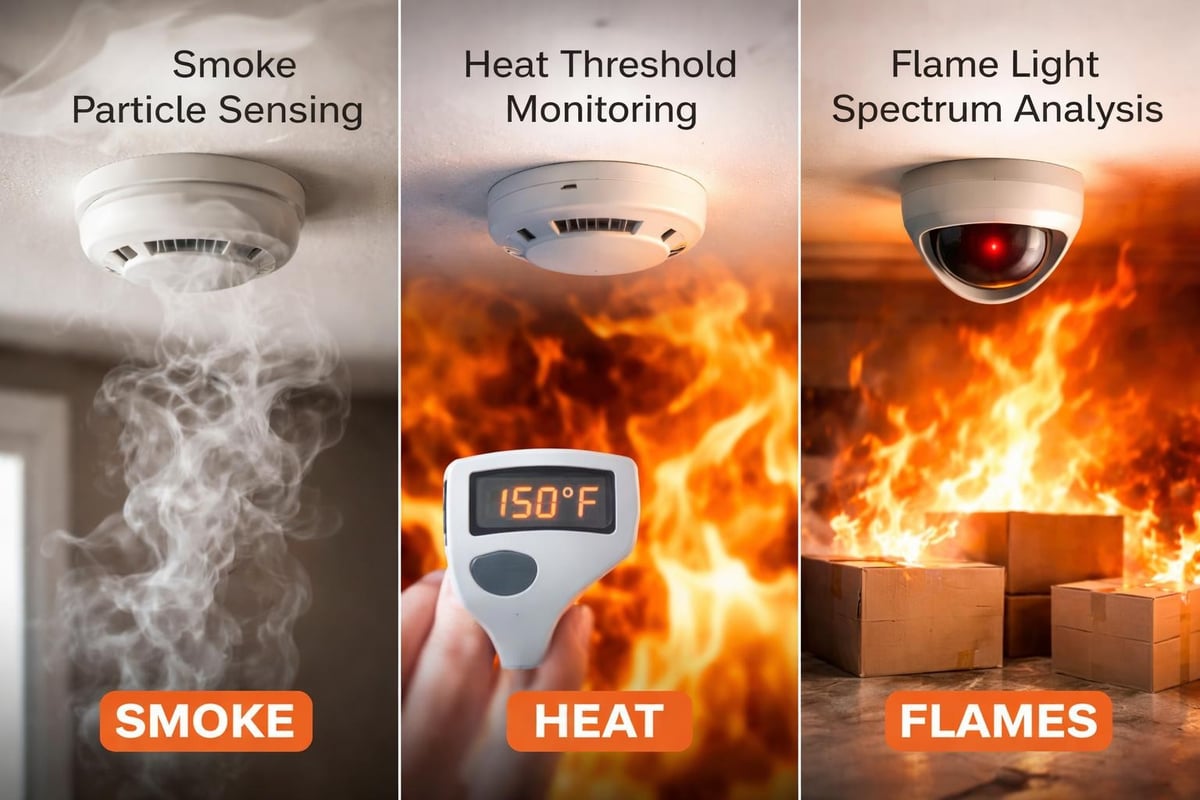
A reliable fire security service begins with cutting-edge fire detection. Addressable alarm systems offer pinpoint accuracy, while conventional setups provide basic coverage. Modern solutions use smoke, heat, and multi-sensor detectors for rapid response.

Wireless and smart-enabled devices integrate seamlessly with building management systems. For a deeper dive into the latest options, review this Advanced fire alarm systems guide. Choosing the right detection technology is the cornerstone of any effective fire security service.

Fire Suppression and Control Systems

The fire security service must include robust suppression and control solutions. Sprinkler systems—wet, dry, or pre-action—are essential for various property types. Gaseous suppression protects server rooms and sensitive assets where water is unsuitable.

Portable extinguishers, when correctly selected and maintained, allow for immediate action. Data shows that effective sprinkler systems can reduce fire-related fatalities by up to 80 percent. Integrating these systems is vital to a comprehensive fire security service.

Emergency Lighting and Evacuation Solutions

A complete fire security service ensures safe evacuation during emergencies. Emergency lighting guides occupants to exits when visibility is compromised. Wayfinding systems and illuminated signage reduce confusion and support orderly movement.

Designated refuge areas provide essential protection for vulnerable individuals. Well-maintained evacuation solutions are not only a legal requirement but also a practical necessity for any modern fire security service.

Fire Doors and Compartmentation

Certified fire doors and regular maintenance are central to a high-quality fire security service. These doors help contain fire and smoke, slowing their spread and buying critical time for evacuation.

Compartmentation divides a building into sections, preventing fire from engulfing the entire property. For example, an office block fire was successfully contained because of effective compartmentation, underscoring the importance of these features in any fire security service.

Integrated Monitoring and Remote Management

A modern fire security service offers 24/7 monitoring via remote alarm receiving centres. Real-time alerts and incident dashboards empower rapid response and data-driven decision-making.

Cloud-based platforms allow property managers to oversee multiple locations efficiently. Integrated monitoring not only supports ongoing compliance but also ensures your fire security service remains proactive and ready for future threats.

Step-by-Step Guide to Choosing the Right Fire Security Service

Choosing the right fire security service for your property is a strategic process. It involves careful risk assessment, setting clear objectives, evaluating providers, comparing technologies, and ensuring ongoing support. Follow these steps to make informed decisions that protect your assets and ensure compliance.

Assessing Your Fire Risk

Begin by understanding the unique fire risks associated with your property. Every building has different vulnerabilities, whether due to its layout, use, or occupancy. A professional fire risk assessment is essential for identifying hazards, evaluating current controls, and prioritising improvements. For in-depth guidance, consult Fire risk assessment guidance to ensure your fire security service is based on a solid foundation.

Review historical incidents and near-misses, and consider factors like building age, electrical installations, and the presence of high-risk equipment. This step sets the stage for a tailored fire security service plan.

Setting Fire Security Objectives

Set clear goals for your fire security service. Define whether you aim to meet legal compliance or strive for best practice standards. Align your objectives with your overall business continuity strategy to minimise disruptions during emergencies.

Establish measurable targets, such as reducing evacuation times or increasing staff training participation. These objectives help you select the most suitable fire security service and ensure ongoing improvement.

Evaluating Fire Security Providers

Not all providers deliver the same level of expertise. When selecting a fire security service, check for industry accreditations like BAFE, NSI, or FIA membership. These credentials confirm the provider’s technical competence and commitment to quality.

Assess their experience in your sector and ask for case studies or client testimonials. A trusted fire security service provider should demonstrate a proven track record in similar environments.

Comparing System Solutions and Technologies

Next, compare the technical solutions available. Decide between wired and wireless systems, considering compatibility with your existing infrastructure and future expansion plans. Evaluate features such as smart integration, cloud monitoring, and remote management.

A thorough comparison ensures your fire security service is robust, scalable, and equipped to handle evolving risks.

Installation and Commissioning Best Practices

Proper installation is critical for system reliability. Ensure your chosen provider uses certified engineers for all installations. The commissioning process should include comprehensive system testing and a formal handover to your staff.

Look for examples of successful installations in complex settings, such as heritage or listed buildings, where careful planning is essential.

Ongoing Maintenance and Support

Ongoing support is a cornerstone of any effective fire security service. Regular servicing, remote diagnostics, and predictive maintenance are vital for system reliability and legal compliance.

Service contracts should detail response times, scheduled inspections, and emergency support. Regular maintenance not only protects your investment but also ensures your fire security service remains up to standard.

Logic Fire and Security: Trusted UK Partner

Logic Fire and Security is a leading UK provider with extensive experience in designing, installing, and maintaining advanced fire security service solutions. Their team delivers tailored systems that prioritise compliance, reliability, and business continuity.

Fire Security Service Guide: Protect Your Property in 2026 - Logic Fire and Security: Trusted UK Partner

Trusted by blue chip companies and public agencies, Logic Fire and Security offers end-to-end fire security service support, ensuring your property remains protected and compliant in 2026.

Ensuring Compliance and Legal Responsibilities in 2026

Navigating the legal landscape for fire security service in 2026 is vital for every property owner. UK law demands rigorous compliance, and missing a detail can have costly consequences. Let us explore the critical regulations, assessments, training, maintenance, and insurance implications shaping your fire security service obligations.

Ensuring Compliance and Legal Responsibilities in 2026

Key UK Fire Safety Regulations

The foundation of any fire security service is strict adherence to UK fire safety law. The Regulatory Reform (Fire Safety) Order 2005, Fire Safety Act 2021, and Building Safety Act 2022 all outline the responsibilities of the ‘Responsible Person’. This individual must ensure premises are safe, maintain documentation, and act on risk assessments.

Recent changes, such as the Transition to European Fire Testing Standards, mean that from March 2025, all new builds and refurbishments must comply with BS EN 13501 for fire testing. Accurate records and up-to-date policies are non-negotiable for a compliant fire security service.

Mandatory Fire Risk Assessments

Regular fire risk assessments are a legal requirement, forming the backbone of an effective fire security service. The frequency and scope depend on property type and occupancy. Residential blocks, commercial spaces, and high-rise buildings each have specific standards.

Using accredited third-party assessors helps ensure impartiality and legal protection. Failure to conduct or act on assessments can result in fines, prosecution, and loss of insurance coverage. A robust fire security service includes scheduled reviews and clear documentation.

Staff Training and Fire Drills

Training is essential to any fire security service, ensuring staff know what to do in an emergency. Legislation requires all employees to receive fire safety instruction, with fire wardens given additional responsibilities.

Fire drills must be held at least annually, with results recorded and actions taken to improve evacuation times. For example, properties conducting regular drills report faster, safer evacuations. Continuous training forms a core part of your fire security service strategy.

Maintaining and Testing Fire Equipment

Ongoing maintenance is not just best practice, it is a legal obligation within every fire security service. Alarms, extinguishers, and emergency lighting must be checked at prescribed intervals, with detailed logs kept for compliance.

A quarter of fire alarm failures stem from neglected maintenance. For guidance on extinguisher upkeep, see Fire extinguisher servicing essentials. Regular servicing guarantees your fire security service remains effective and legally compliant.

Insurance and Liability Considerations

Insurance providers increasingly scrutinise fire security service standards. Non-compliance can invalidate policies, deny claims, or raise premiums. Maintaining evidence of risk assessments, equipment testing, and staff training is essential.

A single missing maintenance record can mean a denied claim after an incident. By prioritising compliance within your fire security service, you protect both your assets and your organisation’s reputation.

Future Trends in Fire Security Services

The landscape of fire security service is changing rapidly as new technologies and challenges emerge. Property owners and managers must stay ahead by understanding these evolving trends. From smart integration and artificial intelligence to sustainability and data-driven management, the future of fire security service is about proactive, adaptive solutions.

Smart Building Integration and IoT

The integration of smart building technologies is revolutionising the fire security service industry. IoT-enabled sensors and devices now communicate seamlessly with central management systems, allowing for faster detection and response.

These connected systems can:

  • Monitor temperature, smoke, and air quality in real time
  • Alert building managers remotely to potential hazards
  • Integrate with other safety and building management platforms

Predictive analytics powered by IoT can identify risks before they escalate, making fire security service more efficient and responsive.

AI and Machine Learning for Fire Detection

Artificial intelligence is set to transform how fire security service providers detect and manage incidents. AI-powered detectors can analyse sensor data to distinguish between real fires and false alarms, improving accuracy and reducing costly disruptions.

Machine learning algorithms learn from previous incidents and environmental patterns, enabling earlier warnings and smarter decision-making. According to industry experts, AI-based systems could reduce false alarms by up to 60%. For more on these innovations, see Fire Service Technology Trends for 2026.

AI advancements are making fire security service smarter and more reliable for every type of property.

Sustainable Fire Security Solutions

Sustainability is becoming a priority for every fire security service. New eco-friendly suppression agents are replacing traditional chemicals, reducing environmental impact without compromising safety.

Key developments include:

  • Recyclable system components
  • Solar-powered emergency lighting
  • Green building certifications that require sustainable fire safety solutions

By prioritising sustainability, a fire security service not only protects assets but also supports broader environmental goals.

Evolving Threats and Adaptive Security

The modern fire security service must adapt to new threats such as battery storage systems and urban vertical farming. These environments introduce unique fire risks that require flexible, scalable protection.

Retrofit solutions allow older or heritage properties to benefit from modern fire safety without extensive renovations. Adaptive systems ensure that as buildings evolve, so too does their fire security service.

Staying responsive to emerging hazards is essential for long-term protection.

The Role of Data and Remote Monitoring

Centralised, cloud-based dashboards are now standard in advanced fire security service offerings. These platforms provide real-time oversight across multiple sites, making compliance reporting and incident analytics more accessible.

Property managers can:

  • Track system status and maintenance schedules
  • Receive instant alerts for any fire event
  • Analyse trends to improve future safety strategies

Embracing these data-driven tools ensures fire security service remains proactive and efficient in the face of shifting risks.

Taking proactive steps to protect your property in 2026 is more important than ever, especially with the new risks and regulations we’ve discussed. By staying up to date on the latest fire security technologies and compliance requirements, you’re not only safeguarding your assets but also ensuring peace of mind for everyone who relies on your building. If you’d like expert guidance tailored to your unique needs, why not take advantage of a complimentary assessment? You can Get a Free Site Survey from Logic Fire and Security and discover how to keep your business safe, compliant, and resilient for the future.

Essential Guide to Becoming a Fire and Security Engineer 2026

Across the UK, the need for skilled professionals who can protect people and property is growing rapidly. As safety regulations become more rigorous and technology continues to evolve, the role of a fire and security engineer is more critical than ever.

If you are considering a career that combines technical expertise, strong job stability, and the opportunity to make a real difference, this guide is designed for you. Here, you will discover a clear roadmap to becoming a fire and security engineer by 2026.

We will cover everything you need to know, from essential skills and qualifications to training pathways, typical job roles, industry trends, and long-term career progression. The work is diverse, the prospects are strong, and the rewards are both financial and personal.

Ready to take the next step? Explore this essential guide for practical advice and actionable steps to launch your fire and security engineer career.

Understanding the Role of a Fire and Security Engineer

The role of a fire and security engineer is central to protecting people, property, and assets in today’s ever-evolving safety landscape. As the reliance on technology in safety systems grows, so does the demand for skilled professionals who can design, install, and maintain these critical solutions.

Understanding the Role of a Fire and Security Engineer

Core Responsibilities and Daily Duties

A fire and security engineer is responsible for the installation, commissioning, and ongoing maintenance of a wide range of safety systems. These include fire detection, intruder alarms, CCTV, and access control systems.

Key tasks often involve:

  • Installing and configuring new systems to meet client requirements
  • Conducting routine servicing and troubleshooting to ensure equipment reliability
  • Responding to emergency call-outs for urgent repairs
  • Ensuring all work complies with UK fire safety laws and insurance standards
  • Providing technical support and guidance to clients

Engineers may work across several sites in a single day, from retail stores to hospitals and schools. For more insight into the types of systems involved, see this Commercial fire alarm systems overview.

Key Skills and Personal Attributes

Success as a fire and security engineer depends on a blend of technical and interpersonal skills. Essential qualities include:

  • Strong problem-solving ability and technical aptitude
  • Keen attention to detail and a commitment to safety
  • Excellent communication skills for client interaction and documentation
  • The ability to work both independently and as part of a team
  • Willingness to adapt to new technologies and evolving regulations
  • Physical fitness, as site visits and equipment handling are routine

Individuals with backgrounds in electrical or mechanical engineering often excel in this career, as they can quickly grasp the technical complexities involved.

Typical Work Environments and Sectors

A fire and security engineer may find themselves working in a variety of settings, including:

  • Offices and commercial buildings
  • Retail premises and warehouses
  • Hospitals, schools, and government sites
  • Manufacturing plants and utilities

These professionals are needed in the commercial, public, social housing, transport, and utilities sectors. Nationwide opportunities exist, with jobs available in both urban and rural locations. Service engineers frequently cover expansive regions, such as the North West, East Midlands, and London, adapting to the unique requirements of each site.

Qualifications, Training, and Certification Pathways

Starting a career as a fire and security engineer requires a blend of formal education, hands-on experience, and industry-recognised certifications. Understanding the pathways available will help you build a solid foundation and stand out in a competitive field.

Qualifications, Training, and Certification Pathways

Entry-Level Requirements and Apprenticeships

To begin your journey as a fire and security engineer, you will need a minimum of GCSEs or equivalent qualifications in maths, English, and science. These subjects provide the essential foundation for understanding technical concepts and effective communication with clients and colleagues.

Many aspiring engineers choose to enter the industry through a Level 3 Fire, Emergency and Security Systems Technician apprenticeship. This pathway combines classroom learning with practical, on-the-job training, allowing you to develop real-world skills while earning a wage. Apprenticeships are offered by both major employers and specialist providers, and they cover a broad range of fire and security systems.

It is common for apprentices to rotate through different types of sites, such as commercial offices, hospitals, and schools. This exposure helps you gain a thorough understanding of the varied environments a fire and security engineer may work in. Candidates who demonstrate a strong work ethic and willingness to learn are often offered permanent positions at the end of their training.

Essential Industry Certifications and Accreditations

Certifications are critical for any fire and security engineer aiming to progress in the industry. The Fire Industry Association (FIA) offers a range of training courses that cover the installation, commissioning, and maintenance of fire detection systems. Employers frequently require engineers to work towards or hold accreditations such as BAFE, NSI Gold, and NICEIC, which demonstrate technical competence and adherence to strict safety standards.

Access to many sites depends on holding valid ECS or CSCS cards, which confirm your health and safety knowledge. Keeping your qualifications current is vital, as regulations and best practices evolve over time. For a detailed overview of the certifications and accreditations most valued in the industry, see the Quality and industry accreditations page.

Employers may also fund or encourage engineers to pursue advanced qualifications, especially for those seeking to specialise in areas like advanced CCTV systems or fire suppression technology.

Ongoing Professional Development

A successful fire and security engineer never stops learning. The industry is constantly changing, with new technologies and regulations emerging each year. To keep up, engineers regularly attend manufacturer-led training courses that introduce the latest equipment and software.

Many professionals participate in Continuing Professional Development (CPD) programmes, which help them stay current with UK fire safety legislation and industry standards. Annual compliance training and refresher courses are also common, ensuring that all engineers maintain the highest levels of competence and safety.

By committing to ongoing development, you will remain a valuable asset to employers and clients, able to adapt quickly to new challenges and technologies as the sector evolves.

Step-by-Step Guide to Becoming a Fire and Security Engineer

Embarking on the path to become a fire and security engineer requires a clear roadmap and actionable steps. Whether you are just starting your career or looking to specialise, following a structured process will help you achieve your goals and excel in this rewarding field.

Step-by-Step Guide to Becoming a Fire and Security Engineer

Step 1: Research the Industry and Role

Start by exploring what it means to be a fire and security engineer. Look into the different systems you may work with, such as fire alarms, CCTV, access control, and emergency lighting. Assess your own interest in technical work and hands-on problem-solving.

Review job descriptions from top employers to understand daily tasks, required skills, and the environments you could work in. Consider speaking with professionals or attending industry events to gain real-world insights. This step ensures you are well informed before committing to the next stages.

Step 2: Gain Relevant Education and Experience

To begin your journey as a fire and security engineer, focus on achieving the essential educational requirements. Most employers look for GCSEs in maths, English, and science or equivalent qualifications. Seek out apprenticeships or entry-level roles within engineering or security firms to develop foundational skills.

Volunteering or interning with local companies can provide valuable exposure to the workplace and help you build a network. Hands-on experience is highly valued, as it allows you to understand how theory translates into practice.

Step 3: Obtain Professional Training and Certifications

Securing specialist training is crucial for a fire and security engineer. Consider enrolling in an approved apprenticeship scheme or a college course focused on fire, emergency, and security systems. Complete industry-recognised certifications, such as those provided by the Fire Industry Association, to enhance your credentials.

Make sure to obtain necessary site safety cards, like ECS or CSCS, which are often required for site access. These qualifications demonstrate your commitment to professional standards and increase your employability in the sector.

Step 4: Build Practical Skills and Industry Knowledge

As a developing fire and security engineer, focus on building hands-on skills. Gain experience with installing, maintaining, and troubleshooting fire detection and electronic security systems. Learn to work with a variety of products, from traditional alarms to advanced CCTV and access control solutions.

Develop strong customer service and communication skills, as you will often advise clients and resolve issues on-site. Stay updated on new technologies and changes in UK fire safety legislation, as the industry evolves rapidly.

Step 5: Apply for Jobs and Advance Your Career

Once you have the right skills and qualifications, prepare a professional CV that highlights your training and experience. Use specialist job boards and recruitment agencies dedicated to fire and security roles. For current opportunities and guidance, visit Fire and security job opportunities to explore vacancies and employer requirements.

Apply for positions such as junior engineer, service engineer, or installation engineer. As you gain experience, seek out opportunities to specialise or move into senior roles. Continuous learning and professional development will support your long-term progression in this dynamic field.

Industry Trends and Future Outlook for 2026

The landscape for every fire and security engineer is evolving rapidly as we approach 2026. Emerging technology, stricter regulations, and a dynamic job market are shaping the future of this essential profession. Understanding these trends is crucial for anyone pursuing or advancing a career as a fire and security engineer.

Industry Trends and Future Outlook for 2026

Technological Innovations Shaping the Sector

Technological change is at the heart of the fire and security engineer’s role. Smart buildings, IoT-enabled devices, and AI-powered CCTV are now standard in many new developments. Wireless and cloud-based solutions are replacing traditional wired systems, making installations more flexible and efficient. Demand is rising for engineers with IT and networking expertise, as integration between building management, access control, and security systems becomes more sophisticated. Engineers who adapt quickly to these advancements will be best positioned for future opportunities.

Regulatory Changes and Compliance Demands

Regulatory pressures continue to influence the daily work of a fire and security engineer. The introduction of the Fire Safety Act 2021 and Building Safety Act 2022 has raised the bar for compliance and accountability. There is a growing emphasis on routine maintenance, system upgrades, and detailed record-keeping to meet legal obligations. Industry organisations, such as the Institution of Fire Engineers Initiatives for 2026, are driving new standards and best practices to ensure public safety. Staying informed about these changes is vital for ongoing success.

Employment Market and Salary Expectations

The job market for fire and security engineer roles remains strong, with significant demand across the UK. Regional shortages and increased investment in building safety mean skilled professionals can command competitive salaries. According to Fire and Security Engineer Salaries in 2025, experienced engineers can expect annual earnings between £28,000 and £40,000, with opportunities for overtime and bonuses. Both permanent and contract positions are widely available, offering flexibility and career stability.

Career Progression and Specialisation

Career development is a key attraction for those entering the field. Fire and security engineer professionals can progress to senior engineer, project manager, or commissioning roles. Specialisation in advanced CCTV, access control, or fire suppression can set candidates apart. Multi-skilled engineers and those with accreditation for complex systems are especially sought after. The sector values continuous learning, so pursuing additional training and certifications will open doors to leadership positions. The outlook for 2026 is positive, with clear pathways for growth.

Essential Tools, Technologies, and Safety Standards

A fire and security engineer relies on a precise toolkit and deep technical knowledge to deliver safe, compliant systems. Their daily work involves a mix of hands-on tasks, digital diagnostics, and strict adherence to industry standards. Understanding the essential equipment, emerging technologies, and safety protocols is crucial for anyone entering or advancing in this field.

Core Tools and Equipment Used

Every fire and security engineer must be comfortable using a range of specialised tools. These include multimeters for electrical testing, cable testers for verifying connections, and laptops loaded with diagnostic software. Power tools are essential for installation, while programming devices are used for configuring alarm and access systems.

Proper personal protective equipment (PPE) is mandatory on-site, ensuring safety during equipment handling and installation. Engineers also use hand tools like screwdrivers, pliers, and wire strippers. The ability to select and maintain these tools is a mark of professionalism for any fire and security engineer.

Here’s a quick summary of core tools:

Tool Type Example Uses
Multimeter Electrical testing
Cable Tester Network and alarm wiring checks
Power Tools Drilling, fixing panels
Laptop Diagnostics, system programming
PPE Site safety, compliance

Key Fire and Security System Technologies

Modern fire and security systems are increasingly sophisticated. A fire and security engineer must work with addressable and conventional fire alarms, intruder alarms, and advanced CCTV systems. Remote monitoring, analytics, and cloud-based solutions are now standard in many installations.

Access control systems are a core technology, with engineers expected to understand their design and function. For a detailed look at these systems, see Building access control systems explained. Emergency lighting and fire suppression systems are also common, requiring familiarity with both legacy and new platforms to ensure seamless integration.

Staying current with these technologies enables a fire and security engineer to deliver reliable solutions for diverse environments.

Health, Safety, and Compliance Standards

Compliance is non-negotiable for any fire and security engineer. Adhering to British Standards such as BS 5839 for fire detection and BS 7671 for wiring is essential. Risk assessments and safe working procedures are part of every project, ensuring both legal compliance and personal safety.

Regular audits by accredited bodies like BAFE and NSI Gold-certified organisations are standard practice. Engineers must document work accurately and participate in ongoing training to keep up with evolving regulations. Employers prioritise these standards to maintain high levels of safety and client trust.

A fire and security engineer who masters these safety protocols not only protects themselves but also ensures the long-term reliability of every system they install or maintain.

Whether you are inspired by the challenge of protecting lives or drawn to the opportunities for career growth in a thriving industry, taking the first step towards becoming a fire and security engineer can feel both exciting and daunting. At Logic Fire and Security, we understand the importance of skilled professionals who can deliver safe, compliant solutions tailored to every client’s needs. If you are ready to explore how your skills and ambitions fit into this rewarding sector, we are here to support you. Please feel free to reach out and Contact Us for guidance or to discuss your next steps.

Our Accreditations

Work
For Us