

Protecting commercial premises from fire damage requires more than simply installing a fire suppression system. Regular, professional servicing ensures these critical safety systems remain operational when needed most. For businesses across the UK, understanding the requirements and benefits of fire suppression system servicing helps maintain compliance, protect assets, and safeguard personnel. From complex gas suppression installations in server rooms to wet chemical systems in commercial kitchens, each type demands specific maintenance protocols and inspection schedules.
Understanding Fire Suppression System Maintenance Requirements
Modern fire suppression systems represent sophisticated engineering solutions that demand regular professional attention. These systems differ significantly from standard fire detection equipment, requiring specialist knowledge for proper maintenance and testing.
British Standards and NFPA codes establish clear guidelines for servicing intervals. Most commercial fire suppression systems require quarterly inspections, semi-annual maintenance checks, and annual comprehensive servicing. The specific requirements vary depending on the system type, installation environment, and occupancy classification.
Regulatory Framework and Compliance Standards
Businesses operating fire suppression systems must comply with several regulatory frameworks. The Regulatory Reform (Fire Safety) Order 2005 places responsibility on building owners and duty holders to maintain fire safety equipment in proper working order. Failure to service these systems appropriately can result in enforcement notices, fines, or prosecution.
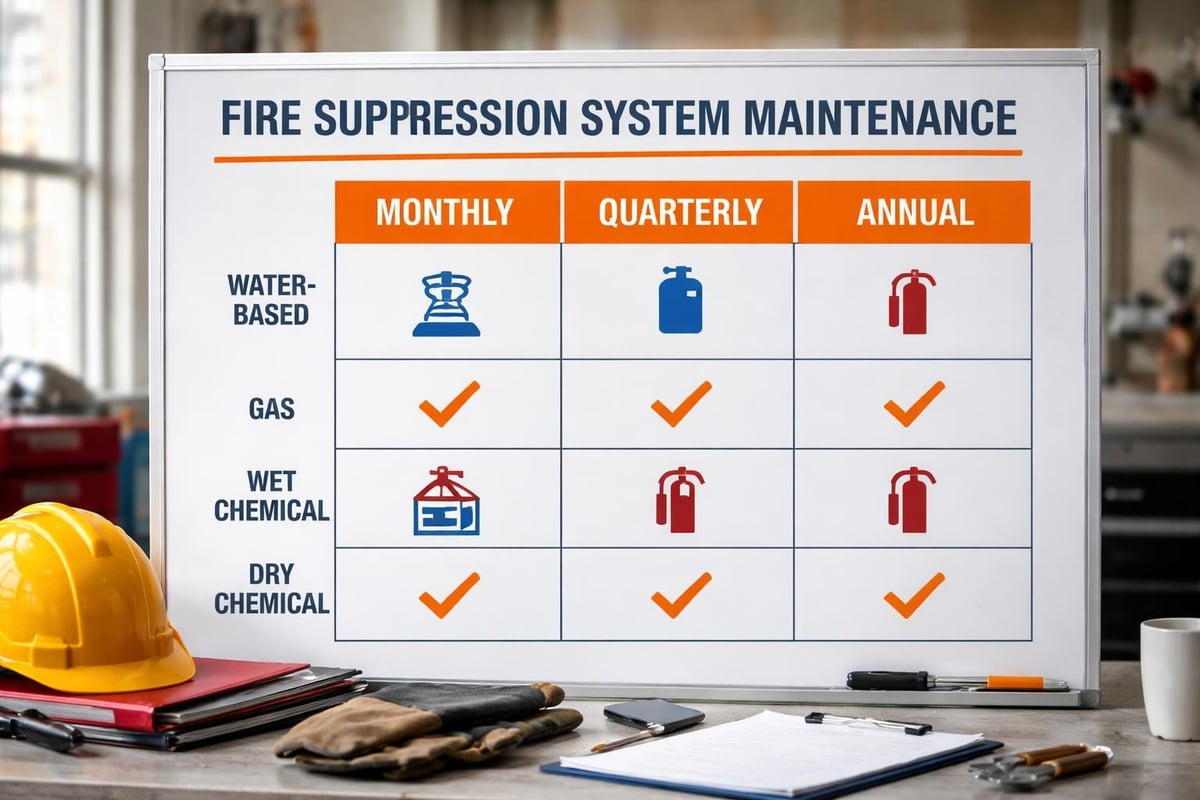
According to NFPA inspection requirements, different suppression system types follow distinct maintenance schedules:
| System Type | Monthly Checks | Quarterly Service | Annual Inspection | Hydrostatic Testing |
|---|---|---|---|---|
| Water-Based | Visual only | Full inspection | Comprehensive | Every 5 years |
| Gas Suppression | Weight check | System check | Full service | Every 5-12 years |
| Wet Chemical | Visual only | Full inspection | Comprehensive | Every 6 years |
| Dry Chemical | Visual only | Full inspection | Comprehensive | Every 12 years |
Professional servicing partners like Firesurv Group Ltd provide comprehensive compliance support, ensuring businesses meet their legal obligations whilst maintaining optimal system performance.
Critical Components Requiring Regular Attention
Fire suppression system servicing encompasses numerous components, each playing a vital role in system reliability. Understanding these elements helps facilities managers recognise what qualified engineers inspect during routine maintenance visits.
Detection and Activation Mechanisms:
- Heat detectors and rate-of-rise sensors
- Smoke detection integration points
- Manual pull stations and emergency releases
- Control panel functionality and battery backup
- Notification devices and alarm sounders
Suppression Agent Storage:
- Cylinder pressure levels and integrity
- Agent weight verification and purity
- Valve seal condition and leak prevention
- Storage temperature and environmental conditions
- Hose and nozzle assembly inspection
The suppression agent itself requires particular attention. Gas suppression fire systems demand precise agent quantities and cylinder pressures to function correctly. Engineers measure and document these parameters during each service visit, comparing readings against manufacturer specifications.
Distribution Network Integrity
Pipework, nozzles, and discharge devices form the delivery mechanism for suppression agents. Servicing engineers inspect these components for corrosion, blockages, mechanical damage, and proper orientation. Even minor deviations can compromise system effectiveness.
Kitchen environments present unique challenges for kitchen suppression systems, where grease accumulation can impair nozzle performance. Quarterly cleaning and inspection prevent discharge pattern disruption, ensuring comprehensive coverage of cooking surfaces and extraction equipment.
Structured Maintenance Programmes
Professional fire suppression system servicing follows documented procedures that ensure consistency and thoroughness. Service providers maintain detailed records of all inspections, tests, repairs, and component replacements.
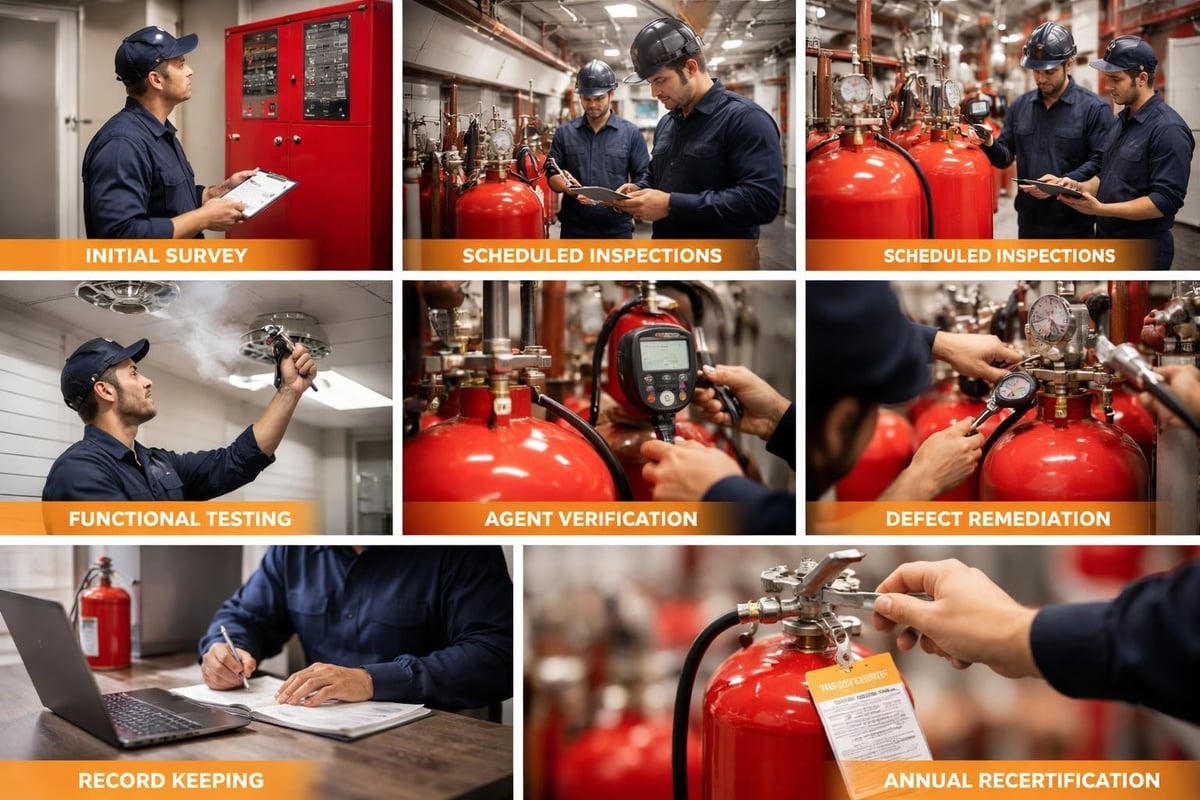
A comprehensive maintenance programme typically includes:
- Initial System Survey: Complete documentation of system configuration, components, and baseline performance data
- Scheduled Inspections: Regular visual checks and operational tests according to manufacturer guidelines
- Functional Testing: Verification that detection devices, alarms, and mechanical releases operate correctly
- Agent Verification: Confirmation that suppression agents maintain proper quantity, pressure, and chemical composition
- Record Keeping: Detailed logs of all maintenance activities, defects identified, and corrective actions taken
- Defect Remediation: Prompt repair or replacement of faulty components
- System Recertification: Annual certification confirming system compliance with applicable standards
The maintenance recommendations from industry experts emphasise the importance of pre-shift inspections in high-risk environments. Facilities managers should conduct basic visual checks before each operational period, noting any obvious damage, obstruction, or alarm conditions.
Specialist Servicing for Different System Types
Each fire suppression technology demands specific servicing expertise and equipment. Generalised maintenance approaches prove inadequate for complex installations serving critical environments.
Clean Agent and Inert Gas Systems
Clean agent systems protecting server rooms, telecommunications facilities, and archive storage require particularly meticulous servicing. These systems employ expensive agents like FM-200, Novec 1230, or Inergen that must remain uncontaminated and at precise concentrations.
Engineers verify agent purity through sampling and laboratory analysis. They inspect discharge nozzles for correct orientation and clear pathways, ensuring agents reach all protected areas within required timeframes. Electronic controls receive thorough testing, including battery backup verification and alarm sequence confirmation.
Water Mist and Deluge Systems
Water-based suppression systems serving industrial facilities, warehouses, and manufacturing plants require different servicing protocols. Engineers inspect pumps, valves, piping networks, and nozzle arrays for proper operation.
Testing procedures include flow tests, pressure verification, and valve operation checks. Water quality receives attention, as mineral deposits or contamination can block nozzles or corrode system components. Annual testing often involves partial discharge to verify distribution patterns.
Chemical Suppression Systems
Commercial kitchens rely on wet chemical systems specifically designed for grease fire suppression. These systems face harsh operating environments with temperature extremes, airborne contaminants, and vibration from extraction equipment.
Quarterly servicing includes thorough cleaning of detection devices and nozzles, verification of agent tank levels, and testing of mechanical linkages. The servicing and maintenance guidelines highlight the importance of cleaning fusible links and heat detection devices to prevent premature activation or failure to discharge.
Documentation and Certification Requirements
Proper documentation forms an essential component of fire suppression system servicing. Regulatory authorities, insurance providers, and building certifiers require evidence of regular maintenance and compliance with applicable standards.
Essential Documentation Includes:
- Service visit logs with date, engineer details, and work completed
- Test results showing system performance metrics
- Component replacement records with part numbers and specifications
- Defect notifications and remediation evidence
- Annual certification confirming system serviceability
- Manufacturer bulletins and technical updates implemented
Many organisations implement digital maintenance management systems that track service schedules, generate automated reminders, and maintain historical records. These systems prove invaluable during insurance renewals, regulatory inspections, or property transactions.
Insurance companies frequently request service records when underwriting commercial property policies. Demonstrating regular professional maintenance can reduce premiums whilst ensuring coverage remains valid. Neglected systems may void insurance protection, leaving businesses financially exposed.
Common Defects Identified During Servicing
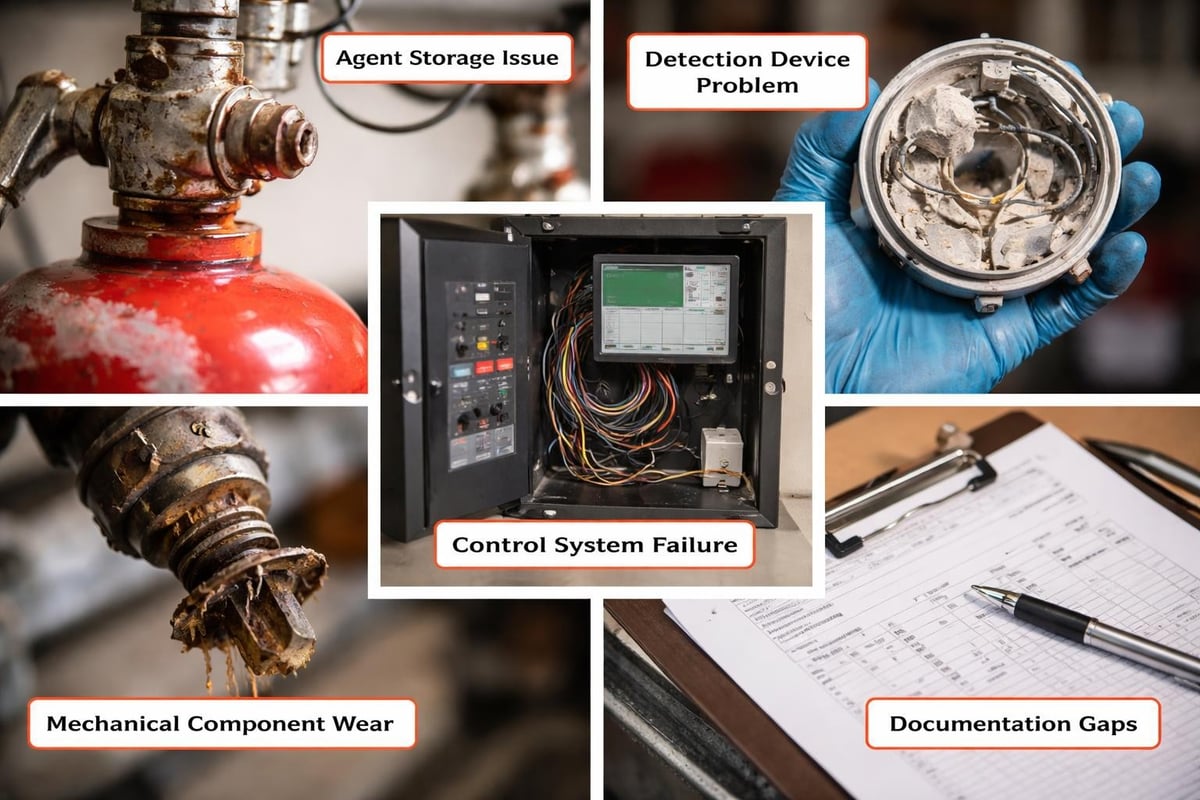
Experienced engineers encounter recurring issues during fire suppression system servicing visits. Recognising these common problems helps facilities managers understand the value of regular professional maintenance.
| Defect Category | Common Issues | Potential Consequences |
|---|---|---|
| Agent Storage | Pressure loss, cylinder corrosion | System failure, inadequate discharge |
| Detection Devices | Contamination, calibration drift | False alarms, failure to activate |
| Control Systems | Battery failure, wiring damage | System inoperability, alarm failure |
| Mechanical Components | Valve seizure, actuator failure | Discharge prevention, partial coverage |
| Documentation | Missing records, expired certification | Compliance violations, insurance issues |
Early detection of these defects through regular servicing prevents costly emergency repairs and potential system failures. The comprehensive guide to fire suppression system inspection emphasises that routine maintenance costs significantly less than reactive repairs following system malfunction.
Selecting Qualified Service Providers
Professional fire suppression system servicing requires specialist knowledge, appropriate tooling, and manufacturer-approved training. Building owners should verify that service providers possess necessary qualifications and industry accreditations.
Essential Provider Credentials
Reputable servicing companies demonstrate competence through recognised industry certifications. Engineers should hold qualifications from bodies such as BAFE (British Approvals for Fire Equipment) or equivalent international standards. Company-level accreditations provide additional assurance of quality and compliance.
Partnerships with equipment manufacturers ensure service technicians receive regular training on new technologies and updated procedures. Authorised service centres access technical support, genuine spare parts, and manufacturer bulletins regarding system improvements or safety notices.
Logic Fire and Security maintains quality accreditations that demonstrate their commitment to professional standards and continuous improvement. Such credentials provide businesses with confidence in the servicing quality they receive.
Service Level Agreements
Structured service agreements define the scope, frequency, and response times for maintenance activities. Well-constructed agreements specify:
- Inspection frequencies for different system components
- Response times for emergency callouts
- Reporting formats and documentation standards
- Spare parts availability and replacement procedures
- Out-of-hours support arrangements
- Annual recertification processes
These agreements protect both parties by establishing clear expectations and accountability. Businesses gain predictable maintenance costs and assured system reliability, whilst service providers can plan resources effectively.
Integration with Broader Fire Safety Systems
Modern fire suppression systems rarely operate in isolation. They integrate with fire alarm systems, building management platforms, and emergency response protocols to provide comprehensive protection.
Servicing visits should verify these integration points function correctly. Engineers test communication between suppression controls and fire alarm panels, ensuring activation signals transmit properly. They confirm that fire alarm monitoring centres receive appropriate notifications when systems activate or develop faults.
Building automation integration allows suppression systems to perform protective actions automatically. These might include shutting down HVAC systems, closing fire dampers, or activating emergency ventilation. Service engineers verify these sequences operate as designed, preventing smoke spread or agent loss.
For facilities requiring round-the-clock protection, integration with 24/7 monitoring services provides immediate response to system alarms or faults. Professional monitoring centres dispatch engineers promptly when defects arise, minimising downtime and maintaining continuous protection.
Cost Considerations and Long-Term Value
Fire suppression system servicing represents an ongoing operational expense that businesses must budget appropriately. However, this investment delivers substantial returns through asset protection, compliance assurance, and insurance benefits.
Annual servicing costs vary depending on system complexity, installation size, and accessibility. Simple single-zone systems serving small commercial spaces cost considerably less to maintain than extensive multi-zone installations protecting large industrial facilities.
Factors Influencing Service Costs:
- System type and complexity
- Number of protected zones
- Agent type and refill requirements
- Site accessibility and location
- Service frequency and response times
- Integration with other fire safety systems
Neglecting regular maintenance often proves far more expensive than scheduled servicing. Emergency repairs following system failure typically cost three to five times more than preventive maintenance. System failures can also result in production downtime, property damage, and regulatory penalties that dwarf routine service expenses.
Insurance providers recognise the value of professional maintenance, often offering premium reductions for businesses demonstrating robust fire protection management. These savings can offset a substantial portion of annual servicing costs.
Emerging Technologies and Service Requirements
The fire suppression industry continues evolving, with new technologies offering enhanced protection and operational benefits. These innovations introduce fresh servicing requirements that engineers must understand and accommodate.
Wireless detection devices reduce installation costs and improve aesthetic integration. However, they require battery monitoring and radio frequency testing during service visits. Engineers verify signal strength, battery condition, and communication reliability with control panels.
IoT-enabled suppression systems provide real-time condition monitoring and predictive maintenance alerts. These platforms identify potential issues before they cause system failures, enabling proactive intervention. Service providers must understand these digital platforms and interpret the data they generate.
Environmental concerns drive development of low global warming potential (GWP) suppression agents. As businesses transition to these environmentally responsible alternatives, service engineers require training on new agent properties, handling procedures, and discharge characteristics.
Smart building integration allows suppression systems to participate in broader facility management strategies. They share data with energy management systems, security platforms, and occupancy monitoring tools. Service technicians must verify these digital connections remain secure and functional.
Training and Competency Development
Effective fire suppression system servicing demands continuous professional development. The technology evolves rapidly, regulatory requirements change, and new installation techniques emerge regularly. Service engineers must maintain current knowledge through structured training programmes.
Manufacturer-specific training ensures technicians understand proprietary systems thoroughly. Equipment suppliers offer courses covering installation, commissioning, maintenance, and troubleshooting for their products. These programmes often include hands-on practice with actual components and system configurations.
Industry associations provide broader education covering standards, regulations, and best practices applicable across different system types. Organisations like the Fire Industry Association (FIA) offer courses, webinars, and technical publications that keep professionals informed about industry developments.
For businesses with in-house facilities management teams, basic training in fire suppression system operation and emergency procedures proves valuable. Whilst only qualified technicians should perform servicing work, building staff benefit from understanding system fundamentals and recognition of potential problems requiring professional attention.
Risk Management and Business Continuity
Fire suppression system servicing contributes directly to business continuity and risk management strategies. Reliable fire protection prevents catastrophic losses that could threaten organisational survival.
Commercial properties face various fire risks depending on their activities, occupancy, and contents. Manufacturing facilities handling flammable materials, data centres hosting critical digital infrastructure, and hospitals providing patient care all require absolute confidence in their fire suppression capabilities.
Regular servicing identifies vulnerabilities before they compromise protection levels. Engineers detect component wear, environmental changes affecting system performance, and emerging risks from facility modifications. This proactive approach prevents gaps in fire protection that could expose businesses to devastating losses.
Business continuity planning should incorporate fire suppression system maintenance schedules, ensuring servicing occurs during appropriate operational windows. Facilities requiring continuous protection need arrangements for temporary coverage during maintenance work or system testing.
Risk assessments conducted as part of fire risk assessment programmes should consider suppression system reliability. Regular professional servicing demonstrates due diligence and supports risk mitigation strategies that protect personnel, assets, and operational capability.
Understanding fire suppression system refilling standards ensures businesses maintain adequate agent quantities following discharge events or routine servicing that requires system depressurisation. Proper refilling procedures restore full protection capability efficiently.
Environmental and Sustainability Considerations
Modern fire suppression system servicing increasingly addresses environmental sustainability alongside traditional safety objectives. Responsible agent management, waste reduction, and energy efficiency contribute to corporate environmental goals.
Legacy suppression agents with high environmental impact require careful handling during servicing, replacement, or disposal. Engineers follow strict protocols for recovering, recycling, or destroying these substances in accordance with environmental regulations.
Businesses seeking to improve their environmental performance may choose to upgrade suppression systems during major servicing intervals. Transitioning to low-GWP agents, improving energy efficiency of control systems, or implementing water-conserving technologies aligns fire protection with sustainability objectives.
Service providers committed to environmental responsibility implement practices that minimise waste, reduce vehicle emissions through optimised scheduling, and specify environmentally preferable replacement components. These considerations increasingly influence provider selection as businesses enhance their environmental credentials.
Even essential building services like those provided by NU Heat North East Ltd demonstrate how service organisations can integrate environmental responsibility into their operations whilst maintaining technical excellence across heating, plumbing, and related building systems.
Professional fire suppression system servicing delivers essential protection for commercial properties whilst ensuring regulatory compliance and operational reliability. Businesses that prioritise regular maintenance by qualified technicians protect their assets, personnel, and continuity more effectively than those treating suppression systems as install-and-forget solutions. Logic Fire and Security provides comprehensive fire suppression system servicing across the UK, combining technical expertise with responsive support to keep your critical fire protection systems operating at peak performance year-round.