
Fire Extinguisher Inspection Guide: Your 2025 Essentials

Did you know that a neglected fire extinguisher inspection can turn a minor incident into a major disaster? In the UK, over 30% of workplace fire extinguishers are found faulty during annual checks, according to UK Fire Service Resources. Failing to carry out regular fire extinguisher inspection not only puts lives at risk but also exposes businesses to legal penalties and operational disruption. Routine fire extinguisher inspection offers peace of mind, ensures compliance with the latest regulations, and safeguards business continuity. In this guide, you will find a clear, step-by-step approach to fire extinguisher inspection for 2025, covering legal duties, inspection procedures, common issues, and best practices.

Understanding Fire Extinguisher Inspection: Why It Matters in 2025

Staying up-to-date with fire extinguisher inspection is crucial for every UK business in 2025. Regulations, safety standards, and the types of extinguishers in use are all evolving. Understanding these changes will help you protect people, property, and your organisation’s reputation.

Understanding Fire Extinguisher Inspection: Why It Matters in 2025

Legal Obligations and Regulatory Updates

UK fire safety law requires all workplaces to complete regular fire extinguisher inspection. The Regulatory Reform (Fire Safety) Order 2005 and BS 5306-3:2017 set the baseline for frequency and process. In 2025, new standards include changes to inspection intervals and the prohibition of certain chemicals. Failing to comply can lead to significant fines or prosecution. Authorities have increased enforcement actions, with several businesses fined in the past year for missing or incomplete records. It is vital to keep detailed inspection logs for insurance and audit purposes. For a summary of the latest changes, see the UK fire extinguisher regulation updates 2025.

The Role of Inspections in Fire Safety Strategy

A robust fire extinguisher inspection routine is a cornerstone of any effective fire safety strategy. Inspections identify faults before an emergency occurs, ensuring equipment is ready when needed. This reduces liability and protects building occupants. According to the Fire Industry Association, 80% of fires are controlled by portable extinguishers when used correctly. Consider a recent workplace incident where a routine inspection revealed a discharged extinguisher, which was replaced just days before a minor fire broke out. Regular checks can make the difference between a minor incident and a major loss.

Types of Fire Extinguishers and Inspection Needs

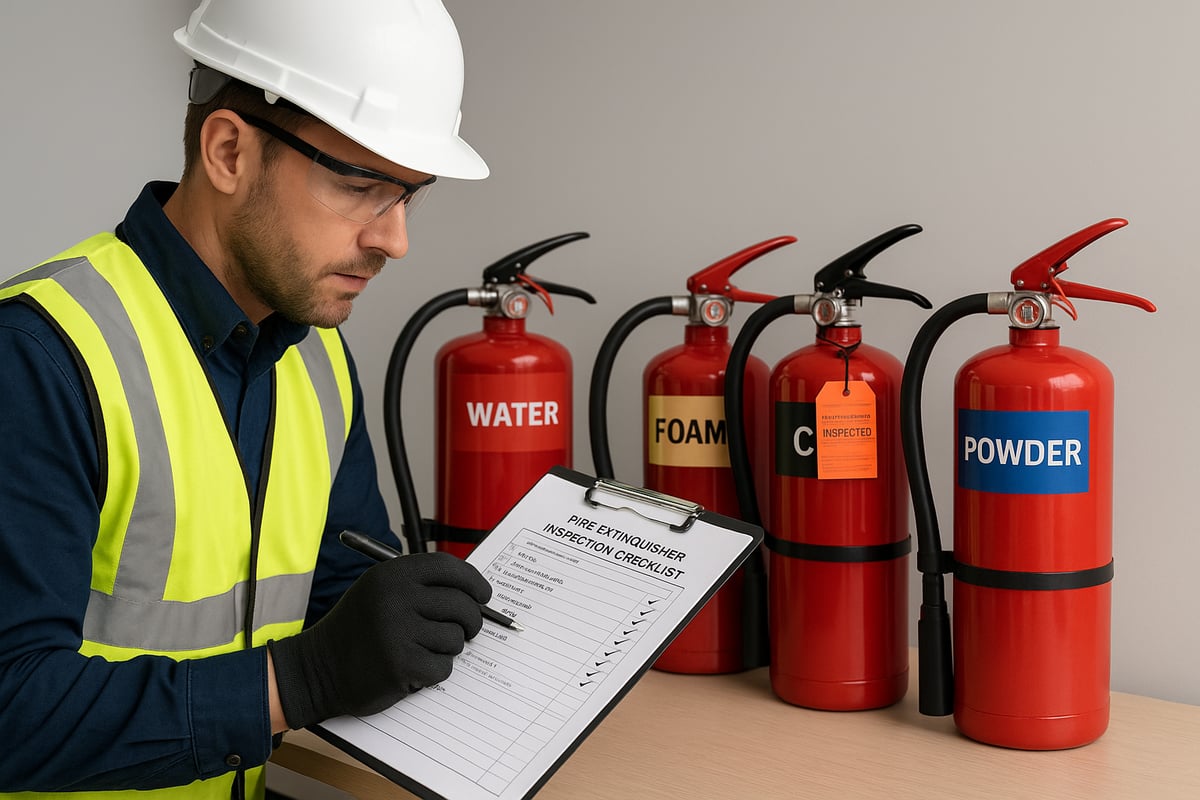
Several extinguisher types are commonly found in UK workplaces, each with specific fire extinguisher inspection requirements:

  • Water: Check for leaks and corrosion.
  • Foam: Inspect for nozzle blockages and pressure.
  • CO2: Ensure the presence of intact pressure seals and weigh the cylinder.
  • Powder: Shake to prevent powder settling and verify tamper seals.
  • Wet chemical: Check specialist discharge mechanisms.

High-risk areas, such as kitchens or industrial sites, demand more frequent and thorough checks. For example, CO2 extinguishers need regular pressure gauge readings and hose inspections. Recent data shows powder extinguishers have a higher failure rate if left unchecked in damp environments. By tailoring your fire extinguisher inspection approach to the type and location, you significantly improve your fire safety compliance and readiness.

Step-by-Step Fire Extinguisher Inspection Process

Carrying out a thorough fire extinguisher inspection is essential for workplace safety and compliance. This step-by-step approach ensures no detail is missed, helping your business meet current UK regulations and best practices.

Step-by-Step Fire Extinguisher Inspection Process

Pre-Inspection Preparation

Before beginning a fire extinguisher inspection, preparation is crucial. Start by scheduling both annual servicing and monthly visual checks as required by UK standards. Assign a competent person, as defined in BS 5306, to oversee the process.

Make sure all extinguishers are accessible. Gather the necessary tools such as a torch, inspection tags, and personal protective equipment. Review previous inspection records to identify recurring issues or missed checks.

A well-organised pre-inspection phase ensures consistency in every fire extinguisher inspection and supports legal compliance.

Visual Inspection Checklist

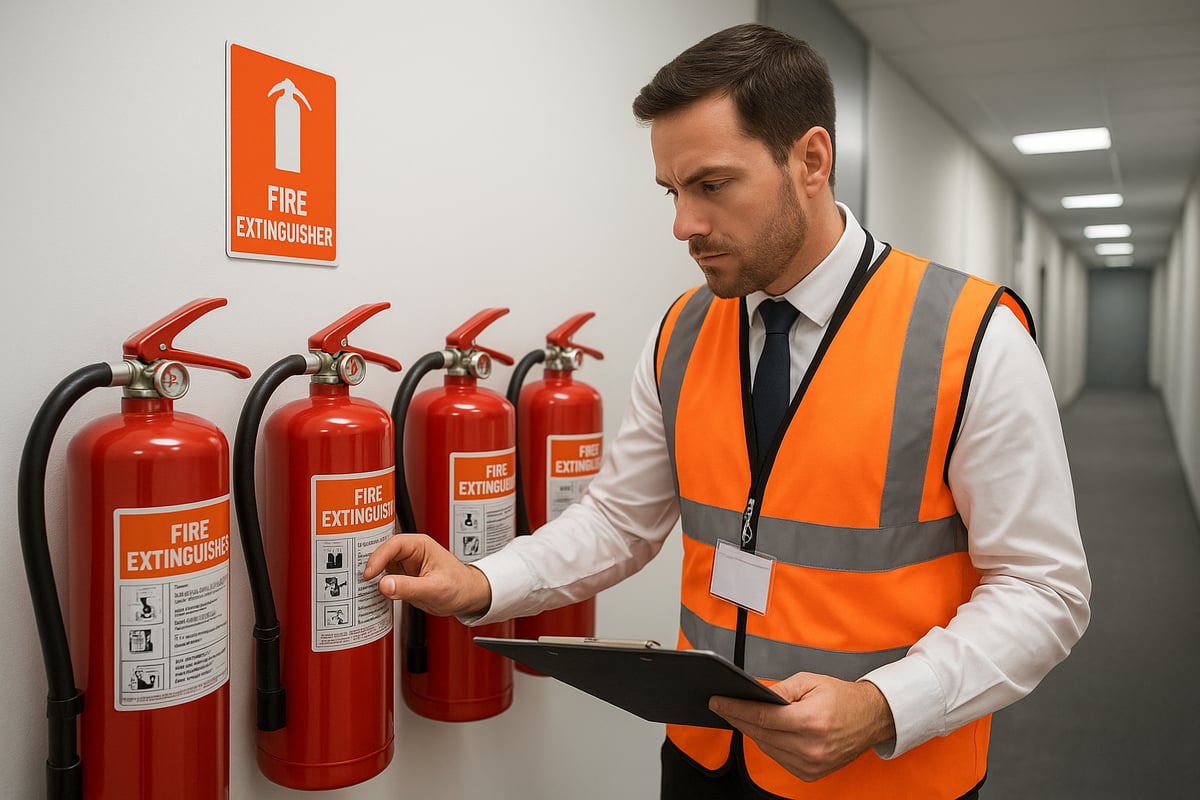
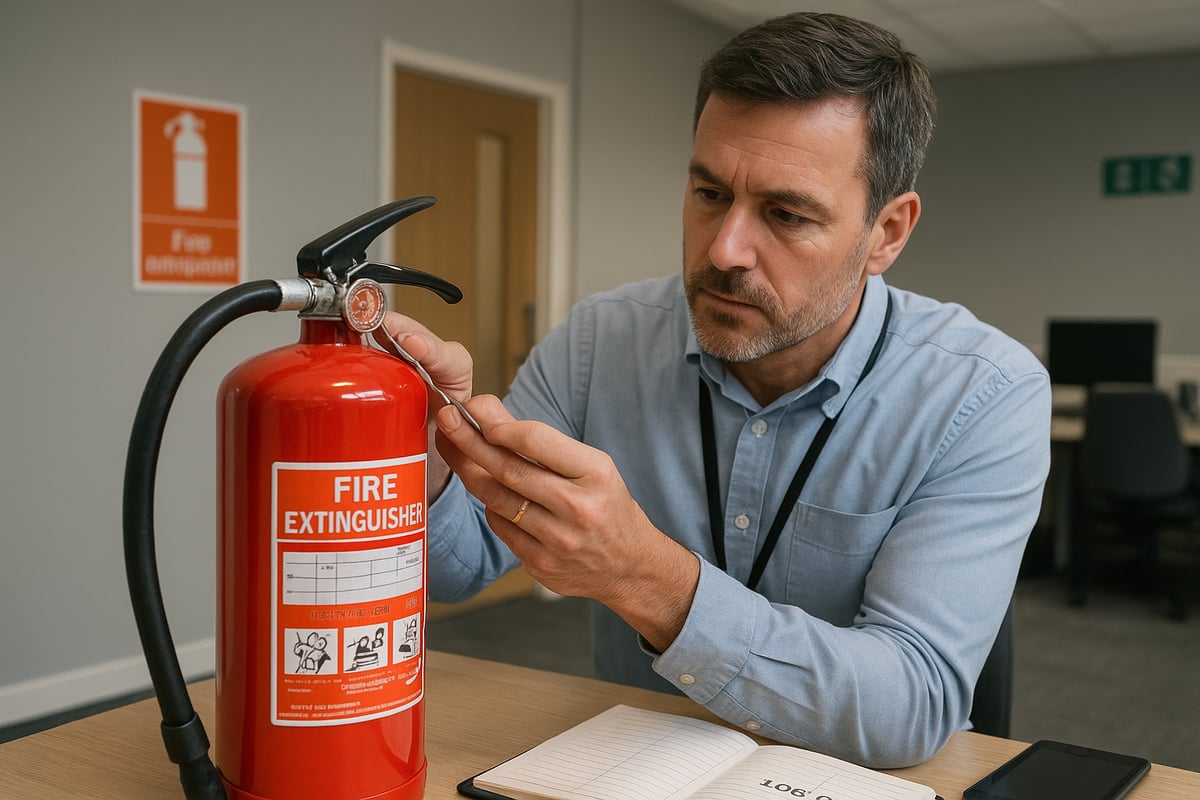
A detailed visual check forms the backbone of every fire extinguisher inspection. Confirm each unit has clear labelling and correct signage. Verify there is unobstructed access and that extinguishers are mounted at the correct height.

Inspect for any physical damage, corrosion, or leaks. Check the pressure gauge to ensure it is within the safe operating range. Confirm the presence of tamper seals and intact safety pins.

Common signs of neglect in office settings include faded labels, blocked access, and missing seals. For more on what to look for and how to address issues, see our Fire extinguisher servicing guide.

Functional Testing and Maintenance Tasks

Beyond visual checks, functional testing is a vital part of any fire extinguisher inspection. Weigh and pressure-test units where required, especially CO2 and powder models.

Shake powder extinguishers gently to avoid compacting the agent. Examine hoses, nozzles, and discharge mechanisms for blockages or wear. Replace, refill, or service extinguishers as needed, always following the manufacturer’s guidelines.

A missed pressure test once led to a failed extinguisher during a retail incident, underlining the importance of this inspection step. Each fire extinguisher inspection should include these functional tasks to guarantee readiness.

Documentation and Record Keeping

Accurate documentation is the final step in a compliant fire extinguisher inspection. Complete inspection tags and update logbooks immediately after each check.

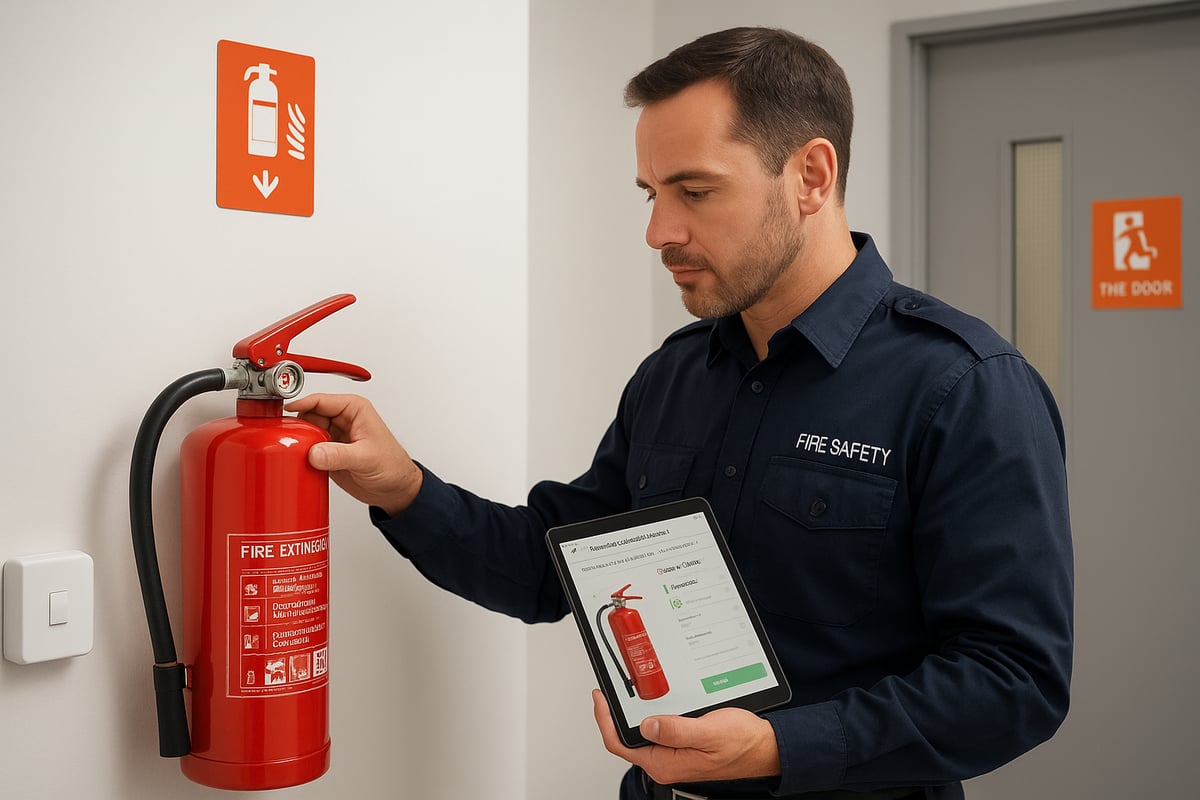
Consider digital record-keeping solutions for 2025, which streamline audits and support insurance claims. Keeping detailed records of every fire extinguisher inspection protects your business and demonstrates diligence to authorities.

Common Fire Extinguisher Inspection Issues and How to Fix Them

Routine fire extinguisher inspection often uncovers issues that can compromise safety and compliance. Addressing these problems promptly ensures that extinguishers function correctly in an emergency and supports a robust fire risk management strategy.

Common Fire Extinguisher Inspection Issues and How to Fix Them

Frequent Problems Identified During Inspections

A fire extinguisher inspection will frequently reveal several recurring faults. The most common issues include:

  • Expired or missing inspection tags: Without valid tags, it is impossible to verify the last check or maintenance date.
  • Low pressure or empty extinguishers: These units may not discharge when needed.
  • Blocked or damaged nozzles: Dirt, debris, or physical damage can prevent proper operation.
  • Corrosion or physical damage: Rust, dents, or leaks can render extinguishers unsafe.
  • Missing or broken safety pins: These compromise tamper evidence and safety.

Statistics indicate that expired tags and low pressure are the top faults found during fire extinguisher inspection in UK workplaces. For a comprehensive approach, integrating inspections with Fire risk assessment essentials is crucial, as this ensures no compliance gaps.

Solutions and Remediation Steps

When a fire extinguisher inspection uncovers faults, immediate action is vital. Follow these steps:

  • Isolate faulty extinguishers: Remove any units that fail checks from service.
  • Arrange for refilling or servicing: Empty or low-pressure extinguishers must be refilled or recharged by a certified technician.
  • Repair or replace damaged parts: Address blocked nozzles, missing pins, or corrosion.
  • Document all actions taken: Update inspection records and tags accordingly.

Preventative measures are equally important. Schedule regular maintenance, store extinguishers in suitable environments, and train staff to spot early signs of wear. In one logistics company, implementing scheduled servicing reduced inspection faults by 40 percent, highlighting the impact of proactive management.

Preventing Future Failures

Ongoing attention is key to reducing fire extinguisher inspection failures. Start with comprehensive staff training so everyone understands basic extinguisher care and reporting procedures. Regular housekeeping checks ensure extinguishers remain accessible and undamaged.

Integrate fire extinguisher inspection into wider safety audits for a holistic approach. Technology also plays a vital role in 2025. Use QR codes or mobile apps to set automated reminders, track inspections, and maintain digital logs.

A recent case study from a UK school illustrates the benefits: after moving to digital inspection records, missed checks dropped significantly, and compliance improved. Consistent attention to process and technology will keep your fire extinguisher inspection procedures robust and reliable.

Best Practices for Fire Extinguisher Compliance in 2025

Ensuring robust fire extinguisher inspection compliance in 2025 is not just about ticking boxes. It means creating a culture of safety, staying ahead of regulation, and using the right people, processes, and technology. Here is how to embed best practices into your fire safety routine.

Best Practices for Fire Extinguisher Compliance in 2025

Training and Appointing Competent Persons

A key pillar for effective fire extinguisher inspection is appointing a “competent person”. Legally, this is someone with adequate training, knowledge, and experience to carry out inspections as defined in British Standards. Regular refresher courses and professional development are vital to maintain competence and adapt to updated regulations.

Essential training elements include:

  • Understanding different extinguisher types and their inspection needs
  • Recognising signs of wear, damage, or tampering
  • Completing and maintaining accurate records

Certification from recognised bodies, such as the Fire Industry Association (FIA), is highly recommended. Many businesses benefit from enrolling staff in FIA-accredited training programmes, which cover both theory and hands-on skills. Investing in ongoing education ensures your team remains up to date and inspection-ready.

Scheduling and Frequency Guidelines

A structured schedule is the backbone of fire extinguisher inspection compliance. Monthly visual checks, combined with annual servicing by a competent person, form the minimum standard. In high-risk settings, such as kitchens or manufacturing plants, inspections may need to be more frequent to ensure readiness.

Frequency Activity Responsible Person
Monthly Visual inspection Trained staff
Annually Full servicing Competent person
As required After use or incident Certified technician

Coordination with other fire safety checks, like fire alarm system requirements, boosts overall compliance and reduces missed steps. For example, a manufacturing plant might align extinguisher checks with routine fire alarm tests to streamline safety audits and maintain complete coverage.

Leveraging Technology for Compliance

Digital transformation is reshaping fire extinguisher inspection in 2025. Mobile apps and cloud-based systems allow for real-time recording, automated reminders, and instant access to inspection history. QR codes and NFC tags attached to extinguishers mean staff can scan and log checks quickly, improving accuracy and accountability.

A recent survey of UK facility managers revealed a sharp increase in the adoption of digital inspection tools, with many citing improved audit readiness and fewer missed inspections. Integrating technology not only supports legal compliance but also future-proofs your approach as regulations and best practices evolve. By embracing digital solutions, businesses can ensure every fire extinguisher inspection is thorough, timely, and fully documented.

Frequently Asked Questions About Fire Extinguisher Inspections

Navigating fire extinguisher inspection requirements can be confusing, especially as regulations evolve. Here are answers to the most common questions UK businesses ask about fire extinguisher inspection, legal compliance, and best practices for 2025.

Who Can Perform Fire Extinguisher Inspections?

For a fire extinguisher inspection, only a “competent person” should carry out the process. This means someone with suitable training, knowledge, and experience in fire extinguisher servicing, as defined by BS 5306-3.

Internal staff may conduct basic monthly checks if they have received proper training. However, annual servicing must be completed by an external certified technician or a person with recognised qualifications. If an unqualified individual performs fire extinguisher inspection, it could invalidate insurance and expose the business to legal risk.

What Records Must Be Kept?

Accurate record keeping is essential for every fire extinguisher inspection. Legally, businesses must maintain up-to-date records of all inspections, servicing, and maintenance. This includes inspection tags on each extinguisher and a central logbook or digital record.

Records should detail the date, findings, actions taken, and who completed the fire extinguisher inspection. The law requires these records to be retained for several years, as they may be requested during audits, insurance claims, or enforcement visits.

How Often Should Inspections Be Carried Out?

The frequency of fire extinguisher inspection depends on the type of check. UK regulations require a visual inspection at least once a month, with a full service by a competent person at least annually.

For high-risk environments or where extinguishers are heavily used, more frequent inspections may be necessary. Always refer to the manufacturer’s guidelines and your fire risk assessment to determine if adjustments are needed. Regular fire extinguisher inspection ensures equipment is ready when needed and supports compliance.

What Should I Do if an Extinguisher Fails Inspection?

If a fire extinguisher inspection reveals a fault, take it out of service immediately. Place a clear “do not use” sign on the extinguisher and arrange for a certified technician to repair, refill, or replace it as required.

Do not attempt repairs unless qualified. If multiple extinguishers fail, review your maintenance schedule and staff training. Prompt action following a failed fire extinguisher inspection helps maintain safety and legal compliance, reducing the risk of equipment failure during an emergency.

How Do Inspections Fit Into Overall Fire Safety Compliance?

Fire extinguisher inspection is just one part of a comprehensive fire safety strategy. Inspections should be integrated with fire risk assessments, emergency plans, and other safety checks, such as fire door inspection best practices.

Keeping thorough records of every fire extinguisher inspection supports insurance claims and demonstrates due diligence during audits. Regular inspections, combined with wider safety measures, help protect people, property, and business continuity.

After reading through the essential steps for effective fire extinguisher inspections in 2025, you might be wondering how your own site measures up or whether your compliance strategy covers every angle. With so much at stake—safety, legal obligations, and peace of mind—it’s worth getting a professional perspective. At Logic Fire and Security, we specialise in providing tailored fire safety solutions that keep your team and premises protected. If you’d like expert advice or a thorough review of your current setup, you can Get a Free Site Survey from our knowledgeable team.

Fire Protection Installations: The Essential Guide for 2025

In 2025, the importance of fire protection installations has never been clearer as technology, regulations, and workplace risks continue to evolve at pace. Fire incidents are on the rise, and businesses that fail to comply with the latest standards face severe financial and reputational damage.

New technologies, smarter systems, and updated legal requirements are transforming how organisations approach fire safety. Robust fire protection installations are now essential for safeguarding people, ensuring compliance, and protecting business continuity.

This essential guide will help you navigate the latest regulations, explore different installation types, understand step-by-step processes, review key technologies, and maintain ongoing protection.

The Evolving Landscape of Fire Protection in 2025

The world of fire protection installations is experiencing rapid change in 2025. With new legislation, shifting risks, and advanced technology, businesses must adapt to stay compliant and protect their people and assets. Understanding these evolving factors is essential for effective fire protection installations and long-term business resilience.

The Evolving Landscape of Fire Protection in 2025

Regulatory Changes and Compliance Updates

2025 brings significant updates to UK and EU fire safety regulations. The Building Safety Act and Fire Safety Order have introduced stricter requirements for commercial properties. New deadlines for compliance are in place, targeting improved installation standards and documentation.

The Grenfell Tower Inquiry continues to shape policy, with its recommendations now embedded in national guidance. Property managers and facility owners face new obligations, including enhanced evacuation plans and regular system reviews. Recent prosecutions highlight the risks of ignoring these rules, with hefty fines and criminal charges for non-compliance.

In 2024, enforcement actions for fire safety breaches rose by 18 percent. This sharp increase underlines the legal and financial consequences of neglecting fire protection installations. For a comprehensive overview of regulatory changes, refer to the 2025 UK fire safety regulation updates.

Emerging Fire Risks and Business Impacts

Modern building materials and open-plan layouts have changed the way fires behave, increasing potential risks. The rise of lithium-ion battery use in offices, warehouses, and logistics centres has led to a spike in battery-related fires. Hybrid working patterns and vacant premises have also shifted risk profiles, leaving some sites more vulnerable to undetected incidents.

Recent data from 2023 and 2024 show a noticeable increase in warehouse and office fire incidents. These events often result in business interruption, lost revenue, and higher insurance premiums. Regular fire risk assessments are now more important than ever to ensure fire protection installations address current hazards and adapt to changing occupancy patterns.

Industry Trends and Innovations

The fire protection installations sector is embracing new technology and sustainable solutions. Smart fire detection systems, powered by IoT, are now common in commercial buildings. These systems offer real-time monitoring, remote diagnostics, and predictive maintenance, helping businesses respond faster and reduce false alarms.

Integration with security and building management platforms is also on the rise, providing seamless control of fire and safety functions. Demand for eco-friendly suppression systems, such as water mist and inert gas, is increasing as companies seek to minimise environmental impact.

Wireless alarm adoption rates are climbing, especially in new builds where flexibility and scalability are crucial. The UK fire protection industry is projected to reach a market value of £2.3 billion in 2025. Data analytics and remote monitoring are becoming standard, enabling proactive management of fire protection installations and meeting evolving insurer and stakeholder expectations.

Types of Fire Protection Installations Explained

Understanding the different types of fire protection installations is essential for creating a safe and compliant environment in 2025. As risks and regulations evolve, selecting the correct installation type has never been more important for businesses and property managers. For a more detailed overview, see the Types of Fire Systems Explained guide.

Types of Fire Protection Installations Explained

Passive Fire Protection Systems

Passive fire protection installations are designed to compartmentalise fires and contain smoke, limiting the spread throughout a building. These systems include fire-resistant doors, walls, floors, and ceilings, all constructed to withstand fire for a specified period. Intumescent materials are often used in high-rise buildings, expanding when exposed to heat to seal gaps and penetrations.

Key components:

  • Fire doors with certified ratings
  • Firestopping around service penetrations
  • Fire-resisting partitions and ceilings

All passive fire protection installations must comply with standards such as BS 476 and EN 1366. Regular inspections are required to ensure ongoing effectiveness, with intervals set by building regulations. Proper maintenance ensures these systems perform as intended during an emergency.

Active Fire Protection Systems

Active fire protection installations involve systems that detect, alert, or suppress fires in real time. These include fire alarm systems such as conventional, addressable, and wireless alarms, as well as suppression solutions like sprinklers, gas suppression, and water mist systems.

For example, sprinklers can reduce fire fatalities in UK commercial premises by up to 88 percent. Emergency lighting and evacuation alert systems are also vital, guiding occupants to safety.

All active fire protection installations must meet BS 5839 for alarms and BS 5306 for suppression. Routine testing and servicing are crucial to maintain readiness and compliance, protecting both people and assets.

Detection and Alarm Technologies

Detection and alarm technologies are the brains of modern fire protection installations, identifying and signalling the presence of fire or smoke. Systems include smoke, heat, and advanced multi-sensor detectors, each tailored for specific risk profiles.

Addressable alarm systems allow pinpoint identification of incidents, while non-addressable systems offer basic coverage. Integration with building management platforms enables remote monitoring and rapid response. Aspirating smoke detection is increasingly standard in data centres for early warning.

Recent innovations in fire protection installations feature AI-powered detection and wireless mesh networks, which improve reliability and reduce false alarms. Keeping pace with technology is vital for optimal protection.

Specialised Systems for High-Risk Environments

Specialised fire protection installations are essential for environments with unique hazards, such as server rooms, commercial kitchens, and industrial sites. Gas-based suppression systems like CO2 or FM-200, as well as water mist solutions, address risks where traditional sprinklers may not be suitable.

Disabled refuge and emergency communication systems provide safe evacuation options for vulnerable occupants. In lithium-ion battery storage facilities, advanced suppression technologies are tailored to handle the specific fire risks.

Compliance with regulatory standards is mandatory for these fire protection installations, especially in hazardous sites. Regular testing and expert consultation ensure these systems remain effective and up-to-date.

Step-by-Step Guide to Fire Protection Installation

Navigating fire protection installations in 2025 requires a structured approach, combining regulatory compliance with the latest technology. Each stage is essential for safeguarding people, assets, and business continuity. Below, we break down the process into five clear steps.

Step-by-Step Guide to Fire Protection Installation

Step 1: Fire Risk Assessment and Site Survey

A comprehensive fire risk assessment is the legal foundation of all fire protection installations. This process identifies hazards, evaluates occupancy types, and highlights vulnerable zones. Common oversights, such as neglecting shared spaces in multi-use buildings, can lead to costly gaps in protection.

Recent data reveals that 67% of UK businesses in 2024 discovered shortcomings in their initial risk assessments. Proper documentation and regular reviews are vital for ongoing compliance. For detailed guidance on this critical first step, see the Fire Risk Assessment Guidance.

Step 2: System Design and Specification

The next phase involves tailoring fire protection installations to the specific needs of your premises. System design should reflect identified risks, building use, and future scalability. Collaboration with architects, engineers, and fire safety consultants is essential, especially for listed or historic buildings where standard solutions may not suffice.

Designs must accommodate changes in layout, occupancy, and technology. Future-proofing ensures systems adapt to evolving regulations and business growth.

Step 3: Product Selection and Sourcing

Choosing the right products is crucial for reliable fire protection installations. Always select certified equipment, such as BAFE, LPCB, or CE marked components. Assess suppliers for reputation and warranty support.

Recent incidents, like recalls of non-compliant fire alarm components, underscore the importance of product certification. Prioritise quality and compliance to avoid unnecessary risk.

Step 4: Professional Installation Process

Installation should be carried out by certified professionals, such as those accredited by NICEIC, BAFE, or NSI Gold. Minimising disruption to business operations is key, often achieved through phased works or out-of-hours scheduling.

Coordination with other trades during fit-outs prevents delays and ensures seamless integration. In occupied office complexes, phased installation allows for continued business activity while maintaining safety. All work must be fully documented and systems commissioned before handover.

Step 5: Testing, Handover, and Staff Training

Thorough testing is mandatory to confirm that fire protection installations operate as designed. This includes both cause-and-effect and integration checks. Comprehensive handover documentation and user manuals are provided on completion.

Staff must receive fire safety training, including evacuation drills, to ensure user competency. Common issues at this stage include overlooked training or incomplete documentation, both of which can compromise safety and compliance. Regular refresher sessions help maintain high standards.

Key Technologies Shaping Fire Protection in 2025

The landscape of fire protection installations in 2025 is defined by rapid advancements in technology and integration. Businesses must stay ahead by adopting solutions that not only meet compliance but also enhance safety, efficiency, and operational resilience.

Key Technologies Shaping Fire Protection in 2025

Smart Detection and IoT Integration

Smart detection is transforming fire protection installations by providing real-time data and remote diagnostics. Modern systems use IoT connectivity to monitor and report on every sensor, detector, and alarm. Predictive maintenance features allow faults to be identified before they cause disruption.

This technology reduces false alarms and enables rapid emergency response. For example, IoT-enabled fire alarms have been shown to cut response times by 25 percent in commercial settings. Adoption rates are rising as more businesses seek smarter fire protection installations that support compliance and reduce risk.

To learn more about advanced detection options, see Fire Alarm System Installation.

Advanced Suppression Systems

The next generation of suppression systems is a cornerstone of effective fire protection installations. Water mist, inert gas, and hybrid systems are increasingly chosen for their efficiency and minimal water damage. Eco-friendly agents are now prioritised to protect both assets and the environment.

A key example is the use of water mist in museums and heritage sites, where traditional sprinklers could cause costly damage. All systems must comply with BS EN 15004 and BS 8489 to ensure performance and safety.

Discover more about these solutions at Fire Suppression System Solutions.

Integration with Security and Building Management Systems

Unified platforms are now central to fire protection installations, merging fire, security, and access control into a single system. Automation enables seamless responses such as lift recall or controlled door release during emergencies.

In large-scale logistics hubs, integrated systems simplify management and improve safety outcomes. Facilities managers and insurers increasingly expect fire protection installations to connect with building management for enhanced oversight and compliance.

This approach streamlines operations and ensures a coordinated response to incidents.

Remote Monitoring and Predictive Analytics

Remote monitoring is a vital evolution for fire protection installations, offering 24/7 oversight from offsite locations. AI-driven predictive analytics can detect trends, schedule maintenance, and minimise the risk of system failures.

With predictive analytics, businesses have reported a 30 percent reduction in unplanned outages. This technology ensures fire protection installations remain reliable, compliant, and responsive to emerging risks.

Investing in these innovations is essential for safeguarding people and property in 2025.

Maintenance and Compliance: Ensuring Ongoing Protection

Staying compliant and maintaining your fire protection installations is not just a legal obligation but a critical part of safeguarding lives and assets. In 2025, the regulatory landscape is stricter than ever, and the risks of neglecting maintenance can be severe. Proactive management ensures your systems operate optimally, helping you avoid costly penalties and keep everyone safe.

Legal Responsibilities and Inspection Schedules

All businesses must adhere to statutory inspection intervals for fire protection installations. This includes weekly, monthly, and annual checks, with every inspection meticulously logged. Documentation, such as fire safety logbooks and certificates, is necessary for demonstrating compliance during audits.

The ‘Responsible Person’ under UK law is accountable for ensuring systems remain in working order. New rules, such as those set out in the Fire Safety (Residential Evacuation Plans) Regulations 2025, place greater emphasis on evacuation planning and regular review. Fines for missed maintenance deadlines have risen, with recent case studies showing significant penalties for non-compliance. Staying current with inspection schedules and legislation is essential for all fire protection installations.

Preventative Maintenance and Servicing

Routine servicing is the backbone of reliable fire protection installations. Regular checks help prevent system failure and reduce the risk of false alarms. Maintenance tasks typically include:

  • Testing alarms and detectors
  • Inspecting extinguishers and suppression systems
  • Checking emergency lighting and evacuation alerts

Home Office data reveals that 15% of fire alarm failures are due to lack of maintenance. Only accredited providers should handle servicing, as they ensure compliance and use approved parts. Preventative maintenance not only extends the lifespan of your fire protection installations but also minimises operational interruptions.

Common Pitfalls and How to Avoid Them

Neglecting passive fire protection installations, using outdated equipment, and failing to update staff training can all lead to major losses. Recent incidents illustrate the consequences of poor maintenance, from invalidated insurance to severe business disruption.

To avoid these pitfalls:

  • Schedule regular inspections for all systems
  • Update equipment as standards evolve
  • Train staff on emergency procedures and system use

A robust maintenance regime is vital for effective fire protection installations. Keeping up to date with regulations and best practices helps prevent costly mistakes.

The Role of Professional Partners

Specialist fire protection companies play a key role in ensuring your fire protection installations remain compliant and effective. Their expertise leads to higher compliance rates and peace of mind for business owners.

By partnering with professionals, you benefit from tailored advice, comprehensive maintenance, and prompt response to emerging risks. Investing in external support is a smart step towards safeguarding your premises and people.

As we’ve explored, staying ahead of new regulations and leveraging the latest fire protection technologies is crucial for keeping your business safe and compliant in 2025. If you want to take the next step towards safeguarding your premises, there’s real value in getting expert advice tailored to your building and operations. A professional site survey can identify hidden risks and help you make informed decisions about your fire protection strategy. If you’re ready to start, why not Get a Free Site Survey? You’ll gain peace of mind knowing you’re building a safer, more resilient future.

Access Control Systems for Business Guide: 2025 Security Insights

Businesses face mounting security challenges in 2025, making access control systems for business more critical than ever. Sophisticated breaches are on the rise, and traditional methods no longer suffice.

Modern access control systems for business offer robust protection, help you meet compliance requirements, and streamline daily operations. These systems can safeguard your assets and maintain a secure environment for staff and visitors.

This guide will give you practical insights into the latest access control technologies, types of systems, key benefits, selection tips, compliance standards, and what to expect for the future. By following these steps, you can strengthen your security posture and stay ahead of emerging threats.

Understanding Access Control Systems for Business

Modern businesses face growing security challenges, making it crucial to understand how access control systems for business protect assets, data, and people. These systems are no longer a luxury but a vital part of operational security, especially for companies handling sensitive information or operating across multiple locations.

Understanding Access Control Systems for Business

What Are Access Control Systems?

Access control systems for business are designed to manage and regulate who can enter or exit specific areas within commercial premises. At their core, these systems consist of four main components:

  • Credentials (such as cards, PINs, biometrics)
  • Readers (devices that validate credentials)
  • Control panels (decision-making units)
  • Software (management interface)

They can be divided into physical access controls (restricting entry to buildings or rooms) and logical access controls (protecting digital assets and networks). For example, an office may only allow authorised staff into server rooms using a secure keycard or fingerprint.

In multi-site or high-traffic environments, robust access control systems for business ensure only approved individuals gain entry, reducing the risk of internal and external threats. For more details, see Access Control Entry Systems.

Types of Access Control Systems

Businesses can choose from several types of access control systems for business, each offering unique features:

System Type Credentials Key Benefit Ideal For
Standalone Keycards, PINs Simple setup Small offices
Networked Cards, biometrics Central management Medium enterprises
Cloud-based Mobile, biometrics Remote access Multi-site businesses

Standalone systems are cost-effective and easy to install but lack scalability. Networked systems offer centralised control and integration options. Cloud-based systems enable remote management and real-time updates, making them suitable for growing firms. Credentials can include keycards, PIN codes, biometrics, or even mobile access via smartphones.

The right choice depends on your company’s size, sector, and security needs.

The Business Case for Access Control

Investing in access control systems for business delivers proven security and operational benefits. These solutions reduce unauthorised access, theft, and vandalism by creating audit trails and custom access levels. Integration with HR and time management systems streamlines employee oversight.

From an insurance and liability perspective, robust systems can lower premiums and ensure legal compliance. According to NSI, businesses with integrated access control report up to 50% fewer security incidents. For example, retailers have successfully reduced stock shrinkage by monitoring and limiting access to sensitive areas.

Ultimately, access control systems for business support a safer, more efficient workplace while safeguarding assets and reputation.

Latest Access Control Technologies and Innovations for 2025

The landscape of access control systems for business is evolving rapidly as new technologies emerge. In 2025, organisations are prioritising solutions that offer robust security, flexibility, and sustainability. Let us explore the most significant innovations shaping business security.

Latest Access Control Technologies and Innovations for 2025

Biometric and Mobile Access Solutions

Biometric authentication is now a cornerstone of access control systems for business. Fingerprint, facial recognition, and iris scanning technologies deliver higher security by using unique personal identifiers. Alongside biometrics, mobile credentials are surging in popularity. Staff access doors using smartphones or wearables, reducing the risk of lost cards or forgotten PINs.

Offices across the UK are adopting facial recognition for seamless, touchless entry. This not only enhances convenience but also speeds up throughput in high-traffic areas. Recent data shows biometric adoption among UK businesses has risen by 30 percent since 2022. The combination of biometrics and mobile access is transforming building security and user experience.

Cloud-Based and Integrated Systems

Cloud-managed access control systems for business are now the preferred choice for organisations seeking scalability and centralised management. These systems allow businesses to administer access permissions, view real-time events, and automate updates from any location. Integration with CCTV, alarms, and building management systems creates a unified security ecosystem.

For multi-site companies, cloud-based platforms mean access can be managed remotely, saving time and reducing costs. Security is further strengthened with automatic software updates and encrypted data transmission. According to Top 5 access control trends for 2025, cloud integration is a defining trend shaping the future of business security.

AI and Analytics in Access Control

Artificial intelligence is revolutionising access control systems for business by enabling smarter threat detection and response. AI-powered analytics monitor access patterns, identifying anomalies such as tailgating or unusual entry times. Automated alerts notify security teams instantly, allowing for swift action.

Predictive maintenance features also ensure system reliability by flagging potential faults before they cause disruption. Over 60 percent of new installations now include AI capabilities. For example, corporate headquarters use AI to detect and address unauthorised access attempts, keeping operations secure and compliant.

Sustainability and Energy Efficiency

Modern access control systems for business are designed with environmental responsibility in mind. Manufacturers now prioritise eco-friendly materials and energy-saving components. Smart controls automatically adjust lighting and HVAC systems based on occupancy, helping reduce overall power consumption.

These innovations support compliance with green building standards such as BREEAM. By integrating sustainable practices, businesses not only protect their premises but also contribute to broader environmental goals. Access control is becoming a key part of a company’s sustainability strategy.

Step-by-Step Guide to Implementing Access Control in Your Business

Implementing access control systems for business is a strategic process that requires careful planning and execution. By following a structured approach, organisations can enhance security, improve operational efficiency, and future-proof their premises against emerging threats. Below is a practical step-by-step guide to help you navigate the implementation journey.

Step-by-Step Guide to Implementing Access Control in Your Business

Assessing Security Needs and Risks

Begin by conducting a thorough assessment of your business’s unique security requirements. Identify areas that house sensitive assets, such as server rooms, warehouses, or executive offices. Engage key stakeholders, including HR, IT, and facilities management, to gather diverse perspectives on potential vulnerabilities.

Use tools like security audits and vulnerability scans to pinpoint high-risk entry points. For example, a warehouse may need stricter access to stockrooms, while office spaces might prioritise executive suites. Mapping these priorities will ensure your access control systems for business align with actual risks and operational needs.

  • Identify sensitive zones
  • Engage multidisciplinary teams
  • Utilise security audit tools

A detailed risk assessment forms the foundation for a robust security strategy.

Designing the Right System

Once needs are clear, choose between standalone, networked, or cloud-based access control systems for business. Select credentials that fit your environment, whether keycards, biometrics, PIN codes, or mobile credentials. Cloud-based solutions are increasingly popular, offering remote management and scalability.

Consider how the system will integrate with existing security infrastructure, such as CCTV or fire alarms. For instance, integrating access control with fire alarm systems ensures compliance and safety. According to Access control trends in 2025, cloud-based and integrated systems are becoming the standard for businesses seeking flexibility and future readiness.

  • Match system type to business size and needs
  • Prioritise scalability for growth
  • Plan for seamless integration

Thoughtful system design sets the stage for effective, long-term protection.

Installation and Configuration

Decide whether to use professional installers or opt for a DIY approach. Professional installation is typically recommended for complex access control systems for business, reducing risk and ensuring compliance. Plan the rollout to minimise operational disruption, perhaps by phasing installation across different departments.

Customise access levels and schedules for various employee groups. Rigorous system testing and validation are critical to catch issues early. For example, large office complexes often implement phased rollouts to maintain security during transition.

  • Professional installation vs DIY
  • Phased implementation
  • Rigorous testing and validation

Careful configuration ensures the system functions as intended from day one.

Training and Ongoing Maintenance

Train staff on how to use the new system and understand security protocols. Schedule regular maintenance and software updates to keep access control systems for business effective and secure. Plan for future upgrades and ensure staff remain informed about evolving best practices.

Ongoing education and upkeep will help your security investment deliver lasting value.

Compliance, Standards, and Legal Considerations for 2025

Keeping up with compliance and legal requirements is essential for any business deploying access control systems for business. As regulations evolve, meeting the latest security, data protection, and safety standards will be a top priority in 2025.

UK and International Security Standards

Compliance with UK and international standards is non-negotiable for access control systems for business. Leading frameworks include NSI, BAFE, and ISO, each setting benchmarks for security and quality. Working with certified providers is crucial, as they ensure your system meets insurance and regulatory expectations.

A prime example is the NSI Gold Continued Certification, which demonstrates a provider’s commitment to the highest industry standards. NSI Gold accreditation covers everything from installation practices to ongoing system maintenance.

Choosing accredited installers means your access control systems for business are more likely to be robust, reliable, and fully compliant. This level of assurance is especially important for businesses seeking to minimise risk and protect assets.

Data Protection and GDPR

When implementing access control systems for business, data protection and GDPR compliance must be at the forefront. These systems often collect sensitive personal data, such as biometric identifiers and access logs. Businesses are required to follow GDPR principles, including data minimisation, clear consent, and defined retention periods.

Secure storage and encrypted transmission of biometric data are essential to prevent unauthorised access or breaches. Regular audits help ensure only necessary data is kept, and that access logs are handled in a GDPR-compliant manner.

By prioritising data privacy, organisations can build trust with employees and visitors, while reducing the risk of regulatory penalties. Proper management of personal data is a cornerstone of responsible access control.

Health & Safety and Fire Regulations

Access control systems for business must never compromise health and safety. UK law, including the Regulatory Reform (Fire Safety) Order 2005, requires that emergency exits remain accessible at all times. This means access control should integrate seamlessly with fire alarms and evacuation protocols.

For example, fail-safe door releases automatically unlock during fire alarms, ensuring everyone can exit safely. Proper integration between access control and fire systems is not just best practice, but a legal obligation.

Regular testing and maintenance help guarantee these systems function correctly in an emergency. Compliance with health and safety standards protects both people and property, reinforcing the value of robust access control systems for business.

Choosing the Right Access Control Partner

Selecting the right partner for access control systems for business is a decision that shapes your long-term security, compliance, and operational efficiency. The right provider is more than just an installer; they are a strategic ally who will help your business achieve its security goals while navigating the complexities of technology and regulation.

Evaluating Providers and Installers

When considering access control systems for business, it is essential to evaluate providers on several criteria. Look for demonstrable experience, up-to-date industry knowledge, and a strong client portfolio. Accreditations such as NSI Gold, BAFE, and ISO are key indicators of quality and compliance. Aftercare and ongoing support services are crucial for system longevity and reliability.

Request site surveys and tailored proposals from multiple vendors. This allows for a clear comparison of solutions, pricing, and the ability to meet your unique needs. Be sure to review a provider’s Quality and Security Accreditations to ensure their standards align with your business requirements.

Logic Fire and Security: Trusted Access Control Solutions

Logic Fire and Security stands out as a premier provider of access control systems for business across the UK. Their expertise spans system design, installation, monitoring, and ongoing maintenance, ensuring comprehensive support at every stage. Accredited by BAFE, NSI Gold, and ISO, they deliver solutions that meet the highest standards of compliance and quality.

Access Control Systems for Business Guide: 2025 Security Insights - Logic Fire and Security: Trusted Access Control Solutions

Their bespoke approach suits commercial premises, public sector organisations, and complex multi-site businesses. Logic Fire and Security’s reputation is built on trust, with blue-chip clients and public agencies relying on their tailored, end-to-end services.

Questions to Ask Before Committing

Before finalising your decision on access control systems for business, ask potential providers the following:

  • What certifications and accreditations do you hold?
  • Can the system scale with future business growth?
  • What are your ongoing support and maintenance terms?
  • How do you manage data privacy and cyber security?
  • Is integration with existing security and fire systems possible?

These questions ensure you select a partner who can support your evolving business needs and regulatory obligations.

Future Trends and Security Insights for Access Control in 2025

Emerging trends in access control systems for business are redefining security strategies as we move into 2025. Businesses are seeking smarter, interconnected, and proactive solutions to stay ahead of both physical and digital threats.

The Rise of Smart Buildings and IoT Integration

Smart buildings are rapidly transforming the landscape for access control systems for business. Integrating IoT sensors and automation, these environments allow for dynamic management of entry points and instant response to security events. Businesses can now automate lockdowns, adjust lighting or climate based on occupancy, and monitor access in real time.

For example, a single dashboard can control access across multiple sites, optimising both security and energy efficiency. The adoption of mobile credentials and real-time monitoring is accelerating, as noted in Access control in 2025: top trends. This shift is making security more adaptive and user-centric.

Cybersecurity Threats and Countermeasures

As access control systems for business increasingly rely on digital networks, cybersecurity risks have become a primary concern. Sophisticated cyberattacks now target access points, aiming to exploit vulnerabilities in connected systems. To counter these threats, businesses are adopting encryption, regular software updates, and network segmentation.

The UK government is responding with stricter regulations, as highlighted in UK plans tougher cybersecurity laws, reinforcing the need for robust cyber defences in 2025. By implementing zero-trust security models, companies can limit exposure and maintain the integrity of their access control systems for business.

Predictive Analytics and Proactive Security

Predictive analytics is now at the forefront of access control systems for business. By leveraging real-time data, AI can identify unusual patterns and anticipate risks before they escalate. Automated alerts enable rapid response to unauthorised attempts, while system health monitoring ensures reliability.

For instance, predictive alerts can flag repeated failed access attempts, prompting immediate investigation. This proactive approach not only deters threats but also enhances overall operational resilience. Businesses embracing predictive analytics are better equipped to protect their assets and maintain compliance.

As you’ve seen, keeping your business secure in 2025 means staying ahead of evolving threats and embracing the latest access control technologies. Whether you’re looking to safeguard sensitive areas, ensure compliance, or streamline your operations, having expert guidance makes all the difference. If you’d like tailored advice or want to understand the best options for your unique needs, why not take the next step? You can Get a Free Site Survey and let Logic Fire and Security help you identify the most effective solutions for your business. Your security deserves nothing less.

Our Accreditations

Work
For Us