

Maintaining the integrity and reliability of physical access control systems has become a critical operational priority for businesses across the United Kingdom. As organisations increasingly rely on sophisticated electronic entry systems to protect their premises, assets, and personnel, the importance of structured access control maintenance programmes cannot be overstated. Whether managing card readers, biometric scanners, electromagnetic locks, or integrated security platforms, a proactive maintenance approach ensures operational continuity, regulatory compliance, and optimal return on investment.
The Business Case for Structured Access Control Maintenance
Every access control system, regardless of its sophistication, requires regular attention to maintain peak performance. The consequences of neglecting maintenance extend far beyond inconvenient lock-outs or system glitches. Failed access points can compromise building security, create life-safety hazards during emergencies, and expose organisations to significant compliance penalties.
Financial implications alone justify comprehensive maintenance programmes. Reactive repairs typically cost three to five times more than preventive servicing, whilst unplanned system failures can result in productivity losses, temporary security vulnerabilities, and emergency call-out fees. For businesses operating in regulated sectors, documentation gaps in access control maintenance records can trigger audit failures and regulatory sanctions.
The ASIS International research report provides valuable benchmarks showing that organisations with formal maintenance schedules experience 67% fewer system failures and 43% lower total cost of ownership compared to those relying on ad-hoc servicing.
Integration with Fire Safety Systems
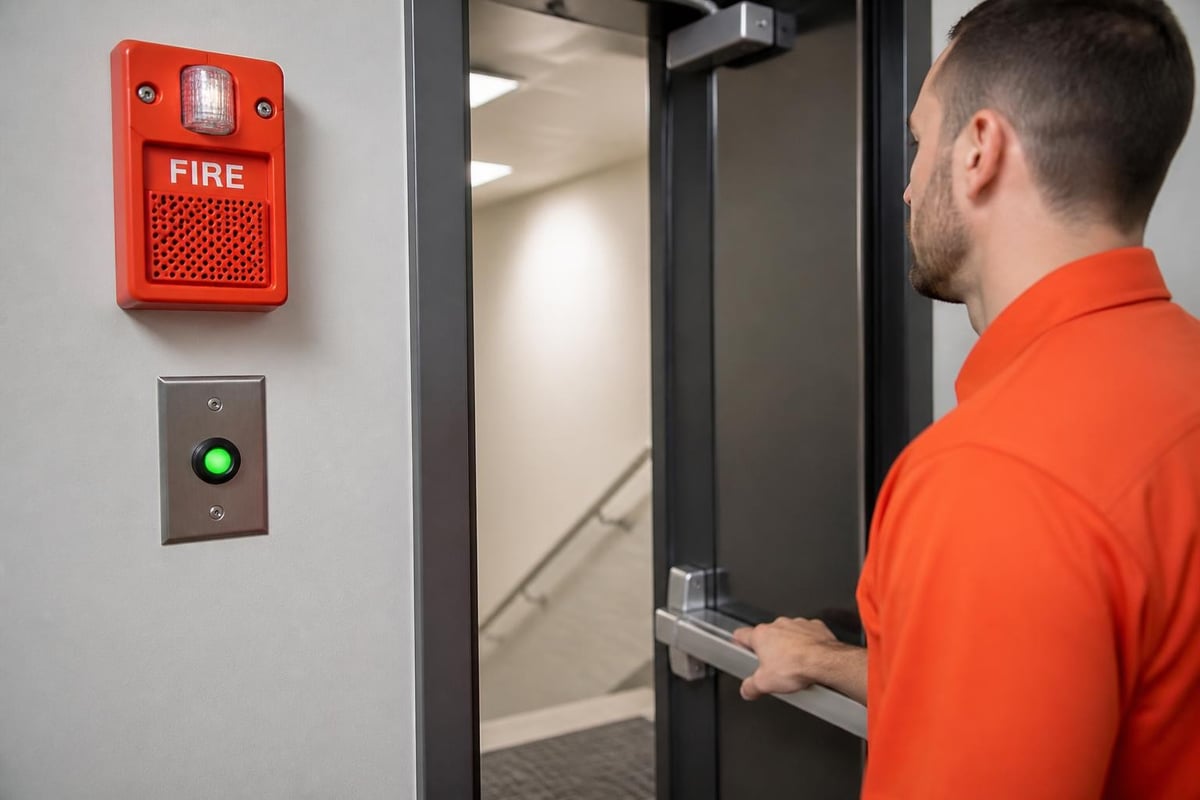
Access control maintenance becomes particularly critical where security and life-safety systems intersect. Electrified door hardware, electromagnetic locks, and access-controlled exit routes must comply with stringent fire safety regulations to ensure safe egress during emergencies.
The NFPA code requirements mandate that access-controlled doors in egress paths must release automatically upon fire alarm activation. Regular testing and maintenance of these interfaces between fire alarm systems and access control hardware protects occupant safety whilst maintaining security during normal operations.
Core Components Requiring Regular Maintenance
Modern access control systems comprise multiple interconnected components, each with distinct maintenance requirements and failure modes. Understanding these elements enables facilities managers to develop comprehensive maintenance schedules that address every critical system function.
Electronic Readers and Credential Devices
Card readers, keypads, and biometric scanners represent the primary user interface with access control systems. These devices endure constant physical interaction, environmental exposure, and electronic stress.
Key maintenance tasks include:
- Cleaning optical components and sensor surfaces monthly
- Testing reader response times and credential acceptance rates
- Inspecting mounting hardware and cable connections
- Updating firmware to address security vulnerabilities
- Calibrating biometric sensors for optimal recognition accuracy
- Replacing worn keypads showing degraded tactile response
Environmental factors significantly impact reader longevity. Exterior readers exposed to weather require more frequent inspection, whilst high-traffic interior locations experience accelerated wear from constant use.
Locking Hardware and Actuators
The mechanical and electromechanical components controlling physical entry represent critical failure points requiring systematic attention. Electromagnetic locks, electric strikes, motorised latches, and automatic door operators all demand regular servicing to maintain reliable operation.
| Component Type | Inspection Frequency | Common Maintenance Tasks |
|---|---|---|
| Electromagnetic locks | Quarterly | Check holding force, verify fail-safe operation, inspect alignment |
| Electric strikes | Quarterly | Lubricate moving parts, test release timing, verify keeper alignment |
| Motorised locks | Monthly | Check battery backup, test motor function, inspect gear mechanisms |
| Door closers | Bi-annually | Adjust closing speed, verify latching force, check fluid levels |
The UL standards for access control equipment provide testing protocols and safety requirements that inform maintenance procedures for listed hardware. Regular verification ensures equipment continues to meet certification requirements throughout its service life.
Control Panels and Power Supplies
The central nervous system of any access control installation resides in control panels, power distribution units, and backup battery systems. These components process authentication requests, manage locking devices, and maintain system operation during power interruptions.
Maintenance priorities include battery replacement at manufacturer-specified intervals (typically 3-5 years), power supply load testing, ventilation system inspection to prevent overheating, and firmware updates addressing security patches. Many modern systems provide remote diagnostics, enabling proactive identification of degrading components before complete failure occurs.
Developing a Preventive Maintenance Schedule
Effective access control maintenance programmes balance regulatory requirements, manufacturer recommendations, environmental conditions, and operational risk tolerance. The GSA National Operations & Maintenance specification offers detailed preventive maintenance expectations suitable for adaptation to commercial environments.
Risk-Based Frequency Determination
Not all access points warrant identical maintenance attention. A risk-based approach prioritises resources where failures would generate the most significant consequences.
High-priority access points typically include:
- Fire-rated doors with electromagnetic locks requiring emergency release
- Main entry points controlling building perimeter security
- Restricted areas protecting sensitive assets or high-value inventory
- Emergency exits where access control interfaces with life-safety systems
- Data centres and server rooms housing critical infrastructure
Medium and low-priority locations receive less frequent attention, though even minimal-risk doors require annual comprehensive inspection to identify developing problems.
Monthly Maintenance Activities
Monthly servicing focuses on high-interaction components and system-level health monitoring. Technicians should inspect credential reader functionality, verify door alignment and closure, test emergency release mechanisms, review system event logs for anomalies, and clean reader surfaces and keypads.
This frequency catches most developing issues before they impact operations whilst remaining economically sustainable for organisations with extensive access control deployments.

Quarterly and Annual Inspections
Comprehensive quarterly inspections expand beyond daily-use components to examine structural mounting, electrical connections, power supply performance, and integration points with other building systems. This schedule aligns well with seasonal changes that can affect exterior hardware.
Annual maintenance represents the most thorough system evaluation, including full functional testing of every access point, complete documentation review, software and firmware updates across all components, battery replacement in aging backup systems, and compliance verification against current standards.
The CISA Security and Resiliency Guide recommends annual penetration testing and security assessments as part of comprehensive physical security maintenance programmes.
Software and Firmware Management
Modern access control systems increasingly rely on sophisticated software platforms managing authentication, access policies, and integration with other security systems. Software maintenance represents an often-overlooked dimension of access control upkeep.
Security Patch Management
Cyber threats targeting access control systems have escalated dramatically in recent years. Manufacturers regularly release security patches addressing newly discovered vulnerabilities. Delayed patch application creates exploitable weaknesses that could compromise both physical and data security.
Best practice establishes a formal patch management process including regular monitoring of manufacturer security bulletins, testing patches in non-production environments before deployment, scheduled maintenance windows for system updates, and documentation of all software version changes.
The NIST SP 800-53 controls catalog provides authoritative guidance on integrating cybersecurity controls with physical access control maintenance, particularly relevant for organisations handling sensitive information.
Database Maintenance and Performance Optimisation
Access control databases grow continuously as systems log entry events, store credential information, and archive audit trails. Without regular maintenance, database bloat degrades system performance and complicates compliance reporting.
Routine database maintenance includes archiving historical transaction logs, optimising database indexes for query performance, verifying backup integrity and restoration procedures, purging expired credentials and inactive users, and testing disaster recovery protocols.
Integration Testing and Cross-System Verification
Few access control systems operate in isolation. Most organisations integrate access control with CCTV monitoring, fire alarm monitoring, intrusion detection, and building management systems. Maintenance must verify these integration points function correctly.
Fire Alarm Interface Testing
The most critical integration involves fire alarm systems and evacuation alert systems. Access control maintenance must include verification that electromagnetic locks release upon fire alarm activation, fail-safe hardware defaults to unlocked position during power failure, and manual override mechanisms function correctly.
Testing should simulate actual alarm conditions rather than relying solely on electronic relay testing. Physical verification ensures mechanical components respond appropriately when electronic signals trigger release mechanisms.
Video Surveillance Coordination
Integration between access control and commercial CCTV installations enables automated recording triggered by access events, visual verification of credential users, and forensic investigation of security incidents. Maintenance should confirm event triggers activate appropriate cameras, synchronisation between access logs and video timestamps remains accurate, and adequate lighting exists for facial recognition where implemented.
Documentation and Compliance Requirements
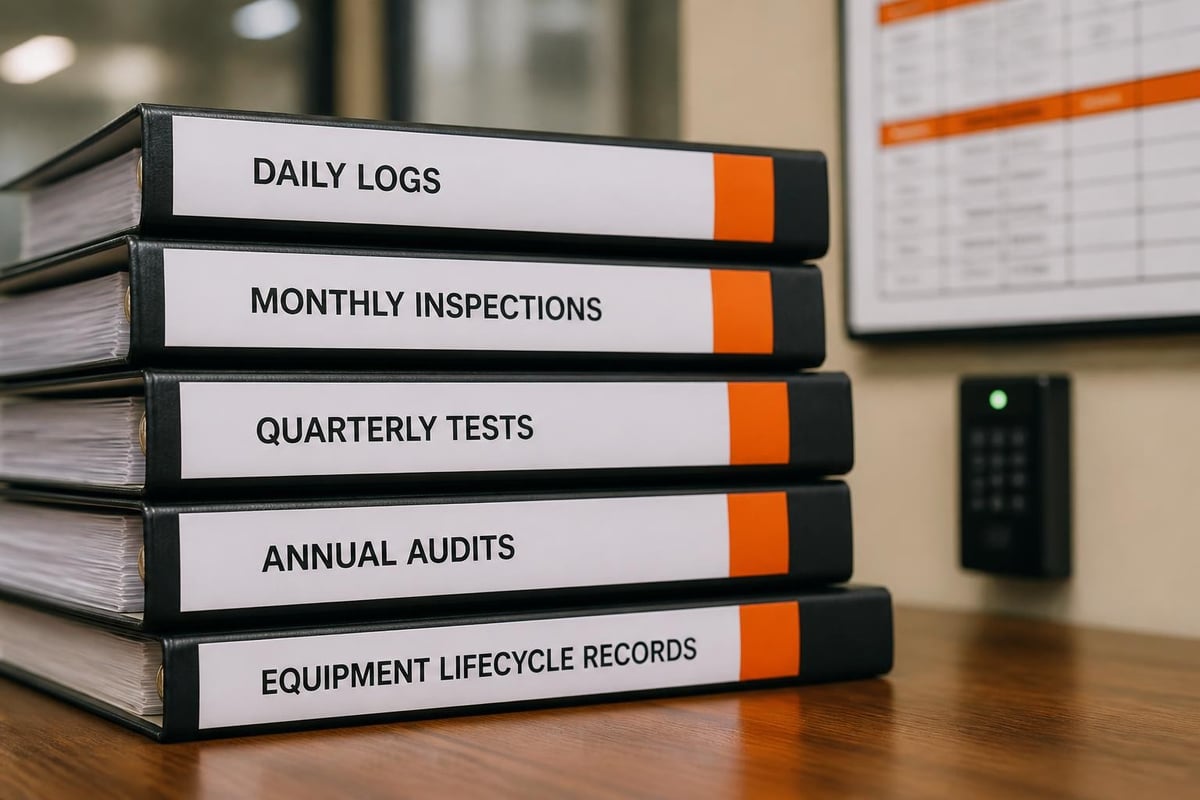
Comprehensive documentation transforms access control maintenance from reactive repairs into a strategic asset protection programme. Records demonstrate regulatory compliance, support warranty claims, inform capital planning, and provide accountability.
Mandatory Record-Keeping
Regulations vary by industry and building type, but most organisations must maintain detailed records including installation dates and equipment specifications, maintenance service dates and tasks performed, component replacements and upgrades, system failures and resolution actions, and compliance testing results.
The GSA Physical Access Control Systems directive establishes detailed documentation requirements for federal facilities that represent best-practice standards applicable to commercial environments.
Digital maintenance management systems have largely replaced paper logs, offering superior search capabilities, automated scheduling, and integration with inventory management. These platforms support proactive maintenance by tracking component age and predicting replacement needs based on historical performance data.
Audit Readiness and Compliance Verification
Regular internal audits verify maintenance programmes meet established standards and identify improvement opportunities. Audit protocols should confirm scheduled maintenance occurred as planned, technician qualifications and certifications remain current, replacement parts meet original equipment specifications, and integration with life-safety systems functions correctly.
For organisations in regulated industries, third-party compliance verification may be mandatory. Maintaining organised, comprehensive maintenance records streamlines these external audits and demonstrates due diligence in system upkeep.
Common Failure Modes and Preventive Strategies
Understanding typical access control failure patterns enables targeted preventive measures that address root causes rather than symptoms. Analysis of maintenance data reveals recurring issues amenable to systematic prevention.
Environmental Degradation
Moisture infiltration, temperature extremes, dust accumulation, and UV exposure accelerate component deterioration. Exterior readers and hardware suffer most severely, but interior locations near loading docks or in dusty environments also experience accelerated wear.
Preventive strategies include:
- Installing weather-resistant enclosures for exterior components
- Specifying appropriate IP ratings for environmental conditions
- Regular cleaning schedules for optical components and keypads
- Protective coatings on exposed metal hardware
- Climate control in equipment rooms housing control panels
Power-Related Failures
Inconsistent power delivery, voltage spikes, and battery degradation account for significant system failures. Backup batteries deteriorate predictably but often remain in service long past replacement intervals, failing precisely when emergency power becomes critical.
Implementing power quality monitoring, installing surge protection on all access control circuits, testing battery backup capacity quarterly, and replacing batteries proactively at 80% of rated service life substantially reduces power-related failures.
Credential and Reader Issues
Card reader failures, credential demagnetisation, and database corruption create user frustration and security vulnerabilities. Many of these issues stem from environmental factors or inadequate user training rather than hardware defects.
Regular reader calibration, user education on proper credential handling, periodic re-enrollment of biometric templates, and database integrity verification prevent most credential-related problems. For organisations still using magnetic stripe technology, migration to contactless credentials eliminates wear-related failures entirely.
Selecting Qualified Service Providers
Whilst basic access control maintenance can be performed by in-house facilities teams, comprehensive programmes typically require specialist expertise. Selecting competent UK security contractors ensures maintenance meets manufacturer standards and regulatory requirements.
Qualification Criteria
Effective service providers demonstrate manufacturer certifications for installed equipment, proven experience with similar systems and facility types, documented quality management processes, and comprehensive insurance coverage including professional liability.
References from comparable organisations provide insight into service quality, responsiveness, and technical capability. Quality and accreditations verification ensures providers meet industry standards for competence and professionalism.
Service Level Agreements
Formal service level agreements establish clear expectations regarding response times for emergency calls, scheduled maintenance frequency and scope, reporting and documentation standards, and parts availability and warranty coverage.
Well-structured agreements balance cost against risk, prioritising rapid response for critical failures whilst accepting longer resolution times for minor issues. Tiered service levels enable organisations to match support intensity to access point criticality.
Technology Evolution and System Lifecycle Planning
Access control technology evolves rapidly, with cloud-based platforms, mobile credentials, and artificial intelligence-enhanced authentication methods reshaping the industry. Effective maintenance programmes must balance optimising existing infrastructure against planning strategic upgrades.
Obsolescence Management
Electronic security systems typically deliver 10-15 years of reliable service, but manufacturer support often ends much sooner. Component availability, software compatibility, and cybersecurity support determine practical system lifespan more than hardware durability.
Maintenance planning should track manufacturer end-of-life announcements, identify critical single-point-of-failure components, maintain strategic spare parts inventory for discontinued items, and develop migration plans before systems become unsupportable.
Modernisation Opportunities
Routine maintenance provides opportunities to implement incremental upgrades rather than disruptive wholesale replacements. Adding modern readers whilst retaining existing control panels, migrating to cloud-based management whilst preserving edge devices, and implementing mobile credentials alongside traditional cards enables gradual technology adoption.
These phased approaches spread capital costs whilst maintaining operational continuity. Integration with commercial security alarm companies and broader security platforms creates unified management whilst preserving access control investment.
Training and Competency Development
Access control maintenance effectiveness depends heavily on technician knowledge, diagnostic skills, and familiarity with specific system architectures. Organisations must invest in ongoing training to maintain competency as technology evolves.
In-House Capabilities
For organisations with dedicated security or facilities teams, developing basic access control troubleshooting capabilities reduces dependence on external contractors for minor issues. Training should cover system architecture and component functions, basic diagnostic procedures and tools, user administration and credential management, and emergency override procedures.
Even organisations relying primarily on external maintenance benefit from staff understanding system fundamentals, enabling informed communication with service providers and appropriate response to system alerts.
Manufacturer and Industry Training
Formal training programmes offered by equipment manufacturers and industry associations ensure technicians remain current with evolving technology and best practices. Certifications demonstrate competency and often satisfy insurance or regulatory requirements.
Investment in continuing education pays dividends through faster problem resolution, reduced system downtime, and enhanced security posture. Many manufacturers tie warranty coverage to use of certified technicians, making training a practical necessity rather than optional enhancement.
Emerging Technologies and Future Considerations
The access control landscape continues to evolve rapidly, with several emerging technologies poised to reshape maintenance requirements and best practices over the coming years.
Cloud-Based and Hybrid Architectures
Migration toward cloud-hosted access control platforms fundamentally alters maintenance requirements. Hardware maintenance remains necessary for readers, locks, and edge devices, but software updates, database management, and system administration increasingly occur remotely with minimal on-site intervention.
These architectures reduce maintenance burden for organisations whilst requiring robust network infrastructure and cybersecurity controls. Hybrid approaches combining local control panels with cloud management offer resilience against network failures whilst enabling remote administration.
Artificial Intelligence and Predictive Maintenance
Advanced analytics applied to access control event data increasingly enable predictive maintenance approaches. Machine learning algorithms identify patterns indicating developing failures, enabling intervention before complete component breakdown occurs.
These capabilities transform maintenance from time-based schedules to condition-based servicing, optimising resource allocation whilst reducing unexpected failures. Integration with building management systems and other data sources enhances prediction accuracy and operational efficiency.
Mobile and Biometric Credentials
Smartphones increasingly replace physical access cards, whilst facial recognition and other biometric methods eliminate credentials entirely. These technologies alter maintenance priorities, shifting focus from card reader servicing to camera calibration, mobile device management, and biometric algorithm updates.
Organisations deploying these advanced authentication methods must ensure maintenance programmes address new requirements whilst continuing to support legacy credential systems during transition periods. Proper signage from suppliers such as SafetySignsForSale helps communicate access procedures to visitors and staff during system upgrades.
Strategic access control maintenance protects security investments, ensures regulatory compliance, and maintains operational reliability across commercial facilities. By implementing structured preventive programmes, documenting all maintenance activities, and partnering with qualified service providers, organisations transform access control from a potential vulnerability into a reliable security asset. Logic Fire and Security brings decades of experience maintaining sophisticated access control systems for Blue Chip companies and public agencies across the UK, combining technical expertise with comprehensive service programmes tailored to each client’s unique requirements. Contact Logic Fire and Security today to discuss how professional access control maintenance can enhance your facility’s security posture and operational efficiency.