

The security landscape for businesses has fundamentally shifted over the past decade. Traditional on-site security guards and localised recording systems no longer provide the comprehensive protection modern organisations require. Remote CCTV monitoring services have emerged as a sophisticated solution, combining advanced camera technology with professional oversight to deliver round-the-clock surveillance capabilities. For businesses ranging from warehouses to corporate headquarters, these services represent a strategic investment in both asset protection and operational efficiency. The convergence of artificial intelligence, cloud computing, and professional monitoring expertise has created unprecedented opportunities for organisations to safeguard their premises whilst maintaining full regulatory compliance.
Understanding Remote CCTV Monitoring Architecture
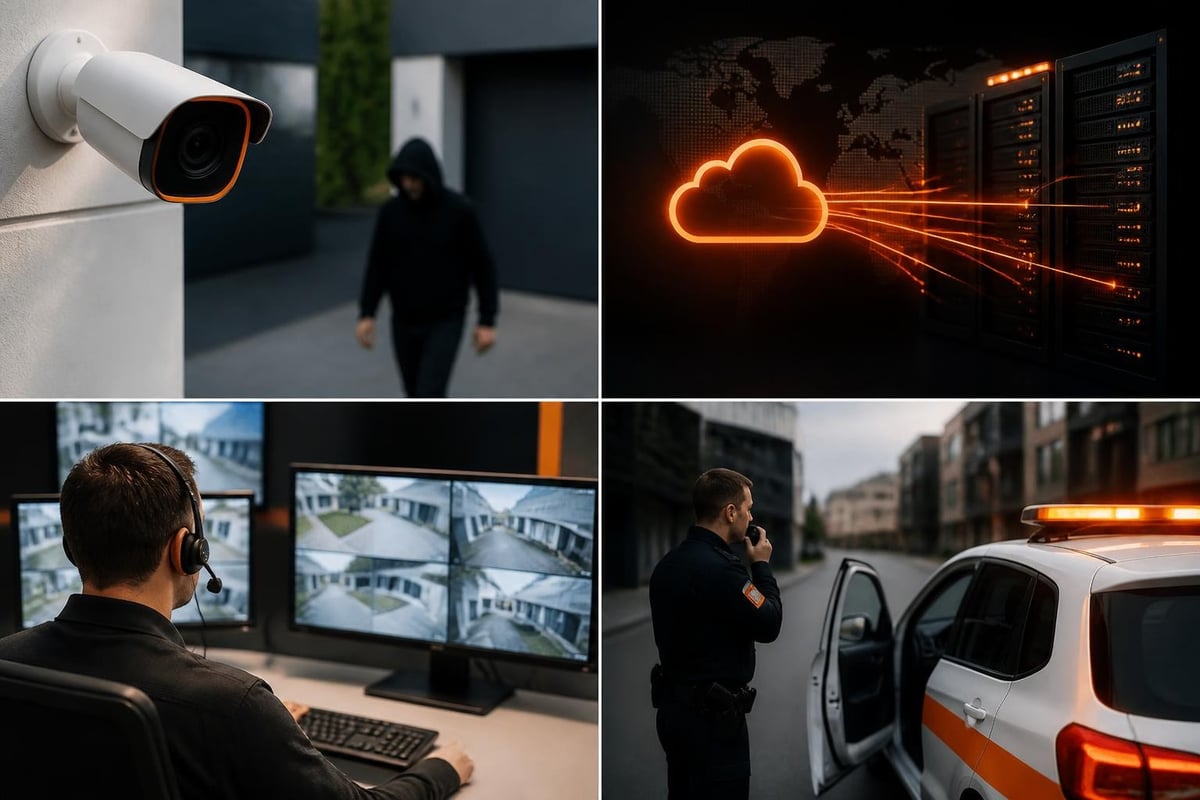
Remote CCTV monitoring services operate through a sophisticated technological infrastructure that connects on-site cameras to centralised monitoring stations. The system architecture typically consists of high-definition cameras, network video recorders, secure data transmission channels, and professional monitoring centres staffed by trained operators.
Modern implementations leverage cloud-based platforms that enable real-time video streaming, intelligent analytics, and automated threat detection. The cloud-edge-terminal collaborative systems deployed today represent a significant advancement over legacy solutions, balancing computational efficiency with response speed.
Key components of effective remote monitoring include:
- IP-enabled cameras with night vision and motion detection capabilities
- Secure encrypted transmission protocols protecting video feeds
- Redundant storage systems ensuring footage retention
- Intelligent video analytics for automated threat recognition
- Professional monitoring staff providing human verification
The integration between commercial CCTV infrastructure and monitoring platforms requires careful planning. Network bandwidth, latency requirements, and failover mechanisms must all be considered during system design.
Technology Evolution and Market Trends
The remote monitoring sector has experienced remarkable growth, driven by technological advancement and changing security requirements. According to market analysis, commercial remote monitoring services have expanded significantly as organisations recognise the cost-effectiveness and reliability advantages over traditional security approaches.
Artificial intelligence now plays a central role in modern systems. Machine learning algorithms can distinguish between routine movements and genuine security threats, dramatically reducing false alarms whilst ensuring critical incidents receive immediate attention. Research indicates that video monitoring and analytics adoption continues accelerating as businesses seek smarter security solutions.
| Technology Generation | Key Features | Primary Limitations |
|---|---|---|
| Analogue Systems | Basic recording, local storage | Limited resolution, no remote access |
| First-Gen Digital | Network connectivity, improved image quality | High bandwidth requirements, limited analytics |
| AI-Enhanced Modern | Intelligent threat detection, cloud storage, mobile access | Requires robust network infrastructure |
Operational Benefits for Business Environments
Implementing remote CCTV monitoring services delivers tangible operational advantages beyond basic security provision. Organisations gain visibility across multiple sites simultaneously, enabling centralised security management regardless of geographical distribution.
The economic benefits prove particularly compelling. Professional monitoring eliminates the need for dedicated on-site security personnel throughout night shifts, weekends, and holidays. The cost savings compound when considering recruitment, training, sick leave, and pension obligations associated with traditional security staffing models.
Operational advantages include:
- Continuous Coverage: 24/7/365 monitoring without staffing gaps or fatigue-related lapses
- Rapid Response: Immediate verification and emergency service dispatch when incidents occur
- Evidence Collection: High-quality recordings providing crucial evidence for investigations
- Deterrence Effect: Visible cameras combined with professional monitoring discourage criminal activity
- Business Intelligence: Video analytics revealing operational insights beyond security applications
Many organisations integrate remote monitoring with other security systems such as intruder alarm monitoring to create comprehensive protection frameworks. This layered approach ensures multiple detection mechanisms work synergistically.
The flexibility of modern platforms enables customised monitoring protocols tailored to specific business requirements. A manufacturing facility might prioritise perimeter monitoring during closed hours, whilst a retail environment focuses on transaction areas throughout trading periods.
Response Protocols and Escalation Procedures
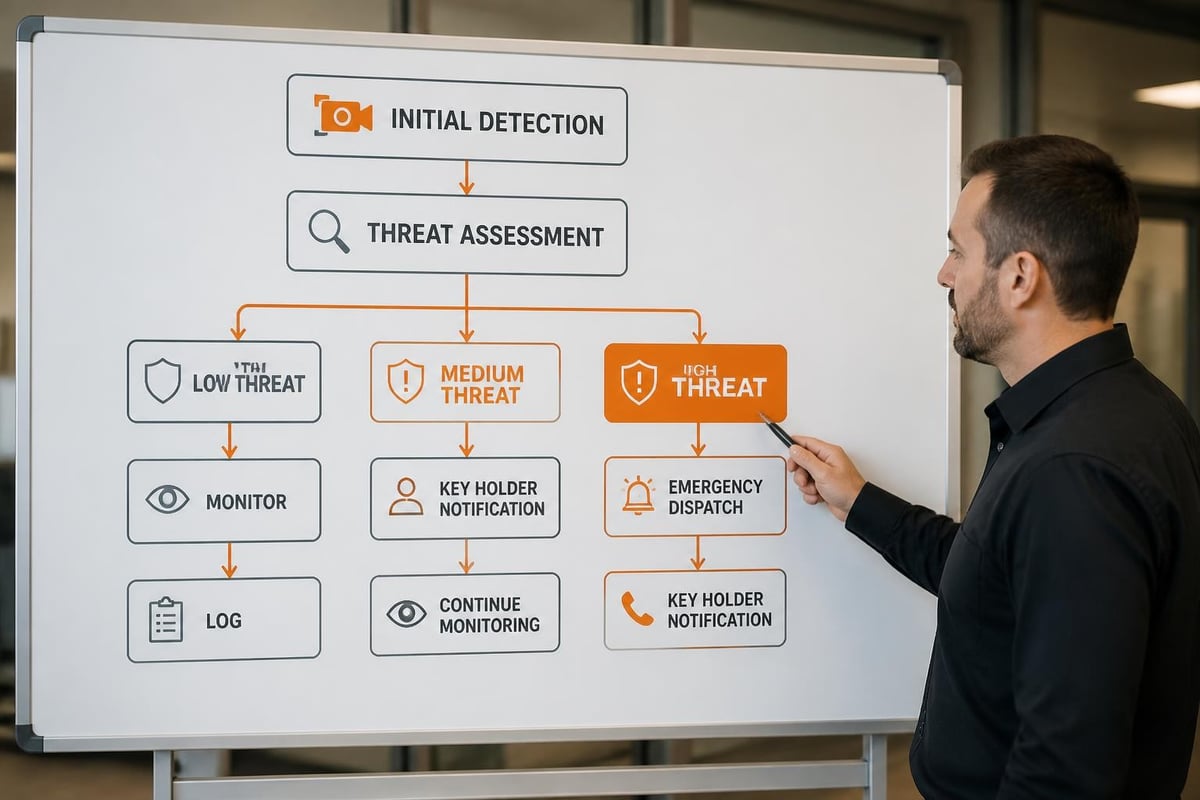
Professional monitoring centres operate according to structured response protocols ensuring consistent, appropriate action when security events occur. Trained operators assess situations rapidly, distinguishing genuine threats from benign triggers.
When potential incidents are detected, operators typically follow escalation procedures:
- Initial alert review through live video verification
- Assessment of threat severity and nature
- Immediate notification to designated key holders
- Emergency service dispatch if required
- Detailed incident logging and evidence preservation
The human element remains crucial despite technological advancement. Automated systems excel at pattern recognition, but experienced operators provide contextual judgement that artificial intelligence cannot yet replicate. This combination of machine efficiency and human insight creates the most effective security posture.
Regulatory Compliance and Data Protection
Remote CCTV monitoring services operate within a comprehensive regulatory framework designed to protect individual privacy whilst enabling legitimate security applications. The UK GDPR and Data Protection Act 2018 establish clear obligations for organisations deploying video surveillance systems.
The ICO guidance on CCTV and video surveillance provides essential direction on lawful deployment, signage requirements, data retention periods, and subject access rights. Businesses must demonstrate legitimate interests justifying surveillance, ensure proportionate implementation, and maintain transparent policies.
Compliance requirements include:
- Clear signage informing individuals of CCTV operation
- Privacy impact assessments for new deployments
- Defined retention periods with automatic deletion protocols
- Secure storage preventing unauthorised access
- Documented policies and procedures
- Regular compliance audits and reviews
For organisations requiring 24/7 protection, compliance management becomes particularly complex. Remote monitoring service providers should handle data processing responsibilities transparently, operating as data processors under formal agreements specifying obligations.
| Compliance Aspect | Business Responsibility | Service Provider Responsibility |
|---|---|---|
| Lawful Basis | Establish legitimate interest | Process data per instructions |
| Data Security | Specify security requirements | Implement robust protections |
| Retention | Define retention periods | Enforce automatic deletion |
| Access Rights | Respond to subject requests | Facilitate data retrieval |
Privacy by Design Principles
Modern remote CCTV monitoring services increasingly incorporate privacy-enhancing technologies that balance security effectiveness with individual rights. Privacy masking enables monitoring of security-relevant areas whilst obscuring zones where surveillance would be inappropriate or disproportionate.
Advanced systems can blur faces in recorded footage unless specific security events trigger unmasking, creating an auditable balance between privacy protection and investigative capability. These features prove particularly valuable in environments such as hospitals or educational institutions where vulnerable populations require additional safeguards.
Organisations should conduct privacy impact assessments before deploying new monitoring capabilities, consulting stakeholders and documenting decisions. This proactive approach demonstrates compliance commitment whilst identifying potential issues before implementation.
Integration with Broader Security Ecosystems
Remote CCTV monitoring services deliver maximum value when integrated within comprehensive security frameworks rather than operating as isolated systems. Modern security architectures connect video surveillance with access control, intruder detection, and fire safety systems to create unified protection platforms.
For instance, an unauthorised access attempt detected by an access control entry system can automatically trigger camera recording in relevant zones whilst notifying remote monitors. This integration enables faster threat assessment and more informed response decisions.
Similarly, integration with fire alarm monitoring allows visual verification of fire alarm activations, helping operators distinguish genuine emergencies from false alarms whilst providing crucial situational awareness for emergency responders.
Integration benefits include:
- Corroborated threat detection through multiple sensor types
- Reduced false alarm rates through visual verification
- Enhanced situational awareness for emergency response
- Streamlined management through unified platforms
- Improved investigative capabilities with correlated data
The convergence of security technologies creates opportunities for advanced analytics applications. Businesses can identify patterns, optimise layouts, and improve operational efficiency using data generated by integrated systems.
Scalability Considerations for Growing Organisations
Businesses experiencing growth or managing multiple sites particularly benefit from remote monitoring’s inherent scalability. Adding new locations to existing monitoring arrangements proves straightforward compared to recruiting, training, and deploying additional on-site security personnel.
Cloud-based monitoring platforms enable elastic scaling, accommodating seasonal variations or temporary requirements without infrastructure constraints. A retail organisation might enhance monitoring during peak trading periods, whilst construction companies can deploy temporary surveillance during project phases.
The centralised visibility provided by professional monitoring enables security teams to allocate resources strategically based on real-time risk assessment across entire property portfolios. This dynamic approach proves far more efficient than static security deployment models.
Selection Criteria and Procurement Guidance
Choosing appropriate remote CCTV monitoring services requires careful evaluation of provider capabilities, technical specifications, and contractual terms. Organisations should establish clear requirements before commencing procurement, considering both immediate needs and future growth trajectories.
Provider Assessment Framework
Evaluating potential monitoring service providers involves examining multiple dimensions beyond simple pricing considerations. The quality of monitoring personnel, response protocols, technical infrastructure, and compliance capabilities all significantly impact service effectiveness.
Essential evaluation criteria include:
- Monitoring Centre Accreditation: NSI Gold or equivalent certification demonstrating professional standards
- Operator Training: Qualifications, experience levels, and ongoing development programmes
- Technical Infrastructure: Redundancy, resilience, and disaster recovery capabilities
- Response Protocols: Documented procedures and average response times
- Compliance Framework: GDPR expertise and audit provisions
- Integration Capabilities: Compatibility with existing security systems
- Reporting Standards: Incident documentation and management information provision
- Contract Flexibility: Terms accommodating business changes and growth
The relationship between monitoring services and fire alarm system providers proves particularly important for comprehensive building protection. Providers offering integrated monitoring across security and fire safety systems deliver operational efficiencies and improved coordination during emergencies.
| Selection Factor | Weight | Key Questions |
|---|---|---|
| Monitoring Quality | 35% | What operator qualifications and training exist? What are average response times? |
| Technical Capability | 25% | What redundancy provisions exist? How is data security ensured? |
| Compliance & Standards | 20% | What accreditations are held? How is GDPR compliance demonstrated? |
| Commercial Terms | 20% | What contract flexibility exists? Are there hidden costs? |
Implementation Planning and Transition Management
Successful remote CCTV monitoring implementation requires structured project management addressing technical deployment, staff training, and operational transition. Organisations should develop detailed implementation plans establishing timelines, responsibilities, and success criteria.
The technical deployment phase typically involves site surveys, network infrastructure assessment, camera installation or upgrading, and system integration. Working with experienced providers like those offering commercial CCTV installation ensures professional standards throughout implementation.
Staff training proves crucial for maximising service value. Key personnel must understand response protocols, escalation procedures, and their responsibilities when monitoring centres identify potential incidents. Clear communication channels and documented procedures prevent confusion during actual security events.
Testing and commissioning should verify all system components function correctly before going live. Simulated incidents confirm that detection, transmission, monitoring, and response elements operate as designed across various scenarios.
Ongoing Management and Optimisation
Remote CCTV monitoring services require active management rather than passive deployment. Regular review cycles ensure systems continue meeting business requirements whilst identifying optimisation opportunities.
Performance metrics provide objective assessment of monitoring effectiveness. Organisations should track incident detection rates, false alarm frequencies, response times, and resolution outcomes. These metrics reveal trends, highlight issues, and demonstrate value to stakeholders.
Key performance indicators include:
- Detection accuracy rates (true positives versus false alarms)
- Average response time from detection to operator action
- Escalation timeliness for genuine security incidents
- System availability and uptime percentages
- Footage quality and retention compliance
- User satisfaction scores from key stakeholders
Regular maintenance ensures camera functionality, image quality, and network connectivity remain optimal. Scheduled inspections identify potential failures before they compromise security coverage, whilst firmware updates deliver performance improvements and security patches.
The monitoring relationship should include periodic business reviews where providers present performance data, discuss challenges, and recommend enhancements. These structured conversations ensure alignment between service delivery and evolving business requirements.
Technology Refresh and Future-Proofing
Video surveillance technology continues advancing rapidly, with new capabilities emerging regularly. Organisations should establish technology refresh cycles balancing investment optimisation with capability enhancement.
Modern camera systems offer significantly improved resolution, low-light performance, and analytics capabilities compared to equipment installed just five years ago. Progressive replacement programmes ensure businesses benefit from technological advancement without disruptive wholesale system replacements.
Cloud-based monitoring platforms simplify technology adoption by enabling capability enhancements through software updates rather than hardware replacement. This model reduces capital expenditure whilst ensuring access to latest analytics and management features.
Cost Analysis and Return on Investment
Understanding the total cost of ownership for remote CCTV monitoring services enables informed investment decisions and accurate budget planning. Whilst service fees represent obvious costs, organisations should consider broader financial implications including risk reduction, operational efficiency, and asset protection.
The cost structure typically includes initial installation expenses, ongoing monitoring fees, maintenance charges, and periodic technology refresh investments. However, these expenditures should be evaluated against traditional security costs and potential loss prevention benefits.
Comparative cost analysis:
| Security Approach | Annual Cost (Medium Site) | Coverage | Flexibility |
|---|---|---|---|
| On-Site Guards (24/7) | £175,000 – £250,000 | Limited to patrol routes | Low (staff dependent) |
| Remote Monitoring | £25,000 – £45,000 | Comprehensive (all cameras) | High (scalable) |
| Hybrid Model | £85,000 – £125,000 | Enhanced (combined) | Medium |
Beyond direct cost comparisons, remote monitoring delivers returns through loss prevention, insurance premium reductions, and operational insights. Retailers report significant shrinkage reduction following implementation, whilst logistics operators improve efficiency through monitoring-derived operational intelligence.
Insurance providers increasingly recognise professionally monitored CCTV as a risk mitigation measure, offering premium discounts that offset service costs. Organisations should engage insurers during procurement to quantify potential savings.
The business case strengthens further when considering liability protection. High-quality recorded evidence resolves disputes, defends against fraudulent claims, and demonstrates due diligence in negligence investigations. These risk management benefits prove difficult to quantify but deliver substantial value.
Remote CCTV monitoring services represent a strategic security investment for modern businesses, combining advanced technology with professional oversight to deliver comprehensive protection. The integration of intelligent analytics, regulatory compliance frameworks, and scalable cloud platforms creates capabilities unmatched by traditional security approaches. Logic Fire and Security brings decades of expertise in designing, installing, and maintaining sophisticated security systems for businesses across the UK, ensuring your organisation benefits from cutting-edge monitoring capabilities whilst maintaining full compliance with regulatory requirements.