

Protecting commercial premises from unauthorised access, theft, and vandalism requires a comprehensive approach to business alarm security that extends far beyond simple door contacts and motion sensors. In 2026, organisations across the United Kingdom face increasingly sophisticated threats while simultaneously benefiting from advanced detection technologies, networked monitoring capabilities, and integrated security ecosystems. The challenge lies not merely in selecting equipment, but in designing, installing, and maintaining systems that deliver reliable protection whilst meeting regulatory obligations and supporting operational efficiency. For businesses managing multiple sites, handling sensitive assets, or operating in high-risk sectors, professional business alarm security becomes a foundational element of risk management and business continuity planning.
Understanding Modern Business Alarm Security Architecture
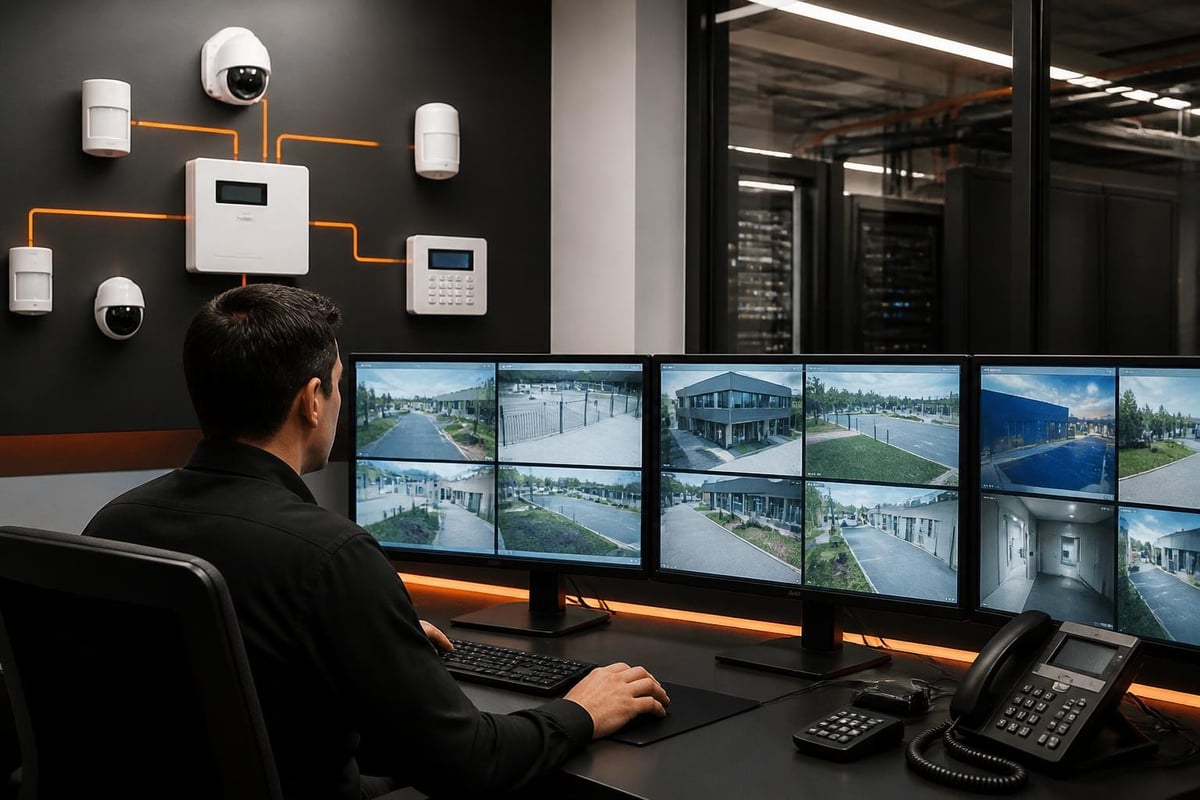
Contemporary business alarm security systems represent a convergence of multiple technologies working in concert to detect, verify, and respond to security events. At the core sits the control panel, which receives signals from various detection devices, processes alarm conditions according to programmed logic, and communicates with monitoring stations or authorised personnel.
Detection devices form the first line of defence. These include:
- Perimeter protection: Door contacts, window sensors, and glass-break detectors that identify boundary breaches
- Motion detection: Passive infrared (PIR) sensors, dual-technology detectors, and microwave sensors that identify movement within protected spaces
- Environmental monitoring: Sensors for temperature extremes, water ingress, or environmental tampering that might precede an intrusion attempt
- Video verification: Integrated cameras that provide visual confirmation of alarm events, reducing false dispatches and improving response decisions
Modern control panels communicate through multiple pathways. Primary signalling typically uses broadband IP connections, with cellular backup ensuring continued operation if internet connectivity fails. This redundancy proves essential for businesses requiring guaranteed alarm transmission to UL-certified central monitoring stations, which maintain rigorous standards for response times and communication reliability.
Integration with Access Control and Fire Systems
The boundaries between security disciplines continue to blur as organisations seek unified platforms for managing all protective systems. A well-designed commercial intruder alarm system increasingly shares infrastructure with access control, video surveillance, and fire detection networks.
This integration delivers tangible operational benefits. When an employee badges into a facility through the access control system, the intrusion alarm can automatically disarm specific zones. If a fire alarm activates, access control systems can unlock emergency exits whilst intrusion systems suspend certain sensors to allow safe evacuation. Video surveillance provides visual verification for both security and fire events, accelerating appropriate response.
| System Component | Standalone Function | Integrated Benefit |
|---|---|---|
| Intrusion alarm | Detects unauthorised entry | Coordinates with access control for automatic arming/disarming |
| Access control | Manages credential-based entry | Provides audit trail for security investigations |
| Video surveillance | Records visual evidence | Offers immediate verification of alarm events |
| Fire detection | Identifies smoke/heat | Triggers security system responses for safe evacress |
The technical standards governing these integrated systems continue to evolve. The NFPA 731 Standard for the Installation of Premises Security Systems provides comprehensive requirements for intrusion detection equipment, installation practices, and testing procedures that ensure reliable operation.
Cybersecurity Considerations for Connected Alarm Systems
As business alarm security systems embrace network connectivity and cloud-based management platforms, they simultaneously introduce cybersecurity vulnerabilities that require careful attention. Networked alarm panels, IP cameras, and wireless sensors become potential entry points for malicious actors seeking to disable security systems or access broader corporate networks.
The NIST IoT cybersecurity guidance offers valuable frameworks for securing connected security devices. Key recommendations include:
- Change default credentials immediately upon installation of any networked security device
- Segment security systems onto dedicated VLANs isolated from general business networks
- Implement strong encryption for all alarm communication pathways
- Establish firmware update procedures to address newly discovered vulnerabilities
- Monitor network traffic from security devices for anomalous patterns
For organisations operating in critical infrastructure sectors, the CISA action guide on physical security provides additional guidance on detection and response practices that complement technical security measures.
Many businesses today rely on IT infrastructure and networked devices that extend beyond traditional security equipment. Working with established it products supplier partners ensures that the broader IT environment supporting security systems maintains appropriate cybersecurity posture.
Privacy and Data Protection Compliance
Video verification and analytics capabilities raise important privacy considerations under UK data protection law. When business alarm security systems incorporate cameras-particularly those recording continuously or capturing public-facing areas-organisations must conduct Data Protection Impact Assessments and implement privacy-by-design principles.
The ICO guidance on CCTV and DPIA requirements provides practical frameworks for assessing privacy risks and implementing appropriate safeguards. This includes clear signage, limited retention periods, restricted access to footage, and documented justifications for surveillance decisions.

Designing Effective Business Alarm Security for Different Environments
Different commercial environments present unique security challenges that demand tailored approaches to business alarm security. A retail establishment faces different risks than a manufacturing facility, research laboratory, or multi-tenant office building.
Retail and Public-Facing Premises
Retail environments require alarm systems that balance security needs against operational flexibility and customer experience. Warehouse security alarm systems protecting back-of-house inventory differ significantly from customer-facing areas.
Key considerations include:
- Selective arming capabilities that secure stockrooms whilst keeping retail floors accessible during trading hours
- Silent alarm options for duress situations without alerting potential threats
- Integration with point-of-sale systems to correlate transaction data with security events
- After-hours protection that activates comprehensive coverage when premises close
Many retailers benefit from remote CCTV monitoring services that provide live response to alarm activations, distinguishing genuine security events from false alarms triggered by cleaning staff or early-arriving employees.
Office Buildings and Corporate Campuses
Multi-tenant office environments present coordination challenges, as different organisations may require independent security zones whilst sharing common areas. Business alarm security in these settings typically employs:
An office alarm system must accommodate flexible working patterns, including shift work, hot-desking arrangements, and hybrid working models where occupancy patterns shift unpredictably. Modern systems address this through smartphone-based arming/disarming, temporary access codes, and intelligent analytics that learn normal patterns and flag anomalies.
| Building Type | Primary Threats | Recommended Protection |
|---|---|---|
| Retail shops | Burglary, theft, vandalism | Perimeter protection, motion detection, video verification |
| Office buildings | Unauthorised access, data theft | Access integration, zone control, audit logging |
| Industrial facilities | Asset theft, sabotage | Heavy-duty sensors, environmental monitoring, outdoor detection |
| Healthcare premises | Controlled substance theft, patient safety | Restricted area protection, silent alarms, staff duress buttons |
Educational and Healthcare Facilities
Schools and healthcare premises require business alarm security approaches that prioritise occupant safety alongside asset protection. These environments often feature schools security systems with specialised capabilities including lockdown functions, panic buttons, and integration with emergency notification systems.
Healthcare facilities managing controlled substances require alarm protection that meets specific regulatory standards whilst supporting clinical operations that continue 24/7. Zone control becomes critical, allowing different areas to maintain independent security states simultaneously.
Professional Monitoring and Response Services
The value of business alarm security extends beyond detection equipment to encompass the monitoring infrastructure and response protocols that transform sensor activations into effective protective action. Professional monitoring centres staffed by trained operators provide 24/7 oversight that most businesses cannot replicate internally.
When an alarm activates, certified monitoring operators follow predetermined escalation procedures:
- Verify the alarm condition through available systems (video, audio verification, or secondary sensors)
- Attempt contact with authorised personnel according to predefined contact lists
- Dispatch appropriate responders (keyholders, security guards, or emergency services)
- Document the incident with timestamps, actions taken, and final resolution
The quality and reliability of monitoring services varies significantly across providers. UL-certified monitoring centres maintain rigorous standards for operator training, redundant communication pathways, backup power systems, and documented procedures that ensure consistent response even during major incidents affecting the monitoring centre itself.
False Alarm Management
False alarms represent a persistent challenge in business alarm security, wasting response resources and potentially incurring fines in jurisdictions with false alarm ordinances. Common causes include:
- User error: Incorrect arming procedures or forgotten disarm codes
- Environmental factors: Temperature fluctuations, air movement, or wildlife triggering motion sensors
- Equipment malfunction: Failed sensors, low batteries, or communication errors
- Inadequate maintenance: Dirty detectors, misaligned sensors, or outdated firmware
Professional installation following security alarm system installation best practices significantly reduces false alarm rates. Proper sensor placement, appropriate sensitivity settings, and regular testing identify potential issues before they trigger unnecessary dispatches.
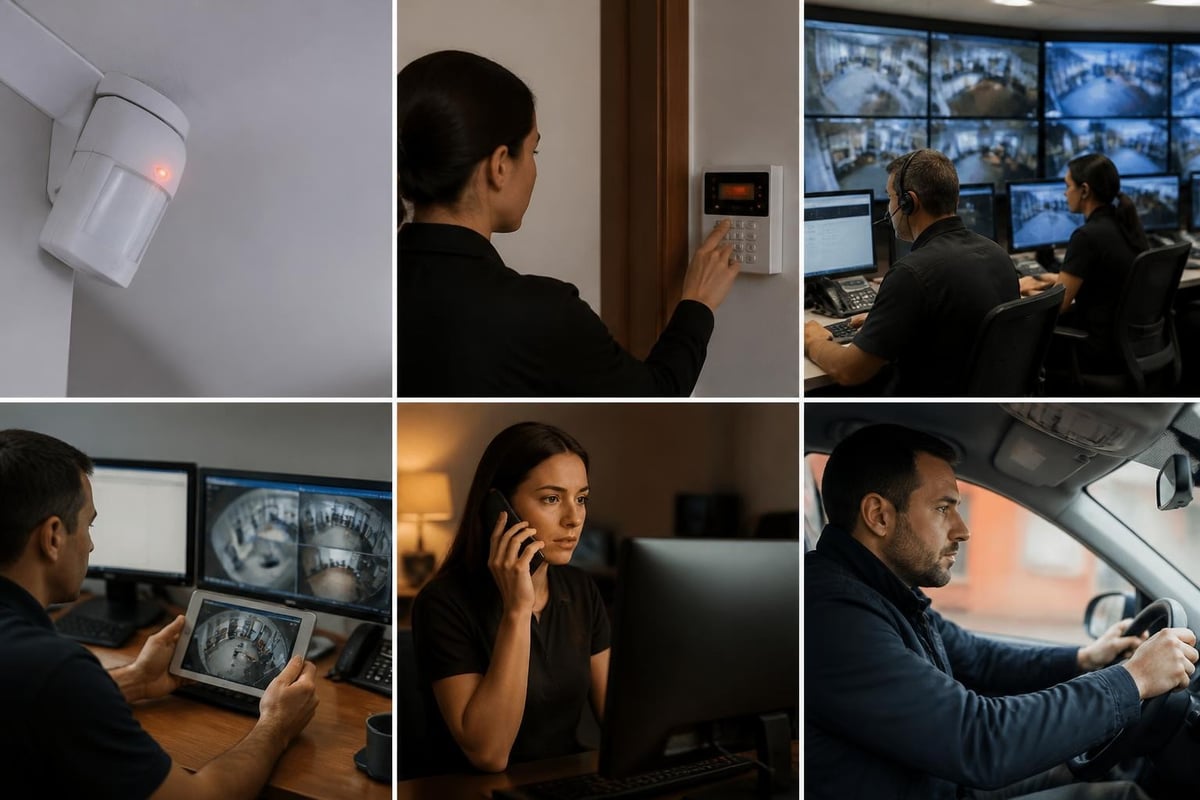
Advanced verification technologies further reduce false alarms. Video verification allows monitoring operators to visually confirm intrusions before dispatching police. Audio verification systems with two-way communication let operators listen to protected premises and challenge potential intruders. Sequential confirmation requiring multiple sensors to activate within a defined timeframe filters environmental false triggers.
Maintenance and Testing Requirements
Business alarm security systems require ongoing maintenance and regular testing to ensure reliable operation when needed. Equipment deteriorates over time, software requires updates, and operational changes may necessitate system reconfiguration.
Scheduled Maintenance Activities
Professional maintenance programmes typically include:
- Quarterly inspections: Visual examination of detectors, testing of communication pathways, battery voltage checks
- Annual comprehensive testing: Full system activation tests, sensor sensitivity verification, backup power load testing
- Immediate repairs: Response to trouble conditions or equipment failures
- Software updates: Firmware upgrades addressing security vulnerabilities or adding capabilities
Documented maintenance records prove essential for insurance compliance, regulatory audits, and troubleshooting system issues. Many insurers require evidence of regular professional maintenance as a condition of coverage.
The complexity of modern integrated systems often exceeds internal facilities teams' capabilities. Partnering with specialists who understand both the technical requirements and business context ensures systems remain effective. For organisations managing surveillance security systems alongside intrusion detection, coordinated maintenance addresses interdependencies between platforms.
Testing Protocols and Documentation
Regular testing validates that business alarm security systems will perform as expected during actual security events. Testing protocols should verify:
| Test Component | Frequency | Acceptance Criteria |
|---|---|---|
| Sensor activation | Quarterly | All zones report correctly to panel |
| Communication pathways | Monthly | Alarm signals reach monitoring centre within specified timeframe |
| Backup power | Quarterly | Battery maintains system for minimum duration |
| User interface | Annually | Keypads, readers, and apps function properly |
| Integration points | Annually | Coordinated response with access, video, and fire systems |
Documentation of test results creates an audit trail demonstrating due diligence. This proves particularly important for organisations operating under regulatory frameworks requiring documented security measures.
Strategic Considerations for System Selection and Implementation
Selecting appropriate business alarm security solutions requires alignment between security requirements, operational realities, and long-term business objectives. The lowest-cost option rarely delivers optimal value when lifecycle costs, scalability limitations, and integration constraints emerge over time.
Total Cost of Ownership Analysis
Initial equipment and installation costs represent only part of the financial picture. Comprehensive evaluation should account for:
- Monitoring fees: Monthly costs for professional central station services
- Maintenance contracts: Ongoing inspection, testing, and repair expenses
- System upgrades: Costs to expand coverage or add capabilities as business needs evolve
- False alarm fines: Potential penalties in jurisdictions charging for excessive false dispatches
- Insurance premiums: Reductions obtained through certified security systems
For growing organisations, scalability considerations prove crucial. Systems built on proprietary platforms may require complete replacement when expanding beyond initial capabilities, whilst open-protocol solutions accommodate incremental growth through additional devices on existing infrastructure.
Businesses focused on scaling operations efficiently may benefit from consulting specialists who understand operational frameworks and growth trajectories. Services like those offered by highticket service scaling consultancies help organisations identify where security investments support broader business objectives versus representing pure cost centres.
Vendor Selection and Partnership Approach
The relationship with security system providers extends far beyond the initial installation. Ongoing support, emergency response, system upgrades, and compliance guidance require a partnership approach with providers who understand your business context.
Evaluation criteria should include:
- Technical certifications: Industry credentials demonstrating installer competence and manufacturer authorisations
- Industry experience: Track record with similar businesses, understanding of sector-specific challenges
- Service capabilities: In-house technical resources, response time commitments, geographic coverage
- Financial stability: Assurance that the provider will remain viable to support systems over their operational lifetime
- Regulatory knowledge: Understanding of compliance requirements affecting your industry
For organisations managing multiple facilities across the United Kingdom, nationwide service capabilities with consistent quality standards become essential selection criteria. The Logic Fire and Security team exemplifies the expertise required to deliver enterprise-grade business alarm security at scale.
Future-Proofing Through Standards-Based Architecture
Technology evolution accelerates continuously. Business alarm security systems installed today must remain effective and supportable for ten years or more. Standards-based architectures using industry-standard protocols provide the greatest assurance of long-term viability.
Proprietary systems lock organisations into single vendors for all future expansions and modifications. Whilst potentially offering short-term cost advantages, these closed ecosystems ultimately constrain flexibility and increase dependence on specific suppliers.
Open protocol systems built on standards including:
- Onvif for video surveillance interoperability
- BACnet for building automation integration
- OSDP (Open Supervised Device Protocol) for access control readers
- SIA DC-09 for alarm communication standardisation
These standards ensure that components from different manufacturers can work together, creating competitive markets for equipment and services whilst preserving investment protection as specific products reach end-of-life.
Regulatory Compliance and Insurance Considerations
Business alarm security systems often represent more than discretionary investments in asset protection. Regulatory requirements and insurance policy conditions frequently mandate specific security measures that directly influence system design and operational procedures.
Industry-Specific Security Requirements
Different sectors face distinct regulatory obligations affecting business alarm security:
Financial services institutions handling cash or high-value instruments typically must comply with prescriptive security standards specifying alarm capabilities, monitoring arrangements, and response protocols.
Healthcare organisations managing controlled substances face regulatory requirements for alarmed storage, access logging, and incident reporting that integrate with broader business alarm security infrastructure.
Critical infrastructure operators may encounter government mandates for security systems protecting essential services or sensitive facilities.
Data centres and facilities processing sensitive information increasingly face cybersecurity regulations that extend to physical security systems, requiring documented cybersecurity controls for networked alarm equipment.
Compliance obligations evolve continuously. Professional security partners monitor regulatory developments and proactively advise clients about emerging requirements affecting their systems.
Insurance Policy Requirements and Premium Reductions
Commercial insurance policies frequently specify minimum security standards as conditions of coverage. These may include:
- Certified alarm systems monitored by approved central stations
- Specific sensor types protecting high-value assets
- Video surveillance with defined retention periods
- Regular professional maintenance with documented testing
Non-compliance with these conditions can void coverage entirely or reduce claim payments through "contribution" clauses penalising inadequate security.
Conversely, robust business alarm security often qualifies businesses for substantial insurance premium reductions. Insurers recognise that effective security systems reduce claim frequency and severity. Documented reductions of 10-20% on property insurance premiums are common, with larger reductions available for high-risk operations implementing comprehensive security programmes.
The financial analysis comparing security system costs against insurance savings frequently demonstrates positive returns within three to five years, before accounting for loss prevention benefits.
Effective business alarm security in 2026 requires comprehensive strategies that integrate advanced detection technologies, professional monitoring services, robust cybersecurity measures, and ongoing maintenance within frameworks addressing both operational needs and regulatory obligations. The complexity of modern integrated systems demands partnerships with experienced providers who deliver not merely equipment installation, but strategic guidance supporting long-term security objectives. Logic Fire and Security brings decades of expertise designing, installing, and maintaining business alarm security solutions for organisations across the United Kingdom, from Blue Chip corporations to public sector agencies requiring the highest standards of protection and compliance. Their comprehensive approach ensures your security infrastructure delivers reliable protection today whilst adapting to evolving threats and business requirements tomorrow.