

Maintaining functional fire extinguishers throughout commercial premises represents a critical responsibility for UK businesses. A professional fire extinguisher refilling service ensures that portable firefighting equipment remains operational, compliant with regulations, and ready to protect staff and assets during emergencies. Regular servicing, inspection, and refilling form the backbone of workplace fire safety programmes, yet many organisations underestimate the technical expertise and regulatory knowledge required to maintain these essential devices properly.
The Critical Importance of Professional Extinguisher Maintenance
Fire extinguishers serve as the first line of defence against small fires in commercial environments. However, their effectiveness depends entirely on proper maintenance and timely refilling.
Regulatory Requirements for Commercial Properties
UK businesses must comply with stringent fire safety legislation, including the Regulatory Reform (Fire Safety) Order 2005. This framework mandates regular maintenance of all firefighting equipment, with fire extinguisher servicing forming a legal obligation rather than optional maintenance.
Key compliance requirements include:
- Annual servicing by competent technicians
- Five-yearly extended servicing and pressure testing
- Immediate refilling after any discharge
- Comprehensive maintenance records
Failure to maintain extinguishers properly can result in enforcement action, substantial fines, and invalidated insurance claims. More critically, neglected equipment may fail during emergencies, putting lives at risk.
When Extinguishers Require Refilling
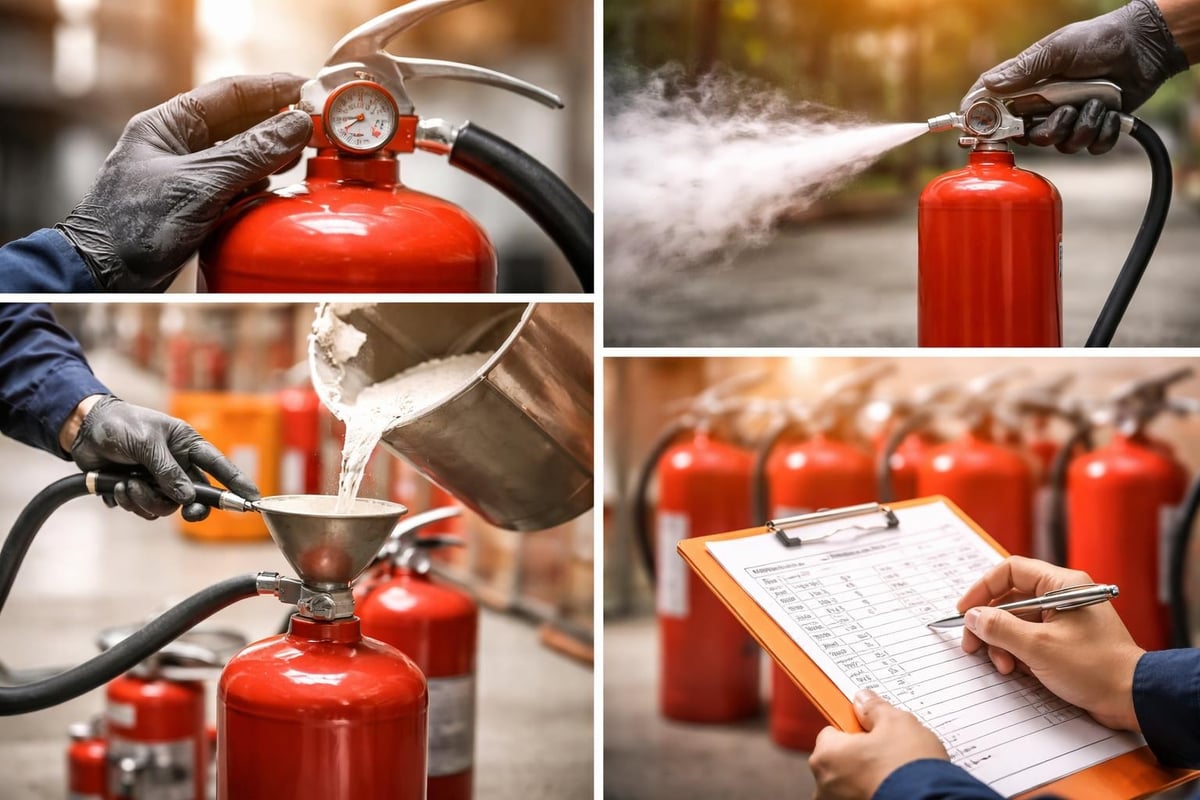
A fire extinguisher refilling service becomes necessary under several circumstances beyond obvious discharge scenarios. Understanding these triggers helps businesses maintain continuous protection.
Extinguishers must be refilled when:
- After any use – even partial discharge requires complete refilling and repressurisation
- Pressure loss detected – gauge readings outside the green zone indicate compromised pressure
- Failed inspection – annual checks may reveal internal issues requiring agent replacement
- Extended service intervals – five-year maintenance includes complete discharge and refill
- Following hydrostatic testing – pressure testing necessitates emptying and refilling
The commercial fire detection systems installed throughout modern facilities work alongside portable extinguishers, creating comprehensive fire safety infrastructure that requires coordinated maintenance scheduling.
Understanding Different Extinguisher Types and Refilling Processes
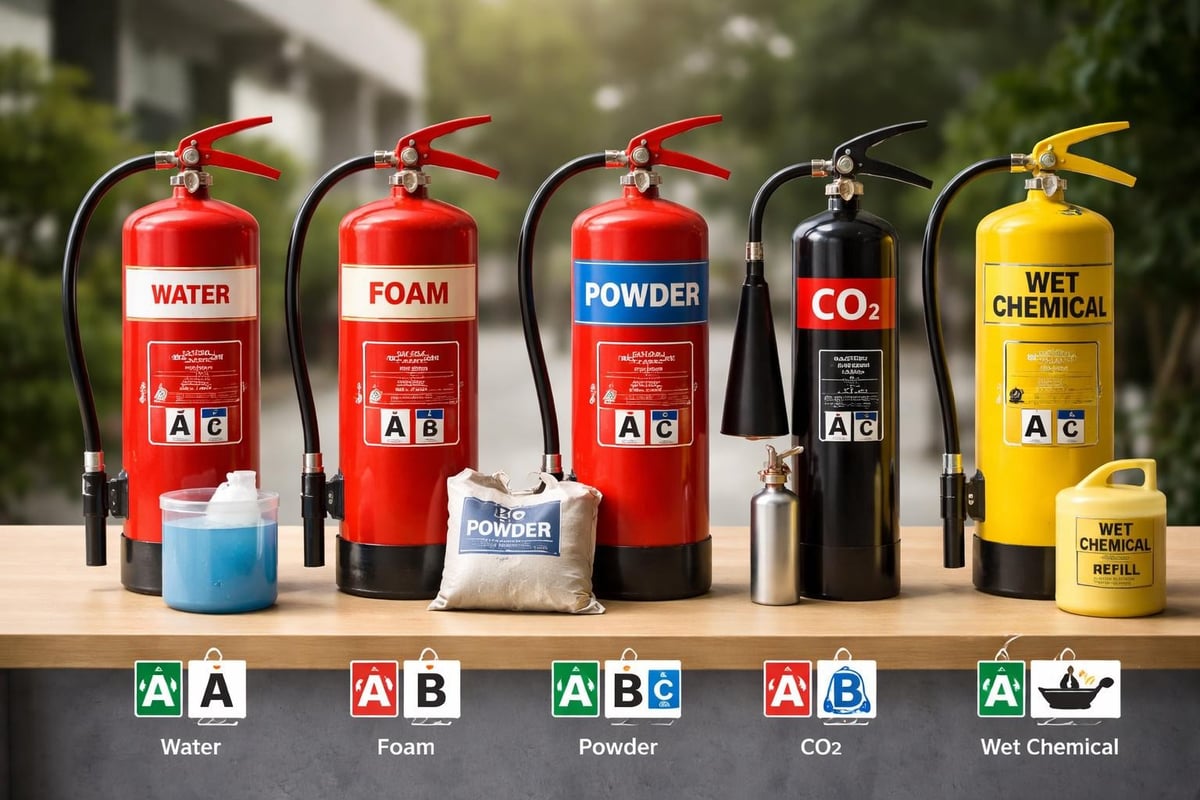
Commercial premises typically house various extinguisher types, each containing different suppressant agents and requiring specific refilling procedures.
Water and Foam Extinguishers
Water-based extinguishers remain the most common type in UK commercial buildings. These devices contain plain water or water with additives for Class A fires involving combustible materials.
Refilling process characteristics:
| Aspect | Water Extinguishers | Foam Extinguishers |
|---|---|---|
| Agent Type | Deionised water | AFFF foam concentrate |
| Pressure Method | Stored pressure or cartridge | Stored pressure |
| Inspection Frequency | Annual | Annual |
| Agent Replacement | 5 years | 5 years |
Foam extinguishers require careful attention to concentration ratios during refilling. Technicians must ensure the correct foam-to-water mixture whilst maintaining appropriate pressure levels for effective discharge.
Powder and CO2 Extinguishers
Dry powder extinguishers offer versatility across multiple fire classes, whilst carbon dioxide units provide clean suppression for electrical fires. Each presents unique refilling challenges.
Powder extinguishers demand meticulous handling during refilling to prevent moisture contamination. The ABC powder must remain completely dry, requiring controlled environments during servicing. CO2 extinguishers, conversely, involve high-pressure gas refilling that necessitates specialised equipment and safety protocols.
Businesses operating kitchen suppression systems alongside portable extinguishers particularly benefit from comprehensive service contracts covering all firefighting equipment simultaneously.
The Professional Refilling Service Process
A comprehensive fire extinguisher refilling service extends far beyond simply topping up suppressant agents. Professional providers follow systematic procedures ensuring complete functionality restoration.
Initial Inspection and Assessment
Qualified technicians begin by thoroughly examining each extinguisher's condition. This assessment identifies issues beyond obvious pressure loss.
The inspection covers:
- External body condition – corrosion, damage, or deformation
- Discharge mechanism – handle, lever, and pin functionality
- Pressure gauge accuracy – calibration verification
- Hose and nozzle integrity – blockages or deterioration
- Safety seals and tamper indicators – evidence of interference
Any extinguisher showing significant structural damage requires replacement rather than refilling. Professional technicians make these determinations based on British Standards and manufacturer specifications.
Discharge, Cleaning, and Pressure Testing
Following assessment, technicians completely discharge remaining agent and depressurise the cylinder. This step allows internal inspection and cleaning.
Modern fire extinguisher refilling service protocols incorporate several quality control measures:
- Complete agent removal and disposal
- Internal examination using inspection mirrors or cameras
- Thorough cleaning with appropriate solvents
- Hydrostatic pressure testing (at specified intervals)
- Valve and seal replacement with manufacturer-approved components
Hydrostatic testing occurs every five to ten years depending on extinguisher type, as outlined in OSHA regulations for portable fire extinguisher maintenance which align with UK standards. This process validates cylinder integrity under extreme pressure conditions.
Refilling and Repressurisation
With the extinguisher clean and pressure-tested, technicians proceed with agent refilling. Precision matters significantly during this phase.
Critical refilling parameters:
| Extinguisher Type | Agent Volume | Pressure (Bar) | Temperature Considerations |
|---|---|---|---|
| Water (9L) | 9 litres | 10-13 | Ambient storage required |
| Foam (6L) | 6 litres | 10-13 | Freeze protection needed |
| Powder (6kg) | 6 kilograms | 12-15 | Moisture-free environment |
| CO2 (5kg) | 5 kilograms | 55-60 | Weight-based verification |
Technicians weigh or measure agent quantities precisely, ensuring each extinguisher meets manufacturer specifications. Incorrect volumes compromise discharge duration and effectiveness.
Following agent introduction, technicians pressurise units using nitrogen or compressed air (never oxygen). Pressure gauges receive verification against calibrated standards before final assembly.
Selecting a Reliable Fire Extinguisher Refilling Service
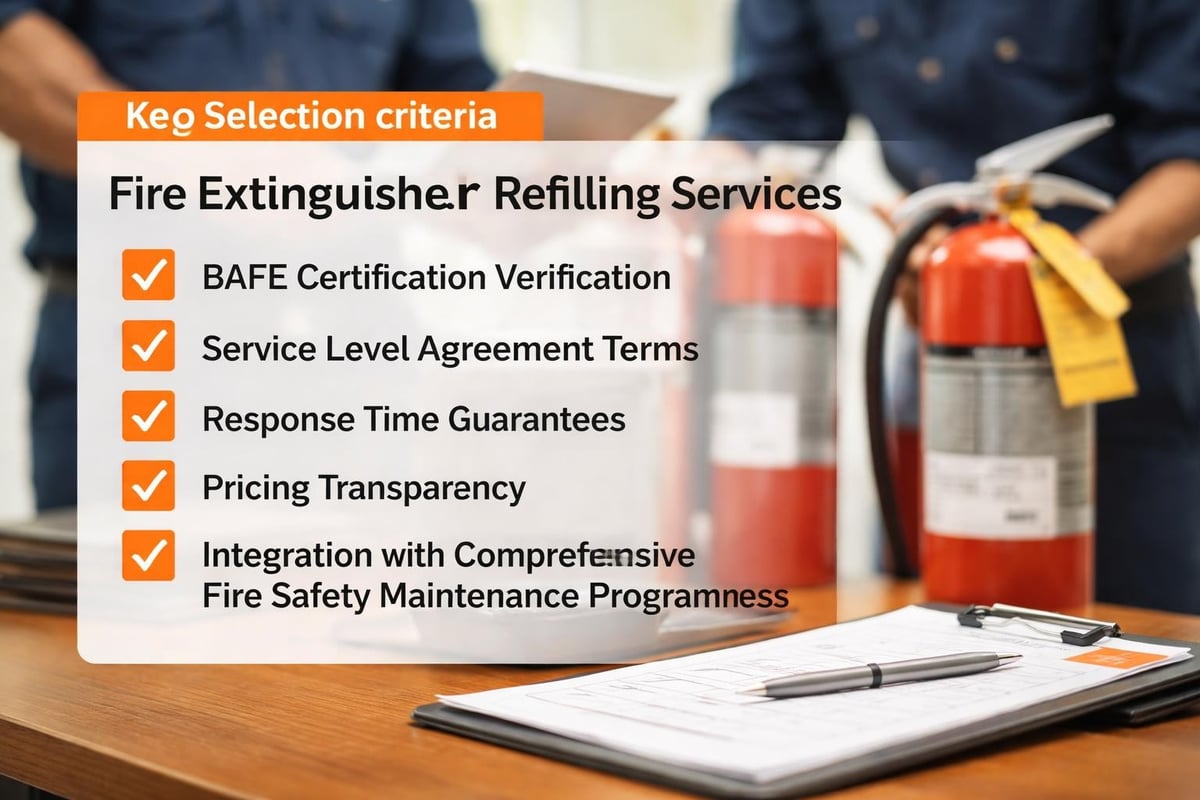
Choosing the right service provider significantly impacts safety compliance, equipment reliability, and long-term costs. Several factors distinguish professional operations from inadequate alternatives.
Certification and Accreditation Standards
Reputable fire extinguisher refilling service providers hold relevant industry certifications demonstrating technical competence and regulatory knowledge.
Essential qualifications include:
- BAFE SP101 certification for fire extinguisher maintenance
- Manufacturer-specific training certificates
- Public liability insurance (minimum £5 million)
- Demonstrable experience with commercial installations
Third-party accreditation provides assurance that technicians follow current British Standards (BS 5306-3) and maintain appropriate quality management systems. This becomes particularly important for organisations requiring documented compliance for insurance or regulatory purposes.
Service Level Agreements and Response Times
Commercial fire safety cannot accommodate extended downtime. Professional providers offer structured service agreements guaranteeing prompt attention.
Typical SLA components:
- Scheduled annual servicing windows
- Emergency call-out response times
- Temporary extinguisher provision during servicing
- Comprehensive maintenance documentation
- 24/7 support availability for critical sites
The integration of extinguisher servicing with broader fire safety and protection maintenance schedules optimises resource allocation whilst ensuring comprehensive coverage.
Cost Structures and Contract Options
Understanding pricing models helps businesses budget appropriately for fire safety obligations. Fire extinguisher refilling service costs vary based on several factors.
Service pricing typically reflects:
- Number and types of extinguishers – larger capacities and specialised agents increase costs
- Site accessibility – multi-storey or restricted access locations require additional time
- Service frequency – annual contracts offer better value than ad-hoc arrangements
- Additional services – signage, brackets, and training bundled with maintenance
Many providers structure contracts as fixed annual fees covering routine servicing, with refilling charged separately when required. This approach provides budget predictability whilst ensuring prompt attention when discharge occurs.
Integrating Extinguisher Maintenance Within Comprehensive Fire Safety
Fire extinguisher refilling service forms one component of holistic fire protection strategies. Modern commercial buildings require coordinated approaches encompassing detection, suppression, and evacuation systems.
Coordinated Maintenance Scheduling
Businesses benefit substantially from synchronising extinguisher servicing with other fire safety maintenance activities. This coordination reduces disruption whilst ensuring comprehensive compliance.
Integrated maintenance calendar:
| Quarter | Fire Safety Activity | Compliance Element |
|---|---|---|
| Q1 | Extinguisher annual service | BS 5306-3 |
| Q2 | Fire alarm testing and inspection | BS 5839-1 |
| Q3 | Fire door inspection | BS 9999 |
| Q4 | Emergency lighting testing | BS 5266 |
Single-supplier solutions from providers like Logic Fire and Security streamline administration, improve accountability, and often deliver cost efficiencies through bundled service contracts.
Documentation and Compliance Records
Meticulous record-keeping proves essential for regulatory compliance and insurance validation. Professional fire extinguisher refilling service providers maintain comprehensive documentation.
Required records include:
- Service dates and technician identification
- Work performed (inspection, refilling, repairs)
- Component replacements with part numbers
- Test results including pressure readings
- Next service due dates
- Photographic evidence where appropriate
Digital record systems enable instant access during inspections or audits. Many modern providers offer online portals where businesses view service histories, schedule appointments, and download compliance certificates.
Training Staff Alongside Equipment Maintenance
Even perfectly maintained extinguishers prove ineffective if personnel lack confidence using them. Progressive businesses combine equipment servicing with staff training programmes.
Practical Fire Extinguisher Training
Professional fire extinguisher refilling service providers increasingly offer hands-on training sessions during routine service visits. These practical demonstrations build employee confidence and reinforce fire safety awareness.
Training components typically include:
- Fire classification and extinguisher selection
- PASS technique (Pull, Aim, Squeeze, Sweep)
- Safe approach distances and retreat protocols
- When to fight fires versus immediate evacuation
- Reporting procedures following extinguisher use
Regular refresher training ensures knowledge retention, particularly in organisations with high staff turnover. Some providers incorporate training records within their maintenance documentation, creating comprehensive compliance portfolios.
Creating a Fire Safety Culture
Visible, well-maintained extinguishers contribute to workplace safety culture. Regular servicing demonstrates management commitment to employee protection, encouraging reporting of defects or concerns.
Organisations implementing comprehensive approaches including commercial fire risk assessments alongside equipment maintenance create environments where safety becomes ingrained rather than merely compliant.
Future Developments in Extinguisher Technology and Servicing
The fire protection industry continues evolving, with innovations affecting both equipment design and maintenance approaches. Understanding emerging trends helps businesses prepare for future requirements.
Smart Extinguisher Monitoring Systems
Connected devices increasingly monitor extinguisher status remotely, alerting facilities managers to pressure loss, tampering, or servicing requirements. These systems integrate with building management platforms, automating compliance tracking.
Benefits of smart monitoring:
- Immediate notification of pressure anomalies
- Automated service scheduling based on usage and time
- Reduced manual inspection requirements
- Enhanced compliance documentation through digital logs
Whilst smart extinguishers command premium pricing, they offer substantial value for large estates or properties with challenging access. The technology complements rather than replaces professional fire extinguisher refilling service, ensuring prompt attention when issues arise.
Environmental Considerations in Agent Selection
Sustainability concerns drive gradual shifts in suppressant agent preferences. Modern foam concentrates use fluorine-free formulations, addressing environmental persistence concerns associated with traditional AFFF products.
Businesses reviewing their fire safety infrastructure increasingly consider environmental impact alongside performance criteria. Professional service providers advise on agent alternatives during refilling, balancing ecological responsibility with firefighting effectiveness.
The integration of environmentally conscious practices extends across fire safety systems, with protection systems incorporating sustainable technologies wherever feasible without compromising safety performance.
Common Mistakes in Extinguisher Maintenance
Even organisations committed to fire safety sometimes make errors compromising extinguisher reliability. Awareness of common pitfalls helps businesses avoid costly mistakes.
Delaying Refilling After Discharge
Perhaps the most frequent error involves postponing fire extinguisher refilling service following partial discharge. Even brief activation compromises pressure and agent volume, rendering extinguishers potentially ineffective.
Some organisations mistakenly believe partially used extinguishers remain serviceable if pressure gauges show green readings. However, agent contamination, moisture ingress, and pressure fluctuations demand complete refilling regardless of apparent functionality.
Using Unqualified Service Providers
Cost pressures sometimes tempt businesses toward unaccredited maintenance providers offering seemingly attractive pricing. This false economy creates significant risks.
Consequences of inadequate servicing:
- Non-compliant equipment failing regulatory inspections
- Voided warranties through unauthorised intervention
- Improperly refilled extinguishers failing during emergencies
- Invalid insurance claims following incidents
- Prosecution under fire safety legislation
Professional accreditation ensures technicians possess current knowledge, appropriate equipment, and genuine replacement components. The modest additional cost proves insignificant compared to potential liabilities.
Neglecting Site-Specific Requirements
Standard extinguisher provision proves insufficient for premises with specialised fire risks. Facilities housing electrical equipment, flammable liquids, or cooking operations require tailored approaches.
Comprehensive fire extinguisher refilling service includes periodic review of site risk profiles, recommending adjustments to extinguisher types, quantities, or locations as operations evolve. This proactive approach maintains optimal protection as businesses grow or change.
Maximising Value From Your Service Investment
Strategic approaches to fire extinguisher maintenance deliver enhanced value beyond basic compliance, protecting investments whilst optimising safety performance.
Long-Term Equipment Planning
Fire extinguishers typically serve 10-15 years with proper maintenance before replacement becomes necessary. Planning replacement cycles prevents emergency expenditure when multiple units reach end-of-life simultaneously.
Professional service providers track equipment ages, recommending phased replacements that spread costs whilst ensuring continuous protection. This forward planning proves particularly valuable for organisations managing large extinguisher populations across multiple sites.
Leveraging Maintenance Visits for Broader Safety Reviews
Scheduled service visits provide opportunities for informal fire safety assessments. Experienced technicians often identify ancillary issues during routine work, such as:
- Obstructed extinguisher access or visibility
- Inadequate or damaged signage
- Changes in room usage affecting risk assessment
- Additional protection requirements in new areas
These observations, whilst beyond core fire extinguisher refilling service scope, demonstrate professional commitment and help businesses maintain comprehensive safety standards.
Integration with specialists offering fire security service ensures holistic approaches addressing both fire prevention and property protection simultaneously.
Maintaining operational fire extinguishers through professional refilling and servicing represents a fundamental business responsibility that protects lives, assets, and regulatory compliance. The technical expertise, specialised equipment, and comprehensive documentation provided by accredited service providers deliver value extending far beyond basic legal obligations. Logic Fire and Security offers complete fire safety solutions for UK businesses, combining expert extinguisher maintenance with advanced detection systems, monitoring services, and comprehensive risk assessment capabilities to create integrated protection tailored to your specific operational requirements.