

Kitchen fire safety has never been more critical as we approach 2026. With regulations tightening across the UK and kitchen fires remaining a leading cause of property damage, both domestic and commercial spaces face growing responsibilities.
This comprehensive guide is designed for homeowners, property managers, and commercial operators seeking the latest advice on kitchen suppression system selection and compliance. We cover essential system types, key regulatory updates, step-by-step installation, maintenance best practices, and expert recommendations to ensure your property stays protected.
Discover how the right kitchen suppression system can provide peace of mind, support compliance, and protect lives as well as assets in the coming year.
Understanding Kitchen Suppression Systems
Kitchen fire risks are a major concern for both homes and commercial properties. A kitchen suppression system is designed to detect and extinguish fires quickly, minimising damage and saving lives. Understanding how these systems work and their benefits is essential for anyone responsible for kitchen safety.
What Is a Kitchen Suppression System?
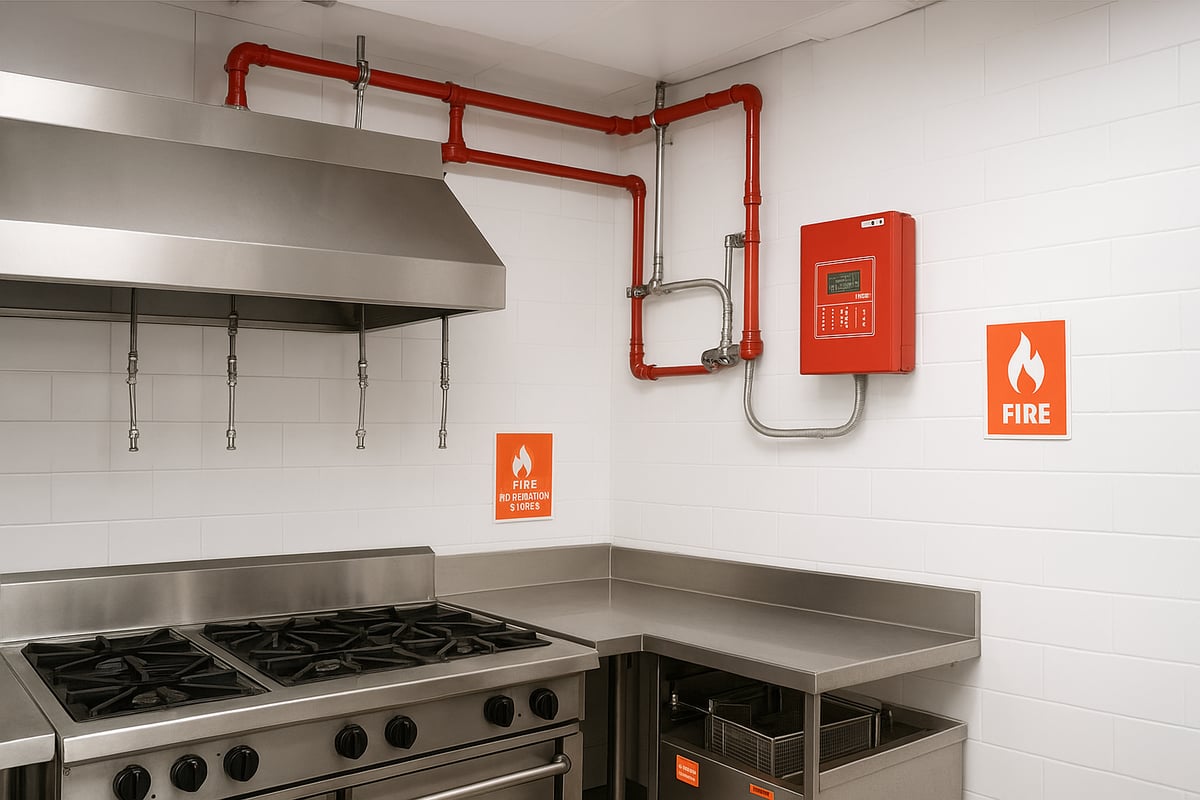
A kitchen suppression system is an automated fire protection solution specifically engineered for cooking areas. Unlike standard fire extinguishers, which require manual operation, these systems detect fires and activate automatically, ensuring rapid response even when the kitchen is unattended.
The main components include:
- Heat or flame detectors that sense danger early
- Actuators to trigger the release of the suppression agent
- Specialised agents (such as wet chemicals) that effectively tackle grease and oil fires
- Integration with alarms to alert occupants and emergency services
For example, Class F wet chemical systems are designed to deal with high-temperature grease fires that are common in kitchens. According to UK Fire and Rescue Service data, kitchen fires account for over 60% of domestic fire incidents, highlighting the critical role of suppression systems in both homes and businesses.
Competitor FAQs often address reliability and speed. Modern systems can detect and suppress a fire within seconds, offering a level of protection unmatched by portable extinguishers. For a deeper look at how these systems function, see this Fire suppression system overview.
Types of Kitchen Suppression Systems
There are several types of kitchen suppression system, each suited to different environments. The main categories include:
| System Type | Best For | Pros | Cons |
|---|---|---|---|
| Wet Chemical | Commercial kitchens | Effective on grease fires | Regular maintenance needed |
| Dry Chemical | Industrial settings | Fast knockdown, broad coverage | Residue cleanup |
| Water Mist | Hotels, care homes | Minimal damage, eco-friendly | Less effective on oil fires |
| Clean Agent | High-tech kitchens | No residue, safe for electronics | Higher cost |
Direct release systems discharge the agent straight over the fire, while indirect systems use piping and nozzles to reach concealed areas. For example, Fireward’s indirect, single nozzle Class F units are popular in residential and student accommodation settings.
Integration with building alarm systems enhances safety by ensuring that everyone is alerted immediately. In the UK, wet chemical agents are standard for commercial kitchens, while water mist is gaining popularity due to its effectiveness and minimal cleanup requirements.
How Suppression Systems Work
The operation of a kitchen suppression system starts with detection. Systems use pneumatic tubing or heat sensors to monitor cooking appliances. If a fire is detected, the actuator releases the suppression agent rapidly, covering hobs, fryers, and grills.
This rapid deployment not only extinguishes the flames but also prevents reignition by cooling surfaces and forming a barrier over hot oils. For example, Fireward’s system uses a single moving part for ultra-fast detection and can operate 24/7 without external power.
Advanced features include automatic shutdown of cooking equipment and battery isolation for added safety. Industry-standard warranties, such as three-year parts and labour, underscore the reliability and longevity of these systems.
Kitchen suppression system technology is designed to deliver seamless, automatic protection, providing peace of mind for property owners and managers.
2026 Kitchen Fire Safety Regulations and Compliance
Stricter fire safety regulations are arriving in 2026, making compliance essential for anyone responsible for kitchens. Understanding the latest requirements, certification standards, and fire risk assessment obligations is crucial for ensuring your kitchen suppression system is up to date.
Key Regulatory Changes for 2026
The fire safety landscape for kitchens is changing rapidly. In 2026, new UK standards will place greater emphasis on kitchen suppression system installation in both residential and commercial settings.
Key updates include:
- Stricter BS EN 16282 requirements for commercial and communal kitchens
- Mandatory automatic suppression in high-risk properties such as HMOs, care homes, and hotels
- Clearer landlord and property manager responsibilities for system upkeep
For those managing shared kitchens, compliance is not just about safety but also reducing liability and insurance costs. According to recent UK fire safety regulation updates 2025, adherence to new standards will be closely monitored by local authorities. Meeting these rules can lower insurance premiums and help safeguard occupants.
Certification and Accreditation Requirements
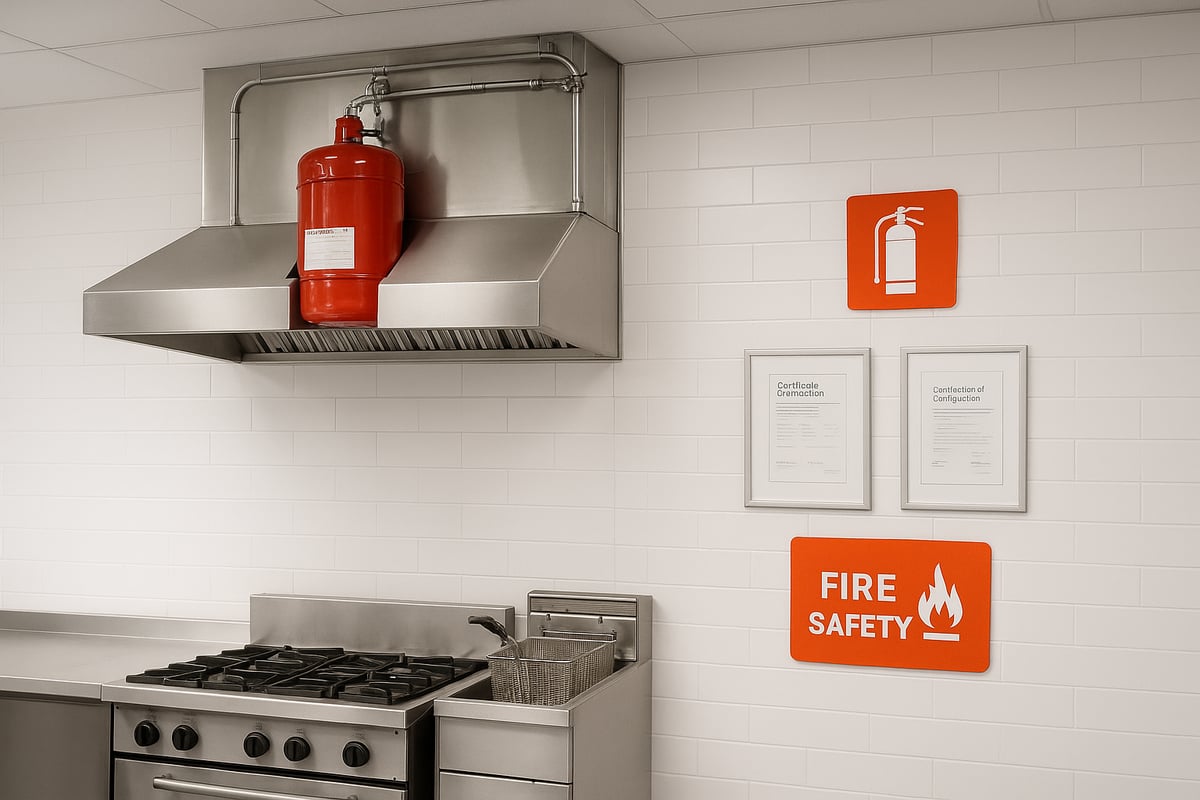
Proper certification is vital when choosing and maintaining a kitchen suppression system. Third-party accreditations, such as LPCB, ISO 9001, and BAFE, demonstrate that systems and installers meet rigorous standards.
When selecting a system, look for:
- LPCB or BAFE certification for both equipment and installer
- Evidence of ISO 9001 quality management
- Ongoing audit and maintenance records
| Accreditation | What It Proves | Impact |
|---|---|---|
| LPCB | System reliability | Regulatory compliance |
| BAFE | Competent installation | Insurance approval |
| ISO 9001 | Quality management process | Audit trail |
For example, Fireward’s multiple certifications ensure their kitchen suppression system options meet or exceed all 2026 requirements. Certified systems are also more likely to have insurance claims approved, with a 40 percent higher success rate.
Meeting Fire Risk Assessment Obligations
Integrating a kitchen suppression system into your fire risk assessment is now essential. Assessors will expect to see evidence of system installation, maintenance, and integration with other safety measures.
To ensure compliance:
- Document all high-risk appliances and kitchen layouts
- Link system choice to identified risks in your assessment
- Keep detailed records of installation and ongoing maintenance
When updating your site safety plan, include:
- Suppression system specifications
- Recent service and inspection logs
- Evidence of installer certification
Many shared kitchens, such as those in student accommodation or care homes, now require kitchen suppression system installation as standard. Maintenance records are critical for legal compliance, and 80 percent of property managers report that staying compliant is their top fire safety concern.
By embedding these steps into your routine, you ensure both safety and legal protection for all kitchen users.
Step-by-Step Guide to Selecting and Installing a Kitchen Suppression System
Selecting the right kitchen suppression system is a crucial decision for any property owner or manager. This step-by-step guide will help you assess your risks, choose a suitable system, ensure proper installation, and integrate with your building’s safety infrastructure for 2026 and beyond.
Assessing Your Kitchen’s Fire Risks
Start by identifying which appliances pose the highest fire risk. Common culprits are hobs, deep fat fryers, and grills. Evaluate the kitchen layout, including ventilation, as poorly ventilated areas can increase fire spread.
Consider the type of occupancy. For example, care homes often have vulnerable residents, while student accommodation may have higher turnover and less experienced cooks. Use the findings from your fire risk assessment guidance to inform your approach to selecting a kitchen suppression system.
Data shows that over 70% of kitchen fires originate from cooking appliances. By understanding your specific risks, you ensure the kitchen suppression system you choose will offer the best protection for your environment.
Choosing the Right Suppression System
Match the kitchen suppression system to your kitchen’s size, usage, and risk profile. For small residential kitchens, indirect nozzle systems can offer discreet protection. In commercial settings, robust wet chemical systems with rapid detection are standard.
Key features to consider:
- Suppression agent type
- Detection speed
- Compatibility with alarm systems
- Length of warranty and aftercare options
Compare costs against the level of protection offered. Study competitor product comparisons to see which solutions provide the optimal blend of reliability and value. Always ensure your chosen kitchen suppression system meets current standards and is suitable for any future upgrades.
Professional Installation: What to Expect
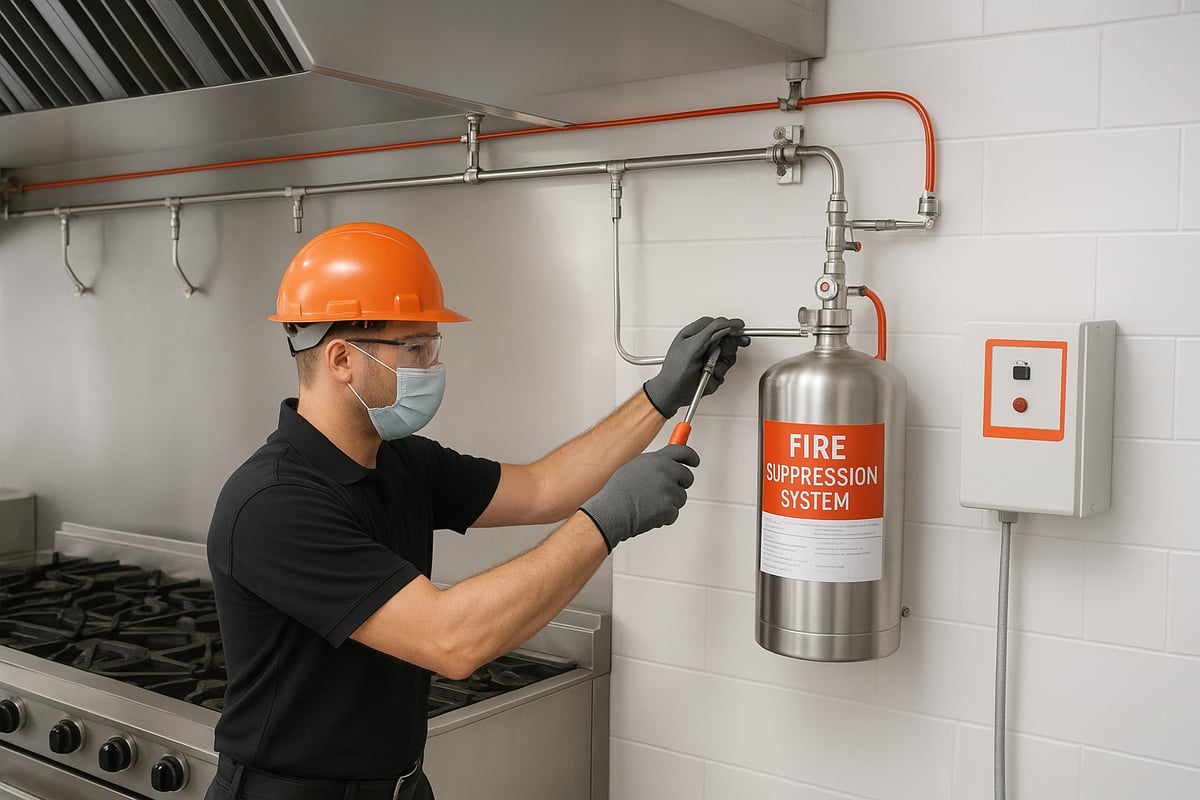
Having your kitchen suppression system installed by certified professionals is essential. Look for installers with LPCB or BAFE accreditation. The process typically includes a site survey, precise fitting of detection and suppression components, thorough testing, and final commissioning.
Integration with existing fire alarms and emergency systems maximises safety. Installers can often work around complex kitchen features, such as extractor hoods, with minimal disruption. Professional installation reduces the risk of system failure by 30 percent, ensuring your kitchen suppression system is ready when you need it.
Integration with Building Safety Systems
For comprehensive protection, link your kitchen suppression system to broader building alarms and monitoring platforms. Advanced systems feature pressure switches, end-of-line gauges, and support for 24/7 remote monitoring.
This integration is especially beneficial for landlords and property managers who need immediate alerts and compliance records. It also helps future-proof your property as fire safety regulations evolve. By keeping your kitchen suppression system connected and up-to-date, you maintain a safer environment for all occupants.
Maintenance and Testing: Keeping Your System Ready
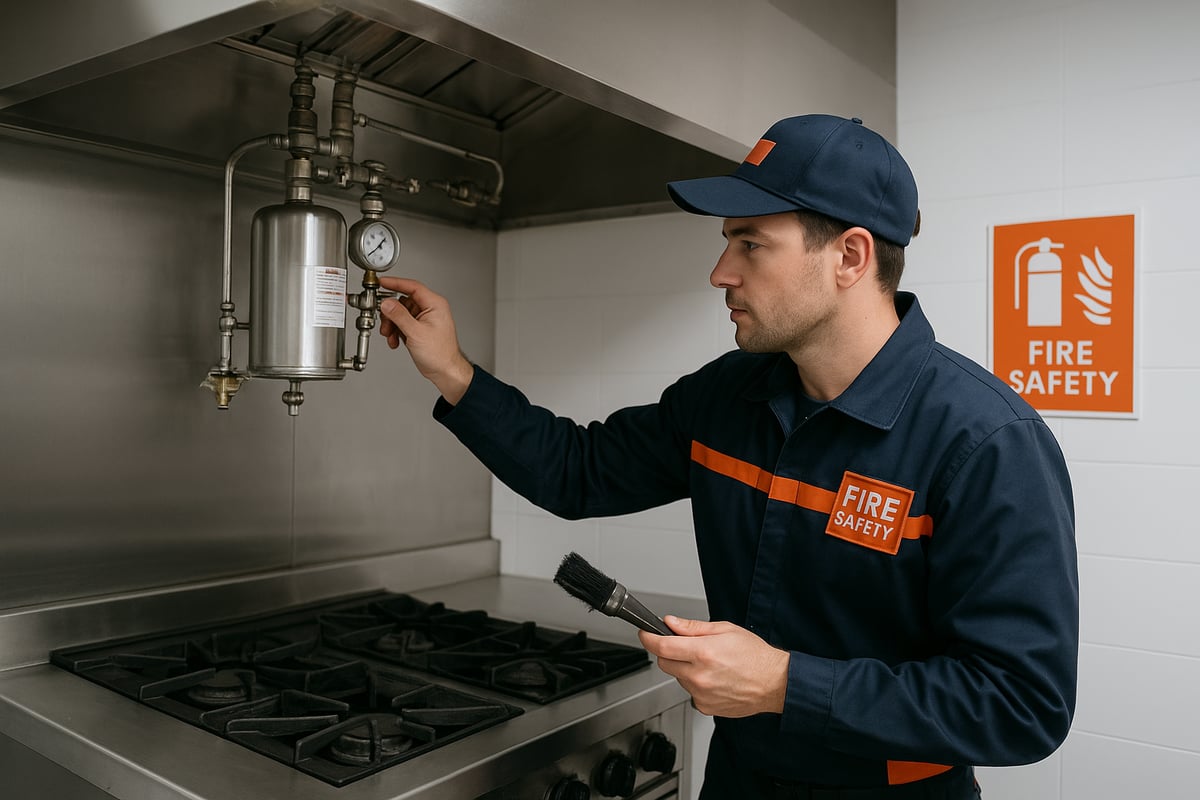
Regular maintenance and testing are vital to ensure your kitchen suppression system remains fully operational when you need it most. Without consistent upkeep, even the most advanced system can fail at a critical moment, putting lives and property at risk.
Routine Maintenance Essentials
A kitchen suppression system should be checked regularly to ensure it operates as designed. Monthly visual inspections, quarterly pressure checks, and annual full servicing are standard across the industry.
Key maintenance tasks include:
- Checking agent levels in cylinders
- Inspecting and cleaning nozzles for blockages
- Verifying pressure readings and actuator integrity
- Reviewing detection tubing or sensor alignment
Professional servicing contracts are highly recommended, as these provide scheduled visits and keep your warranty valid. Many providers offer three-year warranties that require annual inspections. According to industry data, regular maintenance can extend the lifespan of a kitchen suppression system by 25 percent.
Typical issues found during servicing include minor leaks, clogged nozzles, or worn activation mechanisms. For an in-depth look at maintenance best practices, see this fire extinguisher servicing information.
Testing Procedures and Record-Keeping
Testing your kitchen suppression system is crucial for compliance and peace of mind. Safe testing involves simulating a fire condition to verify detection and actuation, without discharging the system unless a full test is required.
Key test steps:
- Use test keys or manual actuators to check system response
- Confirm integration with fire alarms and equipment shutdown
- Ensure audible and visual alarms activate correctly
Maintain detailed logs of all maintenance and testing. These records are essential for fire risk assessments and insurance claims. Incomplete or missing documentation is one of the leading reasons for compliance failures and rejected insurance claims. Always keep records accessible for inspectors and insurance providers.
Troubleshooting and Upgrading
Common faults in a kitchen suppression system include detection failures, agent leaks, or nozzle blockages. If you notice any warning indicators, such as low pressure or error lights, contact a certified technician immediately.
Upgrading is sometimes necessary after a kitchen renovation or if regulations change. Modern systems can be retrofitted to accommodate increased fire loads or new layouts. For example, after adding high-capacity fryers, upgrading to a higher-capacity suppression agent may be required. Proactive upgrades ensure your protection keeps pace with your kitchen’s risks.
Professional Support and Emergency Response
A reliable support contract provides 24/7 access to emergency call-outs and technical assistance. In the event of an activation or fault, rapid response from professionals can minimise downtime and reduce risk.
Emergency support teams are trained to restore your kitchen suppression system quickly and safely. Industry data shows that fast professional intervention is linked to a 90 percent incident containment rate, offering vital reassurance to property managers and business owners.
Essential Tips for Maximising Kitchen Fire Safety in 2026
Kitchen fire safety is a shared responsibility that demands attention to detail and ongoing vigilance. By following these essential tips, you can ensure your kitchen suppression system provides maximum protection in 2026.
Proactive Fire Prevention Measures
Training staff or residents to recognise fire risks and correctly use the kitchen suppression system is crucial. Regular fire drills, clear instructions, and visible emergency equipment make all the difference. Safe cooking habits, such as monitoring appliances and maintaining clean hobs, further reduce hazards.
Keep escape routes unobstructed and ensure fire blankets and extinguishers are easy to access. Notably, water mist systems have demonstrated high efficacy in UK kitchen fires, reinforcing the value of combining technology with human vigilance.
Combining Suppression with Other Safety Systems
A kitchen suppression system is most effective when integrated with alarms, emergency lighting, and robust evacuation plans. Layering these systems creates a comprehensive safety net for all users.
Consider including disabled refuge points in communal buildings and regularly update evacuation maps. Coordinated fire safety strategies help ensure that everyone knows what to do in an emergency and that suppression systems activate alongside other critical responses.
Adapting to Kitchen Changes and New Technologies
Kitchen layouts and appliances change over time, so it is vital to reassess fire risks and the suitability of your kitchen suppression system regularly. New equipment or increased usage may require enhanced coverage or additional features.
Embrace smart monitoring tools, such as IoT-connected alerts, to keep property managers and landlords informed in real time. Remote notifications can significantly speed up response times, providing an extra layer of reassurance for busy environments.
Cost, Insurance, and Peace of Mind
When evaluating the investment in a kitchen suppression system, compare the total cost of ownership with the potential financial impact of a kitchen fire. Compliant systems can lead to reduced insurance premiums and easier claims, especially as standards evolve. For reference, recent fire safety updates highlight the importance of approved systems in meeting regulatory expectations.
The average kitchen fire claim in the UK exceeds £25,000, making robust protection an essential asset for property managers, residents, and business owners alike.
Frequently Asked Questions (FAQs)
What is a kitchen suppression system and why is it needed?
A kitchen suppression system automatically detects and controls fires in cooking areas, providing fast and targeted protection.
How fast do these systems respond to fire?
Most systems activate within seconds of detecting a fire, helping to minimise damage.
Are they required by law in all kitchens?
Legal requirements vary, but many communal and commercial kitchens must have certified suppression systems.
How often should systems be serviced?
Annual professional servicing is recommended, with more frequent checks for high-use environments.
Can they be retrofitted to existing kitchens?
Yes, most systems can be adapted to fit existing layouts, ensuring compliance and safety upgrades are possible.
As you look ahead to 2026 and consider the critical steps for keeping your kitchen safe, it’s clear that the right suppression system is key for both peace of mind and regulatory compliance. Whether you manage a busy commercial kitchen, oversee shared accommodation, or simply want to protect your home, understanding your unique fire risks and staying up to date with the latest requirements makes all the difference. If you’d value tailored advice or want to assess your current setup, you can take the next step towards safer kitchens by booking a Get a Free Site Survey with our expert team.