
Security and Monitoring: Essential Guide for Businesses

Modern businesses face an increasingly complex landscape of threats, from fire hazards to unauthorised access and cyber vulnerabilities. The integration of comprehensive security and monitoring solutions has become essential for protecting commercial assets, ensuring employee safety, and maintaining regulatory compliance. For organisations across the UK, understanding how these systems work together creates a robust defence against potential risks whilst providing valuable operational insights.

Understanding the Foundations of Security and Monitoring

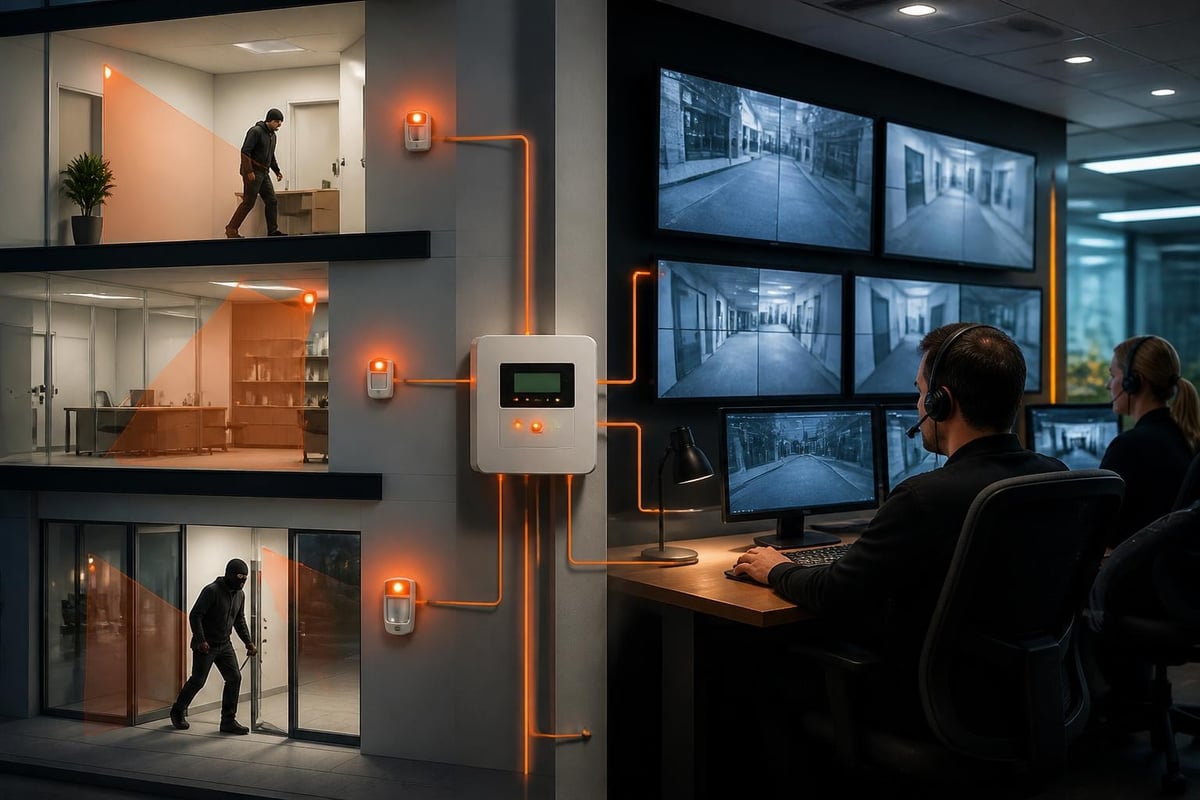
Security and monitoring encompasses a wide range of technologies and processes designed to protect commercial premises from various threats. At its core, this approach combines physical security measures with continuous surveillance capabilities to detect, prevent, and respond to incidents in real time.

Fire detection systems represent a critical component of any security and monitoring strategy. Modern fire alarm networks utilise sophisticated sensors, control panels, and communication devices that work in harmony to identify potential fire hazards before they escalate. These systems integrate with commercial fire alarm monitoring services to ensure 24/7 oversight of your facilities.

Key Components of Integrated Systems

Effective security and monitoring requires several interconnected elements working seamlessly together:

  • Advanced detection technologies (smoke, heat, flame, and gas sensors)
  • Access control mechanisms for perimeter and internal security
  • Video surveillance networks with recording and analytics capabilities
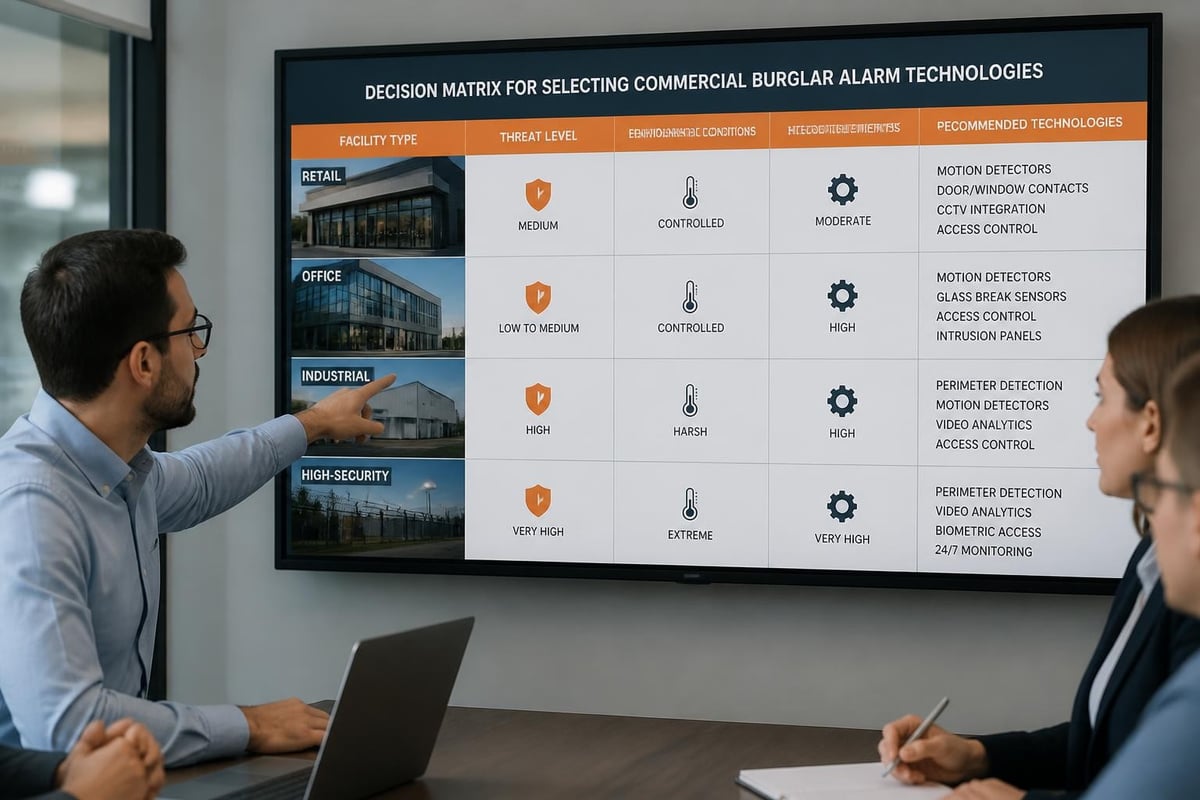
  • Intrusion detection systems with immediate alert protocols
  • Environmental monitoring for temperature, humidity, and air quality
  • Central monitoring stations with trained personnel

The sophistication of modern commercial security systems allows businesses to manage all these components through unified platforms. This integration eliminates blind spots and ensures that security teams receive comprehensive situational awareness across all facilities.

Fire detection integration with security systems

Real-Time Monitoring and Threat Detection

The value of security and monitoring systems lies not just in their presence but in their ability to provide continuous oversight. Real-time monitoring transforms passive security measures into active defence mechanisms that can identify and address threats as they emerge.

According to best practices for logging and monitoring, organisations must establish comprehensive visibility across all security touchpoints. This visibility enables security teams to detect anomalies, track patterns, and respond to incidents with precision and speed.

Implementing Continuous Surveillance

Commercial facilities require surveillance solutions that operate without interruption, regardless of time or conditions. Modern surveillance security systems incorporate features specifically designed for business environments:

Feature Business Benefit Implementation Consideration
24/7 recording Complete incident documentation Adequate storage capacity required
Motion-triggered alerts Reduced false alarms Sensitivity calibration essential
Remote access Management from any location Secure authentication protocols
Analytics integration Behavioural pattern recognition Training data for AI systems
Backup power systems Continuous operation during outages Regular battery testing needed

The shift towards proactive monitoring has fundamentally changed how businesses approach security. Rather than simply recording events, modern systems analyse data streams in real time, identifying potential threats before they materialise into serious incidents.

Leveraging Automated Alert Systems

Automation plays a crucial role in effective security and monitoring. When systems detect unusual activity or potential hazards, automated alerts ensure immediate notification to appropriate personnel. This capability proves especially valuable for commercial fire detection systems, where seconds can make the difference between a contained incident and a catastrophic event.

Intelligent alert systems filter out noise whilst prioritising genuine threats. By implementing effective cybersecurity monitoring practices, businesses can tune their alert parameters to focus on critical events that require immediate attention.

Access Control and Perimeter Security

Physical access control represents a fundamental pillar of comprehensive security and monitoring strategies. Controlling who enters your facilities, when they enter, and which areas they can access provides essential protection for assets, data, and personnel.

Modern commercial access control systems have evolved far beyond traditional lock-and-key mechanisms. Today's solutions incorporate biometric authentication, mobile credentials, and integration with visitor management platforms to create sophisticated access hierarchies.

Designing Effective Access Protocols

  1. Conduct comprehensive facility audits to identify all entry points, including loading bays, emergency exits, and utility access areas
  2. Establish role-based access permissions that align with job functions and operational requirements
  3. Implement multi-factor authentication for sensitive areas such as server rooms, chemical storage, or confidential document repositories
  4. Schedule regular access reviews to ensure permissions remain appropriate as roles change
  5. Integrate access logs with monitoring systems to correlate entry events with other security data

The integration of access control with broader security and monitoring infrastructure creates powerful capabilities for incident investigation and threat prevention. When combined with video surveillance, businesses can verify the identity of individuals accessing facilities and maintain comprehensive audit trails.

Access control workflow

Securing Critical Infrastructure

For businesses operating critical infrastructure or sensitive facilities, enhanced security measures become imperative. The ISA/IEC 62443 series of standards provides guidance for implementing security across industrial automation and control systems, principles that extend to fire and security networks.

Layered security approaches ensure that even if one defensive measure fails, additional barriers protect critical assets. This concept, known as defence in depth, applies equally to physical security and network protection.

Monitoring Best Practices for Commercial Operations

Implementing security and monitoring systems represents just the first step. Maintaining their effectiveness requires adherence to established best practices that ensure systems remain current, properly configured, and fully functional.

According to network security monitoring experts, regular audits and system reviews form the foundation of robust monitoring programmes. These assessments identify vulnerabilities, verify compliance, and ensure that monitoring tools capture relevant data.

Essential Monitoring Practices

  • Establish baseline performance metrics to identify deviations that may indicate security incidents or system malfunctions
  • Standardise log formats across all security devices to simplify analysis and correlation of events
  • Implement selective logging that captures critical events without overwhelming storage or analysis capabilities
  • Conduct regular penetration testing to identify weaknesses before malicious actors exploit them
  • Maintain detailed incident response procedures that specify roles, escalation paths, and communication protocols

The importance of business security monitoring extends beyond immediate threat detection. Historical data provides valuable insights into patterns, trends, and potential vulnerabilities that might otherwise remain hidden.

Maintenance and Testing Schedules

System Component Testing Frequency Maintenance Actions
Fire detection sensors Weekly/Monthly Visual inspection, sensitivity testing
Access control readers Monthly Credential testing, firmware updates
Video surveillance cameras Weekly Lens cleaning, angle verification
Alarm communication paths Daily Test signal transmission
Backup power systems Quarterly Load testing, battery replacement
Central monitoring equipment Daily Software updates, log review

Professional fire alarm testing ensures that detection systems respond appropriately when activated. These regular assessments verify that sensors maintain proper sensitivity, communication pathways function correctly, and notification devices operate at required volumes.

Integration with Incident Response Protocols

Security and monitoring systems provide maximum value when integrated with comprehensive incident response frameworks. The data these systems collect becomes actionable intelligence only when coupled with clear procedures for investigation, escalation, and resolution.

Research on cybersecurity monitoring best practices emphasises the importance of aligning monitoring tools with response capabilities. This alignment ensures that detected threats receive appropriate attention based on their severity and potential impact.

Building Response Capabilities

Effective incident response requires pre-established protocols that specify actions for different scenarios. For fire security applications, this includes evacuation procedures, emergency service notification, and system reset protocols following false alarms.

Priority classification systems help security personnel quickly assess the urgency of alerts and allocate resources accordingly. By categorising incidents based on threat level, potential impact, and regulatory implications, businesses ensure that critical events receive immediate attention whilst routine alerts follow standard processing workflows.

The connection between security and access control becomes particularly important during incident response. When security events occur, the ability to remotely manage access permissions-locking down facilities, restricting movement to specific areas, or enabling emergency egress-can significantly influence outcomes.

Incident response timeline

Compliance and Regulatory Considerations

Commercial security and monitoring implementations must address numerous regulatory requirements that govern fire safety, data protection, and operational security. Understanding these obligations ensures that systems not only protect assets but also maintain compliance with legal standards.

Fire safety regulations require regular commercial fire risk assessments that evaluate detection capabilities, evacuation routes, and emergency procedures. These assessments identify deficiencies and recommend improvements to maintain compliance with current standards.

Documentation and Audit Trails

Comprehensive logging capabilities serve dual purposes: security monitoring and compliance verification. Detailed records of system events, maintenance activities, and incident responses provide evidence of due diligence during regulatory audits.

Retention policies must balance operational needs with storage constraints and regulatory requirements. Most jurisdictions specify minimum retention periods for security recordings and access logs, particularly for sectors such as healthcare, finance, and critical infrastructure.

Following guidance on security monitoring and logging best practices helps organisations develop documentation frameworks that satisfy regulatory requirements whilst supporting operational objectives.

Advanced Technologies and Future Trends

The landscape of security and monitoring continues to evolve as new technologies emerge and existing capabilities mature. Artificial intelligence, machine learning, and advanced analytics are transforming how businesses detect threats and respond to incidents.

Predictive analytics represent a significant advancement in security and monitoring capabilities. By analysing historical data, environmental conditions, and operational patterns, modern systems can identify potential issues before they manifest as actual threats.

Emerging Capabilities

  1. AI-powered video analytics that distinguish between routine activities and suspicious behaviour
  2. Integrated environmental monitoring that correlates multiple data streams to predict equipment failures
  3. Cloud-based management platforms enabling centralised oversight of distributed facilities
  4. Mobile integration allowing security personnel to receive alerts and manage systems remotely
  5. Blockchain-based audit trails providing tamper-proof records of security events

The adoption of these technologies requires careful planning and integration with existing infrastructure. Businesses must balance the benefits of advanced capabilities against implementation costs, training requirements, and potential disruption during deployment.

Research into vulnerability monitoring best practices highlights the importance of regular scanning and prioritisation based on severity. This approach applies equally to physical security systems and network infrastructure.

Professional Installation and Ongoing Support

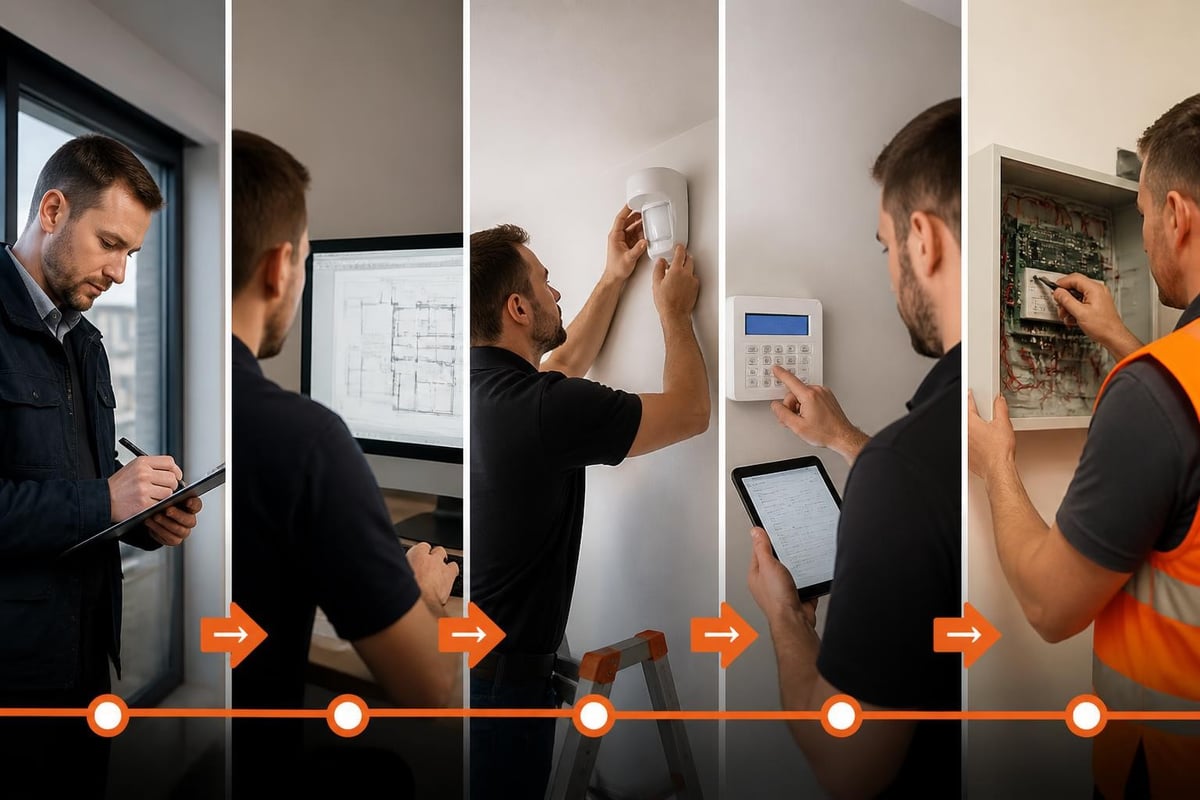
The effectiveness of security and monitoring systems depends heavily on proper installation, configuration, and maintenance. Whilst sophisticated technologies provide powerful capabilities, they deliver value only when implemented correctly and supported throughout their operational lifecycle.

Professional installation ensures that detection devices are positioned optimally, communication pathways are redundant, and control systems are configured to meet specific operational requirements. Working with experienced UK security contractors provides access to expertise across multiple disciplines, from fire detection to access control and video surveillance.

Selecting the Right Partner

Evaluation Criteria Why It Matters Questions to Ask
Industry experience Understanding of sector-specific requirements How many similar facilities have you secured?
Certification credentials Compliance with industry standards What certifications do your engineers hold?
Monitoring capabilities 24/7 professional oversight Describe your monitoring centre operations
Response times Speed of service delivery What are your guaranteed response times?
Maintenance programmes Long-term system reliability What preventive maintenance do you provide?

The commitment to comprehensive fire and security solutions must extend beyond initial installation. Regular maintenance, system updates, and periodic reviews ensure that security and monitoring infrastructure adapts to changing threats and evolving business requirements.

Guidance on preventing data breaches reminds organisations that security requires ongoing vigilance rather than one-time implementation. This principle applies across all aspects of commercial security, from fire detection to access control and surveillance systems.

Training and Human Factors

Technology represents only one component of effective security and monitoring. The human element-how personnel interact with systems, respond to alerts, and maintain vigilance-often determines whether security measures succeed or fail.

Comprehensive training programmes ensure that employees understand their roles within the broader security framework. This includes recognising potential threats, following established protocols during incidents, and properly utilising security technologies in their daily activities.

Building Security Awareness

  • Regular drills and exercises that test response procedures under realistic conditions
  • Clear communication of security policies and their rationale
  • Role-specific training that addresses unique responsibilities across different job functions
  • Refresher courses that reinforce key concepts and introduce system updates
  • Feedback mechanisms that allow personnel to report concerns or suggest improvements

The intersection of security technology and human behaviour creates both opportunities and challenges. Whilst automated systems excel at continuous monitoring and rapid detection, human judgement remains essential for interpreting context, making nuanced decisions, and adapting to unusual circumstances.

Following cybersecurity best practices emphasises the importance of user education alongside technical controls. This holistic approach recognises that the most sophisticated security and monitoring systems can be compromised by human error or social engineering.

System Integration and Unified Management

Modern businesses operate complex technology ecosystems that include fire detection, intrusion alarms, access control, video surveillance, building automation, and IT infrastructure. Integrating these disparate systems creates synergies that enhance overall security and monitoring effectiveness.

Unified management platforms provide centralised oversight across all security components, eliminating the need to monitor multiple independent systems. This consolidation improves situational awareness whilst reducing the complexity of daily operations.

Integration enables advanced capabilities such as automated responses to security events. For example, when a fire alarm activates, integrated systems can automatically unlock emergency exits, activate evacuation alerts, notify monitoring centres, and direct surveillance cameras towards affected areas.

The benefits of integration extend to operational efficiency as well. Single sign-on capabilities, unified reporting, and consolidated maintenance scheduling reduce administrative overhead whilst improving system reliability.


Effective security and monitoring requires a comprehensive approach that combines advanced technology, professional expertise, and ongoing vigilance. By implementing integrated systems that address fire detection, access control, surveillance, and real-time monitoring, businesses create robust protection for their facilities, assets, and personnel. Logic Fire and Security specialises in designing and maintaining these critical systems for commercial clients across the UK, providing the expertise and support necessary to ensure your operations remain secure and compliant. Contact our team to discuss how we can develop a tailored security and monitoring solution that addresses your specific requirements and delivers lasting protection.

Security Detection Systems for Commercial Buildings 2026

Security detection represents the critical first line of defence for commercial premises across the United Kingdom. As businesses face increasingly sophisticated threats to their physical and digital infrastructure, the ability to identify potential dangers before they escalate has become paramount. From fire hazards to unauthorised access attempts, modern security detection systems employ multiple technologies and methodologies to safeguard personnel, assets, and operations. For organisations ranging from manufacturing facilities to corporate headquarters, understanding the comprehensive landscape of security detection is essential for maintaining business continuity and regulatory compliance.

The Foundation of Security Detection Systems

Security detection encompasses a broad spectrum of technologies designed to identify anomalies, threats, and potential hazards within commercial environments. These systems operate continuously, analysing data from multiple sources to distinguish between normal activity and events requiring immediate attention.

At its core, security detection relies on sensors, monitoring equipment, and intelligent algorithms working in concert. Fire detection systems utilise heat and smoke sensors strategically positioned throughout buildings, whilst intrusion detection monitors entry points and restricted areas. Modern installations integrate these capabilities, creating layered protection that addresses multiple threat vectors simultaneously.

Security detection sensor network

The sophistication of contemporary security detection has evolved dramatically over recent years. Traditional standalone systems have given way to interconnected networks that share intelligence across platforms. This integration enables faster response times and more accurate threat assessment, particularly valuable for commercial fire detection systems where every second matters.

Physical Security Detection Technologies

Fire Detection Systems

Fire detection remains one of the most critical security detection applications for commercial premises. Modern systems employ multiple detection methods:

  • Ionisation smoke detectors identify combustion particles invisible to the human eye
  • Photoelectric sensors detect smouldering fires through light scattering technology
  • Heat detectors monitor temperature changes and rate-of-rise indicators
  • Multi-sensor devices combine several detection methods for improved accuracy
  • Aspirating systems continuously sample air quality in high-value areas

These technologies must comply with British Standards and undergo regular maintenance to ensure reliability. The placement of detectors follows stringent guidelines based on room dimensions, ceiling heights, and occupancy patterns.

Intrusion Detection Systems

Unauthorised access detection protects assets and personnel through various sensing technologies. Intrusion detection systems monitor perimeters, entry points, and internal spaces using passive infrared sensors, microwave detectors, and glass break sensors. These systems distinguish between legitimate activity and potential security breaches through sophisticated signal processing.

Modern commercial access control systems integrate biometric readers, proximity cards, and PIN entry to verify authorised personnel whilst maintaining comprehensive audit trails. When coupled with intrusion detection, these systems create robust barriers against unauthorised entry whilst facilitating smooth operation for legitimate users.

Threat Detection and Response Frameworks

Understanding security threat detection requires examining both the identification process and subsequent response protocols. Security detection systems generate alerts based on predefined parameters, but the value lies in how organisations process and act upon this intelligence.

Detection Rule Configuration

Effective security detection depends on properly configured detection rules that balance sensitivity with false alarm prevention. Rules must account for:

  1. Environmental factors such as ambient temperature variations and air movement patterns
  2. Operational schedules distinguishing between occupied and unoccupied periods
  3. Zone-specific requirements tailored to different areas within facilities
  4. Escalation protocols defining appropriate responses to various threat levels
  5. Integration points connecting detection systems with access control and monitoring platforms

Organisations working with experienced UK security contractors benefit from expertise in optimising these parameters for specific operational contexts.

Monitoring and Alert Management

Security detection generates substantial data requiring intelligent filtering and prioritisation. Business security monitoring services provide professional oversight, ensuring alerts receive appropriate attention regardless of time or day.

Detection Type Response Time Target Escalation Level Monitoring Approach
Fire Alarm Immediate (< 30 seconds) Critical 24/7 professional monitoring
Intrusion Alert 1-2 minutes High Automated verification + human assessment
Access Violation 2-5 minutes Medium Logged review with supervisor notification
Equipment Fault 24 hours Low Scheduled maintenance review

Modern monitoring centres employ artificial intelligence to correlate events across multiple systems, identifying patterns that might escape individual sensor analysis. This holistic approach reduces false positives whilst improving genuine threat detection rates.

Advanced Detection Technologies and Methodologies

The evolution of security detection continues accelerating as new technologies emerge. Organisations must balance innovation with proven reliability, particularly in mission-critical applications where detection failures carry serious consequences.

Cloud-Based Detection Platforms

Cloud infrastructure has transformed security detection capabilities, enabling scalability and intelligence previously unattainable with traditional on-premise systems. AWS detection and response services exemplify how cloud platforms continuously analyse activity across distributed facilities, identifying anomalies through machine learning algorithms.

For commercial premises with multiple locations, cloud-based security detection provides centralised visibility whilst maintaining local autonomy. This architecture ensures detection continues operating even during network disruptions, with automatic synchronisation once connectivity restores.

Cloud-based security detection workflow

Artificial Intelligence in Detection Systems

Artificial intelligence enhances security detection through pattern recognition and predictive analytics. Systems learn normal operational baselines, flagging deviations that traditional rule-based detection might miss. This capability proves particularly valuable in complex environments where legitimate activities vary significantly.

Key AI Applications:

  • Facial recognition for access control verification
  • Behavioural analysis identifying unusual movement patterns
  • Predictive maintenance forecasting equipment failures before they occur
  • Video analytics detecting crowd formation or abandoned objects
  • Environmental monitoring identifying gradual changes suggesting developing hazards

The threat detection frameworks employed by leading technology providers demonstrate how AI augments human security personnel rather than replacing them, handling routine monitoring whilst escalating unusual events for expert assessment.

Integration with Fire Safety Infrastructure

Security detection systems achieve maximum effectiveness through integration with broader fire safety and protection infrastructure. This convergence creates unified command and control platforms managing multiple protection layers from single interfaces.

Multi-System Coordination

Modern commercial fire alarm systems coordinate with numerous building systems during emergency events:

  • HVAC systems automatically adjust to prevent smoke spread
  • Elevator controls recall lifts to designated floors
  • Door release mechanisms unlock emergency exits whilst securing sensitive areas
  • Public address systems broadcast evacuation instructions
  • Emergency lighting activates along escape routes
  • Suppression systems deploy extinguishing agents in appropriate zones

This orchestration requires sophisticated security detection logic ensuring appropriate responses across varied scenarios. For instance, kitchen suppression systems activate localised fire suppression without triggering building-wide evacuation unnecessarily.

Compliance and Standards Adherence

Security detection installations must comply with extensive regulatory requirements. British Standards specify minimum detection capabilities, equipment specifications, installation practices, and maintenance schedules. Organisations demonstrating commitment to quality and accreditations ensure their security detection systems meet these stringent requirements.

Regular testing verifies continued compliance and operational readiness. Fire alarm testing protocols examine detection sensitivity, communication pathways, and response coordination, identifying degradation before it compromises protection.

Optimising Security Detection Performance

Maintaining effective security detection requires ongoing attention beyond initial installation. Performance optimisation balances sensitivity, reliability, and operational efficiency through systematic review and adjustment.

Environmental Consideration Factors

Security detection equipment operates within specific environmental parameters. Temperature extremes, humidity variations, dust accumulation, and vibration all affect sensor performance. Facilities with challenging conditions require specialised detection technologies designed for harsh environments.

Manufacturing facilities, warehouse operations, and industrial premises present particular challenges. Detectors must distinguish between normal operational emissions and genuine threats whilst withstanding rigorous conditions. Multi-criteria detection algorithms analyse multiple indicators simultaneously, reducing false alarms without compromising sensitivity.

Maintenance and Lifecycle Management

Scheduled Maintenance Activities:

  1. Visual inspection of detector condition and positioning
  2. Functional testing verifying appropriate sensitivity levels
  3. Communication pathway verification ensuring reliable alert transmission
  4. Battery backup testing confirming emergency power availability
  5. Documentation updates maintaining accurate system records

Professional fire extinguisher servicing and detector maintenance follow manufacturer specifications and regulatory requirements. Organisations establishing comprehensive maintenance schedules prevent gradual performance degradation that might compromise detection capabilities.

Security detection maintenance schedule

Detection equipment has finite operational lifespans. Smoke detectors typically require replacement every ten years, whilst other sensors may need replacement sooner depending on environmental exposure. Lifecycle management programmes track equipment age, scheduling replacements before reliability deteriorates.

Addressing False Alarms and System Optimisation

False alarms represent significant challenges for security detection systems, creating complacency, wasting resources, and potentially incurring regulatory penalties. Systematic approaches reduce false alarm rates whilst maintaining genuine threat detection capabilities.

Root Cause Analysis

Understanding false alarm triggers enables targeted remediation:

False Alarm Source Frequency Mitigation Approach
Cooking emissions High in kitchen areas Install heat detectors rather than smoke sensors
Dust and debris Medium in industrial settings Implement regular cleaning schedules
Insect infiltration Low but persistent Use sealed detector housings
Equipment malfunction Varies by age Accelerate replacement for problematic units
User error Common during initial occupancy Enhance training and clear signage

Microsoft’s threat detection guidance emphasises the importance of tuning detection parameters based on operational experience, continuously refining sensitivity settings to match actual environmental conditions.

Verification Technologies

Modern security detection incorporates verification mechanisms reducing false alarm impact:

  • Video verification automatically captures imagery when alarms trigger, enabling remote assessment
  • Dual-sensor confirmation requires multiple detectors activating before generating alerts
  • Sequential timing analyses activation patterns distinguishing transient disturbances from genuine threats
  • Environmental compensation adjusts sensitivity based on ambient conditions

These technologies significantly reduce nuisance alarms whilst maintaining protection integrity. Facilities implementing comprehensive verification report false alarm reductions exceeding 75% compared to traditional single-sensor approaches.

Emerging Trends in Security Detection

The security detection landscape continues evolving as new technologies mature and threat profiles change. Forward-thinking organisations monitor emerging capabilities, evaluating applicability to their specific operational contexts.

Internet of Things Integration

IoT connectivity enables unprecedented detection granularity through distributed sensor networks. Hundreds or thousands of miniature sensors monitor conditions throughout facilities, creating detailed situational awareness impossible with traditional detection architectures. This density improves early warning capabilities whilst enabling precise threat localisation.

However, IoT integration introduces cybersecurity considerations. Detection systems must incorporate robust encryption, authentication, and network segmentation preventing unauthorised access or manipulation. IBM’s intrusion detection insights highlight the importance of securing IoT devices against potential compromise.

Predictive Analytics and Proactive Detection

Security detection increasingly shifts from reactive alerting to proactive risk identification. Analytics platforms identify trends suggesting developing hazards before they materialise into emergencies. For example, gradual temperature increases in electrical rooms might indicate equipment degradation requiring investigation before fire ignites.

This predictive approach extends detection value beyond emergency response, supporting preventive maintenance and operational optimisation. Facilities management teams receive intelligence enabling informed decision-making about equipment replacement, process modifications, and resource allocation.

Sustainable Detection Technologies

Environmental sustainability influences security detection design and operation. Modern systems emphasise energy efficiency, reduced material consumption, and extended operational lifespans. Wireless detection technologies eliminate cabling requirements, reducing installation waste whilst simplifying building modifications.

Solar-powered outdoor sensors and ultra-low-power indoor devices minimise operational energy consumption. When multiplied across thousands of detection points, these efficiencies deliver meaningful environmental benefits alongside reduced operational costs.

Implementation Considerations for Commercial Premises

Deploying effective security detection requires systematic planning addressing technical, operational, and financial dimensions. Successful implementations align detection capabilities with specific facility requirements and organisational objectives.

Risk Assessment and System Design

Comprehensive security detection begins with thorough risk assessment identifying specific threats and vulnerabilities. Fire risk assessment companies evaluate building characteristics, occupancy patterns, operational processes, and potential hazard sources, developing tailored protection strategies.

Assessment outputs inform system design specifications including:

  • Detection technology selection matching threat profiles
  • Sensor placement optimisation ensuring comprehensive coverage
  • Integration requirements connecting detection with response systems
  • Redundancy provisions maintaining protection during equipment failures
  • Scalability allowances accommodating future facility modifications

Training and Operational Readiness

Security detection systems require competent personnel understanding proper operation and response protocols. Training programmes address:

  1. System operation covering normal functionality and user interfaces
  2. Alarm response procedures defining appropriate actions for different alert types
  3. Manual activation ensuring personnel can trigger alarms when automatic detection fails
  4. System testing enabling staff to verify functionality during routine inspections
  5. Troubleshooting basics empowering users to address minor issues independently

Organisations with robust training report significantly better detection system performance and reduced false alarm rates compared to facilities where users lack proper instruction.

Total Cost of Ownership Analysis

Security detection represents ongoing investment extending beyond initial installation. Total cost of ownership encompasses:

Capital Expenditure:

  • Equipment procurement and installation
  • Infrastructure modifications supporting detection systems
  • Integration with existing building management platforms

Operational Expenditure:

  • Professional monitoring services
  • Routine maintenance and testing
  • Equipment replacement and upgrades
  • Staff training and competency maintenance

Sophisticated detection technologies may command higher initial investment but deliver superior total cost of ownership through reduced false alarms, lower maintenance requirements, and extended operational lifespans. Financial analysis should evaluate lifecycle costs rather than focusing solely on capital expenditure.


Effective security detection forms the cornerstone of comprehensive protection strategies for commercial facilities across diverse sectors. By integrating advanced technologies with proven methodologies, organisations create layered defences identifying threats early whilst minimising operational disruption. Logic Fire and Security brings decades of expertise in designing, installing, and maintaining sophisticated security detection systems tailored to the unique requirements of businesses throughout the United Kingdom, ensuring your operations remain protected through reliable, compliant solutions backed by professional monitoring and responsive support.

Security Monitoring Services: Complete UK Business Guide

The safety and security of commercial premises depend on more than just installing advanced systems. For businesses across the United Kingdom, effective security monitoring services represent the critical difference between detecting threats and experiencing devastating losses. These professional services provide round-the-clock surveillance, immediate threat response, and comprehensive oversight of fire detection, intrusion alarms, CCTV networks, and environmental hazards. As regulatory requirements intensify and operational risks become increasingly sophisticated, understanding how security monitoring services function has become essential for business leaders, facilities managers, and security professionals.

Understanding Security Monitoring Services in Commercial Environments

Security monitoring services encompass the continuous surveillance and management of integrated security systems protecting commercial facilities. Unlike basic alarm installations that simply sound when triggered, professional monitoring involves trained operators at approved receiving centres who respond to alerts, verify incidents, and coordinate appropriate emergency responses. These services form the backbone of comprehensive security strategies for offices, manufacturing facilities, warehouses, retail establishments, and critical infrastructure sites.

The fundamental architecture of security monitoring services connects on-site detection equipment with off-site monitoring stations through dedicated communication pathways. When sensors detect fire, intrusion, environmental anomalies, or system failures, signals transmit immediately to monitoring centres where operators assess the situation according to established protocols. This continuous oversight ensures that businesses benefit from professional vigilance even outside operating hours, during holidays, and when premises stand vacant.

Core Components of Effective Monitoring Systems

Professional security monitoring services integrate multiple technological layers that work cohesively to protect business assets:

  • Signal transmission infrastructure connecting on-site systems to monitoring centres via IP networks, cellular pathways, or redundant communication channels
  • Alarm receiving equipment that processes signals from fire panels, intrusion detectors, CCTV systems, and environmental sensors
  • Operator workstations equipped with geographic information systems, building floor plans, and contact escalation procedures
  • Incident management software that logs events, tracks response actions, and generates compliance documentation
  • Communication systems enabling operators to contact emergency services, key holders, and designated personnel

The National Cyber Security Centre emphasizes that effective logging and monitoring practices form essential elements of comprehensive security strategies, highlighting the importance of systematic oversight across all protection layers.

Security monitoring communication flow

Types of Commercial Security Monitoring Services

Different business environments require tailored monitoring approaches that address specific operational risks, regulatory obligations, and protection priorities. Understanding these distinct categories helps organisations select appropriate services that align with their security objectives.

Fire Alarm Monitoring

Fire detection monitoring represents perhaps the most critical security monitoring service for commercial premises. When fire alarm panels detect smoke, heat, or manual activation, signals transmit instantly to monitoring centres where operators follow strict protocols. These procedures typically involve verifying the alert, contacting designated personnel, and immediately notifying fire and rescue services. Fire alarm monitoring services provide businesses with regulatory compliance whilst ensuring life safety systems receive professional oversight around the clock.

Modern fire monitoring integrates with building management systems, enabling operators to identify specific detector zones, acknowledge alerts, and track system health remotely. This integration proves particularly valuable for multi-site organisations requiring centralised oversight across dispersed facilities.

Intrusion Detection Monitoring

Commercial intrusion monitoring protects business premises from unauthorised access, theft, and vandalism. Intruder alarm monitoring connects door contacts, motion detectors, glass break sensors, and perimeter protection devices to monitoring centres that respond immediately to activation events. Operators distinguish between genuine security breaches and false alarms through verification procedures, which may include audio monitoring, video confirmation, or sequential sensor analysis.

The effectiveness of intrusion monitoring depends significantly on proper system configuration, including correctly programmed entry and exit routes, appropriate detection zones, and accurate contact information for response personnel. Businesses benefit from reduced false alarm rates whilst maintaining robust protection against security incidents.

Video Surveillance Monitoring

CCTV monitoring services extend beyond passive recording to provide active surveillance and incident verification. Monitoring centres receive video feeds that operators can access when alarms trigger, enabling visual confirmation before dispatching emergency services. This verification capability dramatically reduces false alarm responses whilst providing valuable evidence for incident investigation.

Advanced video analytics now enable automated detection of unusual behaviours, loitering, unauthorised area access, and crowd formation. These capabilities prove particularly valuable for retail environments, logistics facilities, and public-facing premises where proactive surveillance enhances both security and operational efficiency.

Monitoring Type Primary Function Typical Response Time Regulatory Requirements
Fire Alarm Life safety protection Immediate (seconds) Mandatory for most commercial premises
Intrusion Detection Asset protection 30-60 seconds Required by insurers for many sectors
CCTV Surveillance Visual verification 1-2 minutes Increasing regulatory oversight
Environmental Equipment protection 2-5 minutes Industry-specific requirements

Regulatory Compliance and Industry Standards

Security monitoring services in the United Kingdom operate within a comprehensive regulatory framework that ensures quality, reliability, and professional competence. Businesses selecting monitoring providers must verify compliance with relevant standards to meet insurance requirements, satisfy regulatory obligations, and guarantee effective protection.

The British Standard BS 5979 provides the code of practice for remote centres receiving signals from security systems. Monitoring centres must achieve accreditation to demonstrate compliance with operational procedures, staff training requirements, communication protocols, and incident response standards. Similarly, BS 8484 specifies requirements for monitoring centres receiving alarm transmissions from lone worker devices and related systems.

For fire detection specifically, BS 5839 parts 1 and 6 establish requirements for fire alarm systems in commercial buildings, including provisions for remote monitoring connections. Compliance with these standards ensures that fire detection systems integrate properly with monitoring services and maintain the reliability expected by regulatory authorities.

Third-Party Certification Requirements

Professional security monitoring services typically hold certifications from recognised industry bodies that validate operational standards:

  • NSI Gold certification demonstrating compliance with relevant British Standards and regular independent auditing
  • SSAIB approval confirming adherence to codes of practice for monitoring centre operations
  • ISO 9001 quality management certification ensuring systematic approaches to service delivery
  • BS 7858 staff vetting standards protecting against insider threats and ensuring personnel reliability

These certifications provide businesses with confidence that monitoring services meet stringent professional standards. Quality and accreditation frameworks establish the foundation for reliable security partnerships that organisations can trust with their most critical protection systems.

Monitoring centre certification compliance

Technology Architecture and Communication Pathways

The technical infrastructure supporting security monitoring services has evolved dramatically with digital transformation and network connectivity. Modern systems leverage multiple communication technologies to ensure reliable signal transmission even when primary pathways fail.

Signal Transmission Methods

Contemporary security monitoring services employ several transmission technologies, often in combination, to maximise reliability:

IP-based communication utilises existing network infrastructure to transmit alarm signals, video streams, and system health data. This approach offers high bandwidth for rich data transmission whilst enabling remote system management and diagnostics. However, businesses must ensure network security to prevent cyber threats from compromising monitoring pathways.

Cellular transmission provides independence from premises-based networks, ensuring signal transmission continues even during network outages or deliberate interference. Dual-path systems combine IP and cellular connections, automatically switching to cellular when primary pathways fail.

Traditional telephone lines remain in use for some legacy systems, though telecom providers' migration away from analogue infrastructure necessitates transition planning for organisations still dependent on these connections.

The Monitoring Association provides resources and standards that help businesses understand evolving technologies in security system monitoring, ensuring organisations stay current with industry developments.

Redundancy and Path Diversity

Professional security monitoring services implement redundancy at multiple levels to prevent single points of failure. Communication path diversity ensures that severed cables, network failures, or power outages don't compromise protection. Similarly, monitoring centres themselves maintain backup power supplies, redundant equipment, and disaster recovery procedures that guarantee continuous operations.

For critical facilities, dual monitoring arrangements route signals to geographically separated centres, ensuring that regional incidents affecting one location don't disrupt protection oversight. These sophisticated architectures prove essential for organisations where security monitoring services protect life safety systems, critical infrastructure, or high-value assets.

Integration with Building Management Systems

Security monitoring services increasingly integrate with broader building management platforms that oversee HVAC, lighting, access control, and environmental systems. This convergence creates opportunities for enhanced protection whilst improving operational efficiency across commercial facilities.

When fire detection systems connect with building management platforms, monitoring centres can access information about ventilation settings, elevator positions, and access control status during emergencies. This contextual awareness enables more informed decisions about evacuation procedures, emergency response coordination, and incident management.

Similarly, plant monitoring services track critical building systems like generators, pumps, and environmental controls. When these systems deviate from normal operating parameters, monitoring centres alert facilities managers before failures occur, preventing equipment damage and operational disruption.

Access Control Integration

Modern access control systems generate valuable security data that monitoring services can leverage for enhanced protection. Unusual access patterns, failed authentication attempts, or door forced alarms provide early warning of security incidents that operators can verify through associated CCTV cameras.

For organisations managing complex visitor workflows, integrated monitoring enables reception staff to coordinate with monitoring centres during unusual circumstances, creating layered security that addresses both physical and procedural vulnerabilities.

Advanced facilities now deploy specialised detection technologies that monitoring services can incorporate into comprehensive oversight strategies. For example, Vape Guardian provides vaping detection and air quality monitoring solutions that alert monitoring centres to vaping incidents, drug use, and anti-social behaviour in schools, offices, and leisure facilities. These sophisticated sensors demonstrate how security monitoring services expand beyond traditional fire and intrusion detection to address emerging operational challenges.

Selecting and Implementing Security Monitoring Services

Choosing appropriate security monitoring services requires systematic evaluation of provider capabilities, technical compatibility, and service alignment with business requirements. Organisations should approach this selection process with the same diligence applied to other critical business partnerships.

Provider Evaluation Criteria

When assessing potential monitoring service providers, businesses should investigate several fundamental capabilities:

  1. Certification and compliance verification through independent audit reports and standards body accreditation
  2. Monitoring centre facilities including redundant equipment, backup power, and geographic diversity
  3. Operator training programmes ensuring staff competence in emergency response, system troubleshooting, and customer communication
  4. Response protocols defining escalation procedures, verification methods, and emergency service coordination
  5. Technology compatibility confirming support for existing equipment whilst accommodating future system expansion
  6. Service level agreements establishing measurable performance standards for response times, availability, and incident documentation

The Vectra AI resource on security monitoring explores delivery models and common gaps that organisations should address when implementing monitoring services, providing valuable context for these evaluation criteria.

Implementation Best Practices

Successful deployment of security monitoring services requires careful planning that addresses technical, operational, and human factors:

System commissioning should include comprehensive testing of signal transmission, verification of alarm zones, and validation that monitoring centre operators receive complete information needed for appropriate responses. This testing phase identifies configuration errors before systems go live, preventing false alarms and missed incidents.

Contact list accuracy represents a critical yet frequently overlooked implementation element. Monitoring centres require current contact information for key holders, facilities managers, emergency coordinators, and designated personnel. Regular reviews ensure that staff changes, role adjustments, and organisational restructuring don't compromise response effectiveness.

User training equips on-site personnel with understanding of how monitoring services function, proper arming and disarming procedures, and appropriate actions during alarm events. Well-trained users generate fewer false alarms whilst supporting effective incident response.

Security monitoring implementation workflow

Operational Management and Performance Optimisation

Security monitoring services require ongoing management to maintain effectiveness and adapt to changing business conditions. Organisations that treat monitoring as a set-and-forget service miss opportunities for optimisation whilst potentially allowing degraded performance to compromise protection.

False Alarm Management

Excessive false alarms represent the primary challenge in security monitoring services, creating complacency, wasting resources, and potentially incurring fines from emergency services. Professional approaches to false alarm reduction include:

  • Root cause analysis investigating each false alarm to identify equipment faults, environmental factors, or procedural issues
  • Detection device optimisation adjusting sensitivity settings, relocating sensors away from false alarm sources, and upgrading aging equipment
  • User procedure enhancement addressing behavioural patterns that generate unnecessary activations through better training or process modification
  • Technology upgrades implementing verification technologies like video confirmation or sequential detection that reduce false dispatches

Monitoring service providers should collaborate with businesses to analyse alarm patterns, identify improvement opportunities, and implement corrective measures. This partnership approach demonstrates the difference between basic alarm receiving services and professional security monitoring services committed to optimal performance.

Performance Metrics and Reporting

Effective oversight of security monitoring services requires measurement frameworks that quantify performance and identify trends. Key metrics include:

Metric Target Range Significance
Signal receipt acknowledgement time <10 seconds Measures monitoring centre responsiveness
False alarm rate <2 per month per system Indicates system reliability and user training effectiveness
Emergency service dispatch accuracy >95% Reflects verification procedure effectiveness
System availability >99.5% Demonstrates communication pathway reliability
Operator action compliance 100% Confirms adherence to response protocols

Regular reporting against these metrics enables businesses to hold monitoring providers accountable whilst identifying opportunities for continuous improvement. Organisations should review performance quarterly, addressing anomalies promptly and recognising excellent service delivery.

Emerging Trends and Future Developments

Security monitoring services continue evolving as new technologies, threat landscapes, and business requirements reshape protection strategies. Forward-thinking organisations monitor these developments to ensure their security monitoring services remain effective against contemporary challenges.

Artificial Intelligence and Automated Analysis

Machine learning algorithms now analyse video streams, alarm patterns, and environmental data to identify anomalies that human operators might miss. These AI-powered capabilities enable monitoring services to detect subtle indicators of security incidents, predict equipment failures before they occur, and prioritise operator attention on genuinely threatening situations.

Video analytics distinguish between authorised personnel and potential intruders, track unusual movement patterns, and alert operators to abandoned objects or perimeter breaches. As these technologies mature, security monitoring services will increasingly leverage automation whilst maintaining human judgment for complex decision-making.

Cloud-Based Monitoring Platforms

Traditional monitoring architectures route signals from on-site equipment to dedicated receiving centres through proprietary communication networks. Cloud-based platforms fundamentally reimagine this model, enabling distributed monitoring where authorised personnel access system status, video feeds, and alarm history from any location with appropriate credentials.

This flexibility proves particularly valuable for multi-site organisations requiring centralised oversight across dispersed facilities. Cloud platforms also enable more sophisticated remote monitoring capabilities that combine professional monitoring centre services with internal security team access.

Integration with Cyber Security Operations

As physical and cyber security converge, monitoring services increasingly coordinate with Security Operations Centres (SOCs) that oversee network threats, data breaches, and digital vulnerabilities. This integration recognises that comprehensive protection requires unified approaches addressing both physical and digital risks.

CSO Online’s coverage of security monitoring software explores how organisations implement integrated monitoring strategies that span traditional security systems and cybersecurity infrastructure, creating holistic protection frameworks for modern businesses.

Cost Considerations and Return on Investment

Security monitoring services represent ongoing operational expenses that businesses must justify through demonstrable value delivery. Understanding cost structures and quantifying benefits enables informed investment decisions that balance protection requirements with budget constraints.

Service Pricing Models

Monitoring service providers typically offer several pricing structures:

Per-device pricing charges monthly fees for each monitored point, including fire zones, intrusion detectors, and camera channels. This transparent model scales with system size but may become expensive for large installations.

Flat-rate monitoring establishes fixed monthly fees regardless of device count, providing budget predictability for organisations with extensive systems. However, this approach may prove uneconomical for smaller installations.

Tiered service levels offer basic monitoring at lower price points whilst premium services include enhanced verification, faster response times, and additional features. This flexibility enables businesses to align service levels with risk tolerances and budget availability.

Beyond monitoring fees, organisations should budget for communication pathway costs, equipment maintenance, system upgrades, and periodic testing requirements. Comprehensive cost analysis ensures realistic financial planning that prevents unexpected expenses.

Quantifying Protection Value

Justifying security monitoring services investment requires demonstrating tangible benefits that offset ongoing costs:

  • Insurance premium reductions often available when certified monitoring services protect commercial premises
  • Loss prevention through early incident detection that minimises theft, vandalism, and property damage
  • Regulatory compliance avoiding fines and operational restrictions resulting from inadequate protection systems
  • Business continuity maintaining operations through rapid incident response and minimised downtime
  • Liability mitigation demonstrating due diligence in protecting employees, visitors, and assets

For many organisations, security monitoring services deliver returns that substantially exceed costs through prevented losses and enhanced operational efficiency. Documenting these benefits strengthens business cases for appropriate protection investment.

Multi-Site Monitoring Coordination

Organisations operating multiple facilities face unique challenges coordinating security monitoring services across dispersed locations. Effective multi-site strategies balance standardisation benefits with site-specific requirements whilst maintaining consistent protection standards.

Centralised Versus Distributed Approaches

Businesses can route signals from all locations to a single monitoring centre, creating centralised oversight that simplifies management and enables consistent response protocols. Alternatively, distributed approaches assign different sites to regional monitoring centres that better understand local conditions and maintain closer relationships with area emergency services.

Many organisations adopt hybrid models where primary monitoring occurs centrally whilst backup arrangements route to alternative centres during outages or major incidents affecting the primary facility. These sophisticated architectures require careful coordination but deliver resilience that justifies the additional complexity.

NIST's guidance on information security continuous monitoring provides frameworks that multi-site organisations can adapt for physical security oversight, establishing systematic approaches to distributed monitoring coordination.

Standardisation and Local Adaptation

Successful multi-site monitoring balances standardised equipment, procedures, and documentation with necessary adaptations addressing site-specific conditions. Common platforms and consistent response protocols enable operational efficiency whilst site variations accommodate different building layouts, operational patterns, and local regulatory requirements.

Regular audits verify that individual sites maintain standards whilst identifying improvement opportunities that can be shared across the organisation. This continuous improvement culture ensures that security monitoring services evolve with changing business needs and emerging best practices.


Security monitoring services form the essential operational component that transforms installed systems into active protection delivering genuine safety and security benefits. By understanding the technologies, standards, and best practices that define effective monitoring, businesses can implement solutions that provide reliable 24/7 oversight whilst meeting regulatory obligations and operational requirements. Whether protecting single facilities or coordinating multi-site operations, professional monitoring services deliver the continuous vigilance that modern commercial environments demand. Logic Fire and Security provides comprehensive monitoring and support services backed by industry-leading certifications and decades of experience protecting Blue Chip companies and public agencies across the United Kingdom, ensuring your critical systems receive the professional oversight they deserve.

Our Accreditations

Work
For Us