

Small businesses across the UK face increasingly sophisticated security threats, from physical break-ins to fire hazards that can devastate operations overnight. Implementing robust security systems for small business operations is no longer optional-it's a fundamental requirement for protecting assets, ensuring employee safety, and maintaining business continuity. The right security infrastructure provides peace of mind whilst demonstrating compliance with legal obligations and insurance requirements.
Modern security systems for small business environments have evolved far beyond simple alarm bells. Today's solutions integrate fire detection, access control, video surveillance, and remote monitoring into cohesive systems that offer comprehensive protection. Understanding the available options and selecting appropriate technologies requires careful consideration of your specific operational needs, premises layout, and regulatory obligations.
Understanding Core Security System Components
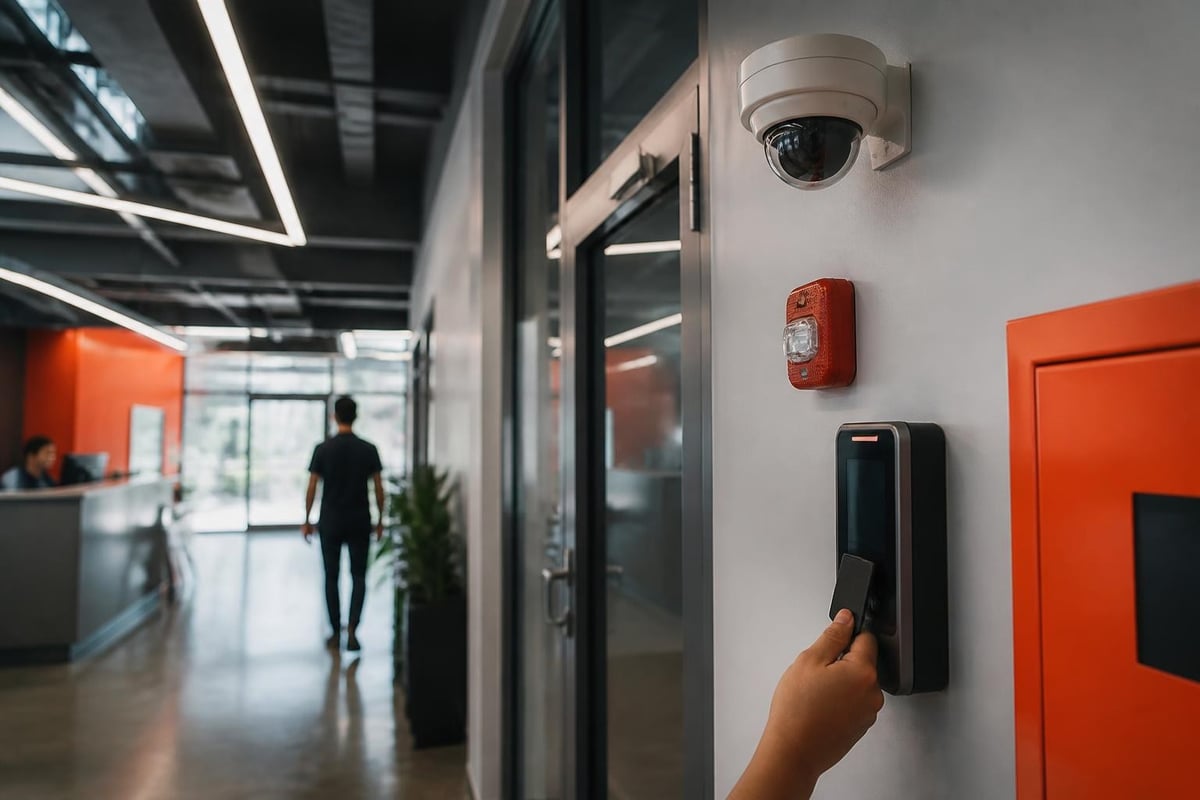
Effective security systems for small business applications typically comprise several interconnected elements working together to provide multi-layered protection. Each component serves a distinct purpose whilst contributing to the overall security posture of your premises.
Fire detection systems form the foundation of workplace safety. Advanced fire detection solutions identify smoke, heat, or flame signatures at the earliest possible stage, triggering automated alerts and evacuation protocols. Modern systems can differentiate between genuine threats and false alarms through sophisticated sensor technology and intelligent algorithms.
Access control systems regulate who enters your premises and when they can do so. From simple keypad entry systems to sophisticated biometric readers and card-based solutions, commercial access control systems prevent unauthorised entry whilst creating detailed audit trails of building access.
Video surveillance provides visual verification of incidents and serves as both a deterrent and an investigative tool. Contemporary CCTV solutions offer high-definition recording, remote viewing capabilities, and intelligent analytics that can identify unusual behaviour patterns or security breaches.
Assessing Your Business Security Requirements
Before investing in security systems for small business premises, conducting a thorough risk assessment identifies vulnerabilities specific to your operations. Consider the nature of your business activities, the value of assets on-site, the number of access points, and your operational hours.
Businesses handling valuable inventory face different challenges than service-based operations. Retail premises require robust perimeter security and internal surveillance, whilst offices may prioritise access control and fire safety. Manufacturing facilities often need specialised fire suppression systems alongside comprehensive monitoring.
Key factors to evaluate include:
- Number of employees and typical occupancy levels
- Operating hours and out-of-hours access requirements
- High-value equipment or inventory locations
- Building layout and number of entry/exit points
- Compliance obligations specific to your industry
- Insurance requirements and premium considerations
Environmental factors matter significantly. Buildings in remote locations may require different security approaches than those in busy commercial districts. Understanding your specific threat landscape ensures you invest in appropriate protective measures rather than generic solutions.
Fire Detection Systems for Business Premises
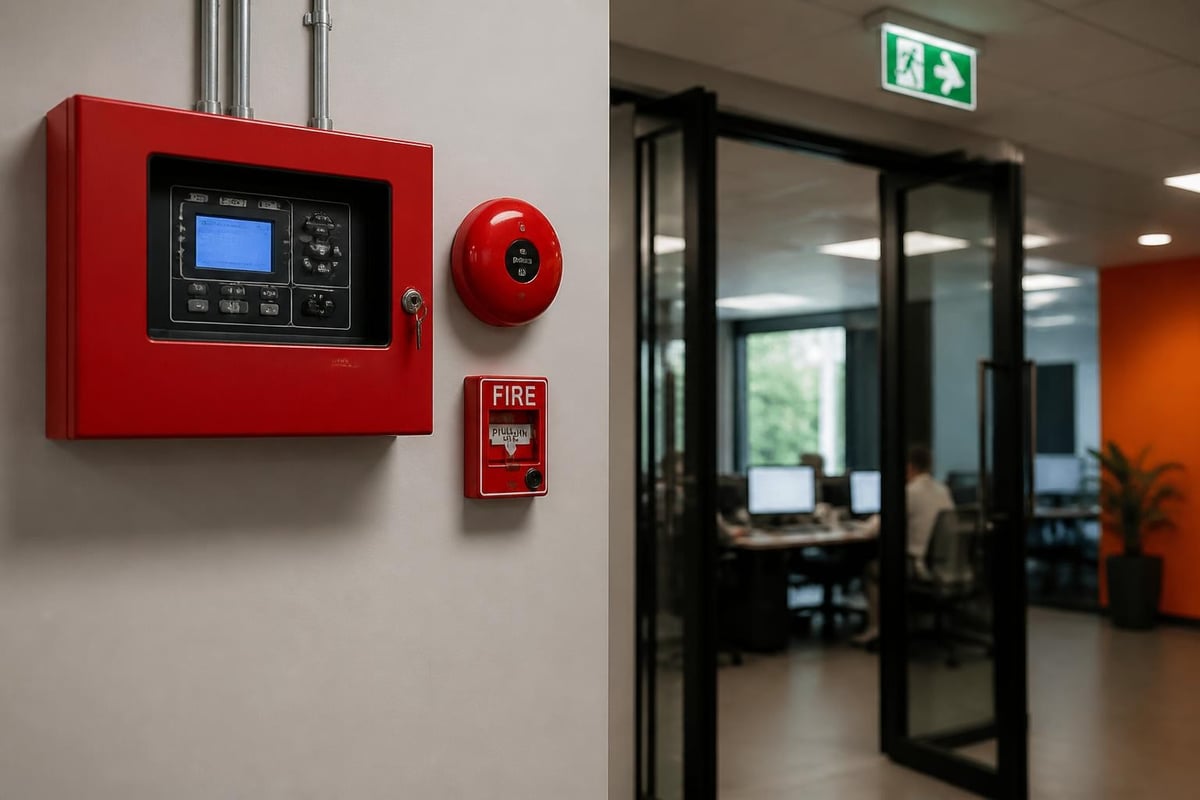
Fire safety represents a critical component of security systems for small business operations. UK legislation mandates appropriate fire detection and alarm systems for virtually all commercial premises, with specific requirements varying based on building size, occupancy, and use.
Commercial fire detection systems employ various sensor technologies to identify fire signatures quickly. Optical smoke detectors respond to visible smoke particles, whilst heat detectors activate when temperatures exceed predetermined thresholds. Multi-sensor devices combine detection methods for enhanced reliability.
Addressable fire alarm systems provide precise location information when a detector activates, enabling faster response times in large or complex buildings. Each device has a unique identifier, allowing the control panel to pinpoint exactly which sensor has triggered the alarm.
Wireless vs Wired Fire Systems
| Feature | Wired Systems | Wireless Systems |
|---|---|---|
| Installation complexity | Requires extensive cabling | Minimal disruption |
| Reliability | Very high, less interference | High with quality equipment |
| Scalability | Moderate, requires new wiring | Excellent, easy to expand |
| Maintenance | Lower ongoing costs | Battery replacement needed |
| Initial cost | Higher installation expense | Lower installation expense |
Wireless fire alarms offer particular advantages for listed buildings or premises where extensive cabling proves impractical. Modern wireless systems deliver reliability comparable to wired solutions whilst significantly reducing installation time and structural impact.
Regular maintenance ensures fire detection systems remain functional when needed most. Professional servicing includes sensor testing, battery checks, and control panel diagnostics. Documented maintenance records demonstrate compliance during inspections and insurance assessments.
Access Control and Intruder Detection
Controlling physical access to your premises forms another essential element of security systems for small business protection strategies. Building access control systems enable you to grant or restrict entry based on time, location, and individual credentials.
Entry control technologies include:
- Keypad systems: Cost-effective solutions requiring PIN codes for entry
- Proximity card readers: Users present cards or fobs to gain access
- Biometric systems: Fingerprint or facial recognition for high-security areas
- Mobile credentials: Smartphone-based access through Bluetooth or NFC
- Intercom systems: Visual and audio verification before granting entry
Intruder alarm systems detect unauthorised entry attempts through sensors on doors, windows, and internal spaces. Passive infrared (PIR) detectors identify movement, whilst contact sensors trigger when doors or windows open. Glass break detectors respond to the acoustic signature of shattering glass.
Modern alarm systems for commercial applications integrate with access control, creating intelligent security ecosystems. When an authorised user disarms the system through their access credential, the alarm automatically deactivates. Unauthorised entry attempts trigger immediate alerts to monitoring stations and designated personnel.
Integration Benefits
Integrated security systems for small business operations deliver advantages beyond standalone components. When access control communicates with video surveillance, cameras automatically record footage whenever doors open. This correlation provides context for security events and simplifies incident investigation.
Integration also enables automated responses to specific scenarios. A fire alarm activation can trigger automatic door unlocking along escape routes, ensuring safe evacuation whilst maintaining security in unaffected areas. Similarly, intruder detection can activate lighting and begin recording on all cameras simultaneously.
Video Surveillance Solutions
CCTV systems serve multiple purposes within security systems for small business implementations. Beyond deterring criminal activity, video surveillance protects against false liability claims, monitors employee safety, and provides evidence when incidents occur.
High-definition IP cameras deliver superior image quality compared to legacy analogue systems. Network-based cameras stream footage across your IT infrastructure, enabling remote viewing from any internet-connected device. Many businesses monitor their premises through smartphones whilst away from site.
When selecting surveillance systems, consider:
- Coverage area: Determine camera locations and required viewing angles
- Image quality: Higher resolution aids identification but increases storage requirements
- Lighting conditions: Low-light or infrared capability for dimly lit areas
- Weather protection: IP-rated cameras for outdoor installation
- Storage duration: Retention periods for recorded footage
- Remote access: Mobile viewing and management capabilities
Surveillance security systems increasingly incorporate artificial intelligence and analytics. Modern cameras can distinguish between humans, vehicles, and animals, reducing false alerts from wildlife or environmental factors. Some systems recognise specific behaviours such as loitering, running, or objects left unattended.
Video analytics transform passive recording into proactive security. Systems can alert you when activity occurs in restricted areas outside normal hours, when visitor numbers exceed capacity limits, or when predetermined security protocols are breached. This intelligence enables rapid response to developing situations.
Professional Monitoring Services
Self-monitored security systems for small business operations place responsibility for response entirely on business owners or designated staff members. Whilst this approach reduces ongoing costs, it relies on individuals being available and able to respond appropriately to alerts at any time.
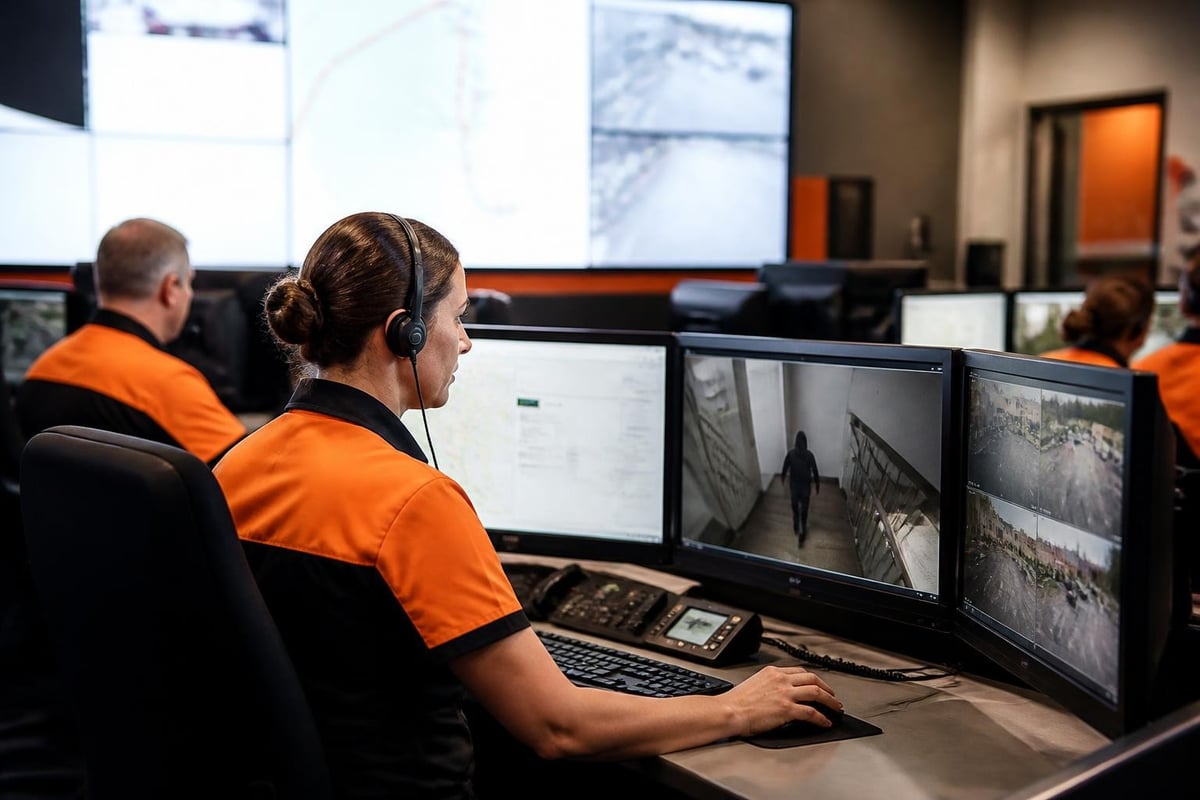
Professional monitoring services provide 24/7 oversight of your security systems. Business security monitoring centres receive alarm signals instantly, verify incidents, and initiate appropriate responses including emergency service dispatch when required.
Monitored systems typically communicate through multiple pathways to ensure reliability. Primary signals transmit via internet connections, with cellular backup maintaining communication if broadband fails. This redundancy prevents criminals from defeating your security by cutting phone lines or internet cables.
Response Protocols
When monitoring stations receive alarm signals, trained operators follow established protocols to verify the threat and determine appropriate action. Video verification allows operators to assess situations visually before dispatching emergency services, reducing false alarm responses that can result in fines from police forces.
Escalation procedures ensure the right people receive notifications based on alarm type and severity. Fire alarms may trigger automatic emergency service dispatch, whilst intruder alarms might first attempt to contact designated keyholders. Customised response plans accommodate your specific operational requirements and risk tolerance.
Professional monitoring also addresses cybersecurity guidance for small businesses, as monitored systems include network security protocols and encrypted communications that protect against digital threats to your security infrastructure.
Compliance and Regulatory Considerations
Security systems for small business installations must comply with various UK regulations and industry standards. Fire safety legislation mandates appropriate detection and warning systems, with specific requirements depending on building occupancy and use.
The Regulatory Reform (Fire Safety) Order 2005 places responsibility on business owners to conduct fire risk assessments and implement adequate fire safety measures. Commercial fire risk assessments identify hazards and ensure your fire detection systems meet legal obligations.
British Standards provide technical specifications for security system design and installation. BS 5839 addresses fire detection and alarm systems, whilst BS 8591 covers intruder and hold-up alarm systems. Compliance with these standards demonstrates that installations meet professional benchmarks for reliability and effectiveness.
Key compliance areas include:
- Fire risk assessment documentation
- Regular system testing and maintenance records
- Staff training in emergency procedures
- Clear evacuation plans and signage
- Data protection for CCTV footage (GDPR compliance)
- Disabled access during emergency evacuation
Insurance providers increasingly require documented security measures as a condition of coverage. Comprehensive security systems for small business premises may qualify for reduced insurance premiums, offsetting implementation costs over time. Insurers often specify minimum security standards for businesses in particular sectors or locations.
Installation and Maintenance Planning
Professional installation ensures security systems for small business operations function correctly from day one. Whilst DIY options exist for basic systems, commercial installations typically require specialist knowledge of building regulations, system integration, and compliance requirements.
Working with accredited installers provides assurance that work meets industry standards. Companies holding certifications from bodies such as NSI (National Security Inspectorate) or SSAIB (Security Systems and Alarms Inspection Board) undergo regular assessment to maintain their accreditation status. This vetting process protects businesses from substandard installations.
Implementation Process
- Site survey: Detailed assessment of premises, security requirements, and technical constraints
- System design: Specification of appropriate equipment and configuration
- Installation planning: Scheduling work to minimise business disruption
- Installation: Physical installation of all system components
- Commissioning: Testing and configuration of complete system
- Training: Instruction for staff on system operation
- Documentation: Provision of user guides and compliance certificates
Ongoing maintenance preserves system reliability and maintains compliance with regulatory requirements. Regular servicing identifies developing issues before they compromise security, whilst testing confirms all components function correctly. Many businesses establish maintenance contracts covering routine inspections, testing, and repair of security systems for small business premises.
According to Walmart’s small business security guide, considering factors like maintenance requirements before purchase helps businesses budget accurately and ensures long-term system viability.
System Integration and Scalability
Security systems for small business operations benefit significantly from integration between components. Unified systems communicate seamlessly, enabling sophisticated automation and simplified management through single interfaces.
Integrated platforms consolidate fire detection, access control, intrusion detection, and video surveillance into cohesive ecosystems. When systems share data and coordinate responses, overall security effectiveness increases whilst management complexity decreases. Single-pane management interfaces reduce training requirements and streamline daily operations.
Integration delivers practical advantages:
- Correlated event logging across all security systems
- Automated response sequences triggered by specific conditions
- Unified user management and credential administration
- Comprehensive reporting combining data from multiple sources
- Simplified troubleshooting through centralised diagnostics
Scalability ensures your security infrastructure grows alongside your business. Cloud-based systems and modular architectures accommodate expansion without requiring complete replacement of existing equipment. Adding new cameras, access points, or sensors integrates seamlessly into established systems.
Planning for growth from initial implementation proves more cost-effective than retrofitting capabilities later. Even if immediate requirements seem modest, selecting platforms capable of expansion protects your investment and simplifies future enhancements.
Cost Considerations and Return on Investment
Budgeting for security systems for small business implementations requires understanding both initial capital expenditure and ongoing operational costs. Equipment costs vary significantly based on system sophistication, coverage requirements, and quality specifications.
Basic intruder alarm systems for small premises may cost several hundred pounds, whilst comprehensive integrated solutions for larger facilities can require investments of tens of thousands. Understanding security system costs helps businesses budget appropriately and avoid underspecification that compromises protection.
| Cost Component | Typical Range | Frequency |
|---|---|---|
| System design and survey | £200-£1,000 | One-time |
| Equipment and installation | £2,000-£20,000+ | One-time |
| Professional monitoring | £20-£100/month | Monthly |
| Maintenance contracts | £200-£1,500/year | Annual |
| System upgrades | Variable | As needed |
Return on investment extends beyond loss prevention. Documented security measures may reduce insurance premiums by 10-30%, delivering recurring savings. Enhanced employee safety and confidence can improve retention and productivity. Protection against business interruption preserves revenue streams that might otherwise cease following security incidents.
Many businesses explore financing options to spread costs over time rather than making large upfront investments. Lease agreements, hire purchase arrangements, or maintenance contracts bundled with equipment costs make comprehensive security systems for small business operations more accessible.
Cybersecurity and Digital Protection
Modern security systems for small business premises increasingly rely on network connectivity, creating potential vulnerabilities if digital security receives insufficient attention. Internet-connected cameras, remote access capabilities, and cloud storage introduce cyber risks alongside their operational benefits.
Implementing robust cybersecurity measures protects your physical security infrastructure from digital compromise. The U.S. Small Business Administration offers cybersecurity resources that apply equally to UK businesses, covering fundamental protections like strong authentication, network segmentation, and regular software updates.
Essential cybersecurity practices include:
- Changing default passwords on all security equipment
- Implementing network firewalls and intrusion detection
- Segregating security systems on separate network segments
- Regular firmware updates for all connected devices
- Encrypted communications for remote access
- Multi-factor authentication for system administration
Research indicates that security barriers faced by small business decision-makers often stem from limited technical expertise and resource constraints. Partnering with experienced security providers addresses these challenges through managed security services that encompass both physical and digital protection.
Video surveillance systems require particular attention to data protection regulations. GDPR compliance mandates appropriate safeguards for recorded footage, including secure storage, limited retention periods, and controlled access. Businesses must balance security requirements with privacy obligations and individual rights.
Selecting Security System Providers
Choosing the right partner for implementing security systems for small business operations significantly impacts long-term satisfaction and system effectiveness. Beyond technical competence, consider factors such as local presence, response times for service calls, and industry-specific experience.
Established providers with proven track records offer confidence that installations will meet professional standards. Quality accreditations from recognised industry bodies demonstrate commitment to excellence and adherence to best practices.
Request references from businesses similar to yours in size and sector. Speak with current customers about their experiences, particularly regarding responsiveness when issues arise and the quality of ongoing support. Long-term relationships depend on reliable service delivery beyond initial installation.
Evaluation Criteria
When comparing security system providers, assess their capabilities across multiple dimensions. Technical expertise matters, but commercial understanding and customer service orientation prove equally important for successful long-term partnerships.
Providers should demonstrate clear understanding of your specific business challenges and regulatory environment. Generic solutions rarely address unique requirements effectively. Look for evidence of customisation and flexibility in proposed systems.
Transparent pricing structures prevent unwelcome surprises. Detailed quotations should itemise equipment, installation, configuration, training, and ongoing support costs. Understanding total cost of ownership over expected system lifespan enables informed decision-making.
Training and Operational Procedures
Even sophisticated security systems for small business installations deliver limited value if staff lack proper training in their operation. Comprehensive training programmes ensure employees understand system capabilities, know how to respond to alarms, and can manage routine tasks like adding new access credentials.
Training should cover both normal operations and emergency procedures. Staff need to know how to arm and disarm alarm systems, respond to fire warnings, manage visitor access, and contact monitoring centres when required. Regular refresher training maintains competency as staff turnover occurs.
Essential training topics include:
- Daily system operations and user interfaces
- Emergency response procedures and alarm verification
- Access credential management and visitor procedures
- Video surveillance retrieval for incident investigation
- Fault reporting and maintenance coordination
- Data protection obligations for CCTV systems
Documented procedures create consistency and provide reference materials for occasional tasks. Written protocols for managing security events ensure appropriate responses even when trained personnel are unavailable. These documents also demonstrate compliance during audits or inspections.
Regular testing of emergency procedures validates that theoretical training translates into effective action under pressure. Fire drills and simulated security incidents identify gaps in knowledge or procedural weaknesses before actual emergencies occur.
Future-Proofing Your Security Investment
Technology evolution continues accelerating, making future-proofing an important consideration when implementing security systems for small business environments. Selecting platforms with upgrade paths and standards-based architectures protects against premature obsolescence.
Cloud-based systems receive regular feature updates and security patches without requiring on-site hardware replacement. This delivery model ensures access to current capabilities whilst extending effective system lifespan. However, cloud dependency requires reliable internet connectivity and raises considerations about data sovereignty.
Artificial intelligence and machine learning increasingly enhance security system capabilities. Predictive analytics identify patterns indicating potential security risks before incidents occur. Object recognition improves video surveillance accuracy whilst reducing false alarms. These technologies will become increasingly prevalent across security systems for small business applications.
Emerging trends include:
- Integration with building management systems for comprehensive facility control
- Advanced analytics providing actionable security intelligence
- Drone-based surveillance for large or complex sites
- Improved biometric authentication methods
- 5G connectivity enabling higher-resolution video and faster response times
Whilst embracing innovation offers advantages, proven reliability remains paramount for security applications. Balancing cutting-edge capabilities with established dependability ensures your security infrastructure protects effectively whilst positioning your business to adopt beneficial advances as they mature.
Research into security best practices using IoT systems provides insights applicable to connected security devices, emphasising the importance of robust security measures protecting the systems designed to protect your business.
Implementing comprehensive security systems for small business premises requires careful planning, professional expertise, and ongoing commitment to maintenance and training. The investment protects your physical assets, ensures employee safety, demonstrates regulatory compliance, and provides peace of mind that your business can operate securely. Whether you're establishing security infrastructure for the first time or upgrading legacy systems, partnering with experienced specialists ensures optimal outcomes. Logic Fire and Security delivers tailored fire detection and security solutions for businesses across the UK, combining technical excellence with comprehensive support to safeguard your operations and ensure compliance with all regulatory requirements.