


A commercial surveillance camera system represents a critical investment in protecting business assets, personnel, and operational continuity. For organisations across the UK, these sophisticated networks extend far beyond simple recording devices. They integrate with broader security infrastructure, support regulatory compliance, and provide actionable intelligence that enhances both safety and operational efficiency. Understanding the technical requirements, design considerations, and integration possibilities ensures your surveillance investment delivers measurable returns whilst meeting contemporary security challenges.
Understanding Commercial Surveillance Infrastructure
Modern commercial surveillance represents a significant departure from legacy closed-circuit television (CCTV) systems. Today's platforms leverage Internet Protocol (IP) technology, enabling sophisticated analytics, remote management, and seamless integration with other building systems. The shift from analogue to digital has transformed surveillance from reactive recording to proactive security management.
Network Architecture Requirements
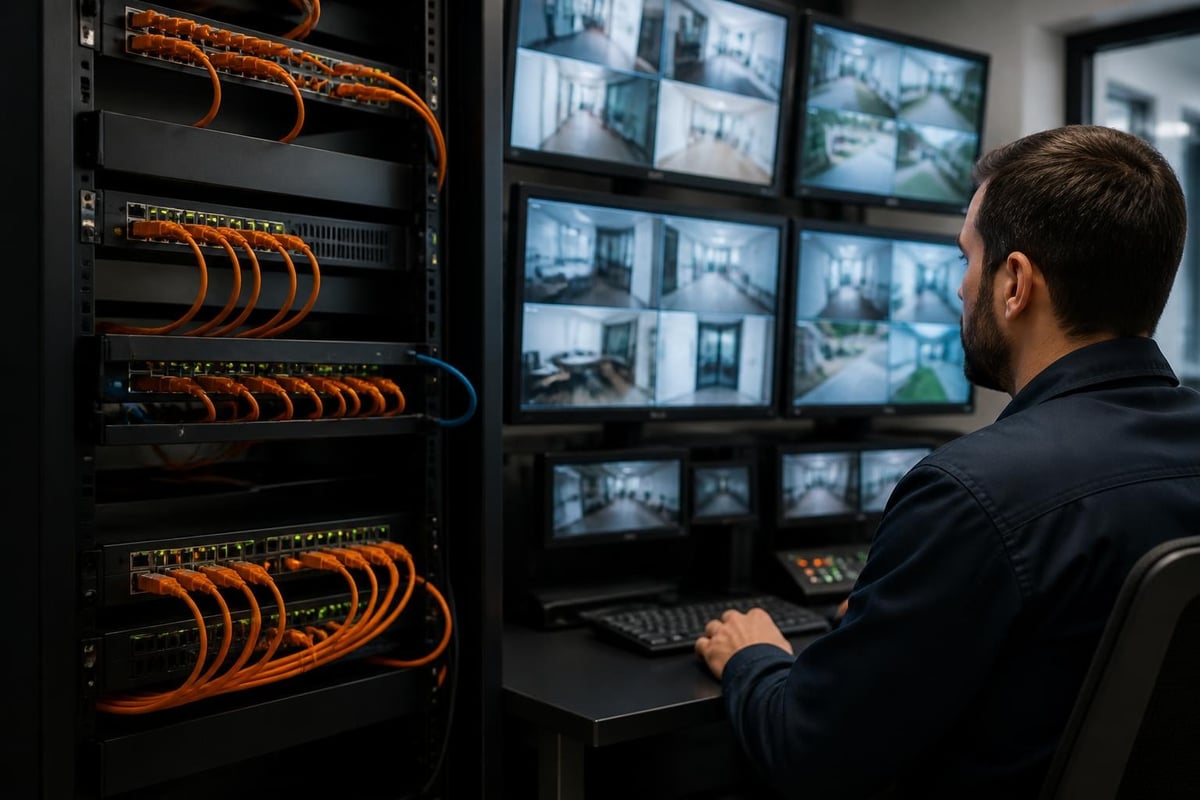
The foundation of any effective commercial surveillance camera system begins with robust network infrastructure. Bandwidth calculations and dedicated surveillance VLANs ensure reliable performance without compromising other network operations. Each camera generates substantial data throughput, particularly when capturing high-resolution footage at elevated frame rates.
Key network considerations include:
- Dedicated network segments isolating surveillance traffic
- Power over Ethernet (PoE) switches reducing installation complexity
- Network video recorders (NVRs) with sufficient processing capacity
- Redundant storage solutions ensuring continuous recording
- Bandwidth allocation matching camera specifications and recording schedules
Modern facilities frequently deploy Power-over-Ethernet surveillance systems that consolidate power delivery and data transmission through single cable runs. This approach reduces installation costs whilst improving system reliability compared to traditional power supplies or battery-dependent configurations.
Strategic Planning and Design Considerations
Deploying an effective commercial surveillance camera system requires methodical planning that addresses coverage requirements, regulatory obligations, and operational objectives. Strategic placement maximises value whilst minimising blind spots and unnecessary expenditure.
Coverage Mapping and Camera Placement
Surveillance design standards emphasise identification-grade coverage in critical areas whilst maintaining awareness-level monitoring across general spaces. This tiered approach optimises resource allocation without compromising security objectives.
| Coverage Level | Pixel Density | Typical Applications | Camera Type |
|---|---|---|---|
| Identification | 250+ PPF | Entry points, cash handling | Fixed, high-resolution |
| Recognition | 125-250 PPF | Corridors, car parks | Varifocal, moderate resolution |
| Detection | 25-125 PPF | Perimeter, general areas | PTZ, wide-angle |
| Monitoring | <25 PPF | Overview coverage | Multi-sensor, panoramic |
Pixels per foot (PPF) measurements determine whether recorded footage supports specific investigative requirements. Identification-grade coverage enables facial recognition and detailed forensic analysis, whilst detection-level monitoring simply confirms that activity occurred within a designated zone.
Integration With Existing Security Systems
A commercial surveillance camera system delivers maximum value when integrated with complementary security infrastructure. This unified approach creates layered protection that responds dynamically to emerging threats. Integration with building access control systems enables automated camera activation when unauthorised access attempts occur.
Similarly, coordination with commercial fire detection systems ensures surveillance captures evacuation processes and identifies potential safety violations. This convergence of systems transforms individual components into comprehensive security ecosystems that enhance overall protection whilst simplifying management.
Technical Specifications and Component Selection
Selecting appropriate hardware forms the cornerstone of surveillance system effectiveness. Camera specifications, recording infrastructure, and storage capacity must align with operational requirements and environmental conditions.
Camera Technology Options
Contemporary commercial surveillance camera systems incorporate diverse sensor technologies and form factors tailored to specific applications. Understanding these variations ensures optimal performance across varied deployment scenarios.
Bullet cameras excel in deterrence and directional coverage, with weather-resistant housings protecting internal components in outdoor environments. Their conspicuous profile signals active surveillance whilst providing focused monitoring of defined areas.
Dome cameras offer discreet monitoring suitable for interior environments where aesthetics matter. Vandal-resistant variants protect against tampering whilst maintaining professional appearance in public-facing spaces.
PTZ (pan-tilt-zoom) cameras deliver flexible coverage across expansive areas, with motorised controls enabling operator-directed investigation and automated patrol patterns. These units reduce camera counts in large facilities whilst maintaining comprehensive surveillance capability.
Multi-sensor cameras combine multiple image sensors in single housings, providing panoramic coverage that eliminates blind spots around critical junctions and open areas. This technology reduces installation complexity whilst delivering 180-degree or 360-degree fields of view.
Recording and Storage Infrastructure
Hardware components and storage solutions directly impact system reliability and investigative capability. Recording infrastructure must accommodate retention requirements whilst maintaining consistent performance during peak usage periods.
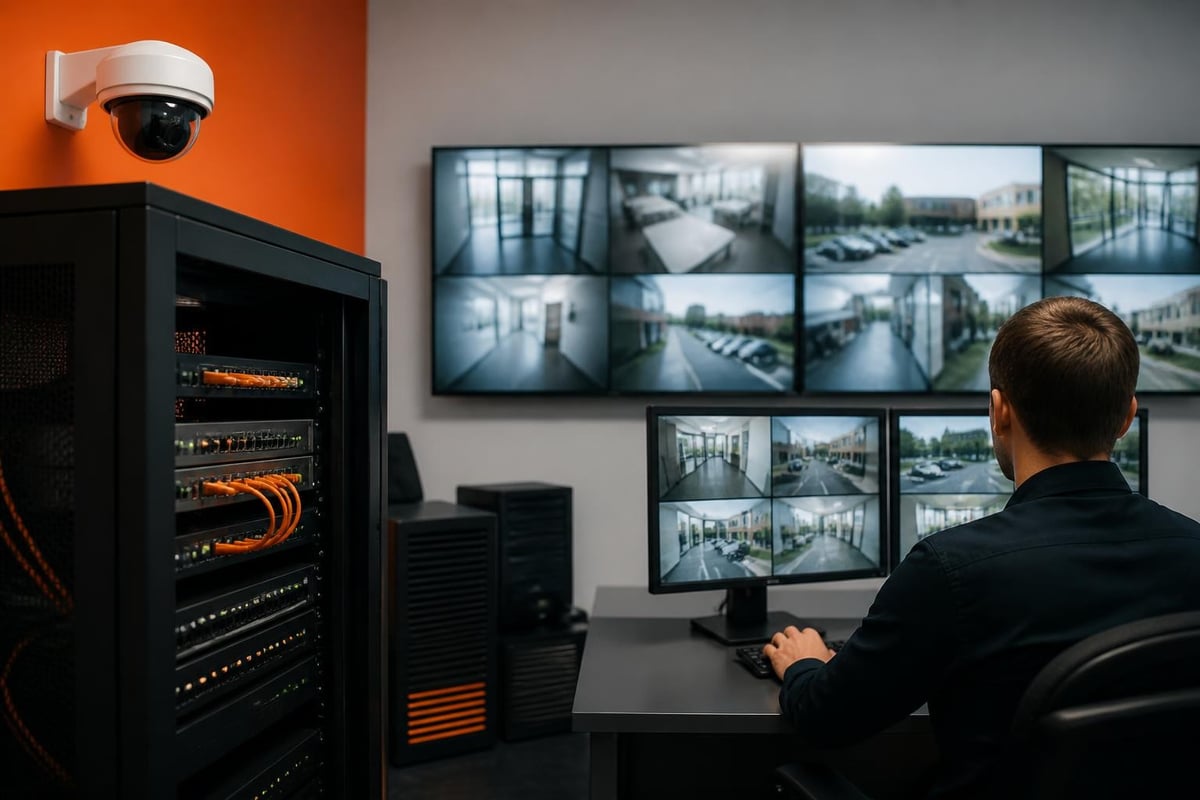
Network video recorders serve as the central processing hub, managing camera feeds, applying analytics, and coordinating storage operations. Enterprise-grade NVRs support redundant recording paths, ensuring continued operation even during component failures.
Storage capacity planning considers several variables:
- Camera count and individual resolutions
- Recording frame rates and compression codecs
- Retention policies driven by regulatory or operational requirements
- Redundancy provisions protecting against data loss
Modern systems increasingly leverage edge storage, with cameras incorporating local solid-state drives that maintain recording during network disruptions. This distributed approach enhances resilience whilst reducing bandwidth consumption through selective uploading of relevant footage.
Regulatory Compliance and Legal Considerations
Operating a commercial surveillance camera system carries significant legal responsibilities that extend beyond technical implementation. Security camera legality encompasses data protection, privacy rights, and workplace monitoring regulations that vary across jurisdictions.
Data Protection Obligations
Under the UK Data Protection Act 2018 and General Data Protection Regulation (GDPR), organisations must establish lawful bases for processing surveillance footage. Legitimate interests often justify commercial surveillance, provided operators demonstrate proportionality and implement appropriate safeguards.
Essential compliance measures include:
- Clear signage informing individuals of surveillance operations
- Privacy impact assessments evaluating proportionality
- Access controls restricting footage viewing to authorised personnel
- Retention schedules automatically purging unnecessary recordings
- Subject access request procedures enabling individuals to review footage
Particular attention applies when surveillance captures audio, as consent requirements differ substantially from video-only recording. Employer surveillance practices must respect employee privacy rights whilst maintaining legitimate security interests.
Industry-Specific Requirements
Certain sectors face additional surveillance obligations beyond general data protection frameworks. Financial institutions, healthcare facilities, and licensed premises often operate under regulatory schemes mandating specific coverage, retention, or quality standards.
Retail environments present unique challenges where commercial security monitoring balances loss prevention with customer privacy expectations. Strategic camera placement focuses on transaction points and high-value merchandise whilst avoiding changing areas and other sensitive zones.
Operational Management and Monitoring
Deploying a commercial surveillance camera system represents merely the foundation. Effective operational management transforms installed infrastructure into actionable security intelligence that supports both immediate response and strategic planning.
Video Analytics and Intelligent Monitoring
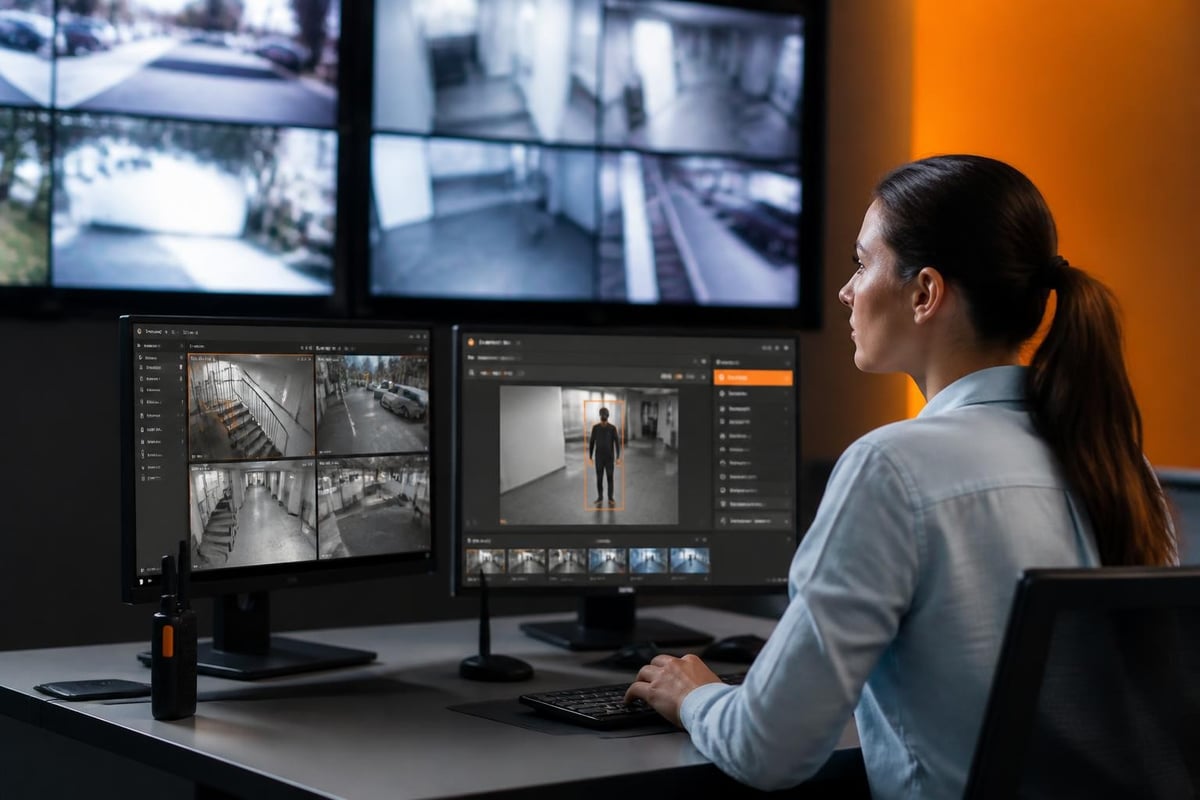
Contemporary platforms incorporate artificial intelligence and machine learning capabilities that transcend simple motion detection. Advanced analytics identify specific behaviours, count individuals, recognise vehicle registration plates, and detect perimeter breaches with minimal false alarms.
These intelligent features enable proactive security management rather than reactive investigation. Automated alerts notify personnel of specific events requiring attention, reducing the burden of continuous human monitoring whilst accelerating response to genuine threats.
| Analytics Function | Application | Benefits |
|---|---|---|
| Facial recognition | Access control integration | Automated visitor management |
| Object detection | Unattended package alerts | Enhanced threat detection |
| Crowd counting | Occupancy management | Safety compliance monitoring |
| Line crossing | Perimeter security | Immediate intrusion notification |
| Loitering detection | Suspicious behaviour | Proactive intervention opportunities |
Integration with surveillance security systems creates automated responses that enhance protection without increasing staffing requirements. Detected events trigger recording parameter changes, activate additional cameras, or initiate access control lockdowns.
Maintenance and System Health Monitoring
Regular maintenance ensures commercial surveillance camera systems maintain operational readiness and comply with relevant standards. Proactive monitoring identifies developing issues before they compromise security coverage.
Scheduled maintenance activities include lens cleaning, firmware updates, storage capacity verification, and network connectivity testing. Remote diagnostic capabilities enable technicians to identify and resolve many issues without site visits, reducing downtime and maintenance costs.
Integration With Comprehensive Security Solutions
A commercial surveillance camera system achieves maximum effectiveness when deployed as part of integrated security infrastructure. This convergence approach leverages complementary technologies to create layered protection that addresses diverse threat vectors.
Unified Security Platforms
Modern security management platforms consolidate surveillance, access control, intrusion detection, and fire safety systems into single interfaces. This integration enhances situational awareness whilst simplifying operator training and reducing response times during incidents.
When integrated with commercial access control systems, surveillance cameras automatically activate upon access denial events, capturing footage of unauthorised entry attempts. Similarly, coordination with commercial intruder alarm systems triggers targeted recording when sensors detect potential breaches.
Cloud-Based Management Solutions
Cloud infrastructure introduces flexibility and scalability previously unavailable in premise-based systems. Remote monitoring, automatic software updates, and distributed storage reduce on-site hardware requirements whilst enhancing accessibility for authorised personnel.
These platforms support multi-site organisations managing surveillance across geographically dispersed facilities. Centralised monitoring teams access all locations through unified interfaces, standardising response protocols and sharing resources efficiently.
However, cloud deployment introduces bandwidth considerations and data sovereignty concerns requiring careful evaluation. Hybrid approaches combining local recording with cloud backup often provide optimal balance between accessibility and operational resilience.
Scalability and Future-Proofing Considerations
Technology evolution continues accelerating, making scalability and upgrade pathways critical selection criteria. Commercial surveillance design planning should anticipate future requirements beyond immediate operational needs.
Open Standards and Interoperability
Systems built on open standards such as ONVIF (Open Network Video Interface Forum) protect investments by enabling component replacement without wholesale system redesign. This interoperability ensures organisations can upgrade individual cameras or recording platforms whilst maintaining compatibility with existing infrastructure.
Proprietary systems may offer unique features but create vendor lock-in that inflates long-term costs and limits flexibility. Evaluating total cost of ownership over anticipated system lifespans provides more accurate investment assessments than initial purchase prices alone.
Capacity Planning and Expansion
Effective commercial surveillance camera systems accommodate growth through thoughtful initial design. Oversizing network switches, recording servers, and storage arrays during installation costs far less than retrospective upgrades requiring service interruption.
Future-proofing strategies include:
- Installing spare network ports at strategic locations
- Selecting recording platforms supporting camera count expansion
- Deploying fibre optic backbone infrastructure
- Implementing storage systems with modular expansion capabilities
- Choosing cameras with upgrade firmware pathways
Regular technology reviews ensure systems remain current with evolving threats and operational requirements. Phased upgrade approaches spread costs whilst maintaining operational continuity during transitions.
Cost Considerations and Return on Investment
Budget allocation for a commercial surveillance camera system extends beyond initial hardware procurement. Comprehensive buying considerations include installation labour, ongoing maintenance, software licensing, and operational costs throughout system lifecycles.
Total Cost of Ownership Analysis
| Cost Category | Initial | Annual | Lifecycle (10 Years) |
|---|---|---|---|
| Hardware | £25,000 | – | £25,000 |
| Installation | £15,000 | – | £15,000 |
| Maintenance | – | £3,000 | £30,000 |
| Software licensing | – | £2,500 | £25,000 |
| Storage expansion | – | £1,500 | £15,000 |
| Total | £40,000 | £7,000 | £110,000 |
These illustrative figures demonstrate how operational costs substantially exceed initial capital expenditure over typical system lifespans. Maintenance contracts, software subscriptions, and storage expansion collectively represent the majority of total ownership costs.
Quantifying Security Value
Whilst difficult to measure precisely, commercial surveillance camera systems deliver tangible returns through loss prevention, liability mitigation, and operational efficiency improvements. Insurance premium reductions often offset portions of annual operational costs, particularly in high-risk industries.
Documentation provided by surveillance footage resolves disputes, defends against fraudulent claims, and supports prosecution of criminal activity. These benefits extend beyond direct financial returns to encompass reputational protection and enhanced stakeholder confidence.
Integration with commercial security systems amplifies value by creating comprehensive protection that addresses multiple threat categories through coordinated infrastructure. This unified approach typically proves more cost-effective than deploying independent systems for each security function.
Modern commercial surveillance camera systems represent sophisticated security infrastructure requiring careful planning, expert installation, and ongoing professional management. The technical complexity, regulatory obligations, and integration possibilities demand experienced partners who understand both security requirements and operational realities. Logic Fire and Security brings decades of expertise designing, installing, and maintaining comprehensive security solutions for businesses across the UK, ensuring your surveillance infrastructure delivers reliable protection whilst maintaining compliance with all relevant standards and regulations.