

Modern businesses face an increasingly complex landscape of threats, from fire hazards to unauthorised access and cyber vulnerabilities. The integration of comprehensive security and monitoring solutions has become essential for protecting commercial assets, ensuring employee safety, and maintaining regulatory compliance. For organisations across the UK, understanding how these systems work together creates a robust defence against potential risks whilst providing valuable operational insights.
Understanding the Foundations of Security and Monitoring
Security and monitoring encompasses a wide range of technologies and processes designed to protect commercial premises from various threats. At its core, this approach combines physical security measures with continuous surveillance capabilities to detect, prevent, and respond to incidents in real time.
Fire detection systems represent a critical component of any security and monitoring strategy. Modern fire alarm networks utilise sophisticated sensors, control panels, and communication devices that work in harmony to identify potential fire hazards before they escalate. These systems integrate with commercial fire alarm monitoring services to ensure 24/7 oversight of your facilities.
Key Components of Integrated Systems
Effective security and monitoring requires several interconnected elements working seamlessly together:
- Advanced detection technologies (smoke, heat, flame, and gas sensors)
- Access control mechanisms for perimeter and internal security
- Video surveillance networks with recording and analytics capabilities
- Intrusion detection systems with immediate alert protocols
- Environmental monitoring for temperature, humidity, and air quality
- Central monitoring stations with trained personnel
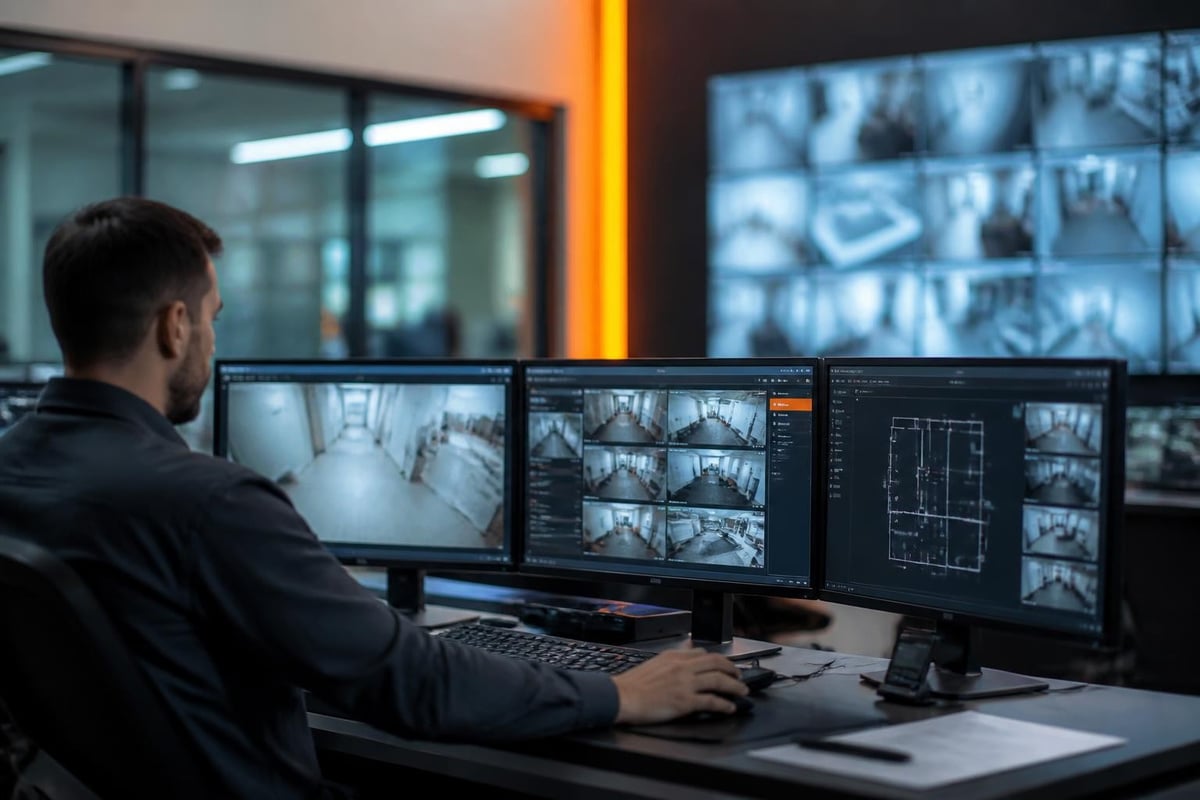
The sophistication of modern commercial security systems allows businesses to manage all these components through unified platforms. This integration eliminates blind spots and ensures that security teams receive comprehensive situational awareness across all facilities.
Real-Time Monitoring and Threat Detection
The value of security and monitoring systems lies not just in their presence but in their ability to provide continuous oversight. Real-time monitoring transforms passive security measures into active defence mechanisms that can identify and address threats as they emerge.
According to best practices for logging and monitoring, organisations must establish comprehensive visibility across all security touchpoints. This visibility enables security teams to detect anomalies, track patterns, and respond to incidents with precision and speed.
Implementing Continuous Surveillance
Commercial facilities require surveillance solutions that operate without interruption, regardless of time or conditions. Modern surveillance security systems incorporate features specifically designed for business environments:
| Feature | Business Benefit | Implementation Consideration |
|---|---|---|
| 24/7 recording | Complete incident documentation | Adequate storage capacity required |
| Motion-triggered alerts | Reduced false alarms | Sensitivity calibration essential |
| Remote access | Management from any location | Secure authentication protocols |
| Analytics integration | Behavioural pattern recognition | Training data for AI systems |
| Backup power systems | Continuous operation during outages | Regular battery testing needed |
The shift towards proactive monitoring has fundamentally changed how businesses approach security. Rather than simply recording events, modern systems analyse data streams in real time, identifying potential threats before they materialise into serious incidents.
Leveraging Automated Alert Systems
Automation plays a crucial role in effective security and monitoring. When systems detect unusual activity or potential hazards, automated alerts ensure immediate notification to appropriate personnel. This capability proves especially valuable for commercial fire detection systems, where seconds can make the difference between a contained incident and a catastrophic event.
Intelligent alert systems filter out noise whilst prioritising genuine threats. By implementing effective cybersecurity monitoring practices, businesses can tune their alert parameters to focus on critical events that require immediate attention.
Access Control and Perimeter Security
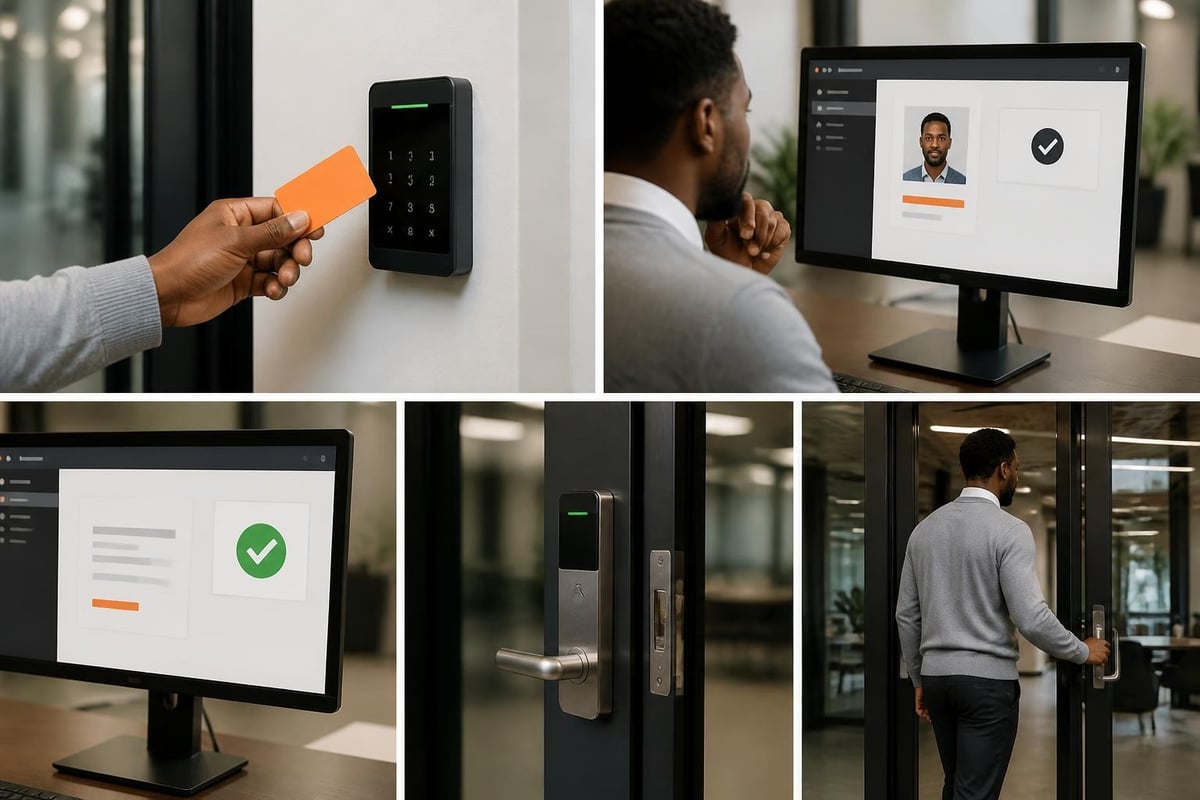
Physical access control represents a fundamental pillar of comprehensive security and monitoring strategies. Controlling who enters your facilities, when they enter, and which areas they can access provides essential protection for assets, data, and personnel.
Modern commercial access control systems have evolved far beyond traditional lock-and-key mechanisms. Today's solutions incorporate biometric authentication, mobile credentials, and integration with visitor management platforms to create sophisticated access hierarchies.
Designing Effective Access Protocols
- Conduct comprehensive facility audits to identify all entry points, including loading bays, emergency exits, and utility access areas
- Establish role-based access permissions that align with job functions and operational requirements
- Implement multi-factor authentication for sensitive areas such as server rooms, chemical storage, or confidential document repositories
- Schedule regular access reviews to ensure permissions remain appropriate as roles change
- Integrate access logs with monitoring systems to correlate entry events with other security data
The integration of access control with broader security and monitoring infrastructure creates powerful capabilities for incident investigation and threat prevention. When combined with video surveillance, businesses can verify the identity of individuals accessing facilities and maintain comprehensive audit trails.
Securing Critical Infrastructure
For businesses operating critical infrastructure or sensitive facilities, enhanced security measures become imperative. The ISA/IEC 62443 series of standards provides guidance for implementing security across industrial automation and control systems, principles that extend to fire and security networks.
Layered security approaches ensure that even if one defensive measure fails, additional barriers protect critical assets. This concept, known as defence in depth, applies equally to physical security and network protection.
Monitoring Best Practices for Commercial Operations
Implementing security and monitoring systems represents just the first step. Maintaining their effectiveness requires adherence to established best practices that ensure systems remain current, properly configured, and fully functional.
According to network security monitoring experts, regular audits and system reviews form the foundation of robust monitoring programmes. These assessments identify vulnerabilities, verify compliance, and ensure that monitoring tools capture relevant data.
Essential Monitoring Practices
- Establish baseline performance metrics to identify deviations that may indicate security incidents or system malfunctions
- Standardise log formats across all security devices to simplify analysis and correlation of events
- Implement selective logging that captures critical events without overwhelming storage or analysis capabilities
- Conduct regular penetration testing to identify weaknesses before malicious actors exploit them
- Maintain detailed incident response procedures that specify roles, escalation paths, and communication protocols
The importance of business security monitoring extends beyond immediate threat detection. Historical data provides valuable insights into patterns, trends, and potential vulnerabilities that might otherwise remain hidden.
Maintenance and Testing Schedules
| System Component | Testing Frequency | Maintenance Actions |
|---|---|---|
| Fire detection sensors | Weekly/Monthly | Visual inspection, sensitivity testing |
| Access control readers | Monthly | Credential testing, firmware updates |
| Video surveillance cameras | Weekly | Lens cleaning, angle verification |
| Alarm communication paths | Daily | Test signal transmission |
| Backup power systems | Quarterly | Load testing, battery replacement |
| Central monitoring equipment | Daily | Software updates, log review |
Professional fire alarm testing ensures that detection systems respond appropriately when activated. These regular assessments verify that sensors maintain proper sensitivity, communication pathways function correctly, and notification devices operate at required volumes.
Integration with Incident Response Protocols
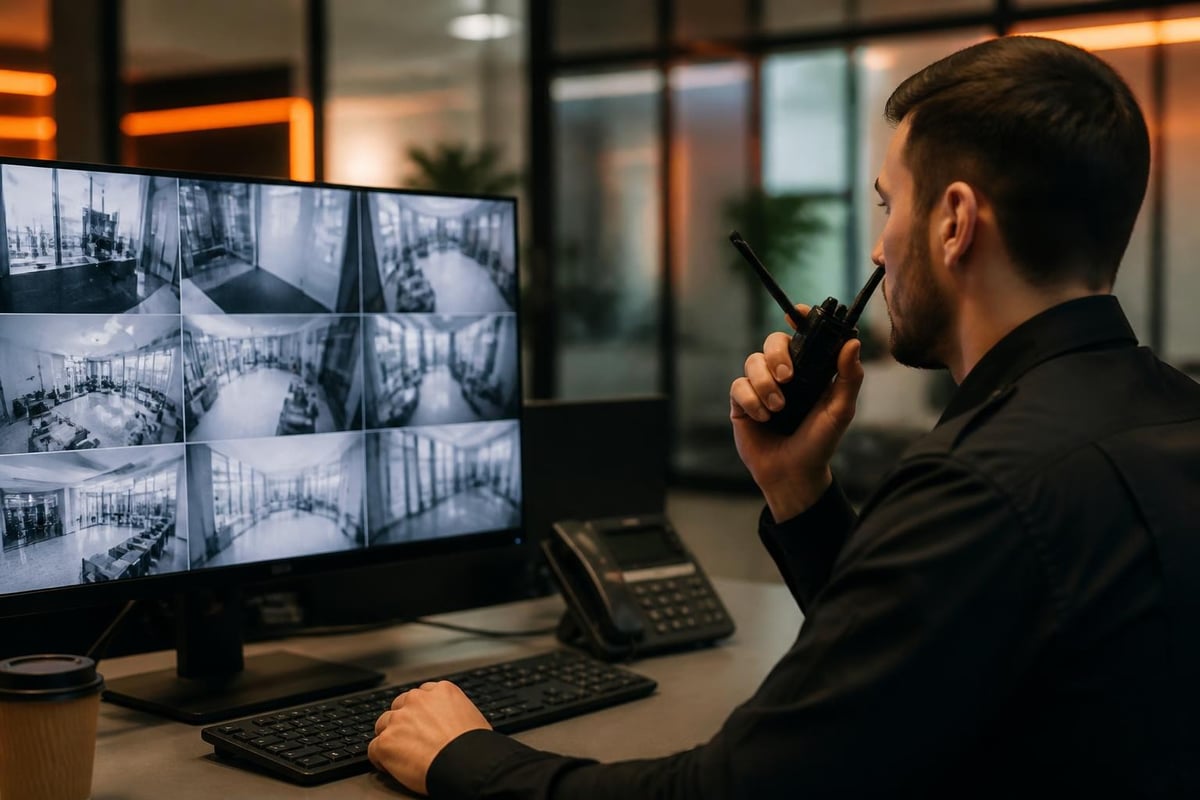
Security and monitoring systems provide maximum value when integrated with comprehensive incident response frameworks. The data these systems collect becomes actionable intelligence only when coupled with clear procedures for investigation, escalation, and resolution.
Research on cybersecurity monitoring best practices emphasises the importance of aligning monitoring tools with response capabilities. This alignment ensures that detected threats receive appropriate attention based on their severity and potential impact.
Building Response Capabilities
Effective incident response requires pre-established protocols that specify actions for different scenarios. For fire security applications, this includes evacuation procedures, emergency service notification, and system reset protocols following false alarms.
Priority classification systems help security personnel quickly assess the urgency of alerts and allocate resources accordingly. By categorising incidents based on threat level, potential impact, and regulatory implications, businesses ensure that critical events receive immediate attention whilst routine alerts follow standard processing workflows.
The connection between security and access control becomes particularly important during incident response. When security events occur, the ability to remotely manage access permissions-locking down facilities, restricting movement to specific areas, or enabling emergency egress-can significantly influence outcomes.
Compliance and Regulatory Considerations
Commercial security and monitoring implementations must address numerous regulatory requirements that govern fire safety, data protection, and operational security. Understanding these obligations ensures that systems not only protect assets but also maintain compliance with legal standards.
Fire safety regulations require regular commercial fire risk assessments that evaluate detection capabilities, evacuation routes, and emergency procedures. These assessments identify deficiencies and recommend improvements to maintain compliance with current standards.
Documentation and Audit Trails
Comprehensive logging capabilities serve dual purposes: security monitoring and compliance verification. Detailed records of system events, maintenance activities, and incident responses provide evidence of due diligence during regulatory audits.
Retention policies must balance operational needs with storage constraints and regulatory requirements. Most jurisdictions specify minimum retention periods for security recordings and access logs, particularly for sectors such as healthcare, finance, and critical infrastructure.
Following guidance on security monitoring and logging best practices helps organisations develop documentation frameworks that satisfy regulatory requirements whilst supporting operational objectives.
Advanced Technologies and Future Trends
The landscape of security and monitoring continues to evolve as new technologies emerge and existing capabilities mature. Artificial intelligence, machine learning, and advanced analytics are transforming how businesses detect threats and respond to incidents.
Predictive analytics represent a significant advancement in security and monitoring capabilities. By analysing historical data, environmental conditions, and operational patterns, modern systems can identify potential issues before they manifest as actual threats.
Emerging Capabilities
- AI-powered video analytics that distinguish between routine activities and suspicious behaviour
- Integrated environmental monitoring that correlates multiple data streams to predict equipment failures
- Cloud-based management platforms enabling centralised oversight of distributed facilities
- Mobile integration allowing security personnel to receive alerts and manage systems remotely
- Blockchain-based audit trails providing tamper-proof records of security events
The adoption of these technologies requires careful planning and integration with existing infrastructure. Businesses must balance the benefits of advanced capabilities against implementation costs, training requirements, and potential disruption during deployment.
Research into vulnerability monitoring best practices highlights the importance of regular scanning and prioritisation based on severity. This approach applies equally to physical security systems and network infrastructure.
Professional Installation and Ongoing Support
The effectiveness of security and monitoring systems depends heavily on proper installation, configuration, and maintenance. Whilst sophisticated technologies provide powerful capabilities, they deliver value only when implemented correctly and supported throughout their operational lifecycle.
Professional installation ensures that detection devices are positioned optimally, communication pathways are redundant, and control systems are configured to meet specific operational requirements. Working with experienced UK security contractors provides access to expertise across multiple disciplines, from fire detection to access control and video surveillance.
Selecting the Right Partner
| Evaluation Criteria | Why It Matters | Questions to Ask |
|---|---|---|
| Industry experience | Understanding of sector-specific requirements | How many similar facilities have you secured? |
| Certification credentials | Compliance with industry standards | What certifications do your engineers hold? |
| Monitoring capabilities | 24/7 professional oversight | Describe your monitoring centre operations |
| Response times | Speed of service delivery | What are your guaranteed response times? |
| Maintenance programmes | Long-term system reliability | What preventive maintenance do you provide? |
The commitment to comprehensive fire and security solutions must extend beyond initial installation. Regular maintenance, system updates, and periodic reviews ensure that security and monitoring infrastructure adapts to changing threats and evolving business requirements.
Guidance on preventing data breaches reminds organisations that security requires ongoing vigilance rather than one-time implementation. This principle applies across all aspects of commercial security, from fire detection to access control and surveillance systems.
Training and Human Factors
Technology represents only one component of effective security and monitoring. The human element-how personnel interact with systems, respond to alerts, and maintain vigilance-often determines whether security measures succeed or fail.
Comprehensive training programmes ensure that employees understand their roles within the broader security framework. This includes recognising potential threats, following established protocols during incidents, and properly utilising security technologies in their daily activities.
Building Security Awareness
- Regular drills and exercises that test response procedures under realistic conditions
- Clear communication of security policies and their rationale
- Role-specific training that addresses unique responsibilities across different job functions
- Refresher courses that reinforce key concepts and introduce system updates
- Feedback mechanisms that allow personnel to report concerns or suggest improvements
The intersection of security technology and human behaviour creates both opportunities and challenges. Whilst automated systems excel at continuous monitoring and rapid detection, human judgement remains essential for interpreting context, making nuanced decisions, and adapting to unusual circumstances.
Following cybersecurity best practices emphasises the importance of user education alongside technical controls. This holistic approach recognises that the most sophisticated security and monitoring systems can be compromised by human error or social engineering.
System Integration and Unified Management
Modern businesses operate complex technology ecosystems that include fire detection, intrusion alarms, access control, video surveillance, building automation, and IT infrastructure. Integrating these disparate systems creates synergies that enhance overall security and monitoring effectiveness.
Unified management platforms provide centralised oversight across all security components, eliminating the need to monitor multiple independent systems. This consolidation improves situational awareness whilst reducing the complexity of daily operations.
Integration enables advanced capabilities such as automated responses to security events. For example, when a fire alarm activates, integrated systems can automatically unlock emergency exits, activate evacuation alerts, notify monitoring centres, and direct surveillance cameras towards affected areas.
The benefits of integration extend to operational efficiency as well. Single sign-on capabilities, unified reporting, and consolidated maintenance scheduling reduce administrative overhead whilst improving system reliability.
Effective security and monitoring requires a comprehensive approach that combines advanced technology, professional expertise, and ongoing vigilance. By implementing integrated systems that address fire detection, access control, surveillance, and real-time monitoring, businesses create robust protection for their facilities, assets, and personnel. Logic Fire and Security specialises in designing and maintaining these critical systems for commercial clients across the UK, providing the expertise and support necessary to ensure your operations remain secure and compliant. Contact our team to discuss how we can develop a tailored security and monitoring solution that addresses your specific requirements and delivers lasting protection.