

With cyber threats growing more complex each year, businesses face unprecedented challenges in protecting their assets. The need for effective security and access control has never been greater, especially as we approach 2026.
This guide will break down the essential strategies and technologies driving security and access control for modern organisations. You will discover access control fundamentals, emerging models, the latest technology trends, regulatory changes, implementation steps, and proven best practices.
Stay ahead of evolving risks with actionable insights designed to help you build a resilient security and access control strategy.
The Evolving Landscape of Security and Access Control
The landscape of security and access control is changing rapidly as businesses face increasingly complex risks. Modern organisations must stay ahead of emerging threats and adopt adaptive solutions to protect assets, data, and people.
Changing Threats and Attack Vectors
Cyberattacks have grown more sophisticated, with ransomware and insider threats on the rise. The attack surface has expanded due to cloud adoption and the shift to remote work, making it easier for criminals to exploit vulnerabilities.
In 2023, breaches involving compromised credentials increased by 30 percent, highlighting the need for robust defences. IoT and smart building systems are now common targets, exposing new entry points for malicious actors. For more on recent statistics and innovation, see the trends in access control for 2026.
Regulatory and Compliance Drivers
Stricter regulations such as GDPR, HIPAA, and UK-specific standards are driving major changes. Organisations risk heavy fines and reputational damage if they fail to implement proper security and access control measures.
For example, under GDPR, inadequate access controls can lead to significant penalties. Compliance is no longer optional and demands continuous attention.
Technology Trends Impacting Access Control
Cloud computing, hybrid IT environments, and edge devices are reshaping the way businesses manage access. The growing use of mobile technology and BYOD policies introduces new complexities.
AI-driven security tools and automation are helping organisations streamline access control, quickly detecting anomalies and reducing manual errors. Keeping up with these trends is crucial for effective security and access control.
The Shift to Zero Trust Architectures
Zero trust has become the new standard for modern enterprises. This approach requires continuous verification of users and strict enforcement of least privilege access.
Enterprises adopting zero trust architectures have seen the impact of breaches reduced by 50 percent. Continuous monitoring and micro-segmentation are now essential for effective security and access control.
The Role of Identity in Security
Identity is now considered the new perimeter in a distributed business environment. Managing identity silos and decentralised directories presents ongoing challenges.
A unified approach to identity management is vital to ensure consistent policy enforcement and reduce the risk of orphaned accounts. Adopting strong identity solutions is key to strengthening security and access control for the future.
Core Components of Modern Access Control Systems
Modern security and access control systems form the backbone of enterprise protection in 2026. Understanding each core component is essential for building a resilient defence against evolving threats. Let’s explore the building blocks that define effective security and access control.
Authentication: Verifying Identity
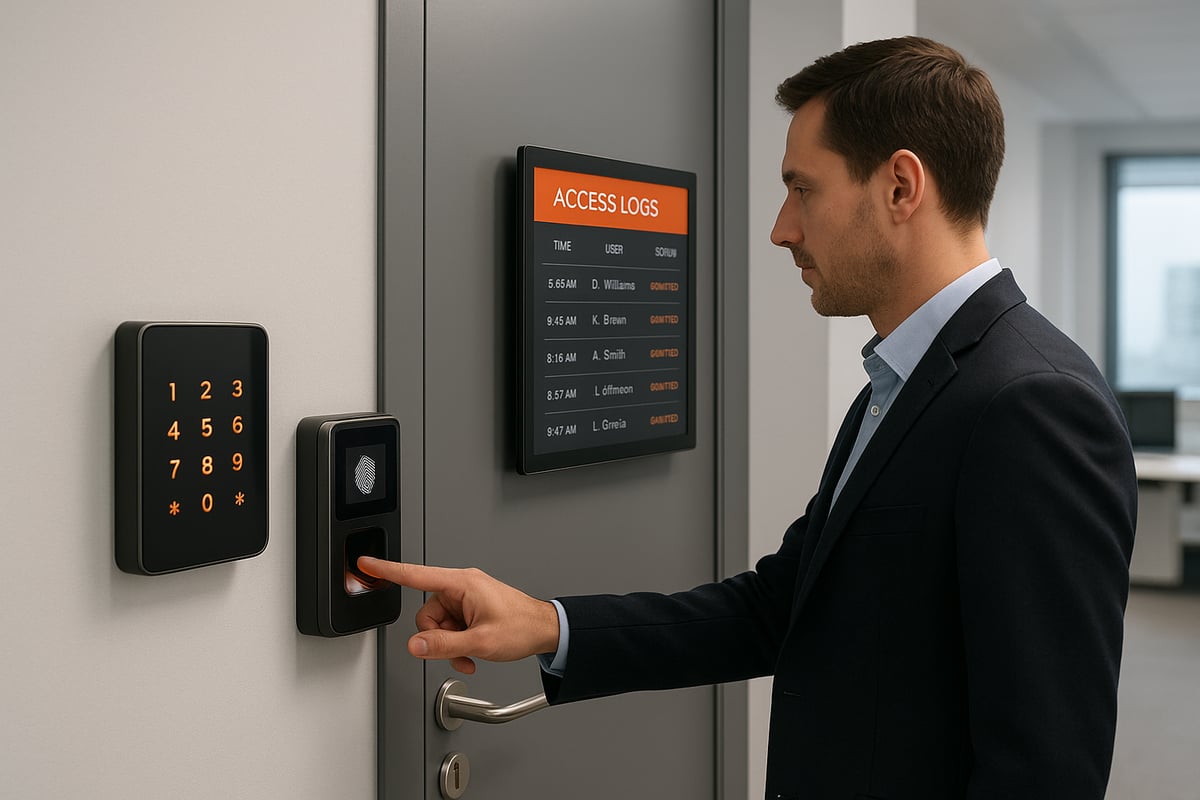
Authentication ensures only legitimate users gain entry to sensitive systems. In 2026, multifactor authentication (MFA) is the baseline, combining something you know, have, and are. Biometric methods, such as fingerprint or facial recognition, offer robust protection, while certificate-based authentication adds another secure layer.
A staggering 80% of breaches still involve weak or stolen credentials. Organisations must regularly assess their authentication stack, selecting options that balance security with user convenience. Comparing authentication types can clarify strengths:
| Method | Strengths | Weaknesses |
|---|---|---|
| Passwords | Familiar, low cost | Easily compromised |
| MFA | Stronger, layered defence | Can add friction |
| Biometrics | Difficult to forge | Privacy concerns |
| Certificates | High assurance | Management overhead |
Authorisation: Granting the Right Access
Authorisation focuses on giving users only the permissions they need, enforcing the principle of least privilege. Dynamic, context-aware authorisation adapts to changing conditions, such as location or device type.
Access policies support fine-grained control, ensuring sensitive data is only available to those with a legitimate need. By aligning authorisation with business roles and scenarios, organisations reduce the risk of privilege creep and unauthorised access. Regularly reviewing and updating policies is vital for maintaining effective security and access control.
Access Management: Ongoing Oversight
Effective access management oversees user permissions throughout their lifecycle. Streamlined onboarding and offboarding processes prevent orphaned accounts, while scheduled access reviews ensure permissions remain current.
Organisations must choose between centralised and decentralised management models, considering scalability and oversight. User lifecycle management tools help automate tasks and ensure compliance. For a practical overview of deploying access control in business, see access control systems for business.
Auditing and Monitoring
Continuous monitoring of access events is critical for detecting anomalies and maintaining compliance. Detailed audit logs capture who accessed what, when, and from where, supporting forensic investigations if incidents occur.
Regular audits often reveal misconfigured permissions, which affect 25% of organisations. By automating monitoring and leveraging real-time analytics, businesses can quickly identify and address potential weaknesses in their security and access control strategy.
Policy and Governance
Defining clear access control policies is the foundation of robust security and access control. Policies must be regularly updated to reflect new business objectives and compliance requirements.
Aligning governance with regulatory standards ensures ongoing protection and avoids costly penalties. Automating policy enforcement and managing exceptions systematically helps organisations respond swiftly to emerging risks. A strong governance framework supports consistent, effective access control across the enterprise.
Types of Access Control Models and Their Applications
Choosing the right access control model is crucial for effective security and access control in any business environment. With evolving threats and diverse infrastructures, organisations need models that fit their operations and compliance needs.
Role-Based Access Control (RBAC)
RBAC assigns permissions based on predefined job roles. This model simplifies administration by grouping users and granting access according to their responsibilities. For example, a financial analyst will have different access rights than an HR manager.
- Streamlines permission management
- Reduces risk of manual errors
- Can lead to privilege creep if roles are not reviewed regularly
RBAC is widely adopted in security and access control strategies due to its balance of simplicity and effectiveness.
Attribute-Based Access Control (ABAC)
ABAC evaluates multiple attributes—such as user identity, resource type, and environmental context—before granting access. This model enables fine-grained, dynamic control, supporting complex scenarios like time-based or location-based restrictions.
- Supports custom policies
- Adapts to changing business needs
- Can be more complex to configure
ABAC is especially useful in environments where traditional security and access control approaches may fall short.
Discretionary Access Control (DAC)
DAC allows resource owners to determine who can access their files or systems. This flexibility is helpful for collaborative teams, such as project groups sharing documents.
- Empowers users to control access
- Quick to implement
- Risk of over-permissioning and accidental exposure
DAC is best suited where collaboration is key, but it requires careful oversight to align with robust security and access control practices.
Mandatory Access Control (MAC)
MAC enforces strict policies defined by the system or administrators, rather than end users. Often used in government and highly regulated sectors, MAC restricts access based on classifications and clearances.
- Ensures policy consistency
- Ideal for sensitive data
- Less flexible for changing business needs
MAC is a cornerstone of security and access control for organisations handling classified or confidential information.
Policy-Based Access Control (PBAC)
PBAC combines rules, roles, and attributes to create adaptable, fine-grained access policies. It is often easier to implement than full ABAC, making it a practical choice for many businesses.
- Merges strengths of other models
- Supports compliance and business objectives
- Scales across hybrid environments
For a deeper look at practical applications, see building access control systems and how PBAC supports modern security and access control requirements.
Challenges and Pitfalls in Access Control for 2026
Businesses in 2026 face a rapidly changing security and access control landscape. As threats evolve, so do the challenges organisations must overcome to protect data, systems, and people. Understanding the key risks is essential for building effective defences.
Managing Distributed and Hybrid Environments
The shift to distributed and hybrid IT environments complicates security and access control. Organisations must secure resources spread across cloud, on-premise, and edge platforms. This diversity often leads to inconsistencies in policy enforcement and visibility gaps.
Legacy systems can be difficult to integrate with modern access management tools. Teams may struggle to maintain a unified approach as new technologies are added. Regular reviews and careful planning help ensure consistent protection.
Remote Work and BYOD Risks
Remote work and bring-your-own-device (BYOD) policies have expanded the attack surface for security and access control. Employees accessing sensitive data from personal devices and varied locations increase exposure to threats.
Attackers frequently target remote workers through phishing and social engineering. Device posture assessments and endpoint security checks are vital. Organisations must verify that only secure, compliant devices can access critical resources.
Password Fatigue and Credential Management
Credential management remains a major vulnerability in security and access control. Users often cope with complex password rules by reusing passwords or choosing weak credentials. This behaviour is exploited in a significant number of breaches.
Implementing phishing-resistant authentication and continuous verification can help address these risks. For further guidance, review AI-powered identity and network access security priorities for practical strategies.
Identity Silos and Lack of Centralisation
Identity silos are a common pitfall in security and access control. When user directories are fragmented across departments or applications, organisations lose oversight and control. This fragmentation increases the risk of orphaned accounts and inconsistent access policies.
Centralising identity management provides a single source of truth. Regular audits and automated provisioning reduce the chance of errors and improve compliance.
Insider Threats and Privilege Escalation
Insider threats and privilege escalation continue to challenge security and access control strategies. Disgruntled employees or compromised insiders may misuse elevated permissions to access sensitive data.
Monitoring privileged access and enforcing least privilege principles are critical. Automated alerts and regular access reviews can help detect and prevent unauthorised activities.
Implementation Strategies for Advanced Access Control
A structured, phased approach is essential for businesses aiming to strengthen security and access control in 2026. By following these well-defined steps, organisations can align their defences with modern threats, ensure compliance, and foster a secure workplace culture.
Step 1: Assess Current State and Identify Gaps
Begin by evaluating your existing security and access control environment. Conduct thorough risk and vulnerability assessments to identify weaknesses across cloud, on-premise, and remote assets. Map out current access control processes, technologies, and user flows.
Engage compliance teams to document regulatory obligations, such as GDPR and ISO 27001. This foundational assessment ensures that future improvements address both business and legal requirements.
Step 2: Define Policies and Access Requirements
Develop clear policies that reflect your organisation’s business needs and regulatory landscape. Collaborate with IT, compliance, and business stakeholders to ensure policies are practical and comprehensive.
Document roles, responsibilities, and escalation protocols. Detailed access requirements provide a blueprint for consistent enforcement and future audits.
Step 3: Select and Integrate Access Control Technologies
Evaluate available solutions such as IAM, PAM, SSO, and MFA to determine which best fit your environment. Prioritise platforms that support both cloud-native and hybrid infrastructures for flexibility.
Plan integration with existing systems, considering legacy compatibility and scalability. For practical advice on deployment, consult resources like security installation best practices to streamline implementation.
Step 4: Implement Zero Trust Principles
Adopt Zero Trust by enforcing least privilege and continuous verification. Segment networks and isolate sensitive data to limit lateral movement.
Introduce micro-segmentation and adaptive authentication for enhanced protection. For expert guidance, refer to Zero Trust implementation best practices to optimise your Zero Trust journey.
Step 5: Automate and Orchestrate Access Management
Leverage automation to streamline onboarding and offboarding processes. Automate regular access reviews and policy updates to minimise manual errors.
Deploy AI or machine learning tools to monitor access patterns and quickly identify anomalies. Automation not only improves efficiency but also strengthens security and access control oversight.
Step 6: Train Staff and Foster Security Culture
Educate employees on access control best practices, password hygiene, and recognising phishing attempts. Run regular simulations to reinforce learning and build resilience.
Encourage a culture where staff feel responsible for reporting potential security incidents. Well-trained users are a critical layer of defence in any security and access control strategy.
Step 7: Monitor, Audit, and Continuously Improve
Implement real-time monitoring and maintain detailed audit logs for compliance and forensics. Schedule regular audits and penetration tests to uncover misconfigurations or gaps.
Use dashboards and analytics to visualise access events, adapting policies based on evolving threats and business changes. Continuous improvement is vital for sustaining robust security and access control.
Best Practices and Future Trends in Security and Access Control
Staying ahead in security and access control requires a proactive approach, especially as threats and technologies evolve rapidly. Here are the top best practices and emerging trends shaping this landscape for 2026.
Embracing Zero Trust and Continuous Authentication
Zero trust models are now essential for robust security and access control. Organisations are moving away from perimeter-based defences, adopting continuous authentication and verification for every user and device. Adaptive authentication, which responds to user behaviour or context, is increasingly common. For example, re-authentication is triggered by unusual activity, reducing the risk of unauthorised access. This approach is especially critical in critical infrastructure sectors, as explored in the Framework for integrating Zero Trust in critical infrastructure.
Centralised Identity and Access Management (IAM)
Centralising IAM streamlines security and access control, making it easier to enforce consistent policies across cloud and on-premises systems. By consolidating user directories and access rights, organisations reduce identity silos and improve oversight. Central IAM platforms also enhance efficiency, as permissions are managed from a single source. This helps prevent gaps that attackers might exploit, boosting overall security posture.
Multi-Factor and Biometric Authentication
MFA is now a baseline for all critical systems in security and access control strategies. Beyond traditional passwords, organisations increasingly deploy biometric solutions such as fingerprint and facial recognition. These methods enable frictionless yet highly secure access. With biometric adoption projected to rise by 60 percent by 2026, businesses can expect both improved user experience and reduced credential-based breaches.
Regular Access Reviews and Least Privilege Enforcement
Scheduling periodic access reviews is a fundamental best practice in security and access control. Regular audits help identify and remove unnecessary permissions, reducing the risk of privilege creep. Enforcing the principle of least privilege ensures users have only the access they truly need. Quarterly reviews are particularly effective at maintaining a clean access environment and supporting compliance requirements.
Leveraging AI and Automation
AI-driven tools are transforming security and access control by enabling rapid detection of suspicious activity and automating repetitive management tasks. For instance, AI can quickly flag anomalous access patterns, while automated workflows handle onboarding, offboarding, and policy updates. This reduces response times and helps security teams focus on higher-value activities, making defences more agile and responsive.
Preparing for Future Regulatory Changes
Regulatory requirements for security and access control are becoming more stringent. Organisations must implement flexible systems that can adapt to new standards, such as stricter rules on data localisation and privacy. Staying informed about upcoming changes allows businesses to remain compliant and avoid costly penalties. Building adaptability into your security strategy ensures long-term resilience.
Integrating Physical and Digital Access Control
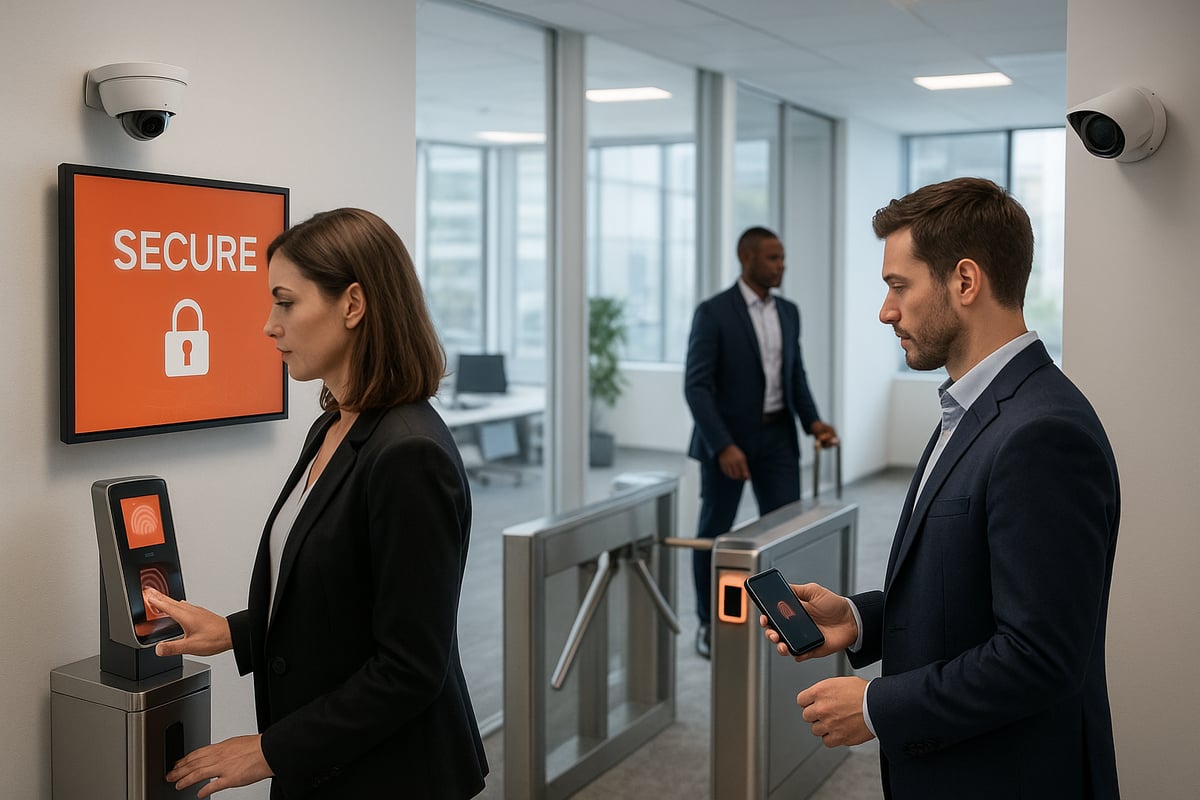
The convergence of physical and digital security is a significant trend in security and access control. Smart buildings now integrate badge access, CCTV, and digital logs for unified monitoring and incident response. For a comprehensive overview of how access control fits within wider commercial security strategies, review this Commercial security systems overview. This holistic approach strengthens protection across all entry points and assets.
As we’ve explored, the landscape of security and access control is rapidly evolving, with new threats, regulations, and technologies shaping how businesses protect their people and assets. Staying ahead means not only understanding these changes but also implementing robust, future-proof solutions tailored to your organisation. If you’re ready to take the next step towards a safer, more compliant workplace, why not let us help you assess your needs and identify the best strategies for your business? Start with a Get a Free Site Survey and gain expert insights into securing your premises for 2026 and beyond.