

The surveillance landscape across the United Kingdom has evolved dramatically in recent years, with businesses facing increasingly sophisticated security challenges alongside stringent regulatory requirements. Closed-circuit television systems have become an essential component of comprehensive security strategies for commercial properties, warehouses, retail spaces, and corporate facilities throughout the UK. Understanding the technical specifications, legal obligations, and strategic implementation of these systems is crucial for organisations seeking to protect their assets, employees, and customers whilst maintaining full compliance with data protection legislation.
Understanding CCTV Requirements for UK Businesses
Commercial CCTV installations in the UK operate within a complex framework that balances security needs with privacy rights. The regulatory environment demands careful consideration of multiple factors before implementation.
Legal Framework and Compliance Obligations
Every organisation deploying CCTV UK systems must understand their responsibilities under current data protection legislation. The UK GDPR and Data Protection Act 2018 establish strict requirements for how businesses collect, store, and process video footage. Companies must register with the Information Commissioner’s Office (ICO) and maintain detailed documentation outlining their legitimate purposes for surveillance.
Key compliance requirements include:
- Conducting and documenting Data Protection Impact Assessments (DPIAs) before installation
- Implementing appropriate technical and organisational security measures
- Establishing clear retention policies for recorded footage
- Appointing a Data Protection Officer where required
- Maintaining audit trails for all footage access and retrieval
The data protection obligations for businesses using CCTV extend beyond simple registration. Organisations must demonstrate legitimate interests that outweigh the privacy rights of individuals captured on camera. This requirement necessitates thorough documentation and regular reviews of surveillance practices.
Signage and Transparency Requirements
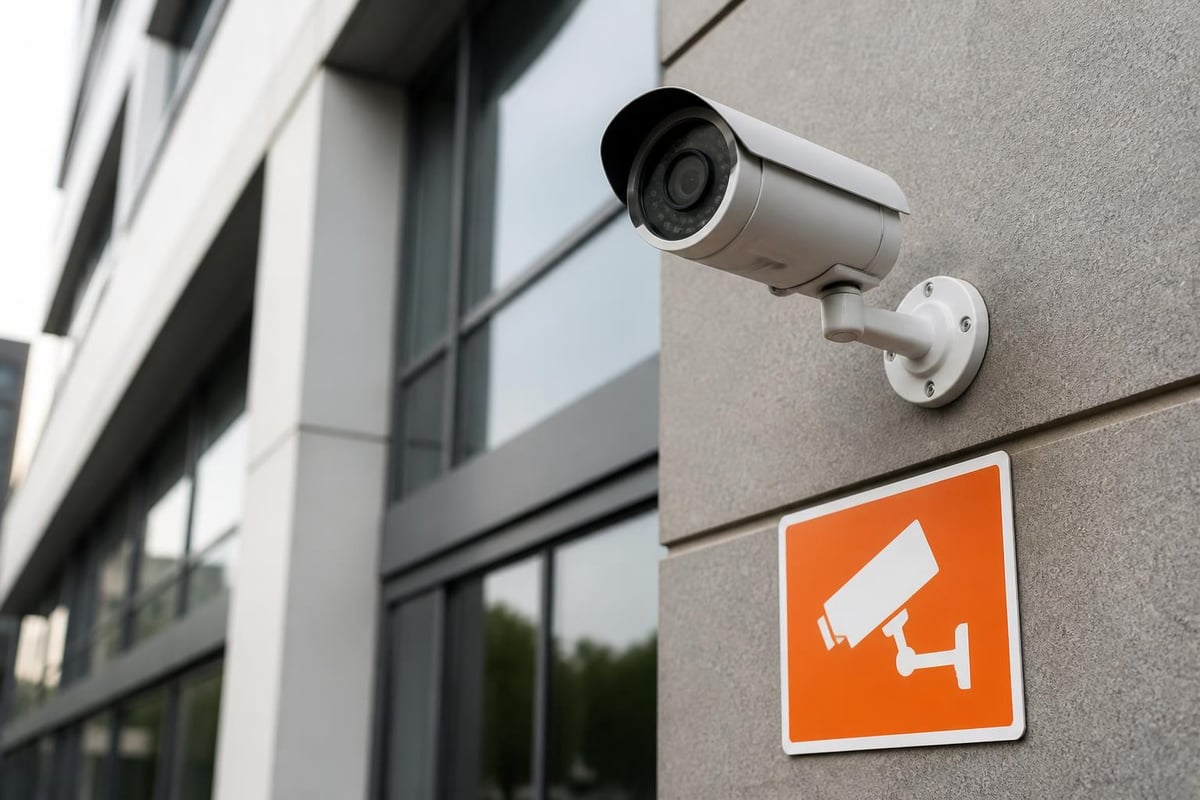
Transparency stands as a fundamental principle when operating CCTV UK installations. Businesses must provide clear, visible signage at all entry points to monitored areas. These signs must contain specific information including the organisation’s identity, the surveillance purpose, and contact details for privacy enquiries.
| Signage Element | Requirement | Placement |
|---|---|---|
| Organisation Identity | Full legal name and ICO registration | All entry points |
| Purpose Statement | Clear explanation of monitoring | Visible before entering zone |
| Contact Information | Data controller details | On all primary signs |
| Retention Period | How long footage is stored | Available upon request |
Technical Specifications for Commercial CCTV UK Systems
Modern surveillance systems incorporate sophisticated technology far beyond basic recording capabilities. Businesses must select equipment that meets both operational requirements and evidential standards.
Camera Types and Strategic Placement
Commercial properties require different camera technologies depending on specific security objectives and environmental conditions. Dome cameras offer discreet monitoring for indoor spaces, whilst bullet cameras provide long-range surveillance for perimeters and car parks. PTZ (pan-tilt-zoom) cameras enable active monitoring of large areas, allowing security personnel to track movement and zoom in on incidents.
Resolution standards have evolved significantly:
- 2MP cameras serve as the minimum acceptable standard for most applications
- 4MP and 8MP systems deliver enhanced detail for facial recognition
- 4K cameras provide exceptional clarity for critical areas requiring identification
- Thermal imaging capabilities extend surveillance to low-light environments
Strategic camera placement requires careful analysis of vulnerabilities, traffic patterns, and coverage overlap. Businesses should work with experienced security contractors to design systems that eliminate blind spots whilst respecting privacy zones such as toilets and private offices.
Recording and Storage Infrastructure
Storage capacity directly impacts a system’s effectiveness and compliance. The UK police requirements for CCTV systems specify minimum standards for footage quality and retention to ensure evidential value.
Modern CCTV UK installations typically employ Network Video Recorders (NVRs) or Video Management Systems (VMS) that offer:
- Automated backup and redundancy protocols
- Intelligent motion detection to optimise storage
- Remote access capabilities with encrypted connections
- Integration with access control and alarm systems
- Analytics for behaviour pattern recognition
Storage calculations must account for camera count, resolution, frame rate, compression methods, and retention periods. A 16-camera system recording at 4MP resolution with H.265 compression might require 6-8TB for 30 days of continuous recording.
Integration with Comprehensive Security Solutions
Effective security infrastructure rarely relies on CCTV alone. The most robust protection emerges from integrated systems that combine multiple technologies working in concert.
Combining Surveillance with Access Control
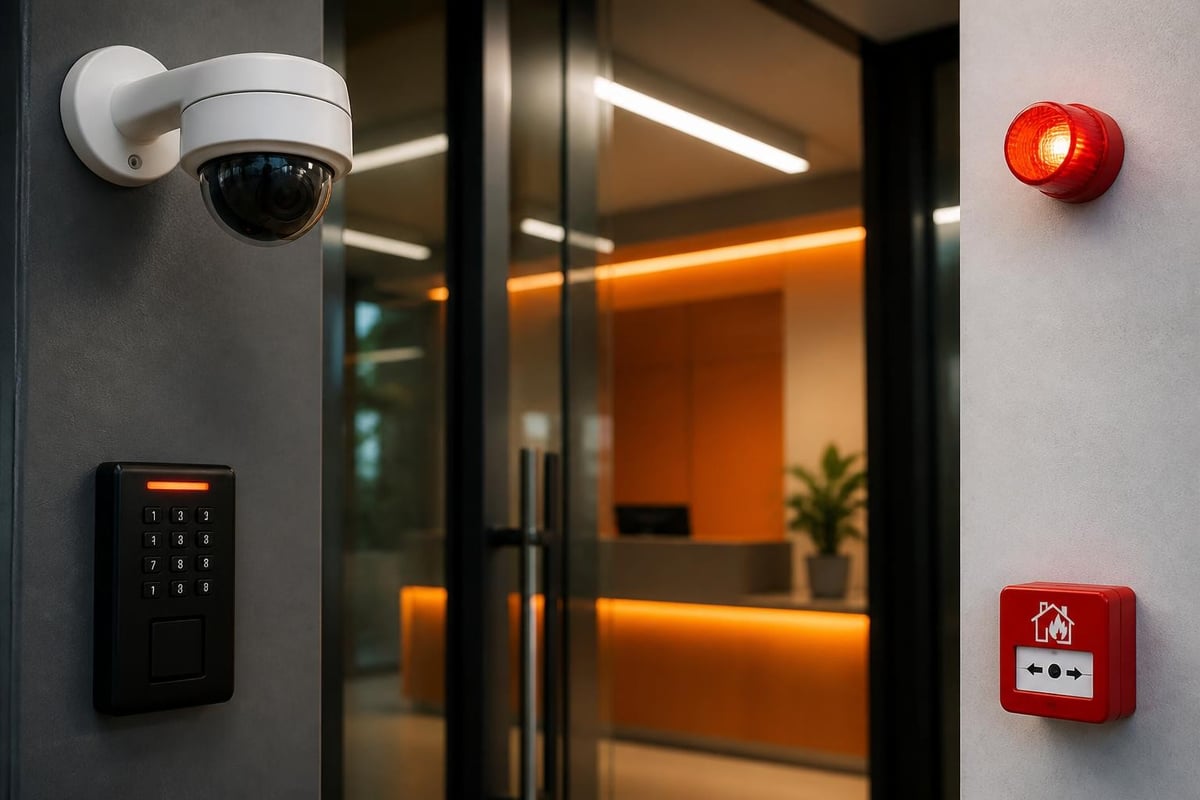
Commercial access control systems and CCTV create powerful synergies when properly integrated. Video verification of access events provides context for unusual patterns, whilst access credentials help identify individuals in footage. This integration enables:
- Automatic recording triggers when doors open outside authorised hours
- Real-time alerts combining visual confirmation with access violations
- Comprehensive audit trails linking personnel movement to video evidence
- Enhanced security for restricted areas containing sensitive materials
Businesses implementing building access control systems alongside surveillance benefit from layered security that addresses multiple threat vectors simultaneously.
Fire Safety and Security System Coordination
Whilst CCTV UK systems primarily serve security functions, their integration with fire safety infrastructure offers operational advantages. Video monitoring can verify alarm activations, assist emergency responders in assessing situations, and provide crucial evidence for post-incident investigations.
Commercial fire alarm monitoring companies increasingly recognise the value of visual verification. When commercial fire detection systems activate, CCTV footage helps operators distinguish genuine emergencies from false alarms, reducing unnecessary disruption and emergency service callouts.
Sector-Specific CCTV UK Applications
Different industries face unique security challenges requiring tailored surveillance approaches. Understanding sector-specific requirements ensures optimal system design and compliance.
Retail and Commercial Premises
Retail environments demand CCTV UK systems that balance theft prevention with customer privacy. High-resolution cameras at point-of-sale terminals deter employee dishonesty, whilst overhead dome cameras monitor shopping areas. Modern analytics detect suspicious behaviours such as loitering or unusual movement patterns, alerting staff to potential incidents before they escalate.
Retail-specific features include:
- Heat mapping to analyse customer flow and optimise store layouts
- Queue management alerts to improve service levels
- Integration with electronic article surveillance (EAS) systems
- Facial recognition for known offenders (where legally justified)
Industrial and Manufacturing Facilities
Manufacturing sites require robust CCTV systems capable of operating in challenging environments. Cameras must withstand dust, vibration, extreme temperatures, and potential impact whilst maintaining image quality. These facilities often implement comprehensive surveillance security systems covering production areas, loading bays, and material storage zones.
Health and safety applications extend beyond security, with footage providing evidence for incident investigations and insurance claims. However, businesses must carefully balance monitoring with employee privacy rights, ensuring surveillance serves legitimate purposes rather than excessive oversight.
Educational Institutions and Public Facilities
Schools, universities, and public buildings face particular challenges when implementing CCTV UK systems. Safeguarding responsibilities must be balanced against privacy considerations, especially regarding children and vulnerable individuals. Alarm systems for schools often integrate with video surveillance to create comprehensive protection.
| Facility Type | Primary Purpose | Key Considerations |
|---|---|---|
| Schools | Safeguarding and security | Child privacy, parental concerns |
| Universities | Campus safety | Student privacy, protest management |
| Hospitals | Patient safety | Medical privacy, violence prevention |
| Government Buildings | Access control | Counter-terrorism, public access areas |
Monitoring and Maintenance Protocols
Installing CCTV UK systems represents only the beginning of effective surveillance operations. Ongoing monitoring, maintenance, and system updates ensure continued performance and compliance.
Professional Monitoring Services
Business security monitoring services provide 24/7 oversight of CCTV systems, responding to alerts and coordinating emergency responses. Professional monitoring centres employ trained operators who can assess situations, contact keyholders, and liaison with police when necessary.
Remote monitoring capabilities have advanced significantly, with cloud-based systems enabling access from anywhere with secure internet connections. However, businesses must implement robust cybersecurity measures to prevent unauthorised access to video feeds.
Preventive Maintenance Schedules
Regular maintenance ensures CCTV UK systems operate reliably when needed. Comprehensive maintenance programmes address both hardware and software components.
- Monthly checks should verify camera functionality, image quality, and field of view
- Quarterly inspections assess recording equipment, storage capacity, and backup systems
- Annual servicing includes firmware updates, lens cleaning, and weatherproofing inspection
- Bi-annual reviews evaluate system effectiveness and identify upgrade opportunities
Documentation of all maintenance activities supports compliance audits and insurance requirements. Many organisations partner with comprehensive security solution providers for scheduled maintenance and emergency call-out services.
Cybersecurity Considerations for Modern CCTV Systems
Network-connected surveillance systems introduce cybersecurity vulnerabilities that organisations must address proactively. IP cameras and cloud-based storage create potential entry points for malicious actors.
Protecting Against Unauthorised Access
Default passwords remain the most common security weakness in CCTV UK installations. Every camera, recorder, and management platform must employ strong, unique credentials changed regularly. Network segmentation isolates surveillance systems from general business networks, limiting potential breach impacts.
Essential cybersecurity measures include:
- Implementing VPN access for remote monitoring
- Encrypting video streams and stored footage
- Regularly updating firmware and security patches
- Conducting vulnerability assessments and penetration testing
- Establishing incident response protocols for security breaches
The increasing sophistication of cyber threats demands vigilance. Organisations should stay informed about emerging vulnerabilities and implement recommended security updates promptly.
Data Protection and Privacy by Design
Privacy by design principles should guide every aspect of CCTV UK system implementation. This approach minimises data collection to what is strictly necessary, implements appropriate security measures, and ensures transparency in processing activities.
Businesses must regularly review their surveillance practices to ensure continued legitimacy. Changes in operational requirements, workforce composition, or physical layout may necessitate adjustments to camera coverage or retention periods.
Cost Considerations and Return on Investment
Implementing effective CCTV UK systems requires significant capital investment, but the returns extend beyond simple loss prevention. Understanding total cost of ownership helps organisations make informed procurement decisions.
Initial Investment Components
System costs vary considerably based on site size, camera count, resolution requirements, and integration complexity. A small warehouse might require £5,000-£15,000 for a basic eight-camera system, whilst large commercial facilities could invest £50,000-£250,000 for comprehensive coverage with advanced analytics.
| Cost Element | Budget Range | Factors Affecting Price |
|---|---|---|
| Cameras (per unit) | £150-£2,500 | Resolution, features, environment rating |
| Recording Equipment | £500-£15,000 | Channel count, storage capacity, redundancy |
| Installation Labour | £2,000-£40,000 | Site complexity, cable runs, integration |
| Software/Licensing | £500-£10,000 | Analytics, remote access, management tools |
| Annual Maintenance | 10-15% capital cost | Service level, response times, parts coverage |
Quantifiable Benefits and Risk Mitigation
CCTV UK systems deliver measurable returns through multiple mechanisms. Theft reduction, insurance premium decreases, improved productivity, and liability protection contribute to positive financial outcomes.
Businesses often underestimate the value of video evidence in resolving disputes. Whether addressing customer complaints, employee grievances, or legal claims, footage provides objective documentation that can save substantial legal costs and reputational damage.
Working with Professional Installation Partners
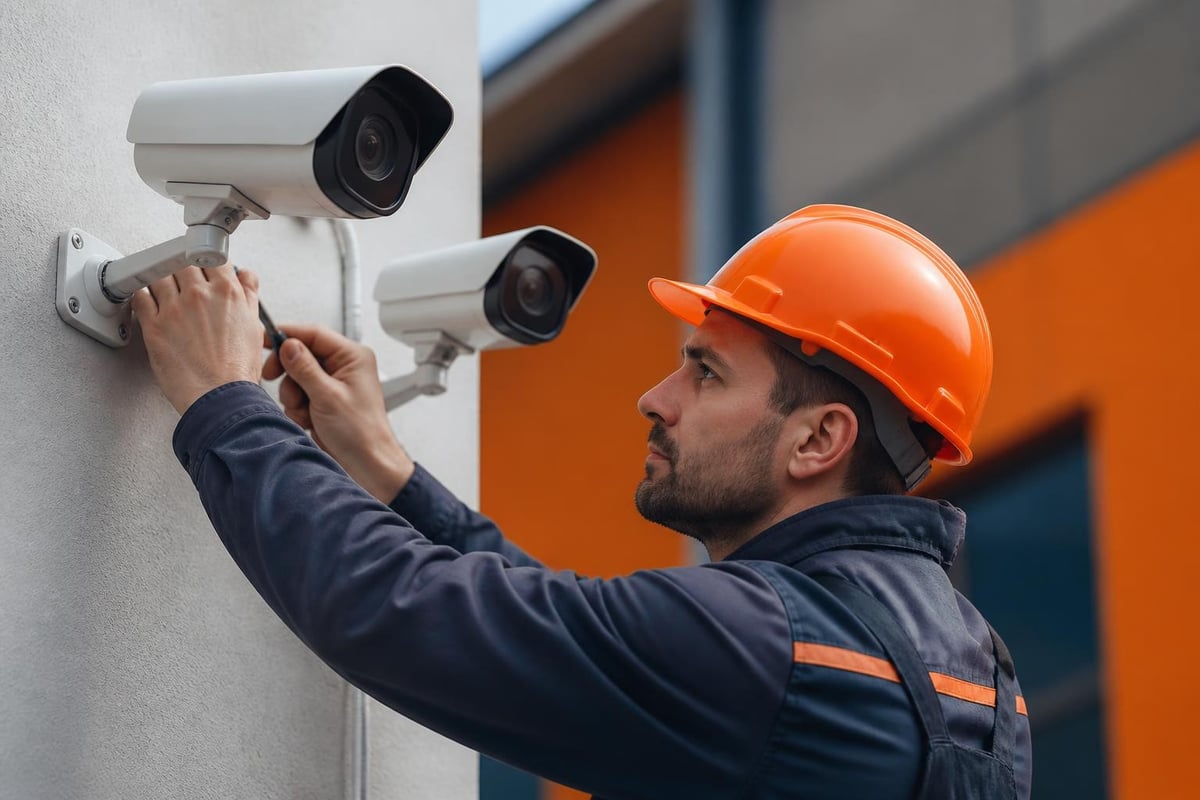
The complexity of modern CCTV UK systems demands professional expertise throughout the project lifecycle. Selecting qualified installation partners significantly impacts system effectiveness and compliance.
Evaluating Installation Credentials
Reputable security contractors maintain industry accreditations demonstrating technical competence and professional standards. NSI Gold and SSAIB certifications indicate adherence to British and European standards for security system installation.
Organisations should verify contractors maintain appropriate insurance coverage, employ qualified engineers, and provide comprehensive warranty terms. References from similar businesses in comparable sectors provide valuable insights into contractor performance and reliability.
Quality Assurance and Testing Protocols
Professional installers follow structured commissioning procedures ensuring systems operate correctly before handover. Comprehensive testing should verify:
- Image quality across all cameras under various lighting conditions
- Recording functionality and storage capacity
- Remote access security and performance
- Integration with existing security infrastructure
- Alarm triggering and notification systems
Documentation packages should include system diagrams, equipment specifications, access credentials, and operational procedures. Training for security personnel and system administrators ensures effective ongoing operation.
Future Developments in CCTV UK Technology
The surveillance industry continues evolving rapidly, with emerging technologies promising enhanced capabilities whilst presenting new compliance challenges.
Artificial Intelligence and Analytics
AI-powered video analytics transform passive recording systems into proactive security tools. Object recognition, behaviour analysis, and predictive algorithms enable systems to identify potential threats before incidents occur.
However, businesses must carefully evaluate the legal and ethical implications of advanced analytics, particularly facial recognition technology. Biometric data processing carries additional regulatory burdens under UK GDPR, requiring careful justification and robust safeguards.
Cloud-Based Systems and Edge Computing
Cloud storage and processing offer scalability and accessibility advantages, eliminating local storage infrastructure requirements. Edge computing pushes analytical processing to cameras themselves, reducing bandwidth demands whilst enhancing real-time response capabilities.
These architectural shifts require careful consideration of data sovereignty, internet connectivity reliability, and ongoing subscription costs. Businesses should evaluate total cost of ownership over system lifecycle when comparing cloud and on-premise solutions.
Modern CCTV UK installations represent sophisticated security infrastructure requiring careful planning, professional implementation, and ongoing management to deliver optimal protection whilst maintaining regulatory compliance. Businesses seeking to enhance their security posture through advanced surveillance systems benefit from partnering with experienced providers who understand both technical requirements and regulatory obligations. Logic Fire and Security offers comprehensive security solutions integrating CCTV with access control, intrusion detection, and fire safety systems, delivering the expertise and support necessary to protect commercial properties across the UK effectively.