

Educational institutions face unique safety challenges that demand comprehensive, reliable protection systems. An alarm system for schools must address multiple threats simultaneously, from fire emergencies to security incidents, while meeting stringent regulatory requirements. As we progress through 2026, the landscape of school safety technology continues to evolve, driven by legislative changes and technological advancements that prioritize rapid response and effective communication with emergency services.
Understanding Modern School Alarm Requirements
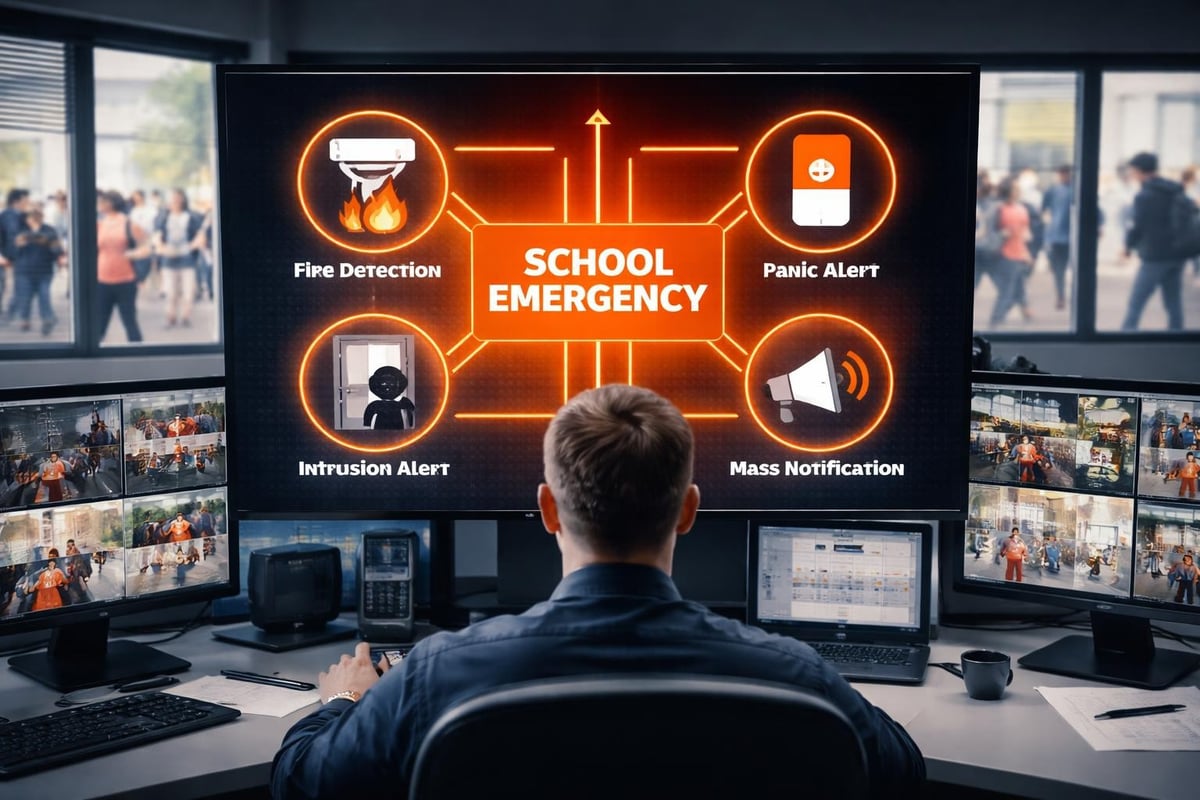
The complexity of an alarm system for schools extends far beyond traditional fire detection. Today's educational facilities require integrated solutions that combine fire safety, intrusion detection, and emergency communication capabilities. This multi-layered approach ensures comprehensive protection for students, staff, and visitors across all campus areas.
Modern school alarm systems must comply with multiple regulatory frameworks. The NFPA 72 standard establishes fundamental requirements for fire alarm and emergency communication systems, providing the baseline for all installations. Beyond these foundational requirements, individual states have implemented additional mandates that specifically address school safety concerns.
Key components of a comprehensive school alarm system include:
- Fire detection and notification systems with intelligent sensors
- Mass notification systems for emergency communication
- Panic alert systems with direct law enforcement connection
- Intrusion detection for after-hours security
- Environmental monitoring for hazardous conditions
- Integration capabilities with access control systems
The regulatory environment surrounding school alarm systems has undergone significant transformation. Several states have enacted legislation requiring panic alarm systems following tragic incidents. Florida’s Alyssa’s Alert system mandates mobile panic alert capabilities that enable real-time coordination with first responders, setting a precedent for similar legislation nationwide.
Fire Detection Systems in Educational Settings
Fire safety remains the cornerstone of any alarm system for schools. Commercial fire alarm systems designed for educational environments must account for diverse occupancy types, from classrooms to laboratories, cafeterias to gymnasiums. Each space presents distinct fire risks requiring tailored detection strategies.
Advanced fire detection technology has revolutionized school safety. Intelligent addressable systems can pinpoint the exact location of a fire event, enabling faster response and more efficient evacuation. These systems reduce false alarms through advanced algorithm processing that distinguishes genuine threats from environmental anomalies.
| Detection Type | Best Application | Response Time | Maintenance Frequency |
|---|---|---|---|
| Smoke Detectors | Classrooms, corridors | 30-60 seconds | Quarterly testing |
| Heat Detectors | Kitchens, workshops | 60-90 seconds | Semi-annual inspection |
| Multi-Sensor | Laboratories, storage | 20-40 seconds | Quarterly testing |
| Beam Detectors | Gymnasiums, halls | 40-60 seconds | Annual alignment check |
The Indiana Department of Homeland Security guidance emphasizes proper response protocols for fire alarms, highlighting the importance of regular drills and staff training. Schools must balance safety with educational continuity, minimizing disruption while maintaining readiness for genuine emergencies.
Panic Alert and Lockdown Systems
Recent legislative developments have prioritized immediate threat response capabilities. An effective alarm system for schools now typically incorporates dedicated panic alert functionality that enables staff to summon emergency assistance silently and rapidly. This technology proves critical during active threat situations where traditional communication methods may be unavailable or dangerous.
Texas regulations specify requirements for panic alert systems capable of direct communication with law enforcement agencies. These systems bypass standard emergency call routing, ensuring the fastest possible response to critical incidents. Implementation varies from fixed wall-mounted buttons to wearable devices that staff can activate discreetly.
Panic alert system features that enhance school safety:
- Silent activation preventing alerting potential threats
- Automatic location identification for precise responder deployment
- Multi-channel notification reaching law enforcement, administrators, and security personnel
- Integration with access control for automated lockdown procedures
- Two-way communication enabling real-time situation updates
The New Jersey compliance requirements for Alyssa's Law mandate panic alarm systems with direct links to law enforcement. Schools implementing these systems report significant improvements in emergency response coordination and overall security confidence among staff and parents.
Integration with Access Control and Security Systems
A truly effective alarm system for schools integrates seamlessly with building access control systems to create layered security. During emergencies, these integrated systems can automatically lock or unlock doors based on the incident type, controlling access while facilitating evacuation as needed.
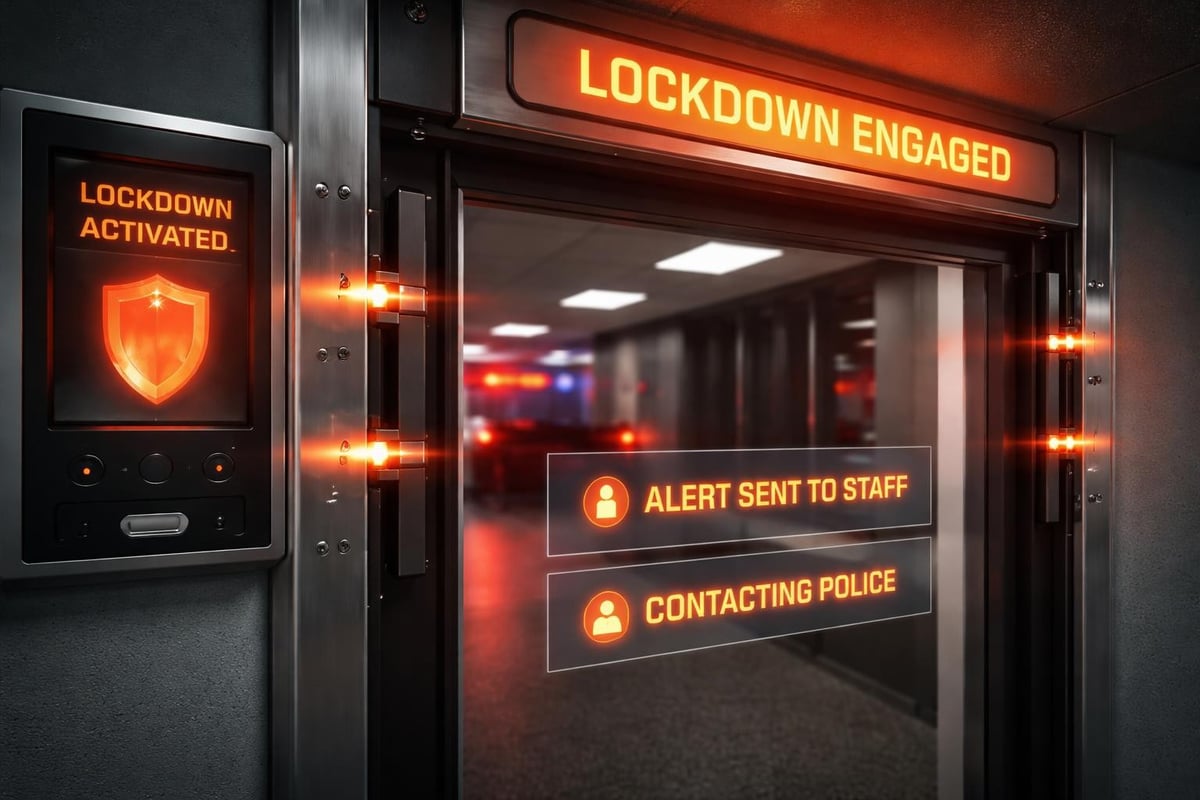
Integration extends to video surveillance systems, providing visual verification of alarm events. When commercial security systems work in concert with alarm platforms, security personnel can assess situations rapidly and provide critical information to responding emergency services. This capability proves invaluable for distinguishing false alarms from genuine threats.
Modern school security platforms consolidate multiple systems into unified management interfaces. Administrators can monitor fire detection, intrusion alarms, access control, and video surveillance from centralized workstations, improving situational awareness and response coordination.
Best Practices for Implementation and Maintenance
Successful deployment of an alarm system for schools requires careful planning, professional installation, and ongoing maintenance. School alert system best practices emphasize the importance of stakeholder involvement throughout the implementation process, ensuring systems meet the specific needs of each educational environment.
The design phase should incorporate input from administrators, security personnel, local fire departments, and law enforcement agencies. This collaborative approach identifies potential vulnerabilities and ensures compliance with all applicable regulations. Professional security integrators like Logic Fire and Security bring expertise in educational facility protection, navigating complex requirements while optimizing system performance.
Implementation timeline for comprehensive school alarm systems:
- Week 1-2: Site survey and needs assessment
- Week 3-4: System design and regulatory review
- Week 5-8: Equipment procurement and staging
- Week 9-12: Installation and integration
- Week 13-14: Testing and commissioning
- Week 15-16: Staff training and documentation
Regular maintenance ensures alarm system reliability when emergencies occur. Alarm monitoring systems require periodic testing to verify communication paths remain functional. Fire detection devices need cleaning and calibration to prevent false alarms while maintaining sensitivity to genuine threats.
Testing and Training Requirements
An alarm system for schools provides protection only when staff understand proper response procedures. Comprehensive training programs should cover activation methods, evacuation protocols, lockdown procedures, and communication expectations during various emergency scenarios.
| Training Component | Frequency | Duration | Participants |
|---|---|---|---|
| Fire evacuation drills | Monthly | 15-20 minutes | All occupants |
| Lockdown procedures | Quarterly | 30 minutes | Staff only |
| Panic alert operation | Semi-annually | 45 minutes | Administrative staff |
| System maintenance review | Annually | 2 hours | Facilities personnel |
| Emergency responder coordination | Annually | 3-4 hours | Security team |
Testing extends beyond scheduled drills. Evacuation alert systems should undergo regular functional testing to verify all notification devices operate correctly. This includes audible alarms, visual strobes, and mass notification speakers throughout campus facilities.
Documentation of all testing and maintenance activities provides essential compliance records. Regulatory agencies may request these records during inspections, and they prove valuable for identifying system performance trends and potential issues before failures occur.
Regulatory Compliance and Local Requirements
Geographic location significantly influences alarm system requirements for schools. While national standards provide baseline guidance, state and local jurisdictions often impose additional mandates. The Olympia Municipal Code exemplifies local regulations that specify alarm system exemptions and service fee structures for public schools.
Compliance verification requires understanding multiple regulatory layers. Building codes, fire safety standards, educational facility requirements, and emergency communication mandates all intersect when designing school alarm systems. Professional security providers maintain current knowledge of these evolving requirements, ensuring installations meet all applicable standards.
Regulatory compliance checklist for school alarm systems:
- Fire alarm design complies with NFPA 72 requirements
- Panic alert systems meet state-specific mandates
- Emergency communication reaches all campus areas
- Notification devices accommodate hearing and visually impaired occupants
- System documentation includes as-built drawings and operation manuals
- Monitoring arrangements provide 24/7 emergency response
- Annual inspections scheduled with qualified technicians
Insurance providers increasingly scrutinize school alarm systems when underwriting policies. Comprehensive, well-maintained systems may qualify institutions for premium reductions, while inadequate protection can result in coverage limitations or exclusions. Documentation of proper installation and maintenance supports favorable insurance terms.
Monitoring and Emergency Response Coordination
Around-the-clock monitoring represents a critical component of any alarm system for schools. Professional monitoring services receive alarm signals immediately upon activation, verify the emergency type, and dispatch appropriate responders according to pre-established protocols. This rapid response capability can save precious minutes during life-threatening situations.
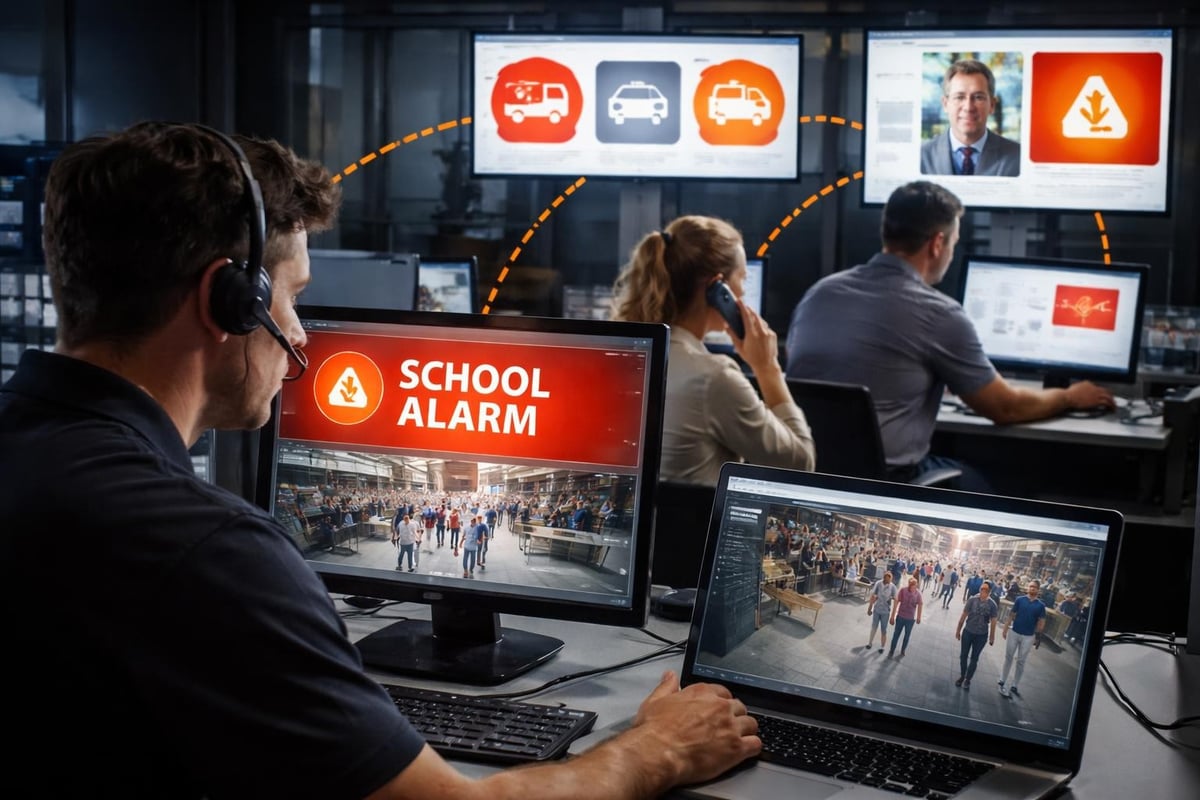
Monitoring centers should maintain detailed information about each protected facility, including floor plans, occupancy schedules, key holder contacts, and special hazard locations. This information enables more effective emergency response coordination and helps responders navigate campus environments efficiently.
Communication between monitoring services and educational administrators ensures appropriate responses to different alarm types. Fire alarms may require immediate evacuation, while intrusion alarms during school hours might indicate unauthorized access requiring security investigation rather than full lockdown.
Advanced Features and Future Technologies
The evolution of school alarm technology continues accelerating. Artificial intelligence enhances threat detection capabilities, distinguishing between normal activities and potential dangers with increasing accuracy. Machine learning algorithms analyze patterns across multiple sensor inputs, reducing false alarms while improving genuine threat identification.
Integration with mobile technology enables more flexible emergency communication. Staff members receive instant notifications through smartphone applications, providing situation updates and response instructions regardless of their campus location. Parents may also receive controlled information during emergencies, reducing anxiety while preventing campus disruption from concerned family members.
Emerging technologies enhancing school alarm systems:
- Gunshot detection providing immediate active shooter alerts
- Air quality monitoring detecting chemical hazards or poor ventilation
- Behavioral analytics from video systems identifying concerning activities
- Wearable panic buttons offering discreet threat reporting
- Outdoor coverage extending protection to playgrounds and athletic facilities
- Cloud-based management enabling remote system monitoring and updates
Voice evacuation systems represent significant advancement over traditional alarm bells. These systems provide clear verbal instructions during emergencies, directing occupants to appropriate exits while conveying specific information about the threat type and location. Research demonstrates improved evacuation efficiency with voice systems compared to conventional alerting methods.
Environmental monitoring capabilities expand alarm system functionality beyond traditional security concerns. Sensors detecting temperature extremes, water leaks, or power failures enable proactive facility management, preventing minor issues from escalating into major problems that could impact educational operations.
System Design Considerations for Different School Types
Primary schools require alarm system designs that account for younger children who may not respond appropriately to complex emergency instructions. Visual indicators supplement audible alarms, and evacuation routes must accommodate smaller students with limited mobility and understanding. Staff panic alert systems prove particularly valuable in primary settings where threats to vulnerable populations demand immediate response.
Secondary schools present different challenges, including larger campuses with multiple buildings, higher occupancy densities, and diverse facility types from science laboratories to performing arts centers. An alarm system for schools at this level often incorporates zone-based alerting, enabling targeted notifications to specific campus areas while avoiding unnecessary disruption to unaffected zones.
| School Type | Typical Coverage Area | Device Count Range | Special Considerations |
|---|---|---|---|
| Primary (300 students) | 30,000-50,000 sq ft | 40-80 devices | Child-appropriate notifications |
| Secondary (800 students) | 100,000-200,000 sq ft | 150-300 devices | Multi-building coordination |
| Higher Education Campus | 500,000+ sq ft | 500+ devices | Outdoor coverage, residence halls |
| Specialized Facilities | Varies | Custom design | Unique hazards, specialized spaces |
Universities and colleges face additional complexity from mixed-use facilities, public access areas, residential housing, and 24/7 operations. Alarm systems must differentiate between academic buildings, dormitories, athletic facilities, and research laboratories, each requiring tailored detection and notification strategies. Integration with campus-wide communication systems ensures consistent messaging across diverse platforms during emergencies.
Specialized educational facilities such as vocational schools, technical colleges, or facilities serving students with special needs demand customized alarm system approaches. Workshops with industrial equipment require specific fire detection technologies, while facilities for students with sensory sensitivities may need alternative notification methods that avoid triggering adverse reactions.
Protecting educational environments demands sophisticated alarm systems that integrate fire detection, security monitoring, and emergency communication capabilities while meeting stringent regulatory requirements. The investment in comprehensive school safety infrastructure pays dividends through enhanced protection, regulatory compliance, and peace of mind for administrators, staff, and families. Whether you're planning a new installation, upgrading existing systems, or ensuring compliance with the latest safety legislation, Logic Fire and Security delivers the expertise and comprehensive solutions that educational institutions throughout the UK trust for their critical safety needs.