

Protecting commercial premises from fire hazards represents one of the most critical responsibilities for any business owner or facilities manager. A comprehensive fire security system encompasses far more than basic smoke detectors; it integrates advanced detection technologies, automated suppression mechanisms, emergency notification protocols, and continuous monitoring capabilities. For businesses operating across the United Kingdom, understanding the technical specifications, regulatory requirements, and operational benefits of these systems proves essential for maintaining both legal compliance and genuine occupant safety.
Understanding Modern Fire Security System Architecture
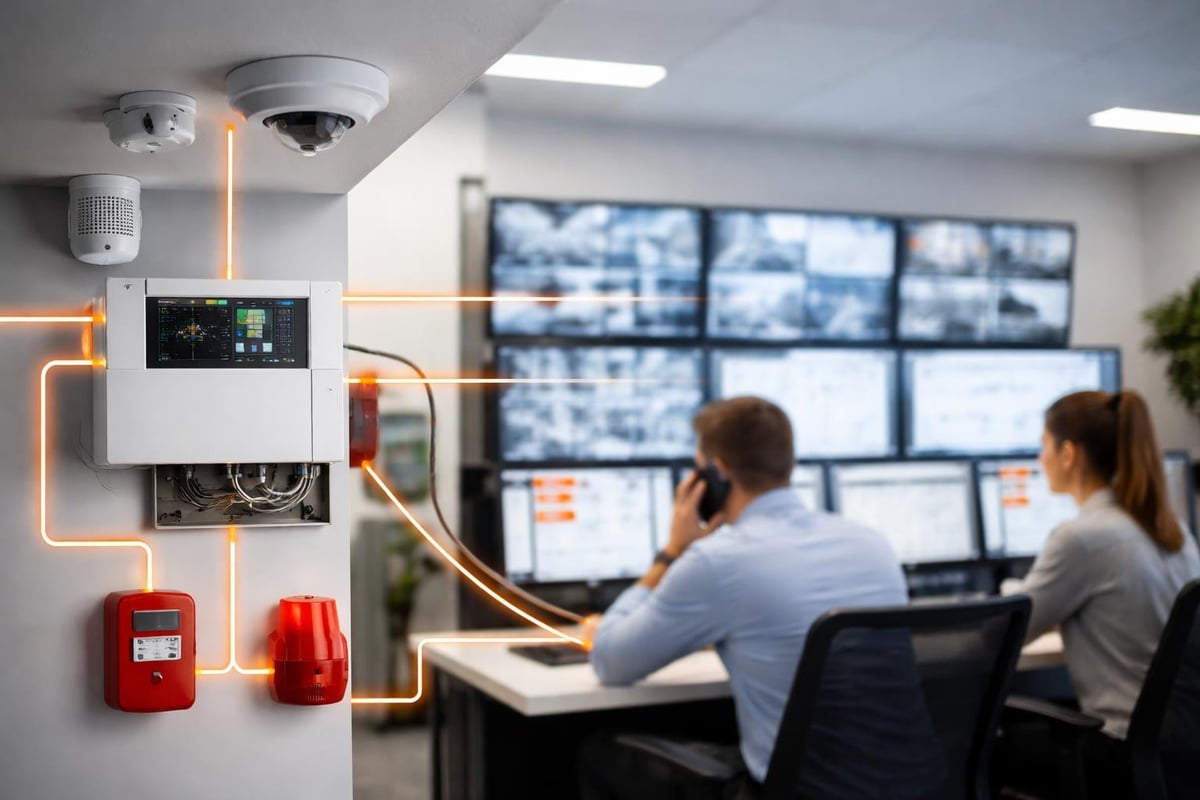
A contemporary fire security system comprises multiple interconnected components working together to detect, alert, and respond to fire emergencies. The foundation typically includes detection devices such as smoke detectors, heat sensors, and flame detectors positioned strategically throughout a facility. These devices communicate with a central control panel that processes incoming signals and triggers appropriate responses.
Core components of an effective system include:
- Addressable detection devices with unique identifiers
- Intelligent control panels with diagnostic capabilities
- Manual call points at exit routes and strategic locations
- Audible and visual warning devices throughout the premises
- Integration points for suppression systems and building controls
- Remote monitoring connections for 24/7 oversight
The sophistication of modern systems allows for precise fire location identification, reducing false alarms whilst improving genuine emergency response times. Advanced detection algorithms can distinguish between actual fire signatures and common nuisance triggers such as steam or dust, significantly enhancing system reliability.
Addressable Versus Conventional Systems
Commercial properties require careful consideration when selecting between addressable and conventional fire security system configurations. Addressable systems assign unique identities to each detection point, enabling the control panel to pinpoint exactly where an alarm originates. This granular information proves invaluable in large facilities where rapid incident location identification can save precious minutes during an emergency.
Conventional systems divide buildings into zones, with multiple devices sharing circuit connections. Whilst more economical for smaller premises, they provide less precise location information. The fire alarm design process must account for building size, occupancy type, and operational requirements when determining the most appropriate architecture.
| System Type | Precision | Cost | Best For |
|---|---|---|---|
| Addressable | Exact device location | Higher initial investment | Large commercial premises |
| Conventional | Zone-level identification | Lower upfront cost | Smaller buildings with simple layouts |
| Wireless Addressable | Device-specific with flexible installation | Premium pricing | Listed buildings and retrofit applications |
Regulatory Compliance and British Standards
Operating a compliant fire security system in the UK requires adherence to multiple regulatory frameworks. The Regulatory Reform (Fire Safety) Order 2005 places responsibility on duty holders to conduct thorough fire risk assessments and implement appropriate preventative and protective measures. This legislation mandates that businesses maintain adequate detection and warning systems appropriate to their specific fire risks.
British Standard BS 5839 provides detailed guidance on fire detection and alarm systems for buildings. Part 1 specifically addresses fire security system design, installation, commissioning, and maintenance requirements for non-domestic premises. Compliance with these standards demonstrates due diligence and forms the foundation for insurance coverage and legal protection.
Understanding fire codes and their updates ensures your system meets current requirements. Regular reviews of applicable standards help businesses stay ahead of regulatory changes that might affect their installations.
Inspection and Testing Protocols
Maintaining a fire security system requires disciplined inspection and testing schedules. Weekly activation of different manual call points, monthly functional checks of the system components, and quarterly inspection of all detection devices form the minimum maintenance baseline. Annual comprehensive inspections by competent technicians ensure system integrity and compliance with British Standards.
Documentation proves absolutely critical for demonstrating regulatory compliance. Every test, inspection, repair, and modification must be recorded in the fire safety logbook. During inspections by fire authorities or insurance assessors, these records provide evidence of responsible system stewardship and ongoing commitment to fire safety.
Professional fire alarm testing services deliver thorough evaluations that identify potential vulnerabilities before they compromise safety or trigger enforcement actions from regulatory authorities.
Integration with Building Management Systems
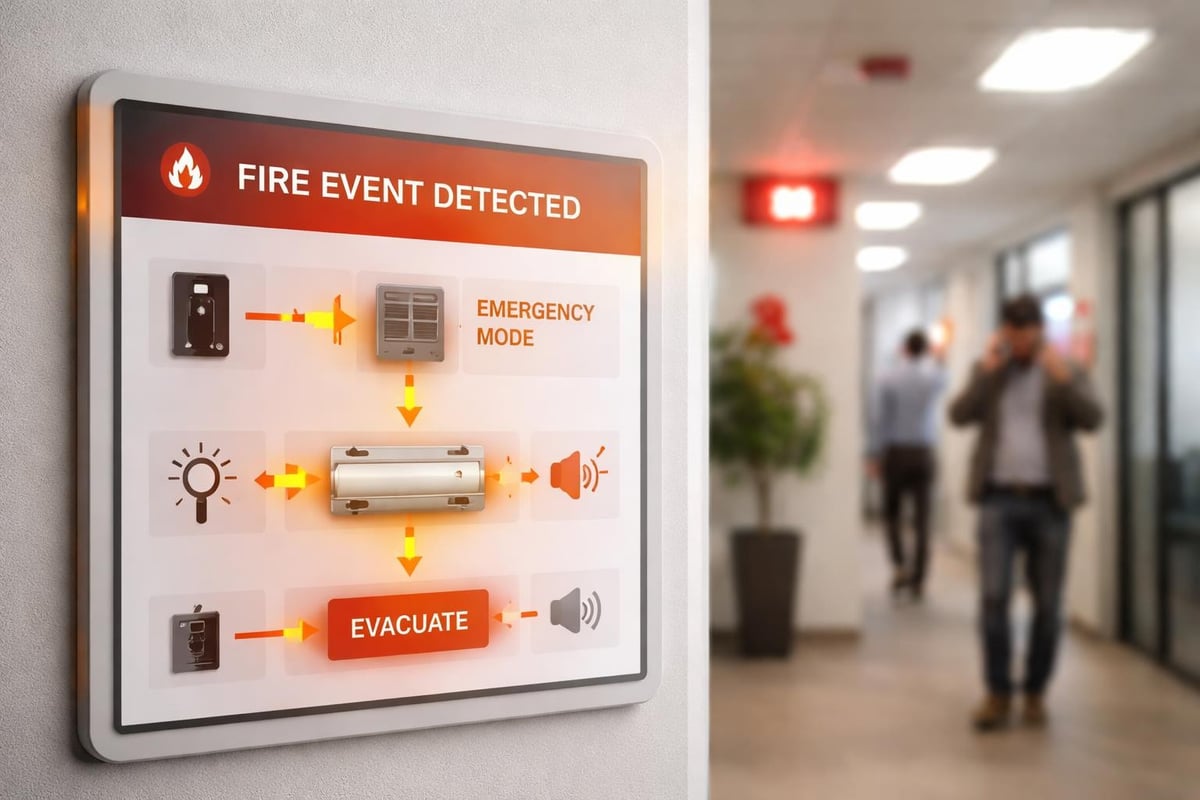
Modern commercial environments increasingly demand integrated fire security system architectures that communicate with broader building management platforms. This integration enables coordinated responses during emergencies, such as automatically unlocking access-controlled exits, shutting down air handling systems to prevent smoke distribution, and activating emergency lighting throughout evacuation routes.
The integration of fire and security systems presents both opportunities and challenges for commercial properties. Properly executed integration enhances overall building safety whilst improving operational efficiency through centralised monitoring and control.
Integration benefits include:
- Coordinated emergency response across multiple systems
- Reduced complexity for facilities management teams
- Enhanced data collection for incident analysis
- Improved occupant safety through automated protective actions
- Streamlined compliance reporting and documentation
However, integration also introduces considerations around system interdependencies and potential failure points. Cybersecurity vulnerabilities in connected fire protection systems require robust security protocols to prevent malicious interference with critical safety infrastructure.
Advanced Detection Technologies
Evolution in fire detection technology continues reshaping how commercial properties identify and respond to fire threats. Multi-sensor detectors combine smoke, heat, and carbon monoxide sensing in single devices, using sophisticated algorithms to reduce false alarms whilst improving genuine fire detection sensitivity.
Aspirating smoke detection systems represent the pinnacle of early warning capability. These systems actively draw air samples through pipe networks, analysing them with highly sensitive laser-based sensors. Particularly valuable in high-value environments such as data centres, museums, and pharmaceutical facilities, aspirating systems detect fire signatures long before conventional detectors would activate.
Flame Detection and Specialist Applications
Certain industrial and commercial environments require flame detection capabilities that respond to radiant energy rather than smoke or heat. These detectors prove essential in facilities handling flammable liquids, gases, or materials where rapid flame development might occur without significant smoke generation.
Different flame detector technologies serve specific applications:
- Ultraviolet (UV) detectors respond to radiation in the UV spectrum produced by flames
- Infrared (IR) detectors sense thermal radiation patterns characteristic of combustion
- Multi-spectrum detectors combine UV and IR sensing for enhanced accuracy
- Video-based flame detection uses advanced image processing to identify flame characteristics
Specialist environments such as commercial kitchens benefit from dedicated kitchen suppression systems that integrate detection with automatic chemical suppression, protecting high-risk areas where conventional detection proves insufficient.
Monitoring and Emergency Response
Professional monitoring transforms a fire security system from a local alarm into a comprehensive emergency response solution. When connected to an approved monitoring centre, system activations trigger immediate notification to fire brigades and designated responsible persons, ensuring rapid response regardless of time or building occupancy.
The business fire alarm monitoring service provides continuous oversight of system health and performance. Monitoring centres receive signals indicating faults, supervisory conditions, and alarm activations, enabling proactive maintenance and verified emergency response.
| Monitoring Feature | Benefit | Critical For |
|---|---|---|
| 24/7 oversight | Continuous protection regardless of occupancy | All commercial premises |
| Fault notification | Early identification of system issues | Compliance maintenance |
| Verified response | Reduced false alarm dispatches | Fire brigade relationship management |
| Multiple communication paths | Redundancy against single-point failures | Business continuity |
Understanding fire alarm monitoring company capabilities helps businesses select partners who provide genuine value beyond basic signal reception.
Mass Notification and Evacuation Systems
Modern fire security system expectations extend beyond simple alarm bells to comprehensive emergency communication capabilities. Voice evacuation systems deliver clear, calm instructions to building occupants, guiding them through appropriate response actions and evacuation routes. Research consistently demonstrates that intelligible voice messages produce more effective evacuation responses than traditional alarm tones.
The integration of fire and life safety systems with mass notification represents current best practice for commercial buildings. These systems can deliver different messages to different zones, provide live announcements from control positions, and integrate with disabled refuge communication systems to ensure inclusive emergency response capabilities.
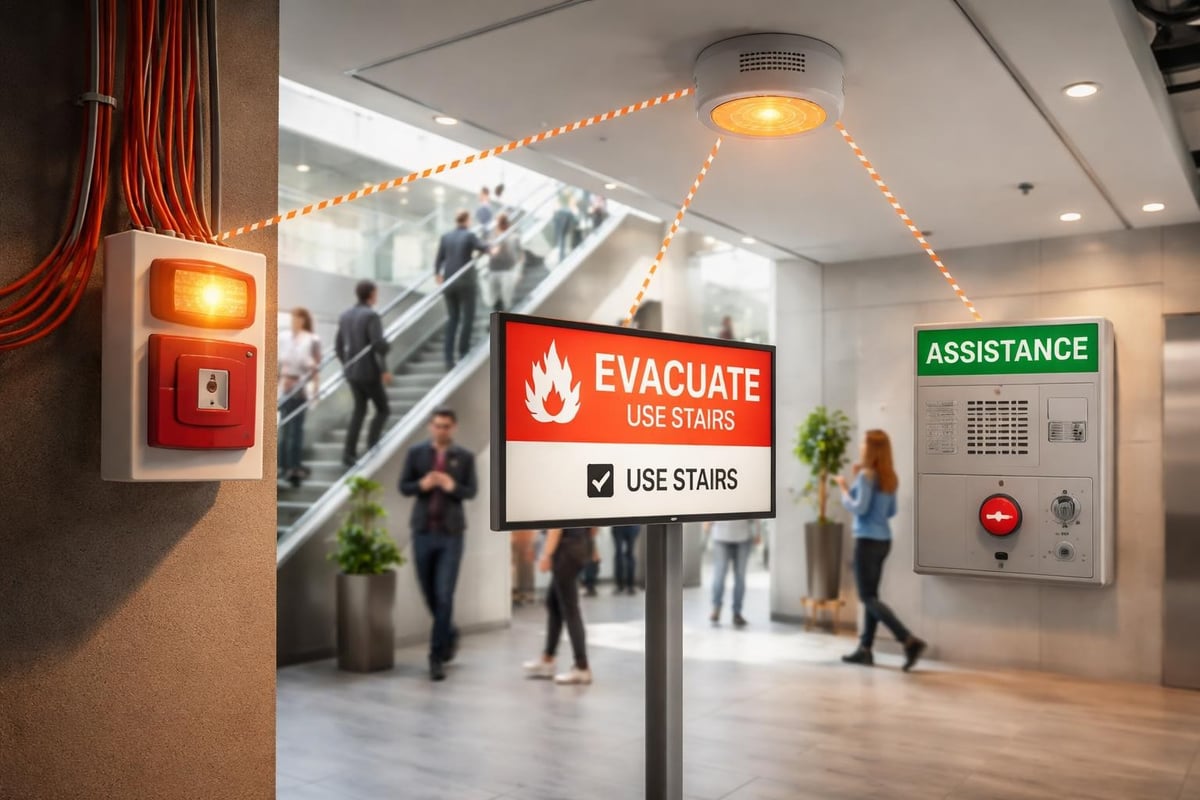
Advanced evacuation alert systems incorporate multiple communication channels including:
- Overhead voice sounders with message playback
- Visual alarm devices for hearing-impaired occupants
- Text message alerts to mobile devices
- Integration with building information screens
- Two-way communication at disabled refuge points
System Design Considerations for Commercial Properties
Effective fire security system design begins with comprehensive risk assessment and thorough understanding of building characteristics. Factors including building height, occupancy type, fire load, compartmentation strategy, and means of escape all influence appropriate system specifications.
The design process must address detection coverage requirements, ensuring all areas receive appropriate monitoring. Circulation spaces, storage areas, plant rooms, and concealed voids all require careful consideration. NFPA 72, the National Fire Alarm and Signaling Code, provides internationally recognised guidance on system design principles, though UK installations must primarily comply with BS 5839.
Critical design elements include:
- Detection device spacing and positioning
- Manual call point accessibility
- Warning device audibility and visibility
- Control panel location and environmental protection
- Cable routing and circuit integrity
- Integration interfaces for building systems
- Monitoring communication redundancy
Working with experienced professionals ensures design compliance whilst optimising system performance for specific operational requirements. Comprehensive commercial fire alarm systems reflect thorough analysis rather than template approaches.
Installation and Commissioning Excellence
Proper installation forms the foundation of reliable fire security system performance. Qualified installers must follow manufacturer specifications, British Standards requirements, and approved design documentation precisely. Cable installation requires particular attention, with fire-resistant cables protecting critical circuits and proper segregation preventing interference from other building systems.
The commissioning process verifies that every installed component functions correctly and the complete system operates as designed. This comprehensive process includes testing every detection device, confirming control panel programming, verifying cause-and-effect relationships, and documenting baseline system performance.
Third-party certification through schemes such as BAFE (British Approvals for Fire Equipment) provides independent verification of installer competence and system compliance. Businesses should prioritise fire protection installations delivered by certified professionals with demonstrated expertise in commercial applications.
Ongoing Maintenance and System Lifecycle Management
Fire security systems require continuous maintenance throughout their operational life to ensure reliable performance. Preventative maintenance schedules address component wear, environmental contamination, and gradual performance degradation. Reactive maintenance addresses faults and alarm investigations promptly to minimise system downtime.
Technological evolution means older systems eventually require updating or replacement to maintain compliance and operational effectiveness. System lifecycle planning addresses:
- Routine maintenance and testing schedules
- Component replacement programmes for aging devices
- Software and firmware updates for intelligent panels
- Capacity expansion as buildings evolve
- Technology refresh strategies for obsolete equipment
Understanding the importance of proper installation, maintenance, and monitoring helps businesses develop comprehensive system lifecycle strategies that balance cost-efficiency with reliable safety performance.
Financial Considerations and Return on Investment
Investing in a comprehensive fire security system represents significant capital expenditure for businesses. However, the financial equation extends beyond initial installation costs to encompass insurance premiums, business continuity protection, regulatory compliance assurance, and potential liability mitigation.
Insurance providers typically offer substantial premium reductions for premises with professionally monitored fire detection systems meeting current standards. These ongoing savings often offset system costs over the installation’s operational life. More importantly, effective fire protection preserves business assets, protects irreplaceable items, and prevents the catastrophic financial consequences of major fire incidents.
| Cost Element | Typical Range | Considerations |
|---|---|---|
| System design | £1,500 – £5,000 | Building complexity and size |
| Equipment supply | £3,000 – £50,000+ | System type and coverage requirements |
| Installation labour | £2,000 – £30,000+ | Access challenges and project scale |
| Commissioning | £500 – £2,000 | Testing scope and documentation |
| Annual maintenance | £400 – £3,000 | System size and contract scope |
| Monitoring services | £200 – £1,200 annually | Service level and communication paths |
Beyond direct costs, businesses must consider operational disruption during installation and the ongoing commitment to testing and maintenance protocols. Comprehensive commercial fire risk assessment informs appropriate investment levels aligned with actual fire risks and regulatory requirements.
Selecting Professional Fire Security System Partners
Choosing the right installation and maintenance partner fundamentally influences fire security system performance and reliability. Businesses should evaluate potential partners on technical competence, industry certifications, project experience, and long-term support capabilities.
Look for providers holding relevant third-party certifications demonstrating commitment to quality and compliance. BAFE accreditation, NSI (National Security Inspectorate) approval, and manufacturer partnerships all indicate professional credibility. Experience with similar building types and occupancies ensures installers understand specific fire risks and regulatory requirements.
References from existing clients provide valuable insight into partner reliability, responsiveness, and overall service quality. Understanding how potential partners handle emergency call-outs, system modifications, and compliance documentation reveals their commitment to ongoing client support beyond initial installation.
Implementing an effective fire security system requires careful planning, professional installation, and disciplined ongoing maintenance to deliver reliable protection for commercial premises. Understanding the technical components, regulatory requirements, and operational considerations enables businesses to make informed decisions about appropriate safety investments. Logic Fire and Security specialises in designing, installing, and maintaining comprehensive fire detection systems tailored to the unique requirements of businesses across the UK, providing the expertise and ongoing support necessary to maintain both compliance and genuine occupant safety throughout your system’s operational life.