

The landscape of commercial security has transformed dramatically over the past decade, with businesses now requiring sophisticated, integrated systems that protect against multiple threats whilst maintaining operational efficiency. A security commercial solution in 2026 encompasses far more than traditional alarm systems, integrating fire detection, access control, surveillance, and monitoring into comprehensive platforms that safeguard people, property, and critical business operations. Understanding the components, standards, and implementation strategies for these systems is essential for any organisation committed to protecting its assets and ensuring regulatory compliance.
Understanding Modern Security Commercial Systems
A security commercial installation represents a significant investment in business continuity and risk management. These systems comprise multiple interconnected technologies designed to detect, prevent, and respond to various threats ranging from unauthorised access to fire emergencies.
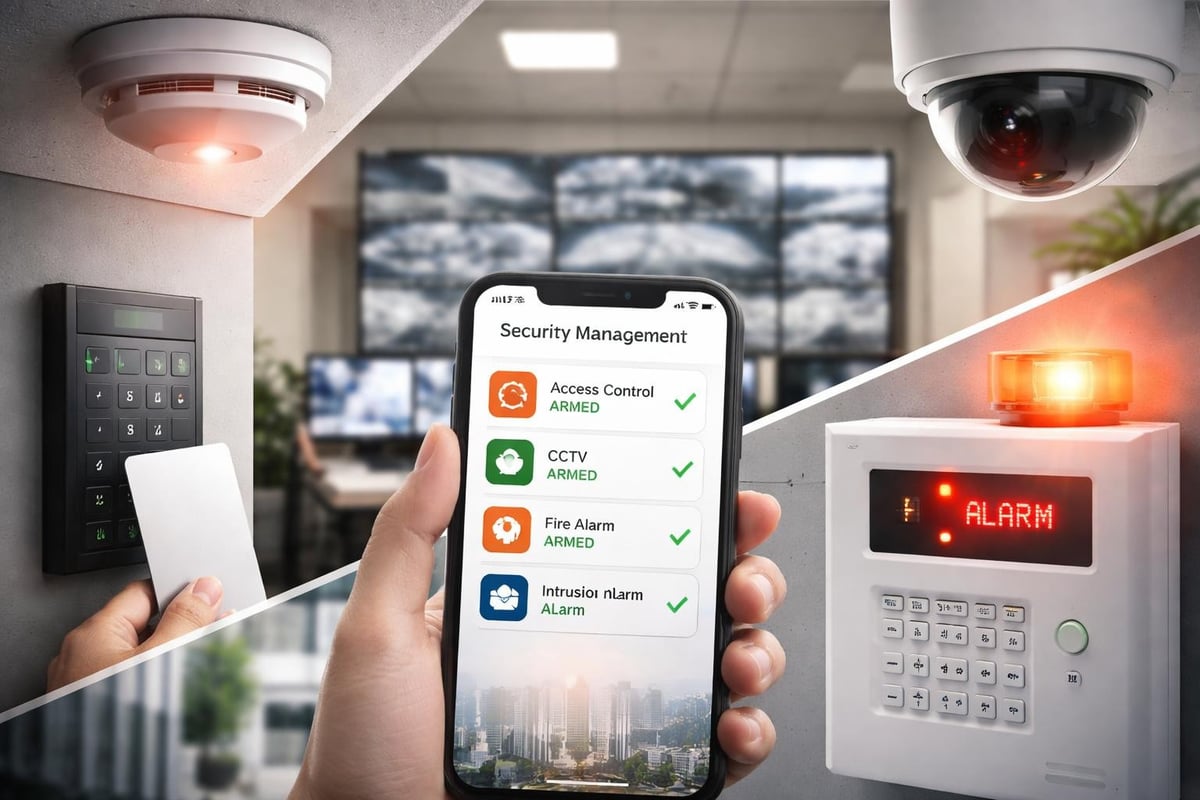
Core components of contemporary systems include:
- Advanced fire detection and alarm systems with intelligent sensors
- Electronic access control managing entry points throughout facilities
- CCTV surveillance with high-definition recording and analytics
- Integrated monitoring platforms providing real-time alerts
- Emergency communication systems for coordinated response
- Cybersecurity measures protecting networked infrastructure
The integration of these elements creates a unified security commercial ecosystem where data flows between systems, enabling faster response times and more informed decision-making. Modern platforms leverage cloud connectivity, artificial intelligence, and machine learning to identify patterns, predict potential incidents, and automate routine functions.
Regulatory Framework and Standards Compliance
Every security commercial project must adhere to stringent regulatory requirements and industry standards. The ISA/IEC 62443 series of standards provides comprehensive guidance on cybersecurity for industrial automation and control systems, increasingly relevant as security infrastructure becomes more networked and vulnerable to digital threats.
Understanding quality and accreditations required within the industry ensures that installations meet both legal obligations and industry best practices. Third-party certification provides independent verification that systems perform as intended and comply with applicable standards.
| Standard | Focus Area | Application to Security Commercial |
|---|---|---|
| BS 5839 | Fire detection and alarm systems | Design and installation requirements |
| BS 8591 | Security monitoring and alarm response | Professional monitoring protocols |
| BS EN 50131 | Intrusion and hold-up alarm systems | Technical specifications for detection |
| ISO 28000 | Supply chain security management | Risk assessment and system integrity |
Designing Effective Security Commercial Infrastructure
The design phase determines the success of any security commercial implementation. A comprehensive security assessment identifies vulnerabilities, evaluates risks, and establishes priorities based on business operations, regulatory requirements, and budget constraints.
Risk Assessment and Planning
Professional security design begins with thorough site surveys examining building layouts, occupancy patterns, asset locations, and potential threat vectors. This analysis informs decisions about sensor placement, camera coverage zones, access control points, and integration requirements.
Commercial fire risk assessment methodologies apply equally to broader security planning, using systematic approaches to identify hazards and implement appropriate safeguards. The assessment considers both internal threats such as employee theft and external risks including burglary, vandalism, and terrorism.
Key design considerations include:
- Coverage adequacy across all vulnerable areas
- Redundancy for critical detection and monitoring functions
- Scalability to accommodate future expansion
- Integration capabilities with existing building systems
- User accessibility balanced against security requirements
- Maintenance access and serviceability
According to best practices for effective security systems in commercial construction, early integration of security planning into building design produces superior results compared to retrofitting systems into completed structures.
Technology Selection and Integration
Choosing appropriate technologies for a security commercial installation requires balancing performance capabilities, reliability, total cost of ownership, and compatibility with other systems. Modern installations increasingly favour IP-based solutions that leverage existing network infrastructure whilst providing enhanced functionality.
Commercial security systems now incorporate intelligent analytics that reduce false alarms, automate routine monitoring tasks, and provide actionable insights from vast amounts of sensor data. Thermal imaging, behaviour analysis, and facial recognition represent just some advanced capabilities available to organisations requiring enhanced protection.
The integration of building access control systems with fire alarm infrastructure ensures that security measures never impede emergency egress whilst maintaining protection during normal operations. This coordination exemplifies the sophisticated orchestration required in contemporary security commercial deployments.
Installation and Commissioning Standards
Professional installation separates effective security commercial systems from those plagued by reliability issues, false alarms, and operational difficulties. Quality installation practices ensure that carefully designed systems perform as intended throughout their operational life.
Professional Installation Requirements
Qualified installers possess both technical expertise and knowledge of applicable standards governing security commercial work. Certification for commercial premises security systems validates installer competency and provides assurance that installations meet safety and performance requirements.
The Security Industry Association outlines various industry standards promoting interoperability and information sharing, essential for creating systems where components from different manufacturers work seamlessly together. These standards reduce vendor lock-in whilst improving system reliability and flexibility.
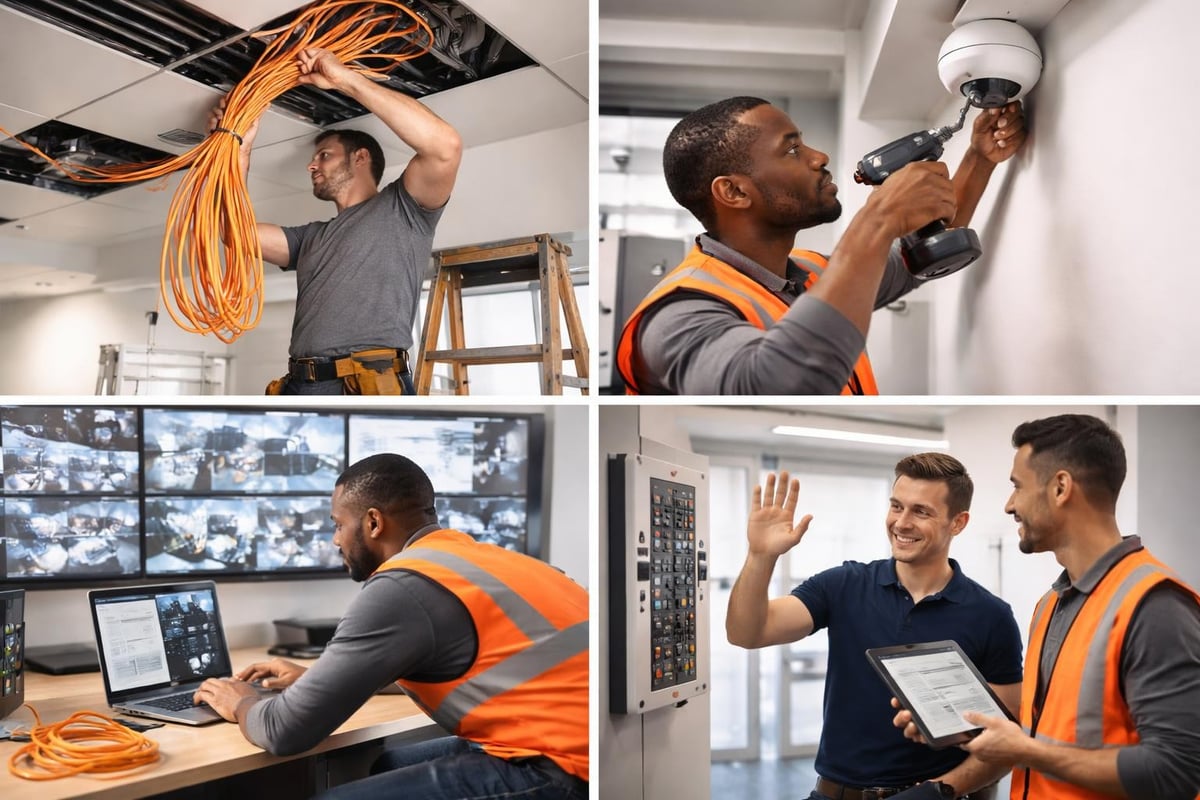
Installation phase activities include:
- Cable routing and termination following manufacturer specifications
- Device mounting ensuring optimal coverage and durability
- Network configuration and cybersecurity hardening
- Integration testing across all system components
- Documentation creation for operational and maintenance reference
- End-user training on system operation and emergency procedures
System Commissioning and Acceptance Testing
Commissioning verifies that every aspect of a security commercial installation functions correctly before handover to the client. This systematic process tests individual devices, subsystem integration, alarm response protocols, and backup systems under various scenarios including simulated emergencies.
Comprehensive commissioning documentation provides baseline performance data essential for ongoing maintenance and troubleshooting. Acceptance testing involves client representatives witnessing system functionality and confirming that deliverables match specifications agreed during the design phase.
Maintenance and Lifecycle Management
Even the most expertly designed and installed security commercial system requires ongoing maintenance to ensure continued reliability and compliance with evolving standards. Preventive maintenance programmes identify potential failures before they compromise protection, whilst regular testing confirms that systems respond appropriately when needed.
Planned Preventive Maintenance Strategies
The NFPA 70B standard provides guidance on preventive maintenance for electrical equipment, principles equally applicable to security commercial infrastructure. Regular inspection schedules based on manufacturer recommendations and operational experience minimise unexpected failures whilst extending equipment lifespan.
Fire alarm testing protocols demonstrate the rigorous verification procedures necessary for life safety systems, approaches that apply across all security commercial equipment. Testing confirms detection sensitivity, alarm notification, communication with monitoring centres, and backup power systems.
| Maintenance Activity | Frequency | Purpose |
|---|---|---|
| Visual inspection | Monthly | Identify obvious damage or tampering |
| Functional testing | Quarterly | Verify detection and alarm operation |
| Communication testing | Quarterly | Confirm monitoring centre connectivity |
| Backup power testing | Semi-annually | Validate battery condition and capacity |
| Full system testing | Annually | Comprehensive verification of all functions |
| Professional servicing | Annually | Detailed inspection and preventive maintenance |
Compliance Documentation and Audit Trails
Security commercial systems serving regulated industries or public buildings must maintain detailed records demonstrating ongoing compliance with applicable standards. Inspection reports, test results, maintenance logs, and incident records create an audit trail proving due diligence in system management.
Advanced fire alarm systems incorporate automatic logging of events, faults, and maintenance activities, simplifying compliance documentation whilst providing valuable data for system optimisation. This historical information identifies recurring issues, informs maintenance scheduling, and supports informed decisions about system upgrades or replacements.
Remote Monitoring and Response Capabilities
Contemporary security commercial installations leverage professional monitoring services that provide continuous oversight and rapid response to alarm conditions. These services transform security systems from reactive detection devices into proactive protection platforms actively managed by trained professionals.
Alarm Monitoring Centre Integration
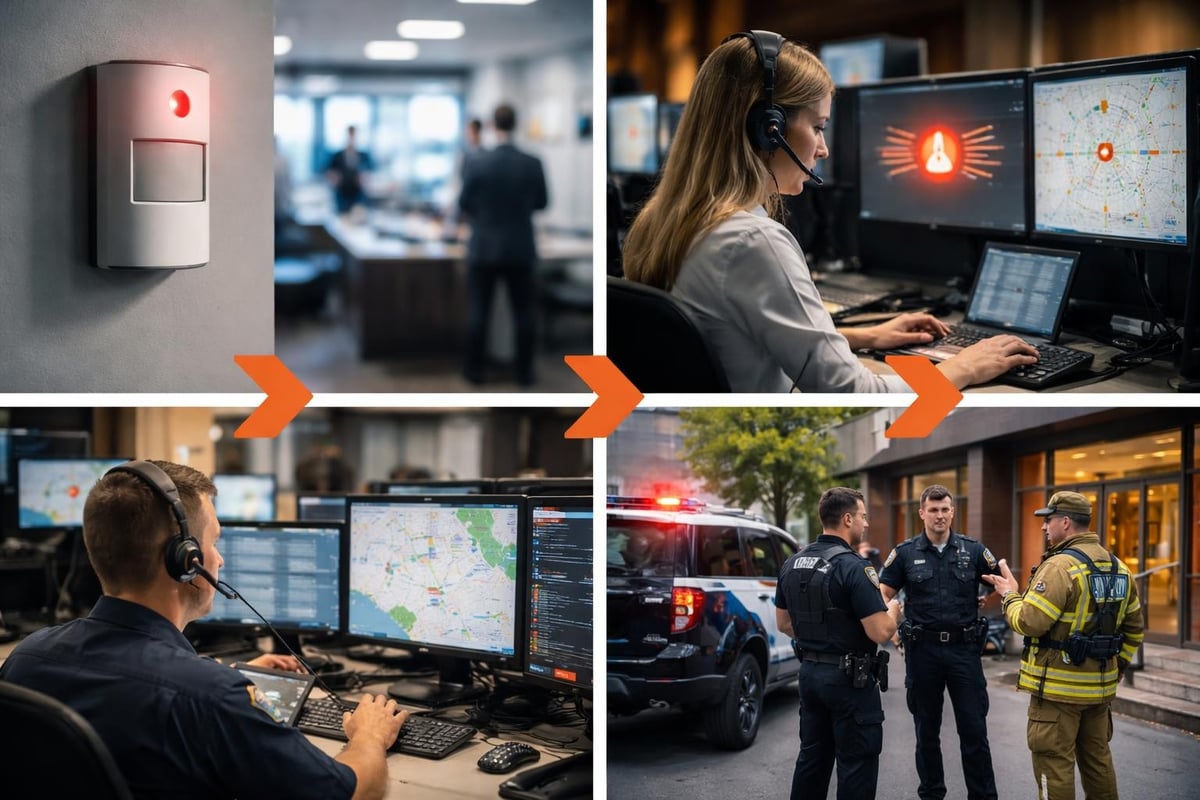
Alarm monitoring systems connect premises equipment to central stations staffed 24/7 by operators following strict protocols for alarm verification and emergency response coordination. This integration provides multiple benefits including faster response times, reduced false alarm dispatches, and professional management of complex incident scenarios.
The comprehensive guide to securing commercial spaces emphasises the importance of integrated monitoring and response planning within overall security strategies. Monitoring centres serve as the operational hub coordinating responses between security systems, emergency services, and facility management teams.
Monitoring centre services typically include:
- Continuous supervision of alarm conditions
- Verification protocols reducing false alarm responses
- Emergency services dispatch coordination
- Escalation procedures for different alarm types
- Remote system diagnostics and troubleshooting
- Regular testing and compliance reporting
Remote Management and Diagnostics
Advanced security commercial platforms enable remote system management, allowing authorised personnel to modify configurations, review system status, and troubleshoot issues without physical site visits. This capability reduces operational costs whilst improving response times for system adjustments and fault resolution.
Remote CCTV monitoring exemplifies the power of networked security infrastructure, enabling security personnel to observe multiple sites simultaneously and respond to developing situations in real-time. Cloud-based management platforms extend these capabilities across entire security commercial portfolios, providing centralised oversight of distributed installations.
Cybersecurity Considerations for Networked Systems
As security commercial infrastructure becomes increasingly connected, cybersecurity emerges as a critical concern. Systems designed to protect physical assets become potential vulnerabilities if inadequately secured against digital threats.
Securing Networked Infrastructure
Network segmentation isolates security systems from general IT infrastructure, limiting potential attack vectors whilst maintaining necessary connectivity for monitoring and management functions. Firewalls, encrypted communications, and secure authentication protocols protect against unauthorised access and data interception.
The security systems best practices document outlines comprehensive approaches to system security including regular software updates, password policies, and access control measures. These practices apply equally to traditional IT infrastructure and specialised security commercial equipment.
Essential cybersecurity measures include:
- Regular firmware and software updates addressing known vulnerabilities
- Strong authentication requiring complex passwords and multi-factor verification
- Encrypted communications between devices and monitoring centres
- Network monitoring detecting unusual activity patterns
- Backup systems protected against ransomware and data corruption
- Incident response plans addressing potential security breaches
Balancing Connectivity and Security
Security commercial systems must balance the benefits of connectivity against associated risks. Careful network design, ongoing monitoring, and regular security audits identify and address vulnerabilities before they can be exploited.
Commercial intruder alarm systems increasingly incorporate network connectivity for remote management and monitoring, requiring robust cybersecurity measures to prevent these protective systems becoming entry points for malicious actors. The same vigilance applied to protecting physical premises must extend to the digital infrastructure supporting modern security platforms.
Integrated Fire and Security Solutions
The convergence of fire detection and electronic security creates comprehensive protection platforms where multiple systems work in coordinated fashion. This integration delivers benefits beyond individual system capabilities, improving emergency response whilst reducing overall infrastructure costs.
Unified Management Platforms
Modern security commercial installations increasingly deploy unified platforms managing fire detection, access control, surveillance, and communications through single interfaces. These systems provide holistic situational awareness, enabling security personnel to understand complex incident scenarios involving multiple systems.
Commercial fire alarm systems integrated with access control ensure that all egress points automatically unlock during fire conditions whilst maintaining security during normal operations. This coordination exemplifies the sophisticated system interaction possible with contemporary integrated platforms.
The ISO 28000 standard specifies requirements for security management systems including supply chain aspects, relevant to organisations managing complex security commercial portfolios across multiple sites. Integrated platforms facilitate compliance through centralised management, consistent procedures, and comprehensive documentation.
Benefits of Integrated Approaches
Integration reduces infrastructure duplication, with shared network cabling, backup power systems, and monitoring equipment serving multiple protective functions. This efficiency translates to lower installation costs, reduced maintenance requirements, and simplified operator training.
Integration advantages include:
- Reduced false alarms through cross-system verification
- Faster emergency response with coordinated system actions
- Lower total cost of ownership through shared infrastructure
- Simplified management with unified interfaces and reporting
- Enhanced functionality through system interaction
- Improved compliance documentation from centralised platforms
Future Trends in Security Commercial Technology
The security commercial sector continues evolving rapidly, with emerging technologies promising enhanced capabilities whilst introducing new considerations for system designers, installers, and operators.
Artificial intelligence and machine learning transform video surveillance from passive recording systems into active monitoring platforms identifying suspicious behaviours, counting occupants, and detecting operational anomalies. These capabilities reduce operator workload whilst improving detection accuracy and response effectiveness.
Cloud-based architectures shift processing and storage from on-premises equipment to distributed platforms, offering scalability, resilience, and accessibility benefits whilst introducing dependency on network connectivity and external service providers. Hybrid approaches combining local processing with cloud capabilities balance these considerations for security commercial applications.
| Emerging Technology | Application | Considerations |
|---|---|---|
| AI video analytics | Behaviour detection, object recognition | Processing requirements, privacy concerns |
| Cloud platforms | Remote management, data storage | Connectivity dependency, subscription costs |
| Biometric access | Enhanced authentication | Privacy regulations, template security |
| Drone surveillance | Large site monitoring | Regulatory compliance, operational complexity |
| IoT sensors | Environmental monitoring | Network capacity, cybersecurity |
Environmental sensors monitoring air quality, temperature, and humidity expand security commercial systems beyond traditional protection functions, supporting facilities management and regulatory compliance initiatives. This convergence creates platforms addressing multiple operational requirements through integrated infrastructure.
Implementing effective security commercial solutions requires careful planning, professional installation, and ongoing maintenance to deliver reliable protection throughout system lifecycles. As business security threats continue evolving, organisations need partners who understand the complexities of modern integrated systems and can provide comprehensive support from initial design through decades of operational service. Logic Fire and Security brings extensive experience designing, installing, and maintaining advanced fire detection and security systems for businesses across the UK, offering the expertise and commitment to excellence that Blue Chip companies and public agencies trust to protect their critical operations.