

In 2026, advanced fire alarm systems are revolutionising building safety. Are you ready to future-proof your premises and protect what matters most?
This expert guide explores everything you need to know about choosing, implementing, and maintaining an advanced fire alarm system for your business or property. Discover the latest technologies, compliance standards, and best practices essential for staying ahead.
With rising fire safety risks and stricter regulations, innovative solutions offer better detection, fewer false alarms, and easier integration. Learn how cost savings, enhanced safety, and regulatory compliance can benefit your premises.
Now is the time to assess your current fire protection and consider an upgrade to an advanced fire alarm system.
The Evolution of Fire Alarm Systems: Trends and Innovations for 2026
The world of fire detection is advancing rapidly, transforming how organisations protect people and property. The advanced fire alarm system is now at the heart of modern safety strategies, bringing together the latest technologies and compliance standards. To stay ahead, business owners and property managers must understand the shift from legacy equipment to intelligent, future-ready solutions.
Key Developments in Fire Detection Technology
Traditional fire alarm systems relied on basic smoke or heat detectors and simple control panels. Today, the advanced fire alarm system is defined by addressable and wireless technologies, giving each device a unique identity and allowing precise pinpointing of hazards. Hybrid and networked systems are now common, especially in complex buildings where flexibility and resilience are essential.
AI and IoT integration are propelling predictive detection, enabling remote monitoring and early intervention. Enhanced sensors such as multi-criteria detectors and aspirating systems like VESDA deliver greater sensitivity and fewer false alarms. Smart analytics further reduce nuisance activations, improving reliability. For instance, the Apollo XP95 addressable range is widely used in commercial environments for its adaptability and robust event logging.
Market Insights and Industry Statistics
The UK market is seeing a surge in advanced fire alarm system adoption, driven by demand for wireless and hybrid solutions in both new builds and retrofits. Over 60 countries now utilise addressable systems, reflecting their global appeal. Regulatory updates, such as the changes to BS 5839-1:2023 and the push for BAFE certification, are shaping procurement decisions and installation standards.
Businesses are also attracted by lower wiring and installation costs, as well as the flexibility these systems offer for future upgrades. The use of event logs and remote diagnostics is streamlining maintenance and compliance checks. For the latest on regulatory changes, see the BSI announces updated fire safety standard for fire alarm systems for non-domestic premises.
Future-Proofing with Advanced Fire Alarm Systems
Future-proofing your premises is crucial as fire safety regulations and risks continue to evolve. An advanced fire alarm system should offer scalability to support business growth and changing layouts. Innovations in user interfaces, such as touchscreen panels and smart notifications, make operation and management more intuitive.
Compatibility with building management and security systems is now standard, enabling centralised control and coordinated emergency responses. Anticipated regulatory changes for 2026 will likely require even greater system integration and adaptability. Investing in the right technology today ensures ongoing protection, compliance, and peace of mind for years to come.
Types of Advanced Fire Alarm Systems Explained
Understanding the various types of advanced fire alarm system is vital for effective building protection. With technology advancing rapidly, selecting the right system can seem daunting. Let us break down the options, components, and key considerations for your premises.
Conventional, Addressable, and Wireless Systems
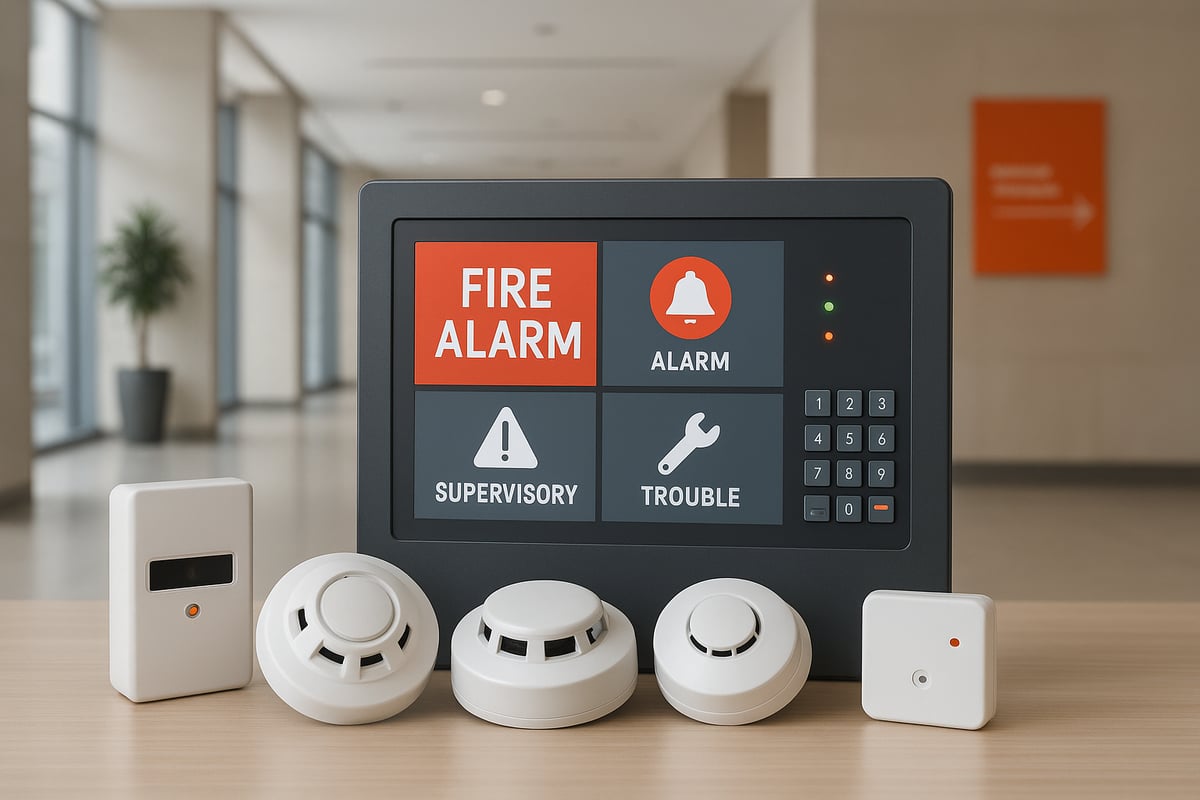
There are three main categories of advanced fire alarm system: conventional, addressable, and wireless. Each offers distinct advantages and is suited to different environments.
- Conventional systems are cost-effective for small sites. Devices are grouped by zones, so an alarm identifies the general area but not the exact device.
- Addressable systems assign each detector a unique address, enabling pinpoint identification of alarms or faults. These are ideal for larger or more complex buildings.
- Wireless systems use radio signals, making installation quick and minimally disruptive. They are especially useful for historic or listed buildings where cabling is impractical.
For a comprehensive comparison, see Types of fire alarm systems. The choice between these systems often depends on the building size, complexity, and installation constraints.
A summary table helps clarify the differences:
| System Type | Device Identification | Installation | Typical Use |
|---|---|---|---|
| Conventional | By zone | Wired | Small offices, shops |
| Addressable | Individual device | Wired | Hospitals, airports |
| Wireless | Individual device | Wireless | Heritage sites |
System Components and How They Work
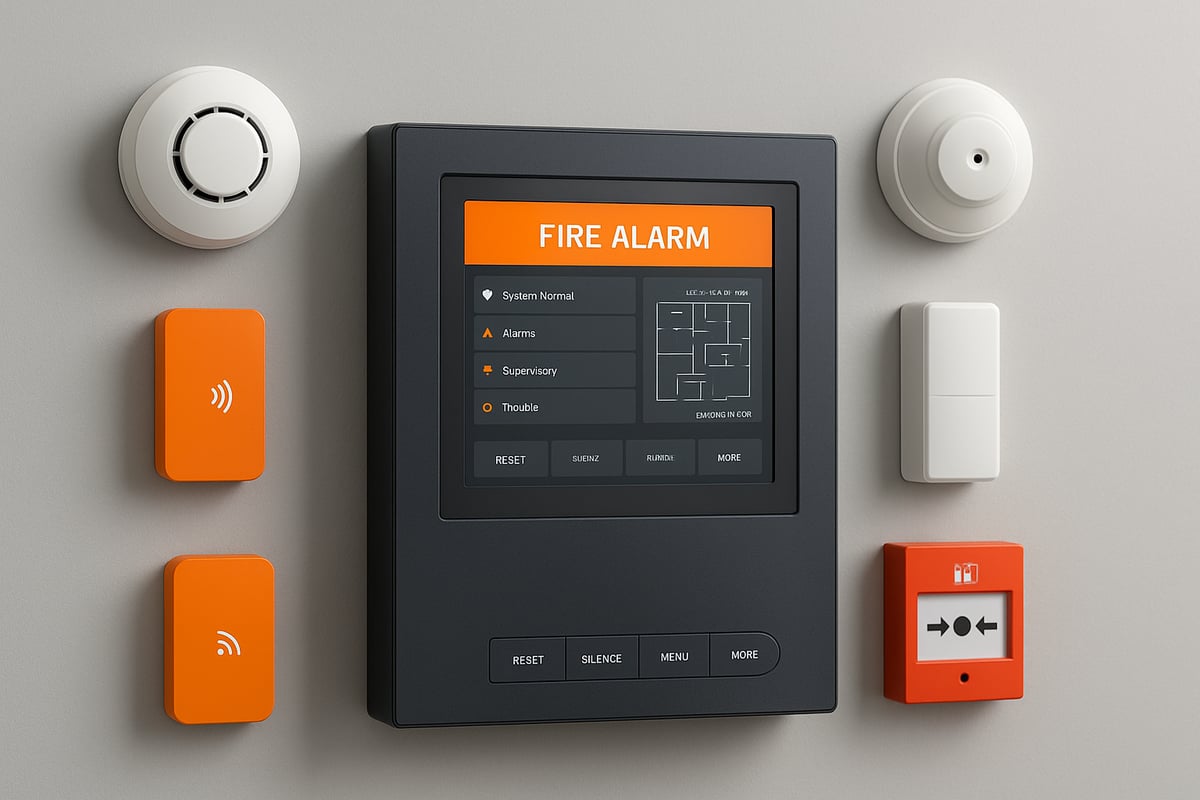
Every advanced fire alarm system relies on a combination of components working in harmony. The key elements include:
- Control panel: the system’s brain, managing all devices and alerts.
- Detectors: smoke, heat, and beam detectors sense various fire conditions.
- Manual call points: allow occupants to trigger the alarm.
- Sounders and beacons: provide audible and visual alerts.
- Interfaces and modules: connect to lifts, plant equipment, or building management systems.
The Apollo XP95 range, for example, offers smoke and heat detectors, sounder beacons, and I/O modules. These can be configured using ring-type wiring, which ensures the system remains functional even if a cable is damaged. Event logging and programmable cause/effect functions (such as automatic lift grounding) further enhance reliability and response.
Choosing the Right System for Your Premises
Selecting the best advanced fire alarm system requires careful assessment of several factors:
- Building size and layout
- Occupancy and risk profile
- Regulatory and insurance requirements
- Potential for future expansion
While addressable systems may entail higher initial costs, they often reduce wiring expenses and offer superior flexibility. Wireless systems are ideal where installation speed and minimal disruption are priorities. Industry examples include the use of Advanced and Apollo systems in hospitals, shopping centres, and airports, where scalability and adaptability are essential.
The right system not only protects lives and assets, it also ensures compliance and supports business continuity.
Step-by-Step Guide: Designing and Installing an Advanced Fire Alarm System
Designing and installing an advanced fire alarm system is a multi-stage process that requires precision, expertise, and strict adherence to safety standards. Each step plays a crucial role in ensuring the system is both effective and compliant.
Step 1: Site Survey and Risk Assessment
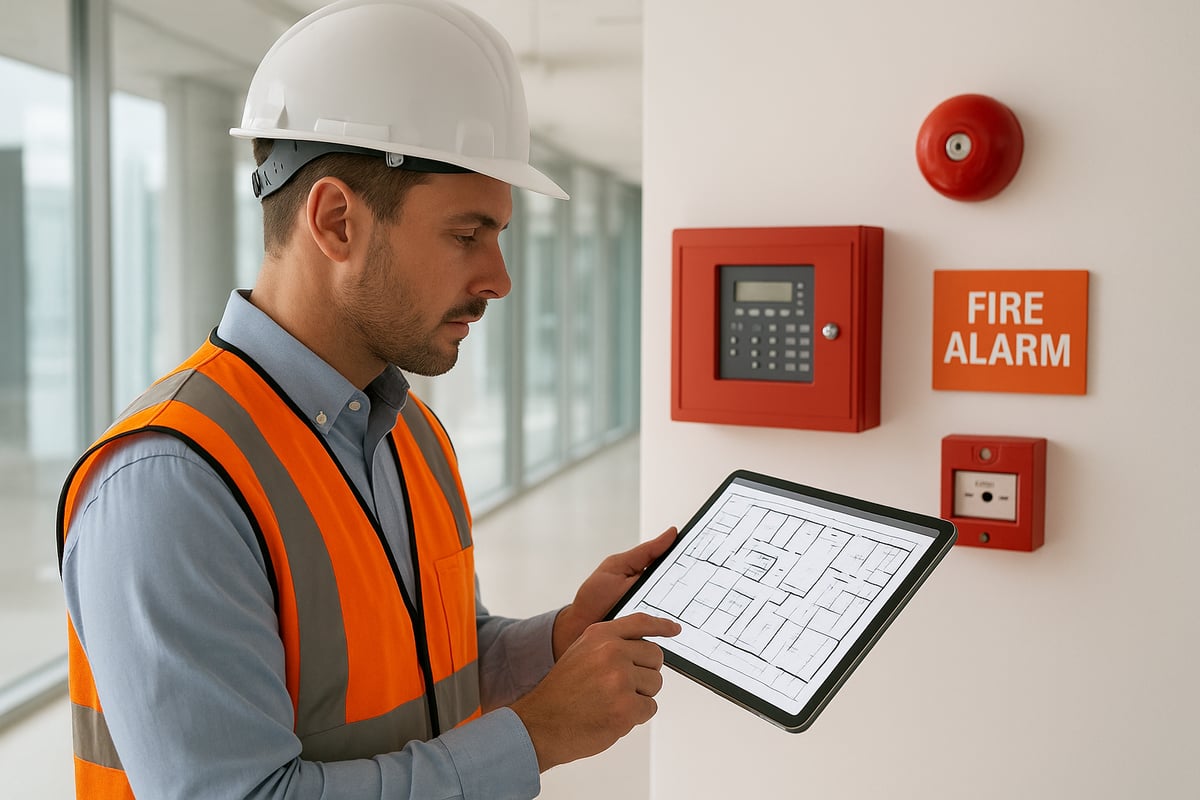
Every advanced fire alarm system begins with a detailed site survey by a qualified professional. This assessment identifies hazards, escape routes, and high-risk areas throughout the building.
During the survey, specialists consider the building’s structure, occupancy, and operational needs. They also review legal requirements and relevant fire safety regulations to ensure full compliance from the outset.
Step 2: System Design and Specification
Once the risk assessment is complete, the next phase is the system design. Engineers create detailed drawings and zone layouts, selecting the most suitable advanced fire alarm system type and components for the premises.
They ensure the design aligns with the latest standards, such as BS 5839-1:2023, and any insurance requirements. This stage involves collaborating with stakeholders to address unique site challenges and future expansion needs.
Step 3: Quotation and Client Approval
A transparent quotation is provided, covering equipment, installation, and ongoing maintenance. Clients can expect a clear breakdown of costs, including options for system features or upgrades.
Many providers offer a free site survey and tailored quotation, helping businesses make informed decisions about their advanced fire alarm system investment.
Step 4: Pre-Installation Checks and Planning
Before installation, the project team verifies site readiness and confirms any changes since the initial survey. This step ensures a smooth installation process with minimal disruption to daily operations.
Scheduling is coordinated with the client, allowing for flexibility around business hours or critical activities within the building.
Step 5: Installation and Commissioning
Accredited engineers carry out the installation of the advanced fire alarm system, following industry best practices. Every device, from detectors to sounders, is tested to guarantee correct operation and integration.
After installation, the team demonstrates the system to the client, ensuring they understand its features, controls, and response protocols. Essential documentation, such as log books and operator manuals, is provided along with compliance certification.
Step 6: Handover and Training
With the system commissioned, the next priority is staff training. Clear instructions are given on how to operate the advanced fire alarm system and respond in case of an emergency.
Zone layout drawings and manuals are mounted onsite for quick reference. This step empowers staff to act confidently and efficiently during real incidents.
Step 7: Ongoing Support and Maintenance Planning
To maintain optimal performance, a maintenance schedule is established, often involving six-monthly visits. Providers typically offer 24/7 support and emergency response to keep the advanced fire alarm system fully operational.
For more on best practices, see Fire alarm system inspections, which covers the importance of regular checks and compliance.
By following this structured approach, businesses can ensure their advanced fire alarm system is not only compliant but also robust, scalable, and ready for future challenges.
Compliance, Certification, and Regulatory Considerations for 2026
Staying compliant with current and upcoming regulations is fundamental for any advanced fire alarm system. As fire safety standards evolve, businesses and property managers must adapt to maintain legal, insurance, and operational integrity.
UK Fire Safety Legislation and Standards
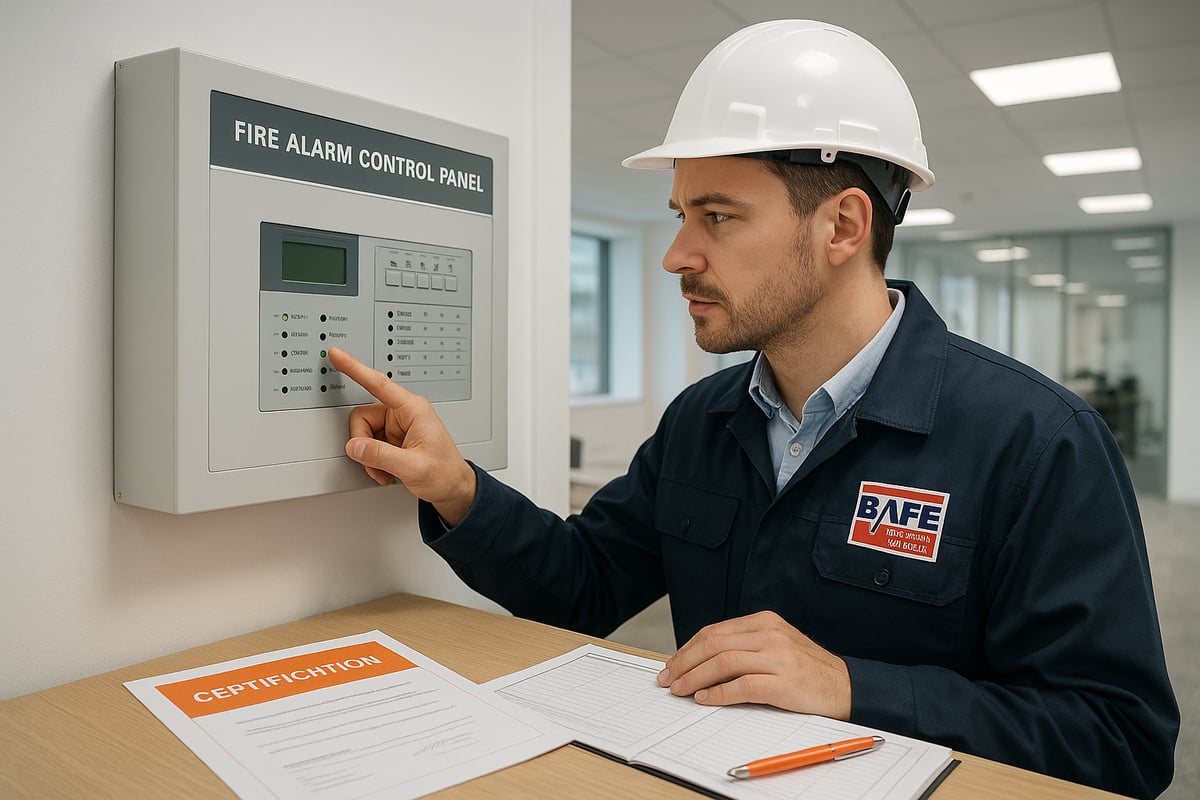
The UK regulatory landscape for fire safety is shaped by the Regulatory Reform (Fire Safety) Order 2005 and the updated BS 5839-1:2023 standard. These frameworks set out the requirements for the design, installation, and ongoing management of any advanced fire alarm system.
Accreditations such as BAFE and NSI Gold are essential for demonstrating compliance and quality assurance. Partnering with a provider who meets these standards, as detailed in the Fire safety compliance standards, ensures your advanced fire alarm system is installed and maintained to the highest benchmarks.
Key points:
- Use only certified professionals for design, installation, and maintenance.
- Ensure your system meets BS 5839-1:2023.
- Regularly review changes in legislation and standards.
Documentation and Record-Keeping
Proper documentation is a legal and insurance requirement for every advanced fire alarm system. Keeping up-to-date log books, operator manuals, and zone layout drawings on site is essential.
Insurers and authorities may request these documents during audits or after an incident. For example, some providers issue comprehensive documentation packs upon handover, covering all aspects of the system.
Required records include:
- Log books of tests, faults, and maintenance visits.
- Operator manuals and system schematics.
- Certificates of commissioning and ongoing compliance.
Maintaining this paperwork not only supports compliance, but also streamlines audits and emergency response.
Meeting Insurance and Risk Management Needs
Insurance companies increasingly require proof that an advanced fire alarm system meets current standards and is regularly serviced. Failure to comply can result in fines, liability issues, or invalidated insurance cover.
Remote diagnostics and event logs help demonstrate compliance and proactive maintenance, making audits more efficient. These features also reduce the risk of non-compliance by providing real-time system status and historical data.
To secure insurance approval and reduce risk:
- Schedule regular maintenance and inspections.
- Use systems with robust event logging and remote monitoring.
- Keep all certification and test records readily accessible.
Proactive compliance safeguards both your assets and your reputation.
Integrating Fire Alarm Systems with Security and Building Management
Integrating an advanced fire alarm system with your security and building management infrastructure is becoming essential for future-ready premises. Modern buildings demand seamless communication between fire detection, access control, and management systems to ensure swift, coordinated responses during emergencies.
This approach not only streamlines incident management but also enhances safety and operational efficiency. With integration, businesses can centralise building intelligence, automate emergency procedures, and reduce manual intervention.
Benefits of System Integration
Combining your advanced fire alarm system with security and building management systems delivers several clear benefits:
- Improved situational awareness through unified alerts and real-time data.
- Faster, coordinated emergency responses, such as automatic door releases or plant shutdowns.
- Centralised monitoring, reducing operational complexity and staff workload.
This integration enables automated cause and effect programming, ensuring that when the advanced fire alarm system is triggered, related actions like shutting down lifts or unlocking exits occur instantly. The result is a safer environment and more efficient compliance with regulations.
Technologies Enabling Integration
Modern technologies have made integration more accessible and robust than ever. Open protocol panels and network interfaces allow various systems to communicate, regardless of manufacturer. Internet of Things (IoT) connectivity and smart notifications enable remote monitoring and management from anywhere.
For a more detailed look into how these solutions work, see Integrating fire and security systems. These advancements ensure your advanced fire alarm system operates in unison with CCTV, access control, and intruder alarms, maximising overall protection.
Example Scenarios and Use Cases
Integrated systems are already transforming safety protocols in complex environments:
- In hospitals, the advanced fire alarm system automatically grounds lifts and coordinates evacuation.
- Offices use integration to release access-controlled doors, allowing safe egress during fire events.
- Warehouses benefit from automatic plant shutdown and instant CCTV activation upon alarm, minimising downtime and damage.
These scenarios show how integration tailors responses to each site’s unique requirements, enhancing both safety and operational continuity.
Logic Fire and Security: Your UK Partner for Advanced Fire Alarm Solutions
Logic Fire and Security specialises in designing, installing, and maintaining advanced fire alarm system solutions nationwide. Accredited to BAFE, NSI Gold, and other leading standards, they deliver compliance and peace of mind.
Their expertise extends to seamless integration with security and building management systems, supporting blue-chip clients and public agencies alike. With free site surveys, bespoke design, and 24/7 support, Logic Fire and Security ensures your advanced fire alarm system remains future-proof, effective, and compliant.
Maintenance, Monitoring, and Future-Proofing Your Fire Alarm System
Caring for your advanced fire alarm system is not just about ticking boxes, it is about safeguarding lives and assets. Proactive maintenance, continuous monitoring, and forward-thinking upgrades will keep your system reliable, compliant, and ready for the future.
Routine Maintenance and Testing
Regular inspections are a legal requirement for any advanced fire alarm system in the UK. Systems in commercial premises typically need checking every six months, or more frequently in larger or high-risk environments.
Preventative maintenance helps reduce false alarms, system failures, and costly downtime. Modern systems use remote diagnostics and event logs to identify issues before they escalate, supporting a proactive approach.
Staying up to date with the latest standards is crucial. For example, FIA publishes guidance on BS 5839-1:2025 fire alarm system changes to help businesses maintain compliance and adapt maintenance routines as regulations evolve.
24/7 Monitoring and Emergency Response
Professional monitoring services provide round-the-clock protection for your premises. When an advanced fire alarm system detects an incident, the monitoring centre is immediately alerted, ensuring rapid communication with emergency services.
Integration with central stations and emergency responders minimises response times and supports coordinated evacuation. Many modern systems enable remote status checks and notifications, adding an extra layer of reassurance for property managers and tenants.
Upgrading and Expanding Existing Systems
Knowing when to upgrade your advanced fire alarm system is vital for ongoing compliance and security. Changes in building use, occupancy, or legislation can all trigger the need for enhanced coverage or new technologies.
Addressable and wireless solutions allow you to add new devices or zones with minimal disruption. This flexibility is especially important for growing businesses or multi-site portfolios. According to the Fire Detection Alarm System Market | Size, Share, Volume 2025 to 2032, demand for scalable, future-ready systems is set to rise as AI and IoT become industry standards.
Cost Management and Lifecycle Planning
Investing in an advanced fire alarm system is a balance between initial spend and long-term efficiency. While addressable systems may have higher upfront costs, they often deliver savings through reduced wiring, fewer false alarms, and easier maintenance.
Plan for ongoing expenses, including routine servicing, future upgrades, and system expansion. Many organisations choose scalable solutions to support growth without major reinvestment. This strategic approach ensures your protection keeps pace with business change, while controlling total cost of ownership.
As you look ahead to 2026 and consider the evolving landscape of fire safety, it’s clear that advanced fire alarm systems are essential for protecting your people and property. Whether you’re navigating new compliance standards or exploring the latest innovations, you don’t have to do it alone. We’re here to help you assess your needs, identify the right solutions, and ensure your building stays safe and compliant for years to come. If you’d like expert advice tailored to your premises, why not Get a Free Site Survey? Let’s work together to future proof your fire safety strategy.