


Security detection represents the critical first line of defence for commercial premises across the United Kingdom. As businesses face increasingly sophisticated threats to their physical and digital infrastructure, the ability to identify potential dangers before they escalate has become paramount. From fire hazards to unauthorised access attempts, modern security detection systems employ multiple technologies and methodologies to safeguard personnel, assets, and operations. For organisations ranging from manufacturing facilities to corporate headquarters, understanding the comprehensive landscape of security detection is essential for maintaining business continuity and regulatory compliance.
The Foundation of Security Detection Systems
Security detection encompasses a broad spectrum of technologies designed to identify anomalies, threats, and potential hazards within commercial environments. These systems operate continuously, analysing data from multiple sources to distinguish between normal activity and events requiring immediate attention.
At its core, security detection relies on sensors, monitoring equipment, and intelligent algorithms working in concert. Fire detection systems utilise heat and smoke sensors strategically positioned throughout buildings, whilst intrusion detection monitors entry points and restricted areas. Modern installations integrate these capabilities, creating layered protection that addresses multiple threat vectors simultaneously.
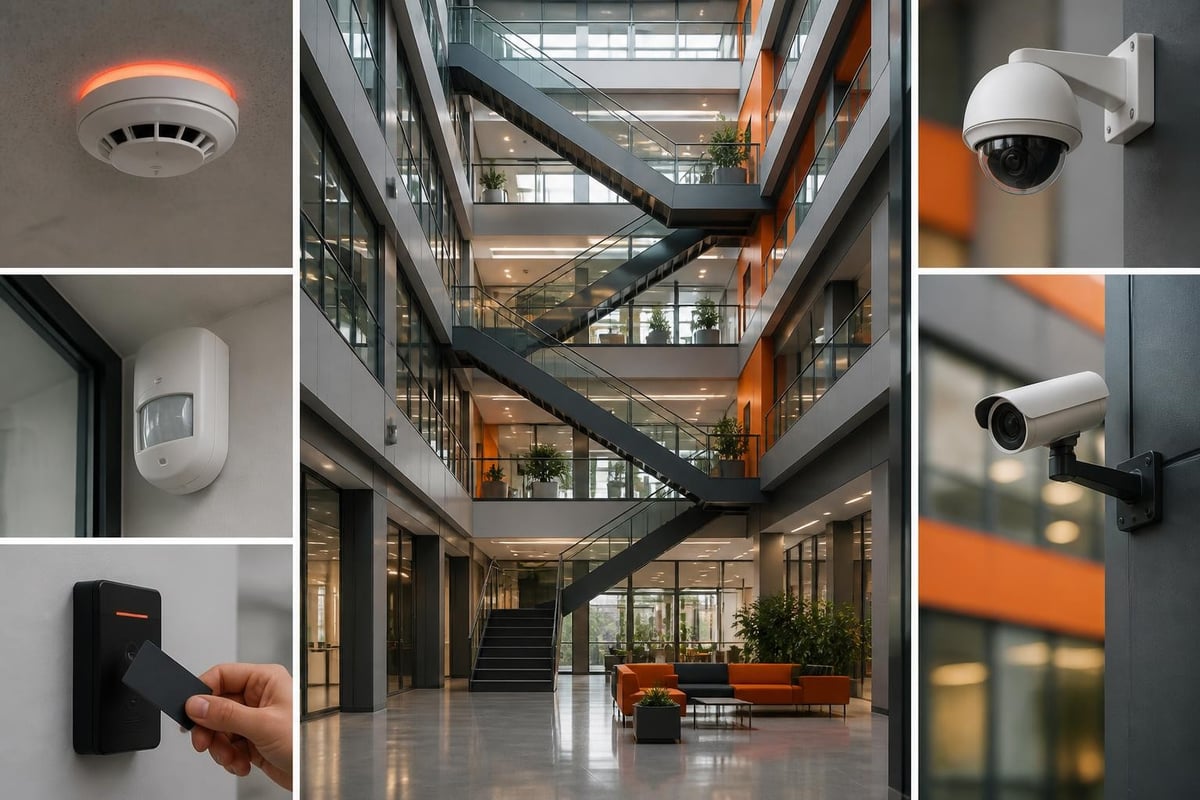
The sophistication of contemporary security detection has evolved dramatically over recent years. Traditional standalone systems have given way to interconnected networks that share intelligence across platforms. This integration enables faster response times and more accurate threat assessment, particularly valuable for commercial fire detection systems where every second matters.
Physical Security Detection Technologies
Fire Detection Systems
Fire detection remains one of the most critical security detection applications for commercial premises. Modern systems employ multiple detection methods:
- Ionisation smoke detectors identify combustion particles invisible to the human eye
- Photoelectric sensors detect smouldering fires through light scattering technology
- Heat detectors monitor temperature changes and rate-of-rise indicators
- Multi-sensor devices combine several detection methods for improved accuracy
- Aspirating systems continuously sample air quality in high-value areas
These technologies must comply with British Standards and undergo regular maintenance to ensure reliability. The placement of detectors follows stringent guidelines based on room dimensions, ceiling heights, and occupancy patterns.
Intrusion Detection Systems
Unauthorised access detection protects assets and personnel through various sensing technologies. Intrusion detection systems monitor perimeters, entry points, and internal spaces using passive infrared sensors, microwave detectors, and glass break sensors. These systems distinguish between legitimate activity and potential security breaches through sophisticated signal processing.
Modern commercial access control systems integrate biometric readers, proximity cards, and PIN entry to verify authorised personnel whilst maintaining comprehensive audit trails. When coupled with intrusion detection, these systems create robust barriers against unauthorised entry whilst facilitating smooth operation for legitimate users.
Threat Detection and Response Frameworks
Understanding security threat detection requires examining both the identification process and subsequent response protocols. Security detection systems generate alerts based on predefined parameters, but the value lies in how organisations process and act upon this intelligence.
Detection Rule Configuration
Effective security detection depends on properly configured detection rules that balance sensitivity with false alarm prevention. Rules must account for:
- Environmental factors such as ambient temperature variations and air movement patterns
- Operational schedules distinguishing between occupied and unoccupied periods
- Zone-specific requirements tailored to different areas within facilities
- Escalation protocols defining appropriate responses to various threat levels
- Integration points connecting detection systems with access control and monitoring platforms
Organisations working with experienced UK security contractors benefit from expertise in optimising these parameters for specific operational contexts.
Monitoring and Alert Management
Security detection generates substantial data requiring intelligent filtering and prioritisation. Business security monitoring services provide professional oversight, ensuring alerts receive appropriate attention regardless of time or day.
| Detection Type | Response Time Target | Escalation Level | Monitoring Approach |
|---|---|---|---|
| Fire Alarm | Immediate (< 30 seconds) | Critical | 24/7 professional monitoring |
| Intrusion Alert | 1-2 minutes | High | Automated verification + human assessment |
| Access Violation | 2-5 minutes | Medium | Logged review with supervisor notification |
| Equipment Fault | 24 hours | Low | Scheduled maintenance review |
Modern monitoring centres employ artificial intelligence to correlate events across multiple systems, identifying patterns that might escape individual sensor analysis. This holistic approach reduces false positives whilst improving genuine threat detection rates.
Advanced Detection Technologies and Methodologies
The evolution of security detection continues accelerating as new technologies emerge. Organisations must balance innovation with proven reliability, particularly in mission-critical applications where detection failures carry serious consequences.
Cloud-Based Detection Platforms
Cloud infrastructure has transformed security detection capabilities, enabling scalability and intelligence previously unattainable with traditional on-premise systems. AWS detection and response services exemplify how cloud platforms continuously analyse activity across distributed facilities, identifying anomalies through machine learning algorithms.
For commercial premises with multiple locations, cloud-based security detection provides centralised visibility whilst maintaining local autonomy. This architecture ensures detection continues operating even during network disruptions, with automatic synchronisation once connectivity restores.

Artificial Intelligence in Detection Systems
Artificial intelligence enhances security detection through pattern recognition and predictive analytics. Systems learn normal operational baselines, flagging deviations that traditional rule-based detection might miss. This capability proves particularly valuable in complex environments where legitimate activities vary significantly.
Key AI Applications:
- Facial recognition for access control verification
- Behavioural analysis identifying unusual movement patterns
- Predictive maintenance forecasting equipment failures before they occur
- Video analytics detecting crowd formation or abandoned objects
- Environmental monitoring identifying gradual changes suggesting developing hazards
The threat detection frameworks employed by leading technology providers demonstrate how AI augments human security personnel rather than replacing them, handling routine monitoring whilst escalating unusual events for expert assessment.
Integration with Fire Safety Infrastructure
Security detection systems achieve maximum effectiveness through integration with broader fire safety and protection infrastructure. This convergence creates unified command and control platforms managing multiple protection layers from single interfaces.
Multi-System Coordination
Modern commercial fire alarm systems coordinate with numerous building systems during emergency events:
- HVAC systems automatically adjust to prevent smoke spread
- Elevator controls recall lifts to designated floors
- Door release mechanisms unlock emergency exits whilst securing sensitive areas
- Public address systems broadcast evacuation instructions
- Emergency lighting activates along escape routes
- Suppression systems deploy extinguishing agents in appropriate zones
This orchestration requires sophisticated security detection logic ensuring appropriate responses across varied scenarios. For instance, kitchen suppression systems activate localised fire suppression without triggering building-wide evacuation unnecessarily.
Compliance and Standards Adherence
Security detection installations must comply with extensive regulatory requirements. British Standards specify minimum detection capabilities, equipment specifications, installation practices, and maintenance schedules. Organisations demonstrating commitment to quality and accreditations ensure their security detection systems meet these stringent requirements.
Regular testing verifies continued compliance and operational readiness. Fire alarm testing protocols examine detection sensitivity, communication pathways, and response coordination, identifying degradation before it compromises protection.
Optimising Security Detection Performance
Maintaining effective security detection requires ongoing attention beyond initial installation. Performance optimisation balances sensitivity, reliability, and operational efficiency through systematic review and adjustment.
Environmental Consideration Factors
Security detection equipment operates within specific environmental parameters. Temperature extremes, humidity variations, dust accumulation, and vibration all affect sensor performance. Facilities with challenging conditions require specialised detection technologies designed for harsh environments.
Manufacturing facilities, warehouse operations, and industrial premises present particular challenges. Detectors must distinguish between normal operational emissions and genuine threats whilst withstanding rigorous conditions. Multi-criteria detection algorithms analyse multiple indicators simultaneously, reducing false alarms without compromising sensitivity.
Maintenance and Lifecycle Management
Scheduled Maintenance Activities:
- Visual inspection of detector condition and positioning
- Functional testing verifying appropriate sensitivity levels
- Communication pathway verification ensuring reliable alert transmission
- Battery backup testing confirming emergency power availability
- Documentation updates maintaining accurate system records
Professional fire extinguisher servicing and detector maintenance follow manufacturer specifications and regulatory requirements. Organisations establishing comprehensive maintenance schedules prevent gradual performance degradation that might compromise detection capabilities.
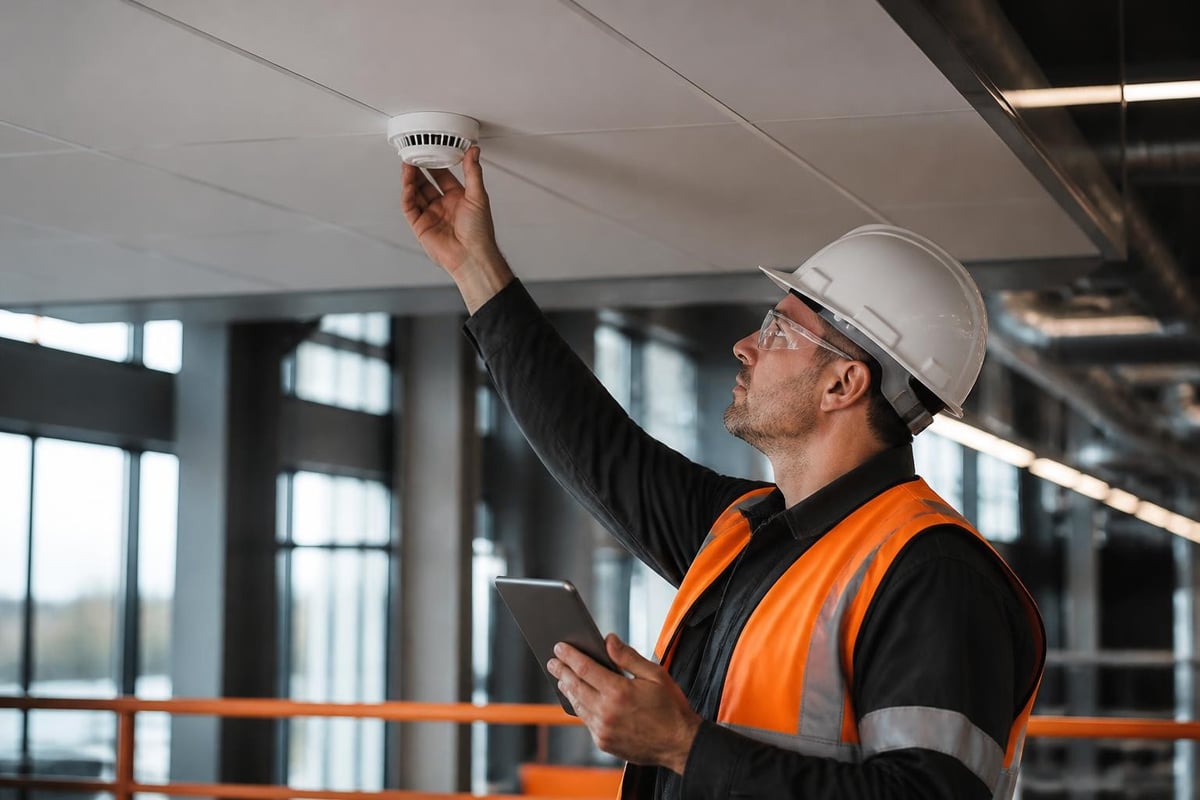
Detection equipment has finite operational lifespans. Smoke detectors typically require replacement every ten years, whilst other sensors may need replacement sooner depending on environmental exposure. Lifecycle management programmes track equipment age, scheduling replacements before reliability deteriorates.
Addressing False Alarms and System Optimisation
False alarms represent significant challenges for security detection systems, creating complacency, wasting resources, and potentially incurring regulatory penalties. Systematic approaches reduce false alarm rates whilst maintaining genuine threat detection capabilities.
Root Cause Analysis
Understanding false alarm triggers enables targeted remediation:
| False Alarm Source | Frequency | Mitigation Approach |
|---|---|---|
| Cooking emissions | High in kitchen areas | Install heat detectors rather than smoke sensors |
| Dust and debris | Medium in industrial settings | Implement regular cleaning schedules |
| Insect infiltration | Low but persistent | Use sealed detector housings |
| Equipment malfunction | Varies by age | Accelerate replacement for problematic units |
| User error | Common during initial occupancy | Enhance training and clear signage |
Microsoft’s threat detection guidance emphasises the importance of tuning detection parameters based on operational experience, continuously refining sensitivity settings to match actual environmental conditions.
Verification Technologies
Modern security detection incorporates verification mechanisms reducing false alarm impact:
- Video verification automatically captures imagery when alarms trigger, enabling remote assessment
- Dual-sensor confirmation requires multiple detectors activating before generating alerts
- Sequential timing analyses activation patterns distinguishing transient disturbances from genuine threats
- Environmental compensation adjusts sensitivity based on ambient conditions
These technologies significantly reduce nuisance alarms whilst maintaining protection integrity. Facilities implementing comprehensive verification report false alarm reductions exceeding 75% compared to traditional single-sensor approaches.
Emerging Trends in Security Detection
The security detection landscape continues evolving as new technologies mature and threat profiles change. Forward-thinking organisations monitor emerging capabilities, evaluating applicability to their specific operational contexts.
Internet of Things Integration
IoT connectivity enables unprecedented detection granularity through distributed sensor networks. Hundreds or thousands of miniature sensors monitor conditions throughout facilities, creating detailed situational awareness impossible with traditional detection architectures. This density improves early warning capabilities whilst enabling precise threat localisation.
However, IoT integration introduces cybersecurity considerations. Detection systems must incorporate robust encryption, authentication, and network segmentation preventing unauthorised access or manipulation. IBM’s intrusion detection insights highlight the importance of securing IoT devices against potential compromise.
Predictive Analytics and Proactive Detection
Security detection increasingly shifts from reactive alerting to proactive risk identification. Analytics platforms identify trends suggesting developing hazards before they materialise into emergencies. For example, gradual temperature increases in electrical rooms might indicate equipment degradation requiring investigation before fire ignites.
This predictive approach extends detection value beyond emergency response, supporting preventive maintenance and operational optimisation. Facilities management teams receive intelligence enabling informed decision-making about equipment replacement, process modifications, and resource allocation.
Sustainable Detection Technologies
Environmental sustainability influences security detection design and operation. Modern systems emphasise energy efficiency, reduced material consumption, and extended operational lifespans. Wireless detection technologies eliminate cabling requirements, reducing installation waste whilst simplifying building modifications.
Solar-powered outdoor sensors and ultra-low-power indoor devices minimise operational energy consumption. When multiplied across thousands of detection points, these efficiencies deliver meaningful environmental benefits alongside reduced operational costs.
Implementation Considerations for Commercial Premises
Deploying effective security detection requires systematic planning addressing technical, operational, and financial dimensions. Successful implementations align detection capabilities with specific facility requirements and organisational objectives.
Risk Assessment and System Design
Comprehensive security detection begins with thorough risk assessment identifying specific threats and vulnerabilities. Fire risk assessment companies evaluate building characteristics, occupancy patterns, operational processes, and potential hazard sources, developing tailored protection strategies.
Assessment outputs inform system design specifications including:
- Detection technology selection matching threat profiles
- Sensor placement optimisation ensuring comprehensive coverage
- Integration requirements connecting detection with response systems
- Redundancy provisions maintaining protection during equipment failures
- Scalability allowances accommodating future facility modifications
Training and Operational Readiness
Security detection systems require competent personnel understanding proper operation and response protocols. Training programmes address:
- System operation covering normal functionality and user interfaces
- Alarm response procedures defining appropriate actions for different alert types
- Manual activation ensuring personnel can trigger alarms when automatic detection fails
- System testing enabling staff to verify functionality during routine inspections
- Troubleshooting basics empowering users to address minor issues independently
Organisations with robust training report significantly better detection system performance and reduced false alarm rates compared to facilities where users lack proper instruction.
Total Cost of Ownership Analysis
Security detection represents ongoing investment extending beyond initial installation. Total cost of ownership encompasses:
Capital Expenditure:
- Equipment procurement and installation
- Infrastructure modifications supporting detection systems
- Integration with existing building management platforms
Operational Expenditure:
- Professional monitoring services
- Routine maintenance and testing
- Equipment replacement and upgrades
- Staff training and competency maintenance
Sophisticated detection technologies may command higher initial investment but deliver superior total cost of ownership through reduced false alarms, lower maintenance requirements, and extended operational lifespans. Financial analysis should evaluate lifecycle costs rather than focusing solely on capital expenditure.
Effective security detection forms the cornerstone of comprehensive protection strategies for commercial facilities across diverse sectors. By integrating advanced technologies with proven methodologies, organisations create layered defences identifying threats early whilst minimising operational disruption. Logic Fire and Security brings decades of expertise in designing, installing, and maintaining sophisticated security detection systems tailored to the unique requirements of businesses throughout the United Kingdom, ensuring your operations remain protected through reliable, compliant solutions backed by professional monitoring and responsive support.