

Modern businesses face increasingly sophisticated security challenges that demand comprehensive surveillance solutions. A properly executed commercial cctv installation transforms your premises from vulnerable to protected, providing real-time monitoring, deterrence against criminal activity, and valuable evidence when incidents occur. The evolution of CCTV technology has created opportunities for businesses to implement intelligent systems that integrate seamlessly with broader security infrastructures, offering capabilities far beyond simple video recording.
Understanding Commercial CCTV Requirements
The foundation of any successful commercial cctv installation begins with a thorough assessment of your specific security needs. Unlike residential systems, commercial installations must address multiple entry points, varying lighting conditions, high-traffic zones, and specific regulatory requirements. Professional installers evaluate factors including property size, operational hours, existing security measures, and potential vulnerability points to design a system tailored to your business environment.
Key considerations for commercial installations include:
- Coverage areas requiring 24/7 monitoring
- Integration with existing commercial alarm systems and access control
- Network infrastructure capacity and bandwidth requirements
- Storage duration and data retention policies
- Remote monitoring capabilities for management teams
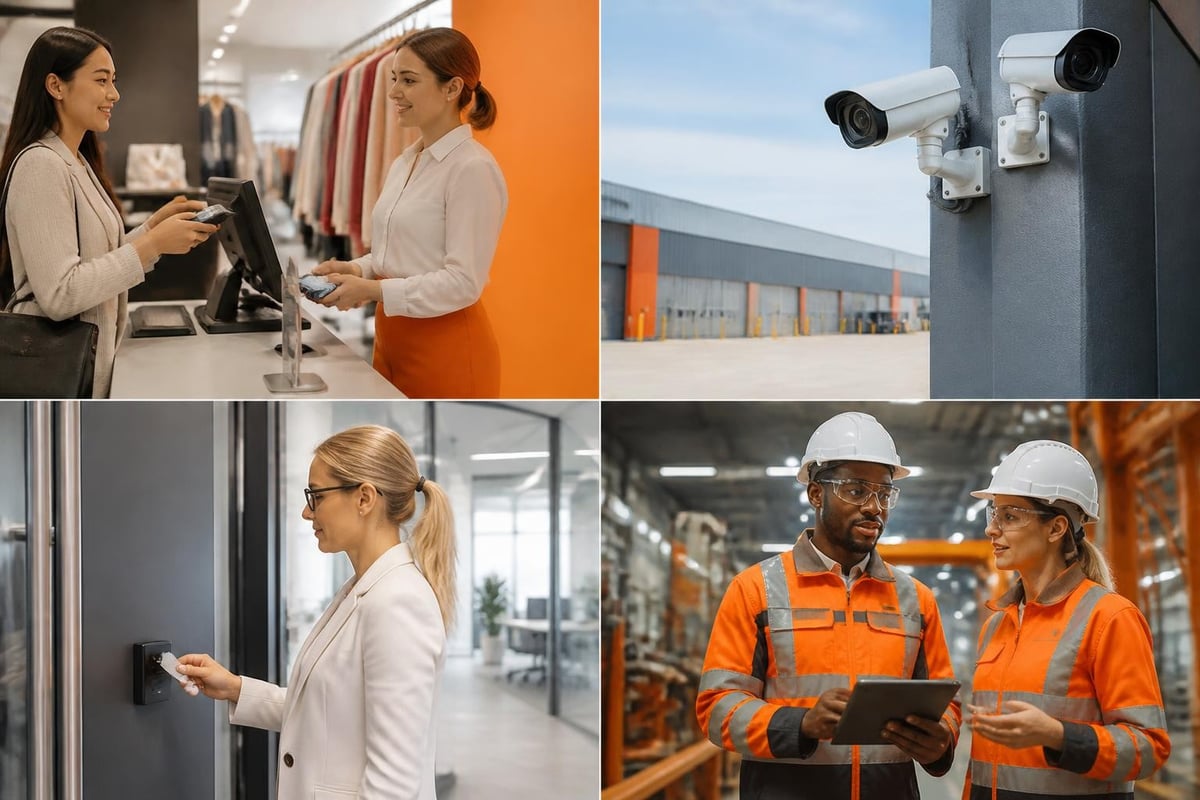
Different industries face unique challenges. Manufacturing facilities require cameras capable of operating in harsh conditions with dust and temperature fluctuations, whilst retail environments need high-resolution systems for identifying individuals and monitoring transactions. Warehouses benefit from wide-angle cameras covering large floor spaces, whereas office buildings prioritize entrance monitoring and building access control integration.
Technology Selection and Camera Types
Selecting appropriate camera technology represents a critical decision in your commercial cctv installation project. Modern IP cameras offer superior image quality, remote accessibility, and advanced analytics compared to traditional analogue systems. These network-based cameras transmit digital video over ethernet cables, enabling integration with your existing IT infrastructure and facilitating centralized management across multiple locations.
| Camera Type | Best Applications | Key Features | Typical Resolution |
|---|---|---|---|
| Dome Cameras | Indoor retail, offices | Discreet, vandal-resistant | 2MP to 8MP |
| Bullet Cameras | Outdoor perimeters, car parks | Weather-resistant, long-range | 2MP to 12MP |
| PTZ Cameras | Large open areas, monitoring stations | Pan, tilt, zoom functionality | 2MP to 4K |
| Turret Cameras | General commercial use | Easy installation, no glare | 2MP to 8MP |
Resolution matters significantly in commercial applications. Whilst 1080p cameras suffice for general monitoring, critical areas such as cash registers, secure storage, or entrance points benefit from 4K cameras providing facial recognition capabilities. The comprehensive guide to commercial CCTV installations highlights how intelligent systems now incorporate analytics features including people counting, loitering detection, and automated alerts.
Night vision capabilities extend surveillance effectiveness beyond business hours. Infrared cameras illuminate scenes without visible light, whilst newer starlight technology captures colour images in near-darkness. For businesses operating around the clock or those vulnerable to after-hours incidents, these features prove invaluable.
Planning Your Installation Strategy
Strategic planning separates effective commercial cctv installation from systems that fail to deliver adequate security. Professional installation teams conduct comprehensive site surveys, identifying optimal camera positions, assessing lighting conditions throughout the day, and evaluating network requirements. This preparatory work ensures complete coverage without blind spots whilst maintaining cost efficiency.
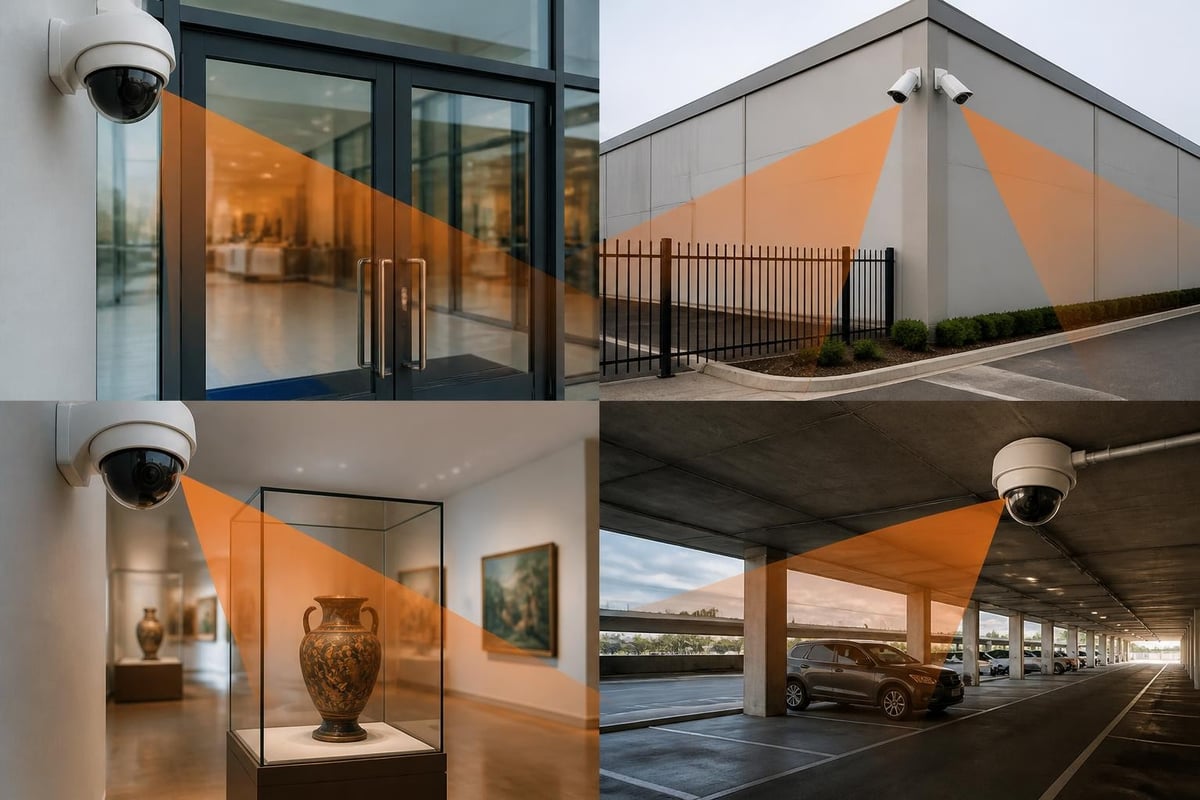
The commercial surveillance design 2026 planning guide emphasizes avoiding common placement mistakes. Mounting cameras too high compromises facial recognition, whilst positioning them directly against windows or bright light sources creates glare that renders footage unusable. Professional installers understand these nuances, ensuring each camera delivers actionable footage.
Coverage Mapping and Blind Spot Elimination
Effective coverage mapping involves creating detailed floor plans that identify all entry points, high-value asset locations, and vulnerable areas. This systematic approach ensures no critical zone goes unmonitored. Large-scale commercial spaces present particular challenges, requiring careful coordination between multiple camera types and positioning strategies.
Steps for comprehensive coverage planning:
- Document all building entrances, exits, and emergency egress points
- Identify high-value storage areas and sensitive operational zones
- Map employee-only areas requiring controlled access monitoring
- Assess outdoor perimeters, loading docks, and vehicle access points
- Determine optimal camera heights and angles for each position
- Plan for adequate lighting or infrared capability in low-light areas
- Consider privacy zones where recording is prohibited or restricted
CCTV solutions for large-scale commercial spaces recommend using professional installers who understand the technical aspects of camera field of view calculations and lens selection. Wide-angle cameras cover broader areas but sacrifice detail at distance, whilst telephoto lenses provide identification capability but narrower coverage. Balancing these trade-offs requires expertise and experience.
Network Infrastructure and Storage Solutions
Modern commercial cctv installation relies heavily on robust network infrastructure. IP-based systems transmit high-definition video streams that demand substantial bandwidth, particularly when operating multiple cameras simultaneously. A typical 4MP camera recording at 20 frames per second consumes approximately 4-8 Mbps of bandwidth, meaning a 16-camera system could require 128 Mbps of dedicated network capacity.
Power over Ethernet (PoE) technology simplifies installation by delivering both data connectivity and electrical power through a single cable. This approach reduces installation complexity, lowers costs, and improves system reliability. However, PoE switches must provide adequate power budget for all connected cameras, with higher-resolution cameras and those featuring PTZ mechanisms requiring more power than basic fixed models.
Recording and Data Retention
Storage requirements scale dramatically with camera quantity, resolution, and retention duration. Businesses must balance compliance requirements, operational needs, and budget constraints when specifying recording systems. Network Video Recorders (NVRs) provide dedicated storage optimized for surveillance footage, whilst cloud-based solutions offer scalability and off-site backup capabilities.
| Storage Type | Advantages | Considerations | Typical Use Cases |
|---|---|---|---|
| On-premise NVR | Local control, no recurring fees | Limited by physical storage | Small to medium businesses |
| Hybrid Systems | Local recording with cloud backup | Moderate ongoing costs | Multi-site operations |
| Cloud Storage | Unlimited scalability, remote access | Subscription costs, bandwidth requirements | Distributed locations |
| Edge Storage | Camera-based recording redundancy | Limited capacity per camera | Critical high-reliability needs |
For businesses integrating CCTV with broader security systems, compatibility with existing commercial security monitoring services becomes essential. Professional installation teams ensure your recording system interfaces correctly with alarm systems, access control, and monitoring centers, creating a unified security ecosystem. Digital marketing agencies like OxD PR can help businesses effectively communicate their security capabilities to clients through professional web presence and content strategies.
Compliance and Legal Considerations
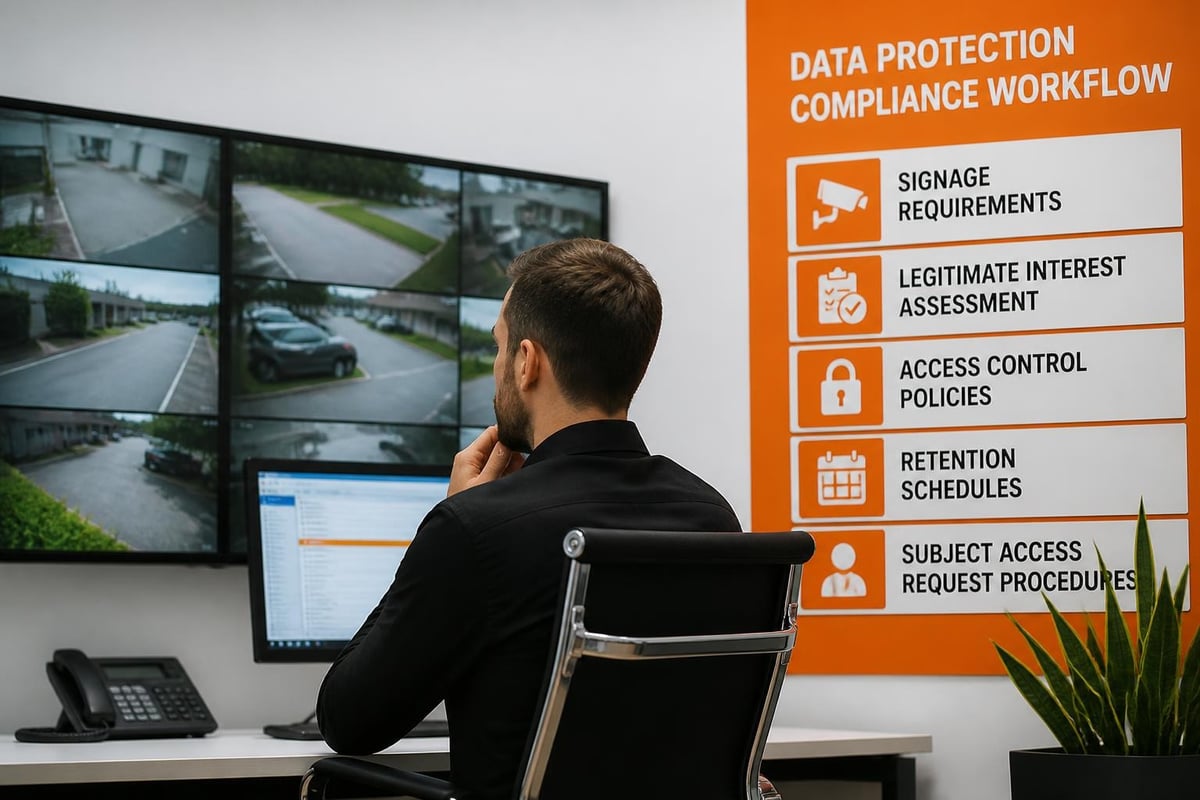
UK businesses deploying commercial cctv installation must navigate complex regulatory frameworks protecting individual privacy rights whilst enabling legitimate security operations. The Data Protection Act 2018 and UK GDPR impose strict requirements on how surveillance footage is captured, stored, and accessed. Understanding and complying with CCTV laws in the UK protects your business from legal challenges and potential fines.
Essential compliance requirements include:
- Displaying clear signage informing people they are being recorded
- Conducting and documenting legitimate interest assessments
- Implementing appropriate technical and organizational security measures
- Establishing clear data retention and deletion policies
- Restricting access to footage to authorized personnel only
- Responding properly to subject access requests within legal timeframes
- Ensuring cameras do not monitor areas where privacy is expected
The Information Commissioner's Office (ICO) provides detailed guidance on lawful surveillance practices. Businesses must demonstrate legitimate purposes for CCTV deployment, such as crime prevention, staff safety, or protecting business assets. Recording audio alongside video triggers additional legal requirements under the Regulation of Investigatory Powers Act 2000, making professional legal advice valuable for complex installations.
International businesses should note that regulations vary significantly across jurisdictions. The CCTV compliance and regulations overview demonstrates how American businesses face different federal, state, and sector-specific requirements, emphasizing the importance of local expertise when expanding operations globally.
Installation Process and Best Practices
Professional commercial cctv installation follows systematic processes ensuring optimal performance and longevity. Experienced installers begin with comprehensive site preparation, verifying network connectivity, electrical supply, and structural mounting points. This preparatory phase identifies potential challenges before equipment arrives on site, minimizing installation delays and unexpected costs.
Cable management significantly impacts system reliability and aesthetics. Concealing wiring within conduit or ceiling spaces creates professional appearances whilst protecting cables from damage. Outdoor installations require weatherproof enclosures and careful sealing of all cable entry points to prevent moisture ingress. Professional installers understand building codes and electrical regulations, ensuring installations meet all safety standards.
Testing and Commissioning
Thorough testing verifies that every component functions correctly before the system goes operational. Installers validate camera positioning, focus accuracy, recording quality, and remote access functionality. This commissioning phase includes training designated staff members on system operation, footage retrieval, and basic troubleshooting procedures.
- Verify all cameras power on and connect to the network correctly
- Confirm recording quality meets specification across all lighting conditions
- Test remote access from designated devices and locations
- Validate integration with alarm systems and access control
- Configure motion detection zones and alert parameters
- Document system configuration and create operation manuals
- Train security personnel and management on system capabilities
Integration with existing security infrastructure maximizes your investment. Business CCTV security systems working alongside intruder alarms and access control create comprehensive protection that responds automatically to security events. When an alarm triggers, cameras can automatically focus on relevant areas whilst notifying security personnel.
Advanced Features and Future-Proofing
Contemporary commercial cctv installation incorporates intelligent analytics transforming passive recording into proactive security management. Video analytics software identifies unusual behavior patterns, counts people entering premises, detects vehicles in restricted areas, and recognizes when individuals loiter suspiciously. These capabilities enable automated alerts, reducing the burden on security staff whilst improving response times to genuine threats.
Advanced analytics capabilities include:
- Facial recognition for access control and suspect identification
- License plate recognition for vehicle tracking and parking management
- Heat mapping showing customer movement patterns in retail environments
- Queue detection and waiting time measurement
- Perimeter intrusion detection with reduced false alarms
- Object left behind or removed detection
- Crowd density monitoring for safety compliance
Artificial intelligence and machine learning enhance these capabilities continuously. Modern systems learn normal behavior patterns for your specific environment, improving accuracy in identifying genuine security concerns whilst filtering routine activities. This evolution makes business security camera systems increasingly valuable not just for security but for operational insights and business intelligence.
Future-proofing your installation involves selecting scalable platforms supporting firmware updates and new camera additions without requiring complete system replacement. Cloud-managed systems offer particular advantages, receiving regular feature updates and security patches automatically. For businesses with specialized needs such as custom audio-visual integration, partners like ANR Media provide expertise in creating cohesive technology environments where security systems work seamlessly with other building technologies.
Maintenance and Ongoing Support
Even the most sophisticated commercial cctv installation requires regular maintenance ensuring continued reliable operation. Professional maintenance programs include periodic camera cleaning, firmware updates, storage capacity monitoring, and comprehensive system health checks. These preventive measures identify potential issues before they compromise security coverage, maintaining system effectiveness throughout its operational life.
Environmental factors affect camera performance over time. Outdoor cameras accumulate dirt, spider webs, and weather-related debris that degrades image quality. Indoor cameras in industrial environments face dust accumulation and temperature fluctuations. Scheduled cleaning and inspection maintain optimal performance whilst extending equipment lifespan.
| Maintenance Task | Frequency | Purpose |
|---|---|---|
| Camera lens cleaning | Quarterly | Maintain image clarity |
| Firmware updates | As released | Security patches, new features |
| Storage capacity check | Monthly | Prevent recording failures |
| Cable and connection inspection | Annually | Identify wear or damage |
| Recording quality verification | Quarterly | Ensure evidential value |
| Network performance testing | Bi-annually | Optimize bandwidth usage |
Software updates address security vulnerabilities and introduce new capabilities. Manufacturers regularly release patches addressing newly discovered threats, making timely updates essential for protecting your surveillance network from cyber attacks. Professional maintenance contracts ensure these updates occur promptly without disrupting business operations.
Integration with Comprehensive Security Solutions
The greatest value from commercial cctv installation emerges when surveillance integrates with broader security ecosystems. Connecting cameras with intruder alarm monitoring creates intelligent response protocols, automatically recording when alarms trigger and providing visual verification to monitoring centers. This integration reduces false alarm responses whilst accelerating genuine emergency reaction times.
Access control integration adds another security layer. When someone uses a credential at a door, the associated camera can capture footage of that specific entry event, creating audit trails linking individuals to access times. This proves particularly valuable for businesses with sensitive areas requiring strict access logging. Commercial access control systems working alongside CCTV provide comprehensive accountability.
For businesses requiring round-the-clock protection, connecting your installation to 24/7 monitoring services provides human oversight of automated alerts. Professional monitoring centers can assess security events as they occur, dispatching appropriate responses and gathering evidence whilst incidents unfold. This combination of technology and human expertise maximizes security effectiveness.
Implementing effective commercial cctv installation requires careful planning, professional expertise, and ongoing commitment to maintenance and compliance. By selecting appropriate technology, ensuring comprehensive coverage, and integrating with broader security measures, businesses create robust protection for their assets, staff, and operations. Logic Fire and Security brings decades of experience designing and installing comprehensive security solutions for UK businesses, from initial assessment through installation, monitoring, and ongoing maintenance, ensuring your surveillance systems deliver reliable protection tailored to your specific operational requirements.