

An access control system represents one of the most critical components of a comprehensive security infrastructure for modern businesses. As organisations increasingly recognise the limitations of traditional lock-and-key security, electronic access control has emerged as the gold standard for protecting premises, assets, and personnel. These systems provide granular control over who can enter specific areas, when they can access them, and create detailed audit trails of all entry events. For businesses across the UK, implementing a robust access control system isn't merely about preventing unauthorised access, it's about creating a secure, compliant, and efficient operational environment that supports business objectives whilst safeguarding people and property.
Understanding Access Control System Architecture
An access control system comprises several integrated components that work together to authenticate users and manage physical access to buildings and restricted areas. At its core, the system relies on credentials, readers, control panels, and locking mechanisms that communicate seamlessly.
Core Components and Their Functions
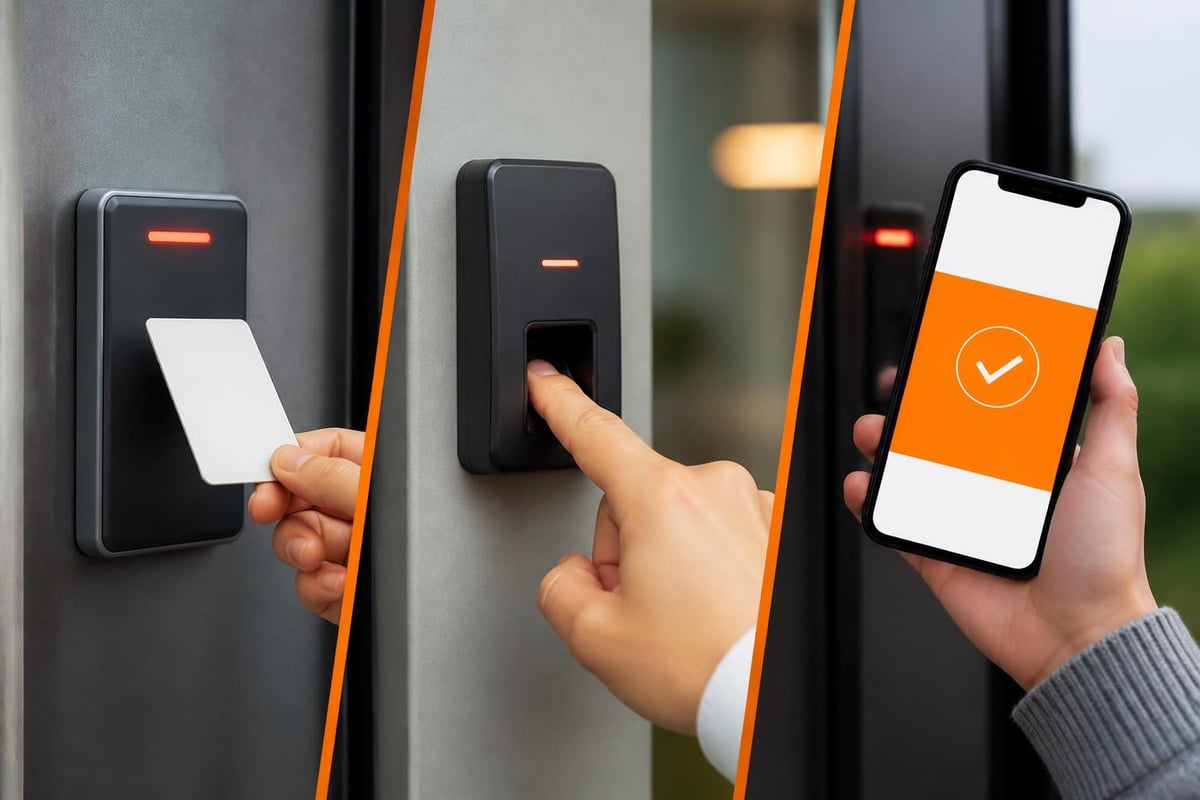
The foundation of any access control system begins with credentials, which serve as the identifying factor for authorised users. These can range from traditional proximity cards and key fobs to advanced biometric identifiers such as fingerprints or facial recognition. Modern systems increasingly support mobile credentials, allowing employees to use their smartphones as access tokens.
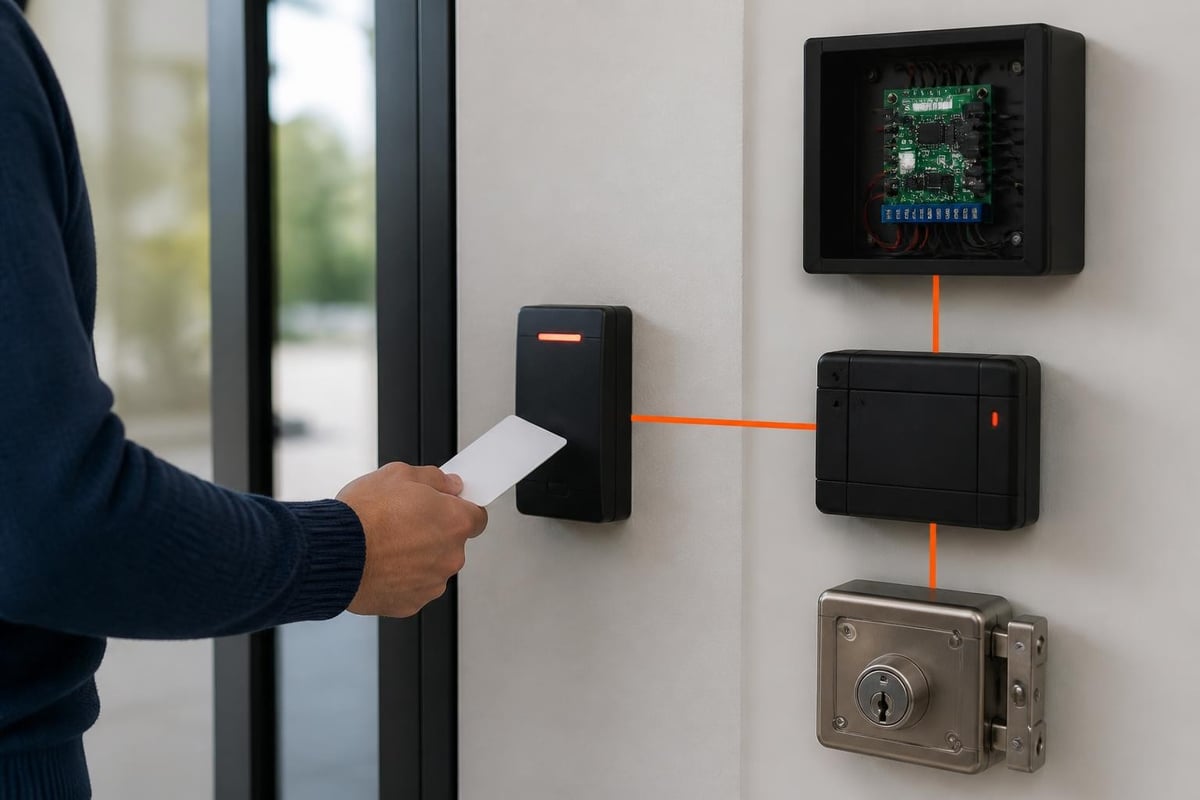
Readers installed at entry points capture credential information and transmit it to the control panel for verification. The control panel, functioning as the system's brain, compares presented credentials against its database of authorised users and their permissions. Upon successful authentication, the panel sends a signal to unlock the door for a predetermined duration.
| Component | Function | Common Types |
|---|---|---|
| Credentials | User identification | Proximity cards, key fobs, biometrics, mobile |
| Readers | Credential capture | Card readers, keypad, biometric scanners |
| Control Panel | Authentication decision | Network controllers, intelligent panels |
| Locks | Physical security | Magnetic locks, electric strikes, motorised locks |
| Management Software | System administration | Cloud-based, on-premise platforms |
The sophistication of modern access control systems extends far beyond simple door unlocking. Integration with fire alarm systems, CCTV surveillance, and building management systems creates a unified security ecosystem. When properly designed, these integrations ensure that building access control systems automatically unlock during fire emergencies whilst maintaining security during normal operations.
Strategic Planning and System Design
Implementing an effective access control system requires thoughtful planning that extends beyond selecting hardware components. The design phase should involve stakeholders from security, facilities management, human resources, and IT departments to ensure the system meets diverse operational requirements.
Defining Access Levels and Security Zones
Best practices for designing and deploying access control systems emphasise the importance of establishing clear access hierarchies from the outset. Begin by mapping your facility and identifying security zones based on sensitivity and risk.
- Public areas requiring minimal restriction (reception, common areas)
- Controlled areas accessible to most staff during business hours
- Restricted zones limited to specific departments or roles
- High-security areas requiring elevated credentials or dual authentication
This segmentation allows organisations to implement the principle of least privilege, granting users only the minimum access necessary to perform their duties. For businesses working with UK security contractors, this approach aligns with industry standards and regulatory requirements.
Stakeholder Involvement and User Requirements
Successful deployment depends on understanding how people actually use your facilities. Engage with department heads to identify peak traffic periods, special access requirements, and operational constraints. For instance, manufacturing facilities may require different access patterns for shift workers compared to administrative staff. Healthcare environments might need temporary visitor credentials, whilst educational institutions require flexible scheduling for after-hours events.
The system architecture should accommodate future growth without requiring complete redesign. Scalability considerations include additional doors, users, and integration points with emerging technologies. When evaluating solutions, assess whether the platform supports distributed architectures for multi-site organisations and offers cloud-based management for remote administration.
Implementation Best Practices
Rolling out an access control system demands meticulous attention to technical specifications, user training, and operational procedures. The implementation phase transforms architectural plans into functioning security infrastructure.
Hardware Selection and Installation Standards
Choosing appropriate hardware begins with understanding environmental conditions at each access point. Exterior doors require weatherproof readers and robust locking mechanisms capable of withstanding temperature fluctuations and moisture. High-traffic areas benefit from durable, fast-reading contactless technology that minimises wear and queuing.
Installation quality directly impacts system reliability. Proper cable routing, secure mounting, and adequate power supplies prevent common failure points. For integrated security environments, coordination with commercial fire detection systems ensures life safety systems override access restrictions during emergencies.
- Survey all access points and document existing infrastructure
- Select hardware appropriate to environmental conditions and traffic volume
- Install structured cabling following industry standards
- Mount readers and locks at accessible heights complying with accessibility regulations
- Test each access point under normal and emergency conditions
- Document the installation with wiring diagrams and component specifications
Software Configuration and Database Management
The management platform requires careful configuration to reflect organisational structure and security policies. Understanding access control architecture and operational mechanics helps administrators establish efficient user groups, access schedules, and alarm responses.
Create hierarchical user groups aligned with job functions rather than individual permissions. This approach simplifies administration as staff move between roles or departments. For example, "Finance Team" or "Facilities Management" groups receive predefined access rights that automatically apply to all members.

Time-based scheduling adds another dimension of control, automatically restricting access outside normal business hours or granting temporary permissions for contractors and visitors. Advanced systems support holiday calendars, ensuring appropriate access during closure periods whilst accommodating essential personnel.
Operational Management and Ongoing Administration
An access control system requires active management to maintain security effectiveness and operational efficiency. Static configurations quickly become outdated as personnel change, business needs evolve, and security threats develop.
Credential Lifecycle Management
Robust credential management begins the moment a new employee joins the organisation. Establish standardised onboarding procedures that provision access credentials alongside other employment essentials. The best practices for managing access control systems recommend coordinating with human resources to align credential activation with start dates and initial access requirements.
Regular audits identify orphaned credentials belonging to departed employees or contractors whose access should have been revoked. Quarterly reviews comparing active credentials against current staff rosters highlight discrepancies requiring immediate attention. This diligence prevents "access drift", where individuals accumulate permissions beyond their current role requirements.
| Activity | Frequency | Responsible Party |
|---|---|---|
| New user provisioning | As needed | HR/Security |
| Access rights review | Monthly | Department managers |
| Credential audit | Quarterly | Security administration |
| Permission recertification | Annually | Executive management |
| System health check | Weekly | IT/Facilities |
When employees change roles, promptly update their access permissions rather than simply adding new rights to existing credentials. This practice prevents privilege creep and maintains the principle of least privilege. Automated workflows linking the access control system with HR databases streamline these updates and reduce administrative burden.
Monitoring and Incident Response
Active monitoring transforms the access control system from a passive barrier into an intelligent security tool. Configure real-time alerts for security-relevant events such as forced door openings, invalid credential attempts, or access during unusual hours. Integration with surveillance security systems enables visual verification of access events, providing context for investigating incidents.
Establish clear procedures for responding to access control alerts. Security personnel should understand escalation protocols, know when to dispatch guards to investigate alarms, and maintain communication with local authorities for serious breaches. Regular drills ensure staff can execute emergency lockdown procedures when threats emerge.
Comprehensive logging capabilities support forensic investigations and compliance reporting. The system should record every access attempt, whether successful or denied, capturing credential identifiers, timestamps, and door locations. These immutable audit trails prove invaluable during security investigations and demonstrate regulatory compliance.
Integration with Broader Security Ecosystems
Modern access control systems function most effectively when integrated within a comprehensive security infrastructure. These integrations create synergies that enhance overall protection whilst improving operational efficiency.
Fire and Life Safety Integration
Critical integration points exist between access control and fire safety systems. UK regulations require automatic door unlocking during fire alarm activation, ensuring occupants can evacuate without obstruction. Proper integration with commercial fire alarm systems ensures doors release immediately upon alarm whilst maintaining security logging.
The integration operates bidirectionally. Access control systems can trigger building evacuations by detecting unusual patterns, such as simultaneous access attempts at multiple doors suggesting coordinated intrusion. Conversely, fire systems override access restrictions whilst maintaining records of who entered and exited during emergencies, supporting accountability and rescue operations.
Video Surveillance and Alarm Systems
Linking access control with CCTV creates powerful verification capabilities. Configure systems to automatically record video whenever credentials are presented at readers, capturing visual records of all entry events. This footage proves invaluable when investigating security incidents or disputed access claims.
Advanced analytics detect anomalies such as tailgating, where unauthorised individuals follow authorised users through access points. Video verification systems require users to look at cameras during credential presentation, matching live images against stored photographs to prevent credential sharing.
Integration with intrusion detection systems enables sophisticated arming and disarming sequences. The access control system can automatically arm burglar alarms when the last authorised user exits and disarm them when the first person arrives, eliminating manual alarm management whilst maintaining comprehensive security coverage. For organisations implementing commercial security systems, these integrations deliver seamless protection.
Advanced Features and Emerging Technologies
The access control landscape continues evolving with technologies that enhance security, convenience, and operational insight. Staying informed about these developments helps organisations future-proof their investments.
Biometric Authentication and Mobile Credentials
Biometric readers eliminate credential sharing and loss concerns by authenticating users based on unique physical characteristics. Fingerprint scanners offer affordability and convenience for moderate-security applications, whilst facial recognition and iris scanning provide elevated security for high-risk environments.
Mobile credentialing represents a significant shift in access control technology. Users carry their smartphones everywhere, making them ideal credential devices. Mobile systems support remote credential provisioning, instant revocation, and flexible permission updates without physical card distribution. Additionally, mobile platforms enable sophisticated features like location-based access and multi-factor authentication combining device possession with biometric verification.
Cloud-Based Management and Analytics
Cloud-based access control platforms eliminate on-premise server requirements whilst providing unprecedented flexibility. Administrators manage systems from anywhere with internet connectivity, particularly valuable for multi-site organisations. Cloud platforms automatically receive software updates, ensuring systems maintain security against emerging threats without manual intervention.
Advanced analytics extract actionable insights from access data. Identify underutilised spaces suggesting real estate optimisation opportunities, detect patterns indicating operational inefficiencies, and forecast facility usage to inform staffing decisions. These capabilities transform the access control system from purely protective infrastructure into a business intelligence tool.
Compliance and Regulatory Considerations
Access control systems play crucial roles in meeting regulatory obligations across various industries. Understanding these requirements ensures implementations satisfy legal mandates whilst protecting organisations from liability.
Data Protection and Privacy Requirements
Access control systems collect and store personal data including employee names, credential numbers, and detailed movement records. UK GDPR compliance requires organisations to implement appropriate technical and organisational measures protecting this information. Best practices include encrypting credential databases, restricting administrative access, and establishing data retention policies that balance security needs against privacy rights.
Transparency obligations require informing employees and visitors about access monitoring. Clear signage at entry points, privacy notices in employment contracts, and accessible privacy policies demonstrate compliance. Regular data protection impact assessments identify and mitigate privacy risks associated with access control deployments.
Industry-Specific Regulations
Different sectors face unique access control requirements. Healthcare facilities must implement systems supporting HIPAA compliance, restricting access to patient records and medication storage areas whilst maintaining detailed audit trails. Financial institutions require segregation of duties, preventing single individuals from accessing sensitive systems without oversight.
For organisations requiring fire risk assessment compliance, access control systems must never impede emergency egress. Fail-safe locking mechanisms unlock during power failures, and manual override capabilities ensure occupants can always exit regardless of system status. Regular testing verifies these safety features function correctly under all conditions.
System Maintenance and Performance Optimisation
Sustained access control effectiveness depends on proactive maintenance addressing both hardware and software components. Establishing comprehensive maintenance programmes prevents failures and extends system lifespan.
Preventive Maintenance Schedules
Regular inspections identify wear before failures occur. Quarterly maintenance should include testing all readers, verifying lock functionality, checking power supplies, and confirming communication between system components. Annual comprehensive reviews assess overall system health and identify upgrade opportunities.
Following access control administration best practices includes maintaining spare hardware inventory. Stocking replacement readers, locks, and control modules enables rapid repairs minimising security gaps. Establish relationships with qualified service providers ensuring timely support when complex issues arise.
Documentation proves essential for long-term maintenance. Maintain current wiring diagrams, configuration backups, and user manuals. Record all maintenance activities, noting repairs, adjustments, and component replacements. This historical data informs future upgrade decisions and troubleshooting efforts.
Performance Monitoring and Optimisation
Baseline performance metrics during initial deployment, then monitor for degradation. Track reader response times, database query speeds, and network communication latency. Performance declines often indicate underlying issues requiring attention before complete failures occur.
Database optimisation becomes increasingly important as systems mature. Archive historical access logs to separate databases maintaining query performance whilst preserving records for compliance purposes. Regular database maintenance including index rebuilding and statistics updates ensures responsive system operation.
Network infrastructure supporting access control systems requires adequate bandwidth and reliability. Segregate access control traffic on dedicated VLANs preventing interference from other network activities. Implement quality-of-service policies prioritising access control communications ensuring consistent performance during peak network usage.
Training and User Adoption
Technical excellence means little if users circumvent or misuse the access control system. Comprehensive training programmes build understanding and encourage proper usage supporting security objectives.
Administrator Training Programmes
System administrators require deep technical knowledge spanning hardware troubleshooting, software configuration, and integration management. Manufacturers typically offer certification programmes covering their specific platforms. Investing in formal training reduces errors, improves incident response, and maximises system capabilities.
Training should extend beyond initial deployment. As systems evolve with software updates and new features, ongoing education keeps administrators current. Establish internal documentation capturing institutional knowledge about custom configurations, integration points, and lessons learned from past incidents.
End-User Education
Employees need clear guidance on credential handling, reporting lost cards, and understanding access restrictions. Brief training during onboarding explains why security measures exist and how individual actions contribute to overall protection. Emphasise the personal responsibility associated with credentials, discouraging sharing and requiring immediate reporting of losses.
Regular security awareness campaigns reinforce proper behaviours. Address common mistakes like propping doors open, allowing tailgating, or lending credentials to colleagues. Explain how seemingly innocent actions compromise security, creating vulnerabilities that malicious actors exploit.
Implementing a robust access control system requires careful planning, thoughtful design, and ongoing management to deliver sustained security benefits. From selecting appropriate hardware and configuring management platforms to training users and maintaining system health, success depends on comprehensive attention to technical and operational details. For organisations seeking expert guidance in deploying advanced access control solutions, Logic Fire and Security brings extensive experience designing, installing, and maintaining integrated security systems for businesses across the UK. Their comprehensive approach ensures your access control infrastructure not only meets current security requirements but adapts to evolving threats and business needs.