

When searching for "fire extinguisher servicing near me", businesses across the UK must prioritise compliance, reliability, and professional expertise. Fire extinguishers represent your first line of defence against workplace fires, and maintaining them to regulatory standards isn't optional. Regular servicing ensures your equipment functions correctly during emergencies whilst keeping your organisation compliant with stringent fire safety legislation. This comprehensive guide explores everything businesses need to know about professional fire extinguisher servicing, from understanding legal requirements to selecting the right maintenance provider for your specific needs.
Understanding Fire Extinguisher Servicing Requirements
Fire extinguisher servicing encompasses far more than a cursory visual inspection. Professional maintenance involves systematic examination of all mechanical components, pressure levels, extinguishing agents, and expelling mechanisms to ensure optimal performance when seconds matter most.
Legal Obligations for Commercial Premises
UK businesses operate under the Regulatory Reform (Fire Safety) Order 2005, which places responsibility for fire safety squarely on the shoulders of the "responsible person" within each organisation. This legislation mandates regular maintenance of all fire-fighting equipment, including portable extinguishers.
Key compliance requirements include:
- Annual comprehensive servicing by competent persons
- Monthly visual inspections by designated staff members
- Immediate replacement or repair of damaged equipment
- Detailed maintenance records for regulatory inspection
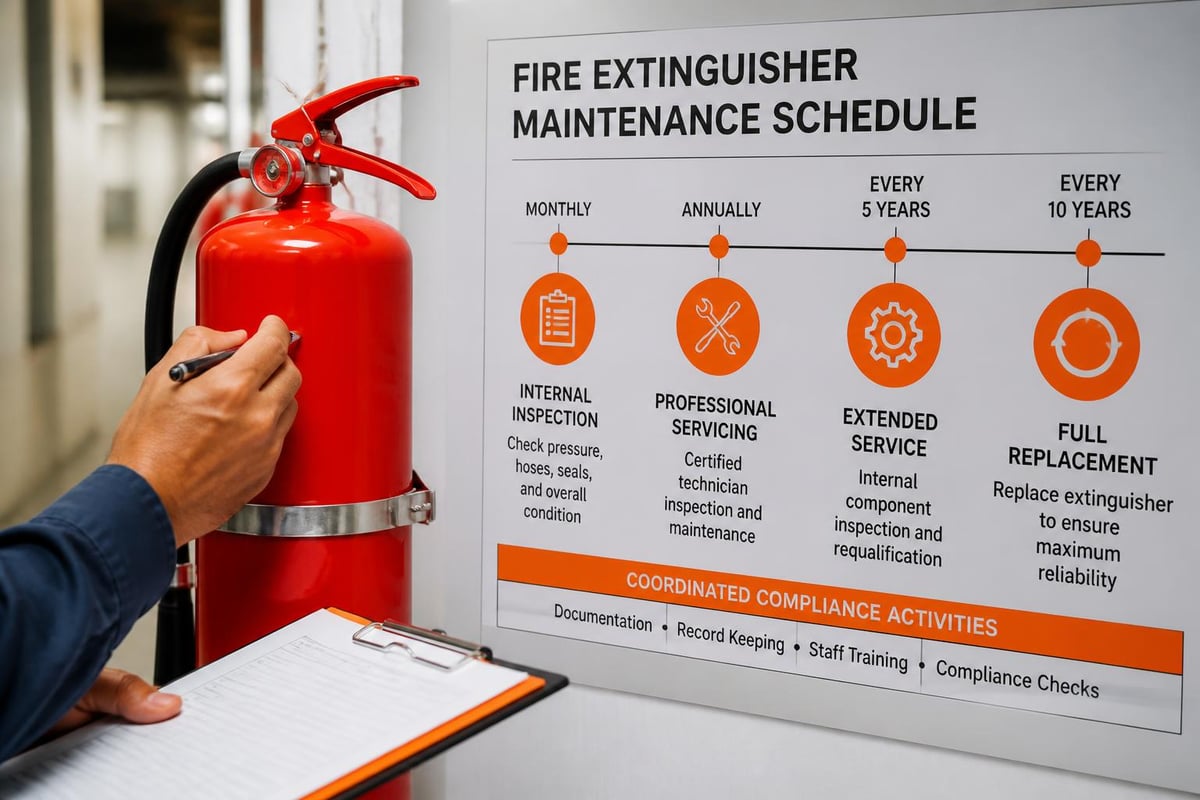
- Five-yearly extended service or replacement depending on extinguisher type
The OSHA guidelines for portable fire extinguishers provide excellent insight into international best practices, though UK businesses must primarily focus on British Standards BS 5306-3. Professional providers understand these nuanced requirements and ensure your business maintains full compliance without compromise.
Different Service Levels Explained
Fire extinguisher servicing near me searches should account for varying maintenance depths required throughout an extinguisher's lifecycle. Service levels range from basic visual inspections to comprehensive internal examinations.
| Service Type | Frequency | Scope |
|---|---|---|
| Basic Inspection | Monthly | Visual checks, accessibility, signage |
| Annual Service | 12 months | Pressure testing, mechanical examination, agent verification |
| Extended Service | 5-10 years | Internal inspection, hydrostatic testing, complete overhaul |
| Discharge Testing | Varies | Functionality verification for specific extinguisher types |
Understanding these distinctions helps businesses budget appropriately and ensures nothing falls through the cracks. Commercial fire detection systems work in tandem with portable extinguishers to create comprehensive fire protection strategies.

What Professional Servicing Involves
When qualified technicians arrive for fire extinguisher servicing near me appointments, they follow rigorous protocols designed to identify potential failures before they compromise safety. Their systematic approach covers every critical component.
Inspection and Testing Procedures
Professional servicing begins with documentation review, examining maintenance history to identify patterns or recurring issues. Technicians then conduct physical examinations that go well beyond superficial checks.
The California fire extinguisher maintenance regulations outline thorough examination requirements that mirror UK best practices, emphasising the importance of checking mechanical parts, extinguishing agents, and expelling means. During annual servicing, technicians verify:
- Pressure gauge readings sit within operational parameters
- Safety pins and tamper seals remain intact and functional
- Hose assemblies and nozzles show no signs of blockage or damage
- Body integrity remains free from corrosion, dents, or structural compromise
- Extinguishing agent quantity meets manufacturer specifications
Visual indicators receive particular attention. Faded or damaged labels get replaced, ensuring users can quickly identify extinguisher types during emergencies. Mounting brackets undergo strength testing, whilst accessibility around each unit is verified against regulatory spacing requirements.
Internal Examinations and Hydrostatic Testing
Extended service intervals demand more invasive procedures. Technicians disassemble extinguishers, examining internal components that external inspections cannot reveal. This process identifies corrosion, sediment accumulation, or agent degradation that might prevent proper discharge.
Hydrostatic testing subjects extinguisher cylinders to pressures exceeding normal operating levels, verifying structural integrity. This non-negotiable safety check occurs at intervals specified by manufacturers and regulatory bodies:
- Water and foam extinguishers: 5 years
- Dry powder extinguishers: 5 years
- CO2 extinguishers: 10 years
Following successful testing, technicians recharge units with fresh extinguishing agents, replace seals, and restore pressure to specified levels. Detailed service labels affixed to each unit document the work completed and schedule future maintenance. Understanding fire safety and protection comprehensively helps businesses appreciate why these procedures matter.
Choosing the Right Service Provider
Searching for "fire extinguisher servicing near me" yields numerous options, but not all providers deliver equivalent expertise or reliability. Selecting the wrong contractor can leave your business vulnerable and non-compliant.
Essential Qualifications and Accreditations
Competence in fire extinguisher maintenance isn't subjective. Legitimate providers hold recognised certifications demonstrating their knowledge and capability. Look for companies accredited by BAFE (British Approvals for Fire Equipment), the gold standard for fire protection servicing organisations.
Third-party certification schemes verify that technicians possess appropriate training and that companies maintain quality management systems. Additional credentials worth considering include:
- BAFE SP101 certification for portable fire extinguisher maintenance
- ISO 9001 quality management certification
- Industry-specific experience within your sector
- Professional indemnity and public liability insurance
Companies like Logic Fire and Security, known for servicing Blue Chip companies and public agencies, demonstrate the reliability standards businesses should demand. Their commitment to quality and accreditations reflects the thoroughness required for proper fire safety maintenance.
Service Coverage and Response Times
Geographic coverage matters tremendously for businesses with multiple locations. Providers offering consistent service quality across regions simplify compliance management and standardise maintenance records.
Response times for emergency call-outs separate exceptional providers from adequate ones. When an extinguisher fails inspection or sustains damage, rapid replacement or repair minimises operational disruption and maintains continuous protection. Establish clear service level agreements covering:
- Routine servicing schedules and advance notification periods
- Emergency response timeframes for critical issues
- Replacement unit provision during extended repairs
- Out-of-hours contact procedures for urgent situations
- Reporting formats and compliance documentation delivery

Cost Considerations and Budgeting
Fire extinguisher servicing near me costs vary based on extinguisher types, quantities, site accessibility, and service frequency. Understanding pricing structures helps businesses budget accurately without compromising safety standards.
Typical Pricing Models
Most reputable providers offer transparent pricing calculated per extinguisher, though economies of scale benefit larger premises. Annual service contracts typically prove more cost-effective than ad-hoc arrangements whilst ensuring nothing gets overlooked.
| Service Component | Typical Cost Range | Notes |
|---|---|---|
| Annual service per extinguisher | £8-£15 | Depends on type and capacity |
| Extended service/internal examination | £25-£45 | Required every 5-10 years |
| Hydrostatic testing | £30-£60 | Includes recharge and certification |
| Emergency call-out | £75-£150 | May include minimum charge |
| New extinguisher supply | £20-£200+ | Varies significantly by type and size |
Fixed-price annual contracts eliminate unexpected costs whilst guaranteeing service completion. Many businesses appreciate predictable budgeting that factors in routine maintenance without surprise invoices for legally required procedures.
Hidden Costs to Avoid
Cheap providers sometimes quote artificially low base prices, then add charges for essential elements like reporting, replacement labels, or travel expenses. Ensure quotations comprehensively cover all required work including:
- Full inspection and testing as per British Standards
- Replacement parts and consumables
- Service labels and documentation
- Compliance reporting and record-keeping
- Any remedial work identified during servicing
The fire extinguisher inspection requirements under various regulatory frameworks demonstrate why thorough servicing cannot be accomplished on minimal budgets. Cutting corners on fire safety maintenance represents false economy that potentially endangers lives.
Frequency and Scheduling Best Practices
Establishing appropriate servicing schedules requires understanding regulatory minimums whilst considering your specific operational environment. High-risk industries demand more frequent attention than standard office settings.
Creating Effective Maintenance Calendars
Annual servicing represents the baseline legal requirement, but monthly visual inspections by competent internal staff fill critical gaps between professional visits. Develop systematic schedules that account for:
Seasonal considerations: Schedule servicing during quieter operational periods to minimise disruption, but never delay beyond compliance deadlines for convenience.
Site-specific factors: Premises exposed to corrosive environments, temperature extremes, or vibration may require more frequent professional attention. Manufacturing facilities, chemical plants, and maritime environments particularly challenge extinguisher integrity.
Regulatory inspection cycles: Align servicing with anticipated fire safety inspections to ensure equipment demonstrates current compliance. Fire door inspection services and other safety checks often occur simultaneously, making coordinated scheduling efficient.
The NFPA guidelines for fire extinguisher servicing frequency emphasise consistency and documentation, principles equally applicable under UK regulations. Electronic calendar systems with automated reminders help organisations with multiple sites maintain compliance without administrative burden.
Internal Inspection Protocols
Between professional servicing appointments, designated staff must conduct monthly checks verifying accessibility, physical condition, and pressure gauge readings. These inspections take minutes per unit but provide early warning of developing problems.
- Verify extinguishers occupy designated locations with clear access
- Check pressure gauges indicate operational status
- Examine hoses, nozzles, and operating instructions for damage
- Ensure tamper seals and safety pins remain intact
- Document findings, particularly any anomalies requiring professional attention
Training staff to recognise concerning indicators transforms them into early warning systems. Simple checklists standardise inspections across sites whilst creating auditable records demonstrating ongoing compliance efforts. This approach complements commercial fire alarm monitoring strategies that rely on multiple safety layers.
Common Servicing Issues and Solutions
Professional technicians encounter recurring problems that compromise fire extinguisher effectiveness. Understanding these issues helps businesses recognise warning signs and appreciate the value of thorough servicing.
Pressure Loss and Mechanical Failures
Gradual pressure loss represents the most common serviceability issue. While some pressure decline occurs naturally over time, sudden drops indicate seal failures, valve problems, or cylinder damage requiring immediate attention.
Mechanical components face particular stress. Operating levers, discharge valves, and pressure gauges contain moving parts subject to corrosion and wear. Annual servicing identifies these degradations before they prevent operation during emergencies. The Home Depot guide to fire extinguisher inspection demonstrates inspection procedures, though commercial environments demand professional expertise beyond basic checks.
Corrosion poses particular challenges in industrial settings. Chemical atmospheres, high humidity, and temperature fluctuations accelerate metal degradation. External corrosion appears obvious, but internal corrosion weakening cylinder walls only reveals itself during disassembly or catastrophic failure.
Agent Contamination and Degradation
Extinguishing agents don't remain effective indefinitely. Dry powder can cake and solidify, blocking discharge mechanisms. Foam agents separate and lose effectiveness. Water-based extinguishers in unheated spaces risk freezing, potentially rupturing cylinders.
Professional servicing verifies agent condition through visual inspection and, when necessary, chemical analysis. Contaminated or degraded agents receive immediate replacement regardless of apparent pressure readings. This thoroughness distinguishes proper maintenance from superficial inspections.
Physical damage from impacts, drops, or mishandling requires expert assessment. Even minor dents can compromise structural integrity, particularly if located near welds or valve assemblies. Technicians trained in extinguisher construction identify damage that laypersons might dismiss as cosmetic.
Multi-Site and Large Portfolio Management
Businesses operating across multiple locations face particular challenges maintaining consistent fire extinguisher servicing standards. Coordinated approaches ensure no site falls behind whilst optimising administrative efficiency.
Centralised Compliance Tracking
Managing fire extinguisher servicing near me requirements across dozens or hundreds of locations demands robust systems. Cloud-based compliance platforms track servicing dates, generate alerts for upcoming maintenance, and store certification documents accessible during audits.
Standardised service providers offer particular advantages for multi-site operations. Single contracts covering all locations ensure consistent quality, simplified invoicing, and unified reporting. National providers with regional technicians combine local responsiveness with centralised accountability.
Key management strategies include:
- Unique asset identification for every extinguisher across all sites
- Automated scheduling preventing missed service deadlines
- Centralised document repositories for compliance evidence
- Standardised reporting formats enabling cross-site analysis
- Escalation procedures for critical non-conformances
Understanding fire risk assessment requirements helps businesses integrate extinguisher servicing into comprehensive fire safety management systems. Holistic approaches prove more effective than treating extinguisher maintenance as isolated activity.
Regional Variations and Local Providers
Whilst national coverage offers consistency, some businesses prefer local specialists for responsive service and community relationships. Hybrid approaches engage national coordinators overseeing networks of accredited local contractors, combining both advantages.
Regional building characteristics sometimes necessitate specialised knowledge. Historic buildings, maritime facilities, or premises with unique fire risks benefit from providers experienced in those specific environments. The Michigan fire extinguisher maintenance regulations demonstrate how regional requirements can add layers beyond national standards, though UK businesses primarily navigate British Standards and local authority expectations.
Integration with Broader Fire Safety Systems
Fire extinguishers don't exist in isolation. They form one component within comprehensive fire protection strategies encompassing detection, suppression, evacuation, and emergency response systems.
Coordinated Maintenance Scheduling
Efficient businesses synchronise fire extinguisher servicing with related safety system maintenance. Scheduling fire alarm testing, emergency lighting checks, and extinguisher servicing simultaneously minimises disruption whilst ensuring technicians assess interconnected systems holistically.
Modern fire safety increasingly relies on integrated systems. Commercial fire alarm systems communicate with building management platforms, whilst suppression systems activate automatically based on detection signals. Ensuring portable extinguishers receive equal maintenance attention prevents weak links in otherwise robust protection.
Documentation and Compliance Records
Comprehensive record-keeping demonstrates due diligence during regulatory inspections and, unfortunately, following incidents. Professional service providers maintain detailed logs documenting:
- Service dates and technician identifications
- Tests performed and results obtained
- Parts replaced and agents replenished
- Defects identified and remedial actions taken
- Next service due dates and any special requirements
Digital record systems increasingly replace paper logbooks, offering superior accessibility and security. Cloud-based platforms enable authorised personnel to retrieve compliance evidence instantly from any location, streamlining audits and incident investigations.
Technological Advancements in Servicing
Fire extinguisher technology and servicing methodologies continue evolving. Forward-thinking businesses adopt innovations that enhance reliability, reduce maintenance burden, and improve compliance assurance.
Smart Monitoring and Predictive Maintenance
Emerging technologies embed sensors within fire extinguishers, continuously monitoring pressure, temperature, and physical position. These smart devices transmit data to central platforms, alerting facility managers to developing issues before they compromise safety.
Benefits of connected extinguisher technology include:
- Real-time pressure monitoring detecting slow leaks immediately
- Tamper alerts if units are moved or removed inappropriately
- Automated compliance reporting reducing administrative burden
- Predictive maintenance scheduling based on actual conditions
- Integration with building management systems for holistic oversight
Whilst adoption remains limited compared to traditional extinguishers, smart technology particularly benefits high-security facilities, premises with numerous extinguishers, or organisations prioritising cutting-edge safety approaches. The technology complements rather than replaces professional servicing, with technicians accessing richer data informing their inspections.
Advanced Testing Equipment
Service providers increasingly employ sophisticated diagnostic tools enhancing inspection accuracy. Ultrasonic testing detects internal corrosion and wall thickness degradation without invasive disassembly. Digital pressure gauges provide precise measurements replacing subjective dial interpretations.
Portable X-ray equipment enables internal examination without complete extinguisher disassembly, reducing servicing time whilst maintaining thoroughness. These technologies particularly benefit extended service intervals where internal condition assessment proves critical.
Training and Staff Awareness
Even perfectly maintained extinguishers prove useless if personnel don't understand proper operation. Comprehensive fire safety strategies combine equipment maintenance with user training and awareness programmes.
Basic Operation and Safety Training
Fire extinguisher training teaches staff the PASS technique (Pull, Aim, Squeeze, Sweep) alongside crucial decision-making about when attempting firefighting proves appropriate versus immediate evacuation. Regular refresher sessions maintain competency and confidence.
Training often coordinates with fire extinguisher servicing near me appointments. Service technicians conduct brief demonstrations following maintenance, reinforcing proper usage whilst equipment receives fresh certification. This integration maximises training efficiency without additional site visits.
Understanding extinguisher types and appropriate fire classes prevents dangerous misapplication. Using water extinguishers on electrical fires or attempting to combat chemical fires with inappropriate agents creates additional hazards. Clear signage complemented by training ensures rapid, correct selection during high-stress emergencies.
Designated Fire Safety Personnel
Larger organisations appoint fire wardens or safety officers with enhanced responsibilities including monthly extinguisher inspections, coordinating professional servicing, and maintaining compliance documentation. These individuals receive advanced training covering:
- Detailed inspection procedures and defect identification
- Regulatory requirements and documentation standards
- Coordination with professional service providers
- Emergency response protocols and evacuation procedures
- Integration of extinguisher maintenance within broader fire strategies
Investing in competent internal resources complements professional servicing, creating redundant safety assurance layers. Organisations serious about fire safety don't rely solely on annual professional visits but cultivate ongoing internal vigilance. This approach aligns with fire security service best practices emphasising cultural commitment alongside technical compliance.
Environmental and Disposal Considerations
Fire extinguishers eventually reach end-of-life requiring proper disposal. Environmental responsibility and regulatory compliance demand appropriate handling of pressurised containers and chemical agents.
Responsible Extinguisher Disposal
Expired or damaged extinguishers cannot simply enter standard waste streams. Pressurised cylinders pose hazards if improperly handled, whilst certain extinguishing agents require specialist disposal preventing environmental contamination.
Professional service providers typically offer disposal services ensuring compliance with waste regulations. Extinguishers undergo depressurisation, agent removal, and cylinder recycling through authorised facilities. This service eliminates liability concerns whilst supporting environmental sustainability.
Disposal considerations include:
- Complete pressure release before handling
- Appropriate disposal routes for different agent types
- Metal recycling of steel and aluminium cylinders
- Hazardous waste procedures for certain chemical agents
- Documentation demonstrating compliant disposal for audit trails
The federal regulations for fire extinguisher servicing demonstrate the comprehensive oversight governing fire safety equipment throughout its entire lifecycle, including ultimate disposal. UK businesses similarly navigate Environment Agency requirements ensuring responsible decommissioning.
Sustainability in Modern Fire Safety
Environmental consciousness increasingly influences fire safety equipment selection and maintenance. Modern extinguishers utilise more environmentally friendly agents with reduced global warming potential compared to historical halons and HCFCs.
Extended service programmes that refresh rather than replace extinguishers reduce resource consumption and waste generation. Businesses balancing safety with sustainability prioritise quality maintenance extending equipment operational life rather than premature replacement.
Maintaining compliant, functional fire extinguishers requires professional expertise, systematic scheduling, and genuine commitment to workplace safety. When searching for fire extinguisher servicing near me providers, businesses must prioritise accredited specialists who understand regulatory nuances and deliver thorough maintenance beyond superficial inspections. Proper servicing protects your people, preserves your property, and demonstrates the duty of care expected of responsible organisations. Logic Fire and Security brings decades of experience servicing fire safety equipment for Blue Chip companies and public agencies across the UK, offering the reliability and expertise your business deserves. Contact their team today to discuss how comprehensive fire safety maintenance can protect your operations whilst ensuring full regulatory compliance.