

Protecting commercial premises from fire hazards requires sophisticated detection and notification systems that can respond within seconds. A commercial fire alarm system serves as the first line of defence for businesses, providing early warning capabilities that save lives and minimise property damage. As regulatory requirements become more stringent and technology advances, understanding the full scope of these systems has never been more critical for building owners, facilities managers, and safety professionals across the United Kingdom.
Understanding Commercial Fire Alarm Systems
A commercial fire alarm system comprises integrated components designed to detect fires, alert occupants, and notify emergency services automatically. Unlike residential systems, commercial installations must cover larger areas, accommodate complex building layouts, and comply with strict regulatory standards.
Modern systems incorporate multiple detection technologies, centralised control panels, and networked communication protocols. These sophisticated installations can distinguish between different types of fires, provide precise location information, and integrate with other building management systems for comprehensive safety coverage.
Core Components and Their Functions
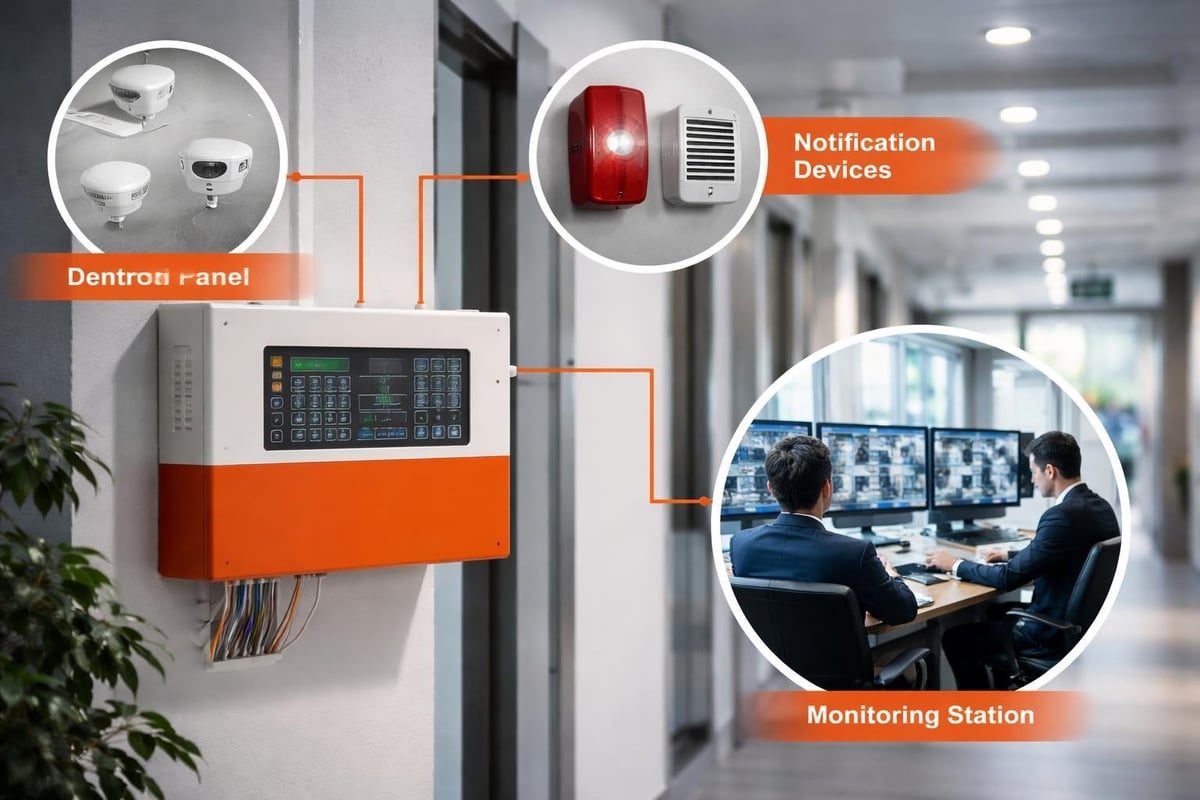
Every commercial fire alarm system relies on several essential elements working together seamlessly. The control panel acts as the system’s brain, monitoring all connected devices and coordinating responses when threats are detected.
Detection devices form the sensory network throughout the facility:
- Smoke detectors identify airborne particles from combustion
- Heat detectors respond to temperature increases or rapid thermal changes
- Flame detectors recognise infrared or ultraviolet light signatures
- Multi-sensor detectors combine technologies for enhanced accuracy
- Manual call points allow occupants to trigger alarms immediately
Notification devices ensure everyone receives alerts regardless of their location within the building. Sounders produce distinctive alarm tones, whilst visual indicators such as strobes accommodate hearing-impaired individuals. Voice evacuation systems provide clear instructions during emergencies, reducing panic and streamlining evacuations.
Regulatory Requirements and Compliance Standards
Commercial buildings in the UK must adhere to comprehensive fire safety legislation that mandates appropriate alarm systems. The Regulatory Reform (Fire Safety) Order 2005 places responsibility on building owners and employers to conduct thorough fire risk assessments and implement suitable protective measures.
British Standard BS 5839 provides detailed specifications for fire detection and alarm systems in non-domestic premises. This standard categorises systems into different types based on protection level and automation requirements.
| System Category | Coverage Level | Typical Applications |
|---|---|---|
| L1 | Full building coverage | High-risk facilities, hospitals |
| L2 | Protected escape routes plus high-risk areas | Hotels, retail centres |
| L3 | Escape routes only | Offices, warehouses |
| L4 | Selected areas based on risk assessment | Industrial premises |
| L5 | Custom design for specific applications | Specialist facilities |
Understanding fire safety and protection regulations ensures your installation meets current legal requirements. The Occupational Safety and Health Administration (OSHA) fire safety guidelines provide additional workplace-specific requirements that complement UK standards.
Design Considerations for Commercial Environments
Designing an effective commercial fire alarm system requires careful analysis of the building’s characteristics, occupancy patterns, and specific risk factors. Ceiling heights, room configurations, and environmental conditions all influence detector placement and type selection.
Facilities with challenging environments need specialised solutions. Kitchens require kitchen suppression systems that work alongside fire detection, whilst dusty industrial areas may need beam detectors to avoid false alarms.
Zoning strategy divides the building into manageable sections for precise fire location identification. Each zone typically corresponds to a specific area or floor level, enabling emergency responders to target their efforts effectively. Large commercial premises may incorporate multiple panels networked together for centralised monitoring.
Installation and Commissioning Process
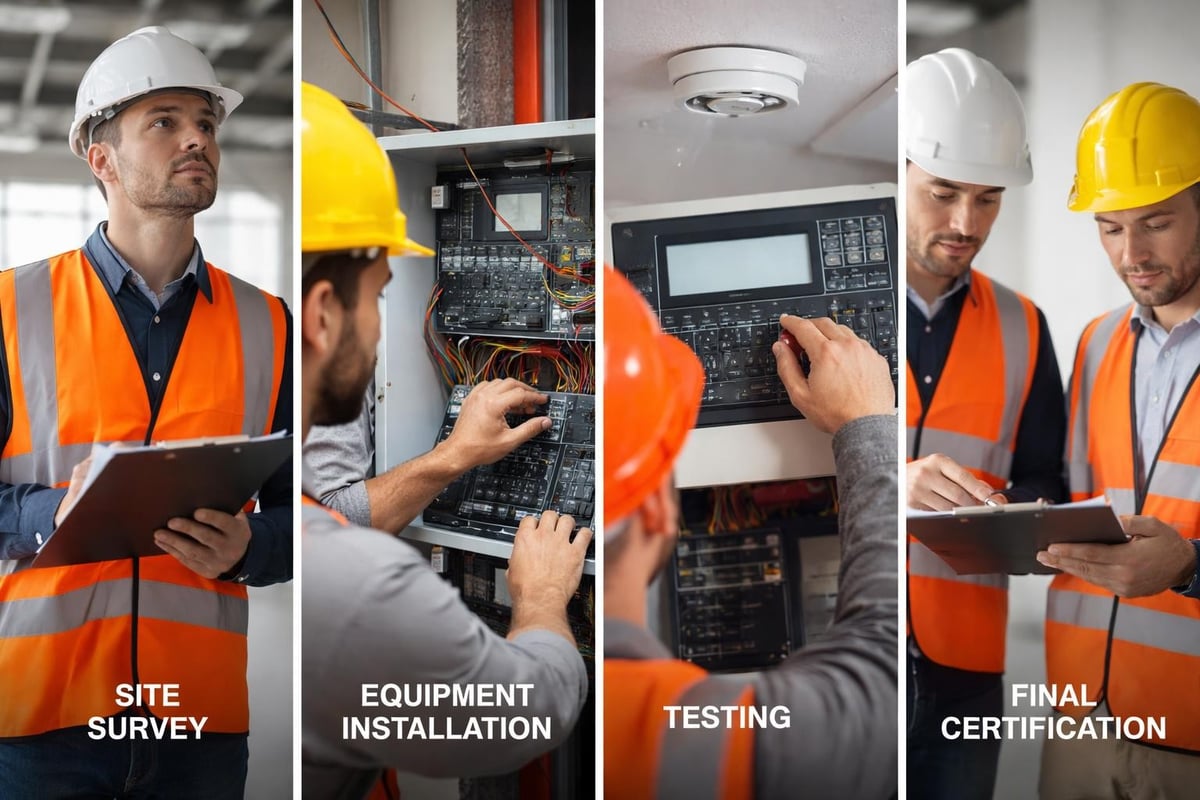
Professional installation ensures your commercial fire alarm system operates reliably when needed most. Experienced engineers begin with comprehensive site surveys, mapping detector locations, cable routes, and equipment positions according to British Standards.
The installation phase follows a structured approach:
- Pre-installation planning including final design approval and equipment procurement
- Cable infrastructure installation throughout designated zones
- Device mounting at calculated positions for optimal coverage
- Control panel configuration programming zone information and system parameters
- Integration with existing building systems and monitoring services
- Comprehensive testing of all components and communication pathways
- Documentation creation including as-fitted drawings and operation manuals
Commissioning verifies every aspect meets design specifications and regulatory requirements. Engineers simulate various fire scenarios, test manual call points, and confirm notification devices activate throughout the building. This rigorous process ensures the system responds correctly under all conditions.
Advanced Technologies and Integration Options
Contemporary commercial fire alarm systems leverage cutting-edge technologies for enhanced performance and reliability. Addressable systems assign unique identifiers to each device, providing precise location data and enabling sophisticated fault monitoring.
Wireless solutions offer installation flexibility in listed buildings or retrofit applications where cable runs prove impractical. Modern wireless fire alarms deliver comparable performance to wired systems whilst reducing installation time and disruption.
Analogue addressable technology allows detectors to report continuous environmental data rather than simple on/off states. Control panels analyse trends, identifying slow-developing fires earlier and reducing false alarms through intelligent algorithms.
Integration with other building systems creates comprehensive safety ecosystems:
- Access control systems automatically unlock doors during evacuations
- CCTV networks provide visual verification of alarm conditions
- Building management systems coordinate HVAC shutdown and smoke control
- Emergency lighting activates to illuminate escape routes
- Voice evacuation systems deliver location-specific instructions
Commercial security systems benefit from unified platforms that manage both fire and intrusion protection through single interfaces.
Monitoring and Emergency Response
Professional monitoring services provide round-the-clock supervision of your commercial fire alarm system. When activation occurs, signals transmit immediately to Alarm Receiving Centres staffed by trained operators.
These centres follow predetermined response protocols:
- Verify the alarm condition through system diagnostics
- Contact designated personnel at the protected premises
- Notify fire and rescue services simultaneously
- Log all events for compliance documentation
Commercial fire alarm monitoring companies maintain redundant communication pathways including telephone lines, cellular networks, and IP connections. This redundancy ensures signal transmission even if primary routes fail.
| Communication Method | Advantages | Considerations |
|---|---|---|
| PSTN (telephone line) | Proven reliability | Vulnerable to line cuts |
| GSM (cellular) | Independent of building infrastructure | Requires signal coverage |
| IP (internet) | High-speed transmission | Dependent on network stability |
| Dual-path | Maximum reliability | Higher ongoing costs |
Maintenance Requirements and Testing Schedules
Regular maintenance keeps commercial fire alarm systems functioning at peak efficiency. British Standard BS 5839 mandates specific inspection frequencies to ensure continued compliance and reliability.
Weekly testing involves activating different call points throughout the building on a rotational basis. This simple procedure verifies basic operation whilst familiarising occupants with alarm sounds and evacuation procedures.
Quarterly inspections conducted by competent persons examine visible components, test backup power supplies, and verify system logs for faults or anomalies. These checks identify potential issues before they compromise protection.
Annual servicing by qualified engineers encompasses comprehensive examination of all system elements. Technicians clean detectors, verify calibration, test communication pathways, and update documentation. This thorough fire alarm testing regime ensures ongoing compliance with regulatory requirements.

Common Challenges and Solutions
Commercial fire alarm systems face various operational challenges that require professional attention. False alarms represent the most frequent issue, typically caused by environmental factors, equipment malfunction, or system design flaws.
Dust accumulation within detector chambers triggers spurious activations. Regular cleaning during maintenance visits eliminates this problem, particularly in industrial environments or during construction activities. Selecting appropriate detector types for specific areas prevents sensitivity mismatches.
Battery failures in backup power supplies can compromise protection during mains outages. Replacement schedules based on manufacturer recommendations ensure reliable operation. Modern systems incorporate battery monitoring that alerts maintenance teams before failures occur.
System obsolescence poses long-term challenges as manufacturers discontinue support for ageing equipment. Proactive replacement planning prevents situations where spare parts become unavailable. Upgrading to current technology also delivers performance benefits and enhanced integration capabilities.
Selecting the Right System for Your Business
Choosing an appropriate commercial fire alarm system requires balancing protection needs, regulatory requirements, and budget constraints. Building size, occupancy type, and risk profile all influence the optimal solution.
Small to medium enterprises may find conventional systems adequate for straightforward layouts with limited zones. These proven technologies offer reliable protection at competitive costs whilst meeting basic compliance standards.
Larger facilities benefit from addressable systems that provide detailed information and sophisticated management capabilities. The higher initial investment delivers long-term value through reduced false alarms, easier maintenance, and comprehensive monitoring.
Specialist environments need tailored approaches incorporating multiple detection technologies. Museums require systems that protect valuable collections without triggering unnecessary responses. Healthcare facilities demand solutions that integrate with medical equipment and support phased evacuation protocols.
Working with experienced providers ensures appropriate system specification. Professionals conduct detailed risk assessments, recommend suitable technologies, and design installations that exceed minimum compliance standards. The National Fire Protection Association (NFPA) 72 standards provide international benchmarks for system design and installation.
Cost Considerations and Budgeting
Commercial fire alarm system investments vary significantly based on building characteristics and protection requirements. Understanding cost components helps develop realistic budgets and evaluate proposals effectively.
Initial capital expenditure includes:
- Equipment purchase (panels, detectors, sounders, cabling)
- Professional design and engineering services
- Installation labour and project management
- System commissioning and certification
- Integration with existing building systems
Ongoing operational costs encompass:
- Annual maintenance contracts
- Monitoring service subscriptions
- Battery replacements and consumables
- System upgrades and expansions
- Compliance testing and documentation
Addressable systems typically command higher upfront costs but deliver operational savings through reduced false alarms and simplified troubleshooting. Extended warranties and comprehensive maintenance packages protect against unexpected expenses whilst ensuring continued compliance.
| System Type | Typical Cost Range (per point) | Best Applications |
|---|---|---|
| Conventional | £35-£65 | Small buildings, simple layouts |
| Addressable | £75-£150 | Multi-zone facilities, complex buildings |
| Wireless | £100-£200 | Retrofit projects, listed buildings |
| Analogue addressable | £120-£250 | High-value premises, critical facilities |
Training and Competency Requirements
Effective fire safety depends on competent personnel who understand system operation and response protocols. Building occupants need basic awareness, whilst designated individuals require comprehensive training.
Responsible persons under fire safety legislation must understand their legal obligations, conduct regular testing, and maintain accurate records. Training programmes cover risk assessment, emergency planning, and system management fundamentals.
Fire wardens receive instruction on evacuation procedures, assembly point management, and communication protocols during emergencies. These individuals play crucial roles in ensuring orderly responses when alarms activate.
Facilities management teams benefit from technical training covering system operation, fault diagnosis, and coordination with external contractors. Understanding panel functions enables quicker response to issues and more effective maintenance scheduling.
Accredited training providers deliver certificated programmes recognised across the industry. Regular refresher courses ensure knowledge remains current as regulations evolve and technologies advance. The International Code Council (ICC) International Fire Code establishes benchmark competencies for fire safety professionals.
Future Developments and Emerging Technologies
The commercial fire alarm industry continues evolving with innovations that enhance detection accuracy, reduce false alarms, and improve emergency response coordination. Artificial intelligence algorithms analyse environmental data patterns, distinguishing genuine threats from benign conditions with unprecedented precision.
Cloud-based management platforms enable remote monitoring and configuration from any location. Facilities managers access real-time system status, review historical data, and receive instant notifications through mobile applications. This connectivity supports proactive maintenance and rapid response to developing issues.
Internet of Things integration creates intelligent buildings where fire systems communicate seamlessly with all protective and operational technologies. Automated responses coordinate across multiple systems, optimising safety whilst minimising disruption during non-emergency conditions.
Advanced analytics identify trends that inform risk management strategies. Data collection reveals high-risk areas, optimal detector placement, and effective evacuation routes. Research from organisations like the National Institute of Standards and Technology (NIST) drives continuous improvement in detection technologies and response protocols.
Environmental sustainability influences system design as manufacturers develop energy-efficient components and recyclable materials. Solar-powered wireless devices reduce operational costs whilst supporting corporate environmental objectives.
Implementing a robust commercial fire alarm system protects your most valuable assets whilst ensuring full compliance with UK fire safety regulations. Professional design, quality installation, and diligent maintenance create reliable protection that responds effectively when every second counts. Logic Fire and Security brings decades of expertise to businesses across the United Kingdom, delivering comprehensive fire detection solutions tailored to your specific requirements. Our experienced engineers guide you through every stage from initial risk assessment and system design through installation, commissioning, and ongoing maintenance, ensuring your premises benefit from the highest standards of fire protection.