

Modern businesses face increasingly sophisticated security challenges that demand equally advanced solutions. Video surveillance systems for business have evolved from simple recording devices into intelligent, networked platforms that integrate seamlessly with broader security infrastructures. Whether protecting assets, ensuring employee safety, or meeting regulatory compliance requirements, selecting and implementing the right surveillance technology requires careful consideration of numerous technical, legal, and operational factors.
Understanding Modern Video Surveillance Technology
Today's video surveillance systems for business incorporate artificial intelligence, cloud storage, and advanced analytics capabilities that transform raw footage into actionable intelligence. These systems differ significantly from traditional CCTV installations, offering enhanced resolution, remote accessibility, and integration with other security platforms.
IP Cameras Versus Analogue Systems
The transition from analogue to digital represents the most significant evolution in surveillance technology. IP cameras transmit data over network infrastructure, enabling higher resolutions, simplified cabling, and advanced features like motion detection and facial recognition. These systems typically offer 4K or higher resolution, compared to the standard definition limitations of analogue alternatives.
Key advantages of IP-based systems include:
- Remote access via smartphones and tablets
- Scalability without extensive infrastructure changes
- Integration with access control and alarm systems
- Advanced analytics and automated alerts
- Superior image quality in various lighting conditions
Analogue systems remain viable for specific applications, particularly when upgrading existing infrastructure. However, most businesses implementing new video surveillance systems for business choose IP-based solutions for their flexibility and future-proofing capabilities.
Cloud Storage Versus On-Premise Solutions
Storage architecture represents a critical decision when implementing surveillance systems. Cloud-based solutions eliminate on-site server requirements, providing automatic backups and remote accessibility. However, they introduce ongoing subscription costs and potential bandwidth limitations.
| Feature | Cloud Storage | On-Premise Storage |
|---|---|---|
| Initial Cost | Lower | Higher |
| Ongoing Costs | Subscription fees | Maintenance only |
| Accessibility | Anywhere with internet | Local network or VPN |
| Scalability | Unlimited | Hardware dependent |
| Data Control | Third-party servers | Complete ownership |
| Maintenance | Vendor managed | In-house responsibility |
Many organisations adopt hybrid approaches, maintaining critical footage locally whilst leveraging cloud storage for extended retention periods and disaster recovery.
Legal Compliance and Privacy Considerations
Implementing video surveillance systems for business necessitates careful attention to legal requirements and privacy regulations. The General Data Protection Regulation (GDPR) imposes strict obligations on organisations collecting and processing video data, whilst industry-specific regulations may introduce additional requirements.
GDPR Requirements for Business Surveillance
Under GDPR, video footage constitutes personal data requiring lawful processing grounds. Businesses must conduct Data Protection Impact Assessments (DPIAs) for surveillance systems, particularly those employing facial recognition or monitoring public areas.
Essential compliance measures include:
- Clearly displayed signage informing individuals of surveillance
- Defined retention periods with automatic deletion
- Access controls limiting who can view footage
- Documentation of legitimate business interests
- Procedures for subject access requests
The Information Commissioner's Office provides detailed guidance on video surveillance laws and compliance requirements, emphasising the balance between security needs and individual privacy rights.
Industry-Specific Regulatory Requirements
Certain sectors face additional surveillance obligations beyond general data protection laws. Healthcare facilities, financial institutions, and educational establishments must comply with sector-specific frameworks governing video monitoring.
Organisations handling sensitive information should integrate their surveillance strategy with broader commercial security systems to ensure comprehensive compliance. This integration proves particularly important when surveillance systems interact with access control platforms or alarm monitoring infrastructure.
Strategic Camera Placement and Coverage
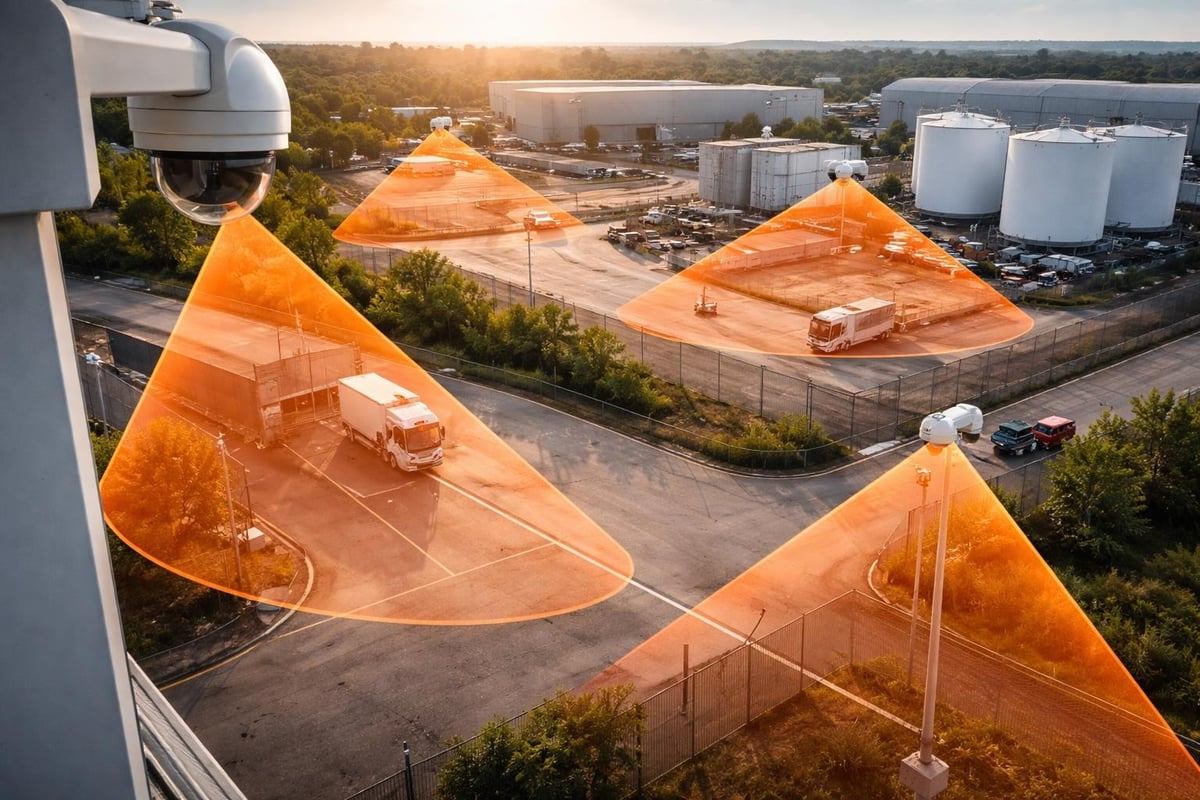
Effective surveillance extends beyond equipment selection to encompass strategic positioning that maximises coverage whilst minimising blind spots. Professional installation ensures optimal camera angles, appropriate lighting considerations, and integration with existing security infrastructure.
High-Priority Monitoring Locations
Video surveillance systems for business should prioritise areas with highest security risks or compliance requirements. Entry points, cash handling areas, inventory storage, and restricted access zones typically warrant continuous monitoring.
- Building perimeters: Deterring unauthorised access and documenting incidents
- Reception areas: Monitoring visitor traffic and employee interactions
- Loading bays: Preventing theft and verifying deliveries
- Car parks: Enhancing employee safety and investigating incidents
- Server rooms: Protecting critical infrastructure and documenting access
Remote CCTV monitoring enables real-time response to detected anomalies, transforming passive recording into active security management.
Avoiding Common Installation Mistakes
Poor planning undermines even the most sophisticated equipment. Cameras positioned too high provide inadequate facial detail, whilst inadequate lighting renders night-time footage unusable. Best practices for video surveillance emphasise professional site surveys and regular system audits.
Environmental factors significantly impact performance. Outdoor cameras require weatherproofing and appropriate housing, whilst indoor installations must consider aesthetic integration and discretion. Working with experienced providers ensures installations meet both functional and regulatory requirements.
Integration with Comprehensive Security Solutions
Modern security demands integrated approaches combining multiple technologies. Video surveillance systems for business deliver maximum value when functioning as components within unified security ecosystems rather than standalone installations.
Access Control Integration
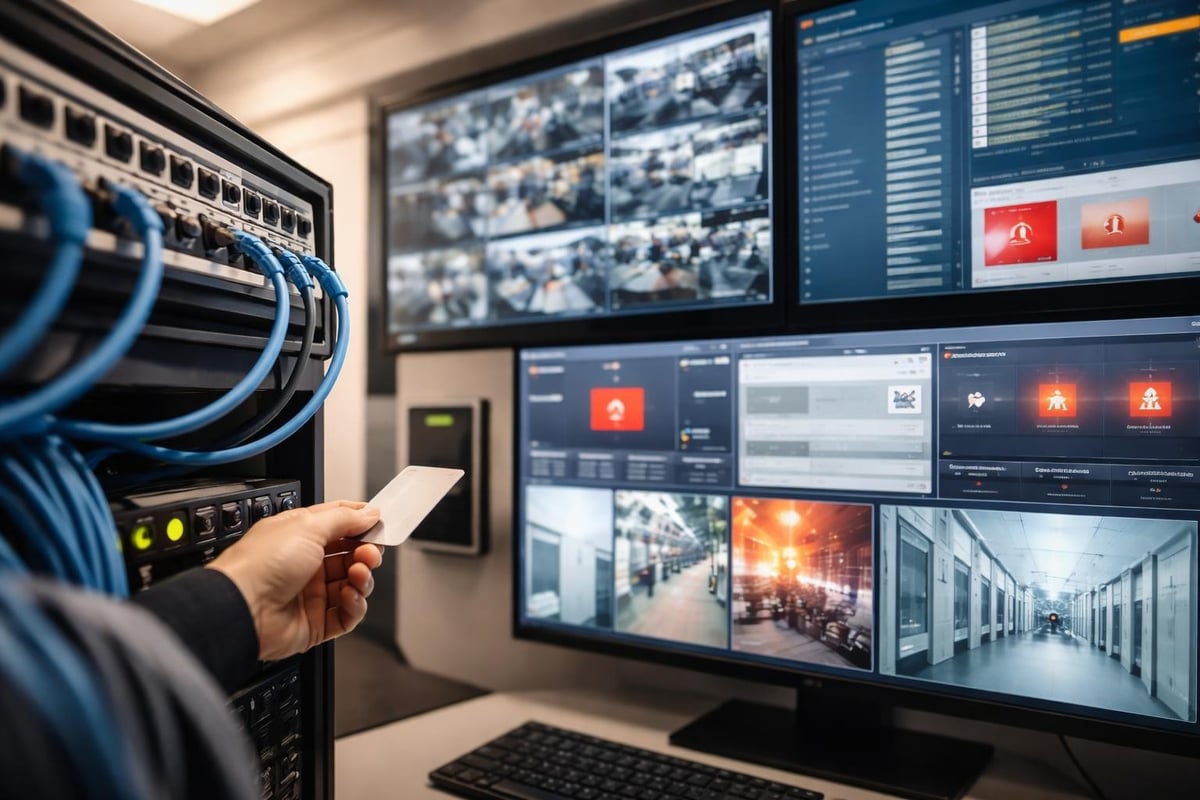
Linking surveillance with building access control systems creates powerful verification and audit capabilities. When access credentials trigger camera recording, organisations maintain detailed logs of who entered restricted areas and when.
This integration proves invaluable for investigating incidents and demonstrating compliance with security protocols. Cameras positioned at access points provide visual confirmation that authorised individuals used their credentials, preventing tailgating and credential sharing.
Fire Safety System Coordination
Integrating video surveillance with fire detection infrastructure enhances emergency response effectiveness. Cameras positioned near evacuation alert systems enable remote verification of building clearance and identification of individuals requiring assistance.
During fire incidents, surveillance footage helps emergency responders understand building occupancy and identify the incident's location. This coordination between protection systems demonstrates the value of unified security approaches.
| Integration Type | Primary Benefits | Use Cases |
|---|---|---|
| Access Control | Identity verification, audit trails | Restricted areas, server rooms |
| Intrusion Detection | Visual verification, false alarm reduction | After-hours monitoring, perimeter security |
| Fire Safety | Emergency response, evacuation confirmation | Building clearance, incident documentation |
| Building Management | Energy efficiency, occupancy monitoring | HVAC optimisation, space utilisation |
Cybersecurity Considerations
As video surveillance systems for business increasingly rely on network connectivity, cybersecurity becomes paramount. Compromised surveillance systems expose organisations to data breaches, privacy violations, and operational disruption.
Securing Network-Connected Cameras
Default passwords represent the most common vulnerability in IP camera deployments. Attackers routinely scan networks for devices using manufacturer defaults, gaining easy access to surveillance feeds and potentially broader network infrastructure.
Implementing cybersecurity best practices for video surveillance protects against unauthorised access. These measures include changing default credentials, implementing network segmentation, and maintaining current firmware versions.
Essential security measures:
- Unique, complex passwords for each device
- Regular firmware updates addressing known vulnerabilities
- Network segmentation isolating surveillance systems
- Encrypted data transmission protocols
- Multi-factor authentication for administrative access
- Regular security audits and penetration testing
Managing User Access and Permissions
Role-based access control ensures employees view only footage relevant to their responsibilities. Security managers require comprehensive system access, whilst department supervisors might access specific camera feeds related to their areas.
Detailed access logs document who viewed footage and when, creating audit trails that support investigations and demonstrate compliance. These logs prove particularly valuable when responding to subject access requests under GDPR.
Selecting Appropriate System Specifications
Video surveillance systems for business must balance image quality, storage requirements, and budget constraints. Higher resolution cameras produce clearer images but consume significantly more storage capacity and bandwidth.
Resolution and Frame Rate Considerations
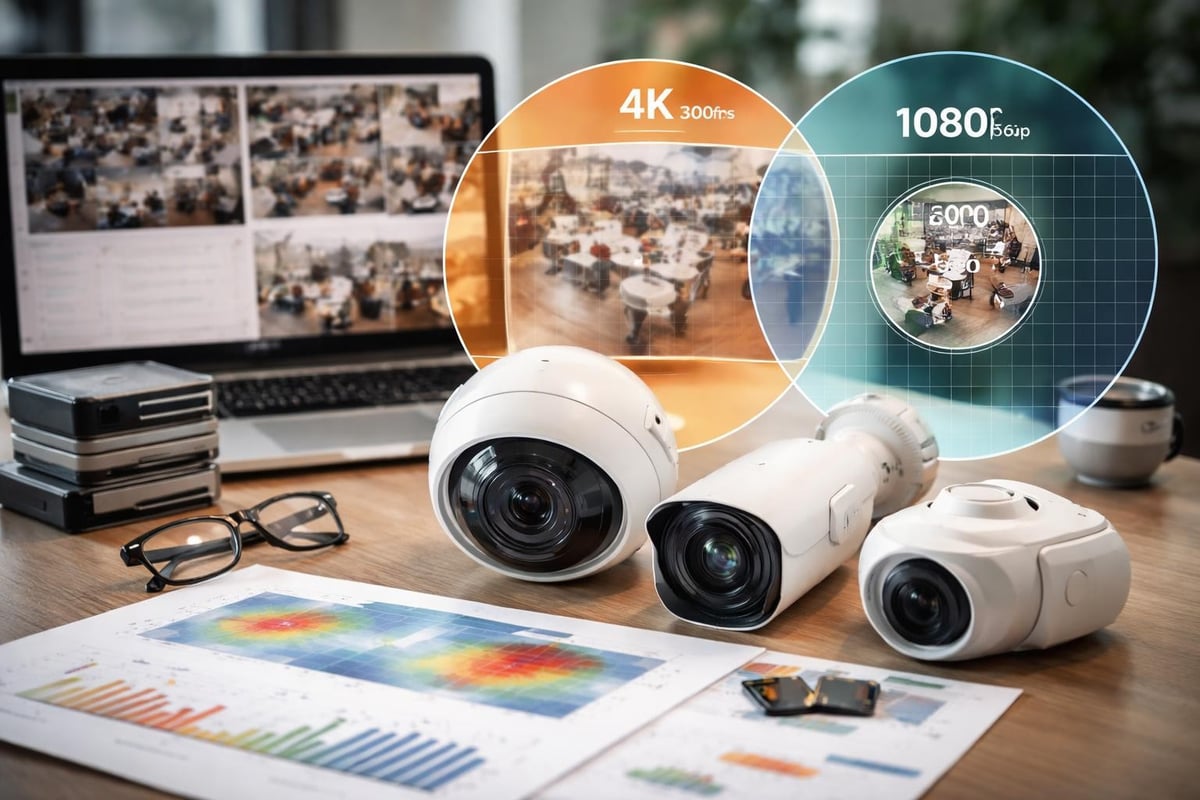
Modern systems typically offer resolutions from 2MP (1080p) to 8MP (4K) or higher. Whilst 4K cameras provide exceptional detail for facial recognition and licence plate reading, they may prove excessive for general area monitoring.
Frame rates impact both storage requirements and motion capture quality. Standard 15 frames per second suffices for most applications, whilst high-traffic areas or specific compliance requirements might necessitate 30fps or higher.
Storage Capacity Planning
Calculating storage requirements involves considering camera count, resolution, frame rate, compression codec, and retention period. A 4MP camera recording at 20fps using H.265 compression typically generates approximately 2GB of data daily.
Factors affecting storage needs:
- Number of cameras in the system
- Recording resolution and frame rate
- Compression technology (H.264 vs H.265)
- Motion-based versus continuous recording
- Required retention period (legal and operational)
- Redundancy and backup requirements
Most businesses maintain 30 to 90 days of footage, though specific industries face longer retention obligations. Financial institutions often retain surveillance data for extended periods supporting fraud investigations and regulatory compliance.
Ongoing Maintenance and System Management
Installing video surveillance systems for business represents the beginning rather than the conclusion of effective security implementation. Regular maintenance ensures continued reliability whilst system management adapts to evolving security requirements.
Preventive Maintenance Schedules
Professional maintenance programmes include camera cleaning, lens adjustment, connection verification, and storage system health checks. Outdoor cameras require particular attention, as weather exposure affects performance and component longevity.
Quarterly maintenance visits typically suffice for most installations, though critical applications might warrant monthly inspections. These scheduled services identify potential failures before they compromise security coverage.
Recommended maintenance activities:
- Clean camera lenses and housings
- Verify focus and field of view
- Test recording functionality
- Review storage capacity and health
- Update firmware and software
- Verify integration with other systems
- Test remote access capabilities
Performance Monitoring and Analytics
Modern systems provide detailed performance metrics enabling proactive management. Storage capacity alerts, camera offline notifications, and motion detection sensitivity adjustments help maintain optimal operation.
Advanced analytics transform surveillance systems into business intelligence tools. People counting, dwell time analysis, and heat mapping provide insights supporting operational decisions beyond security applications.
Cost Considerations and Return on Investment
Understanding the total cost of ownership for video surveillance systems for business requires evaluating initial installation expenses alongside ongoing operational costs. Choosing the right surveillance system involves balancing features against budget constraints whilst ensuring the solution meets current and anticipated requirements.
Initial Investment Components
System costs vary significantly based on camera count, resolution, storage architecture, and installation complexity. A small business might implement a basic four-camera system for £2,000, whilst enterprise deployments easily exceed £100,000.
| Cost Category | Budget System | Mid-Range System | Enterprise System |
|---|---|---|---|
| Cameras (per unit) | £100-£200 | £300-£600 | £800-£2,000+ |
| Storage | £300-£800 | £1,500-£3,000 | £5,000-£20,000+ |
| Installation | £500-£1,500 | £2,000-£5,000 | £10,000-£50,000+ |
| Software/Licensing | £0-£500 | £1,000-£3,000 | £5,000-£15,000+ |
Professional installation ensures optimal camera positioning, proper network configuration, and integration with existing security infrastructure. Whilst DIY installation might appear cost-effective, improper implementation compromises system effectiveness and potentially invalidates warranties.
Operational Expenses and Lifecycle Costs
Beyond initial purchase, video surveillance systems for business incur ongoing expenses including maintenance, software licensing, cloud storage subscriptions, and eventual equipment replacement. These operational costs significantly impact total ownership expenses.
Cloud-based systems typically charge monthly fees per camera, accumulating substantial costs over system lifetime. However, they eliminate on-premise server expenses and simplify scalability. On-premise solutions require hardware refresh cycles every five to seven years, representing significant capital expenditure.
Professional Installation and Support
Partnering with experienced security providers ensures systems meet technical specifications, comply with legal requirements, and integrate effectively with broader security infrastructure. Professional installers understand nuances of camera positioning, network configuration, and regulatory compliance that casual users might overlook.
Reputable providers offer comprehensive support throughout system lifecycle, from initial consultation through ongoing maintenance and eventual upgrades. This continuity proves invaluable when systems require expansion or integration with additional security technologies.
Organisations seeking integrated approaches benefit from providers offering both surveillance and complementary security services. This unified approach ensures compatibility between video surveillance systems for business, intruder detection systems, and fire safety infrastructure.
Implementing effective video surveillance systems for business requires balancing technical capabilities, legal compliance, cybersecurity, and operational requirements. Professional guidance ensures organisations deploy solutions that protect assets, enhance safety, and deliver long-term value whilst meeting evolving security challenges. Logic Fire and Security brings decades of expertise in designing, installing, and maintaining integrated security solutions for businesses across the UK. Our comprehensive approach ensures your surveillance system works seamlessly with fire detection, access control, and alarm monitoring to create unified protection tailored to your specific requirements.