

Understanding how does a hearing loop work is essential for businesses committed to accessibility and legal compliance in 2026. These assistive listening systems have become a critical component in commercial environments, enabling organisations to meet the needs of employees, clients, and visitors with hearing impairments. For businesses across the UK, implementing hearing loop technology demonstrates not only regulatory adherence but also a commitment to inclusive customer service and workplace accessibility.
The Fundamental Technology Behind Hearing Loops
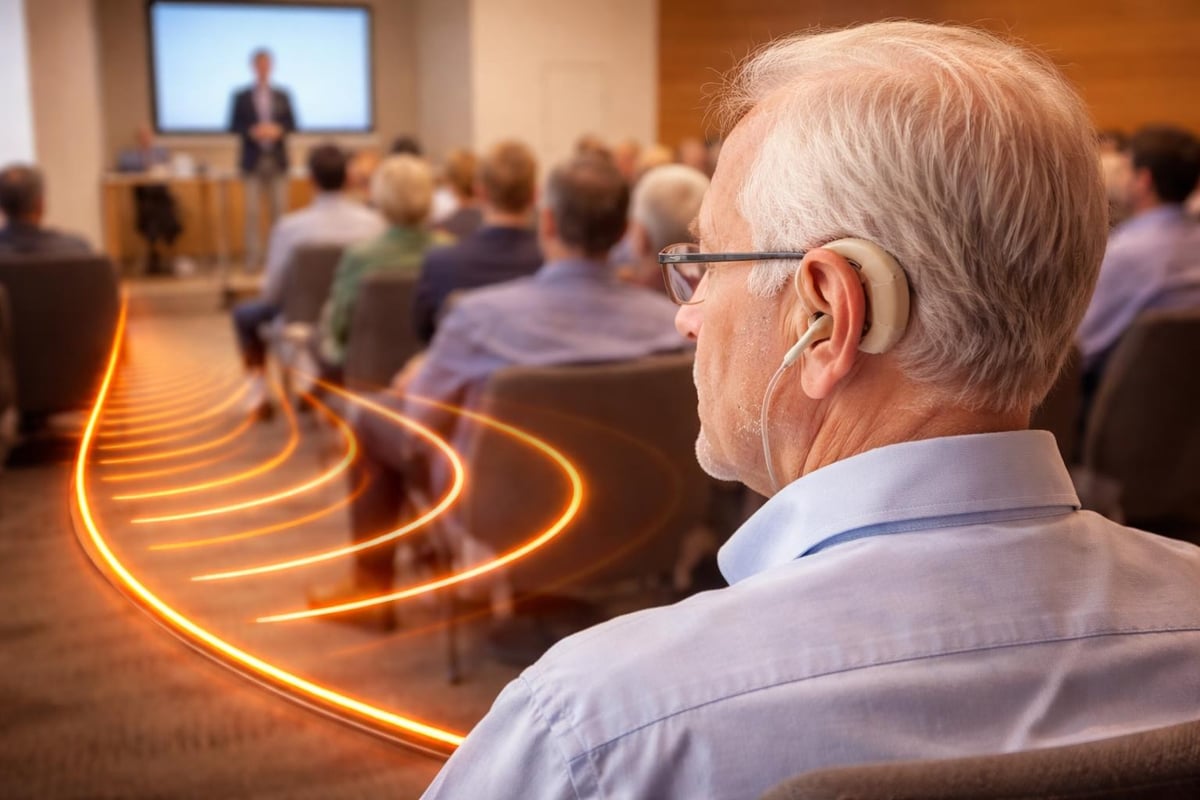
The technology that enables hearing loops to function is elegantly simple yet remarkably effective. A hearing loop system transmits sound directly to hearing aids equipped with a telecoil (T-coil) through electromagnetic induction. This process begins when an audio signal from a microphone, public address system, or another sound source is fed into an amplifier known as an induction loop driver. The amplified signal then travels through a wire loop installed around the perimeter of a designated area, creating a magnetic field that fluctuates in accordance with the audio input.
When a hearing aid user activates their device's telecoil setting, the magnetic field induces a small electrical current in the telecoil. This current is then amplified by the hearing aid and converted into sound that the user hears directly in their ear. The process eliminates the typical challenges faced by hearing aid users in commercial environments, such as background noise, poor acoustics, and distance from the sound source.
The Role of Electromagnetic Fields
The magnetic field generated by the loop cable is the critical component that makes this technology function. Unlike traditional sound waves that travel through air and can be distorted by environmental factors, the magnetic field passes through most materials without significant degradation. This characteristic makes hearing loops particularly effective in commercial settings where physical barriers, ambient noise, and varying acoustic conditions might otherwise compromise audio clarity.
The strength and uniformity of the magnetic field must meet specific international standards to ensure optimal performance. Professional installation by companies experienced in commercial security systems and building accessibility ensures that the field strength complies with IEC 60118-4 specifications throughout the designated listening area.
Essential Components of a Commercial Hearing Loop System
Every hearing loop installation comprises several key components that work together to deliver clear, accessible audio. Understanding these elements helps businesses make informed decisions about system specifications and vendor selection.
| Component | Function | Commercial Considerations |
|---|---|---|
| Audio Source | Provides the original sound input | Must integrate with existing PA systems, microphones, or conferencing equipment |
| Induction Loop Driver | Amplifies and processes the audio signal | Power rating must match room size; typically 1-10 watts per square metre |
| Loop Cable | Creates the electromagnetic field | Installation method varies: floor, ceiling, or wall-mounted depending on venue structure |
| Test Receiver | Verifies system performance | Essential for maintenance and compliance verification |
The induction loop driver serves as the system's heart, converting audio signals into the electrical current that flows through the loop cable. In commercial applications, these drivers must deliver sufficient power to cover large areas while maintaining signal clarity. The comprehensive fire and security solutions approach taken by specialist installers ensures that hearing loop systems integrate seamlessly with other building systems.
Audio Source Integration
Modern commercial hearing loop systems must integrate with diverse audio sources. Conference rooms require connection to microphone systems and video conferencing equipment. Reception areas need integration with public address systems. Auditoriums may demand connection to complex sound reinforcement systems. This versatility is fundamental to understanding how does a hearing loop work in real-world business environments.
Professional installers configure input connections to accept balanced or unbalanced audio signals, ensuring compatibility with existing infrastructure. Automatic gain control prevents distortion from varying source volumes, whilst frequency response optimisation ensures speech intelligibility across all hearing aid models.
How Different Loop Configurations Serve Commercial Spaces
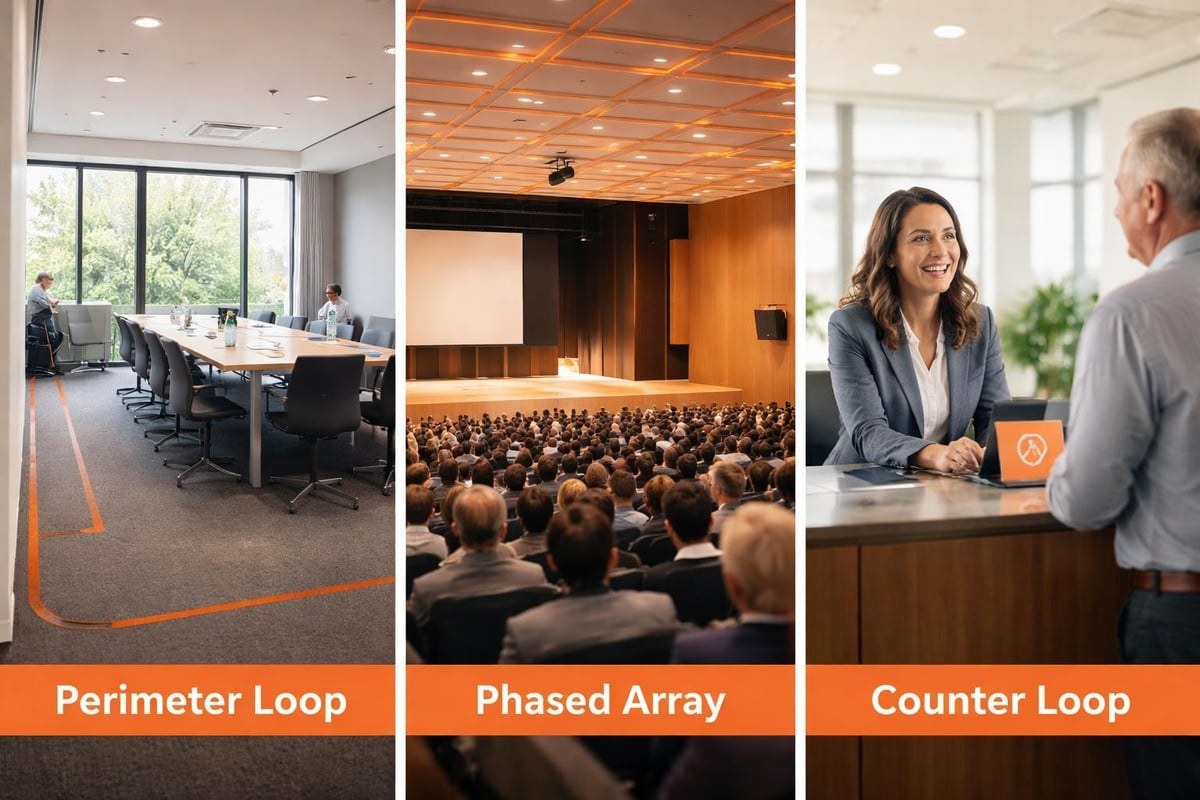
The physical configuration of the loop cable significantly impacts system performance and suitability for different commercial environments. Three primary configurations address varying architectural and functional requirements.
Perimeter Loop Systems
Perimeter loops represent the most common configuration for rooms and defined spaces. The cable runs around the room's perimeter, typically beneath floor coverings or above ceiling tiles. This approach works exceptionally well for:
- Meeting rooms and boardrooms
- Customer service counters and reception desks
- Small to medium-sized conference facilities
- Interview rooms and consultation spaces
The perimeter configuration creates a relatively uniform magnetic field within the bounded area, though field strength may vary towards the centre of very large spaces. Professional installers calculate cable routing and driver specifications to ensure compliance with accessibility standards throughout the coverage area.
Phased Array Systems
Large commercial venues such as auditoriums, lecture theatres, and conference halls often require phased array configurations. This advanced approach divides the coverage area into multiple zones, each with its own loop cable section. The sections are driven with carefully controlled phase relationships to create uniform field strength across the entire space.
Phased arrays overcome the field strength variations inherent in simple perimeter loops covering large areas. However, they demand sophisticated design calculations and precise installation. Only experienced contractors with security and access control expertise should undertake such installations.
Counter Loop Solutions
Customer-facing businesses benefit from localised counter loop systems that provide hearing assistance at specific transaction points. These compact systems install beneath counters or service desks, creating a concentrated magnetic field in the immediate vicinity. Understanding how hearing loops work at counter positions helps businesses optimise customer interaction points.
Counter loops excel in environments such as:
- Bank teller positions
- Retail checkout counters
- Healthcare reception desks
- Ticket sales booths
- Information enquiry points
The Technical Process of Signal Transmission
Grasping how does a hearing loop work requires understanding the precise sequence of signal processing and transmission. The journey from spoken word to heard sound involves several technical stages, each critical to system performance.
The process begins when sound enters the system through a microphone or line-level input. This analogue or digital signal feeds into the induction loop driver's input stage, where automatic level control adjusts gain to prevent distortion whilst maximising signal-to-noise ratio. The driver's amplification stage then boosts the signal to the power level required for the specific loop configuration.
Modern drivers employ compression technology to enhance speech intelligibility. This processing reduces the dynamic range of the audio signal, making quieter sounds more audible whilst preventing louder sounds from causing distortion. Frequency response shaping emphasises the speech frequency range (typically 200-4000 Hz) where maximum clarity is essential.
Magnetic Field Generation and Propagation
The amplified electrical signal flows through the loop cable, generating a fluctuating magnetic field proportional to the audio waveform. The field's strength, measured in milliamps per metre (mA/m), must meet specific minimum values defined by international standards. Professional installations achieve field strengths of 100-400 mA/m within the designated listening area, ensuring compatibility with all telecoil-equipped hearing aids.
The magnetic field propagates omnidirectionally from the cable, creating a three-dimensional coverage zone. Users can move freely within this zone whilst maintaining consistent audio reception. This mobility represents a significant advantage over directional assistive listening systems, making hearing loops ideal for dynamic commercial environments where people move during conversations or presentations.
Compliance Requirements for UK Businesses
UK businesses must understand the legal framework governing accessibility provisions when considering how does a hearing loop work within compliance contexts. The Equality Act 2010 requires organisations to make reasonable adjustments for disabled individuals, including those with hearing impairments. Failure to provide adequate assistive listening facilities can constitute discrimination.
Buildings and venues that regularly host public events, provide customer services, or employ staff with hearing impairments should assess their hearing loop requirements. Government guidance suggests that hearing loops represent a reasonable adjustment in most commercial environments. The technical workings detailed by industry specialists demonstrate that implementation is both technically feasible and cost-effective.
Signage and User Communication
Regulatory compliance extends beyond system installation to include appropriate signage. The international hearing loop symbol must be displayed prominently at all locations where hearing loop facilities are available. This visual indicator enables hearing aid users to identify assisted listening areas immediately, maximising system utility.
Businesses should also train customer-facing staff to:
- Recognise the hearing loop symbol and understand its significance
- Direct hearing aid users to activate their T-coil setting
- Speak clearly into designated microphones when addressing loop users
- Verify that individuals receive adequate assistance
System Design Considerations for Commercial Applications
Professional hearing loop design balances multiple technical and operational factors to deliver optimal performance. The process begins with detailed site surveys that assess room dimensions, construction materials, existing audio infrastructure, and anticipated usage patterns.
Metal structural elements within buildings can interfere with hearing loop performance. Steel reinforcement in concrete floors, metal ceiling grids, and structural steelwork all influence magnetic field distribution. Experienced designers account for these factors when calculating cable routing and driver specifications. This expertise parallels the technical knowledge required for commercial fire detection systems, where environmental factors significantly impact system performance.
Environmental Interference Management
Commercial environments contain numerous potential sources of electromagnetic interference that can degrade hearing loop performance. Fluorescent lighting, computer equipment, electrical transformers, and mains wiring all generate electromagnetic fields that may be picked up by telecoils alongside the desired audio signal.
| Interference Source | Mitigation Strategy |
|---|---|
| Fluorescent lighting | Use electronic ballasts; maintain separation distance from loop cable |
| Mains wiring | Route loop cable perpendicular to power cables; maintain minimum 1-metre separation |
| Computer equipment | Install metal-in-gap drivers to reduce low-frequency spill; use balanced audio connections |
| Adjacent loop systems | Implement frequency shifting or phase modulation to prevent crosstalk |
Professional installers conduct electromagnetic surveys to identify interference sources before finalising system designs. This proactive approach ensures that completed installations deliver the clarity users expect when questioning how does a hearing loop work in practice.
Installation Best Practices and Quality Assurance
Proper installation determines whether a hearing loop system meets its performance objectives. Unlike consumer-grade installations, commercial systems demand professional expertise to ensure compliance with accessibility standards and longevity of service. The installation process typically spans several phases, from initial planning through commissioning and verification.
Cable routing must follow precise specifications to achieve uniform field strength. In perimeter loop installations, the cable should maintain consistent height above or below the listening plane. Floor-mounted cables require protection from physical damage whilst remaining sufficiently close to users. Ceiling-mounted installations must account for additional distance and potential field strength reduction.
Connections between the loop cable and induction loop driver demand particular attention. Poor connections introduce resistance that reduces system efficiency and can cause intermittent faults. Professional installers use appropriate termination methods, typically screw terminals or specialist connectors, and verify connection integrity before commissioning.
Commissioning and Performance Verification
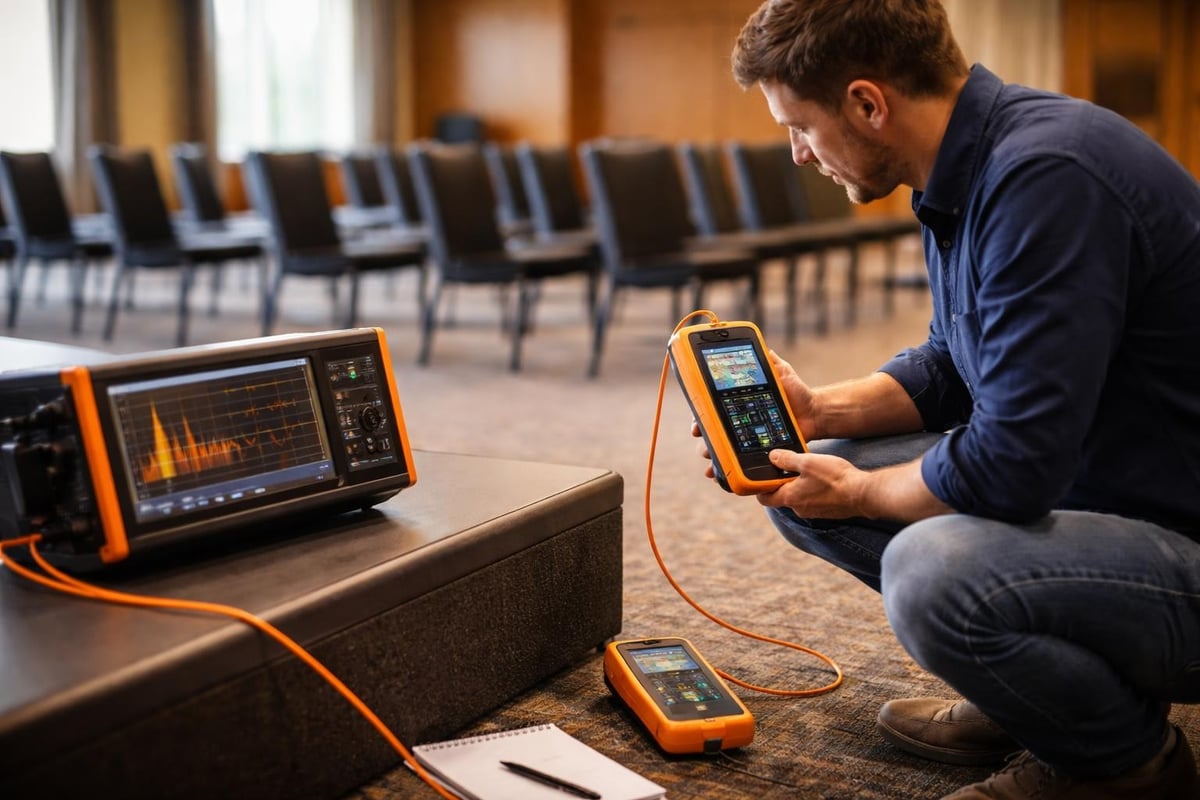
System commissioning involves comprehensive testing to verify that field strength, frequency response, and background noise meet specification requirements. Installers measure field strength at multiple points throughout the coverage area using calibrated test receivers. These measurements confirm compliance with IEC 60118-4 standards and identify any coverage gaps requiring remediation.
Frequency response testing ensures that the system accurately reproduces speech frequencies without excessive emphasis or attenuation. This testing typically involves playing standardised test signals through the system whilst measuring the magnetic field output. Professional installers adjust driver equalisation settings to optimise speech intelligibility.
Maintenance and Ongoing Performance Management
Understanding how does a hearing loop work includes recognition that these systems require periodic maintenance to sustain optimal performance. Commercial installations should undergo annual testing to verify continued compliance with accessibility standards. This maintenance parallels the regulatory requirements for fire alarm testing and other building safety systems.
Maintenance programmes typically include:
- Field strength verification at predetermined test points
- Visual inspection of exposed cable routes for physical damage
- Driver functionality testing including gain control and frequency response
- Connection integrity verification
- Background noise level measurement
- Documentation updates reflecting any configuration changes
Businesses should maintain detailed records of all testing and maintenance activities. These records demonstrate due diligence in meeting accessibility obligations and facilitate troubleshooting should performance issues arise. Many organisations include hearing loop maintenance within broader building access control systems service contracts to ensure consistent oversight.
Integration with Modern Audio Visual Systems
Contemporary commercial environments increasingly rely on sophisticated audiovisual technology for presentations, video conferencing, and hybrid meetings. Hearing loop systems must integrate seamlessly with these platforms to provide consistent accessibility across all communication modes. Understanding how different components work together becomes essential when configuring multi-platform audio systems.
Modern induction loop drivers feature diverse input options including:
- Balanced XLR connections for professional microphone systems
- 3.5mm line inputs for portable devices
- Dante or other network audio protocol compatibility
- Bluetooth connectivity for wireless source integration
- Automatic switching between multiple simultaneous inputs
This versatility enables hearing loops to support various meeting formats without requiring manual reconfiguration. Automatic mixing functionality allows multiple microphones to contribute to the loop signal simultaneously, essential for panel discussions and interactive meetings.
Video Conferencing Integration Challenges
Remote participation has become standard in commercial operations, creating new requirements for hearing loop integration. Systems must capture audio from remote participants and transmit it through the loop whilst simultaneously sending local audio to remote locations. This bidirectional audio flow requires careful configuration to prevent feedback loops and maintain signal quality.
Professional installers configure acoustic echo cancellation and automatic gain control to prevent remote audio from being captured by local microphones and retransmitted, creating feedback. They also ensure that the hearing loop receives a clean, properly balanced audio feed that provides equivalent clarity to the in-room sound reinforcement system.
Cost Considerations and Return on Investment
Businesses evaluating hearing loop implementation naturally consider both initial investment and ongoing operational costs. System pricing varies substantially based on coverage area, configuration complexity, and integration requirements. Simple counter loop installations may cost several hundred pounds, whilst large venue phased array systems can require investments exceeding £10,000.
However, the cost perspective should encompass broader accessibility benefits and regulatory compliance value. Businesses that fail to provide adequate accessibility provisions face potential discrimination claims under the Equality Act 2010. Legal defence costs and potential compensation awards significantly exceed typical hearing loop installation expenses. Moreover, accessible facilities attract customers and employees who might otherwise avoid venues lacking appropriate provisions.
The benefits highlighted by hearing loss organisations demonstrate that hearing loops improve customer satisfaction and employee productivity. These operational benefits deliver ongoing returns that justify the initial capital investment.
Technology Developments and Future Considerations
Hearing loop technology continues to evolve, with manufacturers developing enhanced drivers, installation methods, and integration capabilities. Digital signal processing now enables sophisticated audio optimisation that was impossible with earlier analogue systems. Network-enabled drivers allow remote monitoring and configuration, reducing maintenance costs whilst improving system reliability.
Emerging standards for hearing loop performance promise even better clarity and consistency. The 2026 update to IEC 60118-4 introduces more stringent requirements for field uniformity and frequency response, ensuring that new installations deliver exceptional performance. Businesses planning installations should specify compliance with current standards to ensure longevity and optimal user experience.
Wireless hearing loop systems represent an intriguing development, potentially reducing installation complexity in challenging environments. However, current wireless technologies have not achieved the reliability and coverage consistency of traditional wired installations. Commercial applications should prioritise proven technologies that deliver dependable performance over extended service lives.
Selecting Qualified Installation Partners
The technical complexity inherent in understanding how does a hearing loop work underscores the importance of engaging qualified installation partners. Reputable contractors possess comprehensive knowledge of acoustic principles, electromagnetic field theory, and accessibility standards. They conduct thorough site surveys, design systems appropriate to specific requirements, and commission installations to verified performance standards.
Businesses should verify that prospective installers:
- Hold relevant industry certifications and accreditations
- Maintain professional indemnity insurance covering accessibility installations
- Provide comprehensive warranties on both equipment and installation workmanship
- Offer ongoing maintenance and support services
- Demonstrate experience with comparable commercial installations
The same due diligence applied when selecting commercial fire alarm monitoring companies should inform hearing loop contractor evaluation. System reliability and regulatory compliance depend on professional installation quality.
Hearing loop technology provides businesses with an effective, proven method for ensuring accessibility whilst meeting regulatory obligations under UK equality legislation. These systems deliver clear, personalised audio directly to hearing aid users, eliminating the barriers created by background noise and poor acoustics in commercial environments. For organisations seeking professional installation and ongoing support for hearing loop systems alongside comprehensive fire and security solutions, Logic Fire and Security offers the expertise and service excellence required to ensure optimal performance and compliance. Their experience serving Blue Chip companies and public agencies across the UK positions them as trusted partners for businesses committed to accessibility and inclusive service delivery.