

Fire extinguisher testing represents a critical component of workplace safety and regulatory compliance for businesses operating across the United Kingdom. Every commercial property must maintain operational fire extinguishers, but simply having them installed isn’t enough. Regular testing, inspection, and maintenance ensure these life-saving devices will function correctly when needed most. For facilities managers, business owners, and safety officers, understanding the comprehensive requirements for fire extinguisher testing can mean the difference between meeting legal obligations and facing serious liabilities. This guide explores the essential aspects of testing protocols, regulatory frameworks, and best practices that keep your organisation compliant and protected.
Understanding Fire Extinguisher Testing Requirements
Fire extinguisher testing encompasses several distinct procedures, each serving a specific purpose in maintaining equipment reliability. The testing regime includes visual inspections, functional checks, internal examinations, and hydrostatic pressure tests. These procedures verify that extinguishers maintain proper pressure, contain undamaged components, and hold adequate extinguishing agents.
Legal Framework and Standards
UK businesses must comply with the Regulatory Reform (Fire Safety) Order 2005, which places responsibility on the “responsible person” to ensure fire safety equipment remains in proper working order. The Fire Industry Association provides comprehensive guidance on BS 5306, the British Standard covering commissioning and maintenance of portable fire extinguishers.
Testing schedules vary based on extinguisher type and environmental conditions, but general requirements include:
- Monthly visual inspections by competent staff members
- Annual servicing by certified technicians
- Extended servicing every five years (internal examination)
- Hydrostatic testing at intervals specified by manufacturer or standard
Organisations such as Logic Fire and Security specialise in comprehensive fire safety solutions, ensuring businesses maintain full compliance with these evolving standards.
Monthly Visual Inspections
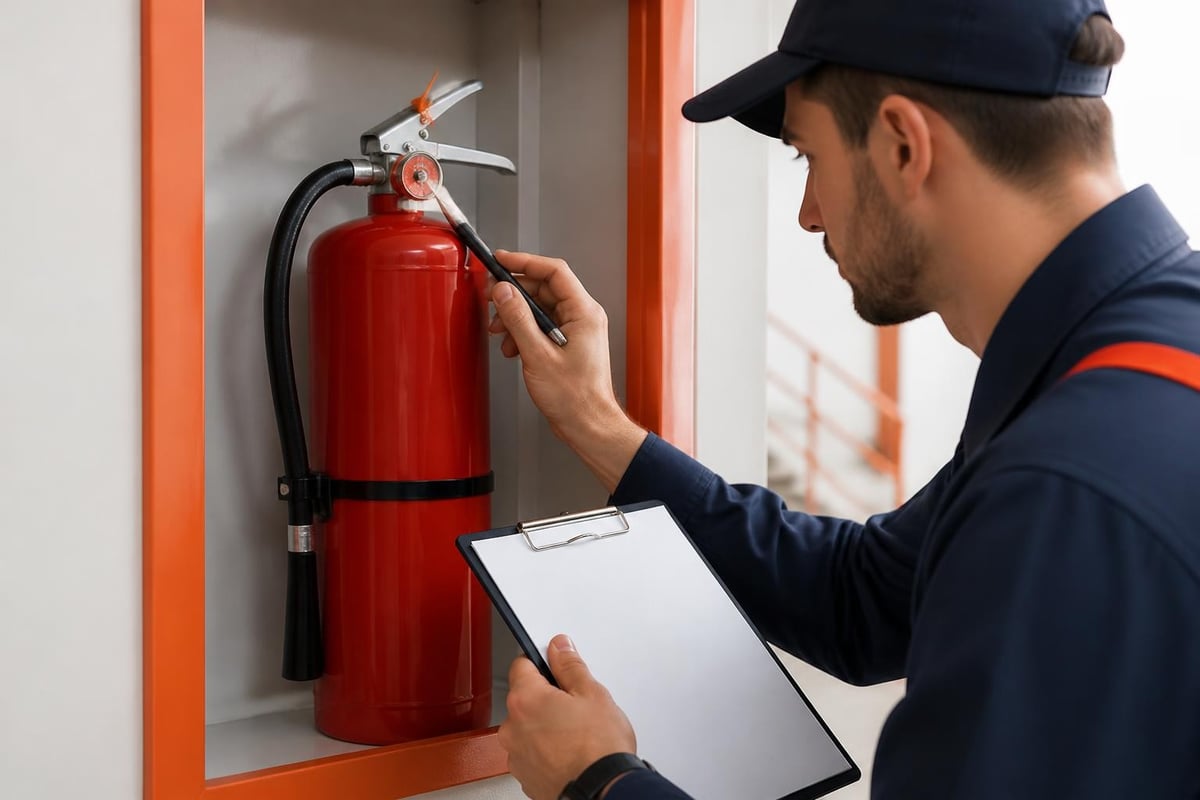
Visual inspections form the foundation of fire extinguisher testing programmes. These quick checks ensure extinguishers remain accessible, undamaged, and apparently ready for use. Trained staff members can complete these inspections in minutes, yet they provide essential early warning of potential problems.
Inspection Checklist Components
During monthly inspections, designated personnel should verify multiple critical factors:
- Extinguisher location remains accessible and unobstructed
- Signage remains visible and legible
- Security seals and tamper indicators show no evidence of use
- Pressure gauges indicate proper charge levels
- Nozzles, hoses, and handles show no physical damage
- Instruction labels remain readable and intact
- No corrosion, leakage, or clogged nozzles apparent
| Inspection Point | What to Check | Action if Failed |
|---|---|---|
| Accessibility | Clear path, proper height | Remove obstruction immediately |
| Pressure Gauge | Needle in green zone | Schedule immediate recharge |
| Physical Condition | No dents, rust, damage | Tag out of service, arrange servicing |
| Seals/Tampers | Intact and undisturbed | Investigate use, schedule inspection |
Documentation of these monthly checks creates an audit trail demonstrating due diligence. Many organisations use digital systems or paper logs to record each inspection, noting the date, inspector name, and any deficiencies discovered.
Annual Fire Extinguisher Testing and Maintenance
Annual servicing by qualified technicians represents the most comprehensive regular fire extinguisher testing procedure. This thorough examination goes far beyond visual checks, involving hands-on assessment of internal components and operational readiness. Professional technicians disassemble, inspect, and verify each extinguisher meets manufacturer specifications and relevant standards.
What Annual Testing Involves
Certified professionals conduct detailed examinations during annual maintenance visits:
- Complete visual inspection of all external components
- Weight verification for stored pressure and cartridge-operated units
- Discharge hose and nozzle examination for blockages
- Internal inspection of applicable extinguisher types
- Pressure testing of certain components
- Recharging as necessary
- Replacement of damaged or expired parts
- Documentation with service tags and records
The NFPA 10 standard provides comprehensive guidance on inspection, maintenance and testing protocols recognised internationally. Whilst UK businesses follow British Standards, understanding international benchmarks provides valuable context for best practices.
Similar to how businesses invest in regular fire extinguisher servicing, other building components like roofs require periodic professional attention. Mark 1 Roofing Service exemplifies this principle in their field, offering expert inspections and maintenance that prevent small issues from becoming major problems.
Service Tags and Record Keeping
Every annual service must include proper documentation. Technicians affix service tags showing:
- Service date and next due date
- Technician name and company
- Work performed
- Test results
- Any deficiencies noted
These tags provide immediate visual confirmation of compliance status. Alongside physical tags, businesses should maintain detailed service records including invoices, test certificates, and any correspondence regarding extinguisher maintenance.
Extended Servicing and Internal Examinations
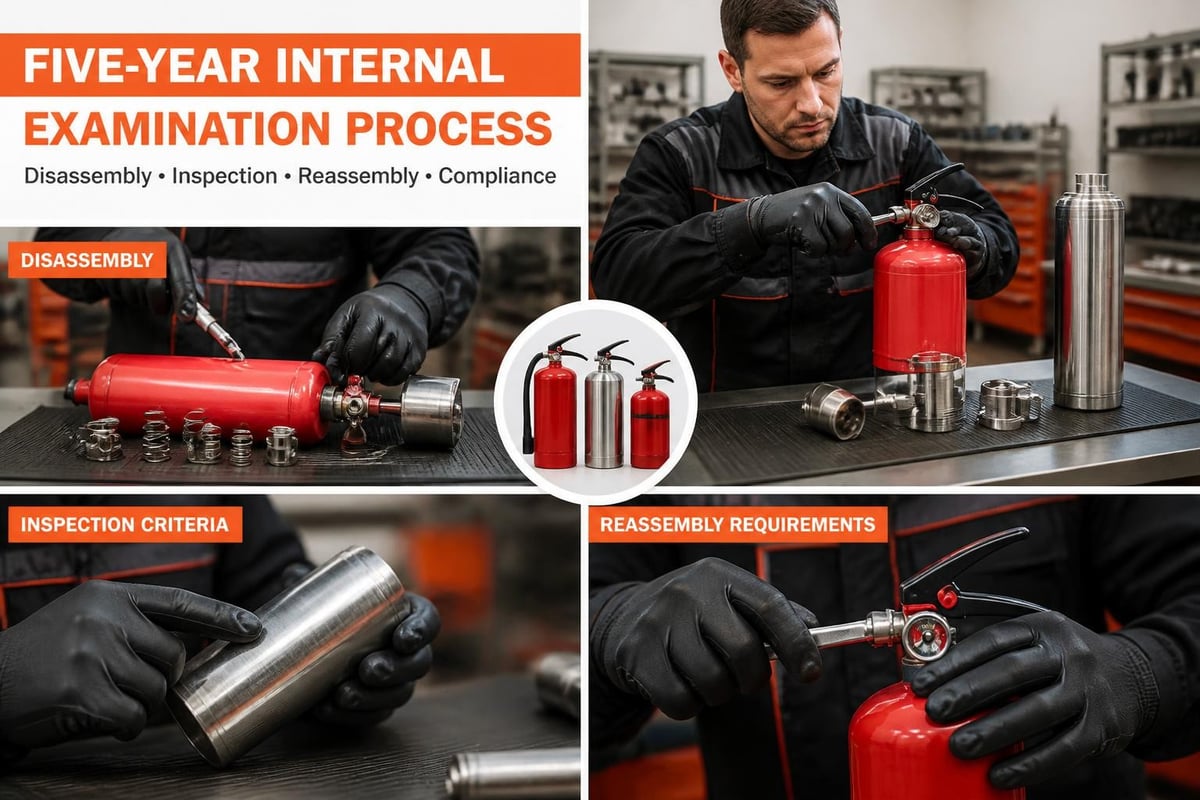
Every five years, most fire extinguishers require internal examination beyond standard annual servicing. This extended fire extinguisher testing procedure involves complete disassembly, thorough cleaning, and detailed inspection of internal components that annual checks cannot assess. The examination verifies structural integrity and identifies wear that might compromise performance.
Types Requiring Internal Examination
Different extinguisher types follow specific protocols:
- Stored pressure extinguishers (water, foam, powder, CO2) require internal inspection at six-year intervals
- Cartridge-operated units need internal examination every six years
- Water-based extinguishers demand particular attention to corrosion
- Wheeled units follow manufacturer-specific schedules
During internal examination, technicians assess cylinder walls for corrosion, pitting, or damage. They inspect valve assemblies, siphon tubes, and discharge mechanisms. Any questionable components receive replacement, and the entire unit undergoes recharging and pressure verification before return to service.
This depth of inspection complements other comprehensive building safety measures. Just as businesses maintain sophisticated fire detection systems, they must ensure portable firefighting equipment receives equivalent professional attention.
Hydrostatic Testing Procedures
Hydrostatic testing represents the most rigorous fire extinguisher testing procedure, verifying cylinder integrity through pressure testing. This process typically occurs every five, ten, or twelve years, depending on extinguisher type and construction materials. The U.S. Code of Federal Regulations (49 CFR §180.209) provides detailed specifications for cylinder requalification, whilst UK standards follow similar safety principles.
The Hydrostatic Testing Process
Specialised facilities perform hydrostatic tests using precise equipment and controlled conditions. The process involves:
- Complete discharge and depressurisation of the extinguisher
- Removal of all internal components and agents
- Visual inspection of cylinder interior
- Pressure application using water or other test medium
- Measurement of cylinder expansion under pressure
- Assessment of permanent expansion against acceptable limits
- Documentation of test results and certification
| Extinguisher Type | Test Interval | Test Pressure |
|---|---|---|
| Water, Foam | 5 years | 2.5× working pressure |
| Dry Chemical | 12 years | 1.5× working pressure |
| CO2 | 5 years | 5/3× working pressure |
| Halon (legacy) | 12 years | 1.5× working pressure |
OSHA guidance on hydrostatic testing emphasises proper recordkeeping and evidence retention. Businesses must maintain test certificates throughout the extinguisher’s service life, creating accountability and traceability.
Cylinders failing hydrostatic tests require immediate retirement from service. The financial and operational considerations mirror those in other safety-critical building systems, where proactive testing prevents failure during emergencies.
Compliance Documentation and Record Management
Effective fire extinguisher testing depends on meticulous documentation demonstrating ongoing compliance. Regulatory authorities, insurance companies, and safety auditors all require evidence of systematic maintenance programmes. Proper records protect businesses legally whilst providing operational insights into equipment performance and replacement needs.
Essential Documentation Components
Comprehensive record systems should include:
- Initial installation records with locations and specifications
- Monthly inspection logs with dates and inspector signatures
- Annual service certificates from certified technicians
- Extended service reports detailing internal examinations
- Hydrostatic test certificates with pressure readings and results
- Training records for staff conducting inspections
- Replacement schedules tracking extinguisher ages
Digital management systems increasingly replace paper records, offering advantages in searchability, backup, and audit preparation. Cloud-based platforms allow facilities managers to track multiple sites, receive automated service reminders, and generate compliance reports instantly.
Just as quality and accreditations demonstrate professional competence, thorough documentation proves commitment to safety. Businesses should retain records for the extinguisher’s entire service life plus several years after disposal.
Choosing Qualified Service Providers
Selecting competent professionals for fire extinguisher testing directly impacts compliance quality and legal protection. The UK fire safety industry includes various certification schemes and professional bodies establishing minimum competency standards. Businesses should verify service providers hold appropriate credentials and insurance coverage.

Key Selection Criteria
When evaluating potential service providers, consider:
- Third-party certifications (BAFE, FIRAS, FIA membership)
- Technician qualifications and ongoing training
- Insurance coverage including professional indemnity
- Service response times for emergency situations
- Geographic coverage across your business locations
- Digital systems for scheduling and documentation
- Customer references from similar organisations
Established providers like Logic Fire and Security bring extensive experience serving Blue Chip companies and public agencies, demonstrating capability with complex multi-site operations. Their comprehensive approach integrates fire extinguisher testing with broader fire safety systems, creating cohesive protection strategies.
The principle of engaging qualified specialists extends beyond fire safety. Whether arranging garage door maintenance through NextLevel Garage Co. or scheduling professional cleaning with Easy Peasy Cleaning, businesses recognise that specialist expertise delivers superior results and compliance assurance.
Common Testing Failures and Remediation
Understanding typical fire extinguisher testing failures helps businesses anticipate problems and implement preventative measures. Analysis of test data reveals recurring issues stemming from environmental conditions, improper storage, and delayed maintenance. Identifying these patterns enables proactive management reducing equipment downtime and replacement costs.
Frequent Failure Modes
Common issues discovered during testing include:
- Pressure loss from seal degradation or valve leakage
- Corrosion in coastal or high-humidity environments
- Physical damage from improper handling or vehicle impacts
- Expired agents particularly in specialty chemical extinguishers
- Blocked nozzles from environmental contamination
- Gauge malfunction showing false readings
- Compromised seals from unauthorized inspection or tampering
| Problem | Typical Cause | Prevention Strategy |
|---|---|---|
| Pressure Loss | Seal degradation | Climate-controlled storage |
| Corrosion | Environmental exposure | Regular inspection, protective coatings |
| Physical Damage | Improper placement | Wall mounting, protective cabinets |
| Agent Expiry | Extended service intervals | Strict schedule adherence |
Remediation options range from simple recharging to complete replacement. Cost-benefit analysis should consider extinguisher age, repair expense, and reliability requirements. Sometimes replacement proves more economical than extensive repair of older units, particularly when modern extinguishers offer improved performance characteristics.
Integrating Testing with Comprehensive Fire Safety
Fire extinguisher testing achieves maximum effectiveness when integrated within comprehensive fire safety programmes. Portable extinguishers represent just one layer in defence-in-depth strategies combining detection, suppression, evacuation, and emergency response systems. Understanding different types of fire systems helps businesses create cohesive protection.
Coordinated Safety Systems
Effective fire safety integration involves:
- Alarm systems providing early warning
- Suppression systems controlling fires automatically
- Detection technology identifying threats immediately
- Evacuation plans moving people to safety
- Training programmes preparing staff for emergencies
- Maintenance schedules coordinating all system servicing
Coordination extends to scheduling, with businesses aligning fire extinguisher testing with inspections of fire doors, alarm systems, and emergency lighting. This integrated approach maximises efficiency whilst ensuring comprehensive coverage.
Specialised environments require additional consideration. Kitchen suppression systems protect commercial cooking areas with automatic chemical discharge, whilst portable extinguishers provide backup protection. Each component complements others, creating redundant protection layers.
Technological Advances in Extinguisher Testing
Innovation continues transforming fire extinguisher testing methodologies and equipment capabilities. Research into automated testing systems explores robotics and sensor technology reducing human error whilst improving test consistency. Smart extinguishers with integrated monitoring offer real-time status updates, revolutionising inspection approaches.
Emerging Technologies
Current developments include:
- IoT-enabled extinguishers transmitting pressure and status data
- Automated inspection systems using vision recognition
- Predictive maintenance algorithms forecasting component failure
- Digital service platforms streamlining scheduling and documentation
- Advanced testing equipment improving measurement accuracy
These innovations promise reduced labour costs, improved compliance verification, and enhanced reliability. However, regulatory approval processes mean adoption occurs gradually, with traditional methods remaining standard for the foreseeable future.
Businesses balancing innovation with proven reliability recognise that technological advancement must demonstrate clear safety benefits. OSHA regulations (29 CFR 1910.157) establish minimum requirements whilst allowing adoption of superior methodologies meeting or exceeding baseline standards.
Training Requirements for Testing Personnel
Competent fire extinguisher testing requires properly trained personnel at multiple levels. Monthly inspections need basic training enabling staff to recognise obvious deficiencies, whilst annual servicing demands certified technicians with specialised knowledge. Organisations must invest in appropriate training matching assigned responsibilities.
Training Programme Components
Effective training addresses:
- Legal requirements and regulatory frameworks
- Extinguisher types and their operating principles
- Inspection procedures for different service levels
- Documentation standards and record-keeping
- Problem recognition identifying common failures
- Safety protocols protecting personnel during testing
- Customer communication explaining findings and recommendations
Internal staff conducting monthly inspections benefit from manufacturer-provided resources, industry guidance documents, and periodic refresher sessions. External technicians should hold recognised certifications demonstrating competency in servicing, testing, and repair procedures.
The importance of proper training parallels requirements in related fields. Whether technicians install commercial fire alarm systems or conduct comprehensive system fire protection assessments, expertise determines service quality and compliance assurance.
Cost Considerations and Budgeting
Fire extinguisher testing costs vary significantly based on facility size, extinguisher quantity, types present, and service frequency. Businesses must budget appropriately for routine servicing, unexpected repairs, and eventual equipment replacement. Understanding cost drivers enables accurate financial planning whilst avoiding false economies compromising safety.
Typical Cost Components
Annual fire extinguisher testing budgets should account for:
- Annual servicing fees (£15-30 per unit typically)
- Extended service costs (£30-50 every five years)
- Hydrostatic testing (£40-80 per cylinder)
- Recharging costs (£20-60 depending on agent type)
- Replacement units (£30-200 based on size and type)
- Emergency callout fees for urgent situations
- Documentation systems and software platforms
| Service Level | Frequency | Typical Cost per Unit |
|---|---|---|
| Monthly Inspection | Monthly | Internal staff time |
| Annual Service | Annually | £15-30 |
| Extended Service | 5 years | £30-50 |
| Hydrostatic Test | 5-12 years | £40-80 |
Deferred maintenance creates false savings. Extinguishers failing during emergencies expose businesses to catastrophic liabilities far exceeding testing costs. Insurance implications also factor into calculations, with many policies requiring documented maintenance for coverage validity.
Strategic budgeting recognises fire extinguisher testing as essential infrastructure investment. Businesses investing in comprehensive fire safety programmes understand that systematic maintenance protects assets, personnel, and legal standing simultaneously.
Fire extinguisher testing represents non-negotiable responsibility for UK businesses, combining legal compliance with life safety protection through systematic inspection, maintenance, and documentation. Understanding testing requirements, selecting qualified providers, and integrating portable equipment within comprehensive fire safety strategies ensures your organisation maintains operational readiness whilst meeting regulatory obligations. Logic Fire and Security delivers expert fire safety solutions throughout the UK, combining technical excellence with deep regulatory knowledge to keep businesses compliant, protected, and focused on their core operations.