

Fire door installation is more vital than ever, protecting lives and property as fire safety standards change for 2026. With new regulations coming into force, improper installation can lead to serious risks, legal penalties, and costly mistakes.
This article is your essential resource for staying compliant and ahead of the curve. Whether you are a property owner, manager, or industry professional, you will find practical steps and expert tips to make your installation effective and future-proof.
Inside, we cover the latest regulations, fire door types, preparation, step-by-step installation, certification, checks, and ongoing maintenance. Take control of your fire safety—start with this comprehensive guide.
Understanding Fire Door Regulations and Standards for 2026
Fire door installation is governed by robust UK regulations designed to save lives and protect property. In 2026, updates to Approved Document B and related legislation introduce stricter standards for both new and existing buildings. These changes affect residential, commercial, and public properties, placing clear statutory obligations on landlords, property managers, and business owners. Third-party certification from recognised schemes like BM TRADA Q-Mark or BRE/LPCB is now essential. For example, legal requirements often specify FD30 or FD60 doors in multi-storey buildings. Notably, up to 60% of fire doors need remediation rather than full replacement. Failure to comply can result in significant penalties, as highlighted in recent enforcement cases and Government Updates Guidance on Fire Door Requirements.
Key Legal Requirements and Updates
UK Building Regulations, particularly Approved Document B, set out clear rules for fire door installation in 2026. Requirements vary by building type, with strict obligations for high-rise residential, commercial, and public facilities. Landlords and managers must ensure all fire doors are correctly specified, installed, and maintained, with third-party certification now a legal necessity. The need for FD30 or FD60 doors is common, especially in multi-storey properties. According to Checkmate Fire, up to 60% of fire doors require remediation rather than full replacement. Enforcement is increasing, with recent prosecutions highlighting substantial penalties for non-compliance. For detailed insights, see the Government Updates Guidance on Fire Door Requirements.
Fire Door Ratings, Certification, and Markings
Fire door installation relies on understanding ratings such as FD30, FD60, and higher, which indicate the minutes of fire resistance offered. Certified doors will display clear markings, labels, or plugs from recognised schemes, ensuring traceability and compliance. Intumescent seals and self-closing devices are critical for achieving the specified rating and preventing smoke or fire spread. Missing or incorrect certification can result in installation failure, as seen in multiple case studies. Proper documentation, including certificates and maintenance records, is vital for building control approval and insurance coverage. Always verify certification before proceeding with fire door installation.
When and Where Fire Doors Are Required
Determining where fire door installation is necessary depends on the building’s design and use. Fire doors are typically required along escape routes, stairwells, and between garages and living spaces. High-rise, healthcare, and educational buildings often have additional requirements. For example, new builds with three or more storeys must have fire doors on every level, as noted by Checkatrade. A professional fire risk assessment is the best way to evaluate your building’s needs, ensuring all legal obligations are met. Consulting sector-specific guidance and experts ensures your fire door installation is both compliant and effective.
Selecting the Right Fire Door: Types, Materials, and Components
Choosing the correct fire door is vital for effective fire door installation and long-term safety. The right option depends on your building type, compliance requirements, and aesthetic preferences. Understanding the key differences in materials, components, and pre-installation considerations will help you achieve a compliant and durable result.
Fire Door Types and Materials
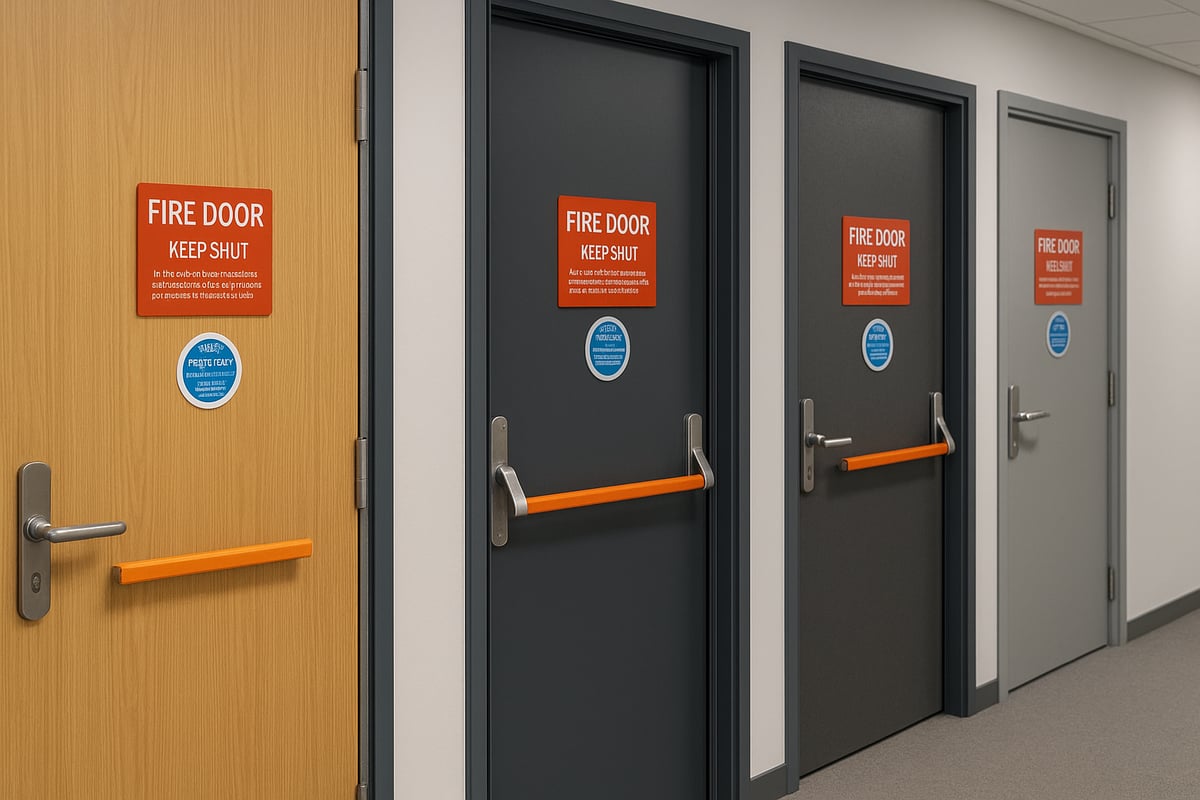
There are several fire door types and materials to consider when planning your fire door installation. Timber fire doors are most common in residential settings, balancing safety and style, while steel fire doors are preferred for industrial or commercial environments due to their durability and high fire ratings. Composite doors combine materials for enhanced performance and are increasingly popular in new builds.
| Material | Typical Use | Fire Ratings | Cost Range |
|---|---|---|---|
| Timber | Homes, flats | FD30, FD60 | £65–£500 |
| Steel | Commercial, industrial | FD60–FD240 | £200–£3,500 |
| Composite | New builds, upgrades | FD30, FD60+ | £150–£1,000 |
Aesthetics matter too. Timber doors can be finished to match interiors, while steel offers a robust, modern look. For a detailed breakdown of types, installation, and legal compliance in commercial settings, see Fire Doors for Commercial Properties: Types, Installation & Legal Compliance.
Essential Fire Door Components and Hardware
Every compliant fire door installation relies on using the correct components and hardware. Key elements include:
- Hinges (minimum three, certified for fire use)
- Handles, locks, and bolts, all fire-rated
- Overhead door closers to ensure automatic closing
- Intumescent strips and smoke seals, fitted in the frame or edge of the door
- Glazed panels with fire-rated glass for visibility and safety
- Air transfer grilles, only if specifically fire-rated and installed to manufacturer’s instructions
Only use certified, compatible hardware. Mismatched or uncertified parts can compromise fire resistance and invalidate certification. Always check for the correct installation of intumescent seals and self-closers, as these are critical for containing smoke and heat during a fire.
Pre-Installation Assessment and Sizing
Successful fire door installation begins long before fitting the door. Professional measurement is essential to ensure the door and frame meet legal standards. Existing frames may need modification, as fire doors are typically thicker and require special grooves for seals.
Key steps include:
- Assessing if the frame is fire-rated or needs upgrading
- Measuring door and frame accurately to avoid excessive gaps
- Creating grooves for intumescent seals if not already present
- Ensuring no over-planing or use of non-fire-rated fillers, which can reduce integrity
If you are replacing standard doors, joiners may need to adjust frames for the increased thickness. Avoid common pitfalls such as misaligned frames or uncertified fillers, as these can result in non-compliance and costly remediation.
Step-by-Step Fire Door Installation Process
Proper fire door installation is vital for ensuring both compliance and long-term safety. By following a structured process, you can avoid common mistakes and meet the highest standards of fire protection. Each stage, from preparation to final checks, plays a key role in the success of your fire door installation.
Preparation and Safety Precautions
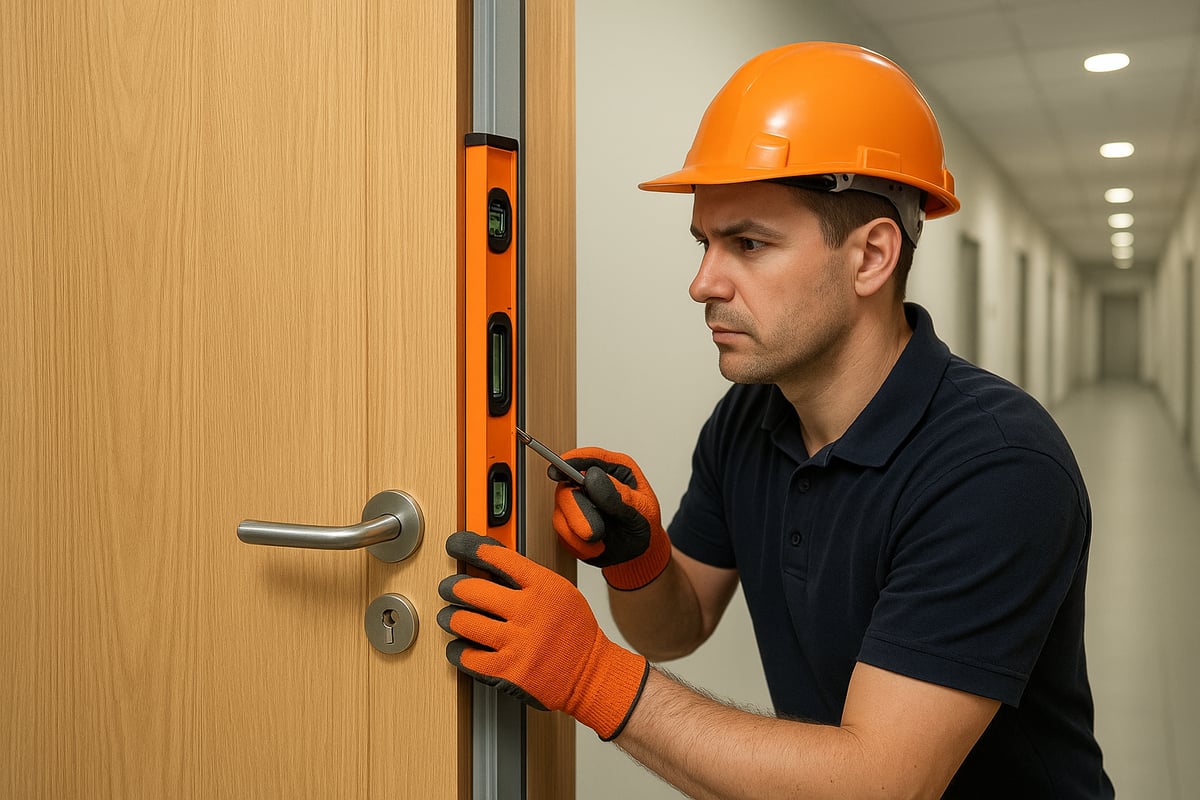
Begin each fire door installation by clearing the work area and ensuring all tools and materials are on hand. Check the door, frame, and hardware for damage or certification labels before starting. All items must meet the specification for your building type.
Installers should wear appropriate PPE such as gloves, safety glasses, and dust masks. Confirm the workspace is free from hazards, including tripping or electrical risks. It is essential to verify that the fire door installation is planned according to the manufacturer’s instructions.
Professional installers typically complete a fire door installation in two to two and a half hours per door, demonstrating the importance of a methodical approach. This preparation ensures the project starts on the right foot and minimises unexpected delays.
Installing the Fire Door Frame and Lining
Remove any existing frame if required, inspecting the wall opening for structural soundness. The lining or frame must meet the required fire rating and be compatible with the chosen door. Use only fire-resistant fixings and fillers to secure the frame.
Position the frame so it is square, level, and plumb. Secure it firmly to the surrounding wall using approved fixings. Maintain consistent gaps of two to four millimetres around the door perimeter, which is crucial for fire door installation to function correctly.
Check that the frame accommodates the thickness of the fire door. Joiners may need to make precise adjustments to existing frames, ensuring the lining fits the door without over-planing or compromising fire resistance.
Hanging the Fire Door and Fitting Hardware
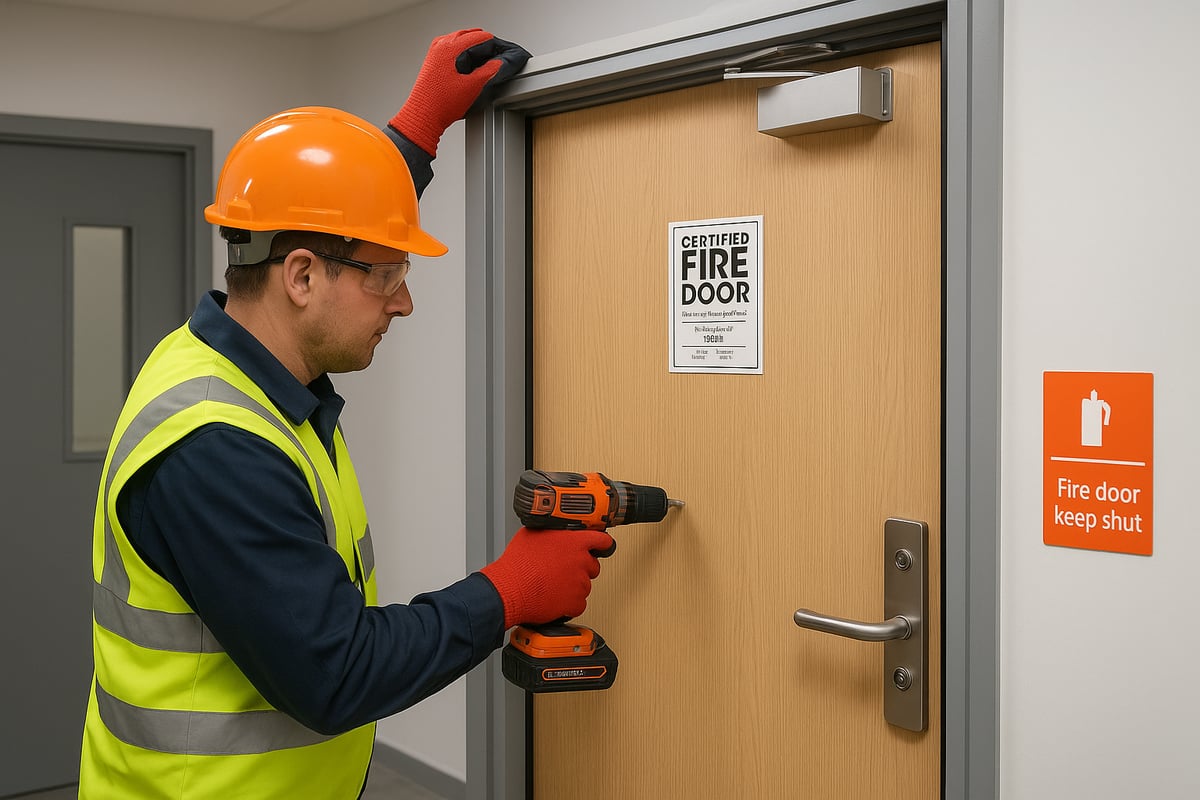
Carefully hang the fire door leaf using certified fire-rated hinges. Attach the door so it swings freely and aligns perfectly with the frame. Install intumescent strips and smoke seals into the grooves, ensuring they are continuous and undamaged.
Fit all hardware, including handles, locks, bolts, and overhead door closers, using only certified and compatible components. Fire door installation requires self-closing devices to be fitted and tested for smooth, automatic closure.
Signage indicating the fire door’s purpose should be applied as required. Ironmongery supply and fit can range significantly in cost, so plan your budget accordingly. Always test moving parts to ensure full functionality.
Final Adjustments and Compliance Checks
Once the door is hung, verify it closes fully and latches securely into the frame. Check all gaps, seals, and hardware for correct alignment. Label the door with its fire rating and complete all necessary certification documentation.
Before sign-off, resolve any issues identified during installation. For peace of mind and ongoing compliance, consider arranging a professional fire door inspection service to ensure every aspect meets current regulations.
A thorough approach to fire door installation not only protects lives and property but also supports legal and insurance compliance for years to come.
Common Installation Mistakes and How to Avoid Them
Mistakes during fire door installation are surprisingly common, even among experienced tradespeople. With regulations tightening for 2026, understanding these errors is essential for anyone responsible for fire safety. Addressing frequent pitfalls early helps protect lives and ensures compliance.

Frequent Fire Door Installation Errors
Many issues stem from incorrect sizing or over-planing the door leaf. If a fire door is trimmed too much, its fire resistance can be compromised. Another widespread error is using uncertified or incompatible hardware, which can render the entire fire door installation non-compliant.
Missing or improperly fitted intumescent seals are another significant concern. These seals expand in the event of a fire, so omitting them or placing them incorrectly undermines safety. Poor alignment can result in excessive gaps around the door, allowing smoke and fire to pass through.
- Incorrect door size or over-planing
- Uncertified hardware
- Missing or misplaced intumescent seals
- Excessive gaps due to poor alignment
According to Checkmate Fire, 60% of fire doors require remediation due to such faults. For a comprehensive guide on correct installation and avoiding these mistakes, see Fire Door Regulations: What You Need To Know.
Impact of Improper Installation
When fire door installation is not completed to standard, the consequences can be severe. The primary risk is reduced fire resistance, meaning doors may fail to contain fire or smoke, putting occupants and property at risk.
Legal liabilities also increase. Non-compliance can lead to prosecution or invalidate insurance policies. Recent UK case studies have shown that faulty fire door installation is a leading cause of enforcement action and non-compliance notices.
- Reduced fire and smoke containment
- Legal and financial liability
- Insurance claims may be denied
Data consistently shows that improper fire door installation is a leading cause of non-compliance, reinforcing the need for professional standards and regular inspection.
Tips for Ensuring a Compliant Installation
To ensure your fire door installation meets regulations, always use certified, experienced installers. Following the manufacturer’s instructions and the latest standards is critical for compliance.
Conduct thorough post-installation checks, verifying that all components are present and correctly fitted. Keep detailed records of the installation process, including certification and documentation.
- Use certified installers
- Follow all manufacturer and legal guidelines
- Complete and document post-installation checks
- Schedule regular inspections and maintenance
Taking these steps helps future-proof your fire door installation and provides peace of mind that your building is protected.
Post-Installation: Certification, Inspection, and Maintenance
After a successful fire door installation, ensuring compliance does not end at fitting the door. Proper certification, regular inspections, and ongoing maintenance are essential to keep your building safe and legal. Each step plays a crucial part in protecting lives and property long after the initial fire door installation.
Certification and Handover Documentation
Once fire door installation is complete, thorough documentation must be provided. This includes third-party accreditation certificates, records of installed components, and any modifications made during fitting. Maintaining a detailed fire door register is vital for future audits and for satisfying building control and insurance requirements. Schemes such as BM TRADA Q-Mark and BRE/LPCB offer recognised third-party certification that demonstrates compliance.
All relevant paperwork should be handed over to the responsible person or property manager. Clear documentation supports ongoing management and is often required during safety audits. For more on industry best practice, see this guide on championing fire door safety best practice.
Regular Inspection and Maintenance Best Practices
Regular checks are critical to ensure continued safety after fire door installation. Inspections should be carried out at least every six months, or more frequently in high-traffic areas. Key areas to assess include intumescent seals, door closers, signage, and gap tolerances. If any issues arise, prompt remediation is usually preferred over full replacement.
Professional maintenance packages, such as Compliance+, can help keep documentation up to date and ensure ongoing compliance. Failure to maintain doors properly can result in increased liability and non-compliance with legal standards. Detailed records of all inspections and repairs should be kept for reference.
When to Seek Professional Help
Not every issue can be spotted or resolved by untrained eyes. If a fire door installation shows signs of damage, excessive wear, or fails to close properly, immediate expert assessment is necessary. DIY checks have their limits, and only certified specialists can guarantee that repairs or replacements meet current standards.
Professional fire door inspectors have the skills and tools to identify hidden issues and ensure full compliance. To find qualified experts, consult industry-accredited bodies or seek recommendations from reputable safety networks. Ongoing support from specialists is key to maintaining safety and legal peace of mind.
Fire Door Installation Checklist and Expert Tips for 2026
Ensuring a compliant fire door installation is essential for safeguarding lives and property. This section provides a structured checklist, practical tips, and trusted resources to help you meet 2026 standards with confidence.
Comprehensive Installation Checklist
A methodical approach to fire door installation ensures both compliance and long-term performance. Use this step-by-step checklist to avoid common pitfalls:
- Confirm the correct fire door rating (FD30, FD60) for your building.
- Arrange a professional pre-installation assessment, including accurate measurements and frame checks.
- Ensure all components and hardware are certified and compatible.
- Prepare the area, removing hazards and checking access routes.
- Fit the door frame securely with fire-resistant fixings and fillers.
- Hang the door leaf, maintaining correct gaps (2–4mm) and alignment.
- Install intumescent strips, smoke seals, and self-closing devices as specified.
- Fit certified handles, locks, signage, and any glazing or air grilles.
- Complete a full compliance check, documenting all stages for certification.
For more detail on assessing where fire doors are required, refer to Fire risk assessments explained, which is an essential step in any fire door installation project.
Expert Tips for Future-Proof Fire Door Compliance
Keeping up with evolving standards is crucial for fire door installation success in 2026 and beyond. Follow these expert tips to ensure lasting compliance:
- Stay informed about regulatory changes and Approved Document B updates.
- Invest in high quality, third-party certified fire doors and hardware.
- Always use experienced, certified installers for every fire door installation.
- Provide regular training for facilities and maintenance teams.
- Utilise digital fire door registers and inspection apps to streamline audits and record keeping.
- Schedule routine inspections and proactive maintenance to address issues early.
By embedding these best practices, you can future proof your fire door installation strategy and maintain legal compliance.
Resources and Further Reading
Accessing authoritative resources is vital for ongoing compliance and knowledge. Explore the following for guidance on fire door installation:
- Fire risk assessments explained for understanding placement requirements.
- UK Government guidance: Approved Document B, Fire Safety Act.
- Industry bodies: BWF-CERTIFIRE, BM TRADA, BRE/LPCB.
- Specialist advice on fire door installation and sector best practice.
- Professional networks and ongoing support for 2026 standards.
Continual learning and professional advice are the foundation of effective fire door installation and maintenance.
As you’ve seen throughout this guide, getting fire door installation right is crucial—not just for compliance in 2026, but for the safety of everyone in your building. By staying informed about the latest regulations, choosing the right materials, and following expert-backed steps, you’re already a step ahead. But if you want complete peace of mind, it helps to have professional support tailored to your property’s unique needs. If you’re ready to take the next step or have questions about your fire door setup, why not Get a Free Site Survey?