

Modern business security extends far beyond traditional lock-and-key mechanisms. Today’s organisations face increasingly sophisticated threats that demand intelligent, scalable solutions capable of protecting assets whilst facilitating legitimate access. Business access control systems represent the cornerstone of contemporary security infrastructure, offering precise control over who enters specific areas, when they enter, and under what conditions. These systems integrate seamlessly with broader security frameworks to create comprehensive protection strategies that adapt to evolving organisational needs.
Understanding Business Access Control Systems Architecture
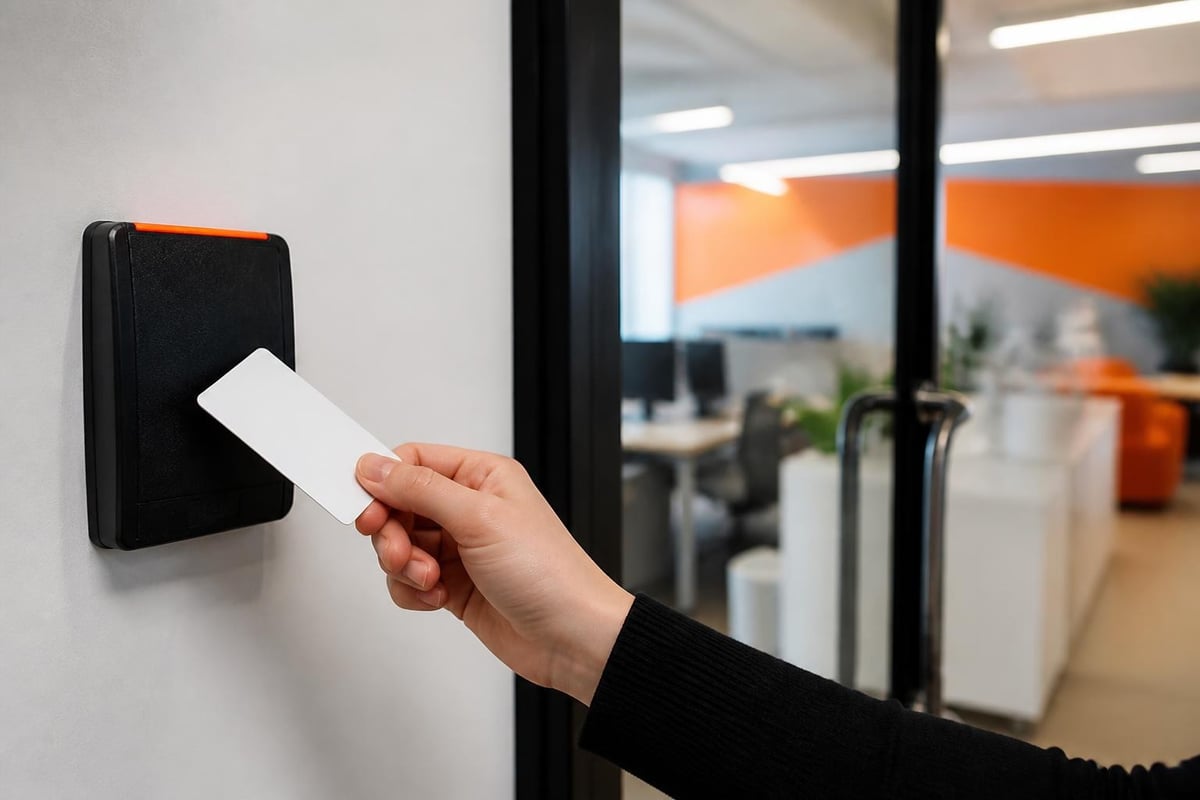
Business access control systems comprise multiple interconnected components working together to authenticate, authorise, and audit access attempts. The architecture typically includes credential readers, control panels, electronic locks, power supplies, and management software that orchestrates the entire ecosystem.
Core infrastructure elements include:
- Electronic credential readers (card, biometric, mobile)
- Central control processors and panels
- Electromagnetic and electric strike locks
- Request-to-exit devices and sensors
- Power supply units with battery backup
- Network connectivity infrastructure
The NIST assessment of access control systems provides valuable insights into various architectures and their respective advantages, helping organisations make informed decisions about infrastructure design.
System Topology and Integration Points
Modern systems typically operate across networked topologies that enable centralised management whilst maintaining local intelligence at access points. This distributed approach ensures continuity even if network connectivity is temporarily disrupted, with individual controllers making autonomous decisions based on pre-programmed policies.
Integration capabilities extend beyond physical security. Many organisations connect their access control entry systems with fire alarm systems, CCTV infrastructure, building management systems, and human resources databases to create unified operational environments.
Access Control Models and Policy Frameworks
Different business environments require distinct approaches to authorisation. The choice of access control model fundamentally shapes how permissions are granted, managed, and audited throughout an organisation’s lifecycle.
| Control Model | Best Suited For | Key Advantages | Typical Applications |
|---|---|---|---|
| Discretionary (DAC) | Small businesses | Flexible, user-controlled | Office suites, retail |
| Mandatory (MAC) | High-security environments | Centrally enforced, rigid | Government, defence |
| Role-Based (RBAC) | Medium to large organisations | Scalable, logical groupings | Corporate offices, hospitals |
| Attribute-Based (ABAC) | Complex, dynamic environments | Contextual, granular | Multi-tenant, research facilities |
Role-Based Access Control remains the most widely deployed model in commercial environments. Research on RBAC implementation demonstrates its effectiveness in simplifying administration whilst maintaining robust security postures across diverse organisational structures.
Attribute-Based Considerations for Modern Businesses
Attribute-Based Access Control represents the evolution of traditional models, incorporating contextual factors such as time of day, location, device type, and current threat levels into authorisation decisions. The NIST publication on attribute considerations outlines how organisations can structure authorisations based on multiple user and environmental attributes simultaneously.
This approach proves particularly valuable for organisations with complex operational requirements. A pharmaceutical research facility, for instance, might grant laboratory access only when specific personnel credentials combine with appropriate time windows, current project assignments, and completed safety certifications.
Technology Options for Credential Management
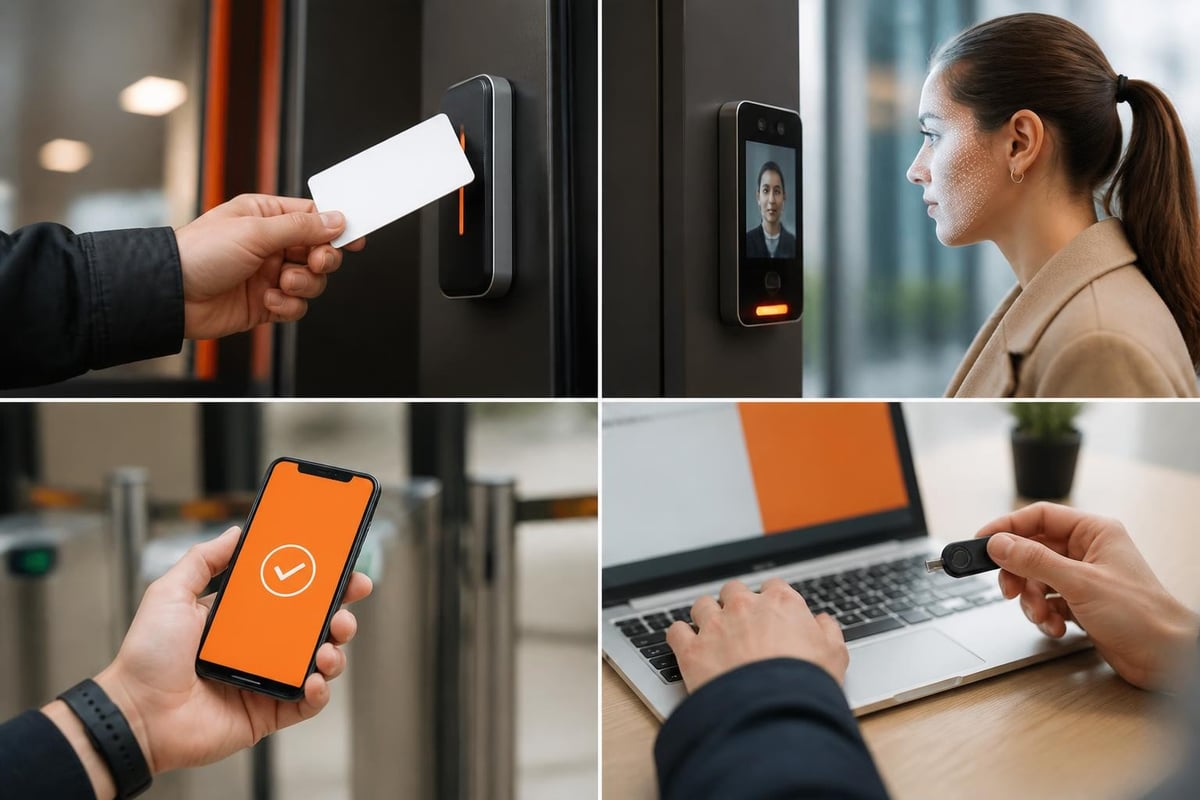
Credential technologies have evolved dramatically beyond traditional proximity cards. Modern business access control systems support diverse authentication methods, each offering distinct security levels and user experience characteristics.
Contemporary credential technologies include:
- Proximity cards – Cost-effective, widely compatible, suitable for basic security needs
- Smart cards – Encrypted data storage, higher security, multi-application capable
- Biometric readers – Fingerprint, facial recognition, iris scanning for high-security zones
- Mobile credentials – Smartphone-based, user-friendly, eliminates physical card management
- Multi-factor authentication – Combined technologies for enhanced security assurance
Biometric systems eliminate credential sharing and loss issues whilst providing irrefutable audit trails. However, organisations must balance security benefits against privacy considerations and ensure compliance with data protection regulations governing biometric information storage.
Mobile credentials are experiencing rapid adoption, particularly following pandemic-related hygiene concerns. These systems leverage Bluetooth Low Energy or Near Field Communication technologies, transforming smartphones into secure access credentials whilst reducing administrative overhead associated with physical card management.
Integration with Comprehensive Security Ecosystems
Business access control systems deliver maximum value when integrated with complementary security technologies. This convergence creates intelligent environments where systems communicate, correlate events, and trigger coordinated responses to security incidents.
Surveillance and Access Control Synergy
Integrating access control with commercial CCTV systems enables visual verification of access events. When unusual access attempts occur, cameras automatically focus on relevant entry points, capturing high-resolution imagery for investigation purposes. This combination proves invaluable during security audits and incident investigations.
Advanced implementations employ video analytics to detect tailgating, where unauthorised individuals follow legitimate users through secured doors. These systems compare physical movement patterns against credential presentations, alerting security personnel to potential breaches in real-time.
Fire Safety and Life Safety Integration
Coordination between access control and fire detection systems is crucial for occupant safety. During fire emergencies, access systems must release electronic locks to facilitate rapid evacuation whilst maintaining security perimeter integrity. Integration with fire alarm systems ensures automatic unlock sequences activate when smoke detectors or manual call points trigger.
This integration extends to disabled refuge systems and emergency lighting, creating comprehensive life safety frameworks that protect occupants whilst maintaining audit trails of all system interactions during critical events.
Cloud-Based versus On-Premises Deployment
Organisations face fundamental architectural decisions when implementing business access control systems. Cloud-based solutions offer distinct advantages in scalability and remote management, whilst on-premises systems provide complete data sovereignty and network independence.
Cloud-based system characteristics:
- Remote management from any internet-connected device
- Automatic software updates and feature additions
- Scalable pricing models aligned with facility growth
- Reduced on-site hardware and IT infrastructure requirements
- Subscription-based cost structures
On-premises system characteristics:
- Complete data control and network isolation
- No recurring subscription dependencies
- Potentially lower long-term costs for stable installations
- Independence from internet connectivity
- Greater customisation and integration flexibility
Recent innovations combine both approaches through hybrid architectures. These systems maintain local control panels for autonomous operation whilst leveraging cloud platforms for centralised management, reporting, and analytics across distributed facilities.
Research exploring blockchain integration in access control suggests emerging distributed architectures may offer new approaches to audit integrity and inter-organisational access management in future implementations.
Compliance and Regulatory Considerations
Business access control systems play crucial roles in meeting regulatory obligations across multiple frameworks. Organisations subject to data protection, workplace safety, or industry-specific security requirements must configure systems to demonstrate compliance through comprehensive audit capabilities.
Data Protection and Privacy Requirements
Access control systems collect and process personal data, triggering obligations under the UK General Data Protection Regulation. Organisations must implement appropriate technical and organisational measures to protect credential data, access logs, and biometric information from unauthorised access or disclosure.
Key compliance considerations include:
- Lawful basis establishment for processing access data
- Data minimisation in log retention policies
- Subject access request procedures for access records
- Privacy impact assessments for biometric deployments
- Vendor data processing agreements
The CMS access control policies demonstrate comprehensive frameworks organisations can reference when developing their own governance structures, though UK-specific regulations must take precedence.
Industry-Specific Security Standards
Certain sectors face heightened security requirements demanding advanced access control capabilities. Healthcare facilities must comply with patient data protection standards, whilst critical national infrastructure operators face government-mandated security baselines that specify minimum access control functionalities.
Financial institutions typically implement multi-factor authentication for sensitive areas, maintain segregated access for different operational zones, and preserve comprehensive audit trails supporting forensic investigations and regulatory examinations.
Operational Management and Administration
Effective business access control systems require structured management processes ensuring permissions remain aligned with organisational changes, security policies are consistently enforced, and system health is continuously monitored.
User Lifecycle Management Workflows
Efficient administration encompasses:
- Onboarding processes – Automated credential provisioning linked to HR systems
- Role assignment – Template-based permission structures reducing configuration errors
- Modification workflows – Approval processes for access level changes
- Offboarding procedures – Immediate credential deactivation upon employment termination
- Periodic reviews – Systematic audits ensuring access rights remain appropriate
Integration with identity management systems streamlines these workflows significantly. When HR systems automatically notify access control platforms of employment status changes, organisations eliminate delays that create security vulnerabilities during staff transitions.
System Health Monitoring and Maintenance
Proactive monitoring identifies potential issues before they impact security or operations. Modern systems provide alerts for offline readers, failed authentication attempts, forced door events, and hardware malfunctions requiring attention.
Regular maintenance schedules should address:
| Maintenance Activity | Recommended Frequency | Purpose |
|---|---|---|
| Reader cleaning and inspection | Monthly | Ensure reliable credential reads |
| Lock mechanism testing | Quarterly | Verify mechanical operation |
| Battery backup verification | Quarterly | Confirm emergency operation capability |
| Software updates and patches | As released | Address vulnerabilities and add features |
| Access rights audit | Annually | Remove unnecessary permissions |
| Disaster recovery testing | Annually | Validate backup and restoration procedures |

Advanced Features and Emerging Capabilities
Contemporary business access control systems incorporate intelligent features that extend beyond simple door control, delivering operational insights and enhanced security capabilities through advanced analytics and automation.
Analytics and Occupancy Management
Access data provides valuable insights into facility utilisation patterns. Organisations analyse entry and exit patterns to optimise space allocation, identify underutilised areas, and demonstrate occupancy compliance during pandemic-related capacity restrictions.
Some systems integrate with building management platforms to adjust lighting, heating, and ventilation based on real-time occupancy data derived from access events. This convergence delivers energy efficiency improvements whilst maintaining comfortable working environments.
Visitor Management Integration
Modern implementations extend beyond employee access to encompass comprehensive visitor workflows. Digital visitor management systems pre-register guests, print temporary credentials, notify hosts of arrivals, and automatically revoke access upon departure.
These capabilities prove particularly valuable for organisations hosting sensitive client meetings or managing contractor access across extended project timelines. Integration with commercial security alarm systems ensures visitors receive appropriate emergency notifications and evacuation guidance.
Interoperability and Open Standards
Leading business access control systems embrace open protocols enabling integration with diverse third-party technologies. Standards such as ONVIF for video systems and OSDP for reader-to-controller communications facilitate multi-vendor implementations that avoid proprietary lock-in.
This openness proves particularly valuable during system expansions or technology refreshes, allowing organisations to adopt best-of-breed components whilst maintaining cohesive operational environments. For businesses seeking integrated solutions, specialised providers like ANR media demonstrate how different technology domains can converge within sophisticated building infrastructures.
Scalability and Future-Proofing Strategies
Business access control systems represent significant investments that must serve organisational needs across extended lifecycles. Selecting architectures with inherent scalability and upgrade paths protects these investments whilst accommodating growth and technological evolution.
Planning for Organisational Growth
Scalable systems accommodate additional doors, users, and sites without fundamental infrastructure replacement. Cloud-based platforms typically scale seamlessly through subscription tier adjustments, whilst on-premises systems require capacity planning for controller expansion and network infrastructure.
Growth considerations include:
- Maximum door capacity per controller
- Network bandwidth requirements for distributed sites
- Database sizing for user populations and log retention
- Software licensing models and upgrade policies
- Hardware compatibility with future technologies
Organisations experiencing rapid expansion should prioritise systems offering straightforward replication of configurations across new locations, reducing deployment complexity and ensuring consistent security policies enterprise-wide.
Technology Refresh and Migration Paths
Even well-planned systems eventually require updates as technologies evolve and equipment reaches end-of-life. Phased migration strategies minimise disruption whilst progressively introducing enhanced capabilities.
Modern platforms support gradual transitions, allowing organisations to maintain legacy readers whilst deploying advanced credential technologies in specific zones. This approach manages costs whilst delivering immediate security improvements where they matter most.
Research on automated ABAC policy extraction from existing access logs suggests future systems may simplify migrations through intelligent analysis of current access patterns, automatically generating appropriate policy configurations for replacement platforms.
Risk Assessment and Security Architecture Design
Implementing effective business access control systems begins with comprehensive risk assessment identifying assets requiring protection, potential threats, and appropriate security measures. This foundation ensures investments align with actual security requirements rather than arbitrary technology selections.
Threat Modelling for Commercial Environments
Different business environments face distinct threat profiles. Retail operations primarily address theft and unauthorised inventory access, whilst professional services firms focus on intellectual property protection and client confidentiality. Manufacturing facilities balance physical security with operational continuity requirements.
Organisations should consider:
- External threats – Unauthorised entry, forced access, credential cloning
- Internal risks – Credential sharing, privilege abuse, tailgating
- Environmental factors – Natural disasters, power failures, network outages
- Regulatory obligations – Compliance mandates, audit requirements, data protection
Professional building access control system assessments identify vulnerabilities and recommend appropriate countermeasures proportionate to identified risks and organisational risk tolerance.
Security Zone Classification
Effective designs employ defence-in-depth strategies creating multiple security layers protecting progressively sensitive areas. Public reception areas require minimal controls, whilst server rooms, executive suites, and research laboratories demand progressively stringent authentication and monitoring.
Zone-based architectures might include:
- Public areas – Reception, lobbies (minimal control)
- General workspace – Offices, meeting rooms (standard authentication)
- Restricted zones – IT infrastructure, archives (enhanced authentication)
- High-security areas – Executive offices, research labs (multi-factor authentication, continuous monitoring)
This layered approach concentrates security investments where they deliver maximum risk reduction whilst maintaining operational efficiency in lower-sensitivity areas.
Selecting Implementation Partners and Vendors
Business access control systems require professional design, installation, and ongoing support to deliver intended security outcomes. Selecting qualified partners significantly influences system performance, reliability, and long-term value.
Vendor Evaluation Criteria
Critical assessment factors include:
- Manufacturer reputation and financial stability
- Product compatibility with existing infrastructure
- Technical support availability and responsiveness
- Warranty terms and service level agreements
- Training resources for administrators and users
- Software update policies and frequency
- Third-party certifications and compliance attestations
Organisations should prioritise vendors demonstrating long-term commitment to their platforms through consistent feature development and vulnerability patching. Legacy support policies indicate how manufacturers treat customers as technologies evolve.
Professional Installation and Commissioning
Proper installation fundamentally impacts system reliability and performance. Qualified installers understand cable specifications, power requirements, network configurations, and environmental considerations affecting equipment operation.
Professional commissioning validates that installed systems meet design specifications, security policies are correctly configured, fail-safe mechanisms operate appropriately, and integration with complementary systems functions as intended. Comprehensive testing before operational handover identifies issues whilst rectification remains straightforward.
Working with established providers like Logic Fire and Security ensures access control implementations benefit from extensive experience across diverse commercial environments and integration with comprehensive fire and security infrastructures.
Effective business access control systems balance security requirements with operational efficiency whilst accommodating future growth and technological evolution. By understanding available architectures, selecting appropriate credential technologies, and integrating with broader security ecosystems, organisations create robust protection frameworks that adapt to changing threats and business needs. Logic Fire and Security brings extensive expertise in designing, installing, and maintaining sophisticated access control solutions tailored to each client’s unique requirements, ensuring comprehensive protection for businesses across the UK through integrated fire and security platforms backed by continuous monitoring and professional support.