


Implementing an effective CCTV solution has become essential for businesses seeking to protect their premises, assets, and personnel. The landscape of closed-circuit television technology has evolved considerably, offering organisations sophisticated capabilities that extend far beyond simple video recording. Today’s commercial CCTV systems integrate advanced analytics, remote monitoring, and intelligent alerts to provide comprehensive security coverage. For businesses across the UK, selecting and deploying the right CCTV solution requires careful consideration of technical specifications, regulatory compliance, and operational requirements.
Understanding Modern CCTV Solution Architecture
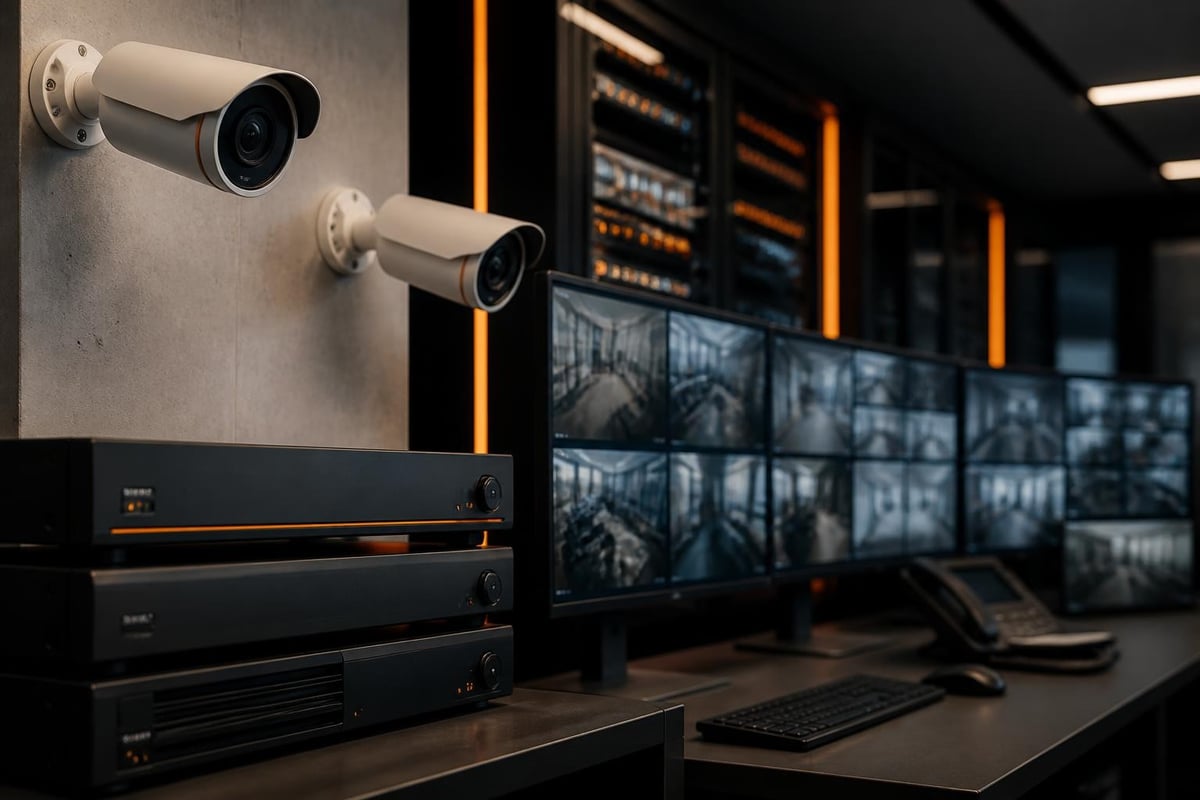
A comprehensive CCTV solution consists of multiple interconnected components working together to deliver seamless surveillance coverage. The camera network forms the foundation, capturing visual data across critical areas of your facility. These devices connect to a centralised recording infrastructure, where footage is processed, stored, and made available for review.
Network video recorders (NVRs) have largely replaced traditional digital video recorders in professional installations, offering superior flexibility and scalability. Modern CCTV solution deployments utilise IP-based architecture, allowing cameras to transmit data over existing network infrastructure. This approach reduces installation complexity whilst enabling remote access and management capabilities.
Key Components of a Professional CCTV Solution
Every effective CCTV solution incorporates several essential elements that work in concert:
- High-resolution cameras tailored to specific monitoring zones and environmental conditions
- Network infrastructure capable of handling multiple high-definition video streams simultaneously
- Recording systems with sufficient storage capacity to meet retention policy requirements
- Monitoring stations where security personnel can view live feeds and review recorded footage
- Power distribution including uninterruptible power supplies to maintain operation during outages
- Management software that coordinates system components and provides analytical capabilities
The integration of these components determines overall system performance. When properly configured, a CCTV solution delivers consistent coverage across your entire facility, eliminating blind spots and ensuring critical areas receive appropriate attention.
Selecting the Right CCTV Solution for Your Organisation
Choosing an appropriate CCTV solution demands thorough assessment of your operational environment and security objectives. Different industries face unique challenges requiring specialised approaches. Manufacturing facilities need cameras capable of operating in dusty or high-temperature conditions, whilst retail environments prioritise facial recognition and point-of-sale monitoring.
Site surveys conducted by experienced professionals identify optimal camera placement, determine coverage requirements, and assess existing infrastructure compatibility. These evaluations inform system design, ensuring your CCTV solution addresses specific vulnerabilities whilst remaining within budgetary constraints.
Camera Technology Considerations
| Camera Type | Best Applications | Key Features |
|---|---|---|
| Fixed Dome | Indoor general surveillance | Discrete installation, wide-angle coverage |
| PTZ (Pan-Tilt-Zoom) | Large open areas, perimeter monitoring | Remote directional control, optical zoom |
| Bullet Cameras | Outdoor perimeter security | Weather-resistant housing, long-range viewing |
| Thermal Imaging | Low-light environments, critical infrastructure | Heat signature detection, 24-hour operation |
| Multi-sensor | Car parks, warehouses, open spaces | 180-degree coverage, reduced camera count |
Resolution standards have increased dramatically, with 4K cameras becoming commonplace in premium installations. However, higher resolution increases storage requirements and network bandwidth consumption. Your CCTV solution must balance image quality needs against infrastructure capabilities and budget constraints.
Installation Standards and Best Practices
Professional installation forms the cornerstone of reliable CCTV solution performance. Poor mounting techniques, inadequate cable management, or incorrect configuration undermines even the most sophisticated equipment. Working with experienced UK security contractors ensures compliance with industry standards and regulatory requirements.
Camera positioning requires consideration of multiple factors. Mounting height affects facial recognition capability, whilst angle determines coverage area and image clarity. Environmental conditions including lighting patterns, weather exposure, and potential tampering risks influence placement decisions.
Installation Planning Steps
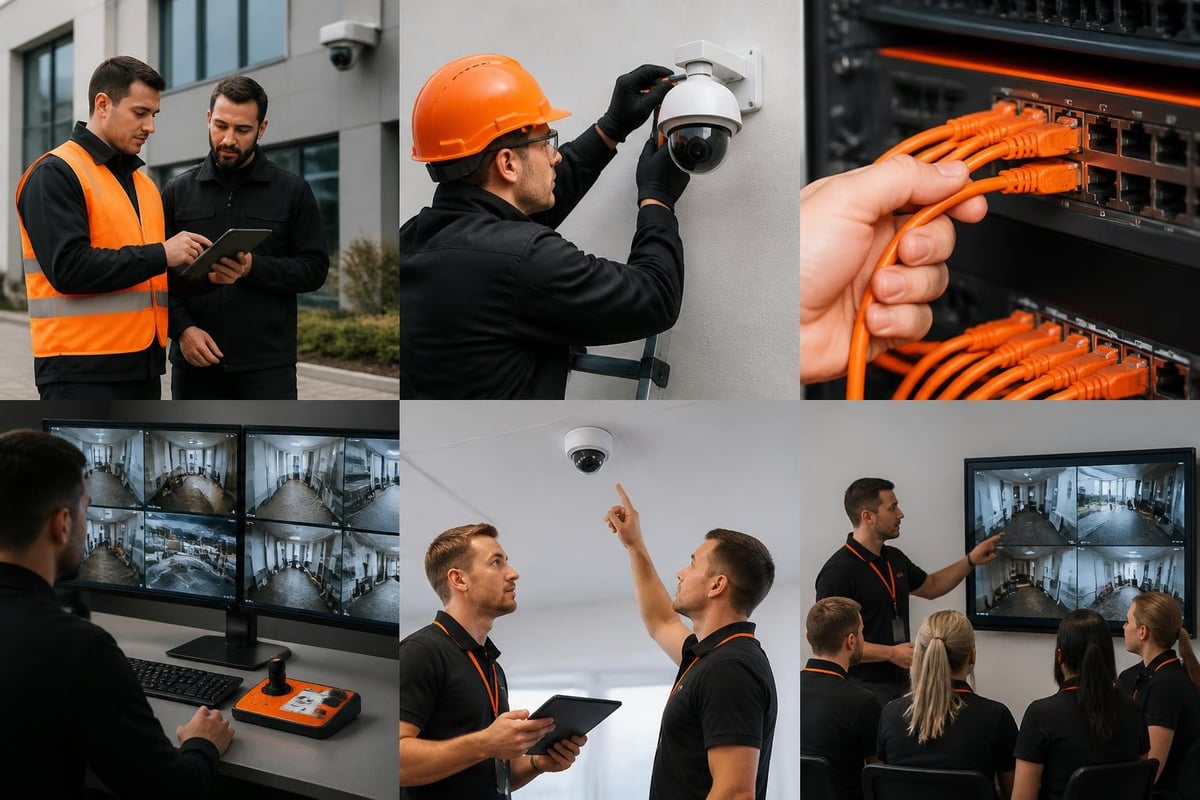
- Conduct comprehensive site assessment to identify security vulnerabilities and coverage requirements
- Design system architecture including camera locations, network topology, and storage capacity
- Verify infrastructure readiness ensuring adequate power, network capacity, and environmental controls
- Install and configure equipment following manufacturer specifications and industry standards
- Commission and test system verifying coverage, image quality, and recording functionality
- Train personnel on system operation, monitoring procedures, and evidence retrieval
Cable routing deserves particular attention, especially in installations spanning multiple buildings or floors. Structured cabling approaches maintain signal integrity whilst facilitating future maintenance and system expansion. Your CCTV solution benefits from professional installation practices that prioritise both immediate functionality and long-term reliability.
Integration with Comprehensive Security Systems
A modern CCTV solution rarely operates in isolation. Integration with access control, intruder detection, and fire safety systems creates layered security that responds intelligently to various scenarios. When access control systems detect unauthorised entry attempts, linked cameras automatically focus on relevant areas, capturing detailed footage of the incident.
This interconnectivity extends to alarm response protocols. Business security monitoring centres receive simultaneous alerts from multiple systems, providing operators with comprehensive situational awareness. Video verification reduces false alarms whilst accelerating appropriate emergency response when genuine incidents occur.
Benefits of Integrated Security Platforms
Unified management interfaces simplify system oversight, allowing security teams to control CCTV, access control, and alarm systems from a single workstation. This consolidation reduces training requirements and improves operational efficiency.
Data correlation capabilities represent perhaps the most significant advantage of integration. When your CCTV solution shares information with other security systems, patterns become visible that individual systems might miss. Repeated access attempts at unusual hours, combined with loitering behaviour captured on camera, can indicate reconnaissance activity preceding more serious security breaches.
Video Analytics and Intelligent Monitoring
Contemporary CCTV solution capabilities extend far beyond passive recording. Artificial intelligence and machine learning technologies enable cameras to identify specific behaviours, objects, and anomalies without human intervention. These analytical capabilities transform reactive security into proactive threat prevention.
Object detection algorithms recognise vehicles, packages, or individuals entering restricted zones. Behavioural analytics identify suspicious activities such as loitering, running, or crowd formation. Licence plate recognition automates vehicle tracking across multiple sites, creating searchable databases that support investigations and access management.
| Analytical Function | Security Application | Operational Benefit |
|---|---|---|
| Facial Recognition | Access control, VIP identification | Automated entry authorisation |
| People Counting | Occupancy management, queue monitoring | Compliance with capacity limits |
| Perimeter Intrusion | Boundary protection, trespassing detection | Immediate alert generation |
| Smoke/Fire Detection | Early warning systems | Fire safety enhancement |
| Abandoned Object Detection | Threat identification in public areas | Rapid security response |
The National Institute of Standards and Technology provides extensive resources on implementing these advanced capabilities effectively. However, analytical features require careful configuration to minimise false positives whilst maintaining sensitivity to genuine threats. Your CCTV solution achieves optimal performance when analytics settings align with specific operational environments and security priorities.
Data Management and Storage Strategies
Video data volumes challenge even robust IT infrastructure. A single 4K camera recording continuously generates approximately 20GB of data daily. Multiply this across dozens or hundreds of cameras, and storage requirements quickly become substantial. Your CCTV solution must incorporate sustainable data management strategies that balance retention requirements against practical storage limitations.
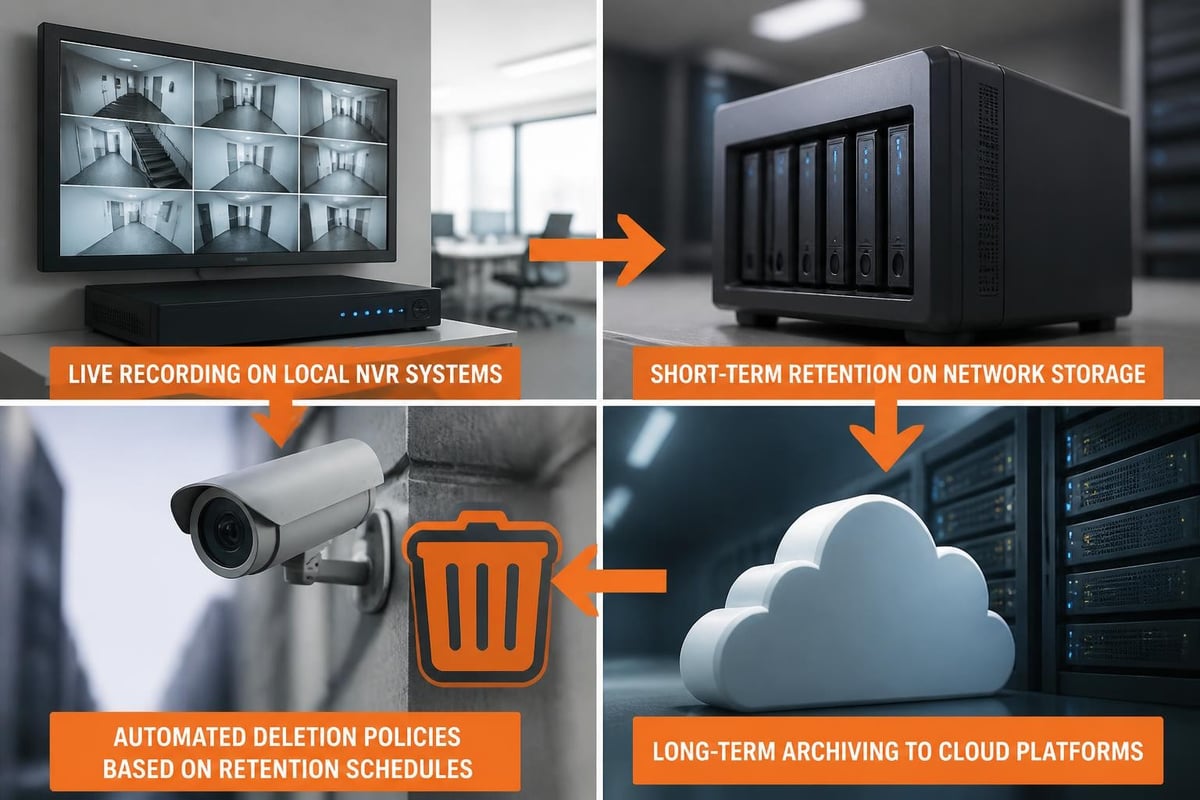
Modern approaches employ tiered storage systems. Recent footage remains on high-speed local storage for immediate access, whilst older recordings migrate to network-attached storage or cloud repositories. Intelligent retention policies automatically delete footage beyond required retention periods, except for bookmarked incidents requiring long-term preservation.
Storage Calculation Factors
Resolution settings dramatically impact storage consumption. Reducing resolution from 4K to 1080p decreases file sizes by approximately 75%, significantly extending storage capacity without eliminating cameras from your CCTV solution. Strategic application of different resolutions across camera networks optimises resource utilisation.
Frame rates similarly affect storage requirements. Reducing frame rates from 30fps to 15fps halves data generation whilst maintaining adequate image quality for most security applications. Critical areas might justify higher frame rates, but general surveillance zones often perform adequately at reduced settings.
Compression technologies continue advancing, with H.265 (HEVC) encoding providing approximately 50% better compression than previous H.264 standards. Advanced surveillance security systems leverage these improvements to extend retention periods without proportional storage expansion.
Regulatory Compliance and Privacy Considerations
Operating a CCTV solution in the UK requires adherence to comprehensive regulatory frameworks. The Data Protection Act 2018 and UK GDPR impose specific obligations on organisations capturing and storing video footage. Non-compliance risks substantial penalties and reputational damage, making regulatory understanding essential for any business deploying surveillance systems.
Legitimate purposes for CCTV deployment include crime prevention, employee safety, asset protection, and operational efficiency. However, surveillance must remain proportionate to identified risks. Cameras positioned in private areas such as changing rooms or toilets violate privacy rights regardless of security justifications.
Compliance Requirements
Clear signage informing individuals of CCTV monitoring forms a fundamental requirement. These notices must identify the organisation responsible for the system, explain monitoring purposes, and provide contact details for privacy enquiries. Failure to display appropriate signage constitutes a regulatory breach regardless of system sophistication.
Data protection impact assessments (DPIAs) become mandatory when surveillance activities pose high privacy risks. These evaluations systematically examine necessity, proportionality, and safeguards, documenting how your CCTV solution balances security needs against individual rights. Regular DPIA reviews ensure ongoing compliance as systems evolve and regulations change.
Access controls protecting recorded footage prevent unauthorised viewing and maintain evidence integrity. Your CCTV solution should implement role-based permissions, ensuring only authorised personnel access specific cameras or recordings. Audit trails documenting who accessed which footage and when provide accountability and support investigations into potential misuse.
Research into CCTV privacy exposure highlights growing concerns about surveillance prevalence. Responsible organisations implement privacy-enhancing technologies including automatic face blurring in non-critical areas and zone masking to exclude private properties from camera views.
Maintenance and System Reliability
Even the most sophisticated CCTV solution degrades without proper maintenance. Environmental factors, component wear, and software updates require systematic attention to maintain reliable operation. Preventive maintenance programmes identify potential failures before they compromise security coverage, whilst scheduled inspections verify continued compliance with regulatory requirements.
Camera lenses accumulate dirt, moisture, and debris that degrade image quality. Regular cleaning schedules ensure clear footage, whilst housing inspections verify weather seals remain effective and mounting hardware stays secure. These simple maintenance activities prevent expensive emergency repairs and coverage gaps.
Maintenance Schedule Components
- Monthly visual inspections checking camera positioning, indicator lights, and obvious damage
- Quarterly cleaning of camera lenses, housings, and monitoring equipment
- Semi-annual technical reviews verifying recording quality, storage capacity, and system performance
- Annual comprehensive testing including backup systems, failover procedures, and disaster recovery protocols
- Continuous monitoring of system health through automated alerts for camera failures or recording issues
Storage system health monitoring prevents catastrophic data loss. Hard drive failures occur with predictable frequency, making redundant storage configurations essential for critical installations. RAID arrays distribute data across multiple drives, ensuring continued operation despite individual component failures. Your CCTV solution should incorporate redundancy appropriate to risk tolerance and operational criticality.
Software updates address security vulnerabilities and introduce performance enhancements. However, updates require careful testing before deployment across production systems. Establishing dedicated test environments allows verification that updates don’t introduce compatibility issues or unexpected behaviour changes.
Cost Considerations and Return on Investment
Implementing a comprehensive CCTV solution represents significant capital investment. Equipment costs vary enormously based on camera count, resolution requirements, storage capacity, and analytical capabilities. However, purchase price represents only one component of total cost of ownership. Installation labour, ongoing maintenance, electricity consumption, and periodic upgrades contribute substantially to lifecycle expenses.
Budget allocation should account for professional system design, ensuring optimal camera placement and appropriate equipment selection. Attempting cost savings through DIY installation or inadequate equipment typically results in performance shortfalls and expensive remediation. Working with established providers like those offering comprehensive security solutions delivers better long-term value despite potentially higher initial investment.
| Cost Category | Typical Allocation | Optimisation Opportunities |
|---|---|---|
| Equipment Purchase | 35-45% | Standardise camera models, negotiate volume pricing |
| Installation Labour | 25-35% | Leverage existing infrastructure, phased deployment |
| Network Infrastructure | 10-15% | Utilise existing network capacity where adequate |
| Storage Systems | 10-15% | Implement tiered storage, optimise retention policies |
| Ongoing Maintenance | 5-10% annually | Preventive maintenance reduces emergency repairs |
Return on investment extends beyond preventing theft and vandalism. Insurance premiums often decrease following CCTV solution deployment, with some insurers offering reductions exceeding 20% for comprehensive systems. Operational efficiencies gained through people counting, queue management, and process monitoring deliver ongoing value that compounds over system lifespan.
Remote Monitoring and Cloud Capabilities
Modern CCTV solution architectures increasingly incorporate cloud technologies, enabling remote monitoring and centralised management across multiple sites. Security managers access live feeds and recorded footage from any location with internet connectivity, supporting flexible working arrangements whilst maintaining security oversight.
Cloud-based video management systems eliminate on-premise server requirements, reducing capital expenditure and IT management overhead. These platforms automatically scale storage capacity as recording volumes increase, preventing the capacity constraints that plague traditional systems. However, bandwidth consumption and ongoing subscription costs require evaluation against traditional ownership models.
Remote Access Security
Secure remote access demands robust authentication and encryption protocols. Multi-factor authentication prevents unauthorised access even if credentials become compromised. Virtual private networks (VPNs) or secure web portals encrypt video streams, protecting sensitive footage during transmission across public networks.
Your CCTV solution should implement geographic access restrictions where appropriate, limiting remote connectivity to specific regions or IP address ranges. These controls reduce attack surfaces whilst maintaining operational flexibility for legitimate users.
Research into privacy-aware routing systems demonstrates growing recognition that surveillance systems must balance security benefits against privacy implications. Organisations deploying cloud-connected CCTV solutions should carefully evaluate data processing locations, ensuring compliance with data sovereignty requirements.
Future-Proofing Your Investment
Technology evolution accelerates continuously, with capabilities considered cutting-edge today becoming standard expectations within years. Future-proofing your CCTV solution requires infrastructure that accommodates technological advancement without requiring complete system replacement.
Standardised IP networking provides inherent flexibility, allowing gradual camera upgrades as budgets permit. Open protocol support prevents vendor lock-in, ensuring your investment retains value even if you change equipment suppliers. Power over Ethernet (PoE) infrastructure simplifies future camera installation, eliminating separate power circuit requirements.
Scalability Planning
Initial deployments should consider likely expansion requirements. Installing spare network capacity and providing additional mounting locations during construction proves significantly cheaper than retrofitting later. Your CCTV solution benefits from thoughtful planning that anticipates growth whilst avoiding expensive over-specification of immediate requirements.
Artificial intelligence capabilities continue advancing, with research into automated camera detection indicating growing sophistication in computer vision technologies. Systems designed with adequate processing capacity and flexible software architectures can incorporate these innovations through updates rather than replacement.
Organisations should also consider integration possibilities with emerging technologies. Building management systems increasingly incorporate security functions, creating opportunities for enhanced coordination between CCTV, HVAC, lighting, and access control. Your CCTV solution gains value when it can participate in these broader automation ecosystems.
Vendor Selection and Partnership
Choosing the right partner for CCTV solution implementation significantly impacts long-term satisfaction and system performance. Established providers bring technical expertise, installation experience, and ongoing support capabilities that inexperienced contractors cannot match. Evaluation should extend beyond pricing to encompass qualifications, references, and demonstrated competence in similar projects.
Industry certifications indicate professional competency and commitment to standards. Look for NSI (National Security Inspectorate) or SSAIB (Security Systems and Alarms Inspection Board) accreditation, which verify that contractors meet rigorous technical and business standards. These certifications provide confidence that your CCTV solution will be designed, installed, and maintained according to industry best practices.
Client references offer invaluable insights into vendor reliability, responsiveness, and technical capability. Speaking with existing customers reveals how providers handle challenges, support ongoing operations, and deliver on commitments. Pay particular attention to feedback regarding post-installation support, as this relationship extends years beyond initial deployment.
Technical expertise in integrated systems proves especially valuable when your CCTV solution forms part of broader security infrastructure. Providers experienced in coordinating fire detection systems alongside electronic security installations bring holistic perspectives that single-discipline contractors lack.
Training and Operational Readiness
Even the most sophisticated CCTV solution delivers minimal value if operators cannot utilise its capabilities effectively. Comprehensive training programmes ensure security personnel understand system operation, evidence retrieval procedures, and appropriate response protocols. Training should address both routine monitoring activities and emergency scenarios requiring rapid, decisive action.
Hands-on practice sessions build operator confidence and competence. Simulated incidents allow personnel to develop response skills in controlled environments, identifying knowledge gaps before real emergencies occur. Regular refresher training maintains proficiency whilst introducing operators to new features and capabilities added through system updates.
Operational Procedures Documentation
Standard operating procedures (SOPs) codify expectations for CCTV solution operation. These documents specify monitoring protocols, incident response steps, evidence preservation requirements, and escalation procedures. Well-drafted SOPs ensure consistent handling regardless of which personnel are on duty, whilst supporting audit requirements and regulatory compliance.
Evidence handling protocols prove particularly critical when footage may support criminal prosecutions or employment proceedings. Maintaining chain of custody, preventing tampering, and preserving original recordings require systematic procedures that operators must understand and follow consistently.
Testing procedures verify that personnel can perform critical functions under pressure. Regular drills simulating security incidents, system failures, or evidence retrieval requests identify training needs whilst building organisational confidence in security capabilities.
Deploying an effective CCTV solution requires careful planning, professional implementation, and ongoing commitment to maintenance and regulatory compliance. The complexity of modern systems demands expertise that extends across multiple technical disciplines, from network architecture to video analytics. Partnering with experienced specialists ensures your investment delivers reliable protection whilst meeting evolving security challenges. Logic Fire and Security brings decades of experience designing and installing comprehensive security solutions for businesses across the UK, providing the technical expertise and ongoing support that organisations need to protect their premises, assets, and people effectively.