

Protecting commercial properties from fire hazards remains one of the most critical responsibilities for business owners and facility managers in 2026. Commercial fire detection systems serve as the first line of defence, identifying potential fires in their earliest stages and triggering appropriate responses that can save lives, protect property, and ensure business continuity. These sophisticated systems have evolved significantly over recent years, incorporating advanced technologies that deliver faster detection, reduced false alarms, and seamless integration with other building management systems. Understanding the components, benefits, and regulatory requirements of these systems enables organisations to make informed decisions that align with their safety objectives and compliance obligations.
Understanding Commercial Fire Detection Systems
Commercial fire detection systems comprise interconnected devices designed to identify signs of fire through various detection methods. Unlike residential systems, these installations must cover larger areas, accommodate complex building layouts, and meet stringent regulatory standards that govern commercial premises.
Core Components and Architecture
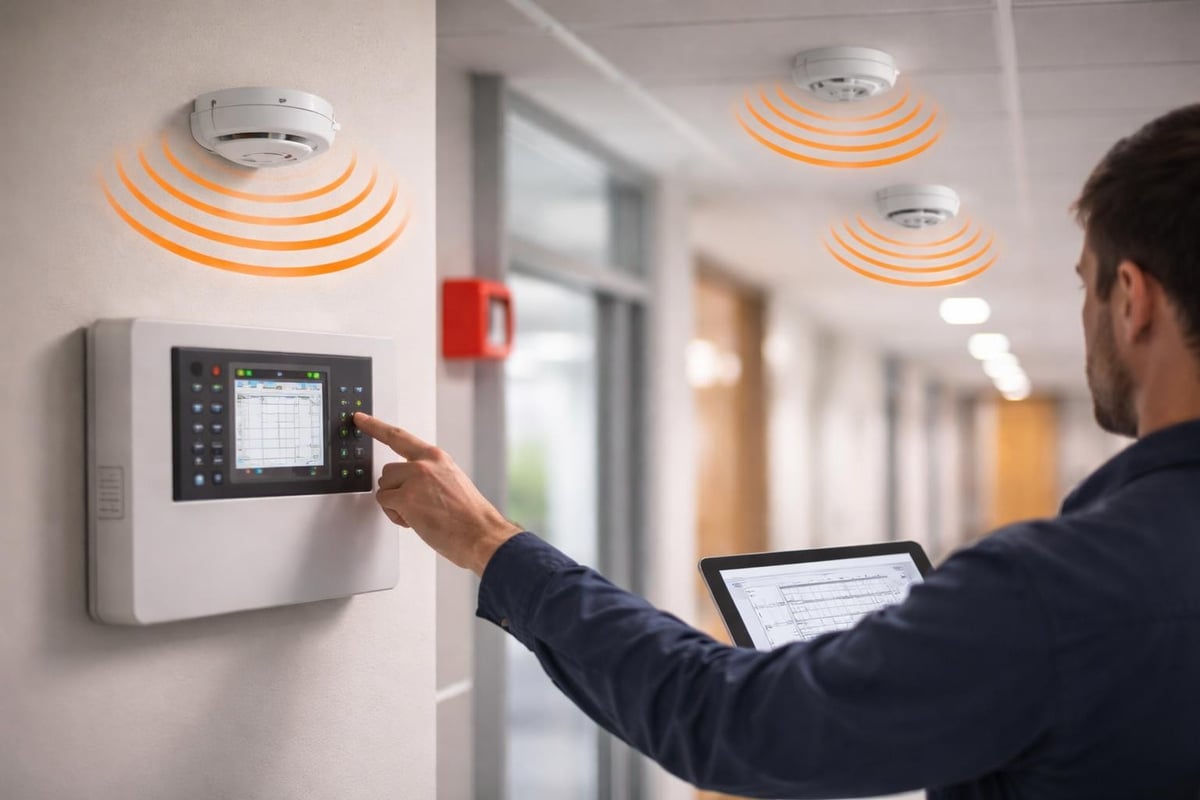
Every effective system consists of several fundamental elements working in harmony. Detection devices form the sensory network, including smoke detectors, heat sensors, and flame detectors positioned strategically throughout the building. These devices communicate with a central control panel that processes signals, determines the nature of the threat, and initiates appropriate responses.
The typical system architecture includes:
- Initiating devices (detectors, manual call points, and beam detectors)
- Control and indicating equipment (central panels and annunciators)
- Notification appliances (sounders, visual alarms, and voice evacuation systems)
- Power supplies (mains power with battery backup)
- Communication pathways (wired or wireless networks)
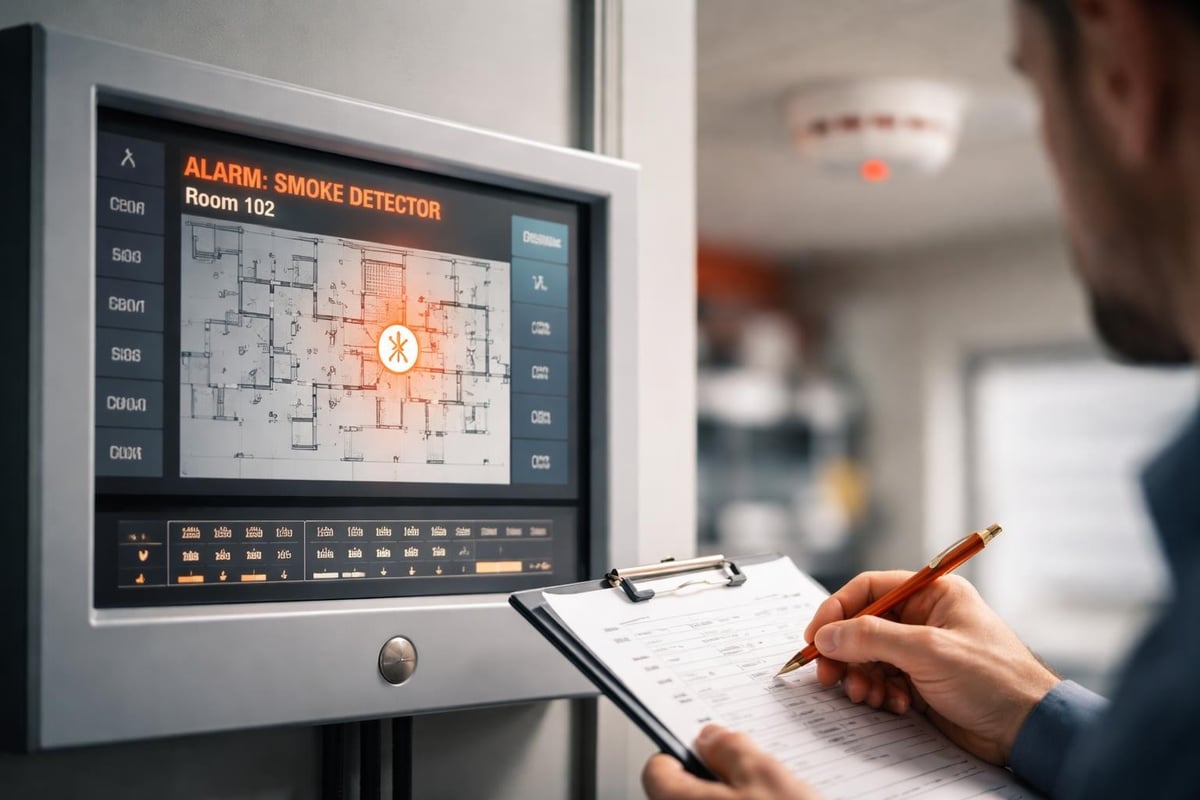
Modern commercial fire detection systems often incorporate addressable technology, allowing each device to have a unique identifier. This advancement enables precise location identification during alarm events, facilitating faster emergency response and reducing investigation time. The NFPA 72 standard provides comprehensive guidelines for installation and performance requirements that ensure systems function reliably when needed most.
Detection Technologies and Applications
Different detection technologies suit various environments and risk profiles. Optical smoke detectors excel in areas where smoldering fires are likely, detecting visible smoke particles through light scattering principles. Ionisation detectors respond quickly to fast-flaming fires, making them suitable for areas storing flammable materials.
Heat detectors provide reliable protection in environments where smoke detectors might generate false alarms, such as kitchens, boiler rooms, and dusty workshops. These devices activate when ambient temperature reaches a predetermined threshold or rises at an abnormal rate.
| Detection Type | Best Application | Response Time | False Alarm Risk |
|---|---|---|---|
| Optical Smoke | Offices, corridors | Fast for smoldering | Low-Medium |
| Ionisation | Storage areas | Very fast for flames | Medium |
| Heat (Fixed) | Kitchens, garages | Slower | Very Low |
| Multi-Sensor | Mixed environments | Adaptive | Low |
| Beam Detection | Large open spaces | Fast | Low |
Multi-sensor detectors combine multiple technologies within a single device, using sophisticated algorithms to analyse different fire signatures simultaneously. This approach significantly reduces false alarms whilst maintaining high sensitivity to genuine fire conditions. For businesses seeking comprehensive protection, understanding smoke detector fire alarm system options helps identify the most appropriate technology for specific environments.
Types of Commercial Fire Detection Systems
Commercial fire detection systems fall into several categories, each offering distinct advantages depending on building size, complexity, and occupancy type. Selecting the appropriate system requires careful assessment of operational needs, budget constraints, and regulatory compliance requirements.
Conventional Systems
Conventional systems divide buildings into zones, with multiple detectors connected to a single zone circuit. When a detector activates, the control panel indicates which zone contains the alarm, but not the specific device location. These systems offer cost-effective solutions for smaller commercial premises with straightforward layouts.
Advantages of conventional systems include:
- Lower initial installation costs compared to addressable alternatives
- Simple operation requiring minimal specialist training
- Easy troubleshooting due to straightforward wiring architecture
- Suitable for buildings under 2,000 square metres
- Reliable performance with proven technology
However, conventional systems present limitations for larger or more complex facilities. Zone-based reporting requires personnel to physically inspect multiple devices within an activated zone, potentially delaying response during critical situations.
Addressable and Analogue Addressable Systems
Addressable commercial fire detection systems represent the industry standard for medium to large commercial installations. Each device possesses a unique address, enabling the control panel to identify precisely which detector has activated. This granular information proves invaluable during emergencies, directing responders to the exact location immediately.
Analogue addressable systems take this capability further by continuously monitoring detector sensitivity levels and reporting this data to the control panel. Facilities managers can track detector performance over time, identifying devices becoming contaminated or degraded before they fail completely. This predictive maintenance capability reduces system downtime and ensures consistent protection.
The sophistication of commercial fire alarm systems varies considerably, with addressable technology offering superior functionality that justifies higher initial investment through reduced operational costs and enhanced safety outcomes.
Wireless Fire Detection Systems
Wireless technology has revolutionised commercial fire detection, eliminating extensive cabling whilst maintaining the reliability demanded by commercial applications. These systems prove particularly valuable in historic buildings where cable installation would damage architectural features, or in facilities undergoing refurbishment where disruption must be minimised.
Modern wireless commercial fire detection systems employ secure radio protocols with redundant communication paths, ensuring signal integrity even in challenging radio frequency environments. Battery-powered devices incorporate long-life power sources, typically requiring replacement every three to five years depending on usage patterns.
Compliance and Regulatory Requirements
Commercial fire detection systems must comply with numerous regulations and standards that vary according to building type, occupancy classification, and geographical location. Navigating this regulatory landscape requires expertise to ensure installations meet current requirements whilst accommodating future legislative changes.
UK Regulatory Framework
The Regulatory Reform (Fire Safety) Order 2005 places responsibility on businesses to implement appropriate fire safety measures, including adequate detection systems. This legislation requires responsible persons to conduct comprehensive fire risk assessments identifying potential hazards and implementing proportionate controls.
Building Regulations Approved Document B specifies technical requirements for fire detection and alarm systems in various building types. These requirements become more stringent as building height, occupancy levels, and risk factors increase. Healthcare facilities, educational establishments, and high-rise buildings face particularly rigorous standards reflecting the vulnerability of occupants.
British Standard BS 5839-1:2017 provides detailed recommendations for the design, installation, commissioning, and maintenance of commercial fire detection systems. Compliance with this standard demonstrates due diligence and typically satisfies insurance requirements. The OSHA fire safety guidelines offer additional perspective on workplace fire protection requirements that complement UK regulations.
Certification and Ongoing Compliance
Professional installation by certified technicians ensures systems function correctly from commissioning. Third-party certification schemes verify installer competence and adherence to industry standards. Regular maintenance contracts ensure continued compliance, with quarterly servicing recommended for most commercial installations.
Essential compliance activities include:
- Annual comprehensive system testing and certification
- Weekly alarm panel checks and indicator verification
- Monthly manual call point testing rotation
- Quarterly detector functional testing
- Documentation of all maintenance activities and remedial works
Organisations must maintain detailed records demonstrating ongoing compliance, including commissioning certificates, maintenance logs, and modification documentation. These records prove essential during regulatory inspections and insurance assessments. Partnering with experienced providers ensures quality and accreditations meet industry standards consistently.
Integration with Building Management Systems
Contemporary commercial fire detection systems rarely operate in isolation. Integration with other building systems enhances safety outcomes whilst improving operational efficiency through coordinated responses during emergency situations.
Fire Alarm and Evacuation Coordination
When commercial fire detection systems identify potential fires, immediate coordination with evacuation systems becomes critical. Modern installations trigger pre-recorded voice messages providing clear instructions to occupants, reducing panic and ensuring orderly evacuation. These evacuation alert systems can deliver zone-specific messages, enabling phased evacuation strategies in large buildings.
Integration with access control systems automatically unlocks emergency exits whilst securing sensitive areas, preventing unauthorised access during evacuations. Lift control integration ensures elevators return to ground level and deactivate, preventing occupants from using them during fire incidents.
HVAC and Smoke Control Integration
Air handling systems can spread smoke rapidly throughout buildings if not controlled appropriately. Integrated commercial fire detection systems communicate with HVAC equipment, shutting down systems that might distribute smoke whilst activating smoke extraction fans that remove combustion products from escape routes.
| Integration Type | Function | Safety Benefit |
|---|---|---|
| Lift Control | Return to ground floor | Prevents lift use during fires |
| HVAC Shutdown | Stop air circulation | Limits smoke spread |
| Smoke Extraction | Activate extraction fans | Maintains tenable escape routes |
| Emergency Lighting | Illuminate escape paths | Aids safe evacuation |
| Door Release | Unlock/close fire doors | Controls fire spread |
Fire doors fitted with electromagnetic hold-open devices automatically close upon alarm activation, compartmentalising the building and slowing fire progression. This integration balances daily operational convenience with fire safety requirements, as doors remain open during normal operation but close automatically when protection is needed.
Maintenance and System Reliability
Even the most sophisticated commercial fire detection systems require regular maintenance to ensure reliable operation. Neglected systems develop faults that compromise protection, potentially leaving buildings vulnerable during genuine emergencies whilst generating false alarms that disrupt operations.
Preventative Maintenance Programmes
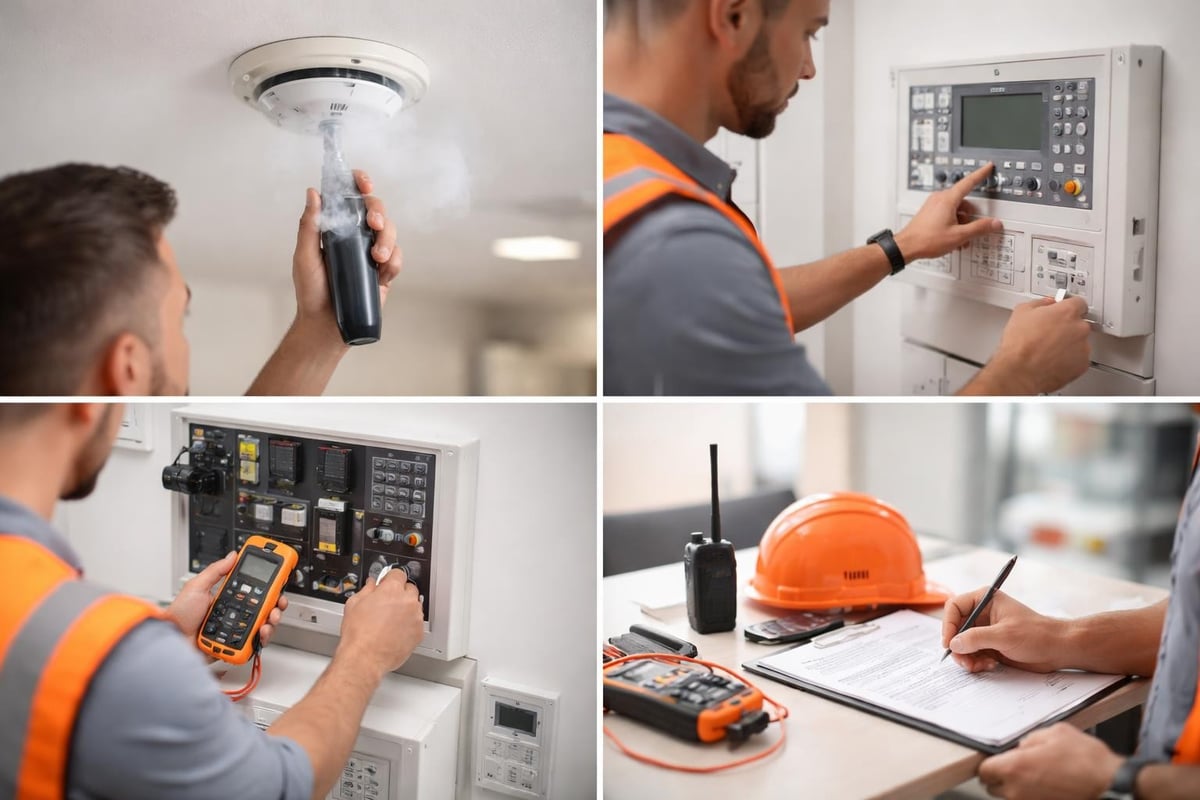
Structured maintenance schedules address different system elements according to their specific requirements. Detectors accumulate dust and debris over time, affecting sensitivity and potentially causing false alarms or detection failures. Regular cleaning maintains optimal performance, whilst periodic sensitivity testing verifies correct operation.
Control panels require inspection to ensure battery backup systems maintain charge capacity. Batteries typically require replacement every four to five years, with earlier replacement necessary in environments experiencing extreme temperatures. Cable connections require checking for corrosion or loosening, particularly in environments with vibration or temperature fluctuations.
Comprehensive maintenance programmes include:
- Visual inspection of all detection devices and notification appliances
- Functional testing of detector response characteristics
- Battery condition assessment and load testing
- Control panel functionality verification
- Communication path integrity testing
- Documentation updates reflecting system modifications
The importance of fire alarm testing cannot be overstated, as regular verification ensures systems respond appropriately when genuine emergencies occur.
False Alarm Management
False alarms represent a significant challenge for commercial fire detection systems, causing operational disruption, emergency service callouts, and potential complacency amongst building occupants. Modern systems incorporate intelligent features that reduce nuisance alarms without compromising genuine fire detection capability.
Multi-sensor detectors analyse multiple parameters before declaring alarm conditions, distinguishing between fire signatures and environmental factors that might trigger simpler devices. Temporal delay features allow investigation periods before full alarm activation, enabling staff to verify genuine fires or reset systems following minor incidents.
Regular maintenance significantly reduces false alarm rates by ensuring detectors operate within design parameters. Contaminated detectors generate spurious alarms, whilst detector placement in inappropriate locations exposes them to environmental conditions triggering false activations.
Advanced Technologies and Future Developments
The commercial fire detection industry continues evolving, incorporating emerging technologies that enhance detection accuracy, reduce installation costs, and provide richer data for facilities management decision-making.
Artificial Intelligence and Machine Learning
Artificial intelligence algorithms analyse detector data patterns, learning normal environmental conditions for specific locations and identifying anomalies indicating potential fire situations. These systems distinguish between genuine threats and benign events with greater accuracy than traditional threshold-based detection.
Machine learning enables predictive maintenance, identifying detectors exhibiting early signs of degradation before complete failure occurs. This capability allows proactive replacement scheduling, reducing emergency callouts and ensuring consistent protection levels.
Cloud-Based Monitoring and Management
Cloud connectivity enables remote monitoring of commercial fire detection systems, providing facilities managers with real-time status information accessible from any location. This capability proves particularly valuable for organisations managing multiple sites, offering centralised oversight and standardised reporting across property portfolios.
Cloud platforms facilitate automatic software updates, ensuring control panels operate with current algorithms and security patches. Remote diagnostic capabilities enable support teams to investigate alarm conditions without site visits, reducing response times and associated costs.
Integration with IoT Ecosystems
Commercial fire detection systems increasingly participate in broader Internet of Things ecosystems, sharing data with other building systems and contributing to comprehensive facility management platforms. This integration enables sophisticated analyses, such as correlating fire alarm patterns with occupancy data, environmental conditions, or equipment operation.
The CDC workplace fire safety guidance emphasises the importance of comprehensive approaches to fire protection, with integrated systems contributing to overall workplace safety strategies.
Selecting the Right System for Your Business
Choosing appropriate commercial fire detection systems requires careful consideration of numerous factors beyond simple cost comparisons. The optimal solution balances initial investment against ongoing operational costs whilst ensuring complete regulatory compliance and adequate protection for occupants and assets.
Risk Assessment and System Design
Professional fire risk assessments form the foundation for effective system design. These assessments identify potential fire sources, evaluate occupant vulnerability, and determine appropriate protection levels. Assessment findings inform decisions about detector types, placement density, and notification appliance specifications.
Buildings housing vulnerable occupants, such as healthcare facilities or educational establishments, require enhanced detection sensitivity and sophisticated evacuation systems. Industrial premises storing hazardous materials need specialised detection technologies suited to challenging environmental conditions.
Key design considerations include:
- Building size, layout, and construction materials
- Occupancy levels and occupant characteristics
- Activities conducted within the premises
- Environmental conditions affecting detector performance
- Integration requirements with existing building systems
- Budget allocation for initial installation and ongoing maintenance
Engaging experienced design professionals ensures systems meet regulatory requirements whilst avoiding over-specification that inflates costs unnecessarily. Understanding fire alarm design principles helps organisations evaluate proposals and select solutions aligned with their specific needs.
Installation Considerations
Professional installation by qualified technicians ensures commercial fire detection systems function correctly from commissioning. Poor installation practices compromise system reliability, potentially creating dangerous situations where occupants believe they enjoy protection that may not materialise during genuine emergencies.
Cable routing must avoid electromagnetic interference sources whilst maintaining accessibility for future maintenance. Detector positioning requires careful consideration of airflow patterns, ceiling heights, and potential obstructions affecting smoke or heat travel. Control panel placement must balance accessibility for maintenance against security requirements preventing tampering.
Monitoring and Response Services
Many organisations enhance their commercial fire detection systems with professional monitoring services providing 24/7 oversight. When alarms activate, monitoring stations receive immediate notification, enabling rapid emergency service dispatch even when premises are unoccupied.
Monitored systems typically qualify for reduced insurance premiums, with savings often offsetting monitoring costs. Additionally, monitoring services provide documentation of alarm events and system performance, supporting compliance demonstration and operational decision-making.
Cost Considerations and Return on Investment
Financial planning for commercial fire detection systems must encompass total lifetime costs rather than focusing solely on initial purchase prices. Systems with higher upfront costs frequently deliver superior value through reduced maintenance requirements, lower false alarm rates, and enhanced operational efficiency.
Initial Investment Components
Purchase prices vary considerably depending on system sophistication and building size. Conventional systems typically cost between £1,500 and £5,000 for small commercial premises, whilst addressable installations in medium-sized buildings range from £5,000 to £25,000. Large, complex facilities with wireless technology and advanced integration can exceed £100,000.
Installation labour represents a significant cost component, often equalling or exceeding equipment expenses. This investment ensures proper configuration, testing, and commissioning that validates system performance before handover.
| System Type | Typical Cost Range | Best For | Key Advantage |
|---|---|---|---|
| Conventional | £1,500-£5,000 | Small premises | Lower initial cost |
| Addressable | £5,000-£25,000 | Medium facilities | Precise location identification |
| Wireless | £8,000-£35,000 | Historic buildings | Minimal building disruption |
| Analogue | £15,000-£100,000+ | Large complexes | Predictive maintenance |
Ongoing Operational Costs
Annual maintenance contracts typically cost 10-15% of initial installation value, covering quarterly inspections, testing, and remedial works. This investment proves essential for maintaining compliance and ensuring reliable operation.
Monitoring services add further recurring costs, typically ranging from £200 to £1,000 annually depending on service levels and response guarantees. However, reduced insurance premiums often offset these expenses whilst providing additional peace of mind.
Insurance and Liability Implications
Adequate commercial fire detection systems significantly reduce insurance premiums, with discounts ranging from 10% to 30% depending on system sophistication and monitoring arrangements. More importantly, comprehensive protection demonstrates due diligence, potentially limiting liability following fire incidents.
Businesses without adequate detection systems face severe consequences following fires, including increased insurance premiums, regulatory penalties, and potential prosecution under health and safety legislation. The reputational damage and business interruption costs far exceed any savings achieved through inadequate fire protection.
Commercial fire detection systems represent essential investments that protect lives, preserve property, and ensure business continuity when fire emergencies occur. Understanding the technologies, regulatory requirements, and maintenance obligations enables organisations to implement solutions delivering reliable protection whilst meeting compliance obligations. Logic Fire and Security brings decades of expertise to the design, installation, and maintenance of commercial fire detection systems across the UK, supporting businesses ranging from small enterprises to Blue Chip corporations with tailored solutions that align with their specific operational requirements and safety objectives.