

Fire safety and protection remains one of the most critical aspects of building management and business operations across the United Kingdom. With evolving regulations, advancing technologies, and increasing complexity in commercial environments, organisations must adopt comprehensive strategies to safeguard their employees, assets, and operations. The consequences of inadequate fire safety measures extend far beyond property damage, encompassing potential loss of life, business disruption, legal liabilities, and reputational harm. Understanding the multifaceted nature of fire safety and protection enables businesses to create resilient environments that meet regulatory requirements whilst protecting what matters most.
Understanding Fire Safety and Protection Requirements
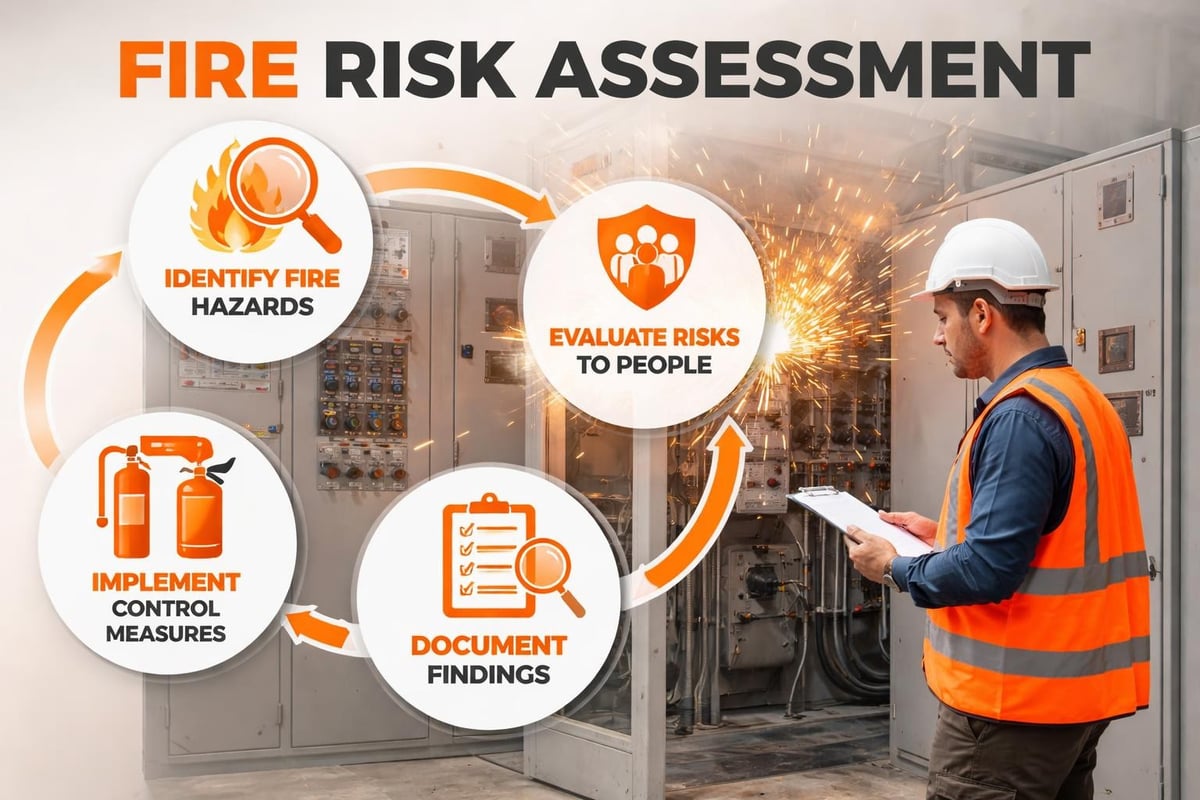
The regulatory landscape governing fire safety and protection in the UK centres on the Regulatory Reform (Fire Safety) Order 2005, which places responsibility firmly on the shoulders of the 'responsible person' within each organisation. This legislation requires businesses to conduct thorough fire risk assessments, implement appropriate preventive measures, and maintain comprehensive records of their fire safety activities.
Compliance isn't merely about ticking boxes. It demands a genuine understanding of the specific risks present within each unique environment. Manufacturing facilities face different challenges compared to office buildings, whilst healthcare settings and educational institutions require tailored approaches that account for vulnerable occupants and complex operational patterns.
Key Regulatory Obligations
Every UK business must:
- Conduct regular fire risk assessments identifying potential hazards
- Implement suitable fire detection and warning systems
- Establish clear evacuation procedures and emergency plans
- Provide adequate staff training on fire safety protocols
- Maintain all fire safety equipment to required standards
- Keep detailed records of inspections, tests, and maintenance activities
The Occupational Safety and Health Administration (OSHA) provides resources on fire safety that complement UK regulations, offering additional insights into workplace fire prevention strategies. These international perspectives can enhance understanding of best practices and emerging technologies in fire safety and protection.
Fire Detection Systems: The First Line of Defence
Advanced fire detection represents the cornerstone of effective fire safety and protection strategies. Modern systems utilise sophisticated sensor technologies that can identify fire signatures at the earliest possible stages, providing crucial minutes for evacuation and intervention before situations escalate.
Contemporary detection technologies extend beyond traditional smoke alarms, incorporating multi-sensor devices that analyse heat, smoke particles, and even carbon monoxide levels. These intelligent systems reduce false alarms whilst increasing sensitivity to genuine threats, addressing one of the most persistent challenges in fire safety management.
Detection Technology Categories
| Technology Type | Primary Application | Response Time | Ideal Environment |
|---|---|---|---|
| Ionisation Detectors | Fast-flaming fires | Very Fast | Kitchens, storage areas |
| Optical Detectors | Slow-smouldering fires | Fast | Offices, corridors |
| Heat Detectors | High-temperature environments | Moderate | Kitchens, boiler rooms |
| Multi-Sensor Devices | Complex environments | Very Fast | Data centres, mixed-use spaces |
| Aspirating Systems | Early warning critical areas | Extremely Fast | Server rooms, heritage buildings |
Fire alarm monitoring services provide continuous oversight of detection systems, ensuring immediate response to any activation. This 24/7 vigilance proves particularly valuable for premises that operate outside standard business hours or remain unoccupied for extended periods.
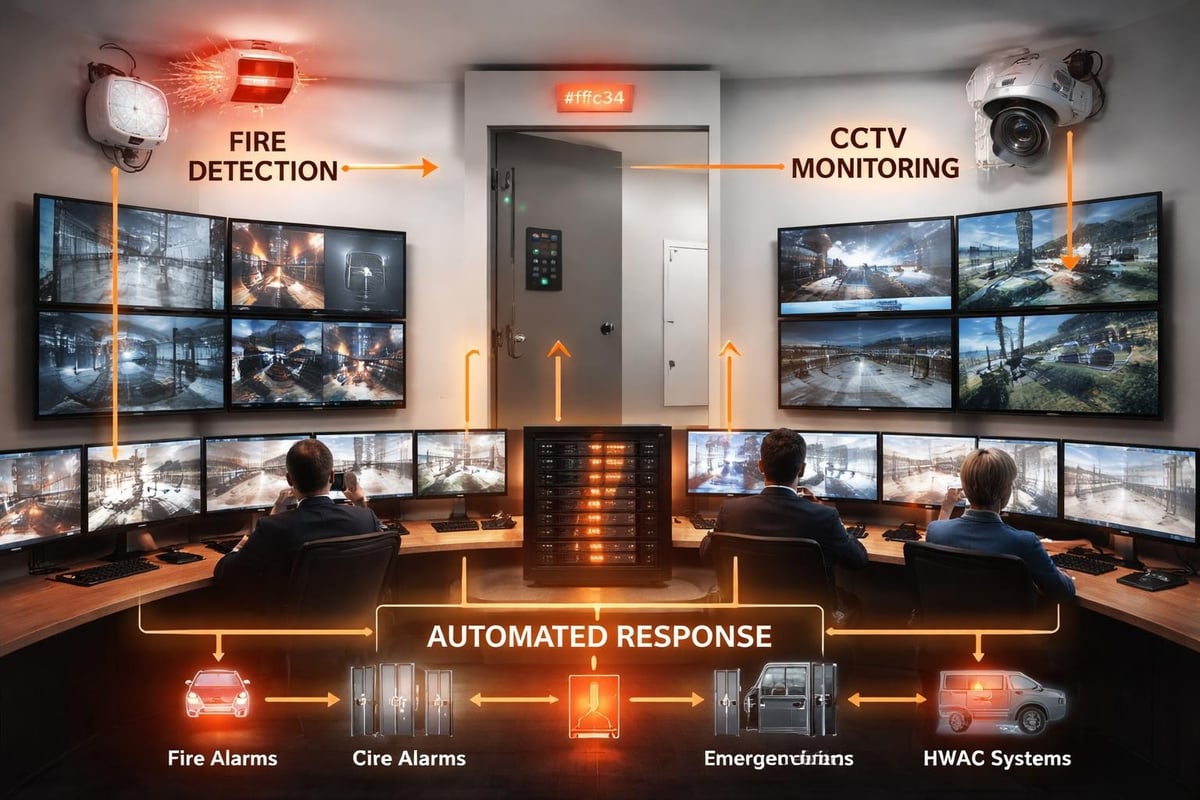
The integration of fire detection with building management systems creates intelligent environments that can automatically initiate protective actions. These might include closing fire doors, shutting down ventilation systems, or activating suppression systems without human intervention.
Fire Suppression Technologies and Applications
Whilst detection systems provide early warning, suppression technologies actively combat fire development. Fire safety and protection strategies increasingly incorporate sophisticated suppression systems tailored to specific risk profiles and asset types.
Water-based sprinkler systems remain the most common suppression technology, proven effective across diverse applications. However, environments housing sensitive electronics, valuable documents, or irreplaceable assets require alternative approaches that minimise collateral damage whilst effectively controlling fire.
Advanced Suppression Options
Gas suppression systems offer clean-agent solutions ideal for protecting:
- Data centres and server rooms
- Telecommunications facilities
- Museums and archives
- Pharmaceutical manufacturing areas
- Research laboratories
Gas suppression fire systems utilise inert gases or chemical agents that extinguish fires without leaving residue or causing water damage. These systems prove particularly valuable where business continuity depends on protecting critical infrastructure from both fire and suppression agent damage.
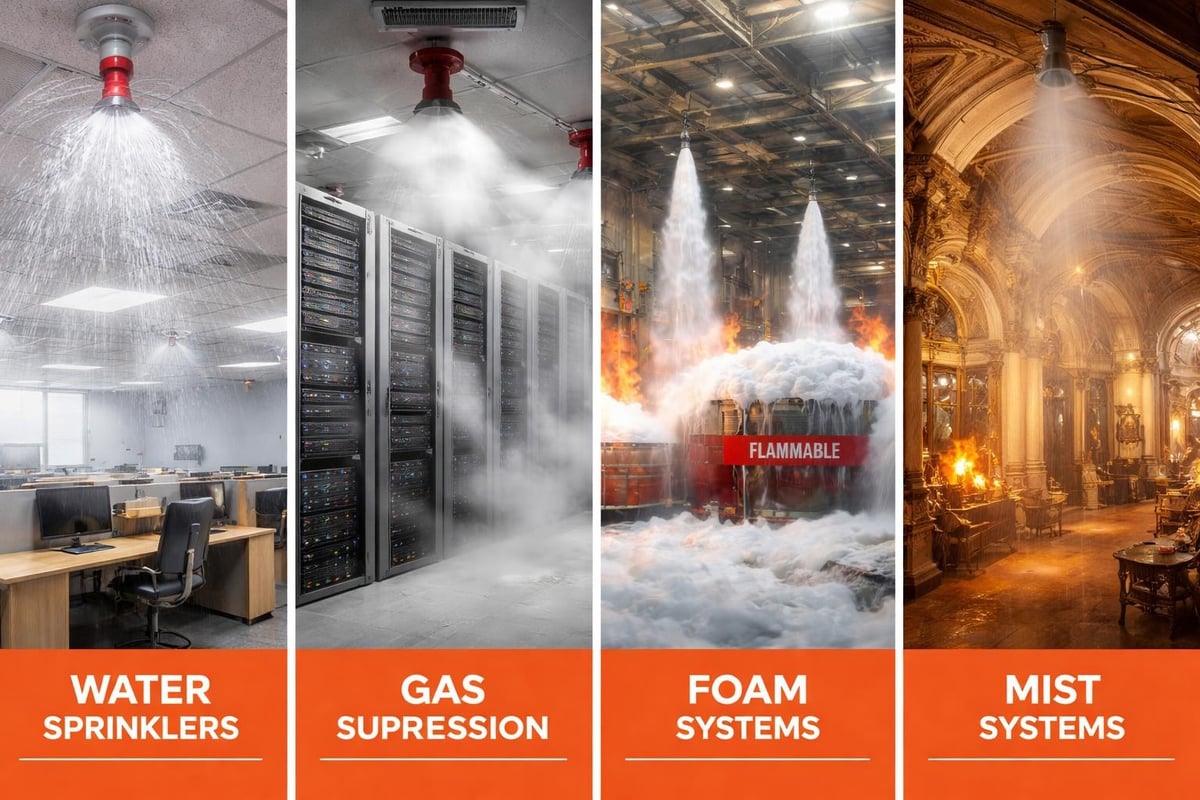
Mist systems represent emerging technology in fire safety and protection, using fine water droplets that cool flames and displace oxygen. These systems consume significantly less water than traditional sprinklers whilst achieving comparable or superior suppression performance. The National Institute of Standards and Technology provides comprehensive information on fire protection systems including residential and commercial sprinkler technologies.
Emergency Lighting and Evacuation Systems
Effective fire safety and protection extends beyond detection and suppression to ensuring safe egress during emergencies. Emergency lighting systems guide occupants along escape routes even when primary power fails, whilst evacuation alert systems provide clear, intelligible instructions during crisis situations.
Modern emergency lighting solutions incorporate LED technology offering extended battery life and reduced maintenance requirements. Self-testing capabilities automatically verify functionality, generating reports that satisfy regulatory compliance obligations whilst reducing administrative burden.
Evacuation System Components
- Voice alarm systems delivering clear spoken instructions
- Visual alert devices ensuring accessibility for hearing-impaired occupants
- Disabled refuge systems providing two-way communication for those unable to evacuate independently
- Way-guidance systems using dynamic signage to direct occupants away from danger
- Integration with access control ensuring doors unlock during emergencies
The importance of well-designed evacuation alert systems cannot be overstated. Research published in the Fire Safety Journal demonstrates that clear, authoritative voice messages significantly improve evacuation speed and reduce panic compared to traditional alarm bells.
Maintenance and Testing Protocols
Even the most sophisticated fire safety and protection systems prove worthless without proper maintenance. UK regulations mandate regular testing and servicing schedules that vary depending on system type and complexity. Documented maintenance not only ensures operational readiness but also demonstrates due diligence in the event of incidents or regulatory inspections.
Typical maintenance frequencies include:
- Weekly testing of fire alarm systems (responsibility of premises staff)
- Monthly checks of emergency lighting operation
- Quarterly servicing of fire extinguishers
- Six-monthly comprehensive system inspections
- Annual full-system testing and certification
Fire extinguisher servicing requires specialist knowledge to verify pressure levels, inspect seals, and ensure agents remain effective. Different extinguisher types demand specific maintenance procedures, with water, foam, CO2, and powder variants each presenting unique servicing requirements.
Professional maintenance partnerships provide businesses with peace of mind that all fire safety and protection equipment receives appropriate attention from qualified technicians. These relationships often include emergency call-out services, ensuring rapid response when systems develop faults or failures.
Integration with Security Systems
Forward-thinking organisations recognise that fire safety and protection systems shouldn't operate in isolation. Integration with commercial security systems creates holistic building management platforms that enhance both safety and operational efficiency.
Integrated approaches deliver multiple advantages:
- Access control coordination ensuring doors unlock during fire events whilst maintaining security integrity
- CCTV verification allowing remote confirmation of fire alarm activations before mobilising emergency services
- Unified monitoring platforms reducing complexity and improving response coordination
- Data analytics identifying patterns that might indicate emerging risks or equipment deterioration
- Cost optimisation through shared infrastructure and consolidated maintenance contracts
The synergy between fire and security systems exemplifies modern building management philosophy. Rather than viewing safety and security as separate domains, integrated approaches recognise their complementary nature and leverage technology to create safer, more efficient environments.
Training and Human Factors
Technology alone cannot guarantee effective fire safety and protection. Human factors play equally critical roles, from proper system operation to appropriate emergency response. Comprehensive training programmes ensure staff understand their responsibilities and can execute emergency procedures confidently when seconds count.
Essential Training Elements
| Training Component | Target Audience | Frequency | Content Focus |
|---|---|---|---|
| Fire warden training | Designated personnel | Annual | Evacuation coordination, equipment use |
| General awareness | All employees | Annual | Alarm response, escape routes |
| Equipment operation | Facilities staff | Annual | System controls, basic troubleshooting |
| Emergency drills | All occupants | Bi-annual | Practical evacuation practice |
| Management briefings | Leadership team | Annual | Legal responsibilities, compliance |
Effective fire safety and protection culture extends beyond mandatory training sessions. It encompasses daily behaviours, from maintaining clear escape routes to proper storage of flammable materials. Regular communication, visible leadership commitment, and incorporation of safety considerations into everyday decision-making all contribute to robust fire safety cultures.
Evacuation drills provide invaluable opportunities to test procedures under controlled conditions. These exercises reveal bottlenecks, identify confusion points, and familiarise occupants with escape routes before genuine emergencies occur. Documentation of drill performance and subsequent improvements demonstrates continuous enhancement of fire safety and protection capabilities.
Specialist Applications and Environments
Certain environments present unique fire safety and protection challenges requiring specialised solutions. Heritage buildings, for instance, demand systems that protect irreplaceable structures without compromising historical integrity. Data centres require suppression technologies that eliminate fire threats whilst preserving sensitive electronic equipment.
Healthcare facilities face particular complexity due to vulnerable patient populations who may be unable to self-evacuate. These environments typically employ horizontal evacuation strategies, moving patients to adjacent fire compartments rather than attempting full building evacuation. Advanced detection becomes critical, providing maximum warning time for staff to implement protective protocols.
Industrial settings with flammable materials, dust hazards, or high-temperature processes require robust detection systems capable of operating reliably in challenging conditions. Explosion-proof equipment, specialised suppression agents, and enhanced compartmentation all contribute to effective fire safety and protection in these demanding environments.
The Department of Energy offers fire protection-related resources that address specialised applications including research facilities, manufacturing plants, and critical infrastructure installations.
Future Trends in Fire Safety and Protection
The fire safety and protection industry continues evolving rapidly, driven by technological advancement, regulatory development, and changing built environment patterns. Artificial intelligence and machine learning increasingly feature in modern systems, enabling predictive maintenance that identifies equipment degradation before failures occur.
Emerging technologies include:
- IoT-enabled sensors providing granular data on environmental conditions
- Cloud-based monitoring platforms accessible from anywhere with internet connectivity
- Augmented reality training offering immersive emergency response preparation
- Drone technology for large-site inspections and emergency assessment
- Advanced analytics identifying fire risk patterns across building portfolios
Wireless technologies reduce installation costs and enable fire safety and protection in buildings where cabling proves impractical. Battery-powered devices with multi-year operational lives eliminate maintenance disruption whilst providing reliable protection.
Sustainability considerations increasingly influence fire safety and protection system design. Energy-efficient emergency lighting, environmentally-friendly suppression agents, and systems designed for long operational lives with minimal waste all reflect growing environmental consciousness within the industry.
The integration of fire alarm systems with smart building platforms creates opportunities for optimised energy management whilst maintaining safety integrity. These systems can adjust heating, ventilation, and air conditioning based on occupancy patterns whilst ensuring fire compartmentation remains effective and detection coverage comprehensive.
Protecting your business from fire requires comprehensive strategies encompassing detection, suppression, evacuation, and ongoing maintenance. The complexity of modern fire safety and protection demands expertise that extends across multiple disciplines, from understanding regulatory requirements to implementing cutting-edge technologies. Logic Fire and Security delivers complete fire and security solutions tailored to your specific operational needs, backed by decades of experience serving Blue Chip companies and public agencies throughout the UK. Their team of specialists can assess your current provision, identify enhancement opportunities, and implement integrated systems that safeguard your people, assets, and business continuity.