

Protecting valuable inventory, equipment, and assets within warehouse facilities demands more than standard security measures. Modern warehouse security alarm systems integrate advanced detection technologies, real-time monitoring, and rapid response protocols to safeguard against theft, unauthorised access, and operational disruption. As warehouses face increasing security challenges from sophisticated criminals and evolving threats, implementing comprehensive alarm systems has become essential for maintaining business continuity and protecting profit margins across the UK’s logistics and distribution sector.
Understanding Modern Warehouse Security Requirements
The landscape of warehouse security has transformed significantly over recent years. Facilities storing high-value inventory, pharmaceuticals, electronics, or sensitive materials face targeted attacks from organised crime groups who exploit security vulnerabilities. Traditional approaches focusing solely on perimeter fencing and basic locks no longer provide adequate protection.
Contemporary warehouse security alarm systems must address multiple threat vectors simultaneously. These include forced entry through loading docks, unauthorised access during shift changes, internal theft by employees or contractors, and sophisticated break-ins targeting specific high-value goods. The complexity of modern warehouse operations, with multiple access points, varied personnel levels throughout the day, and constant movement of goods, requires intelligent alarm systems capable of distinguishing genuine threats from routine activities.
Critical Components of Effective Detection
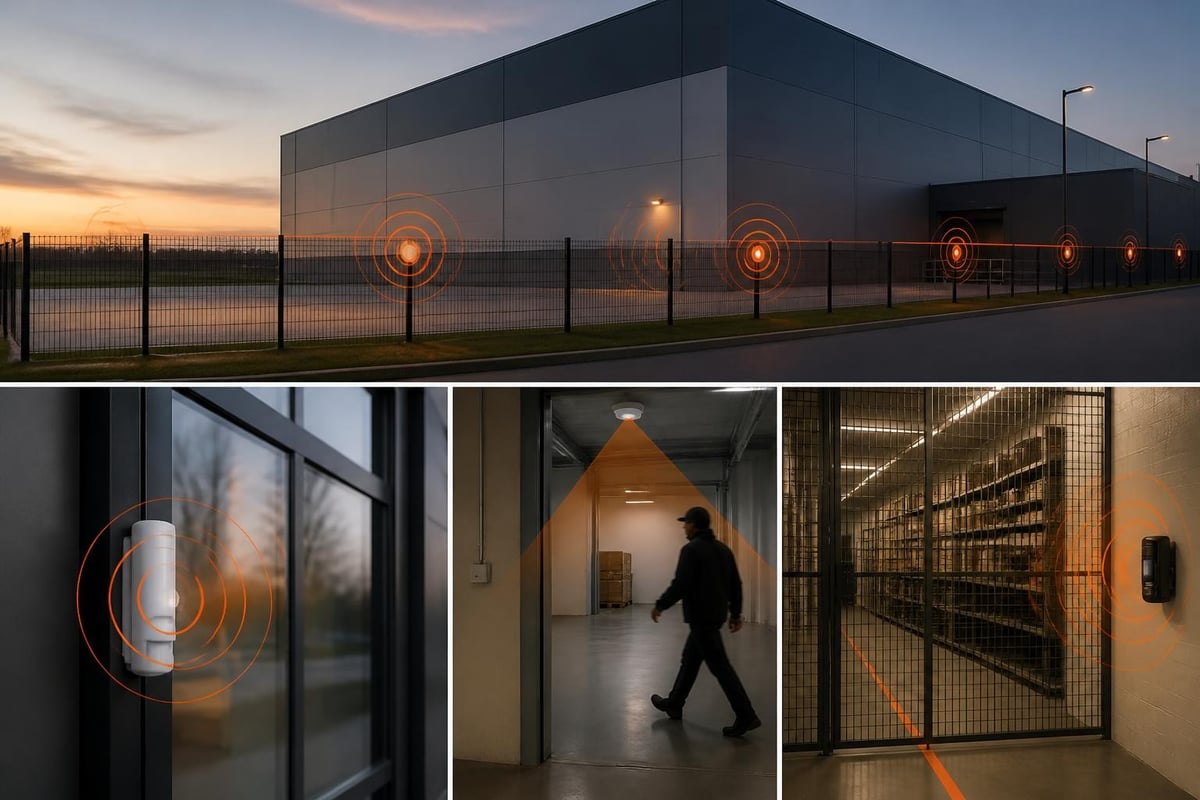
Successful warehouse protection relies on layered detection zones that create multiple barriers for potential intruders. Perimeter protection forms the first line of defence, utilising sensors along fence lines, gates, and building exteriors to detect attempted breaches before criminals reach the facility itself.
Key detection technologies include:
- Passive infrared sensors detecting heat signatures and movement patterns
- Microwave detectors providing volumetric coverage across large open areas
- Glass break sensors monitoring windows and skylights vulnerable to forced entry
- Door contacts tracking every entry point throughout the facility
- Vibration sensors identifying attempts to cut through walls or roofing
Integration between these technologies ensures comprehensive coverage whilst minimising false alarms that undermine system credibility. Modern warehouse security alarm systems employ intelligent algorithms that cross-reference multiple sensor inputs before triggering alerts, distinguishing between genuine security threats and environmental factors like weather conditions or wildlife.
Selecting Appropriate Alarm Technologies
Choosing the right alarm system configuration depends on specific warehouse characteristics, inventory types, operational patterns, and risk assessments. Facilities storing pharmaceuticals or electronics require different approaches compared to those handling bulk commodities or non-perishable goods.
| Technology Type | Best Applications | Coverage Area | False Alarm Risk |
|---|---|---|---|
| PIR Motion Sensors | Internal zones, corridors | Medium (15m range) | Low-Medium |
| Dual-Technology Sensors | High-security areas | Medium (12m range) | Very Low |
| Beam Detectors | Large open spaces | Large (150m+) | Low |
| Vibration Sensors | Perimeter walls, roof | Localised | Low |
| Volumetric Sensors | Warehouse floors | Large (30m range) | Medium |
Dual-technology sensors combining PIR and microwave detection significantly reduce false alarms whilst maintaining high detection reliability. This makes them particularly valuable in warehouse environments where temperature fluctuations, air movement from HVAC systems, and legitimate activity can trigger single-technology sensors.
Wireless vs Wired Infrastructure
Infrastructure decisions impact both initial installation costs and long-term system reliability. Wired systems offer superior reliability and eliminate concerns about battery maintenance or wireless interference, making them ideal for new construction or major refurbishments where cable installation costs remain manageable.
Wireless warehouse security alarm systems provide flexibility for existing facilities where extensive cabling proves impractical or prohibitively expensive. Modern wireless protocols deliver enterprise-grade security with encrypted communications and supervised transmission, ensuring any tampering or signal loss triggers immediate alerts. However, regular battery maintenance schedules become critical operational requirements.
Hybrid approaches combining wired backbone infrastructure with wireless sensors for challenging locations often deliver optimal results. This strategy places critical detection points on wired connections whilst using wireless technology for areas requiring periodic reconfiguration or where cable installation presents structural challenges.
Integration with Access Control and Surveillance
Standalone alarm systems provide limited value compared to integrated security platforms combining intrusion detection, access control entry systems, and video surveillance. This integration enables verification of alarm events, automated response protocols, and comprehensive security management from centralised platforms.
When motion sensors trigger within secured zones, integrated systems automatically direct nearby cameras to record the area whilst simultaneously alerting security personnel with live video feeds. This immediate visual confirmation allows operators to assess threat legitimacy and initiate appropriate responses, whether dispatching security teams, notifying police, or identifying false alarms requiring sensor adjustment.
Access control integration prevents alarm activation when authorised personnel enter the facility using valid credentials. Sophisticated warehouse security alarm systems maintain detailed logs tracking who accessed which areas at what times, creating audit trails essential for investigating security incidents or resolving inventory discrepancies. For businesses seeking comprehensive protection strategies, implementing building access control systems alongside alarm infrastructure creates powerful deterrents against both external threats and internal theft.
CCTV Verification and Evidence Gathering
Commercial CCTV installations provide crucial verification capabilities that transform alarm systems from simple detection tools into comprehensive security solutions. Video verification reduces police response times by confirming genuine security incidents before emergency services dispatch, whilst also minimising false alarm penalties that many UK police forces now impose.
High-resolution cameras with night vision capabilities ensure clear footage regardless of lighting conditions, essential for warehouses with limited illumination during closed hours. Motion-activated recording triggered by alarm events conserves storage capacity whilst ensuring complete documentation of security incidents. Modern business security camera systems integrate artificial intelligence that distinguishes between humans, vehicles, and animals, further reducing false alarm rates.

Professional Monitoring and Response Protocols
Self-monitored alarm systems relying on smartphone notifications provide basic protection but introduce significant vulnerabilities. Delayed responses due to unavailable personnel, inability to verify threats remotely, or confusion during genuine emergencies can render alarm systems ineffective precisely when protection matters most.
Professional intruder alarm monitoring services staffed by trained security operators deliver 24/7 vigilance with established response protocols. When warehouse security alarm systems trigger, monitoring centres immediately assess the situation using integrated video feeds, contact designated keyholders, and coordinate emergency service response when required.
Professional monitoring provides:
- Immediate alarm assessment using video verification and system diagnostics
- Multi-channel communication ensuring keyholder notification through phone, SMS, and email
- Police liaison with verified alarm protocols reducing false dispatch penalties
- Incident documentation creating comprehensive records for insurance and investigations
- System health monitoring identifying technical faults before they compromise security
Leading monitoring services maintain redundant communication paths ensuring alarm signals reach operators even during network outages or deliberate jamming attempts. This resilience proves critical for warehouses in remote locations where communication infrastructure may be less reliable than urban areas.
Response Time Optimisation
Effective security depends on minimising the time between alarm activation and appropriate response. Research consistently demonstrates that rapid response significantly increases the likelihood of apprehending intruders and recovering stolen goods. Understanding warehouse security best practices for high-value inventory helps establish protocols that balance operational efficiency with security requirements.
Sequential calling lists ensure monitoring centres can always reach someone authorised to respond, even during holidays or staff absences. Geographic proximity of keyholders influences response times substantially, making it advisable to designate multiple contacts living within reasonable distance of the facility. Some organisations supplement keyholder response with contracted security patrol services providing guaranteed on-site presence within specified timeframes.
Compliance and Insurance Considerations
Insurance providers increasingly mandate specific security standards for warehouse facilities, particularly those storing high-value goods or operating in high-crime areas. Warehouse security alarm systems meeting recognised standards like EN50131 or PD6662 demonstrate compliance with industry best practices and often qualify for reduced insurance premiums.
Professional installation and certification by accredited companies ensure systems meet required specifications and function correctly. Certificates provided following installation serve as evidence for insurers whilst periodic maintenance and inspection reports demonstrate ongoing compliance. Many insurance policies explicitly require annual servicing of alarm systems, with some insurers refusing claims where maintenance records cannot be produced.
Third-party certification schemes provide independent validation of security system design and installation quality. NSI Gold or SSAIB certification indicates installers meet stringent competency requirements and operate quality management systems ensuring consistent standards. Insurers typically specify minimum certification levels for approved installers, making accreditation selection a crucial consideration during procurement.
Regulatory Requirements for Specific Industries
Warehouses handling pharmaceuticals, hazardous materials, or controlled substances face additional regulatory requirements beyond standard security provisions. The Medicines and Healthcare products Regulatory Agency (MHRA) mandates specific security measures for facilities storing prescription medications, including alarm systems monitored by approved providers.
Similarly, warehouses storing alcohol, tobacco, or other excise goods must implement HMRC-approved security systems meeting defined specifications. Failure to comply with these sector-specific requirements can result in licence revocation, substantial fines, or criminal prosecution. Understanding applicable regulations during system design ensures compliance whilst avoiding costly modifications after installation.

Strategic System Design for Warehouses
Effective warehouse security alarm systems begin with comprehensive site surveys identifying vulnerabilities, operational patterns, and specific risk factors. Professional security assessors evaluate building construction, access points, neighbouring properties, lighting levels, and historical crime data to develop tailored protection strategies.
Zone configuration determines how the system segments the facility for selective arming and monitoring. Well-designed zones allow operational areas to remain active whilst securing storage sections, or enable partial arming during shift changes when personnel occupy only specific areas. This flexibility maintains security without disrupting legitimate warehouse activities.
Consideration of operational workflows prevents alarm systems from becoming impediments to productivity. Loading dock schedules, shift patterns, maintenance access requirements, and seasonal activity variations all influence optimal system configuration. Consulting with warehouse managers and operational staff during design ensures systems accommodate business needs whilst maintaining robust security. Drawing from warehouse security best practices outlined by industry professionals helps identify potential conflicts between security requirements and operational efficiency.
Environmental Factors and False Alarm Prevention
Warehouse environments present unique challenges for alarm systems including temperature extremes, dust, moisture, and structural movement. Selecting sensors rated for industrial environments with appropriate IP ratings ensures reliable operation under challenging conditions. Temperature-compensated PIR sensors maintain accuracy despite the thermal variations common in unheated warehouses or facilities with significant heat-generating equipment.
| Environmental Challenge | Recommended Solutions | Sensor Specifications |
|---|---|---|
| Temperature extremes | Temperature-compensated sensors | Operating range -20°C to +60°C |
| Dust and particulates | Sealed sensors with IP65+ rating | Dust-tight enclosures |
| High ceilings (>8m) | Long-range detectors or beams | Detection range 15-30m |
| Structural movement | Vibration-immune sensors | Adjustable sensitivity settings |
| Wildlife/pests | Dual-technology or pet-immune sensors | Mass discrimination features |
Regular maintenance and sensor positioning optimisation reduce nuisance alarms that undermine system credibility. Positioning sensors away from air vents, heating sources, and areas prone to wildlife ingress significantly improves performance. Professional installers understand these environmental factors and recommend appropriate technologies for specific warehouse conditions.
Advanced Features and Smart Technologies
Modern warehouse security alarm systems incorporate artificial intelligence and machine learning algorithms that continuously improve detection accuracy. These systems learn normal activity patterns and identify anomalous behaviours that may indicate security threats, even when individual sensors wouldn’t trigger traditional threshold-based detection.
Integration with business management systems enables security automation responding to operational status. Warehouse management systems can communicate with alarm platforms to adjust security levels based on whether loading operations are active, deliveries are scheduled, or facilities should be completely secured. This dynamic security posture maintains protection whilst minimising false alarms during legitimate activity periods.
Cloud-based management platforms provide remote system configuration, real-time status monitoring, and comprehensive reporting accessible from anywhere with internet connectivity. Multi-site organisations particularly benefit from centralised oversight enabling security managers to monitor numerous warehouse locations through unified dashboards. Mobile applications extend this capability to smartphones, ensuring security teams maintain situational awareness regardless of their physical location.
Emerging Technologies and Future Developments
Advanced analytics platforms process alarm data alongside video surveillance, access control logs, and business intelligence to identify trends, predict vulnerabilities, and optimise security strategies. Pattern recognition algorithms detect suspicious reconnaissance activities, unusual access patterns, or coordinated attacks across multiple locations.
Biometric authentication integration eliminates vulnerabilities associated with shared access codes or lost credentials. Fingerprint, facial recognition, or iris scanning technologies ensure only authorised individuals can disarm alarm systems or access secured zones. For organisations prioritising the highest security levels, combining biometric verification with traditional credential-based access creates multi-factor authentication that significantly increases protection.
Integration with building management systems enables coordinated responses to security events, automatically locking doors, activating emergency lighting, or isolating compromised sections whilst maintaining safe egress routes. This holistic approach treats security as an integrated building function rather than isolated technology deployment.
Installation and Commissioning Best Practices
Professional installation by qualified engineers ensures warehouse security alarm systems function reliably and meet design specifications. Certified installers possess the technical knowledge to properly configure detection zones, optimise sensor positioning, and integrate multiple security subsystems into cohesive platforms.
Critical installation considerations include:
- Cable routing protecting wiring from tampering whilst maintaining system aesthetics
- Power supply resilience with battery backup ensuring operation during mains failures
- Tamper protection for control panels, keypads, and critical detection devices
- Communication redundancy using multiple signal transmission paths
- Environmental protection ensuring sensors and equipment withstand warehouse conditions
Comprehensive commissioning processes verify every detection zone, test communication paths to monitoring centres, confirm backup power operation, and validate integration with access control and CCTV systems. Documented testing procedures create records demonstrating system functionality for insurance and compliance purposes.
User training ensures warehouse personnel understand proper arming and disarming procedures, recognise genuine alarm conditions, and know appropriate response protocols. Well-trained users reduce false alarms caused by operational errors whilst ensuring legitimate alarms receive prompt attention. Ongoing training updates address staff turnover and reinforce security awareness throughout the organisation.
Maintenance and Lifecycle Management
Regular maintenance preserves warehouse security alarm system reliability and extends equipment lifespan. Annual inspection and testing programmes identify component wear, environmental damage, or technical faults before they compromise security. Professional maintenance visits include sensor testing, battery replacement, communication path verification, and software updates addressing newly discovered vulnerabilities.
Predictive maintenance strategies use system diagnostics and performance monitoring to identify components approaching end-of-life before failures occur. Modern alarm systems generate health reports flagging sensors with degraded performance, communication modules experiencing signal quality issues, or batteries requiring replacement. Addressing these issues proactively prevents security gaps and avoids emergency callouts.
System evolution ensures warehouse security alarm systems remain effective as threats evolve and facilities change. Technology refresh cycles typically span 7-10 years, though specific components may require earlier replacement. Planning upgrades strategically allows phased implementation spreading costs whilst progressively enhancing capabilities. Organisations can learn from established warehouse security systems approaches when planning long-term security infrastructure development.
Documentation and Audit Requirements
Maintaining comprehensive documentation supports compliance, insurance claims, and operational efficiency. System specifications, zone plans, user manuals, maintenance records, and alarm history logs create an audit trail demonstrating due diligence and professional security management.
Regular security audits assess whether existing systems adequately address current threats and operational requirements. Business growth, inventory changes, or evolving criminal tactics may necessitate system enhancements beyond routine maintenance. Third-party security assessments provide objective evaluation identifying vulnerabilities internal teams might overlook.
Digital certification platforms streamline compliance documentation and enable automated validation of security credentials. For organisations managing multiple certifications across fire safety, security, and operational compliance, solutions like Certlink demonstrate how digital certificate management can enhance operational efficiency and ensure regulatory requirements are consistently met across complex facility portfolios.
Cost Optimisation and Return on Investment
Investment in warehouse security alarm systems delivers measurable returns through reduced theft losses, lower insurance premiums, improved operational efficiency, and enhanced business reputation. Calculating total cost of ownership includes initial equipment and installation expenses, ongoing monitoring fees, maintenance costs, and periodic upgrade investments.
Risk-based budgeting allocates resources proportional to asset values and threat levels. High-value storage areas justify premium detection technologies and monitoring services, whilst lower-risk zones may utilise cost-effective solutions providing adequate protection at reduced expense. This graduated approach optimises security spending without compromising overall facility protection.
Insurance premium reductions often offset significant portions of security system costs. Engaging insurers during system design ensures specifications meet their requirements for maximum premium benefits. Some insurers offer multi-year premium guarantees for facilities implementing approved security systems, providing budget certainty and improving investment payback calculations.
Comparing System Options and Procurement Strategies
| Consideration | Entry-Level System | Mid-Range System | Enterprise System |
|---|---|---|---|
| Initial Investment | £3,000-£8,000 | £10,000-£25,000 | £30,000-£100,000+ |
| Detection Technology | Basic PIR sensors | Dual-technology sensors | AI-enhanced detection |
| Monitoring | Self-monitoring | Professional 24/7 | Dedicated security operations |
| Integration Level | Standalone | CCTV & Access Control | Full building management |
| Scalability | Limited | Moderate expansion | Enterprise-wide deployment |
Procurement strategies balancing upfront costs against long-term value influence system selection. Leasing arrangements spread expenses across multiple years whilst ensuring regular technology updates as lease terms conclude. Alternatively, capital purchase provides long-term cost advantages for organisations with available funding and preferences for asset ownership.
Managed service models combine equipment provision, installation, monitoring, and maintenance into comprehensive packages with predictable monthly costs. These arrangements particularly suit organisations lacking internal technical resources or preferring to focus on core business activities rather than security infrastructure management. Understanding the full spectrum of warehouse security systems and their components helps inform procurement decisions aligned with organisational priorities.
Case Studies and Real-World Applications
Distribution centres serving major retail chains implement sophisticated warehouse security alarm systems protecting inventory values exceeding millions of pounds. Multi-zone configurations enable selective arming accommodating 24-hour operations whilst maintaining security in inactive sections. Integration with inventory management systems triggers alerts when goods move through unauthorised areas or at unusual times, detecting internal theft that conventional alarms might miss.
Pharmaceutical warehouses storing controlled substances combine alarm systems with access control, environmental monitoring, and video surveillance creating comprehensive audit trails meeting regulatory requirements. Sequential authentication protocols require multiple verification steps before granting access to high-security areas, whilst alarm systems maintain constant vigilance even when authorised personnel are present.
Cold storage facilities present unique challenges requiring alarm systems functioning reliably at temperatures below -25°C whilst accommodating thermal cycling as personnel enter from ambient environments. Specialised sensors designed for extreme temperatures prevent false alarms whilst maintaining detection sensitivity. Understanding essential warehouse security practices helps facility managers address industry-specific challenges effectively.
System Selection Criteria and Vendor Evaluation
Selecting appropriate warehouse security alarm systems requires evaluating vendor capabilities beyond product specifications. Installation quality, ongoing support responsiveness, monitoring centre reliability, and maintenance service levels significantly impact long-term system performance and value.
Vendor accreditations including NSI Gold, SSAIB, or ISO certifications demonstrate commitment to quality standards and professional practices. References from similar warehouse operations provide insights into real-world performance and vendor reliability under comparable conditions. Site visits to existing installations reveal installation quality, system usability, and operational integration.
Essential vendor evaluation criteria:
- Technical expertise in warehouse security applications and environments
- Installation capabilities with qualified engineering teams and project management
- Monitoring infrastructure including redundant centres and communication paths
- Maintenance responsiveness with defined service level agreements
- Technology partnerships with leading equipment manufacturers
- Financial stability ensuring long-term support availability
Long-term partnerships with security providers deliver superior outcomes compared to transactional relationships focused solely on initial costs. Established relationships enable vendors to understand evolving business requirements, proactively recommend enhancements, and provide prioritised support during emergencies. Organisations benefit from working with providers offering comprehensive capabilities spanning fire safety and electronic security, ensuring coordinated protection strategies addressing all facility risks.
Implementing effective warehouse security alarm systems requires careful planning, professional installation, and ongoing management to deliver reliable protection for valuable assets and operations. By understanding available technologies, integration opportunities, and operational requirements, organisations can develop security strategies that balance protection, compliance, and cost-effectiveness. Logic Fire and Security brings extensive expertise in designing, installing, and maintaining comprehensive security solutions tailored to warehouse environments across the UK. Our team of qualified engineers and commitment to excellence ensures your facility receives the protection it deserves, backed by professional monitoring and responsive support. Contact Logic Fire and Security today to discuss how we can enhance your warehouse security infrastructure.