

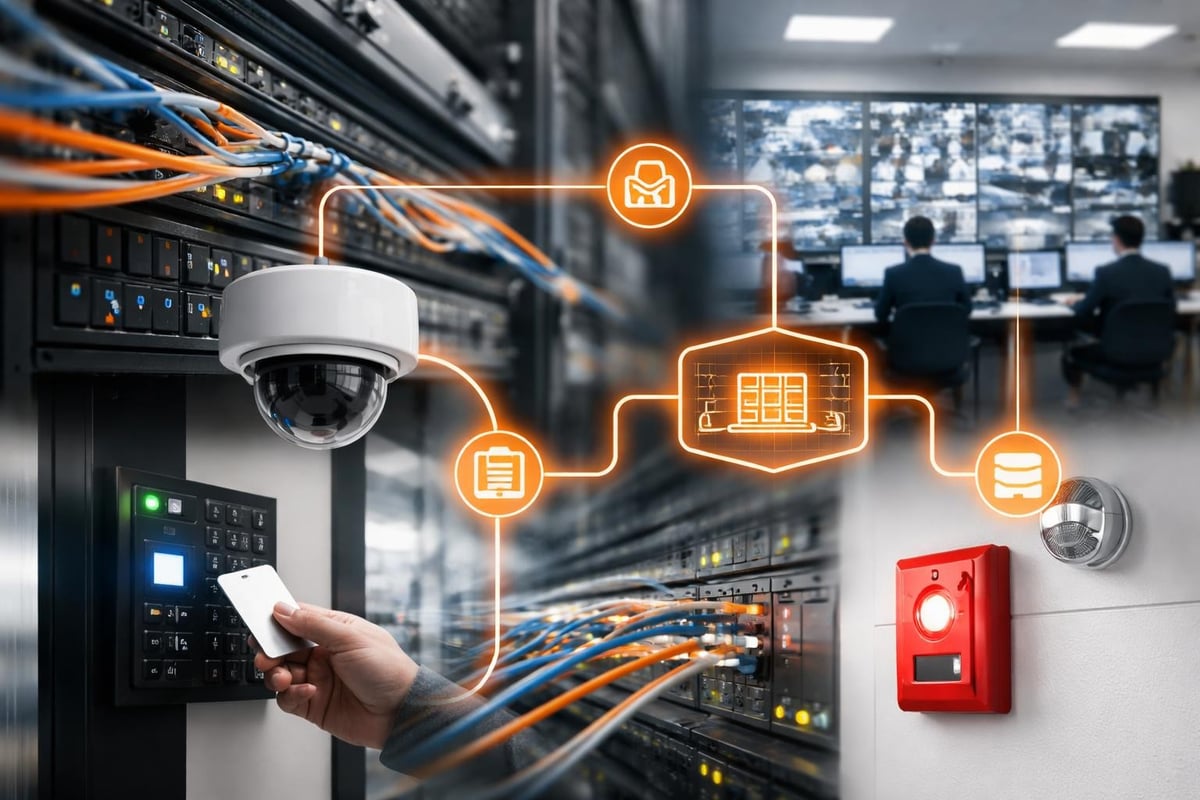
Modern businesses face increasingly sophisticated security threats that demand equally advanced protective measures. Surveillance solutions have evolved far beyond simple CCTV cameras to become comprehensive security ecosystems that integrate video monitoring, access control, and fire detection systems. For commercial organisations, selecting the right surveillance infrastructure is crucial not only for protecting assets and personnel but also for maintaining regulatory compliance and operational continuity.
Understanding Contemporary Surveillance Solutions
Surveillance solutions encompass a broad spectrum of technologies designed to monitor, detect, and respond to security threats within commercial environments. These systems have transformed dramatically over recent years, transitioning from analogue video recorders to sophisticated digital platforms that leverage artificial intelligence and cloud computing.
The surveillance solutions market continues to experience substantial growth, driven by increasing security concerns and technological advancements. Modern commercial installations typically combine multiple security layers, creating integrated systems that communicate seamlessly to provide comprehensive protection.
Core Components of Modern Systems
Today’s surveillance infrastructure includes several essential elements:
- IP-based video cameras with high-resolution imaging capabilities
- Network video recorders that store and manage footage efficiently
- Analytics software that identifies unusual behaviour patterns
- Remote monitoring platforms accessible from multiple locations
- Integration modules connecting to fire alarms and access control
These components work together to create robust security environments that can be tailored to specific business requirements. The shift towards digital surveillance has enabled organisations to implement more sophisticated monitoring strategies whilst reducing the overall cost of ownership through improved efficiency and reduced maintenance needs.
Video Surveillance Technology for Business Premises
Video surveillance remains the cornerstone of most commercial security strategies. Contemporary camera systems offer capabilities that were unimaginable just a decade ago, from facial recognition to licence plate reading and thermal imaging.
Businesses must consider numerous factors when designing video surveillance architecture. Camera placement, resolution requirements, storage capacity, and retention policies all influence system effectiveness. Commercial CCTV installations require careful planning to ensure adequate coverage whilst maintaining privacy compliance.
Resolution and Coverage Requirements
Different business environments demand varying levels of surveillance detail:
| Location Type | Recommended Resolution | Coverage Strategy |
|---|---|---|
| Entry points | 4K minimum | Multi-angle capture |
| General areas | 1080p standard | Wide-angle coverage |
| Critical zones | 4K with zoom | Detailed monitoring |
| Perimeter | Variable | Motion-triggered |
The video surveillance solutions market demonstrates increasing demand for higher resolution cameras as businesses seek to capture clearer evidence and improve facial recognition accuracy. However, higher resolution also means increased storage requirements and bandwidth consumption, necessitating careful infrastructure planning.
Integration with Fire and Security Systems
The most effective surveillance solutions don’t operate in isolation. Integration with fire detection and alarm systems creates a unified security environment that responds intelligently to multiple threat scenarios.
When fire alarms activate, integrated surveillance systems can automatically direct cameras to affected areas, providing real-time visual confirmation to emergency responders. This integration proves particularly valuable in large commercial facilities where pinpointing incident locations quickly can save lives and reduce property damage.
CCTV monitoring services benefit enormously from integration with other building systems. Operators receive contextual information about events, enabling faster and more accurate response decisions. For instance, when an access control system detects an unauthorised entry attempt, surveillance cameras can automatically begin recording whilst simultaneously alerting security personnel.
Creating Unified Security Platforms
Modern businesses increasingly adopt comprehensive protection systems that combine:
- Video surveillance for visual monitoring and evidence collection
- Intrusion detection through sensors and alarms
- Access control managing entry to sensitive areas
- Fire detection with automatic notification capabilities
- Environmental monitoring tracking temperature and humidity
This unified approach ensures that all security elements work cohesively. When properly configured, these systems can trigger automated responses such as locking doors during fire events or activating recording when motion sensors detect movement outside business hours.
Intelligent Analytics and AI Integration
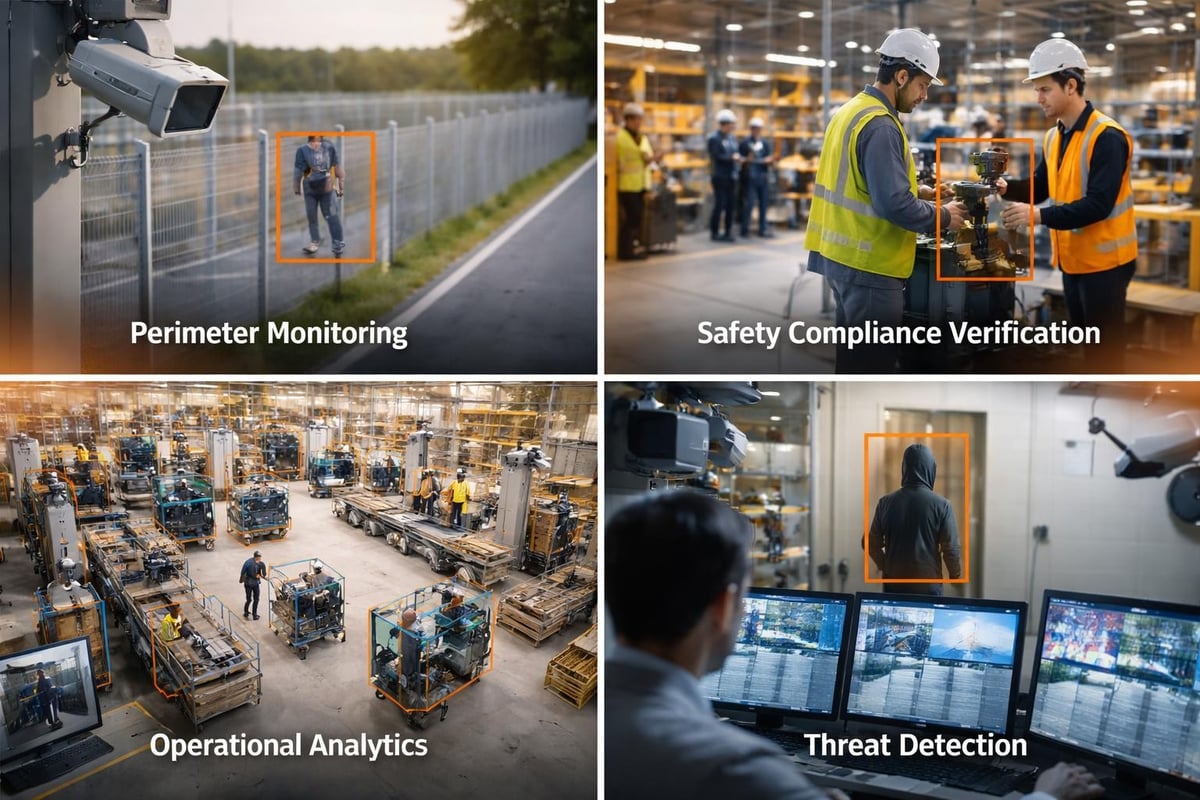
Artificial intelligence has revolutionised what surveillance solutions can achieve. Rather than requiring constant human monitoring, AI-enabled systems can analyse video feeds continuously, identifying potential security concerns and alerting operators only when intervention may be necessary.
Research into AI’s role in surveillance demonstrates how computer vision algorithms have matured to handle complex detection tasks. Modern systems can distinguish between humans, vehicles, and animals, reducing false alarms whilst improving threat detection accuracy.
Practical Applications of Analytics
Businesses deploy intelligent analytics for various purposes:
- Perimeter protection detecting unauthorised access attempts
- Loitering detection identifying suspicious behaviour patterns
- Crowd management monitoring occupancy levels in public areas
- Safety compliance ensuring PPE usage in hazardous zones
- Operational insights analysing customer movement patterns
These capabilities extend surveillance solutions beyond traditional security applications. Retailers use analytics to optimise store layouts, manufacturers monitor production processes, and logistics companies track warehouse operations. The technology provides both security value and operational intelligence.
Cloud-Based Versus On-Premise Systems
One fundamental decision businesses face involves choosing between cloud-based and on-premise surveillance infrastructure. Each approach offers distinct advantages depending on organisational requirements and constraints.
Cloud-based surveillance solutions eliminate the need for extensive on-site hardware, reducing upfront capital expenditure. Footage streams directly to secure cloud servers, accessible from anywhere with appropriate credentials. This approach suits businesses with multiple locations requiring centralised monitoring.
On-premise systems store all data locally, providing complete control over security footage and eliminating ongoing cloud storage fees. Organisations handling sensitive information often prefer this approach to maintain data sovereignty and comply with industry-specific regulations.
| Feature | Cloud-Based | On-Premise |
|---|---|---|
| Initial cost | Lower | Higher |
| Scalability | Excellent | Limited |
| Maintenance | Provider managed | Client managed |
| Data control | Shared | Complete |
| Internet dependency | High | Low |
Many businesses adopt hybrid approaches, storing recent footage locally whilst archiving older recordings to cloud storage. This strategy balances accessibility, cost, and control whilst ensuring compliance with data retention requirements.
Monitoring and Response Services
Installing sophisticated surveillance solutions represents only half the equation. Effective security requires professional monitoring services that ensure rapid response to incidents.
Intruder alarm monitoring and video surveillance monitoring services provide 24/7 oversight of commercial premises. Trained operators watch for security breaches, verify alarms, and coordinate with emergency services when necessary. This human element remains crucial despite advances in automation, as experienced operators can interpret context and make nuanced decisions that algorithms may miss.
Response Protocol Development
Effective monitoring requires clear response protocols:
- Event detection through sensors, cameras, or analytics
- Verification confirming genuine threats versus false alarms
- Assessment determining appropriate response level
- Action dispatching security personnel or emergency services
- Documentation recording incident details for review
Well-designed surveillance solutions incorporate these protocols into their operational framework, ensuring consistent and appropriate responses regardless of when incidents occur. Fire alarm monitoring follows similar protocols, with the added urgency that fire situations demand.
Compliance and Data Protection Considerations
Businesses deploying surveillance solutions must navigate complex legal and regulatory landscapes. Data protection legislation, industry-specific requirements, and privacy considerations all influence how organisations can collect, store, and use surveillance footage.
The UK’s data protection framework requires businesses to demonstrate legitimate interests for surveillance deployment whilst ensuring systems don’t capture more information than necessary. Signage must inform people they’re being monitored, and retention periods must align with genuine business needs rather than arbitrary timeframes.
Different industries face additional compliance requirements. Financial institutions must meet specific security standards, whilst healthcare facilities must protect patient privacy. The mass surveillance industry continues evolving alongside regulatory frameworks that seek to balance security needs with individual rights.
Best Practice Guidelines
Organisations should implement these compliance measures:
- Conduct privacy impact assessments before deployment
- Establish clear data retention and deletion policies
- Implement role-based access controls limiting footage viewing
- Maintain audit logs documenting who accesses recordings
- Provide staff training on surveillance system usage
- Regularly review and update security policies
These practices protect businesses from regulatory penalties whilst demonstrating commitment to responsible surveillance deployment. They also build trust with employees and customers who expect their privacy to be respected even within monitored environments.

Advanced Surveillance Technologies
The surveillance landscape continues evolving with emerging technologies that expand what’s possible in commercial security. Thermal cameras, multispectral imaging, and advanced analytics represent the cutting edge of current capabilities.
Dual-spectrum surveillance cameras combine visible light and thermal imaging, enabling effective monitoring regardless of lighting conditions. These systems prove particularly valuable for perimeter security, detecting intruders in complete darkness or adverse weather conditions.
Emerging Capabilities
Recent technological developments include:
- Facial recognition systems that identify individuals against databases
- Behaviour analysis detecting unusual movement patterns
- License plate recognition for vehicle tracking and access control
- Heat mapping identifying areas of high activity
- Audio analytics detecting specific sounds like breaking glass
Whilst these capabilities offer enhanced security, they also raise privacy concerns requiring careful consideration. Businesses must balance the security benefits against potential employee and customer discomfort with intensive monitoring.
Integration with Access Control Systems
Surveillance solutions achieve maximum effectiveness when integrated with access control entry systems. This combination creates comprehensive security that manages both who enters premises and what they do whilst inside.
When employees badge into buildings, integrated systems can automatically activate cameras to record entry. If access is denied, security personnel receive alerts with live video feeds showing the attempted entry. This integration creates an audit trail documenting all access events with corresponding video evidence.
Modern commercial access control systems can trigger various responses based on surveillance input. For example, if cameras detect someone following an authorised person through a secured door (tailgating), the system can alert security whilst recording the incident.
Network Infrastructure Requirements
Sophisticated surveillance solutions demand robust network infrastructure. IP cameras generate substantial data streams, particularly when recording at high resolutions or frame rates. Businesses must ensure their networks can handle this load without impacting other operations.
Key infrastructure considerations include:
- Bandwidth capacity supporting multiple simultaneous video streams
- Network reliability maintaining continuous recording capabilities
- Power over Ethernet simplifying camera installation and management
- Network segmentation isolating surveillance traffic from general business data
- Backup connectivity ensuring recording continues if primary connections fail
Data cabling forms the foundation of any IP-based surveillance deployment. Proper cabling infrastructure ensures reliable performance whilst allowing for future expansion as security requirements evolve.
Maintenance and System Longevity
Even the most advanced surveillance solutions require regular maintenance to ensure continued reliability. Cameras accumulate dirt and debris, storage systems reach capacity, and software requires updates to address security vulnerabilities.
Proactive maintenance programmes include regular inspections, cleaning, testing, and performance verification. These activities prevent system failures that could leave businesses unprotected during critical moments.
Maintenance Schedule Components
| Activity | Frequency | Purpose |
|---|---|---|
| Camera cleaning | Quarterly | Maintain image quality |
| Software updates | Monthly | Address security patches |
| Storage verification | Weekly | Ensure recording capacity |
| System testing | Monthly | Confirm full functionality |
| Cable inspection | Annually | Prevent connection failures |
Businesses often partner with specialist providers for maintenance services, ensuring systems receive expert attention whilst freeing internal resources for core operations. This approach also ensures access to manufacturer support and warranty protection.
Return on Investment Considerations
Whilst surveillance solutions represent significant investments, they deliver measurable returns through multiple channels. Beyond preventing theft and vandalism, these systems reduce insurance premiums, improve operational efficiency, and protect against liability claims.
Insurance providers typically offer reduced premiums for businesses with professionally installed and monitored surveillance systems. These savings accumulate over time, offsetting installation and operating costs. More significantly, preventing a single major security incident often justifies the entire system investment.
The surveillance camera market continues growing as businesses recognise these value propositions. Organisations increasingly view surveillance not as an expense but as essential infrastructure that protects assets whilst enabling better business decisions.
Selecting Appropriate Solutions
Choosing surveillance solutions requires careful assessment of business-specific requirements. A small office needs different capabilities than a manufacturing facility or retail environment. Understanding these needs ensures investments deliver maximum value.
Key selection criteria include:
- Coverage requirements based on facility layout and risk areas
- Image quality needs determined by identification versus detection goals
- Storage capacity aligned with retention policies and recording schedules
- Integration capabilities with existing fire and security systems
- Scalability allowing expansion as business needs evolve
Working with experienced providers helps businesses navigate these decisions. Specialists can assess premises, identify vulnerabilities, and recommend solutions that address specific requirements whilst remaining budget-conscious. This collaborative approach ensures surveillance infrastructure aligns with both current needs and future growth plans.
Effective surveillance solutions form the backbone of comprehensive commercial security strategies, integrating video monitoring with fire detection and access control to protect businesses against diverse threats. The rapid evolution of surveillance technology, from AI-powered analytics to cloud-based management platforms, offers unprecedented capabilities for organisations committed to safeguarding their assets, personnel, and operations. Whether you’re upgrading existing systems or implementing new security infrastructure, partnering with experienced specialists ensures your investment delivers maximum protection and value. Logic Fire and Security provides comprehensive fire and security solutions tailored to your business requirements, combining decades of expertise with cutting-edge technology to keep your organisation safe and compliant.