

The installation of fire alarm systems in commercial properties represents one of the most critical investments a business can make in protecting lives, assets, and operations. As regulatory requirements become increasingly stringent and technology advances, understanding the complexities of proper fire alarm installation has never been more important for facility managers, property owners, and health and safety officers. This comprehensive guide explores the essential considerations, processes, and best practices that ensure your fire detection system meets both legal obligations and operational needs.
Understanding Regulatory Requirements for Fire Alarm Systems
Before commencing any installation of fire alarm equipment, businesses must familiarize themselves with the applicable regulations and codes governing their specific industry and building type. In the UK, the Regulatory Reform (Fire Safety) Order 2005 places responsibility on building owners and employers to ensure adequate fire detection systems are installed and maintained.
The National Fire Protection Association (NFPA) 72 provides internationally recognized standards for fire alarm system installation that many UK businesses reference alongside British Standards. Similarly, OSHA regulations for employee alarm systems outline specific requirements for workplace installations that protect employees.
British Standard BS 5839-1 remains the primary code of practice for the design, installation, commissioning, and maintenance of fire detection and alarm systems in non-domestic premises throughout the United Kingdom.
Compliance with Building Codes
Commercial buildings must adhere to specific building codes depending on their classification, occupancy type, and square footage. The International Building Code (IBC) influences many modern construction projects and specifies fire alarm requirements based on building use.
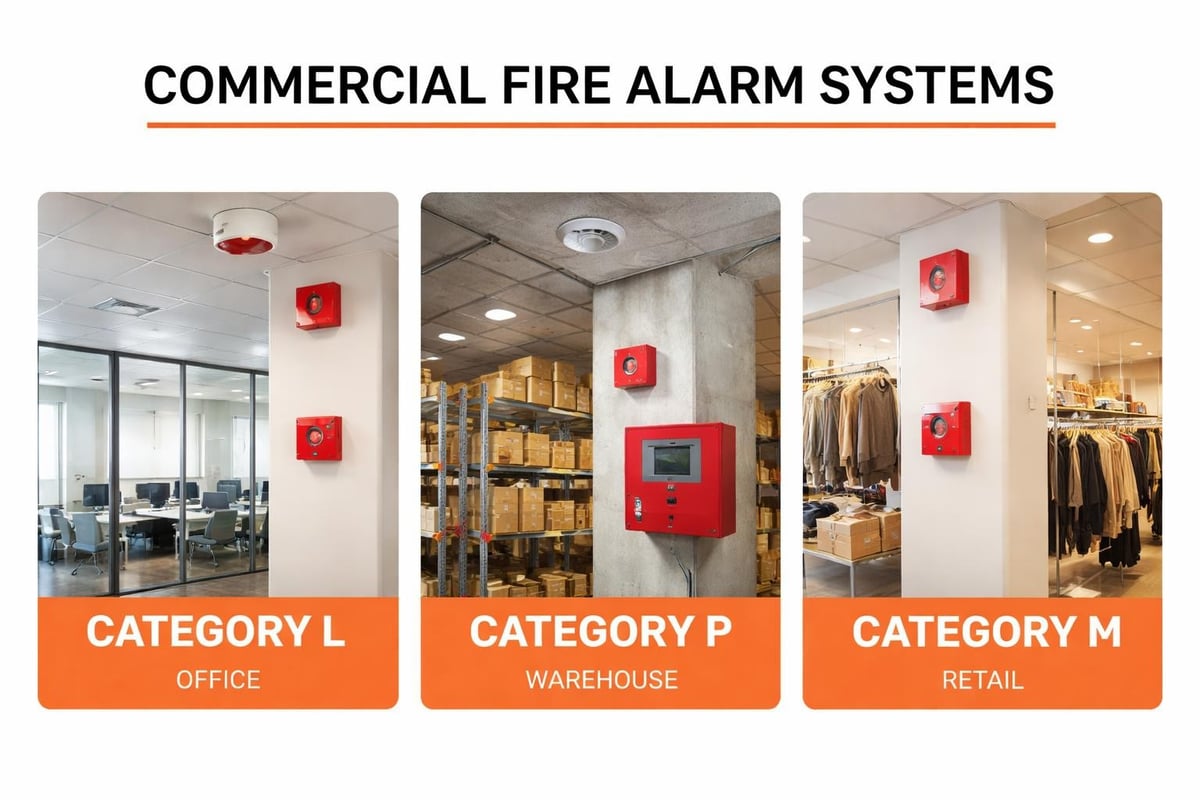
Different property types require different system categories:
- Category L systems: Designed to protect life by providing early warning to occupants
- Category P systems: Intended to protect property through early fire detection
- Category M systems: Manual call point systems without automatic detection
Understanding which category applies to your premises is fundamental before proceeding with installation.
Pre-Installation Planning and Risk Assessment
Proper installation of fire alarm systems begins long before any physical work commences. A thorough fire risk assessment identifies potential fire hazards, evaluates existing fire safety measures, and determines the appropriate level of fire detection required for your specific premises.
Professional fire risk assessments examine multiple factors including building layout, occupancy levels, business activities, storage of flammable materials, and the presence of vulnerable persons who may require additional protection. This assessment forms the foundation for system design and detector placement strategy.
Site Survey and System Design
Following the risk assessment, a comprehensive site survey maps out the optimal placement for detection devices, call points, sounders, and control panels. Engineers consider ceiling heights, room functions, environmental conditions, and potential sources of false alarms during this critical planning phase.
Key considerations during site surveys include:
- Detection zones: Dividing the building into manageable areas for quick fire location identification
- Device spacing: Ensuring adequate coverage based on detector type and ceiling height
- Environmental factors: Identifying areas with dust, humidity, or temperature extremes
- Escape routes: Positioning sounders for maximum audibility along evacuation paths
- Interference sources: Avoiding placement near ventilation systems or heat-generating equipment
| Planning Element | Purpose | Impact on Installation |
|---|---|---|
| Risk Assessment | Identifies fire hazards and required protection level | Determines system category and scope |
| Site Survey | Maps building layout and environmental conditions | Guides detector placement and cable routes |
| System Design | Specifies equipment and network architecture | Ensures adequate coverage and compliance |
| Budget Planning | Allocates resources for equipment and labour | Influences timeline and phasing options |
Equipment Selection and Specification
The installation of fire alarm components requires careful selection of appropriate devices for each area of your commercial premises. Modern systems offer various detector technologies, each suited to different environments and fire risks.
Detector Technologies
Smoke detectors remain the most common detection method in commercial settings, available in optical (photoelectric) and ionization variants. Optical detectors excel at detecting slow-smoldering fires, whilst ionization types respond faster to fast-flaming fires with smaller smoke particles.
Heat detectors serve environments where smoke detectors would generate excessive false alarms, such as kitchens, boiler rooms, or dusty workshops. These devices activate when ambient temperature reaches a predetermined threshold or when temperature rises at an abnormal rate.
Multi-sensor detectors combine smoke and heat detection technologies, using sophisticated algorithms to distinguish genuine fire conditions from environmental factors that might trigger single-technology devices. These advanced detectors significantly reduce false alarms whilst maintaining rapid response to actual fires.
For specialized applications, businesses may require flame detectors, carbon monoxide detectors, or aspiration systems that continuously sample air through a network of pipes. The fire alarm system selected must match your specific operational requirements.
Control Panels and Network Infrastructure
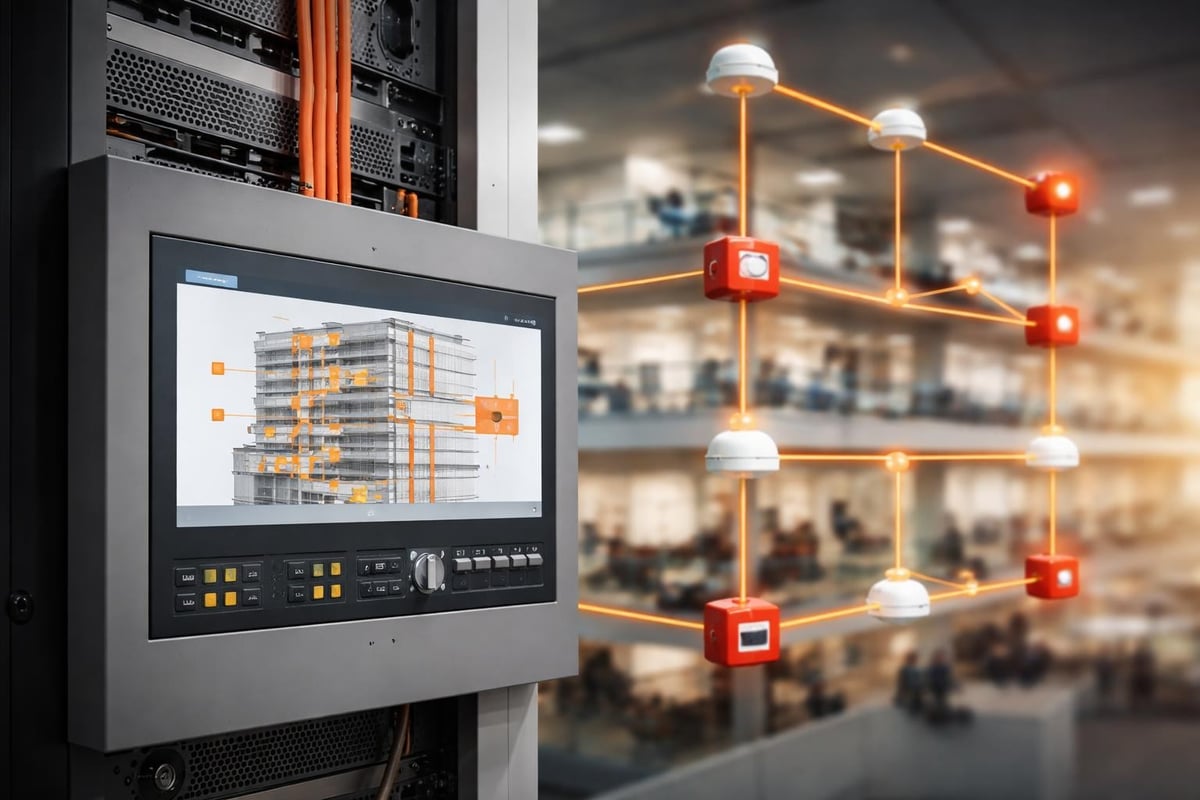
Fire alarm control panels serve as the central intelligence hub for the entire system, monitoring all connected devices, processing signals, and activating alarms when fire conditions are detected. Modern addressable systems allow each device to have a unique identifier, enabling precise location reporting and advanced diagnostics.
Installation considerations for control panels include:
- Accessibility: Positioning for easy operation by fire brigade and maintenance personnel
- Protection: Secure mounting in areas protected from physical damage and unauthorized access
- Power supply: Adequate mains power with appropriate backup battery capacity
- Communication: Integration with building management systems and remote monitoring services
Installation Process and Best Practices
Professional installation of fire alarm systems follows a systematic approach that ensures reliability, compliance, and optimal performance throughout the system's operational life. Qualified engineers certified to relevant industry standards must carry out all installation work.
Cable Installation and Routing
Fire alarm system cabling requires specific fire-resistant cables that maintain circuit integrity during fire conditions, allowing the system to continue operating when needed most. Installation teams route cables through designated fire-protected pathways, maintaining appropriate separation from power cables to prevent interference.
Best practice cable installation includes:
- Using appropriate cable clips and supports at specified intervals
- Avoiding sharp bends that could damage cable cores
- Labelling all cables clearly for future maintenance
- Installing cables in accessible routes for inspection and repair
- Testing continuity and insulation resistance before connection
Device Mounting and Configuration
Each detection device, manual call point, and sounder requires precise mounting according to manufacturer specifications and relevant standards. Height, orientation, and clearance requirements vary by device type and must be strictly observed.
Installation teams configure addressable devices with unique addresses, program control panels with zone information, and set appropriate detection thresholds. Modern systems allow fine-tuning of sensitivity levels to balance rapid response with false alarm prevention.
System Integration and Testing
Complete installation of fire alarm systems extends beyond physical mounting of devices to include integration with other building systems and comprehensive commissioning tests. This phase ensures every component functions correctly individually and as part of the integrated fire safety strategy.
Integration with Building Systems
Modern fire alarm installations often interface with multiple building systems to enhance safety and facilitate efficient emergency response. Common integrations include:
| System | Integration Purpose | Operational Benefit |
|---|---|---|
| HVAC Systems | Shutdown ventilation to prevent smoke spread | Contains fire and smoke to origin area |
| Access Control | Release electromagnetic locks on fire doors | Ensures clear evacuation routes |
| Lift Controls | Return lifts to ground floor and disable | Prevents occupant entrapment |
| Emergency Lighting | Activate illuminated escape route signs | Guides occupants to safety |
| Security Systems | Unlock specific doors whilst maintaining perimeter security | Balances evacuation with security |
The fire alarm monitoring service provides 24/7 professional oversight, ensuring rapid response to any activation.
Commissioning and Certification
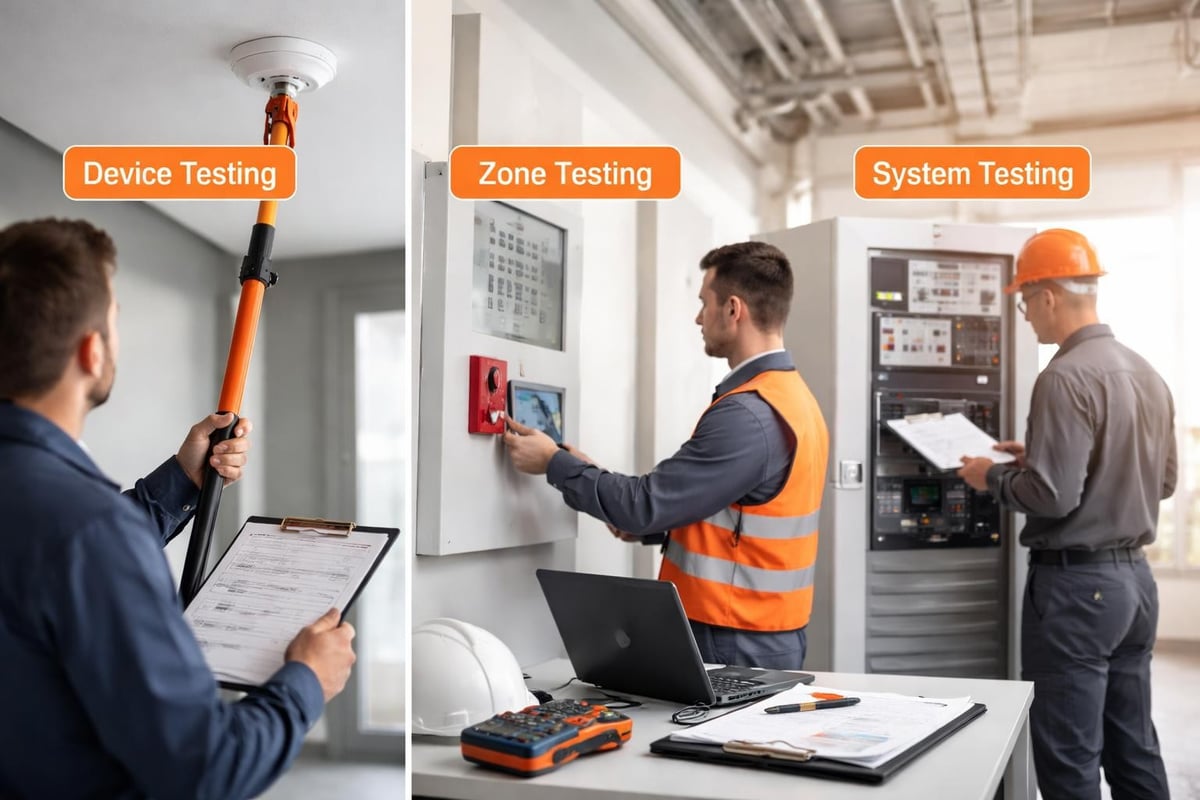
Following physical installation, comprehensive commissioning tests verify system performance across all scenarios. Engineers test each detector individually, verify alarm sounders achieve required decibel levels throughout the premises, and confirm control panel programming matches the design specification.
Testing procedures include:
- Smoke testing: Introducing test smoke to verify detector response
- Heat testing: Using controlled heat sources for thermal detectors
- Manual call point testing: Activating each break-glass station
- Battery backup testing: Simulating mains failure to verify standby power
- Communication testing: Confirming signals reach monitoring stations
- Documentation: Creating comprehensive test records and certificates
Only after successful commissioning can engineers issue certification confirming the installation meets all applicable standards. This documentation proves essential for insurance purposes, regulatory inspections, and legal compliance.
Maintenance Planning and Ongoing Support
The installation of fire alarm systems represents the beginning rather than the conclusion of your fire safety commitment. Effective ongoing maintenance ensures continued reliable operation and regulatory compliance throughout the system's operational life.
Routine Maintenance Requirements
UK regulations mandate regular inspection, testing, and maintenance of fire alarm systems at prescribed intervals. Weekly tests of the system by designated responsible persons verify basic functionality, whilst quarterly professional inspections examine specific components in rotation.
Annual comprehensive maintenance includes:
- Complete system testing including all detection devices
- Control panel diagnostics and programming verification
- Battery condition testing and replacement as needed
- Sounder output verification throughout the premises
- Connection integrity testing for all wired components
- Software updates and security patches for networked systems
Businesses must maintain detailed logbooks recording all tests, maintenance activities, faults discovered, and remedial actions taken. These records demonstrate due diligence and prove invaluable during regulatory inspections or insurance claims.
Monitoring and Remote Diagnostics
Modern fire alarm installations benefit from connection to professional monitoring centres that provide 24/7 oversight. The CDC emphasizes the importance of fire alarm systems in workplace safety, particularly regarding proper installation and maintenance protocols.
Advanced systems transmit diagnostic information enabling predictive maintenance, identifying potential issues before they compromise system reliability. Remote monitoring detects fault conditions, tamper attempts, and unusual patterns that might indicate emerging problems.
Specialist Installation Considerations
Different commercial environments present unique challenges requiring specialized knowledge during the installation of fire alarm systems. Understanding these sector-specific requirements ensures appropriate protection matched to operational realities.
Industrial and Manufacturing Facilities
Industrial premises often require heat detectors rather than smoke sensors due to processes that generate dust, fumes, or water vapor. Installation teams must consider high ceilings, structural steelwork, and harsh environmental conditions when designing systems for manufacturing facilities.
Hazardous area installations require ATEX-certified equipment designed to operate safely in potentially explosive atmospheres. These specialized systems demand additional expertise and certification from installation engineers.
Healthcare and Care Facilities
Healthcare environments require especially sensitive fire alarm design balancing rapid detection with minimal disruption to patient care. Installation must accommodate areas where audible alarms could distress vulnerable individuals, utilizing visual indicators and staged evacuation strategies.
Integration with nurse call systems and automated fire door release mechanisms ensures patient safety whilst maintaining infection control barriers. Specialist knowledge of healthcare regulations proves essential during planning and installation.
Educational Institutions
Schools, colleges, and universities present particular challenges regarding vandal-resistant equipment, noise level requirements during examinations, and complex evacuation procedures for large numbers of young people.
Installation of fire alarm devices in educational settings requires robust protective guards on accessible devices, careful sounder placement to achieve required decibel levels without causing distress, and integration with access control systems that balance security with emergency evacuation.
Retail and Hospitality Venues
Retail premises and hospitality venues require discrete detector placement that maintains aesthetic standards whilst providing comprehensive coverage. High-ceiling areas in shopping centres demand specialized detection technologies and careful spacing calculations.
Installation teams must coordinate with ongoing business operations, often working outside normal trading hours to minimize disruption. Integration with emergency lighting and evacuation alert systems ensures clear guidance for customers unfamiliar with the premises layout.
Choosing Professional Installation Partners
Selecting the right contractor for installation of fire alarm systems profoundly impacts system performance, compliance, and long-term reliability. Reputable providers demonstrate appropriate certifications, extensive experience, and commitment to quality workmanship.
Essential Qualifications and Accreditations
Professional fire alarm installers should hold certification from recognized industry bodies demonstrating competence and adherence to standards. Third-party certification schemes provide independent verification of installer capabilities and quality management systems.
Look for installers approved by:
- BAFE: British Approvals for Fire Equipment certification schemes
- NSI: National Security Inspectorate Gold or Silver approval
- FIA: Fire Industry Association membership
- ECA: Electrical Contractors' Association registration
- NICEIC: National Inspection Council for Electrical Installation Contracting approval
These accreditations require regular audits, ongoing training, and demonstration of technical competence, insurance coverage, and complaint resolution procedures.
Evaluating Installation Proposals
When reviewing proposals for fire alarm installation, businesses should consider factors beyond initial cost. Comprehensive proposals detail equipment specifications, installation methodology, testing procedures, warranty terms, and ongoing maintenance options.
| Evaluation Criteria | Importance | Questions to Ask |
|---|---|---|
| Certifications | Essential | Which third-party schemes approve your work? |
| Experience | High | What similar projects have you completed? |
| Equipment Quality | High | Which manufacturers do you specify and why? |
| Warranty Terms | Medium | What coverage is provided for equipment and labour? |
| Maintenance Options | Medium | What ongoing support packages are available? |
| References | Medium | Can you provide references from similar clients? |
Companies like Logic Fire and Security demonstrate their credentials through transparent communication about quality and accreditations, providing confidence in their technical capabilities.
Technology Trends Shaping Modern Installations
The fire alarm industry continues evolving with technological advances that enhance detection accuracy, reduce false alarms, and improve system management. Understanding these trends helps businesses make informed decisions when planning installation of fire alarm systems in 2026.
Wireless and Hybrid Systems
Wireless fire alarm technology has matured significantly, offering reliable alternatives to traditional wired installations. These systems prove particularly valuable in listed buildings, refurbishment projects, or premises where cable installation would prove disruptive or impractical.
Modern wireless devices utilize sophisticated protocols ensuring signal reliability, encryption for security, and extended battery life. Hybrid installations combine wired backbone infrastructure with wireless devices in challenging locations, optimizing cost and performance.
Cloud-Based Monitoring and Analytics
Internet-connected fire alarm systems enable cloud-based monitoring, providing facility managers with real-time system status accessible from any device. These platforms offer detailed analytics identifying patterns in false alarms, tracking maintenance schedules, and generating compliance documentation automatically.
Advanced analytics help optimize detector placement and sensitivity settings based on actual performance data, continuously improving system effectiveness whilst reducing nuisance activations.
Artificial Intelligence and Machine Learning
Emerging fire alarm systems incorporate AI algorithms that learn normal environmental patterns within different areas of your premises. These intelligent systems distinguish genuine fire signatures from benign conditions that previously triggered false alarms, dramatically improving reliability.
Machine learning enables predictive maintenance, analyzing device performance trends to identify components approaching end of life before failure occurs. This proactive approach minimizes system downtime and unexpected costs.
Cost Considerations and Return on Investment
Understanding the complete financial implications of fire alarm installation helps businesses make informed decisions and allocate appropriate budgets. Initial installation costs represent only one component of total lifetime expenditure.
Installation Cost Factors
Multiple variables influence the total cost of fire alarm installation, making generic pricing difficult. However, understanding key cost drivers enables realistic budget planning:
- Building size and complexity: Larger premises require more devices and longer cable runs
- System type: Addressable systems cost more initially but offer lower long-term maintenance costs
- Detector technology: Specialist detection methods cost more than standard smoke detectors
- Environmental challenges: Difficult access or harsh conditions increase labour costs
- Integration requirements: Interfacing with existing building systems adds complexity
- Certification level: Higher specification systems meeting stringent standards cost more
Businesses should obtain detailed quotations covering all aspects from initial survey through commissioning and certification, avoiding unexpected additional charges.
Long-Term Value and Risk Mitigation
Viewing fire alarm installation purely as a compliance cost overlooks the substantial value protection these systems provide. Consider the potential financial impact of fire events including:
- Property damage: Rapid detection minimizes fire spread and resulting damage
- Business interruption: Early warning enables faster incident response reducing downtime
- Liability protection: Adequate fire detection demonstrates duty of care responsibilities
- Insurance premiums: Proper systems often qualify for reduced insurance costs
- Reputation protection: Preventing fire incidents protects brand reputation and customer confidence
Professional installation by qualified contractors ensures maximum reliability, minimizing false alarm costs whilst providing confidence that the system will perform when genuinely needed. The investment in quality installation pays dividends through decades of dependable service.
Proper installation of fire alarm systems requires meticulous planning, appropriate equipment selection, professional installation expertise, and ongoing maintenance commitment to ensure your business remains protected and compliant. By understanding regulatory requirements, choosing qualified installers, and investing in appropriate technology, you create a robust fire safety foundation that protects lives, assets, and business continuity. Logic Fire and Security brings extensive experience in designing, installing, and maintaining comprehensive fire detection systems for businesses throughout the UK, working with Blue Chip companies and public agencies to deliver solutions that meet the highest standards of safety and reliability. Contact our team to discuss how we can protect your commercial premises with expertly installed fire alarm systems tailored to your specific requirements.