

Fire protection for a UK business means a set of legal duties and physical systems: a written fire risk assessment, detection and warning, clear escape routes with lighting, suitable extinguishers, and trained staff who rehearse evacuation. If you are the Responsible Person for a commercial or public building, each of these measures needs to be in place, maintained and recorded.
The enforcement picture shows why this matters. Fire and rescue services in England completed 51,020 fire-safety audits in the year ending March 2025, and 29,714 of them (58%) had a satisfactory outcome recorded, the lowest proportion since the year ending March 2011. The seven measures below are the ones an auditor is most likely to look for.
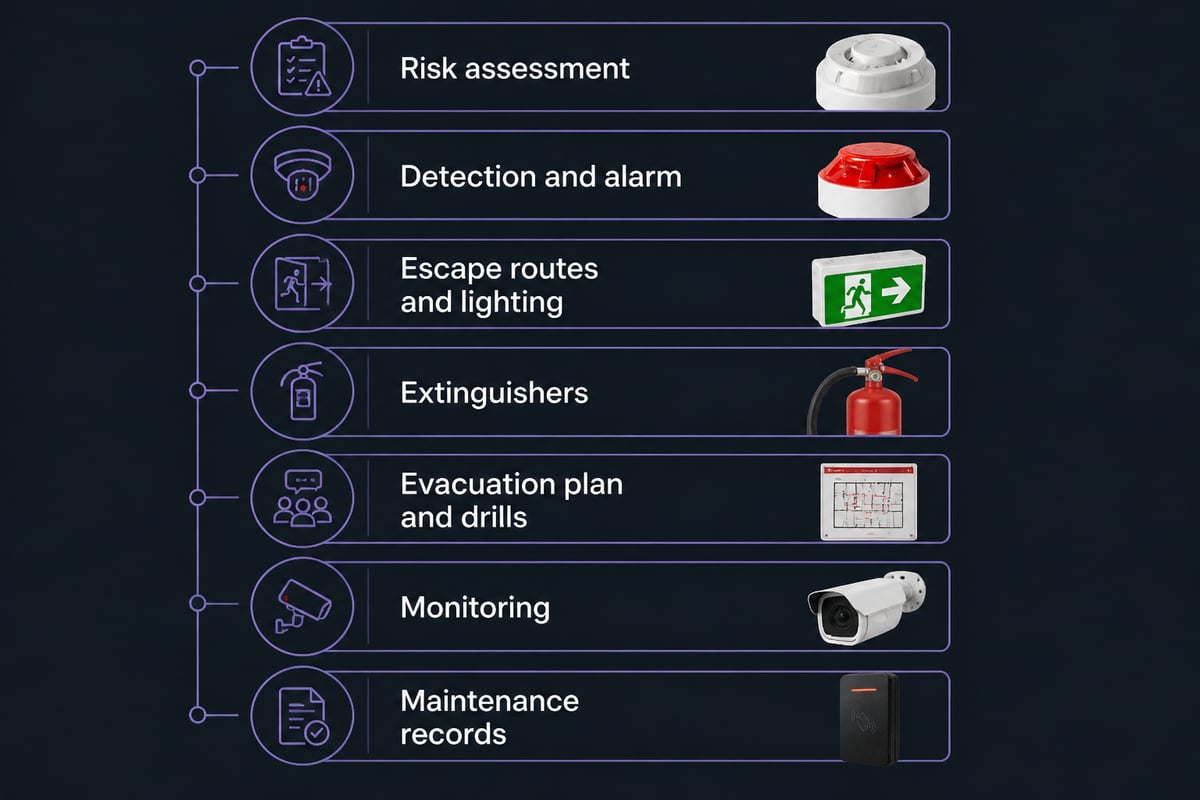
1. A suitable and sufficient fire risk assessment
A fire risk assessment is the legal foundation of fire protection, because every other measure on this list is chosen according to what it finds. The Responsible Person must carry out and regularly review it, and the GOV.UK five-step process covers identifying hazards, identifying people at risk, reducing risk, recording findings and reviewing.
- Key specs: written record of hazards, people at risk (including visitors and those with mobility needs), controls and review dates
- Approximate price: varies with premises size and complexity; quotes are normally given per site
- Suits: every commercial and public building, and essential for multi-occupancy sites, care settings and premises with sleeping or high-occupancy areas
- Verdict: non-negotiable; review it after any layout change, change of use or significant increase in staff numbers
Premises that fall under the same duty include offices, retail units, warehouses and care homes, and the assessment for each looks quite different. Logic Fire and Security has a useful note on fire risk assessment if you are setting the process up for the first time.
2. An addressable or conventional fire alarm system
A commercial fire alarm system detects smoke or heat and warns occupants, and the law requires one in almost every workplace. GOV.UK states that businesses must have a fire-detection and warning system, check it regularly and record faults.
- Key specs: detectors, call points, sounders and a control panel; addressable panels identify the exact device in alarm, while conventional panels report by zone
- Approximate price: varies widely with building size; always priced to the survey
- Suits: addressable for multi-floor, multi-zone or large-footprint buildings where fast location of the fire matters; conventional for small, single-floor premises on a tighter budget
- Verdict: the core of any fire protection plan, and it should be designed to the building rather than bought off the shelf
3. Emergency escape lighting and signage
Emergency escape lighting keeps routes visible when mains power fails, and it is generally required wherever artificial lighting is needed to see an exit. The Home Office small-premises guide says it should illuminate exit doors, routes, stairs, corridors and areas without natural light.
- Key specs: maintained or non-maintained luminaires, illuminated exit signs, battery backup, regular functional testing
- Approximate price: modest per fitting; cost depends on the number of luminaires and wiring access
- Suits: any building with internal corridors, stairs, windowless rooms or out-of-hours occupation
- Verdict: inexpensive relative to the risk it covers, but it fails quietly, so scheduled testing and a log are essential
4. Fire extinguishers matched to the risk
Portable extinguishers let trained staff tackle a small fire or protect an escape route, provided the type matches the hazard. For most small premises, the Home Office says a water-based extinguisher on each floor may be adequate, possibly with a CO₂ extinguisher for electrical equipment.
- Key specs: water, foam, CO₂ and dry powder types; wet chemical for kitchens; sited by exits and at hazard points
- Approximate price: individual units are inexpensive; the larger cost is ongoing servicing across a site
- Suits: all workplaces, with kitchens, server rooms, workshops and plant rooms needing specific types
- Verdict: only as good as staff training and servicing, and the wrong type can make a fire worse
5. Fire extinguisher servicing to BS 5306
Fire extinguisher servicing keeps portable equipment in working order and documented, which is what an inspecting officer will ask to see. Logic Fire and Security offers fire extinguisher servicing carried out by BAFE-registered technicians to BS5306 standards.
- Key specs: BAFE-registered technicians, BS5306 standard, service records for each extinguisher
- Approximate price: not listed here; contact Logic Fire and Security for a site-specific quote
- Suits: multi-site estates and any premises that need a single, accredited provider and consistent paperwork
- Verdict: a sensible way to turn extinguishers from a purchase into a documented, auditable control
6. An evacuation plan, staff training and drills
A written evacuation plan with trained staff and rehearsed drills turns equipment into a working response. The GOV.UK evacuation guidance covers marked escape routes, sufficient exits, emergency doors, lighting, staff training and a safe meeting point. GOV.UK also recommends at least one fire drill a year, with the results recorded.
- Key specs: named fire wardens, personal emergency evacuation plans for those who need them, roll-call procedure, annual drill
- Approximate price: mostly staff time; external training is optional and priced per course
- Suits: any workplace, with extra weight for sites using agency staff, shift patterns or public footfall
- Verdict: the cheapest measure on this list and the one most visibly tested in a real incident
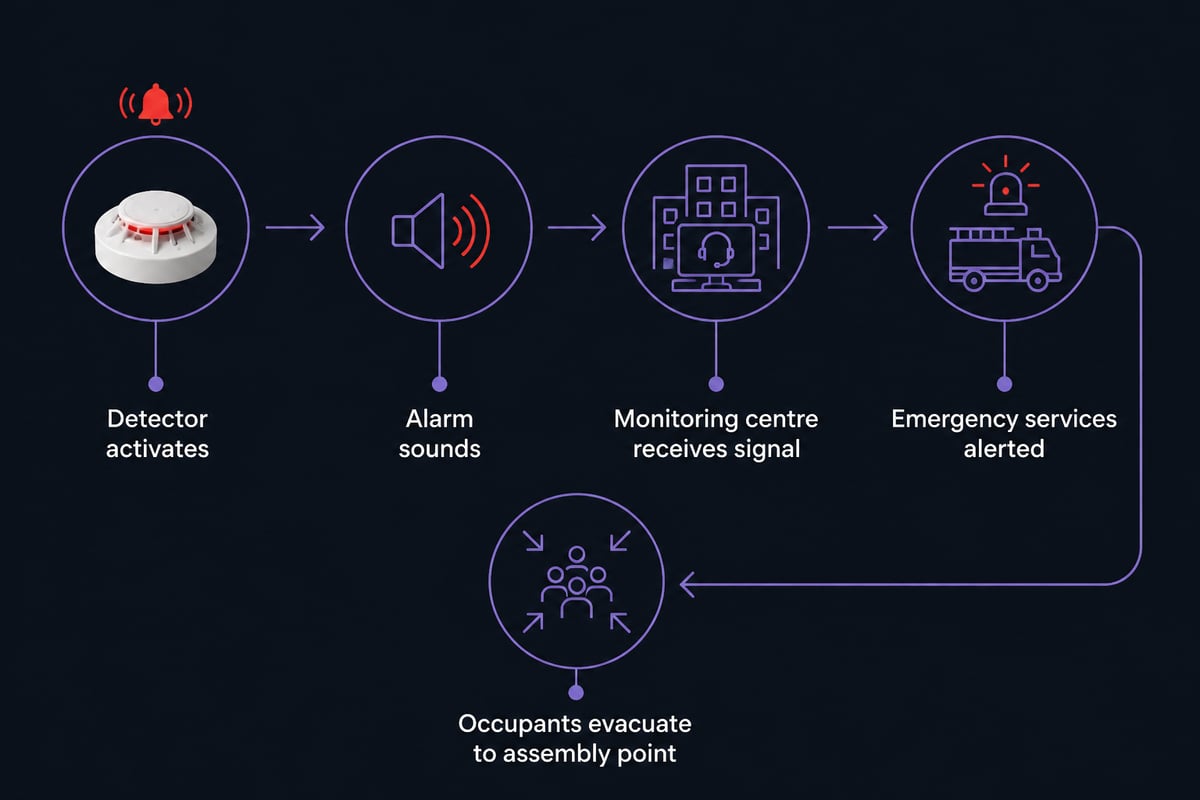
7. 24/7 alarm monitoring and planned maintenance
Remote monitoring means an alarm is acted on even when the building is empty, and planned maintenance keeps the system compliant. Logic Fire and Security provides 24/7 fire alarm monitoring alongside design, installation and maintenance, and its fire alarm system service covers supply, installation and upkeep of commercial systems.
- Key specs: 24/7 monitoring, NICEIC, BAFE and NSI Gold approved contractor, scheduled servicing, fault logging
- Approximate price: not listed here; contact Logic Fire and Security for a site-specific quote
- Suits: unoccupied-overnight premises, multi-site estates and organisations that want one accountable contractor from design through to maintenance
- Verdict: closes the gap between having a system and being able to prove it works
Fire protection measures compared
| Measure | What it does | Main ongoing duty | Best suited to |
|---|---|---|---|
| Fire risk assessment | Identifies hazards and sets controls | Review after changes | All premises |
| Fire alarm system | Detects fire and warns occupants | Regular testing, fault records | All premises |
| Escape lighting and signage | Keeps routes visible in a power cut | Scheduled functional tests | Buildings with internal routes |
| Fire extinguishers | Tackle small fires, protect escape | Correct siting and type | All premises |
| Extinguisher servicing | Keeps equipment compliant | Annual BS5306 service | Multi-unit or multi-site estates |
| Evacuation plan and drills | Makes the response work | Annual drill, recorded | All premises |
| Monitoring and maintenance | Ensures alarms are acted on | Planned service visits | Sites empty out of hours |
The table separates the measures by function, but the more useful comparison for a Responsible Person is where each one sits in the sequence of a fire, and what each one costs in time rather than money.
The risk assessment comes first because it is the only measure that decides the others. A warehouse with racking and forklift charging has different detection, extinguisher and evacuation needs from a ground-floor office, and the assessment is where that difference is written down. It is also the document an auditor will ask for before anything else. With 51,020 audits completed in England in the year ending March 2025 and 58% recorded as satisfactory, a dated, site-specific assessment is the clearest signal that duties are being taken seriously.
Detection and alarm sit next, and they carry the most regular testing burden. GOV.UK requires businesses to check that alarms work and to record faults, so the practical commitment is a routine test, a log entry and a named person responsible. Escape lighting follows the same pattern. Both fail without anyone noticing: a dead battery in a luminaire or a detached sounder shows nothing until the moment it is needed. The Home Office guidance on escape lighting applies wherever artificial light is needed to see an exit route, which in practice means most internal corridors, stairwells and windowless rooms.
Extinguishers and servicing are best compared as a pair. Buying the right extinguisher type is a one-off decision; keeping it serviceable is a recurring one. For most small premises the Home Office says a water-based extinguisher on each floor may be adequate, possibly with a CO₂ unit near electrical equipment. A kitchen, however, calls for a wet chemical extinguisher, and a server room points towards CO₂. Servicing to BS5306 by BAFE-registered technicians is what turns those units into documented equipment that an inspector can verify.
The evacuation plan and drills are the lowest-cost measure and the hardest to fake. GOV.UK recommends at least one drill a year with the results recorded, so a single line in the log, covering the date, the time taken to clear the building and any problems found, shows the plan has been rehearsed. A drill run during a shift change, or with agency staff present, tests the plan far harder than one run on a quiet morning.
Monitoring and maintenance close the loop. Monitoring matters most where the building is empty overnight or at weekends, because an alarm that sounds in an unattended building does nothing until someone hears it. Planned maintenance visits also create the paper trail that links every other measure together.
Read across the table, three duties repeat: test it, record it, review it. The measures differ in cost and complexity, but a Responsible Person who keeps a single log covering all seven will find that most audit questions can be answered from one place.
How the measures work together
Each measure covers a different failure point, so none is a substitute for another. A risk assessment tells you what to install, detection tells you a fire has started, lighting and plans get people out, and extinguishers deal with small incidents. Monitoring and servicing make sure all of it still works months later.
Retail is a good illustration of why consistency matters. Shops accounted for 10,106 audits in the year ending March 2025, 20% of the total and up 5.9% on the previous year, so high-footfall sites should expect scrutiny.
A few habits keep the whole system defensible:
- Keep one central log of tests, drills, servicing and faults
- Re-run the risk assessment whenever layouts, stock or occupancy change
- Never allow storage to block exits or corridors
- Check that contractors hold current accreditations; Logic Fire and Security lists its own on its quality and accreditations page
If you are unsure where your premises stands, the Home Office five-step checklist is a quick way to test your current arrangements before arranging a professional review.
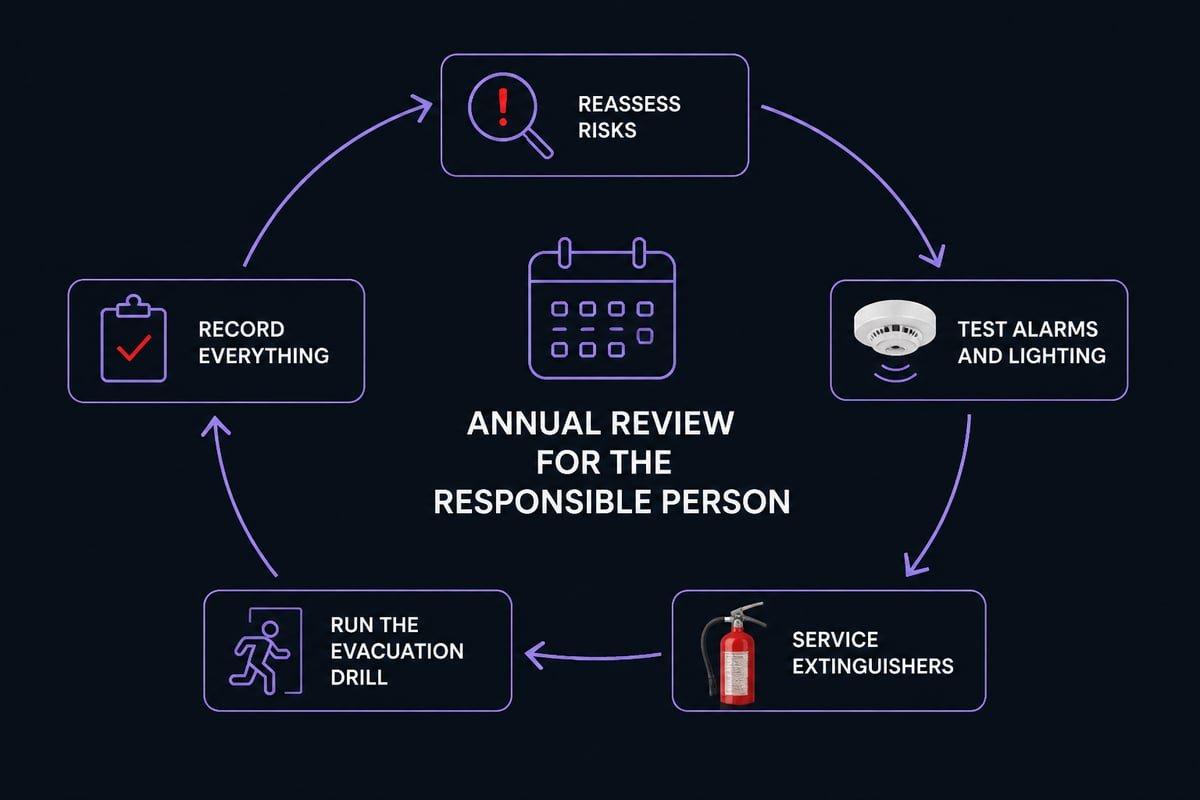
Your next step is to pull out your current risk assessment and check its review date against the seven measures above, noting any gaps in testing records or servicing. If you need help closing them, Logic Fire and Security designs, installs, monitors and maintains fire detection systems for businesses and public bodies across the UK, and its fire extinguisher servicing covers your portable equipment to BS5306 standards. To talk through your premises, call 0800 8445 999 or email [email protected] and a member of the Logic Fire and Security team can advise on the right next step.