

Across the UK, the need for skilled professionals who can protect people and property is growing rapidly. As safety regulations become more rigorous and technology continues to evolve, the role of a fire and security engineer is more critical than ever.
If you are considering a career that combines technical expertise, strong job stability, and the opportunity to make a real difference, this guide is designed for you. Here, you will discover a clear roadmap to becoming a fire and security engineer by 2026.
We will cover everything you need to know, from essential skills and qualifications to training pathways, typical job roles, industry trends, and long-term career progression. The work is diverse, the prospects are strong, and the rewards are both financial and personal.
Ready to take the next step? Explore this essential guide for practical advice and actionable steps to launch your fire and security engineer career.
Understanding the Role of a Fire and Security Engineer
The role of a fire and security engineer is central to protecting people, property, and assets in today’s ever-evolving safety landscape. As the reliance on technology in safety systems grows, so does the demand for skilled professionals who can design, install, and maintain these critical solutions.
Core Responsibilities and Daily Duties
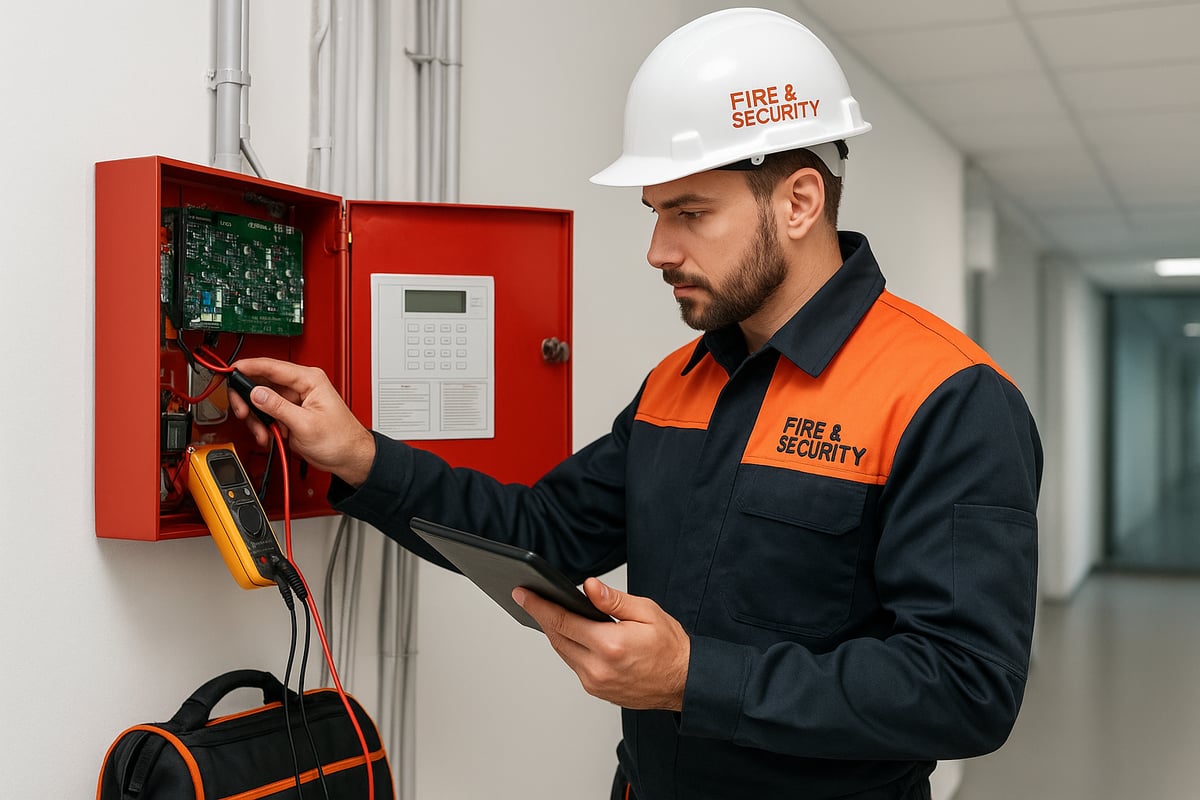
A fire and security engineer is responsible for the installation, commissioning, and ongoing maintenance of a wide range of safety systems. These include fire detection, intruder alarms, CCTV, and access control systems.
Key tasks often involve:
- Installing and configuring new systems to meet client requirements
- Conducting routine servicing and troubleshooting to ensure equipment reliability
- Responding to emergency call-outs for urgent repairs
- Ensuring all work complies with UK fire safety laws and insurance standards
- Providing technical support and guidance to clients
Engineers may work across several sites in a single day, from retail stores to hospitals and schools. For more insight into the types of systems involved, see this Commercial fire alarm systems overview.
Key Skills and Personal Attributes
Success as a fire and security engineer depends on a blend of technical and interpersonal skills. Essential qualities include:
- Strong problem-solving ability and technical aptitude
- Keen attention to detail and a commitment to safety
- Excellent communication skills for client interaction and documentation
- The ability to work both independently and as part of a team
- Willingness to adapt to new technologies and evolving regulations
- Physical fitness, as site visits and equipment handling are routine
Individuals with backgrounds in electrical or mechanical engineering often excel in this career, as they can quickly grasp the technical complexities involved.
Typical Work Environments and Sectors
A fire and security engineer may find themselves working in a variety of settings, including:
- Offices and commercial buildings
- Retail premises and warehouses
- Hospitals, schools, and government sites
- Manufacturing plants and utilities
These professionals are needed in the commercial, public, social housing, transport, and utilities sectors. Nationwide opportunities exist, with jobs available in both urban and rural locations. Service engineers frequently cover expansive regions, such as the North West, East Midlands, and London, adapting to the unique requirements of each site.
Qualifications, Training, and Certification Pathways
Starting a career as a fire and security engineer requires a blend of formal education, hands-on experience, and industry-recognised certifications. Understanding the pathways available will help you build a solid foundation and stand out in a competitive field.
Entry-Level Requirements and Apprenticeships
To begin your journey as a fire and security engineer, you will need a minimum of GCSEs or equivalent qualifications in maths, English, and science. These subjects provide the essential foundation for understanding technical concepts and effective communication with clients and colleagues.
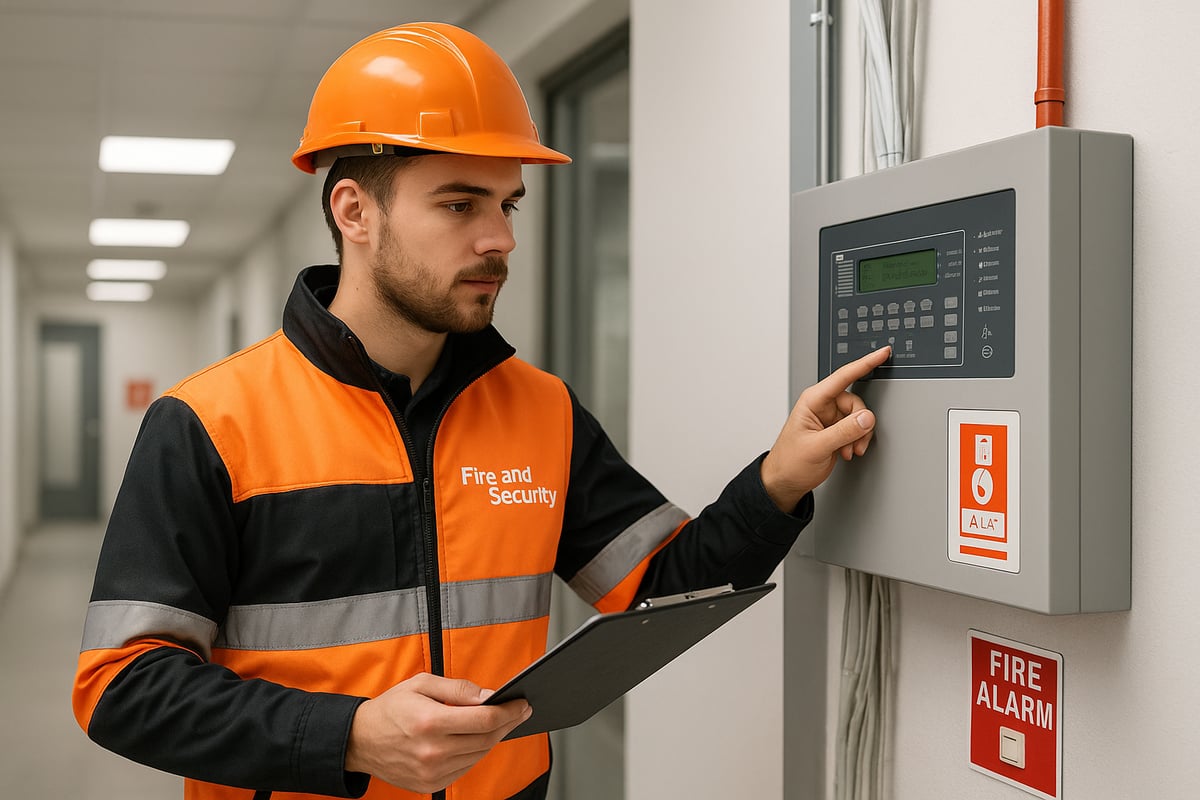
Many aspiring engineers choose to enter the industry through a Level 3 Fire, Emergency and Security Systems Technician apprenticeship. This pathway combines classroom learning with practical, on-the-job training, allowing you to develop real-world skills while earning a wage. Apprenticeships are offered by both major employers and specialist providers, and they cover a broad range of fire and security systems.
It is common for apprentices to rotate through different types of sites, such as commercial offices, hospitals, and schools. This exposure helps you gain a thorough understanding of the varied environments a fire and security engineer may work in. Candidates who demonstrate a strong work ethic and willingness to learn are often offered permanent positions at the end of their training.
Essential Industry Certifications and Accreditations
Certifications are critical for any fire and security engineer aiming to progress in the industry. The Fire Industry Association (FIA) offers a range of training courses that cover the installation, commissioning, and maintenance of fire detection systems. Employers frequently require engineers to work towards or hold accreditations such as BAFE, NSI Gold, and NICEIC, which demonstrate technical competence and adherence to strict safety standards.
Access to many sites depends on holding valid ECS or CSCS cards, which confirm your health and safety knowledge. Keeping your qualifications current is vital, as regulations and best practices evolve over time. For a detailed overview of the certifications and accreditations most valued in the industry, see the Quality and industry accreditations page.
Employers may also fund or encourage engineers to pursue advanced qualifications, especially for those seeking to specialise in areas like advanced CCTV systems or fire suppression technology.
Ongoing Professional Development
A successful fire and security engineer never stops learning. The industry is constantly changing, with new technologies and regulations emerging each year. To keep up, engineers regularly attend manufacturer-led training courses that introduce the latest equipment and software.
Many professionals participate in Continuing Professional Development (CPD) programmes, which help them stay current with UK fire safety legislation and industry standards. Annual compliance training and refresher courses are also common, ensuring that all engineers maintain the highest levels of competence and safety.
By committing to ongoing development, you will remain a valuable asset to employers and clients, able to adapt quickly to new challenges and technologies as the sector evolves.
Step-by-Step Guide to Becoming a Fire and Security Engineer
Embarking on the path to become a fire and security engineer requires a clear roadmap and actionable steps. Whether you are just starting your career or looking to specialise, following a structured process will help you achieve your goals and excel in this rewarding field.
Step 1: Research the Industry and Role
Start by exploring what it means to be a fire and security engineer. Look into the different systems you may work with, such as fire alarms, CCTV, access control, and emergency lighting. Assess your own interest in technical work and hands-on problem-solving.
Review job descriptions from top employers to understand daily tasks, required skills, and the environments you could work in. Consider speaking with professionals or attending industry events to gain real-world insights. This step ensures you are well informed before committing to the next stages.
Step 2: Gain Relevant Education and Experience
To begin your journey as a fire and security engineer, focus on achieving the essential educational requirements. Most employers look for GCSEs in maths, English, and science or equivalent qualifications. Seek out apprenticeships or entry-level roles within engineering or security firms to develop foundational skills.
Volunteering or interning with local companies can provide valuable exposure to the workplace and help you build a network. Hands-on experience is highly valued, as it allows you to understand how theory translates into practice.
Step 3: Obtain Professional Training and Certifications
Securing specialist training is crucial for a fire and security engineer. Consider enrolling in an approved apprenticeship scheme or a college course focused on fire, emergency, and security systems. Complete industry-recognised certifications, such as those provided by the Fire Industry Association, to enhance your credentials.
Make sure to obtain necessary site safety cards, like ECS or CSCS, which are often required for site access. These qualifications demonstrate your commitment to professional standards and increase your employability in the sector.
Step 4: Build Practical Skills and Industry Knowledge
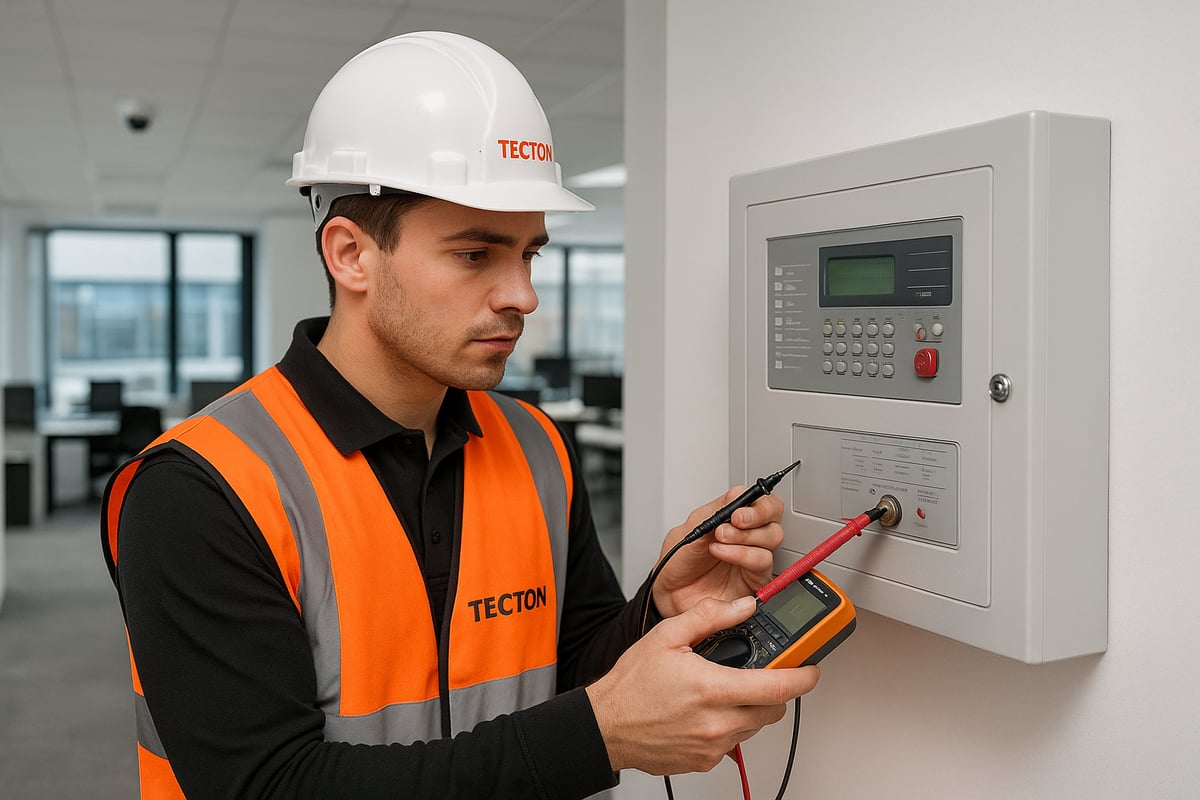
As a developing fire and security engineer, focus on building hands-on skills. Gain experience with installing, maintaining, and troubleshooting fire detection and electronic security systems. Learn to work with a variety of products, from traditional alarms to advanced CCTV and access control solutions.
Develop strong customer service and communication skills, as you will often advise clients and resolve issues on-site. Stay updated on new technologies and changes in UK fire safety legislation, as the industry evolves rapidly.
Step 5: Apply for Jobs and Advance Your Career
Once you have the right skills and qualifications, prepare a professional CV that highlights your training and experience. Use specialist job boards and recruitment agencies dedicated to fire and security roles. For current opportunities and guidance, visit Fire and security job opportunities to explore vacancies and employer requirements.
Apply for positions such as junior engineer, service engineer, or installation engineer. As you gain experience, seek out opportunities to specialise or move into senior roles. Continuous learning and professional development will support your long-term progression in this dynamic field.
Industry Trends and Future Outlook for 2026
The landscape for every fire and security engineer is evolving rapidly as we approach 2026. Emerging technology, stricter regulations, and a dynamic job market are shaping the future of this essential profession. Understanding these trends is crucial for anyone pursuing or advancing a career as a fire and security engineer.
Technological Innovations Shaping the Sector
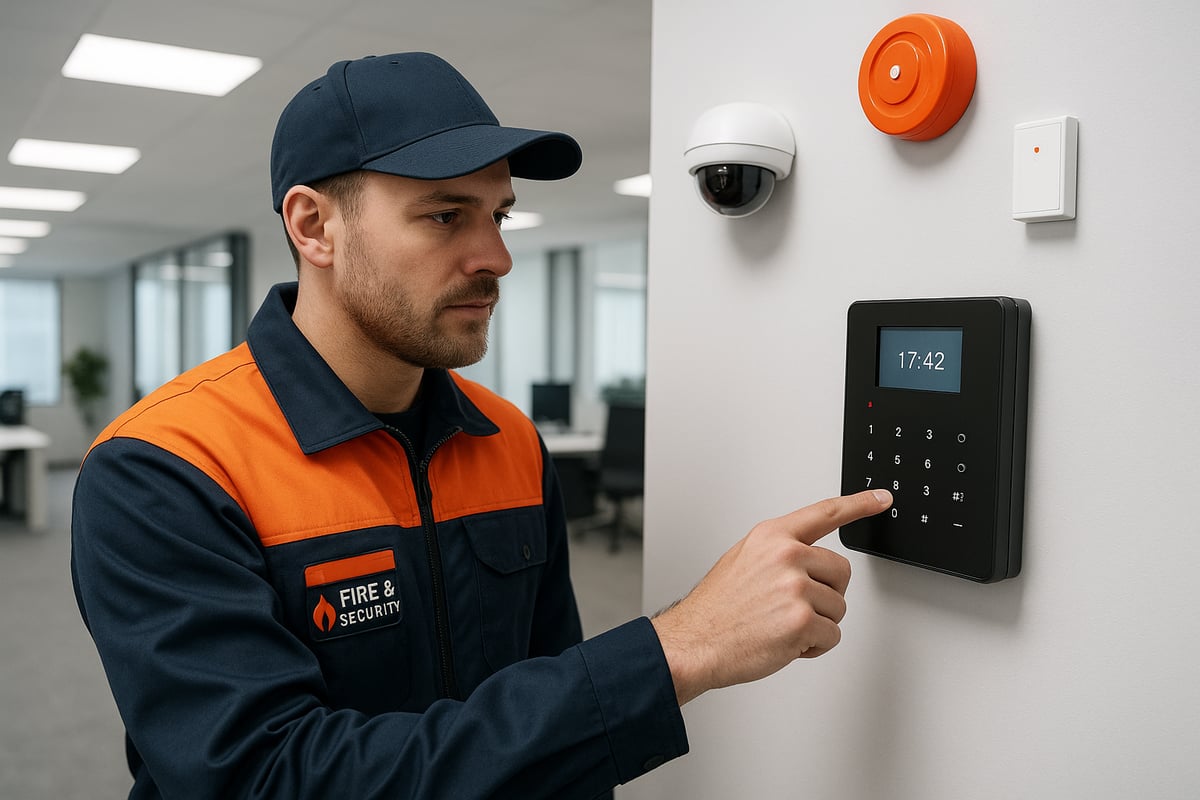
Technological change is at the heart of the fire and security engineer’s role. Smart buildings, IoT-enabled devices, and AI-powered CCTV are now standard in many new developments. Wireless and cloud-based solutions are replacing traditional wired systems, making installations more flexible and efficient. Demand is rising for engineers with IT and networking expertise, as integration between building management, access control, and security systems becomes more sophisticated. Engineers who adapt quickly to these advancements will be best positioned for future opportunities.
Regulatory Changes and Compliance Demands
Regulatory pressures continue to influence the daily work of a fire and security engineer. The introduction of the Fire Safety Act 2021 and Building Safety Act 2022 has raised the bar for compliance and accountability. There is a growing emphasis on routine maintenance, system upgrades, and detailed record-keeping to meet legal obligations. Industry organisations, such as the Institution of Fire Engineers Initiatives for 2026, are driving new standards and best practices to ensure public safety. Staying informed about these changes is vital for ongoing success.
Employment Market and Salary Expectations
The job market for fire and security engineer roles remains strong, with significant demand across the UK. Regional shortages and increased investment in building safety mean skilled professionals can command competitive salaries. According to Fire and Security Engineer Salaries in 2025, experienced engineers can expect annual earnings between £28,000 and £40,000, with opportunities for overtime and bonuses. Both permanent and contract positions are widely available, offering flexibility and career stability.
Career Progression and Specialisation
Career development is a key attraction for those entering the field. Fire and security engineer professionals can progress to senior engineer, project manager, or commissioning roles. Specialisation in advanced CCTV, access control, or fire suppression can set candidates apart. Multi-skilled engineers and those with accreditation for complex systems are especially sought after. The sector values continuous learning, so pursuing additional training and certifications will open doors to leadership positions. The outlook for 2026 is positive, with clear pathways for growth.
Essential Tools, Technologies, and Safety Standards
A fire and security engineer relies on a precise toolkit and deep technical knowledge to deliver safe, compliant systems. Their daily work involves a mix of hands-on tasks, digital diagnostics, and strict adherence to industry standards. Understanding the essential equipment, emerging technologies, and safety protocols is crucial for anyone entering or advancing in this field.
Core Tools and Equipment Used
Every fire and security engineer must be comfortable using a range of specialised tools. These include multimeters for electrical testing, cable testers for verifying connections, and laptops loaded with diagnostic software. Power tools are essential for installation, while programming devices are used for configuring alarm and access systems.
Proper personal protective equipment (PPE) is mandatory on-site, ensuring safety during equipment handling and installation. Engineers also use hand tools like screwdrivers, pliers, and wire strippers. The ability to select and maintain these tools is a mark of professionalism for any fire and security engineer.
Here’s a quick summary of core tools:
| Tool Type | Example Uses |
|---|---|
| Multimeter | Electrical testing |
| Cable Tester | Network and alarm wiring checks |
| Power Tools | Drilling, fixing panels |
| Laptop | Diagnostics, system programming |
| PPE | Site safety, compliance |
Key Fire and Security System Technologies
Modern fire and security systems are increasingly sophisticated. A fire and security engineer must work with addressable and conventional fire alarms, intruder alarms, and advanced CCTV systems. Remote monitoring, analytics, and cloud-based solutions are now standard in many installations.
Access control systems are a core technology, with engineers expected to understand their design and function. For a detailed look at these systems, see Building access control systems explained. Emergency lighting and fire suppression systems are also common, requiring familiarity with both legacy and new platforms to ensure seamless integration.
Staying current with these technologies enables a fire and security engineer to deliver reliable solutions for diverse environments.
Health, Safety, and Compliance Standards
Compliance is non-negotiable for any fire and security engineer. Adhering to British Standards such as BS 5839 for fire detection and BS 7671 for wiring is essential. Risk assessments and safe working procedures are part of every project, ensuring both legal compliance and personal safety.
Regular audits by accredited bodies like BAFE and NSI Gold-certified organisations are standard practice. Engineers must document work accurately and participate in ongoing training to keep up with evolving regulations. Employers prioritise these standards to maintain high levels of safety and client trust.
A fire and security engineer who masters these safety protocols not only protects themselves but also ensures the long-term reliability of every system they install or maintain.
Whether you are inspired by the challenge of protecting lives or drawn to the opportunities for career growth in a thriving industry, taking the first step towards becoming a fire and security engineer can feel both exciting and daunting. At Logic Fire and Security, we understand the importance of skilled professionals who can deliver safe, compliant solutions tailored to every client’s needs. If you are ready to explore how your skills and ambitions fit into this rewarding sector, we are here to support you. Please feel free to reach out and Contact Us for guidance or to discuss your next steps.