

Modern fire and alarm systems form the cornerstone of commercial building safety across the United Kingdom. As regulatory requirements become increasingly stringent and technology advances rapidly, businesses must navigate complex decisions regarding system design, installation, monitoring, and maintenance. Understanding the critical components and strategic considerations behind effective fire detection and alarm infrastructure enables organisations to protect their assets, ensure occupant safety, and maintain full compliance with current legislation.
Understanding Commercial Fire and Alarm Infrastructure
Fire and alarm systems in commercial environments operate as sophisticated networks of interconnected devices designed to detect threats early and facilitate rapid response. Unlike residential applications, business premises require comprehensive coverage across multiple zones, integration with building management systems, and robust failover mechanisms that ensure continuous operation.
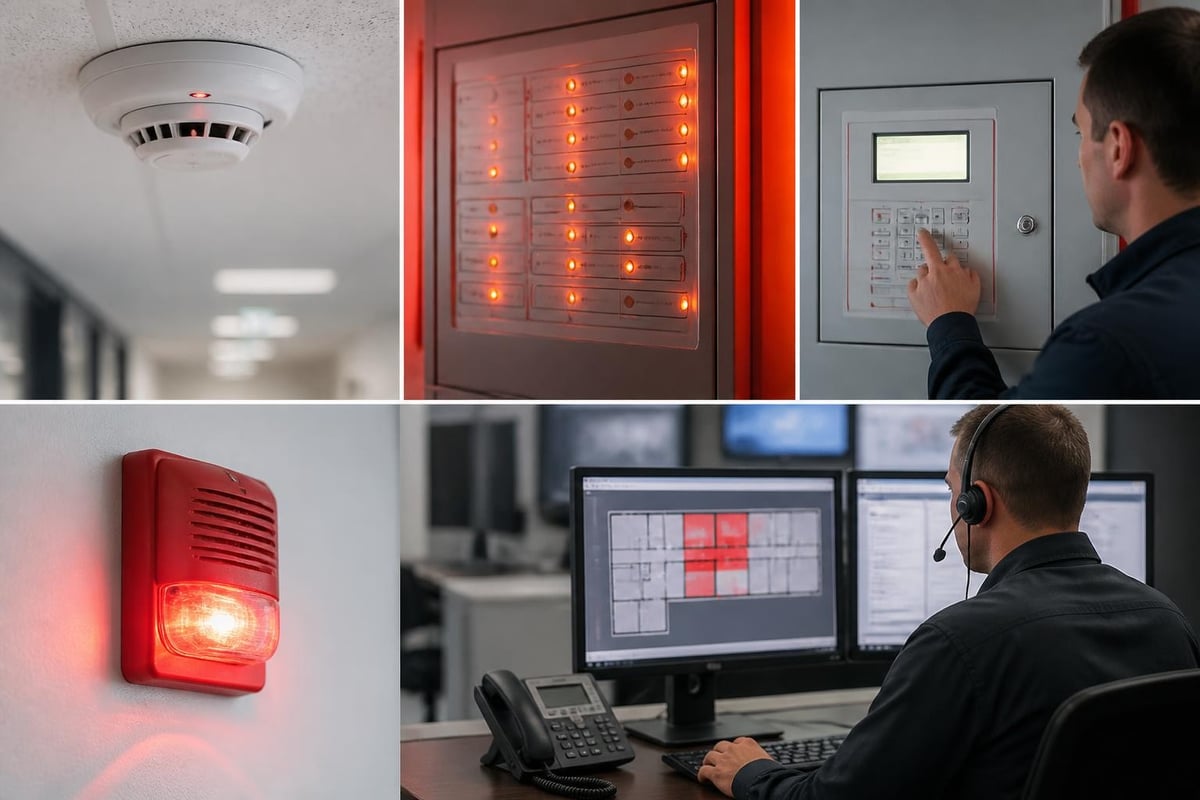
The fundamental architecture comprises detection devices, control panels, notification appliances, and monitoring interfaces. Each component must work harmoniously to provide reliable protection across diverse environments, from office complexes and manufacturing facilities to warehouses and retail spaces.
Core System Components
Modern commercial installations integrate multiple detection technologies to address varied fire signatures:
- Smoke detectors using optical, ionisation, or aspirating technologies
- Heat detectors with fixed temperature or rate-of-rise capabilities
- Multi-sensor devices combining smoke and heat detection
- Flame detectors utilising ultraviolet or infrared sensing
- Manual call points positioned at strategic exit routes
Control panels serve as the system’s central intelligence, processing signals from detection devices, activating alarm sounders, and communicating with monitoring centres. Advanced panels support addressable technology, allowing precise identification of activated devices and sophisticated cause-and-effect programming.
Design Considerations for Business Environments
Effective fire and alarm system design requires detailed understanding of building characteristics, occupancy patterns, operational activities, and regulatory obligations. Professional design teams assess numerous factors to create tailored solutions that balance protection requirements with practical operational considerations.
Environmental conditions significantly influence technology selection. Manufacturing facilities with dust, humidity, or temperature extremes demand specialised detectors resistant to false alarms. Server rooms and data centres benefit from very early warning aspirating detection systems that identify microscopic smoke particles before visible fire develops.
Zoning and Coverage Strategies
Proper zoning divides buildings into logical detection areas that enable rapid threat localisation. This approach proves particularly valuable in large or complex facilities where pinpointing fire location accelerates emergency response and evacuation procedures.
| Zone Type | Application | Detection Method |
|---|---|---|
| Standard Coverage | Offices, corridors | Optical smoke detection |
| High Sensitivity | IT suites, archives | Aspirating systems |
| Environmental | Warehouses, plants | Multi-sensor devices |
| Open Areas | Atriums, retail floors | Beam detectors |
Coverage calculations follow strict guidelines based on detector type, ceiling height, and room geometry. Professional designers conduct detailed surveys to ensure compliance whilst optimising device placement for maximum effectiveness and minimal false alarm risk.
Regulatory Compliance and Standards
UK businesses operate under comprehensive fire safety legislation that mandates appropriate detection and alarm provision. The Regulatory Reform (Fire Safety) Order 2005 places responsibility on building owners and managers to conduct thorough risk assessments and implement proportionate protective measures.
British Standard BS 5839 provides detailed technical guidance for fire alarm system design, installation, commissioning, and maintenance. Part 1 addresses non-domestic premises, establishing categories (M, L, P) that define protection objectives and corresponding system specifications.
Professional fire risk assessment companies evaluate building characteristics, occupancy profiles, and existing controls to determine appropriate fire and alarm provisions. These assessments identify deficiencies, recommend improvements, and establish maintenance schedules that preserve system integrity over time.
Certification and Documentation Requirements
Compliant installations require comprehensive documentation including design specifications, installation certificates, commissioning records, and operational manuals. Third-party certification from bodies such as BAFE or NSI provides independent verification of system quality and installer competence.
Quality and accreditations demonstrate adherence to industry standards and regulatory expectations. Businesses should verify that contractors maintain appropriate certifications and follow recognised installation practices aligned with current regulations.
Advanced Detection Technologies
Innovation continues transforming fire and alarm capabilities, introducing intelligent features that enhance detection accuracy whilst reducing nuisance alarms. Modern systems leverage advanced algorithms, multi-criteria sensing, and artificial intelligence to distinguish genuine threats from benign conditions.
Aspirating smoke detection represents leading-edge technology particularly suited to mission-critical environments. These systems continuously sample air through pipe networks, analysing particles at extreme sensitivity levels that enable intervention before fire development reaches critical stages.
AI-Enhanced Monitoring and Maintenance
Artificial intelligence applications increasingly support fire and alarm operations through predictive maintenance models for fire alarm and smoke management systems that identify potential failures before they compromise protection. Machine learning algorithms analyse system performance data, detecting patterns that indicate deteriorating components or emerging faults.
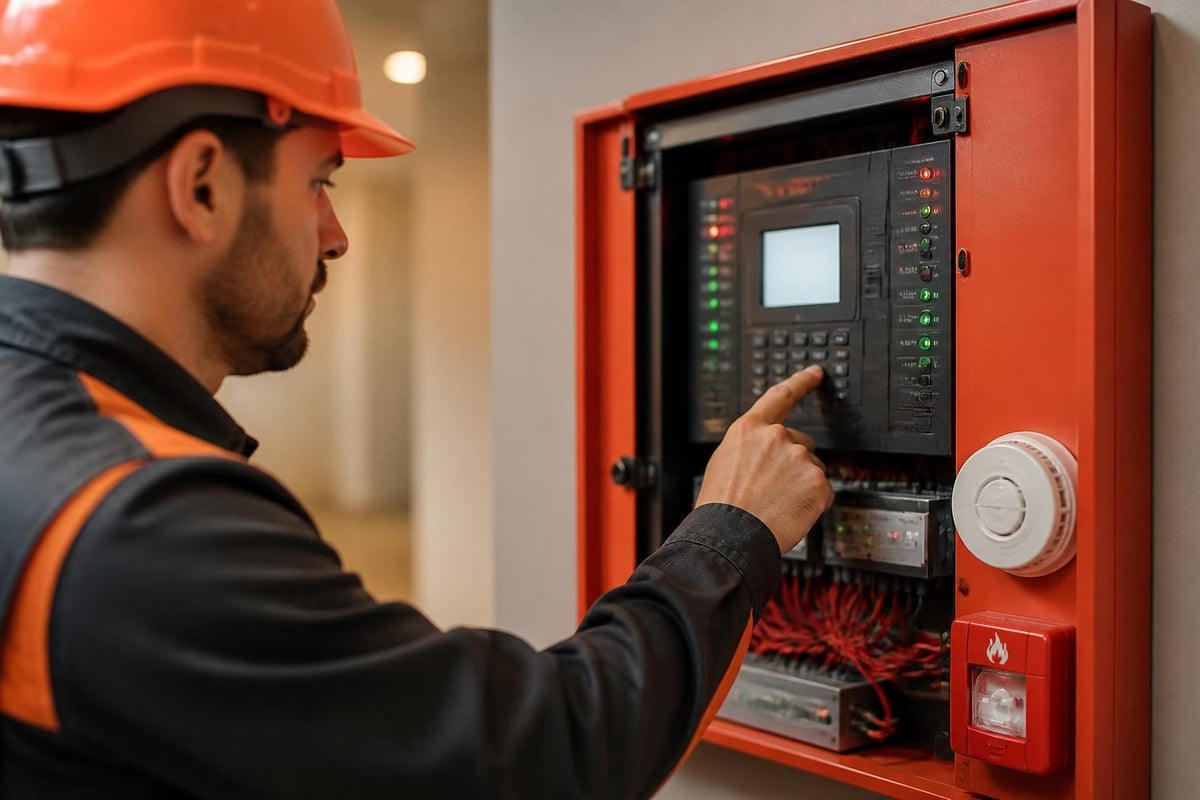
Intelligent systems also adapt alarm thresholds based on environmental conditions, time of day, and historical patterns. This dynamic approach maintains high sensitivity to genuine threats whilst minimising false alarms that disrupt business operations and erode occupant confidence in protective systems.
Integration with Building Management Systems
Contemporary fire and alarm infrastructure rarely operates in isolation. Integration with broader building management platforms creates synergistic capabilities that enhance both fire safety and operational efficiency across commercial facilities.
When fire alarms activate, integrated systems can automatically:
- Shut down ventilation systems to prevent smoke spread
- Release magnetic door holders allowing fire doors to close
- Activate voice evacuation systems with location-specific messages
- Illuminate emergency lighting along escape routes
- Recall lifts to ground floor and disable further use
- Interface with building access control systems to unlock emergency exits
This orchestrated response accelerates safe evacuation whilst containing fire spread and protecting property. Integration also supports facilities management by consolidating alarm monitoring, generating unified reports, and streamlining maintenance scheduling across multiple systems.
Professional Installation and Commissioning
The quality of fire and alarm system installation directly impacts long-term reliability and regulatory compliance. Professional installation teams possess specialised knowledge of detection technologies, wiring practices, and commissioning procedures essential for creating robust, dependable systems.
Experienced UK security contractors follow systematic methodologies that ensure every device operates correctly, all circuits maintain proper electrical characteristics, and complete systems perform as designed under various scenario testing.
Installation Quality Factors
| Quality Aspect | Impact | Verification Method |
|---|---|---|
| Cable routing | Signal integrity | Continuity testing |
| Device positioning | Detection coverage | Site survey validation |
| Power supplies | System reliability | Load and battery tests |
| Control programming | Correct operation | Functional scenario testing |
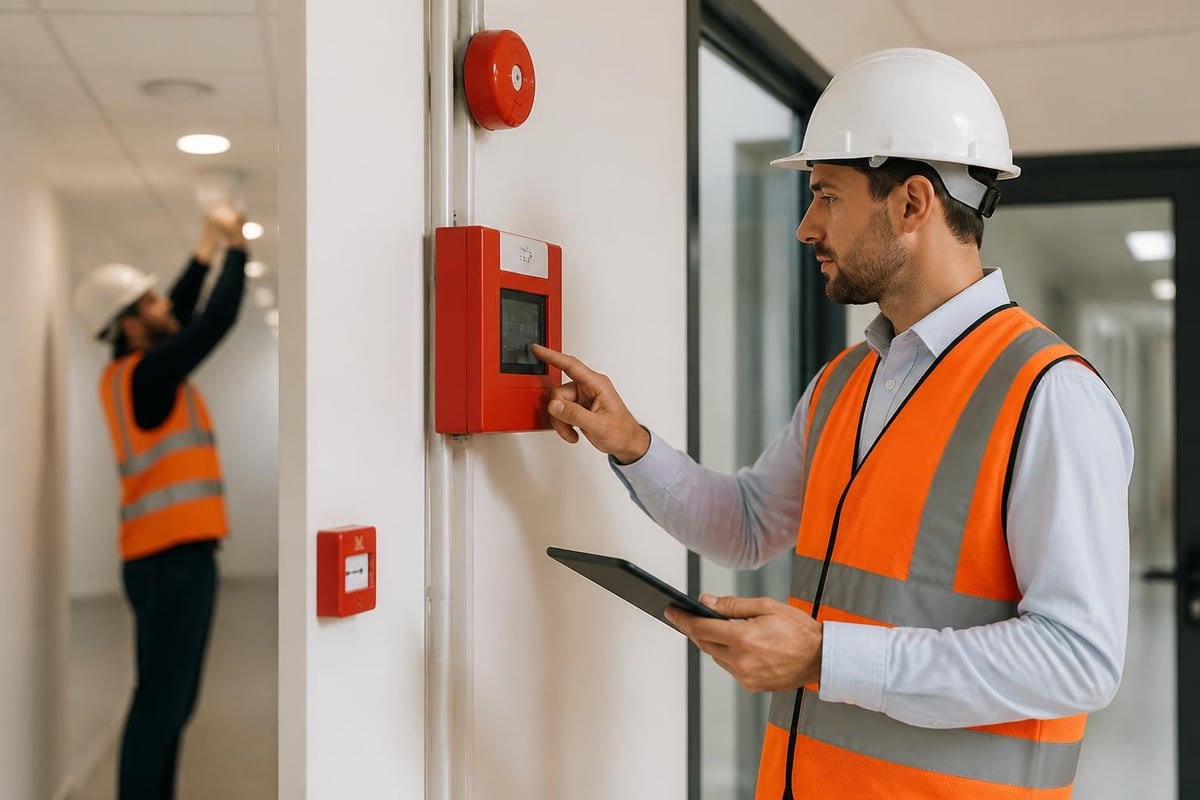
Commissioning represents the critical transition from installation to operational service. Comprehensive commissioning includes testing every detector, verifying all alarm outputs, confirming monitoring connections, and training building staff on system operation. Detailed commissioning documentation provides essential records for ongoing maintenance and regulatory inspections.
Monitoring Services and Emergency Response
Round-the-clock monitoring transforms fire and alarm systems from standalone devices into actively supervised life-safety networks. Professional fire alarm monitoring services receive alarm signals instantly, verify incidents, and coordinate emergency service dispatch with minimal delay.
Monitoring centres operate continuously, staffed by trained operators who follow established protocols for alarm handling. When systems detect fire conditions, monitoring stations receive detailed information including building location, specific zone identification, and detector type, enabling informed emergency response decisions.
Advanced monitoring platforms support remote system interrogation, allowing technicians to assess alarm causes without site visits for minor issues. This capability reduces response costs whilst maintaining system availability and occupant protection.
Multi-System Monitoring Benefits
Businesses with multiple sites benefit from centralised monitoring that provides unified oversight across their entire property portfolio. Consolidated alarm management enables:
- Consistent emergency response protocols
- Comprehensive reporting across locations
- Efficient maintenance resource allocation
- Strategic risk management insights
Integration with intruder alarm monitoring and CCTV monitoring creates comprehensive security operations centres that address all protection requirements through single monitoring relationships.
Maintenance Programmes and System Longevity
Regular maintenance preserves fire and alarm system reliability throughout operational lifecycles that often span decades. Professional maintenance programmes follow manufacturer specifications and regulatory requirements, addressing both preventive and corrective service needs.
British Standard BS 5839-1 mandates specific maintenance activities at defined intervals:
- Weekly: Visual inspection of control panel indications
- Monthly: Functional testing of different detection zones
- Quarterly: Comprehensive inspection of system components
- Annually: Complete system servicing and documentation review
- Biannually: Professional maintenance by competent technicians
Maintenance activities include detector sensitivity testing, battery capacity verification, connection integrity checks, and software updates. Systematic testing rotates through all devices ensuring complete coverage whilst distributing inspection activities across manageable intervals.
Documentation and Compliance Records
Comprehensive maintenance records demonstrate regulatory compliance and support insurance requirements. Professional service providers maintain detailed logs documenting all maintenance activities, repairs, and modifications throughout system lifespans.
These records prove invaluable during regulatory inspections, insurance assessments, and incident investigations. They also inform strategic decisions regarding system upgrades, component replacement, and technology migration as buildings and businesses evolve.
Specialised Applications and Environments
Certain commercial environments demand specialised fire and alarm solutions addressing unique challenges. Data centres, for instance, require extremely early detection combined with gas suppression fire systems that extinguish fires without water damage to sensitive electronics.
Heritage buildings present distinct challenges balancing effective protection with preservation requirements. Wireless detection technologies enable comprehensive coverage without damaging historic fabric, whilst specialist devices address architectural features like high ceilings and ornate decoration.
Manufacturing and industrial facilities often incorporate fire suppression systems tailored to specific process hazards. Detection devices must withstand challenging environmental conditions whilst providing reliable early warning appropriate to fire development patterns in industrial settings.
System Expansion and Future-Proofing
Forward-thinking fire and alarm design anticipates building modifications, occupancy changes, and technology evolution. Scalable system architectures accommodate expansion without complete replacement, protecting initial investments whilst enabling capability enhancement over time.
Addressable systems offer inherent expandability through available device addresses and zone capacity. Specifying control panels with excess capacity provides headroom for future growth without infrastructure replacement when businesses expand or reconfigure spaces.
Technology migration strategies balance ongoing support for legacy equipment with phased introduction of advanced capabilities. Standards for fire alarm systems continue evolving, and professional service providers help businesses navigate transitions whilst maintaining continuous protection and regulatory compliance.
Training and Operational Preparedness
Technology alone cannot ensure fire safety without competent operators who understand system capabilities and response procedures. Comprehensive training programmes educate building staff on system operation, alarm investigation protocols, and emergency response coordination.
Effective training covers:
- Control panel operation and alarm acknowledgement
- System testing procedures and fault identification
- Emergency response protocols and evacuation coordination
- Communication with monitoring centres and emergency services
- Maintenance scheduling and service coordination
Regular evacuation drills test both fire and alarm system performance and occupant response effectiveness. These exercises identify procedural weaknesses, validate evacuation alert system audibility, and build confidence in protective measures.
Cost Considerations and Investment Planning
Fire and alarm system investments span initial design and installation through decades of operational support. Understanding total lifecycle costs enables informed decisions that balance capability requirements with budget realities whilst ensuring regulatory compliance and occupant safety.
Initial investment factors include system complexity, technology selection, building characteristics, and coverage extent. Whilst sophisticated technologies command higher upfront costs, they often deliver operational savings through reduced false alarms, lower maintenance requirements, and extended component lifecycles.
| Cost Category | Percentage of Total | Key Drivers |
|---|---|---|
| Design & Planning | 10-15% | Building complexity, regulatory requirements |
| Equipment & Installation | 50-60% | Technology level, coverage extent |
| Commissioning & Testing | 5-10% | System complexity, documentation requirements |
| Annual Maintenance | 8-12% | Service frequency, component count |
| Monitoring Services | 10-15% | Service level, response requirements |
Professional contractors provide detailed quotations breaking down costs across these categories, enabling businesses to understand investment components and optimise specifications for their specific requirements and constraints.
Choosing Professional Service Partners
Fire and alarm system success depends heavily on service provider competence, experience, and commitment. Businesses should evaluate potential partners across multiple dimensions beyond simple cost comparison.
Essential evaluation criteria include:
- Third-party certifications and industry accreditations
- Demonstrable experience with similar building types
- Financial stability and insurance coverage
- Technical capabilities and staff qualifications
- Monitoring and support service availability
- Customer references and project portfolio
Long-term service relationships deliver greatest value through deep understanding of building characteristics, system history, and operational requirements. Providers who offer comprehensive services from design through maintenance enable consistent quality and simplified coordination.
Effective fire and alarm systems require careful planning, professional implementation, and ongoing commitment to maintenance and operational excellence. Understanding these critical considerations enables UK businesses to make informed decisions that protect their people, preserve their assets, and ensure full regulatory compliance. Logic Fire and Security delivers comprehensive fire detection and alarm solutions tailored to business requirements across the UK, combining expert design, professional installation, and dedicated support services that provide complete peace of mind for organisations of all sizes.