

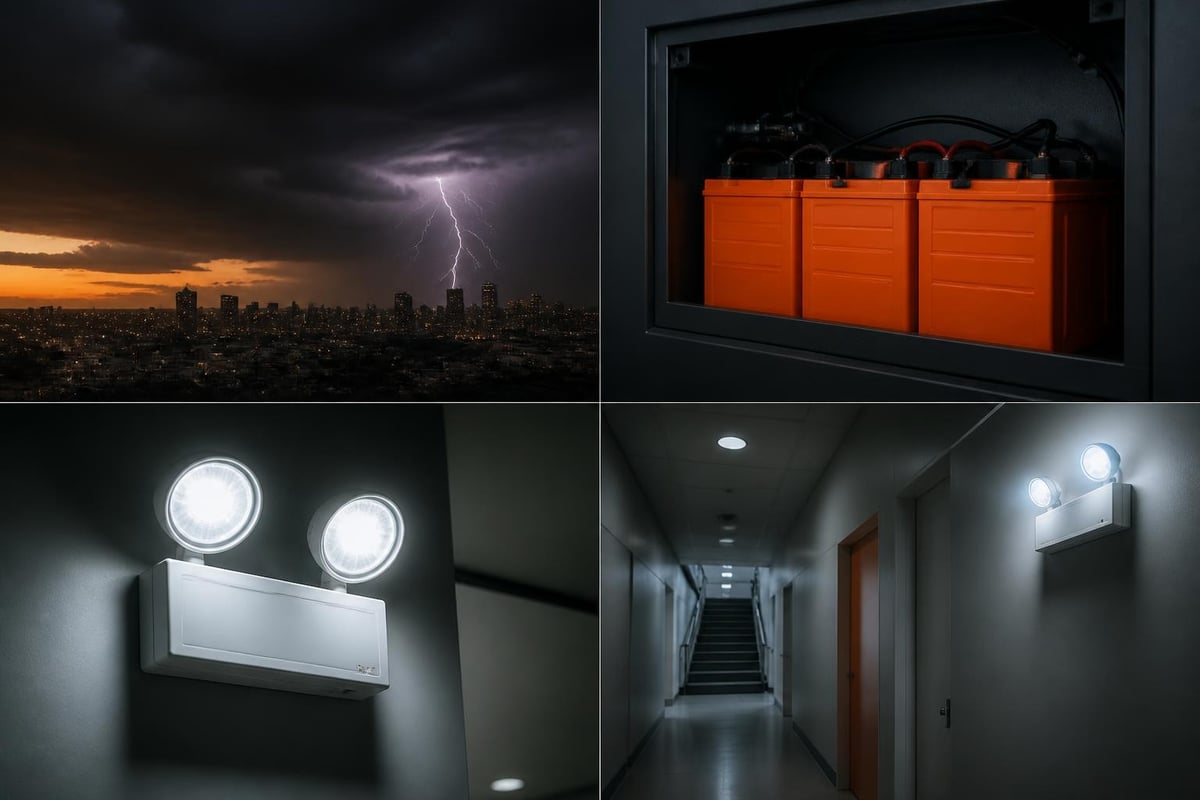
Emergency lighting represents a critical life safety system that every commercial building must have to protect occupants during power failures or emergencies. When normal lighting fails, these systems automatically activate to provide illumination for safe evacuation, enabling people to navigate escape routes, locate firefighting equipment, and exit buildings without panic or injury. For UK businesses, understanding the regulations, technologies, and maintenance requirements surrounding emergency lighting is essential for compliance and, more importantly, for safeguarding lives.
Understanding Emergency Lighting Requirements
Emergency lighting systems serve multiple purposes beyond simply providing light when the power goes out. These installations must illuminate escape routes clearly, highlight exit signs and doors, indicate changes in floor level, and mark the locations of firefighting equipment and first aid stations.
The regulatory landscape in the UK continues to evolve. BSI recently published BS 5266-1:2025, a revised standard that expands the scope of emergency lighting guidance to include standby and local area lighting, whilst clarifying design and installation requirements. This update reflects the growing complexity of modern building safety systems.
Legal Obligations for UK Premises
UK legislation mandates emergency lighting in virtually all non-domestic buildings. The Regulatory Reform (Fire Safety) Order 2005 places responsibility on building owners and managers to ensure adequate emergency escape lighting is installed and maintained.
Key requirements include:
- Provision of emergency escape lighting on all escape routes
- Illumination of exit doors and directional signs
- Lighting for anti-panic areas exceeding 60 square metres
- High-risk task area lighting where sudden darkness poses danger
- Standby lighting for continuation of normal activities
Conducting thorough fire risk assessments helps determine the specific emergency lighting needs for your premises. Different building types require varying levels of provision based on occupancy, layout, and risk factors.
Types of Emergency Lighting Systems
Modern emergency lighting encompasses several distinct system types, each suited to different applications and building requirements. Understanding these options enables informed decisions about the most appropriate solution for your premises.
Maintained vs Non-Maintained Systems
| System Type | Operation | Typical Applications | Advantages |
|---|---|---|---|
| Maintained | Permanently illuminated | Public buildings, cinemas, theatres | Continuous visibility, psychological comfort |
| Non-maintained | Only illuminates during power failure | Offices, warehouses, factories | Energy efficient, longer lamp life |
| Sustained | Combines both modes | Dual-purpose areas | Flexibility for changing uses |
Maintained systems remain lit continuously, serving as both normal and emergency lighting. Non-maintained systems activate only when mains power fails, making them more energy-efficient for most commercial applications.
Self-Contained and Central Battery Systems
Self-contained emergency lights incorporate their own battery, lamp, and charging circuit within each luminaire. This distributed approach offers simple installation and fault tolerance, as individual unit failures do not compromise the entire system.
Central battery systems power multiple luminaires from a single, large battery bank. These installations require more complex wiring but offer advantages in maintenance accessibility and battery management. Comparing different types of fire systems reveals similar considerations between distributed and centralized approaches.
Self-contained systems provide:
- Simplified installation with minimal wiring
- Independent operation of each luminaire
- Lower initial installation costs
- Easier system expansion
Central battery systems offer:
- Consolidated maintenance access
- Longer battery life expectancy
- Reduced luminaire size and weight
- Precise monitoring capabilities
Technology Advances in Emergency Lighting
The emergency lighting sector has witnessed significant technological development in recent years, driven by energy efficiency demands and smart building integration. Research into state-of-the-art emergency lighting technologies highlights the shift toward LED technology and alternative power sources.
LED Revolution
Light-emitting diode (LED) technology has transformed emergency lighting performance. LEDs consume substantially less power than traditional incandescent or fluorescent sources, extending battery runtime and reducing system size. Their exceptional longevity minimizes maintenance requirements, whilst superior light quality improves visibility during emergencies.
LED emergency luminaires typically achieve 50,000 hours of operational life, compared to 1,000-2,000 hours for traditional lamps. This dramatic improvement reduces replacement frequency and associated labor costs.
Smart Testing and Monitoring
Automated testing systems represent a major advancement in emergency lighting management. IEC 62034 standard specifies requirements for automatic test systems that conduct function and duration tests without manual intervention, logging results for compliance documentation.
Modern addressable emergency lighting systems integrate with building management platforms, enabling:
- Real-time monitoring of luminaire status
- Automatic scheduled testing
- Instant fault notification
- Comprehensive compliance reporting
- Remote diagnostics and management
These capabilities significantly reduce the administrative burden of maintaining emergency lighting whilst ensuring continuous system readiness.
Design and Installation Considerations
Proper emergency lighting design requires careful analysis of building layout, occupancy patterns, and specific hazards. The goal extends beyond minimum compliance to creating genuinely effective illumination that facilitates safe evacuation under stressful conditions.
Escape Route Illumination Standards
UK standards specify minimum illumination levels along escape routes. The horizontal illumination on the floor along the centre line of an escape route must reach at least 1 lux, whilst open areas require uniform coverage without dark patches that could cause disorientation.
Emergency lighting must illuminate:
- All changes in floor level
- Each exit door requiring illumination
- Escape route directional signs
- Each staircase so that each tread receives direct light
- Mandatory action signs and safety equipment locations
- External areas immediately outside exit doors
Comprehensive fire safety systems integrate emergency lighting with detection, alarm, and suppression components for cohesive building protection.
Duration Requirements
Emergency lighting systems must maintain adequate illumination for sufficient time to enable complete evacuation. Standard requirements specify three-hour duration for premises where re-occupation or rescue operations may occur, whilst most other buildings require one-hour duration.
Certain premises require extended duration:
- Sleeping accommodation: 3 hours minimum
- Entertainment venues: 3 hours minimum
- Healthcare facilities: 3 hours minimum
- High-occupancy buildings: Often 3 hours minimum
Battery capacity must account for end-of-life performance degradation, ensuring compliance throughout the battery service life.
International Standards Comparison
Emergency lighting requirements vary significantly between jurisdictions, reflecting different safety philosophies and building practices. Comparative analysis of international standards reveals substantial differences in illumination levels, fixture spacing, and application requirements.
| Region | Primary Standard | Minimum Lux | Duration | Key Differences |
|---|---|---|---|---|
| UK/Europe | BS 5266-1, EN 1838 | 1 lux on escape routes | 1-3 hours | Emphasis on uniformity ratios |
| North America | ANSI/UL 924, NFPA 101 | 10.8 lux average | 90 minutes | Higher illumination levels |
| Australia | AS/NZS 2293 | 0.2-1 lux | 90 minutes | Different measurement criteria |
Organizations operating internationally must navigate these varying requirements, potentially implementing systems that meet multiple standards simultaneously for consistency across their portfolio.
Maintenance and Testing Protocols
Regular maintenance and testing represent legal requirements and operational necessities for emergency lighting systems. Neglected systems inevitably fail when needed most, potentially with catastrophic consequences.
Testing Schedules
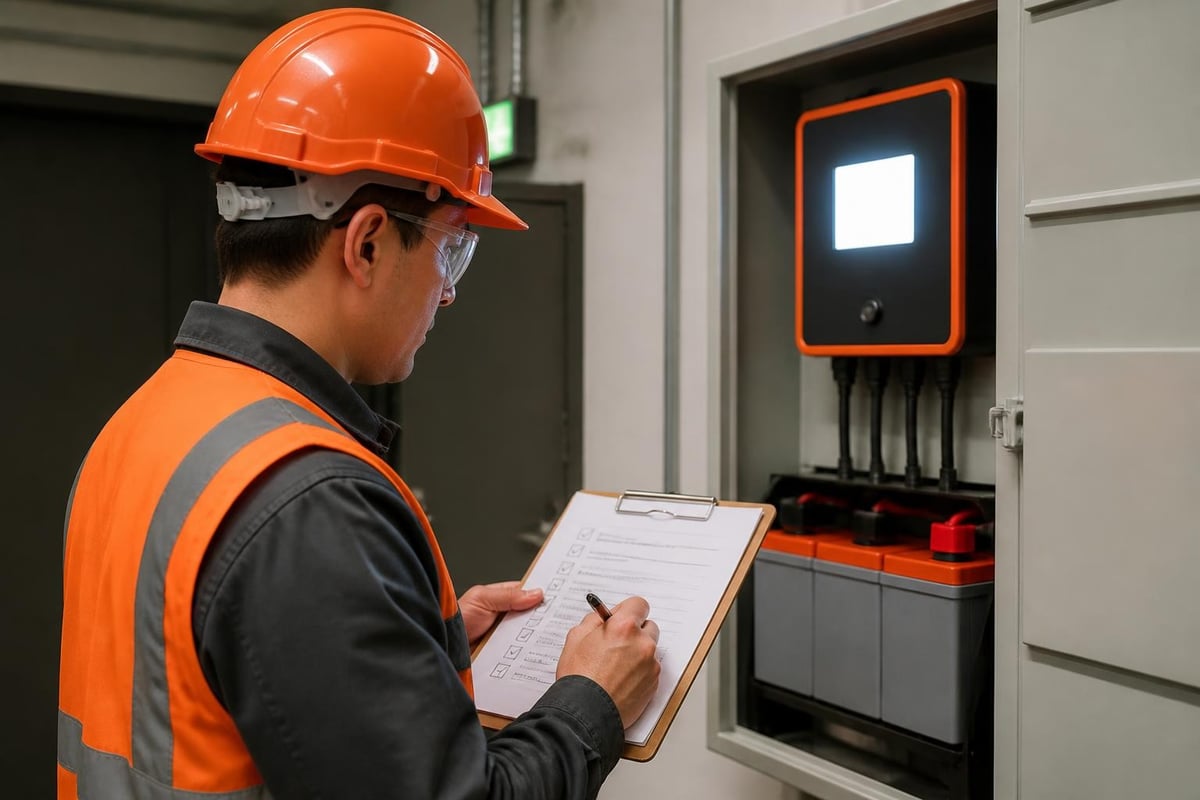
Monthly function tests verify that each luminaire illuminates when simulated mains failure occurs. These brief tests confirm lamp operation and basic battery function without fully discharging the battery.
Annual duration tests fully discharge the battery whilst timing how long the system maintains adequate illumination. This comprehensive test validates that batteries retain sufficient capacity for emergency operation.
Documentation of all tests must be retained as evidence of compliance. Many businesses maintain logbooks recording test dates, results, and any remedial actions taken. Automated systems generate this documentation automatically, reducing administrative burden whilst improving accuracy.
Professional fire alarm system monitoring often extends to emergency lighting supervision, providing immediate notification of system faults.
Component Replacement
Emergency lighting batteries require replacement at intervals specified by manufacturers, typically every four to five years. Deteriorating batteries gradually lose capacity, eventually failing duration tests and requiring replacement before system failure occurs.
LED luminaires substantially outlast traditional lamps, but eventually require replacement as light output gradually diminishes. Establishing replacement schedules based on manufacturer specifications and test results ensures systems remain fully functional.
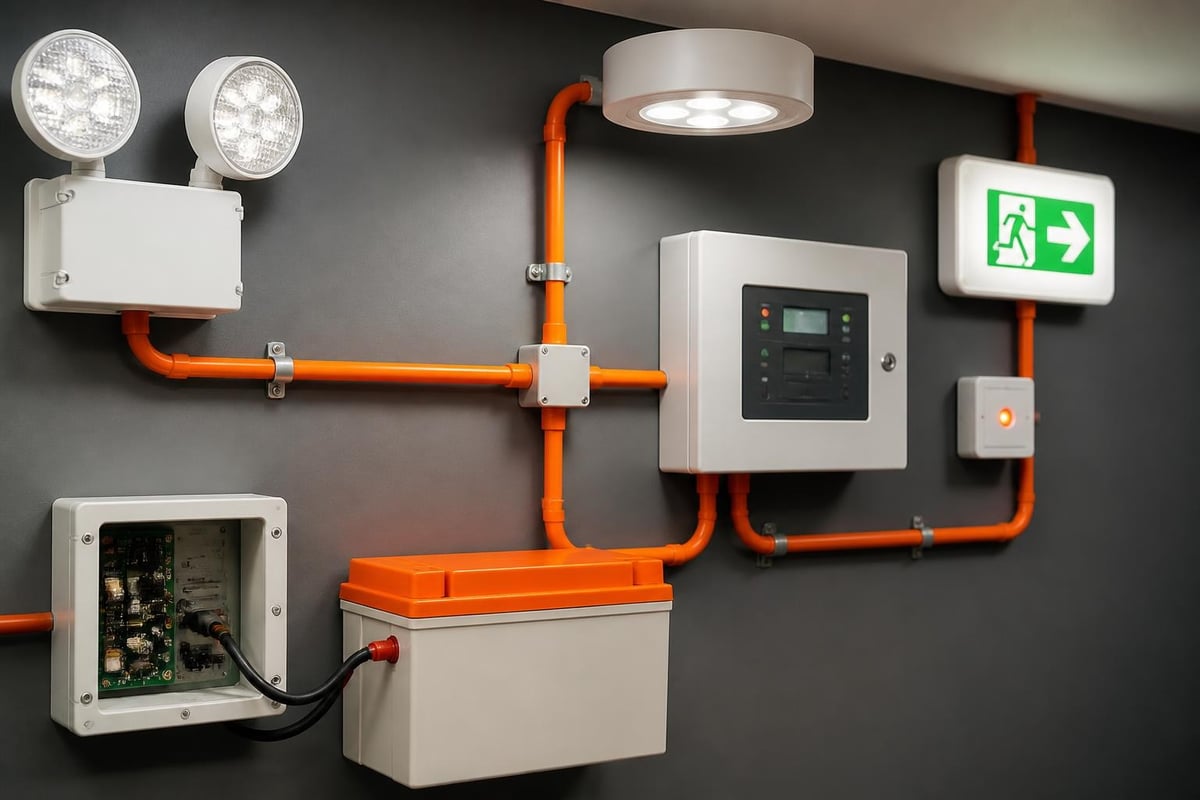
Integration with Building Safety Systems
Emergency lighting does not operate in isolation but forms part of an integrated building safety infrastructure. Modern systems communicate with fire detection panels, building management systems, and security platforms to coordinate responses during emergencies.
Fire Alarm Integration
When fire alarm systems detect smoke or heat, they can trigger emergency lighting activation even if mains power remains available. This early activation ensures immediate illumination as soon as the alarm sounds, reducing confusion and accelerating evacuation.
Integration also enables emergency lighting systems to provide visual alarm signals in areas requiring additional notification methods, supporting evacuation alert systems for comprehensive occupant notification.
Access Control Coordination
Emergency situations require immediate, unrestricted egress from buildings. Emergency lighting systems interface with access control entry systems to trigger door unlocking upon activation, ensuring that electrically locked doors do not impede evacuation.
This coordination proves particularly important in secure facilities where multiple security barriers exist along escape routes. Failsafe locking mechanisms release automatically during emergencies, guided by illuminated pathways to safety.
Specialist Applications
Certain building types and areas present unique emergency lighting challenges requiring specialist solutions beyond standard escape route illumination.
Disabled Refuge Areas
Disabled refuge systems require adequate emergency lighting for people awaiting assistance during evacuation. These areas must maintain higher illumination levels to enable communication, reassurance, and eventual rescue operations.
Refuge point lighting typically operates on maintained circuits, providing continuous illumination that building occupants can easily locate during normal conditions whilst ensuring functionality during emergencies.
High-Risk Task Areas
Workplaces containing dangerous machinery, hazardous materials, or critical processes require high-risk task area (HRTA) emergency lighting. These systems provide sufficient illumination for safe shutdown procedures or hazard management when power fails.
HRTA lighting must achieve higher illumination levels than standard escape route lighting, typically 10% of normal working light levels, enabling detailed work to continue safely until shutdown completes.
Cost Considerations and Return on Investment
Emergency lighting represents both a legal compliance cost and an investment in life safety. Understanding the total cost of ownership helps organizations make informed decisions about system selection and maintenance strategies.
Initial Installation Costs
Self-contained systems typically incur lower initial installation costs due to simplified wiring requirements. Central battery systems require greater upfront investment but may prove more economical in large installations through reduced long-term maintenance costs.
LED technology commands premium pricing compared to traditional luminaires, but delivers rapid payback through reduced energy consumption, extended component life, and lower maintenance requirements. Total cost analysis over the system lifespan typically favors LED installations.
Maintenance Cost Management
Automated testing systems eliminate manual testing labour whilst ensuring consistent compliance. Although these systems cost more initially, the ongoing savings in testing time and documentation effort typically justify the investment within three to five years.
Organizations managing multiple sites benefit significantly from centralized monitoring platforms that provide enterprise-wide visibility and standardized compliance reporting. These systems reduce site visit frequency and enable proactive maintenance scheduling.
Selecting the Right Emergency Lighting Partner
Choosing a competent emergency lighting provider significantly impacts system performance, compliance, and long-term costs. The complexity of modern systems and evolving regulations demand expertise that extends beyond basic installation capabilities.
Accreditation and Expertise
Reputable providers hold relevant industry accreditations demonstrating technical competence and commitment to quality standards. Quality and accreditations signal professional standards and adherence to best practices in system design and installation.
Experience with your specific building type and industry sector proves valuable, as different environments present unique challenges and regulatory requirements. Providers serving diverse clients across commercial, industrial, and public sectors bring broader perspective to system design.
Comprehensive Service Provision
Effective emergency lighting management requires ongoing maintenance, testing, and system updates. Providers offering complete lifecycle support simplify compliance management and ensure consistent system performance.
Look for providers offering:
- Detailed site surveys and lighting calculations
- System design optimized for your specific requirements
- Professional installation by qualified technicians
- Comprehensive commissioning and handover documentation
- Ongoing maintenance and testing services
- 24/7 emergency response capabilities
- System monitoring and remote diagnostics
Organizations benefit from single-source responsibility for emergency lighting alongside related fire safety and security systems, ensuring coordinated operation and streamlined management.
Emergency lighting forms an indispensable component of building safety infrastructure, protecting occupants during the critical moments when normal lighting fails. Understanding regulatory requirements, available technologies, and maintenance obligations enables organizations to implement systems that genuinely enhance safety whilst maintaining compliance. For businesses seeking comprehensive fire and security solutions, Logic Fire and Security delivers expert emergency lighting design, installation, and maintenance services tailored to your specific requirements. With extensive experience serving Blue Chip companies and public agencies across the UK, Logic Fire and Security ensures your emergency lighting systems remain compliant, functional, and ready to protect your people when it matters most.