

Modern commercial security demands more than traditional locks and keys. A door entry system with lock release provides businesses with sophisticated access control whilst maintaining essential safety protocols for emergency egress. These integrated systems combine visitor verification, employee authentication, and automated unlocking mechanisms to create secure yet flexible entry points across offices, warehouses, hospitals, and industrial facilities throughout the UK.
Understanding Door Entry Systems with Integrated Lock Release
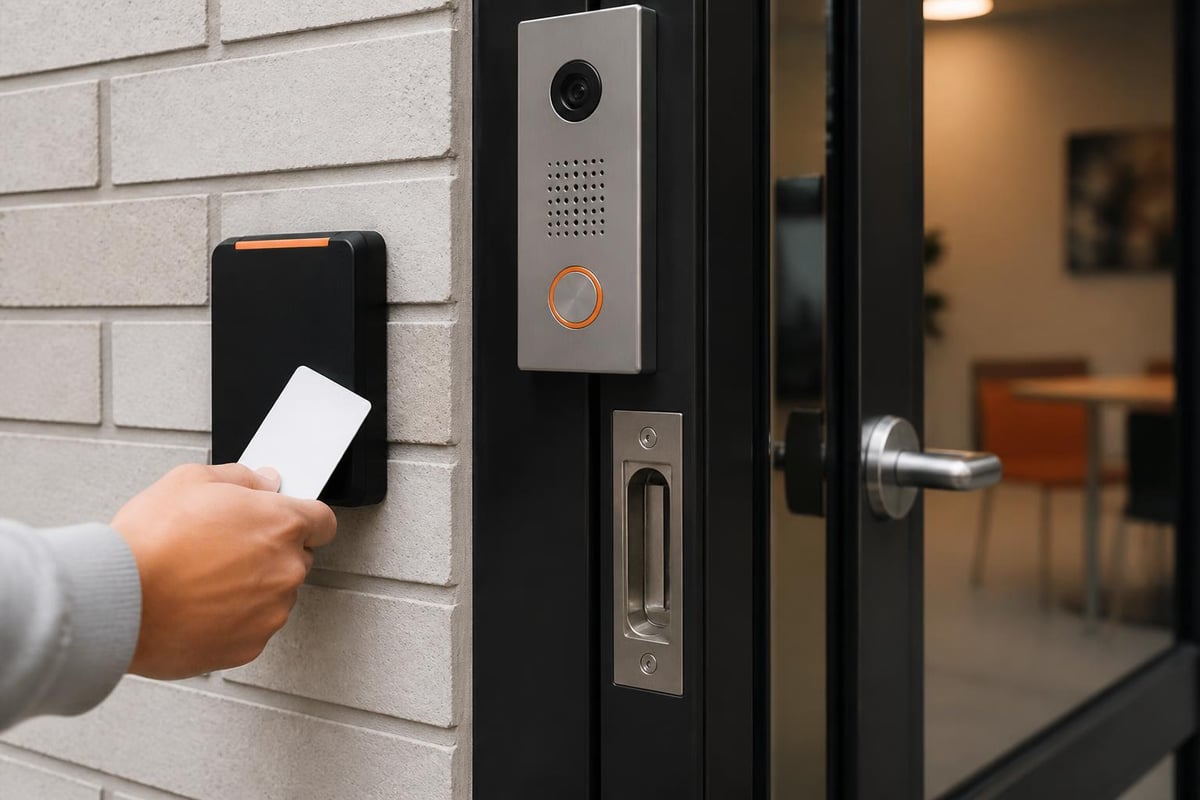
A door entry system with lock release encompasses multiple components working together to manage building access. At its core, the system authenticates users through various methods-including keypads, card readers, biometric scanners, or intercoms-and then triggers an electronic release mechanism to unlock the door.
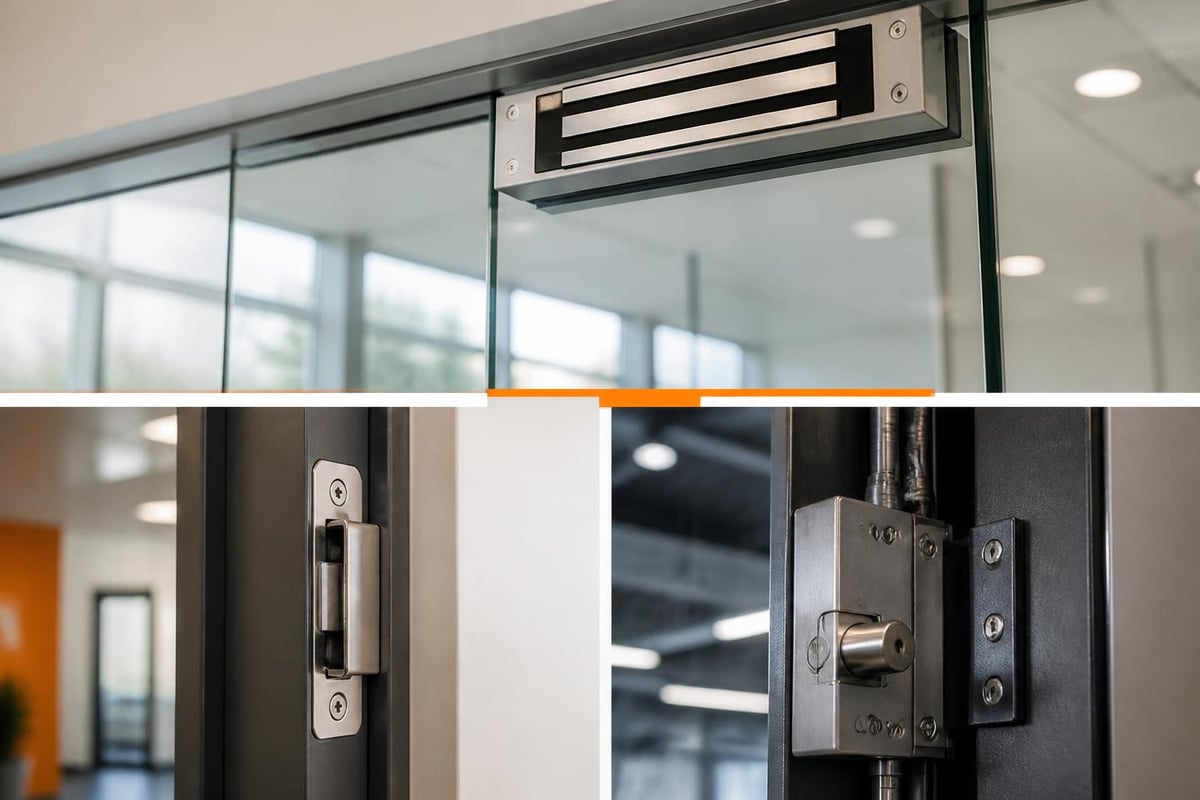
The lock release component typically operates through one of several technologies. Electromagnetic locks create a powerful magnetic bond between the door and frame, requiring electrical current to maintain their locked state. Electric strikes replace traditional door strikes and use a solenoid to retract the keeper, allowing the latch to pass through when activated. Motorised locks employ small motors to physically move deadbolts or latches.
Key Components and Their Functions
Modern systems integrate several essential elements:
- Authentication devices: Card readers, keypads, biometric scanners, or video intercoms
- Control panels: Process authentication requests and manage access permissions
- Lock release mechanisms: Electromagnetic locks, electric strikes, or motorised deadbolts
- Power supplies: Backup batteries and transformers ensuring continuous operation
- Request-to-exit devices: Motion sensors or push buttons allowing free egress
- Monitoring systems: Real-time logging and alert capabilities for security personnel
The sophistication of access control entry systems has advanced considerably, with contemporary solutions offering cloud-based management, mobile credentials, and seamless integration with other security infrastructure.
Compliance and Safety Regulations for Commercial Applications
Implementing a door entry system with lock release requires strict adherence to building codes and life-safety regulations. The 2021 International Building Code establishes comprehensive requirements for electrically locked egress doors, ensuring occupants can exit freely during emergencies.
Understanding proper application of UL standards for controlled or delayed egress locking devices remains crucial for commercial installations. These standards address fail-safe versus fail-secure operation, ensuring systems default to the appropriate state during power failures.
Critical Regulatory Considerations
| Regulation Area | Key Requirement | Commercial Impact |
|---|---|---|
| Emergency Egress | Free exit without prior knowledge | Must incorporate request-to-exit devices |
| Power Failure | Fail-safe unlocking for egress paths | Electromagnetic locks required for certain doors |
| Fire Alarm Integration | Automatic unlock upon alarm activation | System must interface with fire detection panels |
| Delayed Egress | Maximum 15-second delay permitted | Requires specific signage and audible warnings |
The International Code Council outlines specific requirements for electrical locking systems on means of egress doors. These regulations balance security needs with occupant safety, particularly crucial in healthcare facilities, educational institutions, and high-occupancy commercial buildings.
NFPA 101, the Life Safety Code, provides additional guidance on door hardware and access control. Consulting with experienced professionals who understand building access control systems ensures your installation meets all applicable standards whilst providing effective security.
Types of Lock Release Mechanisms
Selecting the appropriate lock release mechanism depends on door type, security requirements, traffic patterns, and regulatory constraints. Each technology offers distinct advantages for specific commercial applications.
Electromagnetic Locks
These devices create holding forces ranging from 600 to 1,200 pounds, making them exceptionally difficult to defeat through physical force. Electromagnetic locks require constant electrical current to maintain their locked state, automatically releasing during power failures-an inherent fail-safe characteristic ideal for egress paths.
Advantages include:
- Simple installation: Surface-mounted with minimal door preparation
- Silent operation: No mechanical noise during locking or unlocking
- Fail-safe design: Automatically unlocks when power is interrupted
- Durability: No moving parts to wear out over time
- Versatility: Suitable for various door materials and configurations
However, electromagnetic locks necessitate careful integration with request-to-exit sensors and often require door position switches to confirm proper closure before engaging the lock.
Electric Strikes
An electric strike replaces the traditional door strike plate, using a solenoid-activated keeper that releases when energised. This mechanism allows the existing lockset to remain functional, providing mechanical security alongside electronic access control.
Electric strikes offer configurability for both fail-safe and fail-secure operation. In fail-secure mode, the strike remains locked during power loss-appropriate for perimeter doors requiring continuous security. Fail-safe strikes unlock when power is cut, essential for interior egress routes.
Installation considerations include:
- Door frame must accommodate the strike body
- Requires precise alignment with the latch
- May need frame reinforcement for heavy doors
- Compatible with most commercial locksets
- Allows both electronic and mechanical key override
Motorised Locks and Latch Retraction
These sophisticated devices incorporate small motors that physically retract deadbolts or latches upon receiving authorised access signals. They provide the highest security level, combining electronic control with mechanical locking strength.
Integration with Fire Safety and Security Systems
A door entry system with lock release cannot operate in isolation. Effective commercial security requires seamless integration with fire detection, alarm monitoring, and broader security infrastructure.
Fire alarm systems must override access control during emergency situations. When a fire detection system activates, fire alarm monitoring capabilities ensure electromagnetic locks release automatically, allowing free egress from all areas. This integration requires compatible control panels and proper wiring between systems.
Essential System Interconnections
Modern installations typically interface with:
- Fire detection panels: Automatic unlock during fire alarms
- CCTV systems: Visual verification of access attempts and forensic review
- Intruder alarms: Coordinated arming/disarming with access credentials
- Building management systems: Centralised control and scheduling capabilities
- Visitor management platforms: Temporary credential issuance and audit trails
The commercial security systems ecosystem continues evolving towards unified platforms that consolidate access control, video surveillance, and alarm monitoring into single interfaces. This convergence streamlines management whilst improving response capabilities.
Compliance considerations extend to understanding how locking configurations affect access and egress control. The balance between securing a facility and allowing free egress requires thoughtful design, particularly in mixed-use commercial buildings with varying security zones.
Selecting Components for Commercial Environments
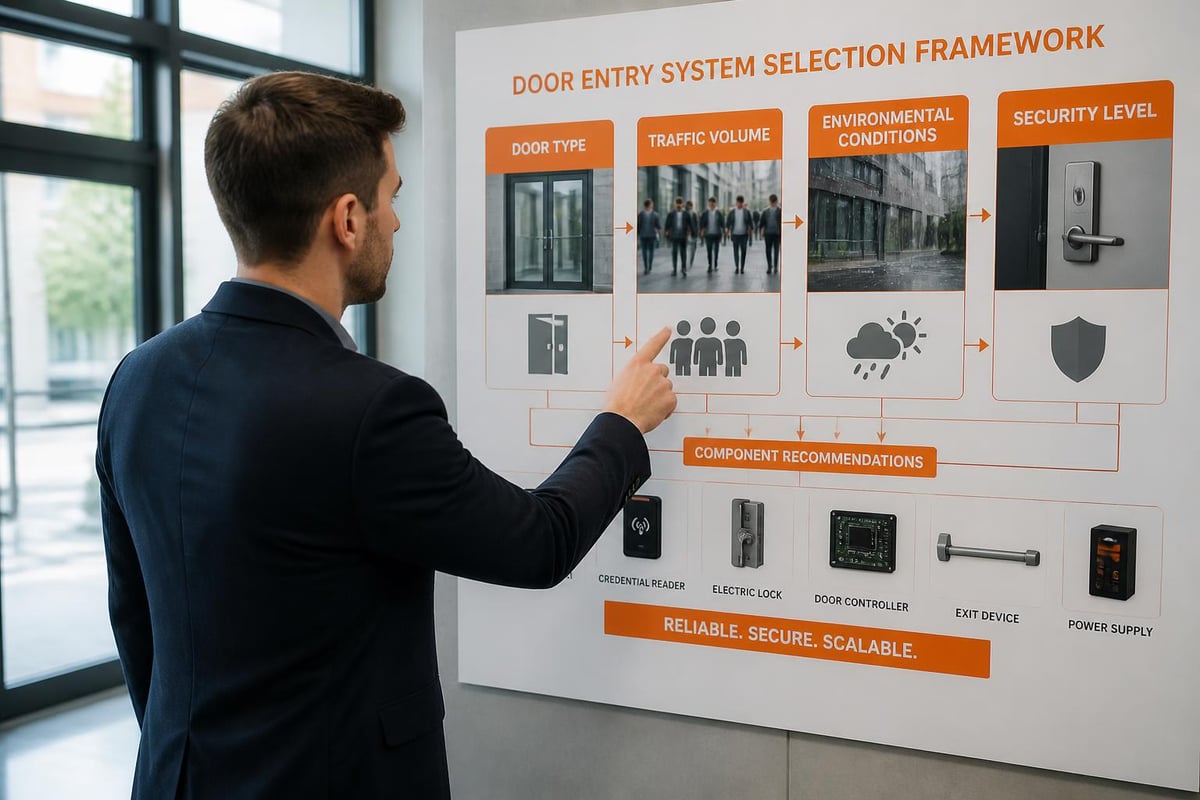
Choosing appropriate hardware for a door entry system with lock release demands careful assessment of operational requirements, environmental conditions, and expected usage patterns.
Traffic volume significantly influences component selection. High-traffic entrances require industrial-grade electromagnetic locks rated for continuous operation, whilst low-traffic secondary exits might use standard electric strikes. Heavy-duty cycle ratings prevent premature failure in busy commercial settings.
Environmental Factors
| Environment Type | Primary Concerns | Recommended Solutions |
|---|---|---|
| Exterior doors | Weather exposure, temperature extremes | IP65-rated components, heated locks for freezing climates |
| Clean rooms | Contamination control, airflow | Flush-mounted devices, minimal protrusions |
| Industrial facilities | Dust, vibration, impact | Reinforced housings, sealed electronics |
| Healthcare settings | Hygiene, antimicrobial requirements | Touchless operation, copper-infused materials |
Door construction influences lock release selection. Glass doors typically require electromagnetic locks due to their frameless design and inability to accommodate mortised hardware. Steel doors with substantial frames accept electric strikes or motorised locks more readily. Aluminium doors might need additional reinforcement to handle holding forces.
Power consumption and backup capabilities warrant consideration. Electromagnetic locks drawing continuous current require substantial power supplies with battery backup systems ensuring operation during outages. Electric strikes consume power only during unlocking, reducing electrical demands.
Authentication methods should align with security policies and user convenience. Card-based systems provide audit trails and easy credential management. Biometric readers eliminate credential sharing but require larger databases and processing power. Keypads offer simplicity but necessitate regular code changes to maintain security.
Installation Best Practices and Technical Considerations
Proper installation ensures a door entry system with lock release operates reliably whilst maintaining code compliance. Professional installation by certified technicians prevents common pitfalls that compromise security or safety.
Pre-Installation Planning
Thorough site surveys identify potential challenges before work begins:
- Assess existing infrastructure: Evaluate power availability, network connectivity, and door conditions
- Map integration points: Identify connections to fire panels, CCTV, and monitoring systems
- Verify code compliance: Confirm egress requirements and obtain necessary approvals
- Plan cable routes: Determine conduit paths avoiding electromagnetic interference
- Schedule coordination: Minimise disruption to business operations through phased installation
Door preparation varies by mechanism type. Electromagnetic locks require minimal modification-typically just mounting plates and wiring channels. Electric strikes demand precise mortising into the door frame, often requiring frame reinforcement. Motorised locks may necessitate complete lockset replacement.
Alignment proves critical for reliable operation. Misaligned electromagnetic locks fail to achieve full holding force, whilst improperly positioned electric strikes prevent latches from engaging correctly. Professional installers use templates and measurement tools ensuring precise component placement.
Wiring and Power Requirements
Electrical installations must follow British Standards for commercial buildings. Low-voltage wiring for access control systems typically runs separately from mains power, often within dedicated conduits to prevent interference.
Electromagnetic locks drawing 500-800mA require substantial power supplies, particularly when multiple doors operate simultaneously. Calculations must account for peak loads plus 20-30% overhead, with backup batteries providing sufficient runtime for orderly shutdown or emergency egress during extended outages.
Request-to-exit devices integrate through both wired and wireless configurations. Motion sensors detecting occupants approaching doors from inside trigger timed unlocking, whilst push buttons provide manual release. Both methods require fail-safe operation ensuring occupants never become trapped.
Door position switches confirm full closure before electromagnetic locks engage. Without these sensors, partially open doors might appear secured whilst remaining accessible. Similarly, monitoring circuits detect lock failures, alerting security personnel to potential vulnerabilities.
Advanced Features and Future-Ready Capabilities
Contemporary door entry systems with lock release incorporate sophisticated capabilities extending beyond basic access control. These advanced features enhance security whilst improving operational efficiency across commercial environments.
Mobile credentials represent significant evolution in authentication technology. Employees use smartphones as access cards, receiving encrypted digital credentials through dedicated applications. This approach eliminates physical card production costs, enables instant credential revocation, and provides enhanced security through device-specific encryption.
Anti-passback functionality prevents credential sharing by tracking entry and exit events. The system refuses entry to credentials already registered as inside the facility, deterring users from passing cards back to unauthorised individuals. This feature proves particularly valuable in high-security commercial environments.
Time-Based Access Control
Granular scheduling capabilities restrict access based on:
- Day of week: Weekend restrictions for standard office areas
- Time of day: After-hours limitations preventing unauthorised entry
- Holiday calendars: Automatic adjustments for bank holidays
- Temporary permissions: Contractor access limited to project duration
- Zone-based rules: Different schedules for various building areas
Integration with visitor management systems streamlines guest access. Pre-registration allows visitors to receive temporary credentials via email or SMS, reducing reception delays whilst maintaining comprehensive audit trails. Video intercom systems enable remote authentication, particularly useful for managing deliveries or after-hours access requests.
Analytics derived from access data provide valuable operational insights. Tracking entry patterns identifies peak traffic times, informing staffing decisions and facility management. Unusual access attempts trigger alerts, enabling proactive security responses.
Cloud-based management platforms offer remote administration capabilities. Security managers configure permissions, review access logs, and respond to alerts from any location with internet connectivity. This flexibility proves essential for organisations managing multiple facilities or requiring off-hours administration.
Maintenance and Ongoing Support Requirements
A door entry system with lock release requires regular maintenance ensuring continued reliability and compliance. Planned preventive maintenance prevents unexpected failures whilst extending component lifespan.
Quarterly inspections should verify:
- Lock release mechanisms operate smoothly without delays
- Authentication devices read credentials consistently
- Request-to-exit sensors detect occupants reliably
- Door closers provide appropriate closing force and speed
- Power supplies maintain proper voltage levels
- Backup batteries hold adequate charge
- All connections remain secure without corrosion
Annual comprehensive servicing includes firmware updates, deep cleaning of readers and sensors, battery replacement, and full system testing under simulated emergency conditions. Fire alarm integration testing confirms automatic unlocking occurs during alarm activation.
Common Issues and Solutions
| Problem | Typical Cause | Resolution |
|---|---|---|
| Intermittent operation | Loose wiring connections | Inspect and tighten all terminals |
| Reduced holding force | Electromagnetic lock misalignment | Adjust mounting plates for proper contact |
| Failed authentication | Dirty card readers | Clean reader heads with approved solutions |
| Delayed unlocking | Control panel processing lag | Update firmware, check network latency |
| Battery backup failure | Aged batteries past service life | Replace batteries per manufacturer schedule |
Professional maintenance programmes offered by experienced providers ensure systems remain operational and compliant. Quality and accreditations demonstrate provider competence, with certifications indicating proper training and adherence to industry standards.
Documentation updates prove equally important. As personnel change, contractor access gets modified, or building layouts evolve, system configurations require corresponding adjustments. Maintaining current records prevents confusion and ensures security policies remain effective.
Understanding commercial fire detection systems integration helps facilities managers appreciate how door entry systems interact with broader life-safety infrastructure, informing maintenance priorities and testing protocols.
Cost Considerations and Return on Investment
Implementing a door entry system with lock release represents significant capital investment, but the security improvements and operational efficiencies generate measurable returns for commercial enterprises.
Initial costs encompass several components:
- Hardware: Lock mechanisms, readers, control panels, power supplies
- Installation labour: Professional fitting, wiring, and configuration
- Integration: Connecting to existing fire, CCTV, and alarm systems
- Commissioning: Testing, documentation, and user training
- Compliance: Code consultations and inspection fees
Per-door costs vary considerably based on specification. Basic electromagnetic lock installations with proximity card readers might range from £800-1,200 per opening, whilst sophisticated biometric systems with anti-passback and full integration exceed £2,500 per door.
Ongoing expenses include:
- Annual maintenance contracts (typically 10-15% of installation cost)
- Credential management (card stock, mobile app licences)
- Software updates and feature enhancements
- Periodic hardware replacement (readers, locks, controllers)
- Monitoring services for remote access management
Return on investment manifests through multiple channels. Reduced security guard requirements in areas with automated access control lower personnel costs significantly. The elimination of mechanical key management-including rekeying after employee departures-provides ongoing savings.
Enhanced audit capabilities reduce liability exposure through comprehensive access logs documenting who entered which areas and when. During security incidents or compliance audits, this documentation proves invaluable for investigation and regulatory demonstration.
Operational efficiency improvements include faster visitor processing, reduced reception staffing during off-hours, and automated access for shift workers without requiring security personnel presence. These benefits accumulate substantially across large commercial facilities with multiple entry points.
A door entry system with lock release delivers robust security whilst maintaining essential life-safety compliance for commercial premises. By carefully selecting components, ensuring proper integration with fire and security systems, and maintaining equipment through professional service programmes, businesses create secure environments that facilitate legitimate access whilst deterring unauthorised entry. Logic Fire and Security brings extensive experience designing, installing, and maintaining comprehensive access control solutions for businesses across the UK, combining technical expertise with deep understanding of regulatory requirements to deliver systems that protect your premises effectively.