


Modern commercial premises face complex safety and security challenges that demand sophisticated, responsive solutions. An automatic alarm system represents the frontline defence against fire, intrusion, and other critical threats, providing continuous monitoring and instant notification without requiring manual intervention. For businesses operating across the UK, these systems have evolved from simple alert mechanisms into intelligent networks that integrate fire detection, security monitoring, and compliance management into cohesive platforms that protect assets, personnel, and operations around the clock.
Understanding Automatic Alarm Systems in Commercial Environments
An automatic alarm system functions as an integrated network of sensors, control panels, and notification devices designed to detect and respond to specific conditions without human activation. Unlike manual systems that require someone to identify a problem and trigger an alert, automatic configurations continuously monitor environmental conditions and automatically initiate pre-programmed responses when predefined thresholds are exceeded.
These systems serve multiple purposes within commercial settings. Fire alarm monitoring capabilities detect smoke, heat, or flame signatures and immediately alert occupants whilst simultaneously notifying emergency services and facility managers. Security functions identify unauthorized access, movement in restricted areas, or tampering with protected assets. The sophistication of modern automatic alarm systems allows them to distinguish between genuine threats and benign conditions, significantly reducing false alarms that disrupt operations and waste emergency response resources.
Core Components and Architecture
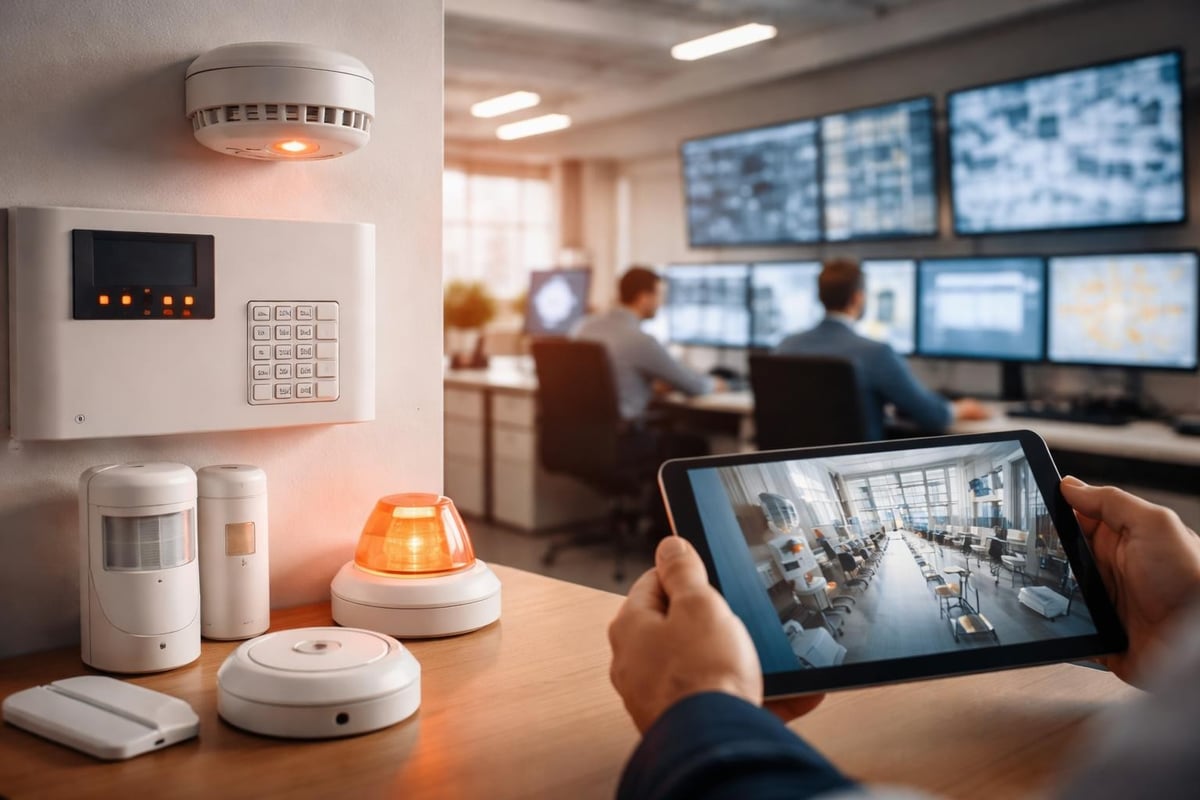
The architecture of a commercial automatic alarm system comprises several interconnected elements working in concert:
Detection Devices
- Smoke detectors using optical, ionization, or multi-sensor technology
- Heat detectors with fixed temperature or rate-of-rise capabilities
- Flame detectors employing infrared or ultraviolet sensing
- Motion sensors for security applications
- Glass break detectors for perimeter protection
- Door and window contact sensors
Control and Processing
- Central control panels that process signals from all detection devices
- Addressable systems that pinpoint exact alarm locations
- Programmable logic controllers enabling customized responses
- Integration modules connecting fire, security, and building management systems
Notification and Response
- Internal sounders and visual indicators for occupant alerting
- Remote monitoring connections to alarm receiving centres
- Automated emergency service notification
- Mobile alerts to designated personnel
- Integration with building systems for automated responses
The electronic alarm industry has established comprehensive standards governing these components, ensuring reliability and interoperability across different manufacturers and system types.
Fire Detection Integration Within Automatic Systems
Fire safety represents perhaps the most critical application of automatic alarm technology in commercial environments. A properly configured fire alarm system employs multiple detection methodologies to identify fire conditions at the earliest possible stage, providing maximum evacuation time and minimizing property damage.
Modern fire detection within automatic alarm systems utilizes intelligent algorithms that analyze multiple data points simultaneously. Multi-sensor detectors combine smoke, heat, and sometimes carbon monoxide readings to build a comprehensive picture of environmental conditions. This approach dramatically reduces false alarms caused by cooking fumes, steam, or dust whilst maintaining exceptional sensitivity to genuine fire signatures.
Advanced Detection Technologies
The evolution of detection technology has transformed automatic alarm system capabilities. Aspirating smoke detection systems continuously sample air through a network of pipes, identifying smoke particles at concentrations far below those detectable by conventional sensors. This technology proves particularly valuable in environments with high ceilings, sensitive equipment, or challenging atmospheric conditions.
Addressable systems represent another significant advancement, assigning unique identities to each detection device. When an alarm condition occurs, the control panel immediately identifies the precise location, enabling faster response and more targeted intervention. This capability becomes essential in large commercial facilities where rapid incident location significantly impacts emergency response effectiveness.
| Detection Technology | Response Time | Best Applications | Coverage Area |
|---|---|---|---|
| Optical Smoke | 30-60 seconds | Offices, corridors | 100m² per device |
| Heat Detection | 60-90 seconds | Kitchens, warehouses | 50m² per device |
| Aspirating Systems | 15-30 seconds | Data centres, archives | 2000m² per system |
| Multi-sensor | 20-40 seconds | Multi-purpose spaces | 80m² per device |
| Flame Detection | 5-10 seconds | Chemical storage, refineries | Line-of-sight dependent |
Security Applications and Intrusion Detection
Whilst fire detection often receives primary focus, the security dimensions of an automatic alarm system provide equally vital protection for commercial premises. Intruder alarm monitoring creates comprehensive barriers against unauthorized access, protecting physical assets, confidential information, and personnel safety.
Modern security configurations within automatic alarm systems employ layered detection strategies. Perimeter protection identifies breaches at building boundaries through door contacts, window sensors, and glass break detectors. Interior motion detection provides secondary coverage, identifying movement within protected spaces during armed periods. Advanced systems incorporate video verification, automatically capturing footage when alarm conditions occur to provide immediate visual confirmation of security events.
Intelligent Security Features
Contemporary automatic alarm systems incorporate artificial intelligence and machine learning to enhance security effectiveness. Pattern recognition algorithms learn normal building usage patterns and flag anomalous activities that might indicate security threats. Some systems integrate with access control entry systems to create comprehensive security ecosystems that manage both authorized access and threat detection within unified platforms.
Research into automated alarm pattern recognition demonstrates how machine learning improves threat identification whilst reducing false activations. These systems analyze historical alarm data to identify genuine security events versus benign triggers, continuously refining their detection parameters to improve accuracy.
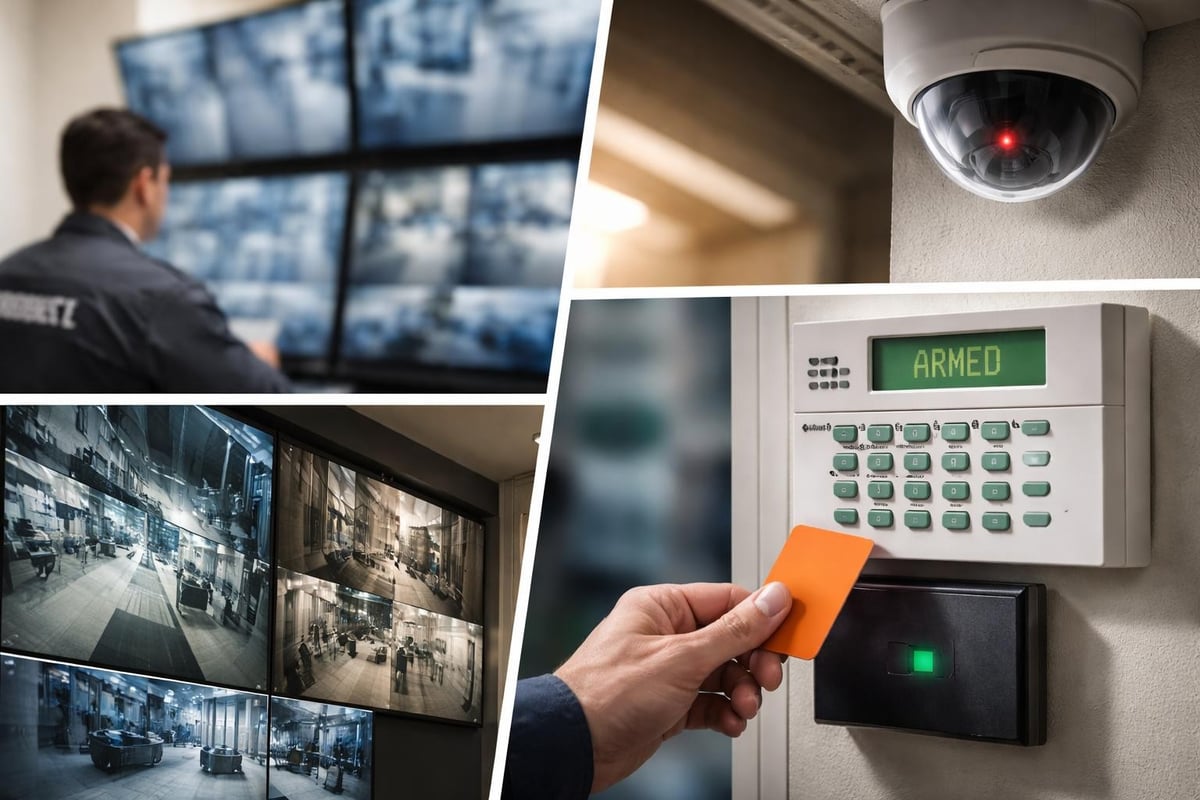
The integration of commercial CCTV with automatic alarm systems provides powerful verification capabilities. When a sensor detects suspicious activity, cameras automatically focus on the relevant area and begin recording, providing security personnel with immediate situational awareness and creating forensic evidence for subsequent investigation.
Monitoring and Response Protocols
The true value of an automatic alarm system emerges through professional monitoring services that provide continuous oversight and coordinated emergency response. Monitoring centres staffed by trained professionals receive alarm signals, verify their authenticity, and initiate appropriate responses according to pre-established protocols specific to each facility.
24/7 Monitoring Benefits
- Immediate alarm verification through multiple channels
- Direct communication with emergency services
- Keyhold services providing physical response when required
- Escalation procedures ensuring appropriate personnel notification
- Detailed incident logging for compliance and analysis
CCTV monitoring capabilities enable remote verification of alarm conditions without requiring physical attendance. Monitoring operators can assess situations through integrated camera systems, determining whether alarms represent genuine emergencies, false activations, or situations requiring specific response protocols. This capability significantly reduces unnecessary emergency service dispatches whilst ensuring genuine threats receive immediate, appropriate attention.
Response Time Optimization
The IEC 62682 standard provides comprehensive guidance on managing alarm systems across their lifecycle, emphasizing principles that enhance safety and operational efficiency. Implementing these standards ensures automatic alarm systems maintain optimal performance whilst minimizing operator burden through intelligent alarm management.
Response protocols vary based on alarm type, facility characteristics, and operational requirements. Fire alarms typically trigger immediate emergency service notification alongside automated building responses such as elevator recall, smoke extraction system activation, and electromagnetic door release. Security alarms may initiate graduated responses, beginning with remote verification before escalating to keyhold attendance or police dispatch based on verified threat levels.
Integration with Building Management Systems
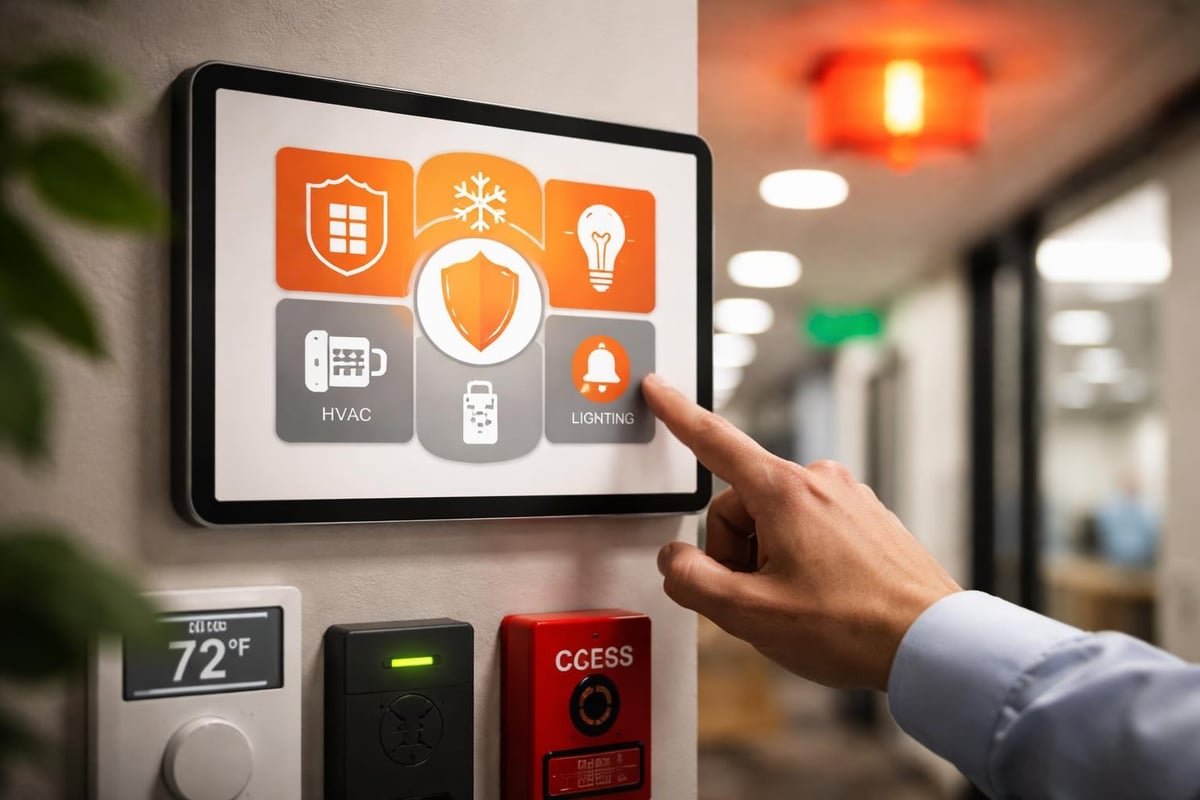
Modern automatic alarm systems increasingly function as components within broader building management ecosystems rather than standalone installations. This integration creates operational synergies that enhance both safety and efficiency whilst providing facility managers with centralized oversight of multiple building systems through unified interfaces.
Integration capabilities extend across numerous building systems:
- HVAC control for smoke containment and air pressure management
- Lighting systems for emergency illumination and evacuation guidance
- Lift controls for emergency service access and occupant safety
- Public address systems for clear emergency communications
- Door access systems for controlled evacuation and emergency access
- Plant monitoring for critical infrastructure protection
The convergence of fire safety, security, and building automation creates opportunities for sophisticated automated responses. When fire detection occurs, an integrated automatic alarm system might simultaneously activate sprinklers, recall lifts to ground level, unlock emergency exits, illuminate evacuation routes, and broadcast evacuation instructions whilst notifying emergency services and facility management.
Data Analytics and System Optimization
Advanced automatic alarm systems generate substantial data regarding building conditions, alarm events, and system performance. Analytics platforms transform this information into actionable insights that improve safety, reduce false alarms, and optimize system configuration.
Research into deep learning for alarm system analysis demonstrates how artificial intelligence identifies relationships between different alarm signals, helping operators understand root causes of complex events and improving response decision-making. These capabilities prove particularly valuable in large industrial or commercial complexes where numerous interconnected systems generate multiple simultaneous alarms during incidents.
| Integration Type | Primary Benefits | Implementation Complexity | ROI Timeline |
|---|---|---|---|
| HVAC Coordination | Smoke containment, energy efficiency | Medium | 12-18 months |
| Access Control | Security enhancement, audit trails | Low-Medium | 6-12 months |
| CCTV Verification | False alarm reduction, evidence capture | Low | 3-6 months |
| Emergency Lighting | Code compliance, evacuation safety | Low | Immediate |
| Building Automation | Operational efficiency, centralized control | High | 18-36 months |
Compliance and Regulatory Requirements
Commercial automatic alarm systems must comply with numerous regulatory frameworks governing fire safety, security, and building operations. Understanding these requirements ensures systems meet legal obligations whilst providing optimal protection for occupants and assets.
The Regulatory Reform (Fire Safety) Order 2005 establishes fundamental fire safety obligations for commercial premises in England and Wales, requiring appropriate fire detection and warning systems based on building characteristics and occupancy. Similar regulations apply across other UK jurisdictions, with specific requirements varying based on building type, size, and use.
Standards and Certification
British and European standards provide detailed technical specifications for automatic alarm system design, installation, and maintenance:
- BS 5839 governing fire detection and alarm systems
- BS EN 54 specifying component performance requirements
- BS 8418 covering installation and commissioning
- BS 7273 addressing system operation and integration
- PD 6662 specifying intruder alarm systems
Compliance extends beyond initial installation, requiring ongoing maintenance, testing, and documentation. Fire risk assessment companies evaluate whether automatic alarm systems remain appropriate for current building use and occupancy, recommending upgrades when conditions change or regulations evolve.
Working with providers holding appropriate certifications ensures systems meet required standards. Third-party certification schemes such as BAFE, NSI, and SSAIB verify that installers possess necessary competence and maintain quality management systems ensuring consistent, compliant installations.
Maintenance and Lifecycle Management
An automatic alarm system requires systematic maintenance throughout its operational life to maintain reliability and compliance. Neglected systems experience increased false alarms, reduced detection sensitivity, and potential complete failure when most needed.
Routine Maintenance Activities
- Weekly functional tests of notification devices and control panels
- Monthly battery condition checks and backup power testing
- Quarterly detector sensitivity testing and cleaning
- Annual comprehensive system inspection and certification
- Component replacement based on manufacturer recommendations
- Software updates maintaining current functionality and security
Preventive maintenance identifies potential failures before they impact system operation. Sensors accumulate dust and contaminants over time, degrading performance. Batteries deteriorate, reducing backup power duration. Control panel components age, increasing failure risk. Systematic maintenance addresses these issues before they compromise protection.
Documentation requirements form essential aspects of maintenance programmes. Compliance obligations mandate detailed records of all testing, maintenance activities, and system modifications. These records demonstrate due diligence whilst providing operational history that informs future system planning.
Studies examining automated cause analysis of test alarms reveal how systematic testing and documentation improve system reliability whilst reducing maintenance costs through targeted intervention based on actual performance data rather than arbitrary schedules.
Future Developments in Automatic Alarm Technology
The trajectory of automatic alarm system development points toward increasing intelligence, connectivity, and integration. Emerging technologies promise enhanced detection capabilities, reduced false alarms, and more sophisticated automated responses that adapt to specific incident characteristics.
Artificial intelligence and machine learning applications continue expanding. Future systems will better distinguish between genuine threats and benign conditions, learning from historical data to refine detection parameters specific to each facility’s unique characteristics. Predictive maintenance capabilities will identify component degradation before failure occurs, optimizing maintenance schedules and reducing system downtime.
Connectivity and Remote Capabilities
Cloud-based platforms increasingly supplement or replace traditional on-premises monitoring infrastructure. These systems provide enhanced scalability, remote management capabilities, and sophisticated analytics that transform raw alarm data into strategic facility management insights. Mobile applications give facility managers real-time system status visibility and remote control capabilities from any location.
The Internet of Things enables unprecedented sensor diversity and deployment flexibility. Wireless sensors eliminate cabling costs whilst providing deployment flexibility impossible with conventional wired systems. Battery technology improvements extend wireless device operational life to five years or more, reducing maintenance requirements whilst maintaining system reliability.
Integration with smart building platforms creates opportunities for automated responses that extend beyond traditional alarm functions. Future automatic alarm systems might adjust building operations based on occupancy patterns, environmental conditions, or predicted requirements, optimizing both safety and operational efficiency within unified management frameworks.
Research into automated congestion detection and alarm systems demonstrates principles applicable to building management, where automatic systems monitor conditions, predict problems, and initiate preventive responses before issues escalate into emergencies.
Selecting the Right System for Your Facility
Choosing an appropriate automatic alarm system requires careful analysis of facility characteristics, operational requirements, regulatory obligations, and budget constraints. Cookie-cutter approaches rarely deliver optimal results given the diversity of commercial premises and their unique protection requirements.
Assessment should begin with comprehensive risk evaluation identifying specific threats facing the facility. Manufacturing environments face different hazards than office buildings, retail premises, or healthcare facilities. Fire risk assessment identifies ignition sources, fuel loads, and escape route requirements that inform detection system design.
System Specification Considerations
Key factors influencing system selection include:
- Building size, layout, and construction characteristics
- Occupancy type, density, and vulnerability considerations
- Asset values and business continuity requirements
- Regulatory compliance obligations specific to the industry
- Integration requirements with existing building systems
- Budget for initial installation and ongoing operational costs
- Scalability needs to accommodate future facility changes
Engaging experienced providers early in the specification process ensures systems incorporate appropriate technologies whilst avoiding over-specification that inflates costs without delivering commensurate protection improvements. Protection systems must balance comprehensive coverage against practical installation and operational considerations.
System architecture decisions significantly impact long-term operational costs and flexibility. Addressable systems cost more initially but provide superior functionality, easier maintenance, and simpler expansion compared to conventional configurations. Wireless technologies reduce installation costs in existing buildings whilst providing deployment flexibility unachievable with wired alternatives.
Protecting commercial premises demands sophisticated automatic alarm systems that deliver reliable detection, intelligent verification, and coordinated response across fire safety and security applications. As threats evolve and regulatory requirements become more stringent, selecting appropriate technology and maintaining systems to exacting standards becomes increasingly critical for business continuity and legal compliance. Logic Fire and Security brings decades of expertise in designing, installing, and maintaining automatic alarm systems for businesses across the UK, delivering comprehensive solutions that protect people, assets, and operations whilst ensuring ongoing regulatory compliance through professional monitoring and systematic maintenance programmes.