

A fire extinguisher is a portable device that discharges an agent to put out or contain a small fire, and the right type depends on what is burning. In UK workplaces, that means matching water, foam, CO2, dry powder or wet chemical units to the fire classes your premises actually present, then keeping them serviced and within reach of an exit.
This guide takes you from the basics to confident use. It covers what each extinguisher is for, how to choose and position them, how to operate one, what servicing involves and how it relates to the rest of your fire strategy.
What is each fire extinguisher for?
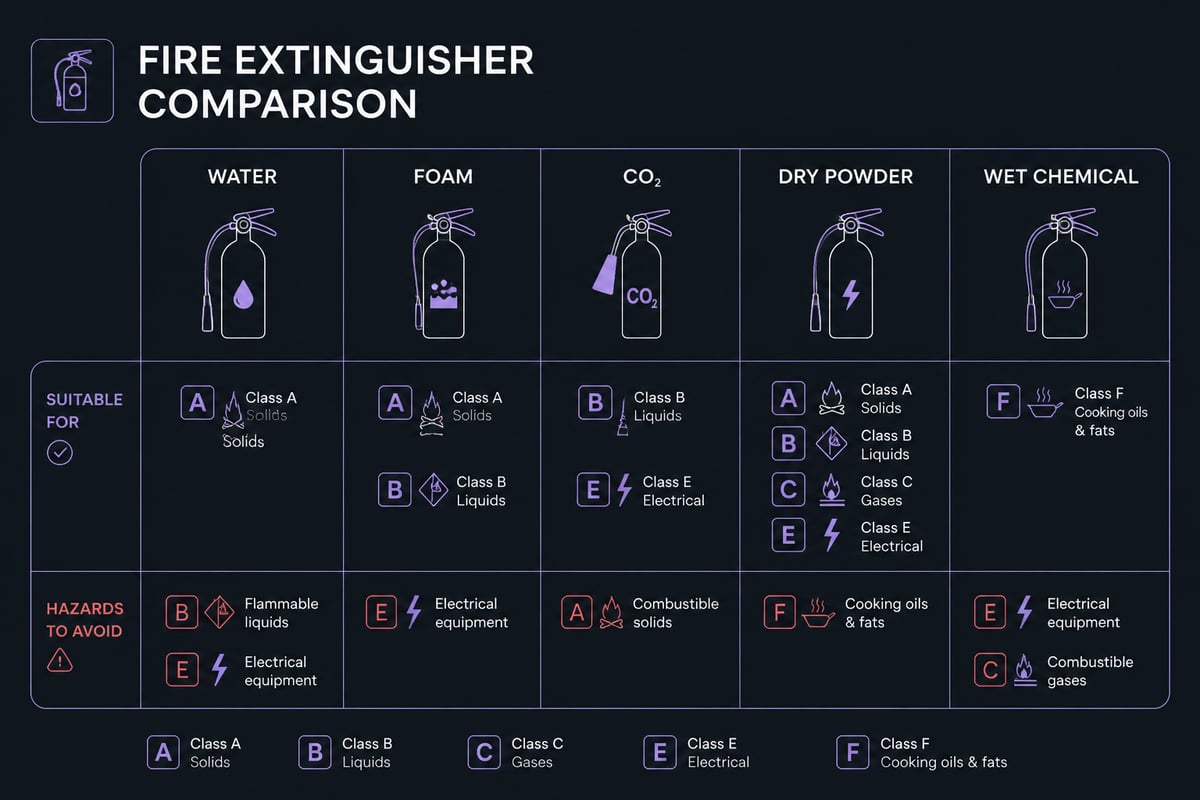
Each type of extinguisher is designed for particular classes of fire, and using the wrong one can spread the fire or create an electrical hazard. Fire is classified by fuel, and the U.S. Fire Administration notes five primary extinguisher types, intended for ordinary combustibles, flammable liquids, energised electrical equipment, flammable metals and cooking oils and fats.
UK and European classifications differ slightly from the American letters, but the principle is the same. The table below summarises the common types found in commercial buildings.
| Extinguisher type | Typical label colour | Suitable for | Avoid on |
|---|---|---|---|
| Water | Red | Paper, wood, textiles, furnishings | Flammable liquids, live electrics, cooking oil |
| Foam | Cream | Solids and flammable liquids | Live electrics, cooking oil |
| CO2 | Black | Electrical equipment, flammable liquids | Enclosed spaces (risk of asphyxiation) |
| Dry powder | Blue | Flammable liquids, gases, live electrics, some metals (specialist powder) | Confined spaces, sensitive equipment |
| Wet chemical | Yellow | Cooking oils and fats, solids | Live electrics, flammable liquids |
Water extinguishers are the most common general-purpose option. Foam suits premises where both solids and liquids such as paints or fuels are present. CO2 leaves no residue, which makes it popular in server rooms and offices. Dry powder is versatile but obscures vision and can damage equipment. Wet chemical units are purpose-built for deep fat fryers and commercial kitchens.
How do the fire classes work?
Fire classes group fires by the fuel involved, and each extinguisher label states which classes it is approved for. Knowing them lets you read any label in seconds.
- Class A: ordinary solids such as paper, timber, fabric and plastics.
- Class B: flammable liquids such as petrol, solvents and paints.
- Class C: flammable gases.
- Class D: combustible metals, which need specialist dry powder.
- Electrical: equipment that is live; once isolated, the fire reverts to the class of the burning material.
- Class F: cooking oils and fats, covered by wet chemical units.
Ratings also carry numbers. In the U.S. system, a rating such as 1A:10B:C means the 1A is equivalent to 1.25 gallons of water on a Class A fire, while 10B indicates capability on a Class B fire of up to 10 square feet, according to the U.S. Fire Administration. British Standard ratings follow a similar logic, where a higher number reflects a larger fire the unit can handle.
OSHA's guide to portable extinguishers is a useful reference on how classes map to extinguisher types, including its guidance on combustible metals and cooking oils.
What type of fire extinguisher is required for a kitchen?
A commercial kitchen needs a wet chemical extinguisher for cooking oil and fat fires, usually alongside a fire blanket and a suitable unit for electrical equipment. Wet chemical agent cools the oil and forms a soapy layer that helps prevent re-ignition. Water on a fat fire can cause violent flare-ups.
For most kitchens, a sensible combination is:
- A wet chemical extinguisher near the fryers and cooking line.
- A CO2 extinguisher for appliances and electrical panels.
- A fire blanket within easy reach of the hob area.
- A water or foam unit for general combustibles such as packaging and furniture.
Larger catering operations often add a fixed fire suppression system over cooking equipment, which discharges automatically to help control a fire at the appliance.
How do you choose the right fire extinguisher for your premises?
Choose extinguishers by starting with your fire risk assessment, which identifies the fuels, ignition sources and people in each area. Selection should follow the hazards found, not a generic checklist.
Work through these questions for each zone:
- What materials could burn, and which fire classes do they fall into?
- Is live electrical equipment present?
- Could a person with no training operate the unit comfortably? The U.S. Fire Administration advises choosing the largest extinguisher the user can safely and comfortably operate, which means weight matters as much as capacity.
- Does the unit carry a recognised approval mark, such as a UL Listed or ULC Listed label?
- Will the agent damage stock or equipment if discharged?
Multipurpose units suit mixed-risk areas. The U.S. Fire Administration points out that a multipurpose extinguisher labelled A-B-C can be used on most types of fires. ABC dry powder units can be a poor fit for offices, laboratories and server rooms because of residue and reduced visibility.
A fire risk assessment carried out by a competent person is the legal starting point for this decision, and it should be reviewed whenever the use of a space changes.
Where should a fire extinguisher be placed?
Place extinguishers on escape routes, near exits and close to the specific hazards they serve, mounted so they are visible and easy to lift. Positioning near an exit means the user can fight a small fire with a clear route out behind them.
Good practice for commercial and public buildings includes:
- Mount units on brackets or stands, with the handle at a height that suits all staff.
- Group different types together at a "fire point" so the right one is chosen quickly.
- Place wet chemical units at kitchen exits, not above the fryers, where they would be unreachable in a fire.
- Keep signage clear, and do not allow storage, pallets or trolleys to obstruct access.
- Ensure every floor, stairwell landing and plant room has coverage appropriate to its risk.
In multi-occupied and high-rise residential buildings, extinguishers in communal areas should be considered alongside the evacuation strategy. Many such buildings operate a stay-put or phased evacuation policy, so the building manager must decide whether residents or staff are expected to use extinguishers at all, and train accordingly.
How do you use a fire extinguisher safely?
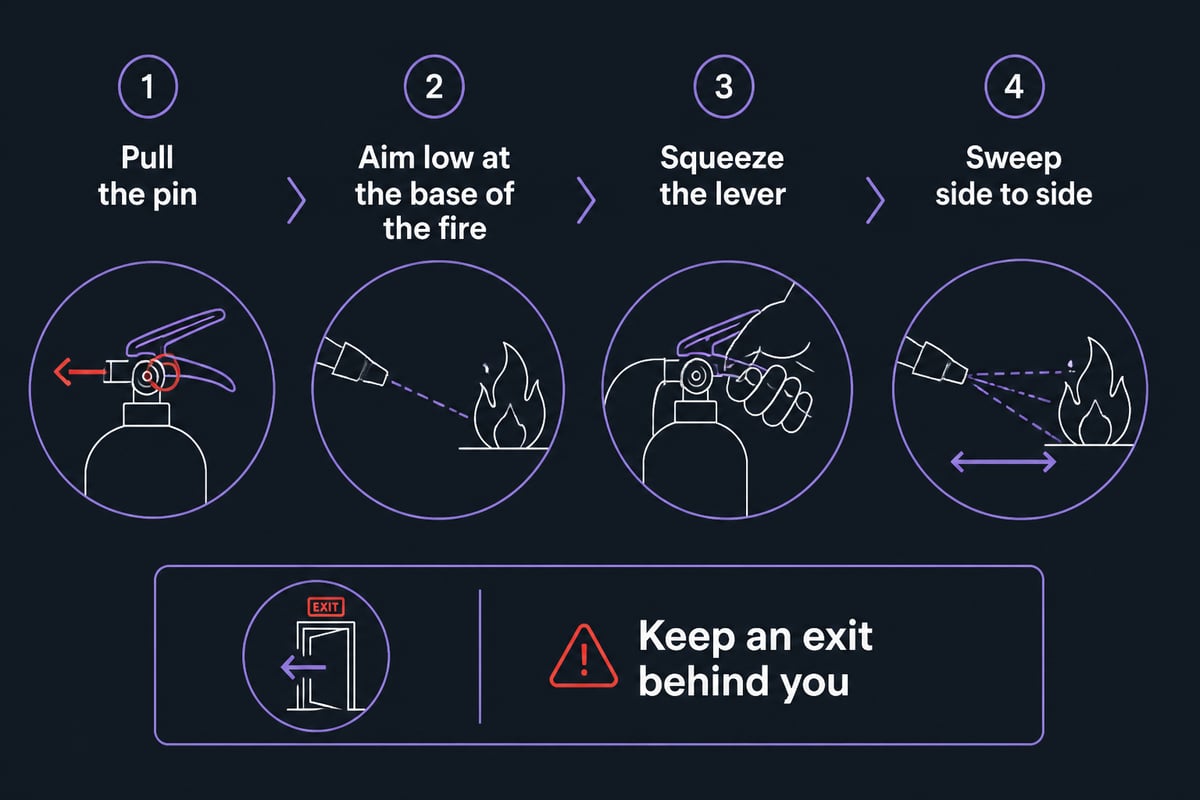
Use the PASS method: pull the pin, aim low at the base of the fire, squeeze the lever and sweep from side to side. OSHA sets out these steps for portable extinguisher operation.
Before attempting any of it, confirm the following:
- The fire is small and contained, not spreading beyond the item first alight.
- The alarm has been raised and the building is being evacuated.
- You have the correct extinguisher for the fuel.
- You can stand with an exit behind you.
Leave immediately if the fire grows, smoke fills the room or the extinguisher runs out. After a Class A fire, check for smouldering hot spots. Never tackle a fire to protect property if doing so puts a life at risk.
How often must a fire extinguisher be inspected and serviced?
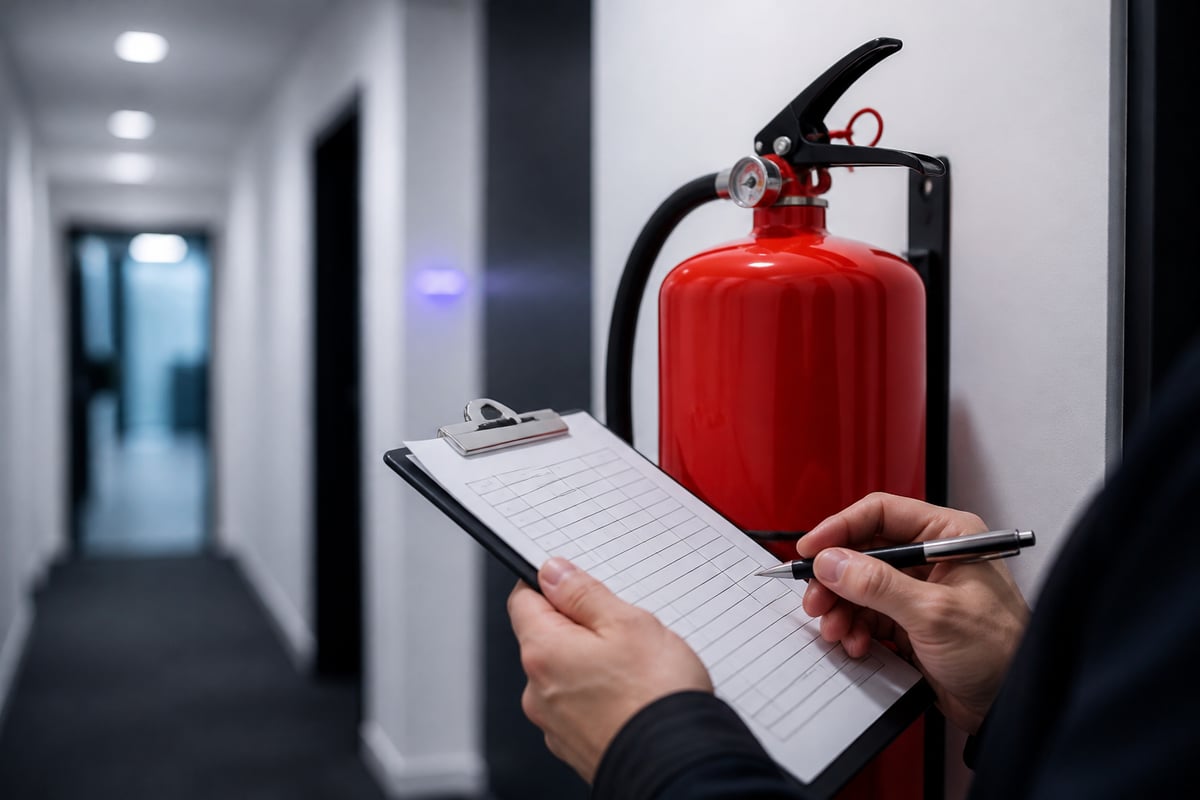
Extinguishers need a quick visual check by a responsible person at regular intervals and a full service by a competent engineer at least once a year. The Regulatory Reform (Fire Safety) Order 2005 requires the Responsible Person to keep firefighting equipment in efficient working order.
A routine visual check, often monthly, should confirm that:
- The unit is in its designated location and unobstructed.
- The safety pin and tamper seal are intact.
- The pressure gauge, where fitted, reads in the operating range.
- There is no visible damage, corrosion or leakage.
Beyond that, certain units need extended servicing or discharge testing at longer intervals, often five or ten years depending on type. Logic Fire and Security explains the process in its guides to fire extinguisher servicing and fire extinguisher testing.
Keep service records, including dates, engineer details and any units replaced. Auditors, insurers and enforcing authorities may ask to see them.
How much does it cost to have a fire extinguisher serviced in the UK?
Servicing is typically charged per extinguisher, and the price varies with the type, the number of units on site and the contract terms. Larger sites generally secure a lower unit cost, and bundling extinguisher servicing with fire alarm or emergency lighting visits can reduce call-out charges.
Prices differ between providers, so request a written quotation based on a site survey. Compare what is included: labour, replacement tamper seals, new labels, recharges and a certificate of service. Check that the contractor holds recognised accreditation, as an uncertified supplier may not satisfy your insurer.
Replacement and recharging are priced separately. If a unit has been discharged or has failed an inspection, a refilling service or outright replacement may be needed.
Is a fire extinguisher enough on its own?
No. Portable extinguishers are a first-aid measure for small fires, and they work best as one layer in a wider fire strategy. Detection, alarm, emergency lighting, compartmentation and a tested evacuation plan do far more to protect people.
Consider how the layers fit together:
- Detection and alarm: a well-designed fire alarm system gives the earliest warning, and 24/7 monitoring ensures a signal is acted on even when the building is empty.
- Emergency lighting: keeps escape routes visible when mains power fails.
- Fire doors: hold back smoke and flame, and need regular inspection.
- Suppression: gas or water-based systems protect server rooms, archives and plant areas where manual firefighting is impractical.
- Training: staff designated as fire wardens should know the extinguisher types on site and when not to use them.
Whatever the mix, each element should appear in your fire risk assessment and be maintained on a schedule.
What are the common mistakes with workplace extinguishers?
The most frequent faults are avoidable and usually found at inspection rather than in an emergency. Recognising them lets you correct them before a fire does.
- Wrong type for the hazard: a water unit beside a fryer, or powder in a clean room.
- Blocked or hidden units: extinguishers behind stock, doors or coat racks.
- Missed servicing: expired certificates and absent tamper seals.
- Untrained staff: units provided but nobody confident enough to use them.
- Unchanged layout: a refit or change of use that left the original extinguisher plan out of date.
- Misplaced reliance: treating extinguishers as a substitute for evacuation.
A short routine of monthly checks, annual servicing and a review after any layout change prevents most of these.
FAQ
Who is the largest manufacturer of fire extinguishers?
Several multinational safety groups produce extinguishers at scale. For a UK business, the manufacturer matters less than third-party certification and servicing by an accredited contractor who can maintain the models you hold.
Can I use any fire extinguisher on an electrical fire?
No. Water and foam units should never be used on live electrical equipment because of the risk of electric shock. CO2 and dry powder are generally suitable, and if it is safe to do so, isolate the power first so the fire can be treated as the class of whatever is burning.
Do all staff need fire extinguisher training?
Only those expected to use one, usually fire wardens and nominated staff, need hands-on training. All employees should still know where extinguishers are, what the alarm sounds like and when to evacuate instead. Refresh training periodically and whenever the extinguisher plan changes.
Start by walking your premises with your latest fire risk assessment and checking that every extinguisher is the right type, in the right place, in date and clearly visible. If any gaps appear, Logic Fire and Security can help: as NICEIC, BAFE and NSI Gold approved contractors with fully trained engineers, they design, install, monitor and maintain fire safety systems for businesses across the UK, so call 0800 8445 999 or email info@logicfireandsecurity.com to arrange a conversation about your site.