

Protecting business premises in 2026 requires more than a simple lock and key. A commercial alarm system serves as the frontline defence against intrusion, fire hazards, environmental threats, and operational disruptions. For businesses across the UK, from small enterprises to Blue Chip companies, implementing a robust alarm infrastructure is essential for safeguarding assets, ensuring employee safety, and maintaining regulatory compliance. Modern systems integrate multiple detection technologies, intelligent monitoring capabilities, and automated response protocols to deliver comprehensive protection around the clock.
Understanding Commercial Alarm System Architecture
A commercial alarm system comprises several interconnected components working in harmony to detect, verify, and respond to security threats. Unlike residential systems, commercial installations must accommodate larger premises, multiple zones, complex access patterns, and stringent regulatory requirements.
Core Components and Their Functions
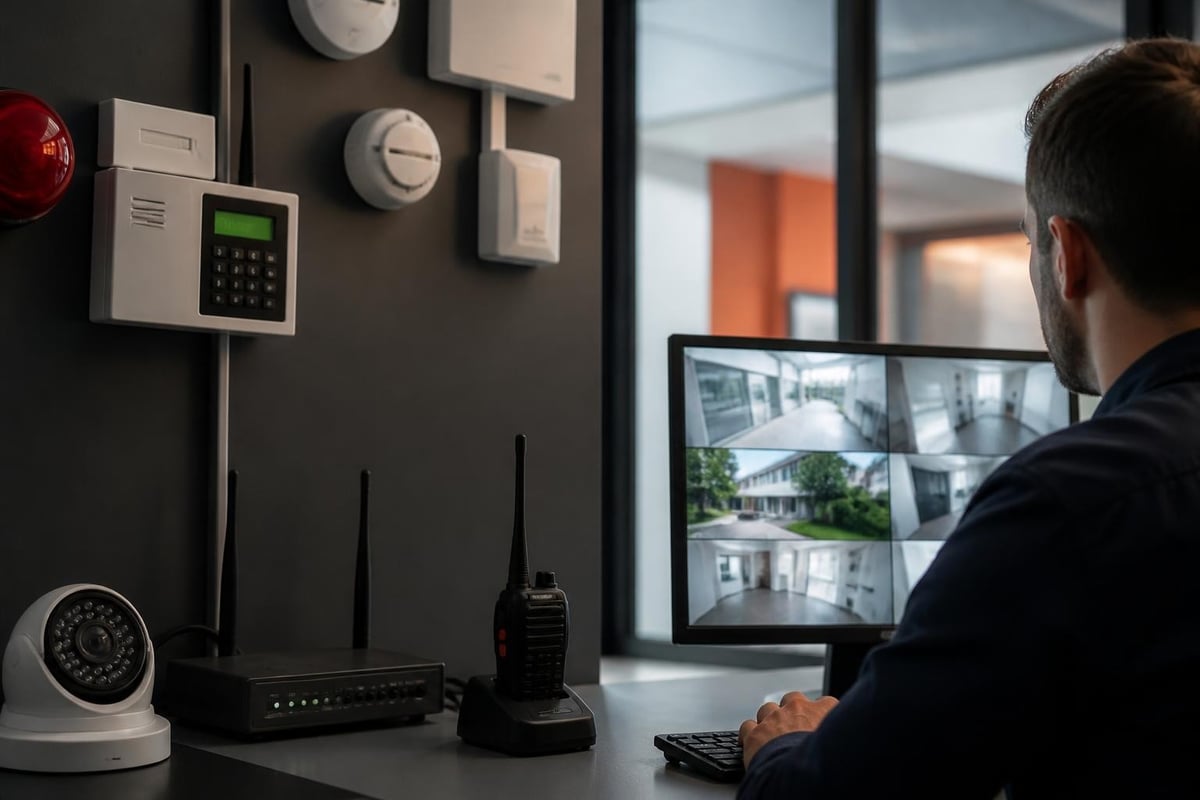
The alarm control panel serves as the system's central processing unit, receiving signals from detection devices, processing event data, and initiating appropriate responses. This critical component maintains constant communication with security monitoring services to ensure rapid emergency response when threats are detected.
Essential system components include:
- Detection devices (motion sensors, door contacts, glass break detectors)
- Fire and smoke detection equipment
- Environmental sensors (temperature, flood, carbon monoxide)
- Keypads and access control interfaces
- Communication modules (cellular, internet, telephone)
- Backup power supplies
- Audible and visual notification devices
Modern commercial installations increasingly incorporate building access control systems to manage employee entry whilst simultaneously monitoring for unauthorised access attempts. This integration creates a unified security ecosystem that streamlines operations whilst enhancing protection.
Zone Configuration and Coverage Planning
Effective commercial alarm system design requires strategic zone mapping that accounts for building layout, operational patterns, and specific security risks. Each zone represents a distinct area or threat category, enabling precise threat localisation and targeted response protocols.
| Zone Type | Primary Function | Typical Coverage | Response Priority |
|---|---|---|---|
| Perimeter | External intrusion detection | Doors, windows, loading bays | Critical |
| Interior Motion | Internal movement detection | Corridors, offices, warehouses | High |
| Critical Assets | High-value area protection | Server rooms, safes, inventory | Critical |
| Fire Detection | Smoke and heat monitoring | Throughout premises | Emergency |
| Environmental | Hazard detection | Basements, plant rooms, storage | Medium to High |
Businesses operating warehouses or distribution facilities, such as those utilising warehouse automation solutions, require specialised zoning strategies that accommodate robotic systems, automated guided vehicles, and 24-hour operational patterns without triggering false alarms.
Intrusion Detection Technologies
Commercial premises face diverse intrusion threats requiring multiple detection methodologies. The architecture and multi-sensor verification of commercial alarm systems emphasises layered detection approaches that significantly reduce false alarms whilst maintaining high sensitivity to genuine threats.
Passive Infrared and Microwave Sensors
Passive infrared (PIR) sensors detect heat signatures from moving objects, making them highly effective for detecting human presence in secured areas. When combined with microwave sensors in dual-technology devices, false alarm rates drop dramatically as both detection methods must trigger simultaneously before activating the alarm.
Dual-technology sensors offer several advantages:
- Reduced environmental false alarms from temperature fluctuations
- Enhanced detection reliability in challenging conditions
- Adjustable sensitivity for different operational environments
- Pet immunity settings for premises with service animals
- Extended coverage ranges for large commercial spaces
Perimeter Protection Systems
External protection begins at the property boundary, creating the first line of defence against intrusion attempts. Glass break detectors monitor window integrity using acoustic sensors that recognise the specific frequency pattern of breaking glass, whilst magnetic contacts on doors and windows provide immediate notification of unauthorised opening.
For businesses requiring enhanced external security, perimeter beam systems create invisible detection barriers around building exteriors. These photoelectric devices trigger alarms when beams are interrupted, providing early warning before intruders reach the building envelope.
Fire Safety Integration
A comprehensive commercial alarm system must seamlessly integrate fire detection capabilities to meet regulatory requirements and protect life safety. The relationship between smoke detectors and fire alarm systems demonstrates how early detection saves lives and minimises property damage through rapid emergency response.
Multi-Criteria Detection Approaches
Modern fire detection employs multiple sensing technologies to distinguish genuine fire conditions from environmental factors that might trigger false alarms. Addressable systems identify the exact location of activated detectors, enabling rapid emergency response team deployment to the correct area.
Advanced detection methods include:
- Optical smoke detection for smouldering fires
- Ionisation detection for fast-flaming fires
- Heat detection in dusty or steamy environments
- Carbon monoxide monitoring for incomplete combustion
- Aspirating detection for ultra-sensitive applications
Businesses with critical infrastructure or sensitive equipment benefit from complete detection systems that combine multiple technologies to provide early warning whilst maintaining low false alarm rates.
Monitoring and Communication Standards
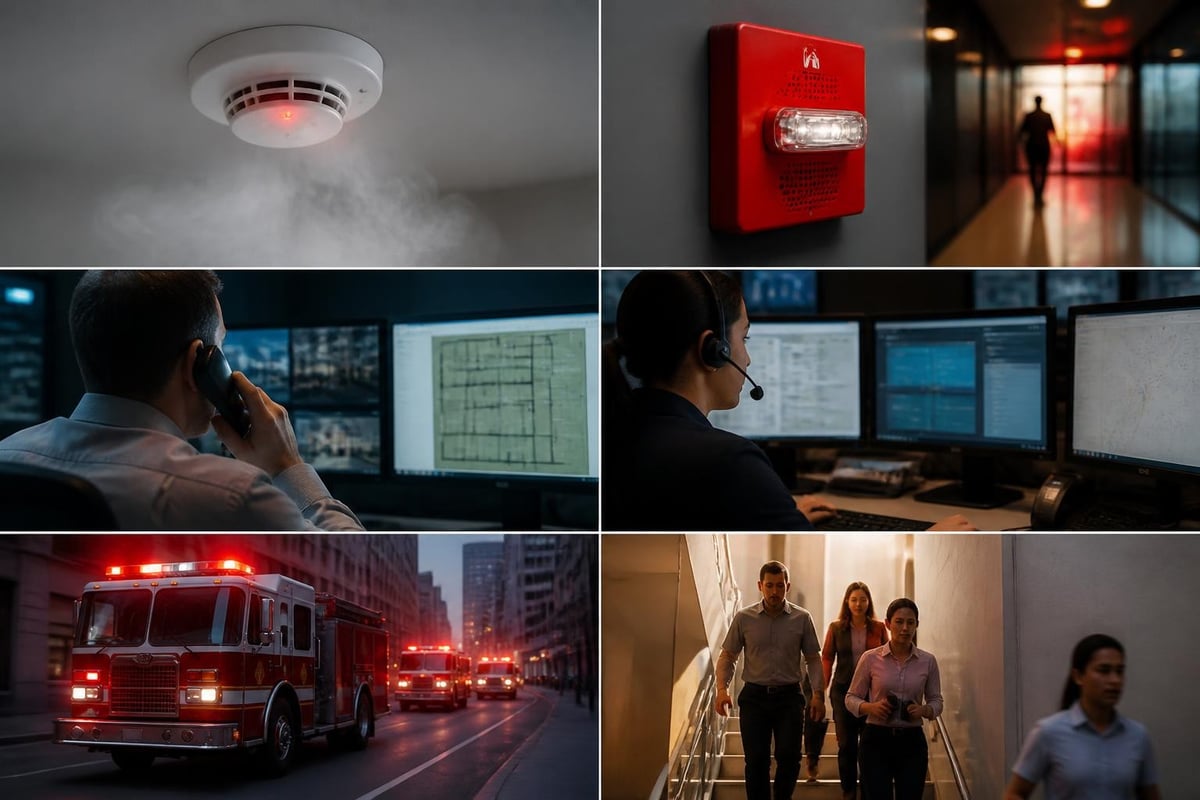
Fire alarm monitoring requires adherence to strict standards ensuring reliable communication between protected premises and emergency services. Best practices for fire alarm monitoring emphasise UL 864 compliance and dual-path signaling to guarantee message delivery even when primary communication channels fail.
| Communication Method | Reliability | Speed | Backup Capability |
|---|---|---|---|
| Cellular (Primary) | High | Immediate | Independent network |
| Internet (Secondary) | Medium-High | Immediate | Separate ISP recommended |
| Telephone Line | Medium | Fast | Vulnerable to line cuts |
| Radio | High | Immediate | Self-contained transmission |
Professional monitoring centres maintain 24/7 vigilance, immediately notifying fire services when alarms activate whilst contacting designated personnel to verify emergencies and coordinate response activities.
Environmental and Operational Monitoring
Beyond security and fire threats, commercial alarm system capabilities extend to environmental hazards and operational conditions that could disrupt business continuity or damage valuable assets.
Water and Flood Detection
Basement areas, plant rooms, and locations housing critical equipment require water detection sensors that trigger alarms when moisture is detected. Early notification prevents extensive damage from burst pipes, HVAC condensate overflow, or external flooding.
Businesses in sectors requiring environmental controls, such as those working with roofing services contractors on building envelope integrity, particularly value these monitoring capabilities to protect against weather-related water intrusion.
Temperature and Climate Monitoring
Server rooms, refrigerated storage, and climate-sensitive inventory require constant temperature monitoring with alarm notification when conditions deviate from acceptable ranges. This protection prevents equipment failure, product spoilage, and compliance violations.
Critical temperature monitoring applications:
- Data centre cooling system failures
- Cold storage refrigeration malfunctions
- Pharmaceutical storage compliance
- Manufacturing process conditions
- HVAC system performance verification
The core functions of modern commercial alarm systems emphasise this holistic approach to facility protection, integrating multiple threat categories into unified monitoring and response frameworks.
Alarm Management and Optimisation
Effective commercial alarm system operation extends beyond initial installation, requiring ongoing management to maintain optimal performance whilst minimising operational disruptions from nuisance alarms.
Alarm Rationalisation and Priority Assignment
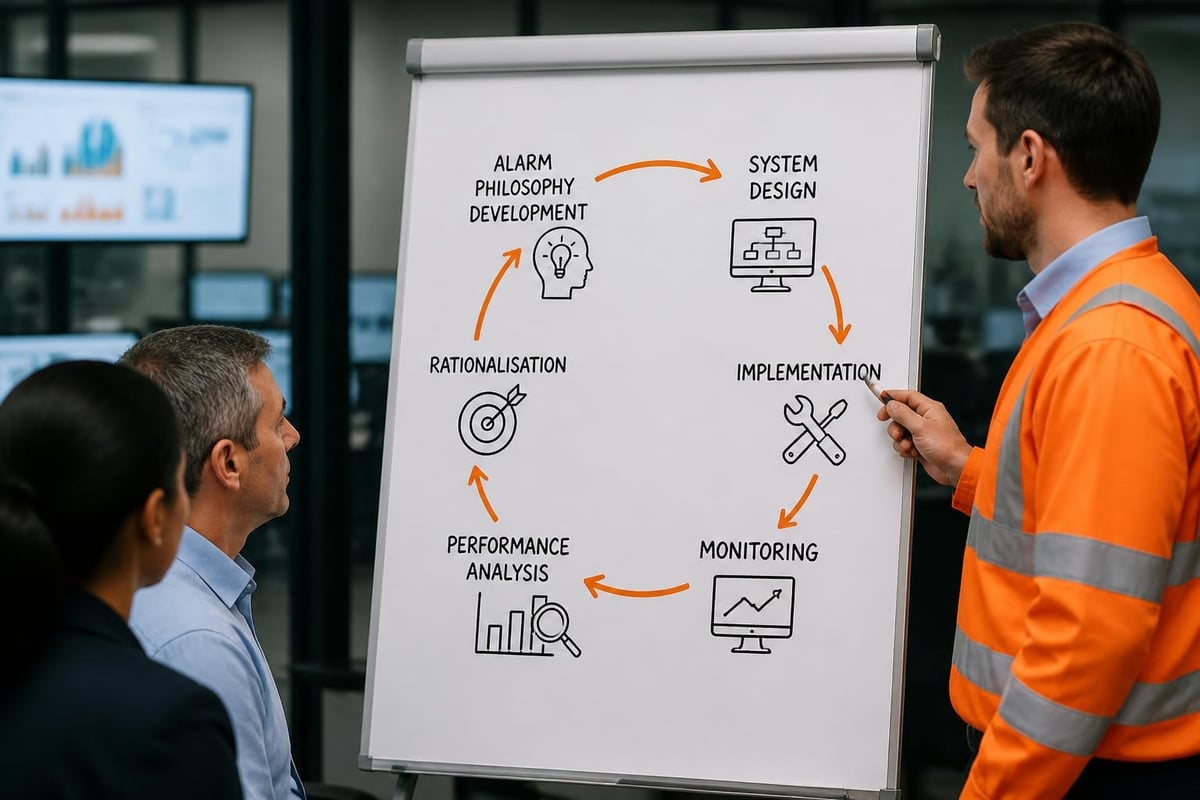
Industrial and commercial facilities often struggle with excessive alarm rates that desensitise personnel and obscure genuine critical events. The ISA-18.2 standard for alarm management provides structured methodologies for prioritising alarms, establishing acceptable alarm rates, and implementing effective response protocols.
Key performance metrics include:
- Average alarm rate per operator per hour (target: 1-2 alarms)
- Percentage of alarms requiring operator action
- Distribution across priority levels (critical, high, medium, low)
- Alarm response time by priority category
- False alarm rate and contributing factors
Businesses operating process control systems or SCADA environments particularly benefit from alarm management best practices that prevent alarm floods during upset conditions whilst ensuring critical notifications receive immediate attention.
Documentation and Alarm Philosophy
Successful commercial alarm system management begins with comprehensive documentation establishing alarm purposes, priority classifications, expected operator responses, and escalation procedures. The ISA 18 series of standards defines minimum requirements for alarm system lifecycle management from design through operation and maintenance.
System Selection and Implementation
Choosing an appropriate commercial alarm system requires careful assessment of facility requirements, operational patterns, regulatory obligations, and long-term scalability needs.
Needs Assessment Framework
Before selecting equipment or engaging installation contractors, businesses should conduct systematic security assessments identifying vulnerabilities, threat scenarios, and protection priorities. The NIST selection and application guide for commercial intrusion alarm systems provides comprehensive frameworks for evaluating security needs and matching them to appropriate technologies.
Assessment considerations include:
- Building size, layout, and construction materials
- Operational hours and access patterns
- Inventory value and asset concentration
- Regulatory compliance requirements
- Integration with existing business security camera systems
- Budget constraints and total cost of ownership
Educational facilities implementing schools security systems face unique challenges balancing openness during operational hours with comprehensive protection during evenings and holidays, requiring sophisticated scheduling and zone management capabilities.
Control Panel Selection and Configuration
The alarm control panel determines system capability, expansion potential, and integration possibilities. The commercial alarm control panel setup guide emphasises selecting scalable platforms that accommodate future growth without requiring complete system replacement.
| Panel Feature | Small Business | Medium Enterprise | Large Commercial |
|---|---|---|---|
| Zone Capacity | 8-16 zones | 32-128 zones | 256+ zones |
| User Codes | 10-20 users | 50-100 users | 500+ users |
| Event Memory | 100-500 events | 1,000-5,000 events | 10,000+ events |
| Communication | Dual-path | Dual-path + redundancy | Multiple redundant paths |
| Integration | Basic IP connectivity | Full network integration | Enterprise platform |
Modern panels increasingly offer cloud connectivity, enabling remote management, real-time status monitoring, and automated software updates that maintain security without requiring on-site technical visits.
Installation and Commissioning
Professional installation ensures commercial alarm system reliability whilst maintaining compliance with British Standards and insurance requirements. Poor installation practices undermine even the highest-quality equipment, creating coverage gaps and reliability issues.
Professional Installation Standards
Qualified installers assess optimal sensor placement, accounting for environmental factors, operational patterns, and detection technology characteristics. Motion sensor positioning must avoid HVAC vents, windows with direct sunlight exposure, and areas with moving equipment that could trigger false alarms.
Critical installation considerations:
- Proper sensor height and coverage angles
- Tamper protection on all accessible devices
- Concealed or protected wiring routes
- Adequate backup power capacity
- Clear zone identification and documentation
Businesses implementing alarm systems for business applications should verify that installers hold relevant certifications and maintain comprehensive insurance coverage for installation activities.
System Testing and Verification
Commissioning involves systematic testing of every detection device, communication path, and notification function to verify correct operation before transitioning to operational status. Walk tests confirm sensor coverage, whilst communication tests verify monitoring station connectivity through all available pathways.
Documentation provided at commissioning should include zone maps, user manuals, programming details, maintenance schedules, and emergency contact procedures. This information proves invaluable for ongoing system management and troubleshooting.
Ongoing Maintenance and Support
Commercial alarm system reliability depends on regular maintenance identifying potential failures before they compromise protection. Proactive servicing maintains insurance compliance whilst preventing costly emergency repairs.
Preventive Maintenance Programmes
Scheduled maintenance activities include battery testing and replacement, sensor calibration, communication path verification, and software updates. Annual inspections typically satisfy insurance requirements, though quarterly servicing provides enhanced reliability for critical installations.
Maintenance schedule components:
- Monthly: Self-test review and battery voltage checks
- Quarterly: Full system testing and cleaning
- Annually: Comprehensive inspection and certification
- As needed: Software updates and security patches
Facilities with integrated fire systems benefit from combined fire alarm servicing and maintenance programmes that efficiently address both security and life safety equipment during single site visits.
Remote Monitoring and Diagnostics
Cloud-connected alarm systems enable remote diagnostics, identifying communication failures, low battery conditions, and sensor malfunctions without requiring site visits. Monitoring centres receive trouble notifications, often resolving issues remotely or scheduling targeted maintenance visits addressing specific problems.
This proactive approach minimises system downtime whilst reducing the total cost of ownership through efficient resource allocation and preventive intervention before minor issues escalate into major failures.
Regulatory Compliance and Standards
Commercial alarm system installations must satisfy various regulatory frameworks, industry standards, and insurance requirements to ensure adequate protection whilst avoiding penalties or coverage limitations.
British Standards and Certification
BS 8243 provides specifications for the installation and configuration of intruder and hold-up alarm systems, establishing minimum performance requirements for commercial applications. Systems designed, installed, and maintained to these standards typically satisfy insurance requirements whilst providing recognised levels of protection.
Key regulatory considerations include:
- BS 5839 for fire detection and alarm systems
- BS 8418 for remote centres receiving alarm transmissions
- GDPR compliance for video integration and data storage
- Building regulations for life safety systems
- Industry-specific requirements (financial, healthcare, education)
Professional installers maintain current knowledge of evolving standards, ensuring new installations and system upgrades meet all applicable requirements without costly post-installation modifications.
Insurance Requirements and Certification
Commercial insurance policies frequently mandate specific alarm system capabilities, monitoring arrangements, and maintenance schedules as conditions of coverage. Failure to maintain compliant systems may result in claim denials or coverage limitations following losses.
Regular maintenance certifications demonstrate ongoing compliance, providing documentation that may prove essential following security incidents or insurance claims. Businesses should maintain comprehensive records of all installation, testing, and servicing activities throughout the system lifecycle.
Integration with Broader Security Ecosystems
Modern commercial alarm system effectiveness increases dramatically when integrated with complementary security technologies creating unified protection and operational efficiency.
Access Control Integration
Combining access control system capabilities with intrusion detection creates intelligent security that automatically arms alarm zones when authorised personnel exit whilst disarming upon verified entry. This automation eliminates user error whilst providing detailed audit trails of facility access and alarm events.
Integration enables sophisticated scenarios such as automatically locking doors during alarm conditions, restricting access to specific zones during emergencies, and coordinating building evacuation procedures following fire alarm activation.
Video Verification and Surveillance
Linking commercial CCTV installations with alarm systems enables visual verification of alarm events, dramatically reducing false alarm response costs whilst providing valuable evidence following genuine incidents. Cameras automatically record when specific zones trigger, capturing crucial footage of intrusion attempts or emergency situations.
Video analytics add another dimension, detecting unusual behaviour patterns, counting occupants during emergencies, and verifying that evacuation procedures complete successfully during drills or actual events.
Implementing a robust commercial alarm system represents a critical investment in business continuity, asset protection, and life safety across commercial facilities of all sizes. By carefully selecting appropriate technologies, ensuring professional installation, maintaining ongoing system health, and integrating with broader security infrastructure, businesses create comprehensive protection addressing the full spectrum of modern threats. Logic Fire and Security brings decades of expertise in designing, installing, and maintaining advanced alarm systems for businesses throughout the UK, delivering the reliable protection that Blue Chip companies and public agencies depend upon for their most critical facilities.