

Protecting commercial properties from fire damage requires more than basic detection systems. Sprinkler fire systems represent one of the most effective methods of automatic fire suppression available to businesses today, combining rapid response capabilities with minimal maintenance requirements. These systems have evolved significantly since their inception, now offering sophisticated technology that can be tailored to virtually any commercial environment, from office blocks to manufacturing facilities. Understanding how these systems work, their various configurations, and their regulatory requirements is essential for business owners, facilities managers, and safety officers responsible for protecting both people and property.
Understanding Commercial Sprinkler Fire Systems
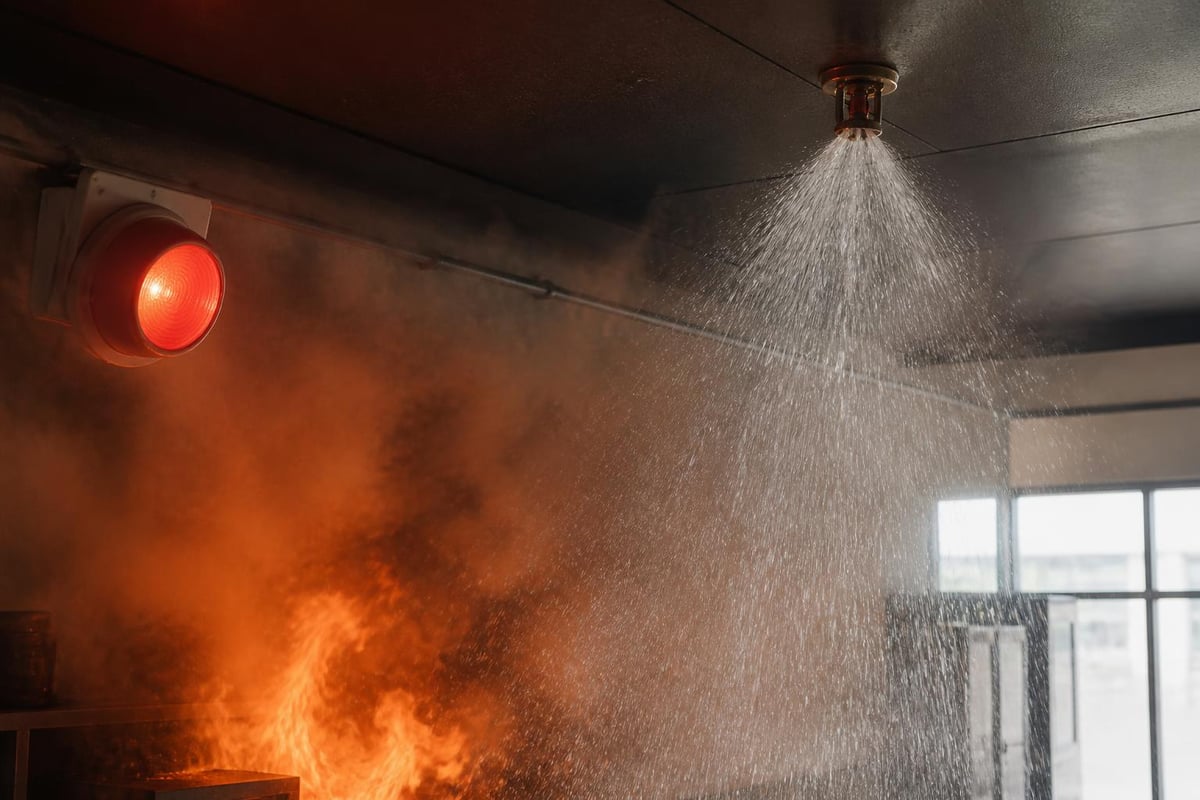
Sprinkler fire systems operate on a straightforward yet highly effective principle: automatically discharging water when heat from a fire activates individual sprinkler heads. Unlike the common misconception that all sprinklers activate simultaneously, these systems are designed to operate only where heat is detected, minimising water damage whilst maximising fire suppression effectiveness.
The basic components of any sprinkler system include a reliable water supply, a network of pressurised pipes, control valves, and individual sprinkler heads positioned throughout the protected area. When a fire produces sufficient heat to trigger a sprinkler head-typically between 57°C and 77°C for standard commercial applications-that specific head opens, releasing water in a carefully designed spray pattern.
Key System Components
Modern sprinkler fire systems comprise several critical elements working in harmony:
- Sprinkler heads: Temperature-sensitive devices that open at predetermined heat levels
- Pipe network: Distribution system carrying water throughout the building
- Control valves: Regulate water flow and enable system isolation for maintenance
- Alarm systems: Alert occupants and monitoring services when activation occurs
- Water supply: Mains connection, tanks, or pumped systems ensuring adequate pressure
The fire protection infrastructure in commercial buildings often integrates sprinkler systems with detection and alarm systems to create comprehensive safety solutions.
Types of Sprinkler Fire Systems for Commercial Properties
Different business environments demand different approaches to fire suppression. The main classifications of sprinkler fire systems each offer distinct advantages suited to specific operational requirements and building characteristics.
Wet Pipe Systems
Wet pipe systems maintain water under pressure throughout the entire pipe network at all times. This makes them the simplest and most reliable option for heated commercial buildings. When a sprinkler head activates, water discharges immediately-typically within seconds of activation.
Advantages of wet pipe systems:
- Lowest installation and maintenance costs
- Immediate water discharge upon activation
- Simple, reliable operation with minimal components
- Suitable for most standard commercial environments
These systems dominate commercial installations across the UK, particularly in offices, retail spaces, and educational facilities where temperatures remain above freezing year-round.
Dry Pipe Systems
For unheated warehouses, loading bays, and outdoor structures, dry pipe systems offer essential protection without the risk of frozen pipes. These systems contain pressurised air or nitrogen rather than water, which is held back by a dry pipe valve. When a sprinkler head opens, the pressure drops, triggering the valve to release water into the pipes.
| Feature | Wet Pipe | Dry Pipe | Pre-Action | Deluge |
|---|---|---|---|---|
| Response Time | Immediate | 1-2 minutes | Delayed | Immediate upon detection |
| Best For | Heated buildings | Unheated spaces | Data centres | High-hazard areas |
| Complexity | Low | Medium | High | High |
| Maintenance | Minimal | Regular | Intensive | Intensive |
| Cost | Lowest | Moderate | Higher | Highest |
Pre-Action Systems
Data centres, museums, archives, and other facilities housing valuable equipment or irreplaceable materials benefit from pre-action systems. These sophisticated installations require two separate events before water discharges: activation of a smoke or heat detection system, followed by sprinkler head activation from direct heat exposure.
This dual-activation approach virtually eliminates the risk of accidental water discharge from mechanical damage or system malfunction. The commercial fire detection systems that trigger pre-action systems can identify potential fires at the earliest stages.
Deluge Systems
High-hazard industrial environments-including chemical storage facilities, aircraft hangars, and power generation plants-often require deluge systems. Unlike other types where individual heads activate independently, deluge systems use open sprinkler heads connected to a pipe network controlled by a deluge valve.
When fire detection equipment identifies a fire, the deluge valve opens, simultaneously releasing water through all sprinkler heads in the designated zone. This immediate, comprehensive water application is necessary for rapidly developing or spreading fires common in high-risk commercial operations.
Installation Considerations for Business Premises
Implementing sprinkler fire systems in commercial buildings involves careful planning and adherence to strict regulatory standards. The design phase determines system effectiveness for decades to come.
Design and Planning Requirements
Professional system design begins with comprehensive risk assessment. Engineers evaluate building layout, occupancy types, storage configurations, ceiling heights, and potential fire loads. This analysis informs decisions about sprinkler head spacing, pipe sizing, water supply requirements, and system classification.
British Standard BS EN 12845 provides detailed specifications for fixed firefighting systems in the UK. Compliance with these standards, alongside building regulations and insurance requirements, forms the foundation of any lawful installation.
The extensive knowledge base on fire sprinkler systems offers valuable technical references for professionals involved in design and installation workflows.

Water Supply and Hydraulic Calculations
Adequate water supply stands as perhaps the most critical factor in sprinkler system effectiveness. Engineers must verify that available water pressure and flow rates meet or exceed system demands during worst-case fire scenarios.
Water supply sources include:
- Direct mains connection (most common for smaller commercial premises)
- Dedicated storage tanks with pumped systems
- Combined tank and mains arrangements
- Alternative sources such as rivers or reservoirs (large industrial sites)
Hydraulic calculations determine pipe sizes throughout the network, ensuring sufficient water reaches the most remote sprinkler heads at required pressures. These complex calculations account for friction losses, elevation changes, and simultaneous sprinkler operation expectations.
Professional Installation Standards
Only competent, qualified installers should undertake sprinkler system installation. The quality of workmanship directly impacts system reliability during emergencies. Proper pipe supports, correct fitting installation, appropriate thread compounds, and accurate sprinkler head positioning all contribute to long-term performance.
Many businesses partner with established providers like Logic Fire and Security to ensure installations meet exacting standards from initial design through commissioning and beyond.
Regulatory Framework and Compliance
Navigating the regulatory landscape surrounding sprinkler fire systems requires understanding multiple layers of legislation, standards, and best practices governing commercial fire protection.
UK Building Regulations and Standards
Building Regulations Approved Document B sets out fire safety requirements for commercial premises in England and Wales. Whilst sprinklers aren’t universally mandated, they’re increasingly required or strongly recommended for certain building types, heights, and uses.
Scotland and Northern Ireland maintain separate but similar regulatory frameworks. The regulatory requirements for water-based fire protection systems vary by jurisdiction but share common principles focused on life safety and property protection.
NFPA Standards Influence
Whilst British Standards govern UK installations, awareness of National Fire Protection Association (NFPA) standards proves valuable, particularly for multinational businesses or those dealing with American insurance providers. NFPA 13 covers commercial sprinkler installations, whilst NFPA 25 addresses inspection, testing, and maintenance.
The adopted standards for fire sprinkler systems in various jurisdictions often reference NFPA guidelines, demonstrating their international influence on fire protection practices.
Insurance Requirements
Commercial property insurers frequently mandate sprinkler systems for high-value premises or those with elevated fire risk. Insurance-compliant installations typically require third-party certification and regular maintenance documentation. Systems meeting insurer specifications can significantly reduce premium costs whilst providing enhanced protection.
Many insurers specify standards beyond minimum regulatory requirements, particularly regarding water supplies, system monitoring, and maintenance frequencies. Early engagement with insurance providers during design phases prevents costly modifications later.
Maintenance and Testing Protocols
Sprinkler fire systems demand regular attention to maintain their readiness. Well-maintained systems remain effective for decades, whilst neglected installations may fail precisely when needed most.
Routine Inspection Requirements
Weekly, monthly, quarterly, and annual inspections form the backbone of effective sprinkler system maintenance. Each inspection level addresses different components and potential issues.
Weekly inspections typically include:
- Visual checks of control valve positions
- Verification of pressure gauge readings
- Examination of water supply components
- Review of monitoring system status
Monthly and quarterly inspections expand to include alarm device testing, pump operation verification, and more detailed visual examinations of accessible components.
Annual Maintenance Activities
Comprehensive annual inspections involve qualified technicians examining the entire system systematically. These detailed assessments identify wear, corrosion, mechanical damage, or environmental factors that might compromise system performance.
During annual maintenance, specialists test alarm systems, verify pipe supports remain secure, inspect sprinkler heads for damage or obstruction, and confirm all valves operate correctly. Documentation of these activities provides essential compliance evidence and historical performance data.
Training staff to recognise fire protection system components and understand their importance contributes to overall building safety culture. Resources like Study Academy offer compliance training that helps employees understand their role in maintaining building safety systems.
Addressing Common Issues
Several recurring challenges affect sprinkler fire systems in commercial environments:
- Corrosion: Particularly in dry pipe systems, internal pipe corrosion can reduce water flow capacity
- Physical damage: Warehouse operations, renovations, or accidents may impact sprinkler heads or pipes
- Obstructions: Stored materials, suspended ceilings, or decorative elements blocking spray patterns
- Freezing: In partially heated buildings or during severe weather
- Pressure fluctuations: Changes in municipal water supply or building systems
Regular inspections catch these issues before they compromise system effectiveness. The fire alarm testing processes that accompany sprinkler maintenance ensure integrated systems work cohesively.

System Integration and Modern Technology
Contemporary commercial fire protection increasingly emphasises integrated systems where sprinkler fire systems work alongside detection, alarm, and building management technologies.
Smart Building Integration
Modern sprinkler systems connect to building management systems (BMS), enabling remote monitoring, automated reporting, and predictive maintenance scheduling. Smart sensors detect pressure changes, valve positions, and water flow, transmitting real-time data to facilities management teams and monitoring centres.
This integration allows immediate response to system faults or activations, reducing potential damage and ensuring faster emergency service notification. The commercial fire alarm monitoring capabilities available today extend well beyond simple activation alerts.
Enhanced Detection and Response
Pre-action and deluge systems particularly benefit from advanced detection technology. Multi-criteria detectors analysing smoke, heat, and other fire signatures trigger sprinkler systems only when genuine fire conditions exist, virtually eliminating false activations.
Voice evacuation systems, emergency lighting, and smoke control systems coordinate with sprinkler activations to facilitate safe building evacuation whilst supporting firefighting efforts. This coordinated response significantly improves overall building safety performance.
Remote Monitoring Capabilities
Twenty-four-hour monitoring services receive instant notification when sprinkler systems activate or experience faults. These services immediately contact designated personnel and emergency services, ensuring rapid response regardless of building occupancy status.
Historical data from monitored systems informs maintenance schedules and identifies patterns suggesting underlying issues before they cause system failures. This proactive approach reduces downtime and maintains compliance with regulatory requirements.
Cost Considerations and Return on Investment
Understanding the financial implications of sprinkler fire systems helps businesses make informed decisions about fire protection investments.
Installation Costs
New construction installations typically prove most cost-effective, as system infrastructure integrates naturally into building design. Retrofitting existing commercial properties costs more due to accessibility challenges, aesthetic considerations, and potential operational disruptions.
Installation costs vary significantly based on:
- Building size and complexity
- System type selected
- Water supply infrastructure requirements
- Special hazard considerations
- Aesthetic finishing requirements
Whilst initial investment appears substantial, the long-term value proposition often justifies the expenditure through insurance savings, property protection, and business continuity assurance.
Operational and Maintenance Expenses
Annual maintenance costs remain relatively modest compared to installation expenses. Regular servicing, inspection, and testing typically represent 1-3% of initial installation costs annually, though complex systems or challenging environments may require higher maintenance budgets.
Water costs for wet pipe systems prove negligible, whilst electricity for pump operation in larger installations represents the primary ongoing utility expense. Dry pipe system maintenance requires more frequent attention due to compressed air requirements and increased component complexity.
Insurance and Risk Reduction Benefits
Many businesses recover sprinkler system costs within several years through reduced insurance premiums. Property insurers recognise that properly maintained sprinkler fire systems reduce claim frequency and severity dramatically.
Beyond direct insurance savings, sprinklers protect business continuity by limiting fire damage to affected areas. The comprehensive overview of fire sprinkler effectiveness demonstrates how these systems consistently control or extinguish fires before substantial property damage occurs.
Businesses avoiding major fire losses preserve their market position, customer relationships, and employee security-benefits far exceeding any system cost considerations.
Sector-Specific Applications
Different commercial sectors face unique fire protection challenges requiring tailored sprinkler system approaches.
Warehousing and Distribution
High-bay warehouses storing flammable materials demand robust sprinkler protection. Early suppression response (ESFR) sprinkler heads designed specifically for warehouse applications deliver high-volume water discharge capable of controlling fires in stored commodities up to 13 metres high.
Storage arrangements significantly impact system design. Solid pile storage, palletised storage, and racking systems each present distinct challenges requiring specialist design approaches. In-rack sprinklers supplement ceiling-level protection in particularly challenging scenarios.
Office and Commercial Buildings
Modern office environments balance fire protection with aesthetic considerations. Concealed, flush, or decorative sprinkler heads maintain interior design integrity whilst providing effective protection. Suspended ceilings, raised floors, and open-plan layouts influence system design and installation approaches.
Office buildings typically use wet pipe systems due to consistent heating and moderate fire risks. The commercial fire alarm systems installed alongside sprinklers provide early warning and evacuation support.
Manufacturing and Industrial Facilities
Industrial premises housing machinery, processes, or materials with elevated fire risks require specialist sprinkler system design. Foam systems, mist systems, or special hazard protection may supplement or replace traditional sprinkler fire systems in certain areas.
Coordinating sprinkler protection with process shutdown systems, explosion suppression, and specialised detection equipment demands expertise in both fire protection and industrial operations. The kitchen suppression systems used in commercial cooking facilities exemplify this specialised approach.
Healthcare and Educational Facilities
Hospitals, care homes, schools, and universities present unique challenges combining high occupancy, complex layouts, and vulnerable populations. Sprinkler systems in these environments prioritise life safety above all other considerations.
Phased evacuation strategies common in healthcare settings rely on compartmentation and sprinkler protection working together. Systems must operate reliably without compromising patient care or educational activities during routine maintenance and testing.
Training and Competency Requirements
Effective sprinkler fire system operation depends on competent personnel understanding system principles, maintenance requirements, and emergency response procedures.
Installer Qualifications
The standards for sprinkler fitting professionals establish baseline competency expectations. Reputable installation companies employ technicians holding recognised qualifications demonstrating both theoretical knowledge and practical skills.
Third-party certification schemes verify installer competence and adherence to industry standards. These certifications provide assurance that installations meet regulatory and insurance requirements whilst following manufacturer specifications.
Facilities Management Training
Building managers and maintenance personnel require thorough understanding of sprinkler system operation, inspection requirements, and emergency procedures. Knowing how to respond when systems activate-including when to shut down systems after fire service attendance-proves essential.
Regular training ensures staff recognise potential issues during routine building operations, understand the importance of maintaining clearances around sprinkler heads, and know whom to contact for service or emergencies. The fire safety and protection knowledge required extends beyond sprinkler systems to encompass comprehensive fire safety management.
Ongoing Professional Development
Fire protection technology evolves continuously. Professionals involved in system design, installation, and maintenance benefit from regular skills updates covering new products, techniques, and regulatory changes. Industry associations, manufacturers, and specialist training providers offer courses supporting professional development throughout careers in fire protection.
Future Developments in Sprinkler Technology
Innovation continues advancing sprinkler fire system capabilities, efficiency, and integration possibilities.
Water Mist Systems
Water mist technology uses significantly less water than traditional sprinklers whilst providing effective fire suppression. These systems prove particularly valuable in heritage buildings, telecommunications facilities, and marine applications where water damage concerns or supply limitations exist.
Ongoing research documented by organisations like NIST on residential sprinkler systems informs development across all sprinkler applications, though this work primarily focuses on residential rather than commercial installations.
Wireless Monitoring Solutions
Wireless technology eliminates costly cabling in retrofit installations whilst enabling flexible monitoring configurations. Battery-powered sensors monitor valve positions, water flow, and pressure levels, transmitting data to central monitoring systems without physical connections.
These developments particularly benefit listed buildings or structures where traditional cabling installation proves challenging or architecturally unacceptable.
Predictive Maintenance Technologies
Artificial intelligence and machine learning algorithms analyse system performance data, predicting potential failures before they occur. This proactive approach reduces unexpected downtime, optimises maintenance scheduling, and extends system component life.
Sensor technology monitoring pipe conditions, valve wear, and water quality enables condition-based rather than time-based maintenance, improving efficiency whilst maintaining reliability.
Sprinkler fire systems remain the cornerstone of effective commercial fire protection, combining proven reliability with evolving technology to protect businesses, employees, and assets. From initial design through decades of service, these systems deliver unmatched fire suppression capabilities when properly specified, installed, and maintained. Whether you’re considering new system installation, upgrading existing protection, or ensuring ongoing compliance, partnering with experienced specialists ensures optimal outcomes. Logic Fire and Security provides comprehensive sprinkler system solutions tailored to your business requirements, backed by expertise serving Blue Chip companies and public agencies throughout the UK.